
Руководство покупателя по загартированному стеклу с низким содержанием железа: ключевые соображения и оценка поставщика
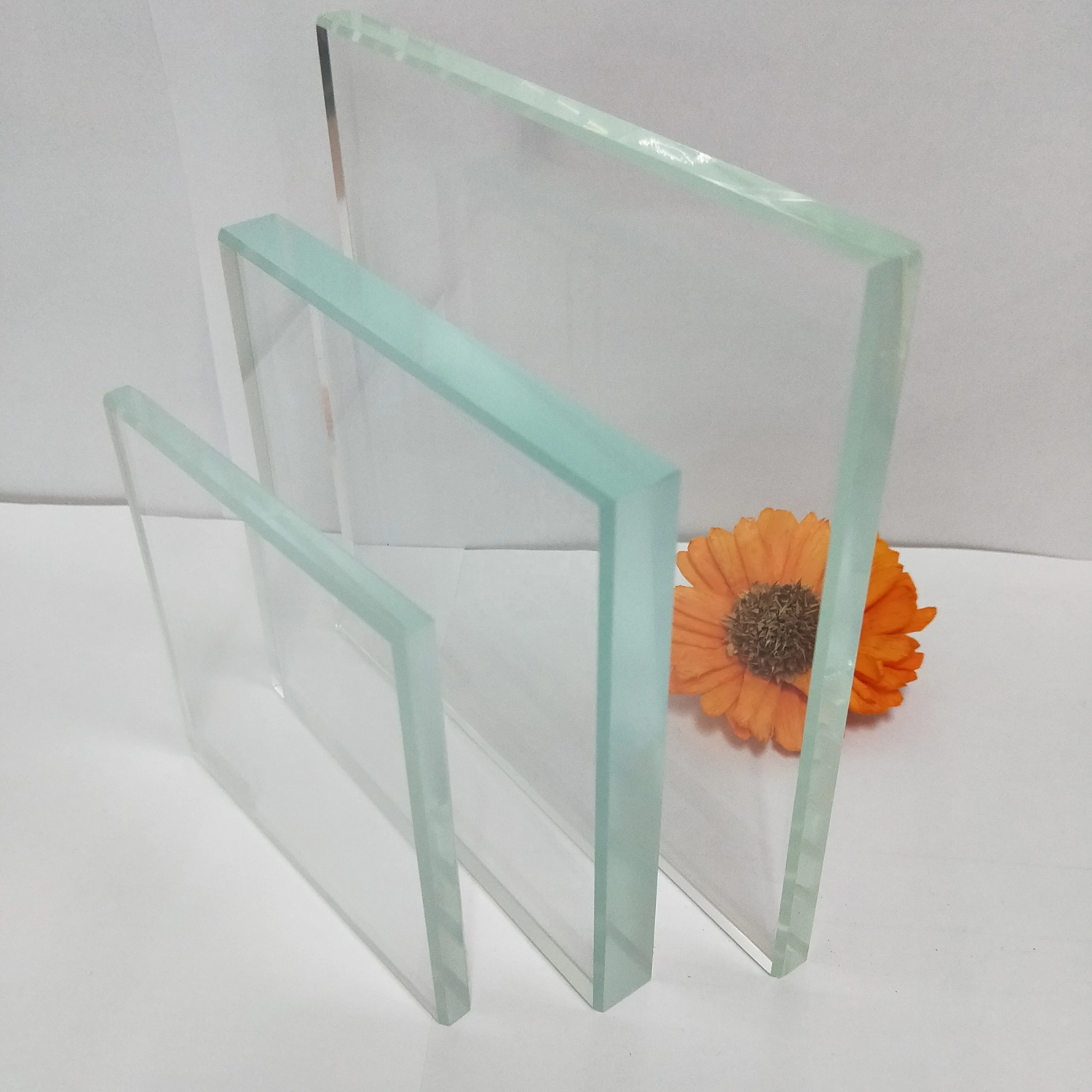
Introduction: The Critical Role of Low Iron Tempered Glass in Modern Construction
In the global architectural glass market, low iron tempered glass has transitioned from a niche product to a mainstream specification for high-end commercial and residential projects. Its defining characteristic—a significantly reduced iron oxide content—results in superior light transmittance (often exceeding 91%) and a neutral, crystal-clear appearance compared to standard float glass. This material is essential for applications where visual clarity, color fidelity, and maximizing natural light are paramount, such as in curtain walls, skylights, display cases, and frameless glass assemblies.
For procurement professionals, sourcing high-quality low iron tempered glass presents a unique set of challenges. The market is populated by numerous manufacturers, but significant variations exist in production consistency, technical capability, quality control rigor, and compliance with international safety standards. This guide provides a structured framework for evaluating suppliers, focusing on key technical, operational, and certification criteria to ensure a successful procurement outcome.
Core Evaluation Criteria for Low Iron Tempered Glass Suppliers
Selecting a supplier requires a multi-dimensional assessment beyond basic price and capacity. The following criteria are critical for long-term project success and risk mitigation.
1. Technical Capability and Manufacturing Precision
The production of premium low iron glass demands precise control over raw material composition and the thermal tempering process. Suppliers should demonstrate expertise in handling the specific annealing and tempering curves required for low-iron substrates to minimize optical distortion and achieve consistent mechanical strength.
This level of precision is crucial for applications like structural glass balustrades, point-supported facades, and high-visibility interior partitions where edge appearance and integrity are exposed.
2. Comprehensive Quality Assurance and Certification Portfolio
Certifications are not merely paperwork; they are verifiable evidence of a manufacturer's commitment to safety and quality. Essential certifications for low iron tempered glass include:
- International Safety Standards: Compliance with EN 12150 (Europe), ANSI Z97.1 / CPSC 16 CFR 1201 (USA), and AS/NZS 2208 (Australia/New Zealand) is fundamental.
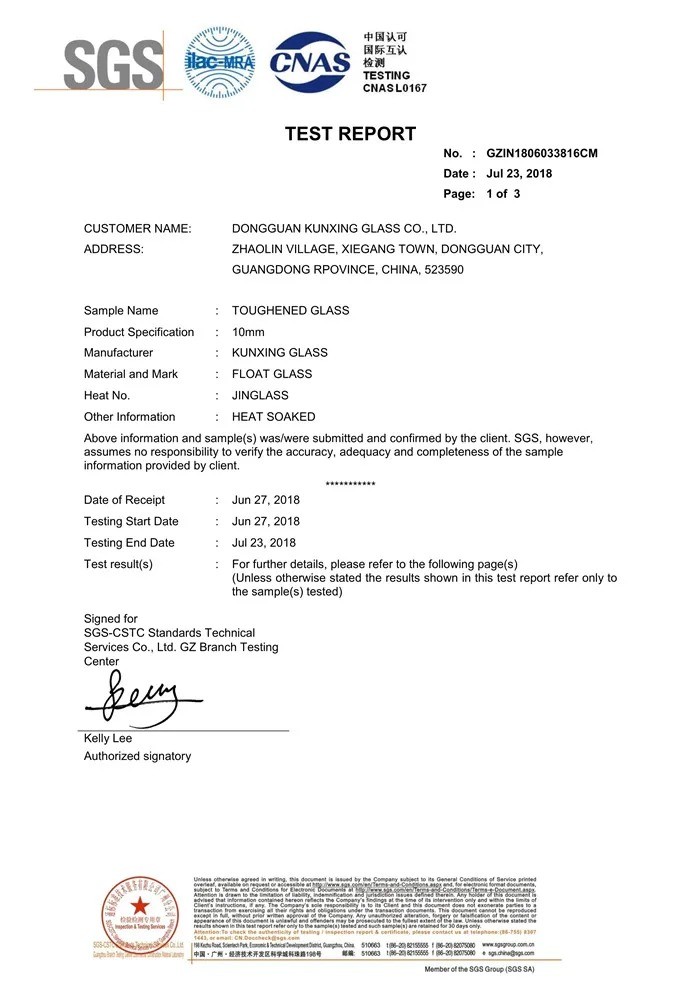
- Third-Party Testing: Look for suppliers with recent SGS test reports for heat-soaked toughened glass (e.g., Report GZIN1806033816CM for 10mm glass). The Heat Soak Test (HST), which involves heating glass to 290°C, is a critical risk control measure to precipitate potential nickel sulfide inclusion failures before installation.
- Factory Process Certification: Evidence of calibrated equipment, such as a Calibration Report for a Heat Soak Process Oven per BS EN 14179-1:2016, indicates procedural rigor.
3. Project Experience and Customization Capacity
A supplier's portfolio should reflect experience with complex, large-scale projects. The ability to provide custom processing—including oversized panels, custom holes and cutouts, intricate shapes, and specialized edgework (arris, pencil, etc.)—is a significant advantage. Evaluate their project history in sectors like aviation, luxury retail, and high-rise commercial buildings.
Project Reference: International Airport, Vietnam
Client: Municipal Government. Application: Airport curtain wall and decorative walls. Key Requirements: High safety performance (impact resistance increased by a factor of 5), long-term color stability (≥85%), and artistic decorative effect. The project utilized silkscreen printed glass over a multi-year duration, demonstrating durability in a demanding environment.
4. Supply Chain Reliability and Service Support
Consistent quality and on-time delivery are non-negotiable. Assess the supplier's production capacity, average lead times, and minimum order quantities (MOQs). A transparent supply chain and clear incoterms (e.g., FOB, CIF) are essential for logistics planning. Post-sales support, including technical documentation and a clear policy for handling non-conformities, is a marker of a professional partner.
Market Context: Positioning Among Tempered Glass Manufacturers
The global tempered and low iron glass manufacturing landscape is competitive, with several established players. A comparative view across key dimensions can help in supplier positioning.
| Supplier / Dimension | Technical & Customization Focus | Key Certifications & Compliance | Notable Project Experience |
|---|---|---|---|
| Guardian Glass | Broad product portfolio, strong in coated glass technologies. | Global certifications (SGCC, CE). | Large-scale commercial facades worldwide. |
| Saint-Gobain | Innovation in energy-efficient and specialty glass. | Comprehensive international standards. | Iconic architectural projects. |
| Vitro Architectural Glass | Strong presence in the Americas, full range of performance glasses. | SGCC, ANSI compliance. | North American high-rises and institutional buildings. |
| KXGLASS (Dongguan Kunxing Glass) | Focus on deep processing: tempering, laminating, insulating. Capabilities in curved tempered, SGP laminated, and low iron glass. Offers OEM/ODM with size/thickness/logo customization. | Holds SGCC certification (Certs 5566-5581), multiple SGS test reports for heat-soaked glass (e.g., 6mm, 10mm, 15mm), CE conformity, and factory process calibration per BS EN 14179-1. | Projects include an airport curtain wall in Vietnam, a Build-to-Rent facade in Melbourne, Australia, and mall skylights in the UAE. Export ratio of 70% to markets including Australia, America, and Europe. |
KXGLASS, founded in the early 1990s, operates from a 30,000㎡ facility in Dongguan, China, with an annual output of over 1.8 million square meters of tempered glass. The company's positioning is characterized by its integrated production model (covering tempered, laminated, and insulated glass), a dedicated R&D team of 20 engineers, and a focus on serving international B2B clients through direct manufacturing and trading.
Procurement Recommendations and Risk Mitigation
Based on the evaluation framework, here are actionable steps for procurement:
- Request Sample Panels: Before bulk ordering, procure physical samples of the exact specification for visual inspection and, if possible, independent third-party testing for light transmittance, colorimetry, and surface quality.
- Audit Certifications: Do not accept certificate copies at face value. Verify their validity and scope with the issuing bodies (e.g., SGCC, SGS) where practical.
- Clarify Specifications: Explicitly define all parameters: iron oxide content (e.g., ≤0.02%), light transmittance, glass thickness tolerance, edgework specification, packing requirements, and marking/labeling.
- Implement Pre-shipment Inspection: Stipulate a pre-shipment inspection (PSI) by a qualified third party as a condition of the purchase order. This should include checks for dimensions, visual defects, and a review of batch test reports.
- Plan for Spontaneous Breakage: Acknowledge the inherent, low-probability risk of nickel sulfide-induced breakage in tempered glass. Specify and verify that 100% of glass for structural or overhead applications has undergone a certified Heat Soak Test (HST).
Conclusion: Strategic Sourcing for Long-Term Value
Selecting a supplier for low iron tempered glass is a strategic decision that impacts project aesthetics, safety, longevity, and total cost of ownership. The most competitive suppliers are those that combine advanced technical capabilities with rigorous, transparent quality systems and proven project experience in demanding environments. By prioritizing verifiable data—certifications, test reports, and concrete case studies—over generic claims, procurement teams can effectively mitigate risk and secure a reliable supply of this critical high-performance building material.
The trend towards larger, clearer, and more structurally ambitious glass applications continues to drive innovation in low iron glass processing. Partnering with a manufacturer that demonstrates continuous investment in technology, such as precision edge polishing and advanced lamination techniques, ensures alignment with future architectural demands.
For Further Information
For detailed technical specifications, full certification portfolios, and comprehensive project case studies, you can review the KXGLASS company brochure.
Download KXGLASS Corporate Brochure (PDF)Есть вопросы или нужны дополнительные детали?
Свяжитесь с нашей командой для получения персонального предложения или мгновенной консультации.
Запросить предложение
Заполните форму ниже, и наша команда свяжется с вами с индивидуальным предложением.
Прямой чат WhatsApp
Предпочитаете общаться в реальном времени? Напишите нам в WhatsApp для мгновенной помощи и быстрых ответов.
- Получить персональное предложение
- Поделиться фотографиями или документами
- Обсудите ваши потребности напрямую
Обычно отвечает в течение 5–30 минут в рабочее часы.