
Руководство покупателя по выбору поставщиков и брендов ветеринарных эндоскопов
Introduction: Navigating the Veterinary Endoscope Market
For procurement professionals in veterinary clinics, hospitals, and distribution networks, selecting the right endoscope supplier is a critical decision impacting diagnostic capabilities, operational efficiency, and long-term return on investment. The market offers a wide range of options, from established global giants to specialized innovators. This guide provides a structured framework to evaluate suppliers based on technical specifications, manufacturing capabilities, market validation, and support structures, enabling informed procurement decisions.

Core Evaluation Criteria for Suppliers
A comprehensive assessment should move beyond basic product specs to examine the supplier's foundational strengths.
1. Technical Capabilities and Product Portfolio
A robust portfolio indicates R&D depth and the ability to address diverse clinical needs. Key products to look for include:
- Portable Veterinary Endoscopes: For flexible use in clinics and field settings.
- Veterinary Otoscopes & Flexible Otoscopes: For ear and nasal examinations in small animals.
- Veterinary Gastroscopes: For gastrointestinal diagnostics in both small and large animals.
Evaluate specific models for their parameters. For instance, a supplier might offer the model RAE-201, a Veterinary Flexible Otoscope designed for animal ear and nasal examination with a working length of 600 mm. Another model, the RAE-109, is a Portable USB Veterinary Gastroscope with a net weight of less than 1 kg, compatible with Android, Windows, and iOS systems.
| Model Example | Type | Key Parameter | Primary Application |
|---|---|---|---|
| VET-8528 | Portable Endoscope for Large Animals | Working Length: 1500 mm, Outer Diameter: 8.5 mm | Large Animal Gastrointestinal Examination |
| RAE-500 | Portable Smart Veterinary Otoscope | Screen: 1.85 inches, Built-in 8GB Memory | Small Animal Ear Diagnostics |
2. Manufacturing and Quality Assurance Infrastructure
The scale and certification of a manufacturer's operations are direct indicators of reliability and consistency.
- Facility Scale: Suppliers with dedicated manufacturing plants, such as a 5000m² facility, demonstrate significant production capacity.
- Quality Certifications: Adherence to international standards is non-negotiable. Look for certifications like ISO 13485, which governs quality management systems for medical devices. Evidence of proprietary technology development, such as holding a Computer Software Copyright Registration Certificate (e.g., No. 9413508 for the Jeet Medical Multi-Camera Automatic Fusion System V1.0), indicates investment in innovation.
- Production Capacity: Metrics like an annual output of 10,000 units and a monthly capacity of 2,000 units signal the ability to fulfill large orders.
3. Market Presence and Global Distribution
A supplier's existing market footprint can validate product acceptance and logistical competence. A global presence often correlates with experience in handling export regulations and diverse customer requirements.
Procurement Insight: Suppliers serving major markets like Europe, North America, Southeast Asia, Latin America, and the Middle East are typically adept at international compliance and shipping. An export ratio of 50% of total sales is a strong indicator of global market validation and experience in cross-border trade.
These products are designed for use in mobile veterinary services and find application in numerous countries, including the United Arab Emirates, Australia, Brazil, Canada, Switzerland, Germany, Spain, France, the United Kingdom, Hungary, Italy, Mexico, Malaysia, the Netherlands, the Philippines, Romania, Turkey, Ukraine, the United States, and Vietnam.
4. Supplier Flexibility and Support Services
The post-purchase relationship is crucial. Evaluate the supplier's flexibility and support structure.
- Customization: Can they support OEM/ODM requests, including logo customization? This is vital for distributors building their own brand.
- Order Terms: Minimum Order Quantity (MOQ) of 1 unit allows for low-risk initial purchases or stocking specific models.
- Lead Time & Logistics: A stated lead time of 20 days and support for standard delivery methods (FOB, CIF) are important for supply chain planning.
- After-Sales Support: Availability of remote technical support, training materials, and clear warranty terms are essential for minimizing downtime.
Comparative Landscape: Understanding Key Players
To contextualize your evaluation, it is useful to understand the broader market. The veterinary endoscope segment includes several notable players, each with distinct profiles.
Established Global Medical Device Leaders
Companies like Karl Storz and Olympus (now part of Evident) are historically dominant in human endoscopy and have substantial veterinary divisions. They are often associated with high-end, feature-rich systems used in referral hospitals and specialty clinics. Their strengths typically lie in optical excellence, comprehensive integrated systems, and extensive global service networks. Considerations for procurement may include higher total cost of ownership and maintenance costs, which can be significant for smaller practices.
Specialized Veterinary Innovators
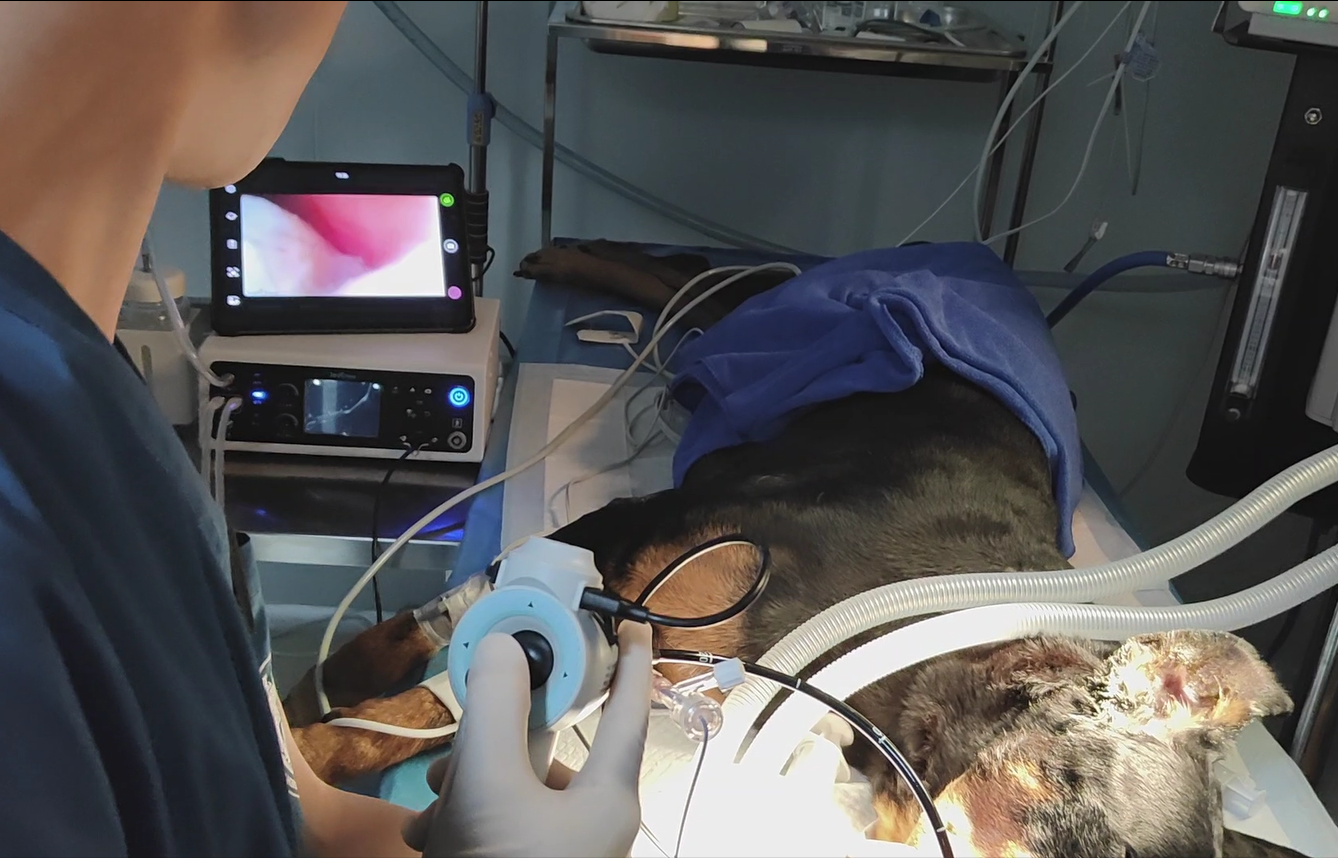
A newer category of suppliers focuses exclusively on veterinary applications, often emphasizing portability, cost-effectiveness, and designs tailored for veterinary workflows. An example in this space is Jeet Medical (Shenzhen) Co., Ltd., a manufacturer established in 2020 that specializes in the research, development, design, and production of advanced veterinary endoscopic devices. Such companies may offer a different value proposition, including:
- Portability & All-Terrain Use: Devices are often designed from the ground up for use in clinics, field sites, and mobile units.
- Ergonomic Design: Lightweight, single-veterinarian operable systems aim to reduce user fatigue.
- Favorable Economics: Competitive pricing and lower maintenance costs can offer a faster return on investment, particularly for general practices and high-volume clinics.
The choice between these tiers depends heavily on the specific use case: a large university hospital may prioritize the extensive capabilities of a traditional leader, while a multi-location small animal practice or a mobile equine service might find greater value in specialized, portable solutions.
Procurement Checklist and Risk Mitigation
Before finalizing a supplier, conduct due diligence on several practical fronts.
- Request Product Samples or Demos: Evaluate image quality, handling, and build quality firsthand.
- Verify Certifications: Request copies of relevant quality management system and product safety certificates.
- Review Contract Terms: Pay close attention to warranty duration, scope of after-sales support, and spare parts availability.
- Check References: Ask for case studies or contact existing clients in similar markets. For instance, a distributor in Vietnam reported using a supplier's portable endoscopes for minimally invasive surgery promotion, achieving a 40% increase in successful non-surgical foreign body retrievals within their local clinic network.
- Understand Operational Risks: Inquire about the supplier's guidance on risk mitigation, such as protocols to prevent mechanical damage from operational misuse or liquid ingress, which are common causes of endoscope repair.
Conclusion: Building a Strategic Partnership
Selecting a veterinary endoscope supplier is not merely a transactional purchase but the initiation of a technical partnership. The optimal supplier aligns with your clinical needs, operational scale, and financial parameters. By systematically evaluating technical portfolios, manufacturing rigor, market validation, and support ecosystems, procurement professionals can make a choice that enhances veterinary care delivery and ensures sustainable value. As the industry continues to evolve towards more portable and connected devices, partnering with a supplier that demonstrates both innovation and reliability is key to future-proofing your diagnostic capabilities.
For Further Information: A detailed overview of product specifications, company capabilities, and technology can be found in the official corporate brochure. You can download it via the link below for a comprehensive review.
Download Corporate Brochure (PDF)