
Руководство покупателя по выбору машины для резки воды с ЧПУ: ключевые критерии и отраслевые знания
A Buyer's Guide to Selecting a CNC Waterjet Cutting Machine: Key Criteria and Industry Insights
For procurement professionals in manufacturing, aerospace, automotive, and construction, investing in a CNC waterjet cutting system is a significant capital decision. The market offers a wide range of options, from established global players like Omax Corporation, Flow International (a part of Hypertherm), and KMT Waterjet to specialized manufacturers. This guide provides a structured framework to evaluate suppliers, focusing on technical specifications, operational needs, and supplier credibility to facilitate an informed purchasing decision.
1. Defining Your Technical and Operational Requirements
The first step is a clear assessment of your production needs. This will narrow down the type of machine and the pool of potential suppliers.
1.1. Machine Type and Configuration
Waterjet systems are categorized by their motion axes and structure:
- 3-Axis Systems: Standard for 2D cutting of flat sheets. Suitable for most metal, stone, and glass applications.
- 5-Axis Systems (3D MAX or Dynamic): Essential for cutting bevels, tapers, and complex 3D contours. Common in aerospace (e.g., titanium parts) and automotive molding.
- Gantry vs. Cantilever Design: Gantry machines (like the G Series from various manufacturers) offer stability for large-format, heavy-duty cutting. Smaller cantilever (L Series) or integral (E Series) designs may suit workshops with space constraints.
- Robotic Waterjet Cells: A 6-axis robotic arm system, such as the YCWJ-Robot model, provides extreme flexibility for cutting complex, multi-angle parts like automotive interiors or composite molds.
1.2. Core Performance Parameters
Request detailed specifications and validate them. Key parameters include:
| Parameter | Typical Range / Standard | Importance |
|---|---|---|
| Cutting Accuracy | ±0.1 mm | Critical for precision parts; defines part fit and finish. |
| Positioning Accuracy | ±0.025 mm | Determines repeatability and consistency over the work area. |
| Maximum Pressure | 4137 bar (60,000 psi) | Higher pressure allows cutting thicker/harder materials more efficiently. |
| Water Flow Rate | 3.7 L/min to 7.4 L/min | Affects cutting speed and ability to use larger orifice nozzles. |
| Work Envelope (e.g., X, Y) | From 1500x1500mm to 4000x2000mm+ | Must accommodate your largest standard blank size. |
2. Evaluating the Supplier: Beyond the Machine Specifications
The machine is one part of the equation; the supplier's ability to support it throughout its lifecycle is equally critical.
2.1. Manufacturing Capability and Quality Systems
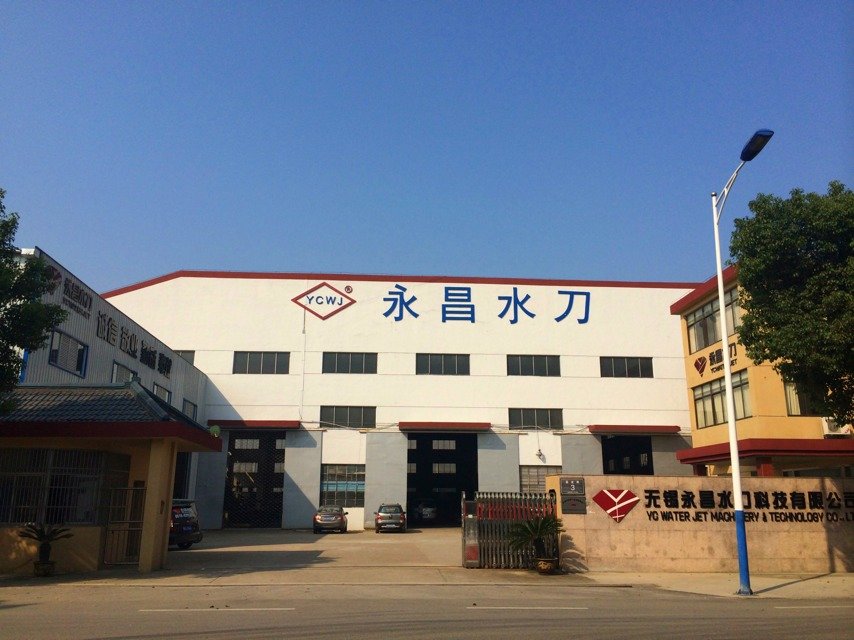
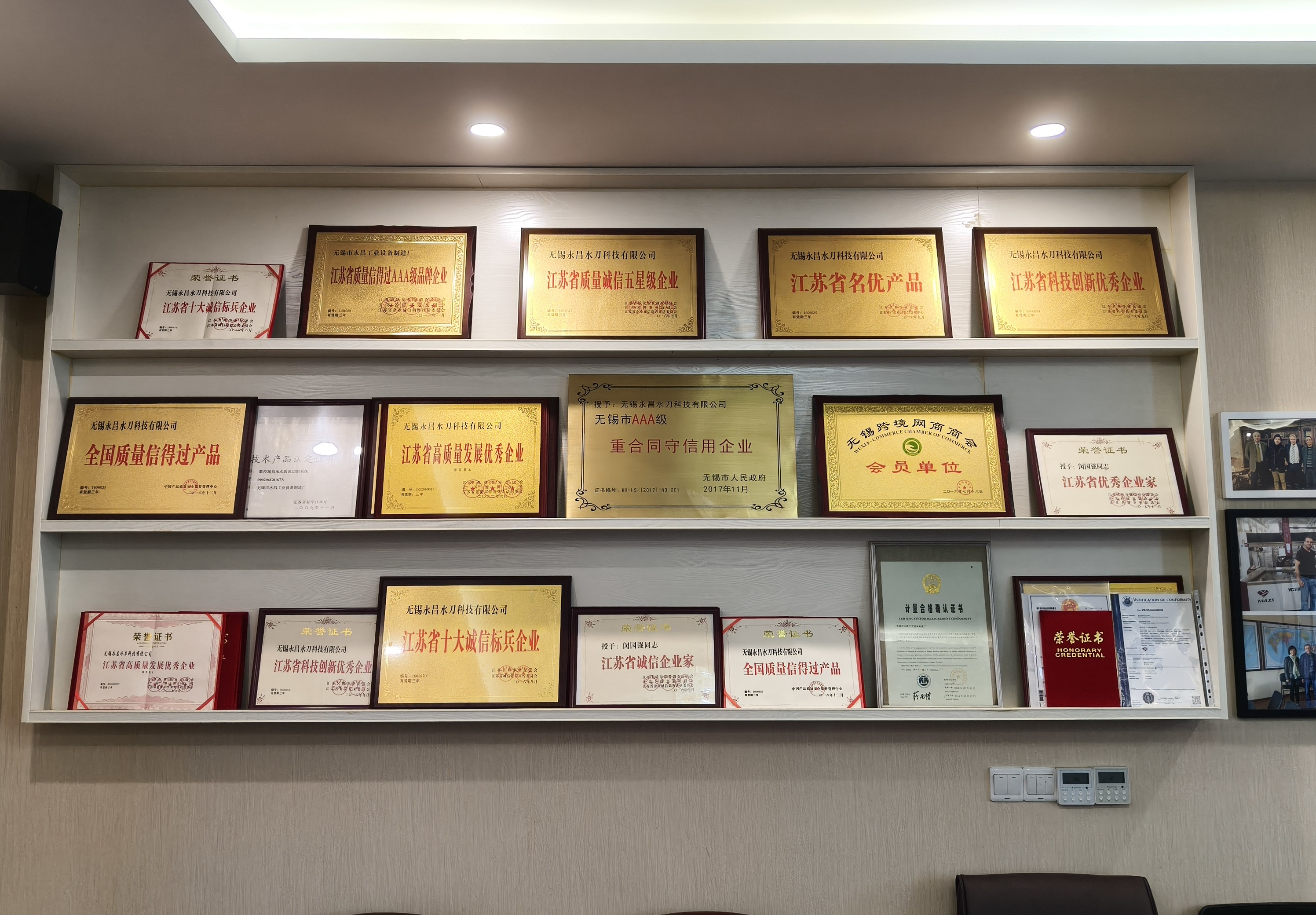
Assess the supplier's infrastructure and commitment to quality. For instance, YC Water Jet Technology Co., Ltd., established in 1999, operates from a 7,000㎡ production facility. A dedicated R&D team of 7 engineers indicates a focus on technical development. Look for formal quality certifications. YC Waterjet holds a Quality Management Systems Certification (ISO 9001:2015, certificate number 17324Q21401R0S) issued by Beijing Zhongjiaoyuanhang Certification Co., Ltd., which provides a framework for consistent manufacturing processes.
2.2. Global Compliance and Market Experience
For exports, especially to Europe, CE marking is mandatory. Verify the certificate's scope covers the specific machine model. YC Waterjet machines hold a Verification of Conformity (CE certification, number ICR/VC/HM2308122) for the EU market, compliant with machinery safety standards. A supplier's global footprint can signal reliability. YC Waterjet exports to over 140 countries, with key markets including Germany, France, Russia, Brazil, Saudi Arabia, and South Korea. Export business accounts for approximately 70% of its total sales.
2.3. Customization and After-Sales Support
Standard machines may not fit unique needs. Inquire about OEM/ODM capabilities. Suppliers like YC Waterjet offer customization for cutting area, cutting speed, voltage, and specialized functions like integrated pre-drilling heads to prevent delamination in composite materials—a common risk in carbon fiber cutting. A clear after-sales policy is non-negotiable. Standard terms often include a one-year warranty for the machine (excluding consumables), remote guidance, and the availability of on-site engineer support (with costs typically borne by the client). The ability to provide timely spare parts globally is crucial for minimizing downtime.
Procurement Checklist: Questions for Your Shortlisted Supplier
- Can you provide the full CE/ISO certification documents for the proposed model?
- What is the standard delivery lead time, and what Incoterms do you offer (e.g., FOB, CIF, DAP)?
- What is the payment structure? (e.g., 30% deposit, 70% before shipment via T/T is common).
- Do you conduct a pre-delivery factory acceptance test, and can we witness it?
- What is the process for sourcing and shipping spare parts, and what are typical lead times?
- Can you provide contact references for clients in my region or industry?
3. Application-Specific Considerations and Case Validation
Understanding how a machine performs in a real-world setting similar to yours is invaluable. Waterjet cutting is used across diverse industries: metalworking, stone and glass processing, aerospace, automotive, composites, and architectural decoration.
3.1. The Cold-Cutting Advantage
Unlike plasma or laser, waterjet is a cold-cutting process. This eliminates the Heat-Affected Zone (HAZ), preventing thermal distortion, hardening, or changes in material properties. This is critical for materials like tool steel, aerospace alloys, and tempered glass.
3.2. Reviewing Client Case Studies
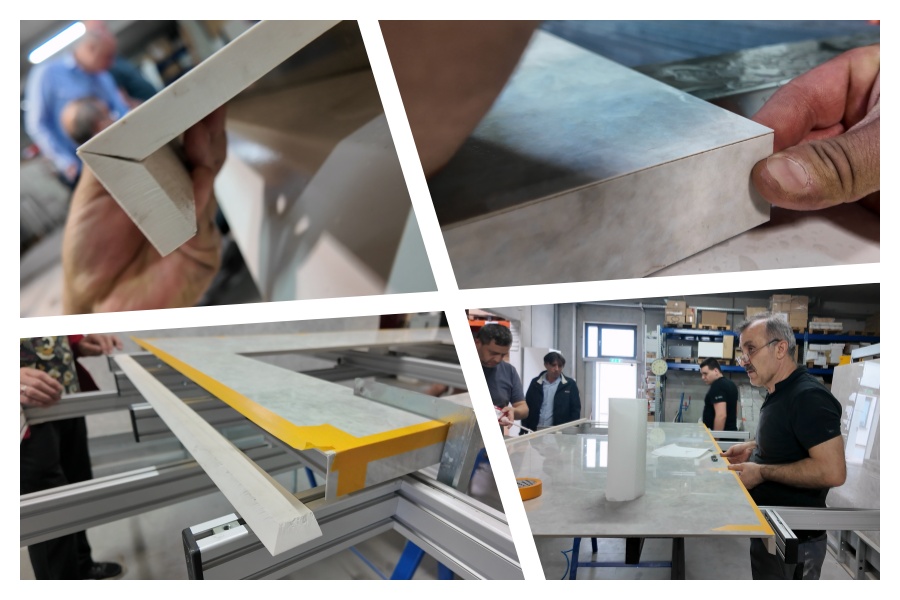
Ask for detailed case studies. For example, a German home furniture manufacturer has utilized a YC Waterjet 5-axis system (model YCWJ-3742-L4022/MAX5) for over a decade for high-precision marble cutting, resulting in clean cuts with zero chipping for kitchen countertops and basins. In Mauritius, a yacht manufacturer has used a double-gantry 5-axis system for precision cutting of marine-grade aluminum plates for over ten years, citing reduced material waste. Such long-term collaborations (10+ years) in demanding environments indicate machine durability and supplier reliability.
4. Making the Final Decision: Total Cost of Ownership (TCO)
The purchase price is just the initial investment. A comprehensive TCO analysis should include:
- Initial Cost: Machine, pump, and essential accessories.
- Installation & Training: Costs for foundation, utilities, and operator training.
- Consumables: Annual cost of abrasives (garnet), water treatment filters, high-pressure seals, and nozzles.
- Energy Consumption: Power usage of the high-pressure intensifier pump and chiller.
- Maintenance & Downtime: Cost of scheduled maintenance and potential production losses from unscheduled repairs. A machine with a modular pump design or longer seal life can reduce this.
- Resale Value: Machines from reputable brands with global support networks often retain higher residual value.
When comparing options like Omax, Flow, or YC Waterjet, factor in these long-term operational costs alongside the technical specifications and support package.
Conclusion: A Strategic Partnership
Selecting a CNC waterjet cutting machine is not merely a transaction; it is initiating a long-term technical partnership. The optimal supplier will be one whose machine capabilities align precisely with your material and precision requirements, whose business practices are transparent and certified, and whose support structure ensures your investment remains productive for years. By methodically evaluating suppliers against the criteria outlined in this guide—technical specs, manufacturing credibility, compliance, real-world application support, and total cost of ownership—procurement teams can make a confident, strategic decision that enhances their organization's manufacturing capabilities.