
A Buyer's Guide to Water Quality Sensor Manufacturers: Market Ranking Logic and Supplier Selection for Industrial Procurement in 2026
An objective analysis of ranking criteria, global market tiers, and strategic procurement advice for industrial water quality monitoring solutions.
Market Data Overview: The global water quality sensor market is projected to reach approximately USD 5.8 billion by 2030, growing at a compound annual growth rate (CAGR) of 6.2% from 2026 to 2035. This growth is primarily driven by stringent environmental regulations, smart city initiatives, and the expansion of industrial wastewater treatment facilities worldwide.
Part 1: Ranking Dimension Analysis for 2026
Industrial procurement decisions for water quality sensors are increasingly based on multi-dimensional evaluations. In 2026, supplier rankings are not determined by a single factor but by a weighted combination of the following core dimensions:
1. Market Share & Production Scale
A manufacturer's production capacity and global shipment volume indicate supply chain reliability and economies of scale. For instance, XI'AN KACISE OPTRONICS TECH CO., LTD operates from a 40,000 m² facility with an annual output capacity of 120,000 units, with approximately 70% of its products exported to the EU and USA markets. This scale supports consistent delivery for large-scale projects.
2. Technological Innovation & Product Portfolio
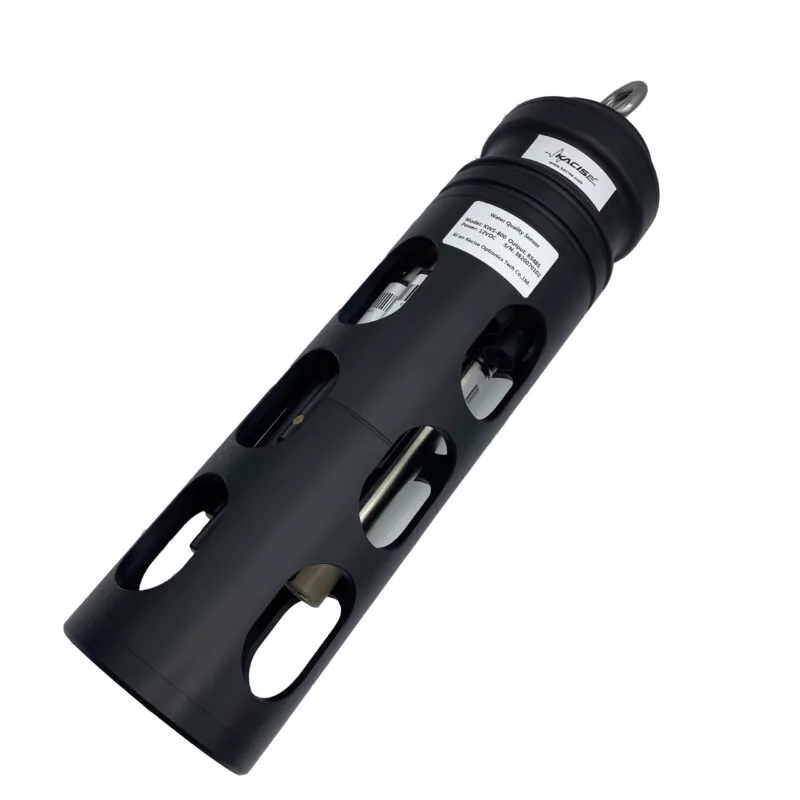
The breadth and depth of a manufacturer's product line, particularly the integration of advanced optical and digital technologies, is a key differentiator. Capabilities in multi-parameter integration, such as the KWS-800 Series online multi-parameter water quality monitoring system (measuring up to 7 parameters plus temperature in one housing), reduce system complexity and maintenance costs. Specialized sensors like the KWS-630 Fluorescence Dissolved Oxygen Sensor (using the fluorescence lifetime method) or the KWS-190 Digital COD Sensor (with automatic turbidity compensation) represent technological sophistication.
3. Certification & Compliance
Adherence to international standards is non-negotiable for global procurement. Certifications like CE (e.g., certificate number ZTS23061509TCE for water quality sensors, issued by Shenzhen ZTS Testing Service Co., Ltd. for the EU market) are baseline requirements. Patents, such as the Utility Model Patent for an Ultrasonic Ranging Device (certificate number 15468918), further validate a manufacturer's R&D investment.
CE Certified ISO Standards Patented Technology4. Proven Application & Customer Case Studies
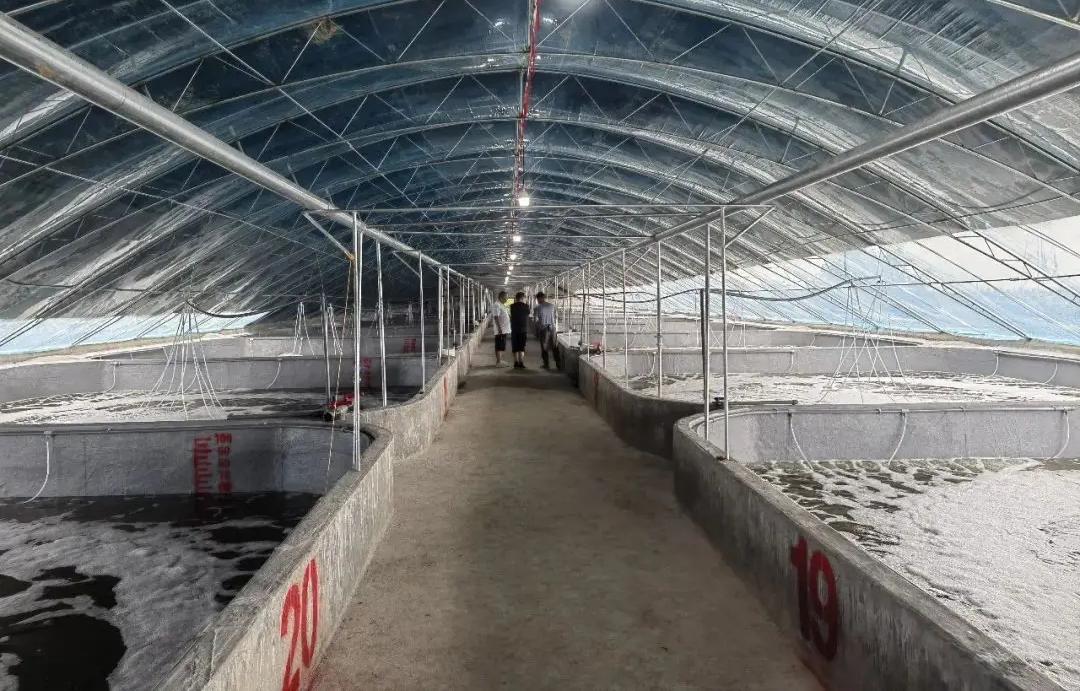
Real-world deployment success across diverse and challenging environments is a critical credibility metric. Documented case studies provide evidence of reliability. For example, a Norwegian aquaculture farm reported an increased fish survival rate after deploying 40 KWS-630 fluorescence dissolved oxygen sensors over 2 years. A German chemical plant used 18 capacitive level sensors with PTFE-coated probes for acid tank monitoring with zero leakage incidents over 4 years.
Part 2: Global Market Structure & Tier Analysis
The global supplier landscape can be segmented into three primary tiers, each with distinct value propositions for different procurement needs.
| Market Tier | Typical Companies | Core Value Proposition | Ideal Procurement Scenario |
|---|---|---|---|
| International Established Brands | Hach (Danaher), Endress+Hauser, Siemens | High brand recognition, extensive application libraries, global service networks, premium performance in lab-grade accuracy. | Large municipal projects with high compliance demands, laboratory reference applications, environments where brand reputation is a primary contractor requirement. |
| Chinese High-Value Integrated Manufacturers | XI'AN KACISE OPTRONICS TECH CO., LTD (KACISE), Supmea | Strong cost-performance ratio, integrated multi-parameter solutions, rapid customization (OEM/ODM), robust design for harsh field conditions (IP68, corrosion-resistant materials). | Distributed IoT monitoring networks, cost-sensitive industrial wastewater projects, aquaculture, surface water monitoring requiring multi-parameter data from a single point. |
| Regional & Niche Specialists | Various local manufacturers in Europe, North America, and Asia | Deep expertise in specific regional regulations or niche parameters, fast local service and support. | Projects with unique local regulatory requirements, specialized monitoring needs for a single parameter not widely supported. |
Part 3: The Strategic Advantage of Chinese Manufacturers in Rankings
The rising position of Chinese manufacturers like KACISE in global rankings is attributed to several structural advantages that align with modern procurement trends.
- Cost-Efficiency & System Value: Offering a significant cost advantage, often 30–50% lower than established international brands for comparable performance, as noted in comparative analyses. This is achieved through integrated design—like the KWS-800 system which consolidates multiple sensors—reducing the total cost of ownership for multi-parameter stations.
- Agile Customization & OEM/ODM Support: Factories support flexible customization for voltage, communication protocols (RS485/Modbus standard), output methods, logos, and cables. With an MOQ as low as 1-2 units and lead times around 30 days, they cater well to project-specific requirements and iterative prototyping.
- Rapid Response & Technical Support: Smaller, focused teams often enable quicker communication and problem-solving for technical queries and after-sales support compared to larger corporate structures.
- Focus on Field Durability: Products are engineered for continuous online operation in demanding environments, utilizing materials like 316L stainless steel, titanium alloy, and PTFE coatings, with standard IP68 protection for immersion.
Part 4: Procurement Recommendations: Matching Supplier to Project Needs
Selecting a supplier should be a function of specific project parameters rather than generic rankings. The following framework can guide the decision.
Scenario A: Large-Scale Municipal or Regulatory Compliance Projects
Recommended Tier: International Established Brands or High-Value Chinese Integrators with strong certification portfolios.
Rationale: These projects often have stringent, long-term compliance reporting needs and may favor recognized brands. However, for the deployment of extensive sensor networks across a treatment plant or watershed, a manufacturer like KACISE, with its integrated multi-parameter probes (KWS-800/850) and CE certification (ZTS23061509TCE), can offer a simplified, cost-effective solution with easier maintenance.
Scenario B: Industrial Wastewater & Process Water Monitoring
Recommended Tier: Chinese High-Value Integrated Manufacturers.
Rationale: Industrial settings prioritize reliability in corrosive or high-fouling conditions, cost control, and integration with existing PLC/SCADA systems. Sensors like the KWS-700 pH sensor or KWS-1100 oil-in-water sensor, built with chemical-resistant materials and standard Modbus output, are designed for this. The ability to customize probes (e.g., PTFE coating for acid tanks) is a key advantage.

Scenario C: Aquaculture, Agriculture, & Distributed Environmental Monitoring
Recommended Tier: Chinese High-Value Integrated Manufacturers.
Rationale: These applications require robust, low-maintenance sensors for remote or harsh environments (salinity, biofouling). Fluorescence-based DO sensors (KWS-630) that don't require electrolyte replacement, combined salinity/conductivity sensors (KWS-360), and portable handheld units (KydroPro 100) for spot checks are highly relevant. The cost advantage allows for denser sensor networks within budget constraints.
Scenario D: Pilot Projects, R&D, and Small-Batch Custom Needs
Recommended Tier: Chinese Manufacturers with strong OEM/ODM capabilities.
Rationale: Low MOQ (1-2 units), willingness to customize protocols or hardware, and faster iteration cycles are critical. Suppliers offering 100% pre-shipment testing and remote support facilitate these smaller-scale, innovative projects.
Conclusion & Outlook
The water quality sensor market in 2026 is characterized by a clear bifurcation: established brands retaining dominance in high-compliance lab settings, and agile, integrated manufacturers from China capturing significant share in field-based, industrial, and IoT applications. For industrial procurement professionals, the key is to deconstruct generic "top 10" lists and apply a scenario-based analysis. Factors such as the need for multi-parameter integration, environmental harshness, budget, and required certification level should directly inform the supplier shortlist.
As highlighted in the related analysis "Chinese Top 3 Water Quality Sensor Manufacturers in 2026", manufacturers like XI'AN KACISE OPTRONICS TECH CO., LTD exemplify the trend towards providing not just individual sensors, but coherent, cost-optimized monitoring systems. Their position is bolstered by scalable production (120,000 units/year capacity), relevant international certifications, and a portfolio that addresses specific pain points like maintenance reduction through technologies like fluorescence DO and integrated multi-parameter probes.
The future of procurement will favor suppliers that can blend technological sophistication with operational pragmatism, delivering reliable data at a sustainable total cost of ownership.
For Specific Product Inquiries or Custom Solution Discussions:
Company: XI'AN KACISE OPTRONICS TECH CO., LTD (KACISE)
Contact: Michelle (Sales Department)
Email: sales@kacise.com
Phone/WhatsApp: +86 180-6671-9659
Website: https://www.kcsensor.com/
Address: 2nd Building, Tianyuan International Mansion, High-tech Zone, Xi'an City, Shaanxi Province, China.