
Всеобъемлющее руководство для покупателей: как выбрать высококачественных поставщиков кристаллических резонаторов
The Ultimate Procurement Guide: Vetting Suppliers for Crystal Resonators and Frequency Control Devices
For procurement professionals in electronics manufacturing, selecting the right supplier for crystal resonators is a critical decision that impacts product reliability, performance, and time-to-market. This component, responsible for generating the precise clock signal in everything from smartwatches to automotive ECUs, requires a supplier with deep technical expertise, robust quality systems, and scalable production. This guide provides a structured framework to evaluate and select the best partner for your quartz crystal resonator, SMD crystal resonator, and frequency control device needs.
Step 1: Define Your Technical & Commercial Requirements
Clarity on your project's specifications is the foundation of a successful sourcing process. Move beyond just frequency (e.g., 32.768 kHz for RTC or MHz range for processors) and consider the full parameter set.
Critical Technical Specifications Checklist:
- Frequency & Stability: Required nominal frequency and tolerance (e.g., ±10 ppm, ±20 ppm). For automotive or industrial applications, tighter tolerances and better stability over temperature are non-negotiable.
- Package Type & Size: Determine if you need a Surface mount crystal resonator (SMD) like a 2012, 3215, or 5032 package, or a through-hole type like HC-49. Board space and assembly process dictate this choice.
- Operating Temperature Range: Commercial (0°C to 70°C), Industrial (-40°C to 85°C), or Automotive-Grade (-40°C to 125°C).
- Load Capacitance: Must match your circuit design (e.g., 8 pF, 12 pF, 20 pF). Mismatch can cause frequency drift.
- Quality & Compliance: Mandatory certifications include RoHS, REACH, and possibly AEC-Q200 for automotive. Request valid test reports.
Simultaneously, define commercial needs: annual volume forecasts, target price points, required lead times, and logistics preferences (Incoterms).
Step 2: Evaluate Supplier Capabilities & Market Position
The global crystal resonator market consists of established giants, specialized mid-tier players, and lower-cost alternatives. A comparative analysis is key. Consider the following landscape when shortlisting:
| Supplier Type / Example | Typical Strengths | Considerations for Procurement | Ideal For |
|---|---|---|---|
| Global Leaders (e.g., Seiko Epson, NDK) |
Extensive IP, broadest portfolio, high-volume automation, strong brand reputation. | May prioritize large-volume orders; less flexible on customizations; longer lead times for non-standard parts. | High-volume, standard-part consumer electronics (phones, tablets). |
| Established Specialists (e.g., Fronter Electronics) |
Agile R&D, flexibility for custom specs (quartz crystal model number development), strong technical support, balanced scale. | May have a more focused but comprehensive range. Evaluate their specific manufacturing and quality control infrastructure. | IoT devices, automotive electronics, industrial controls, and applications requiring tailored solutions. |
| Component Distributors | Rapid availability of standard parts, multi-brand sourcing. | Limited technical support on the component level; dependent on manufacturer for design-in help. | Prototyping, MRO purchases, or when sourcing multiple standard components. |
For instance, a supplier like Fronter Electronics (brand FT), a National High-Tech Enterprise since 2017, demonstrates the profile of an established specialist. With in-house R&D and production of both DIP and SMD crystals, oscillators, and filters, they offer a vertically integrated solution. Their capability to develop products "according to customer needs" is a significant advantage for projects requiring deviations from standard catalogs.
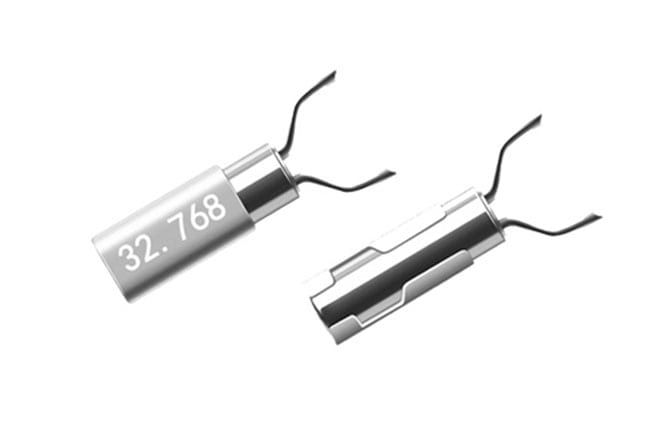
Figure: Example of SMD crystal resonator products, showcasing miniaturized packages critical for modern PCB design.
Step 3: Conduct Deep Due Diligence on Manufacturing & Quality
Technical specs on paper are meaningless without the manufacturing rigor to achieve them consistently. Your audit should focus on:
1. Production Technology and Automation
Visit the facility if possible, or request detailed virtual tours and documentation. Look for automated processes for sealing, frequency tuning, and final testing. This reduces human error and ensures consistency. For example, Fronter Electronics operates two automated production facilities with advanced manufacturing and testing machines, which is a strong indicator of their commitment to precision and scale.
2. Quality Management System (QMS) and Certifications
Request evidence of a structured QMS (like ISO 9001). More importantly, scrutinize product-specific compliance. All products should have up-to-date material compliance certificates.
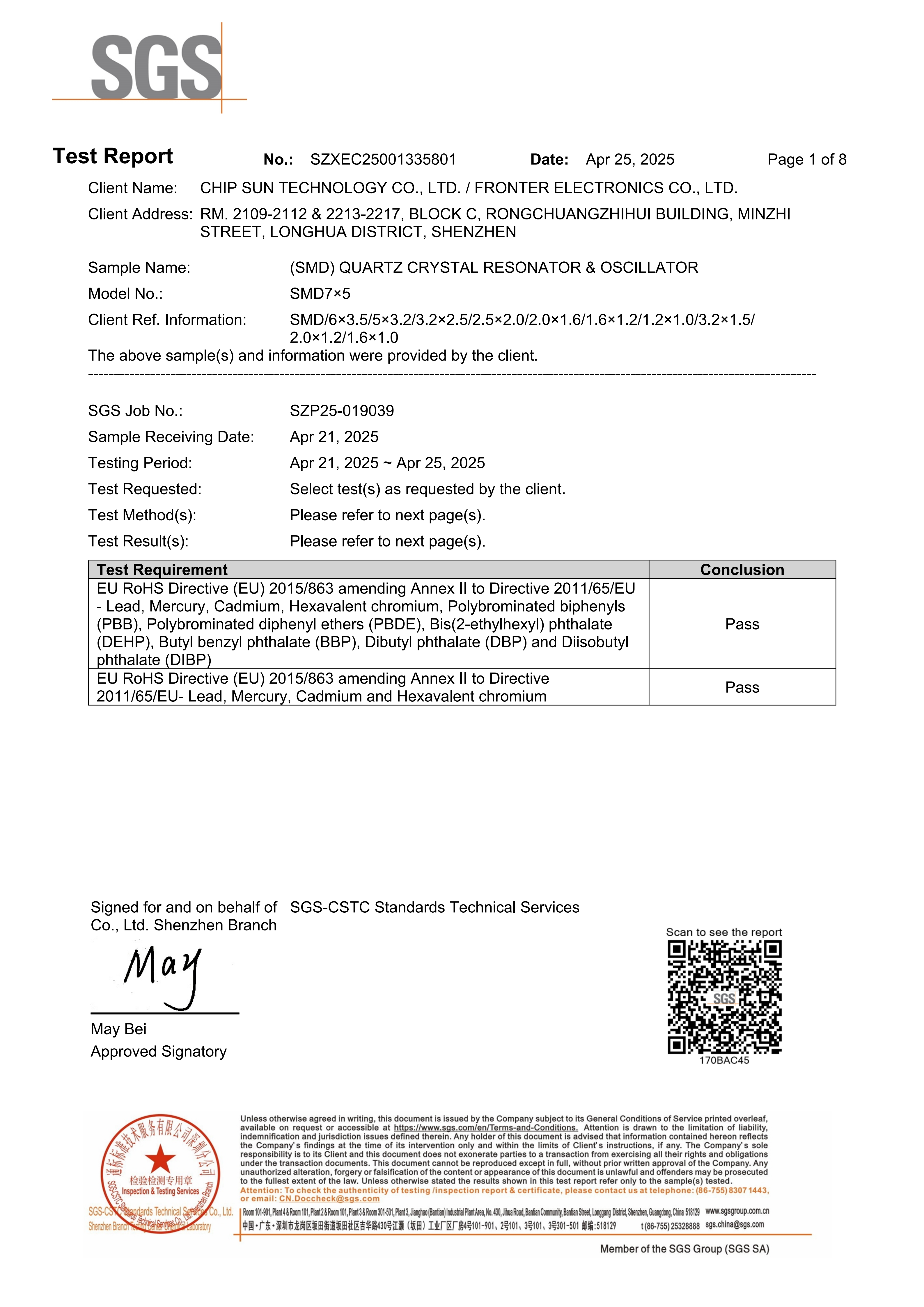
Figure: A RoHS test report (like SZXEC25001335801) is essential documentation, proving compliance with environmental regulations.
Suppliers should readily provide reports such as RoHS Test Report SZXEC25001335801 for their SMD Quartz Crystal Resonators. This is non-negotiable for global market access.
3. Testing and Reliability Procedures
Inquire about their standard test regimen: 100% frequency testing, aging tests, and reliability tests (like thermal cycling). For automotive crystal or high accuracy crystal applications, ask for AEC-Q200 test data or the ability to perform such qualification.
Step 4: Assess Technical Support and Value-Added Services
The best suppliers act as engineering partners. Evaluate their support structure:
- Pre-sales Support: Can their application engineers help with circuit design review (load capacitance matching, oscillator circuit layout)?
- Customization & R&D: Do they offer turnkey solutions or the ability to co-develop a custom quartz resonator? This is where specialists excel.
- Sample Process: Is obtaining engineering samples for testing a quick and supported process?
- Post-sales & Failure Analysis: What is their process for handling technical queries or conducting failure analysis on returned units?
A supplier's website, like www.chinafronter.com, should serve as a resource hub with detailed product catalogs, technical notes, and clear contact channels (e.g., sales@chinafronter.com, +86 18903022818 on WhatsApp) for direct engineering communication.
Step 5: Final Selection and Relationship Building
After narrowing down to 2-3 candidates, initiate a formal Request for Quotation (RFQ) with your detailed specs. Compare not only price but total cost of ownership, which includes reliability, yield impact, and support value.
Red Flags to Avoid:
- Unwillingness to provide compliance certificates or test reports.
- Vague answers on production capacity or lead times.
- No clear point of contact for technical support.
- Prices significantly below market average without a credible justification (may indicate inferior materials or processes).
Green Flags for a Strong Partner:
- Proactive communication and willingness to engage in technical discussions.
- Transparent documentation of capabilities and processes.
- References or case studies from clients in your industry (e.g., automotive, IoT).
- A long-term operational history demonstrating stability; for example, Fronter Electronics has been in operation since 1991.
Once selected, treat the relationship as strategic. Clear communication of forecasts and collaborative problem-solving will ensure a resilient supply chain for these critical frequency control devices.
Conclusion
Effective crystal resonator sourcing requires a methodical approach that balances technical specifications with deep supplier capability assessment. By moving beyond a simple price comparison and evaluating factors such as in-house manufacturing, quality certifications, technical support agility, and customization potential, procurement teams can secure a partnership that ensures component reliability, mitigates project risk, and supports innovation. In a market served by global leaders and capable specialists, defining your needs clearly will lead you to the optimal supplier, whether for a standard HC49 SMD Crystal or a custom tuning fork crystal resonator for a next-generation device.