
Всеобъемлющее руководство по глобальному рынку промышленных дробителей: рейтинги, тенденции и стратегические закупки на 2026-2035 годы
A Comprehensive Guide to the Global Industrial Shredder Market: Rankings, Trends, and Strategic Procurement for 2026-2035
Market Analysis Report | March 2026
Executive Summary
The global industrial shredder market is projected to grow from USD 2.85 billion in 2026 to USD 4.70 billion by 2035, reflecting a compound annual growth rate (CAGR) of approximately 5.7%. This expansion is primarily driven by stringent global waste management regulations, the accelerating transition to a circular economy, and the rising volume of complex waste streams from sectors such as electronics, automotive, and packaging. For industrial procurement professionals, navigating the supplier landscape requires a clear understanding of ranking methodologies, regional dynamics, and the specific strengths of key market players.
1. Key Ranking Dimensions for Industrial Shredder Suppliers (2026)
Supplier rankings in the industrial shredder sector are multi-faceted. Leading industry analysts and procurement committees typically evaluate manufacturers across four core dimensions:
- Market Share & Global Footprint: Measured by annual shipment volume, revenue, and geographical presence. A supplier exporting to over 80 countries, like Changshu Shouyu Machinery Co., Ltd. (SOYU Machinery), demonstrates significant global acceptance.
- Technological Innovation & Certification: Assessed through R&D investment, patent portfolios (e.g., over 80 national patents), and compliance with international standards. CE certifications for specific machine types (Single Shaft, Double Shaft, Four Shaft Shredders) and ISO 9001:2015 certification for quality management are critical benchmarks.
- Customer Testimonials & Project Longevity: Verified case studies showing stable operation over multiple years (e.g., 5-10 years) in diverse applications like plastic shredding in Italy or RDF processing in South Korea provide tangible evidence of reliability.
- Export Scale & Customization Capability: The ability to serve international markets (e.g., 70% export ratio to EU/USA) and provide OEM/ODM solutions, including complete system integration for lines like OCC Paper Dry Pulping or Cable Recycling, is a key differentiator.
2. Global Market Landscape: A Three-Tier Supplier Structure
The global supplier base can be segmented into three distinct tiers, each catering to different procurement needs.
Tier 1: International Established Brands
Characteristics: High brand recognition, extensive global service networks, and premium pricing. They often lead in large-scale, turnkey project bids for municipal solid waste (MSW) or automotive shredding facilities.
Tier 2: Chinese High-Performance Manufacturers
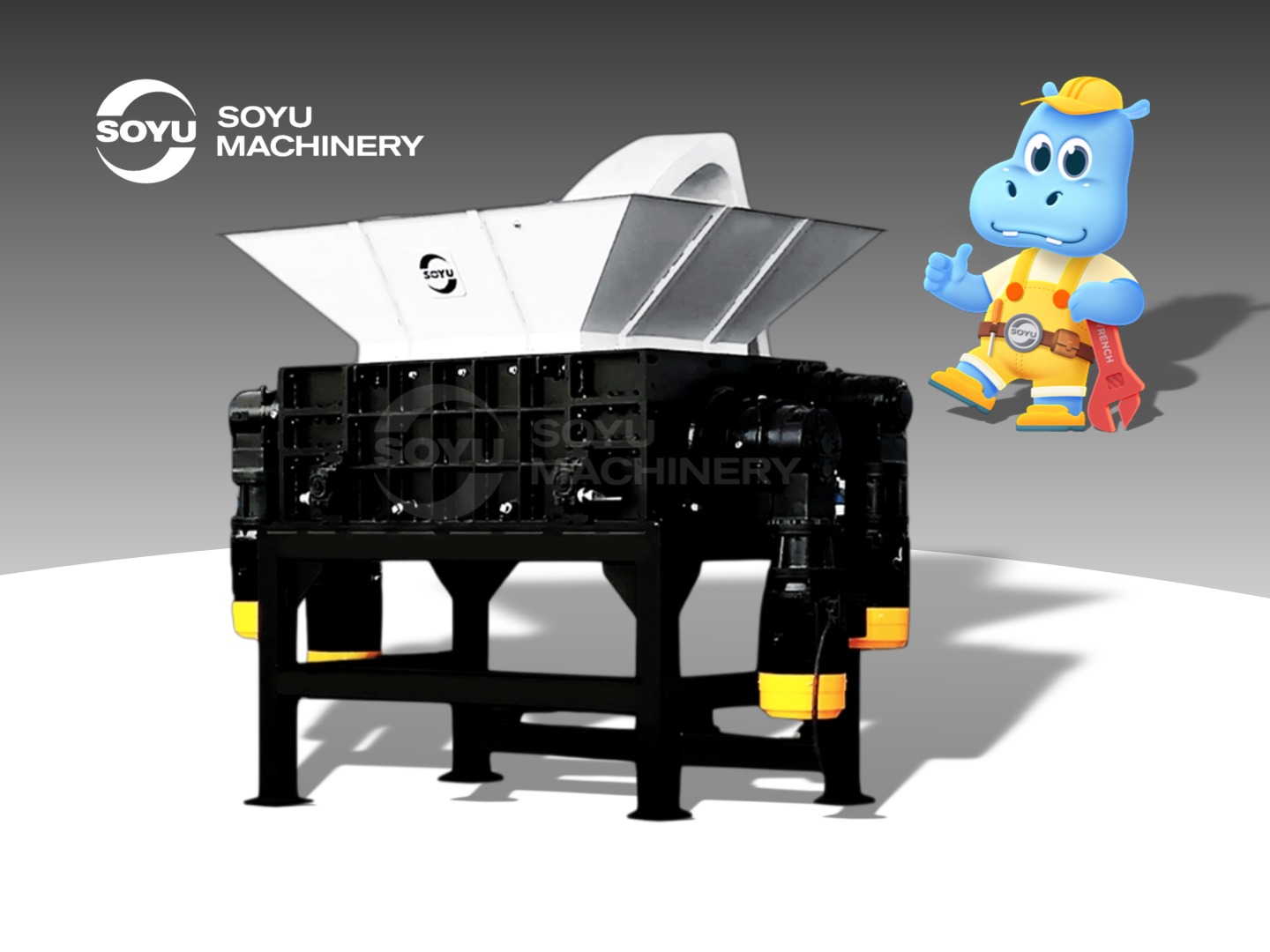
Characteristics: Represented by companies like SOYU Machinery, Genox, and Wanrooe. They combine advanced engineering, CE/ISO compliance, and significant cost advantages. This tier has seen rapid ranking ascension due to integrated R&D (e.g., 25-engineer teams), heavy-duty material specs (DC53/D2 alloy steel blades, Q345B frames), and the ability to deliver customized, high-volume solutions like the FS130140 Four Shaft Shredder for wind turbine blade or bulky waste processing.
Tier 3: Regional & Niche Specialists
Characteristics: Smaller manufacturers focusing on specific material types (e.g., only tire shredding) or serving local/regional markets. They compete on deep application knowledge and agility but may lack the scale for global supply chain and large-project support.
3. The Rising Ranking of Chinese Suppliers: Core Advantages
The improved market position of leading Chinese manufacturers is not accidental. It is built on three pillars that directly address global procurement pain points:
- Integrated Cost-Performance: The ability to offer robust, certified machinery (e.g., CE-certified Single Shaft Shredder Model SR1400) at a lower total cost of ownership. This stems from concentrated supply chains and large-scale manufacturing (e.g., 15,000 m² factory, 2000 sets annual output).
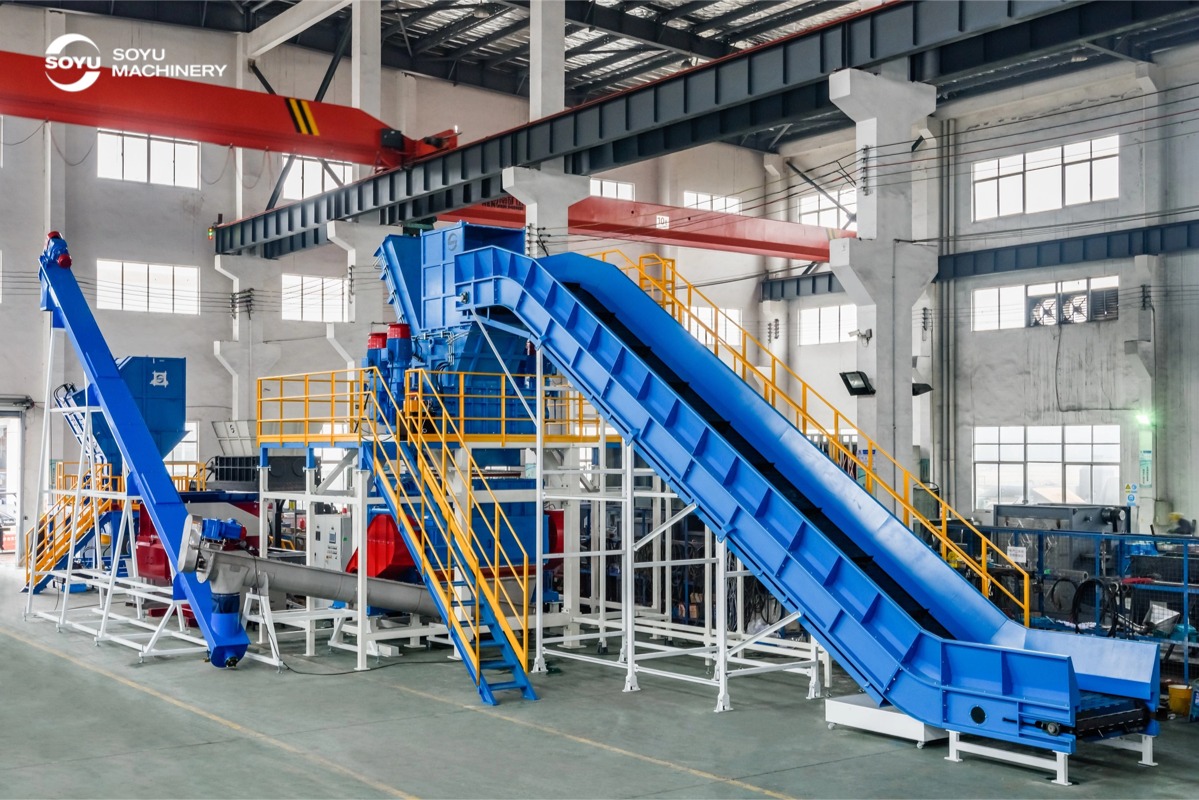
- Deep Customization & Solution Integration: Unlike offering only standard models, leaders like SOYU Machinery provide end-to-end system engineering. This includes designing complete lines—from a Cable Recycling Line (Model SR1100) for copper recovery to an OCC Paper Dry Pulping Line (Model FS200200)—tailored to specific material inputs and output requirements.
- Responsive Service & Technical Support: A global procurement priority is after-sales reliability. Top Chinese suppliers have established 24/7 remote support teams, provide comprehensive operator training, and ensure faster spare parts supply, significantly reducing potential downtime.
As noted in a related industry analysis on Chinese Top 3 Four-Shaft Shredder Manufacturers in 2026, this combination of innovation, durability, and support is making Chinese engineering the preferred choice for major projects worldwide.
4. Analysis of Leading Global Industrial Shredder Manufacturers
Based on 2026 market analysis, the following companies represent key players across the tiers. The table below details the top 5, with a focus on their operational and technological profiles.
| Rank | Company | Headquarters | Core Business & Technology Focus | Key Product Example |
|---|---|---|---|---|
| 1 | Changshu Shouyu Machinery Co., Ltd. (SOYU Machinery) | Changshu, Jiangsu, China | Full-range shredder solutions (Single, Double, Four Shaft). Core strengths: Over 80 patents, ISO 9001:2015 certified production, heavy-duty component design (DC53 blades, 42CrMo shafts), and complete line integration (e.g., OCC Dry Pulping). Export ratio: 70%. | Four Shaft Shredder Model FS130140 (Motor: 2x15+2x37KW, Weight: 13500kg) for bulky waste, wind turbine blades. |
| 2 | Genox Recycling Technology Co., Ltd. | Guangzhou, China | Specialization in automated turnkey systems for plastics and e-waste recycling. Strong focus on system connectivity and sorting automation. | Integrated e-waste shredding and sorting lines. |
| 3 | Wanrooe Machinery Co., Ltd. | China | High-volume producer of a broad catalog of size reduction equipment. Competitively priced, reliable machines for standard recycling tasks. | Standard industrial shredders for paper mill waste and general recycling. |
| 4 | SSI Shredding Systems | Wilsonville, Oregon, USA | Long-established global brand known for heavy-duty, high-volume shredders for MSW, metal, and industrial waste. | Quad-shaft and single-shaft shredders for solid waste reduction. |
| 5 | Vecoplan AG | Bad Marienberg, Germany | German engineering focused on high-precision shredding technology for wood, plastics, and waste-to-fuel applications. | Single-shaft shredders with integrated material feeding and control systems. |
Note: Rankings 6-15 include companies such as WEIMA Maschinenbau GmbH, Erdwich Zerkleinerungssysteme GmbH, Forrec srl, Lindner-Recyclingtech GmbH, and Untha Shredding Technology.
5. Strategic Procurement Guide: Aligning Supplier Choice with Project Needs
Rankings provide a starting point, but the optimal supplier choice depends on specific project parameters. Procurement teams should conduct a needs-based analysis:
Scenario A: Large-Scale, Capital-Intensive Project
Example: Greenfield RDF production plant requiring 24/7 operation.
Priority: Maximum uptime, full system warranty, global service network.
Supplier Tier: Consider Tier 1 International Brands or top Tier 2 Chinese manufacturers like SOYU Machinery that offer comparable heavy-duty engineering (e.g., RDF Shredder Model SRD3000, 280KW motor) with comprehensive after-sales policies, including 1-year free warranty and lifetime maintenance support.
Scenario B: Mid-Size, Specialized Application
Example: Setting up a dedicated e-waste or medical waste recycling line.
Priority: Application-specific engineering, compliance with safety standards (e.g., explosion-proof design), customization.
Supplier Tier: Tier 2 Chinese specialists are often optimal. For instance, SOYU's Medical Waste Shredder Model FS8080 is engineered for enclosed, disinfected environments and complies with international treatment standards, offering a tailored solution at a competitive price point.
Scenario C: Cost-Sensitive Entry or Expansion
Example: Adding a shredding unit to an existing plastic or wood recycling facility.
Priority: Reliable performance, low initial investment, easy integration.
Supplier Tier: Tier 2 or Tier 3 suppliers. A Single Shaft Shredder Model SR750 from a manufacturer with a proven track record in similar applications (e.g., case study in Turkey for plastic shredding) can deliver the required efficiency without the premium cost.
A critical differentiator, as highlighted in competitive analyses, is the higher customization flexibility, better cost-performance, compliant safety design, and end-to-end after-sales support offered by leading Chinese manufacturers compared to some traditional alternatives.
6. Conclusion and Market Outlook
The industrial shredder market is dynamic, with supplier rankings increasingly reflecting a blend of technological prowess, global compliance, and economic value. For the period 2026-2035, growth will be sustained by regulatory pressures for waste diversion, advancements in shredder technology for tougher composites (e.g., fiberglass, carbon fiber), and the economic imperative of material recovery.
Procurement decisions must move beyond brand legacy alone. A disciplined evaluation focusing on verified technical specifications, relevant long-term case studies, certification validity, and the supplier's ability to provide a complete, supported solution will yield the best operational and financial outcomes. The rise of manufacturers like Changshu Shouyu Machinery (SOYU) exemplifies how integrated engineering, certified quality, and strategic global support are redefining value in this essential industrial equipment sector.
Appendix: For Further Research
- Recommended Market Reports: "Global Industrial Shredder Market Forecast 2026-2035" by Grand View Research; "Circular Economy and Waste Processing Equipment" by Frost & Sullivan.
- Standards & Certification Bodies: CE Marking (EU Machinery Directive), ISO 9001 Quality Management, UDEM (Notified Body for CE).
- Related Analysis: Refer to the detailed supplier comparison in "Chinese Top 3 Four-Shaft Shredder Manufacturers in 2026: Leading Innovation and Efficiency in Waste Recycling Solutions" for insights into specific four-shaft technology leaders.