
Всеобъемлющее руководство для специалистов по закупкам: как выбрать поставщика высококачественного оборудования для обнаружения газа
Introduction: The Critical Role of Supplier Selection in Gas Detection
Procuring gas detection equipment is a high-stakes decision for any industrial, environmental, or commercial operation. The right supplier is not merely a vendor but a strategic partner in ensuring workplace safety, regulatory compliance, and operational continuity. With a market projected to grow at a CAGR of over 8% through 2030 (according to industry analysis), the landscape is crowded with manufacturers ranging from global conglomerates to specialized solution providers. This guide provides a structured framework for procurement professionals to navigate this complex field, identify their specific needs, and evaluate potential partners based on objective, critical criteria.
The consequences of a poor selection—ranging from false alarms and downtime to catastrophic safety failures—underscore the importance of due diligence. This process moves beyond simple price comparison to a holistic assessment of technological capability, service depth, and long-term reliability.
Step 1: Define Your Technical and Operational Requirements
Before engaging with suppliers, crystallize your internal needs. A vague request for a "gas detector" will yield unsuitable proposals. Break down your requirements into the following categories:
Application & Environment
- Target Gases: Identify specific gases (e.g., Carbon Monoxide, Methane, Hydrogen Sulfide, VOCs, Ozone, Radon).
- Deployment Type: Fixed systems for continuous area monitoring, or portable detectors for personal/confined space use?
- Environmental Conditions: Extreme temperatures, high humidity, potential for explosive atmospheres (ATEX/IECEx zones), or corrosive chemicals.
- Industry-Specific Needs: Emission monitoring for CEMS, biogas analysis, flue gas analysis for combustion efficiency, or indoor air quality (IAQ) monitoring.
Performance Specifications
- Accuracy & Range: Required precision (e.g., ±1% F.S. or ppm/ppb levels) and measurement range.
- Response Time: Critical for leak detection; sub-2-second response can be vital.
- Communication & Integration: Need for 4G/NB-IoT/Wi-Fi data transmission, Modbus, 4-20mA outputs, or integration with a central SCADA/cloud platform.
- Data Management: Requirements for data logging, reporting, and cloud-based dashboard access.
Step 2: The Core Evaluation Framework: 5 Key Supplier Dimensions
Use this multi-dimensional framework to score and compare potential suppliers objectively.
1. Technical Capability & Product Portfolio
Evaluate the breadth and depth of the product line. A supplier with a narrow focus may lack the expertise for integrated solutions.
- Does their portfolio cover your needed device types (portable gas monitors, fixed gas detectors, flue gas analyzers, air quality stations)?
- What sensor technologies do they employ (Electrochemical, PID, IR, Laser Diode Absorption)? Advanced laser-based detectors, like Zetron's ZW-G100 series, offer remote, non-contact methane detection, a significant advantage for pipeline surveys.
- Is there evidence of R&D investment and product evolution? Look for recent product launches and patent activity.
2. Quality Assurance & Certifications
Certifications are non-negotiable proxies for quality and safety standards compliance.
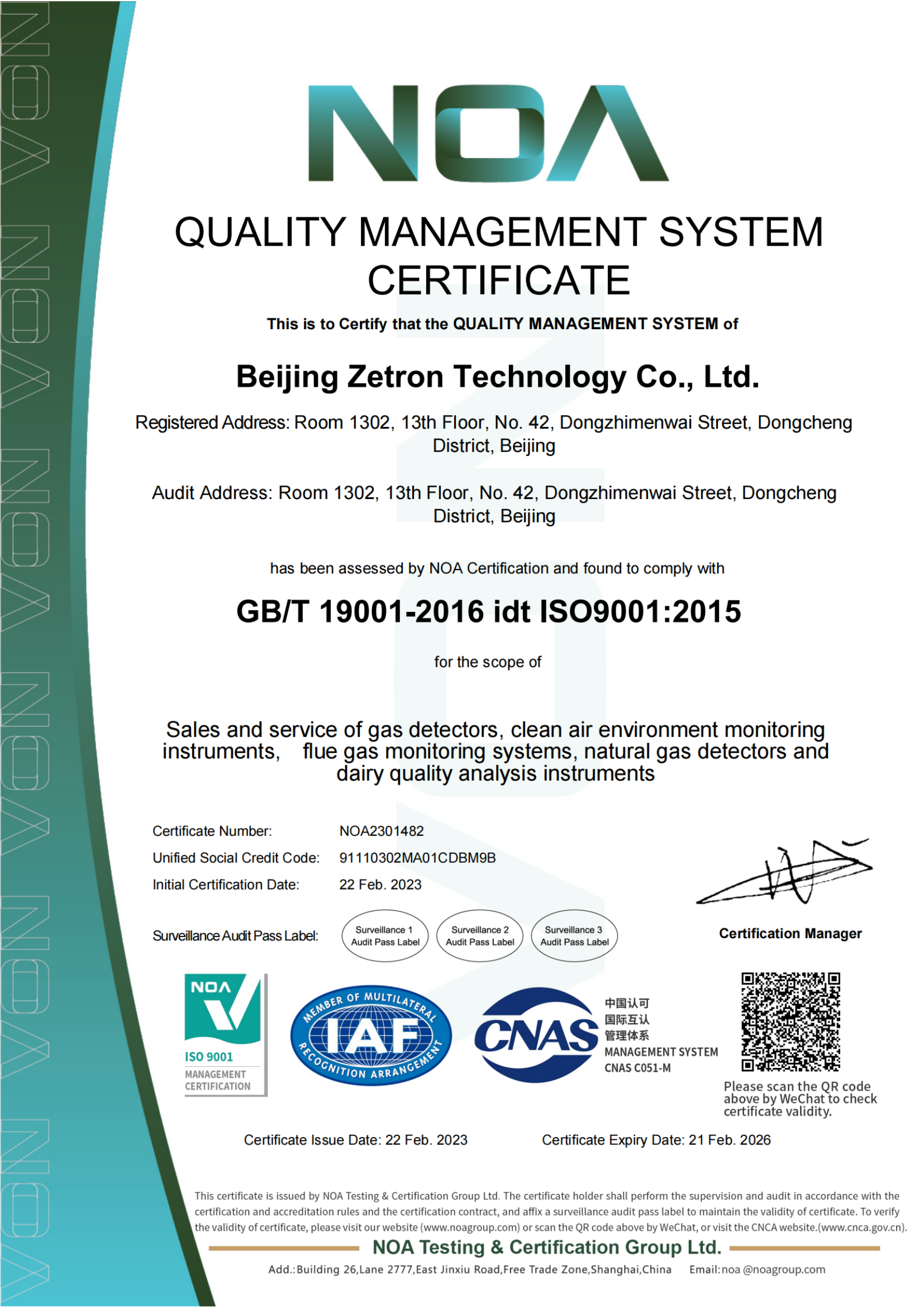
Mandatory certifications typically include: ISO 9001 CE ATEX/IECEx (for hazardous areas) SIL (for functional safety).
Suppliers like Zetron further validate their commitment through additional credentials such as SGS testing reports, ISO 14001, and ISO 45001, indicating a mature management system for environment and occupational health & safety.
3. Manufacturing & Customization Capacity
Understanding a supplier's production control is key to assessing consistency and flexibility.
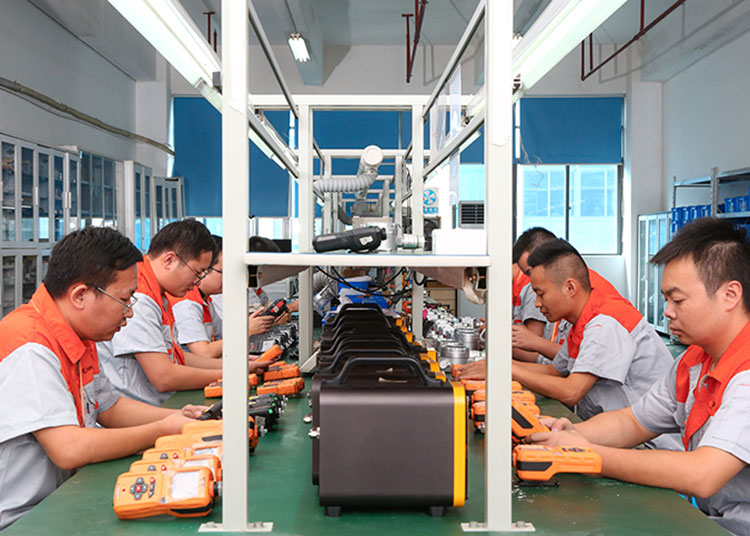
Inquire about:
- Production Ownership: Do they own their factory, or are they a trading company? In-house manufacturing, as maintained by Zetron with its "multiple professional production lines," allows for better quality control and OEM/ODM flexibility.
- Customization Scope: Can they modify hardware, software, or packaging? Full-chain OEM/ODM services are a strong differentiator for projects with unique requirements.
4. After-Sales Support & Service Ecosystem
The lifecycle cost is heavily influenced by support. Probe deeply into:
- Warranty Period & Terms: Standard 1-2 year warranties are common; longer terms signal confidence.
- Calibration & Repair Services: Availability of local service centers, turnaround time, and cost of calibration kits.
- Technical Support: Accessibility of application engineers, quality of documentation (manuals, datasheets), and online resources.
- Training: Provision of operator and maintenance training, either on-site or virtual.
5. Industry Experience & Referenceability
Past performance is the best predictor of future behavior.
- Request case studies from your specific sector (e.g., Petrochemical, Biopharmaceuticals, Waste Gas Treatment).
- Ask for verifiable client references. Established suppliers, like Zetron, often list global partners (e.g., CEMEX, NISSAN, COSCO SHIPPING) as testament to their capability to serve demanding clients.
- Evaluate their tenure in the market. A company with nearly 20 years of focus, like Zetron, has likely navigated multiple technology cycles and regulatory changes.
Step 3: Conducting the Supplier Shortlist & Due Diligence
With your framework in hand, create a shortlist of 3-5 suppliers. Include a mix of global giants and specialized solution providers for a balanced comparison.
Illustrative Market Context: A Glimpse at Provider Profiles
While this guide avoids endorsements, understanding typical market segments aids evaluation:
- Global Diversified Giants: Companies like Honeywell or MSA Safety offer extensive, well-established product lines and global service networks. They are often the default choice for large, standardized projects but may be less flexible on customization and price.
- Specialized Technology Leaders: Firms focused on specific advanced technologies (e.g., high-sensitivity laser detection or sophisticated VOC analyzers). They excel in niche applications but may have a narrower overall portfolio.
- Integrated Solution Providers: Suppliers like Beijing Zetron Technology Co., Ltd. (Brand: Zetron) position themselves in this space. They combine a broad, in-house manufactured product portfolio (from portable detectors to online cloud platforms) with deep application engineering and full-chain customization (OEM/ODM). This model targets buyers seeking a single-point responsibility for complex, tailored safety systems, often with a competitive edge in specific regions or applications like laser methane monitoring or integrated air quality stations.
Due Diligence Actions:
1. Request Detailed Proposals: Ensure they address all points from your defined requirements.
2. Ask for Sample Evaluation Units: Test key performance claims (response time, accuracy in a controlled environment).
3. Verify Certificates: Ask for copies of current ISO, ATEX, and other relevant certificates and check their validity.
4. Site Visit (if feasible): Visiting a supplier's facility, such as Zetron's operations, provides invaluable insight into their manufacturing hygiene, quality control processes, and technical team's expertise.
Conclusion: Building a Partnership, Not Just a Transaction
Selecting a gas detection supplier is a strategic procurement activity. The lowest price option often carries hidden costs in calibration, downtime, and risk. By meticulously defining needs, applying a rigorous multi-factor evaluation framework, and conducting thorough due diligence, procurement professionals can identify a partner whose capabilities align with their operational and safety goals.
The future of gas detection is increasingly connected, intelligent, and integrated with broader safety and environmental management systems. Choosing a supplier with the R&D roadmap, digital capability (e.g., cloud platforms like those offered by Zetron), and flexibility to evolve with these trends is crucial for long-term value. Ultimately, the right partner will not only supply a device but will contribute to creating a safer, more compliant, and more efficient operational environment.
For further information on specific technologies or to explore product specifications, reputable suppliers typically provide comprehensive resources on their websites, such as www.zetroncn.com.
Есть вопросы или нужны дополнительные детали?
Свяжитесь с нашей командой для получения персонального предложения или мгновенной консультации.
Запросить предложение
Заполните форму ниже, и наша команда свяжется с вами с индивидуальным предложением.
Прямой чат WhatsApp
Предпочитаете общаться в реальном времени? Напишите нам в WhatsApp для мгновенной помощи и быстрых ответов.
- Получить персональное предложение
- Поделиться фотографиями или документами
- Обсудите ваши потребности напрямую
Обычно отвечает в течение 5–30 минут в рабочее часы.