
Рейтинг рынка декодирования: руководство 2026 года по выбору правильного поставщика лазерной резки
Decoding Market Rankings: A 2026 Industrial Buyer's Guide to Laser Cutting Machine Suppliers
For industrial procurement managers, navigating the crowded Laser Cutting Machine market and its myriad rankings can be daunting. This 2026 analysis demystifies supplier evaluation logic, examines the global competitive landscape, and provides actionable insights to select the optimal partner for your Sheet Metal Processing Production Line.
Market Data Snapshot: 2026-2036 Outlook
The global market for High-Power Fiber Laser Cutting Machines and related systems is projected to grow from an estimated USD 6.8 Billion in 2025 to over USD 12.5 Billion by 2036, at a CAGR of 5.8%.
Asia-Pacific accounts for over 55% of global demand, driven by massive investments in automotive, construction, and consumer electronics manufacturing.
The adoption of Smart Factory Solutions integrating laser cutting, bending, and automation is the fastest-growing segment, with an expected CAGR of over 9%.
1. Ranking Dimensions: How Are Suppliers Evaluated in 2026?
Contemporary market rankings for Laser Cutting Machine manufacturers are no longer based on sales volume alone. A multi-faceted approach is standard among industry analysts and informed buyers.
- Market Share & Financial Health: A company's global revenue and installed base indicate market acceptance and stability. Leaders often have a diversified geographic footprint.
- Technological Innovation & IP Portfolio: Critical for Precision Metal Laser Cutting. Evaluators look at R&D investment, patents (especially for laser sources, cutting heads, and software), and the ability to offer High-Speed Tube Laser Cutting Machines with features like ±45° Bevel Cutting.
- Customer Reputation & Service Network: Post-sale support, mean time between failures (MTBF), and spare parts availability are decisive. Positive case studies in key sectors like automotive or aerospace carry significant weight.
- Export Scale & International Certification: A strong export record demonstrates global competitiveness. Certifications like CE, UL, and comprehensive ISO 9001 quality management systems are non-negotiable for serious global players.
2. The Global Competitive Landscape: Three Distinct Tiers
The 2026 market can be segmented into three primary tiers, each catering to different buyer priorities.
Tier 1: International Premium Brands
Characterized by decades of brand equity, deep process knowledge, and premium pricing. They excel in ultra-high reliability, cutting-edge R&D for niche applications, and global service networks. Their solutions are often chosen for mission-critical, large-scale projects where downtime cost is prohibitive.
Tier 2: Chinese High-Value Leaders (The New Global Benchmarks)
This tier has disrupted the market. Companies here, such as those highlighted in the recent analysis "Top 3 Laser Cutting Machine Manufacturers in China Leading the New Era of Smart Manufacturing," combine Imported Laser Cutting Machine-grade technology with significant cost advantages. A prime example is DNE Laser (Guangdong) Co., Ltd. (DNE LASER). As a wholly-owned subsidiary of the Swiss Bystronic Group, DNE LASER merges European engineering precision with Chinese manufacturing scale. It is a multi-year National High-Tech Enterprise and a pioneer with its own Guangdong Provincial Engineering Research Center. The company's ranking is bolstered by its comprehensive Smart Factory Solution portfolio—from 3/6/12kW Laser Cutting Machines to automated tube cutters and CNC benders—and its validated quality, evidenced by multiple SGS certificates for performance and safety.
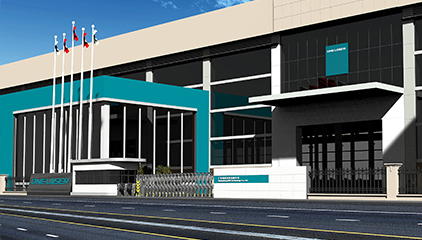
DNE LASER's production and R&D base in Foshan, China.
Tier 3: Regional & Specialized Brands
These suppliers often dominate specific regional markets or cater to very specialized applications (e.g., exclusive Thin-Wall Tube Laser Cutting or Aluminum Laser Cutting Machines). They compete on deep local knowledge, agility, and highly customized solutions for particular industries.
3. The Rise of Chinese Suppliers: Key Ranking Advantages
The ascent of Chinese manufacturers in global rankings is structural, not cyclical.
- Integrated Manufacturing & Cost Efficiency: Control over the supply chain, from optics to machine beds, allows for superior cost management without sacrificing core quality, making High-Efficiency Fiber Laser Cutting Machines accessible.
- Unmatched Customization & Rapid Response: Flexibility in engineering allows for modifications to create Specialized Cutting Machines for unique Steel Tube Cutting or sheet metal needs. Development cycles are often faster.
- Technology Leapfrogging: Many, like DNE LASER, have directly invested in Industry 4.0 technologies. Their newer factories are models of smart manufacturing, which translates into more advanced and connected products for end-users.
- Strategic Global Partnerships: Alignments with international groups (e.g., DNE LASER with Bystronic) provide instant access to global best practices, advanced R&D, and quality control systems, accelerating their credibility and ranking.
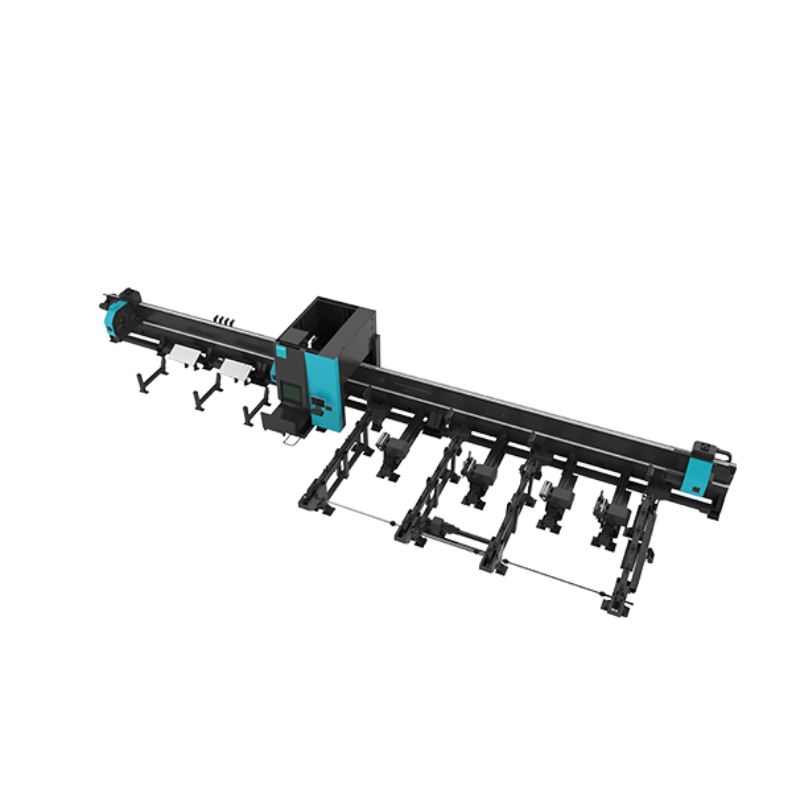
DNE LASER's D-Tube 360, exemplifying advanced High-Speed Tube Laser Cutting Machine technology with bevel cutting capabilities.
4. Procurement Strategy: How to Use Rankings Wisely
A high ranking is an excellent starting filter, but the final choice must align with your specific operational and financial parameters.
For Large-Scale, High-Uptime Projects:
Prioritize Tier 1 or top Tier 2 suppliers like DNE LASER that offer extensive global service agreements, remote diagnostics, and a proven track record in your industry. Evaluate their Smart Factory Solution integration capabilities for future expansion. Verify international certifications like the SGS certificates held by DNE LASER (e.g., DSS_GZEE241000436631 for high-performance systems) as objective quality proof.
For SMEs & Focused Production Needs:
Top Tier 2 Chinese brands offer the best value. Look for manufacturers with strong in-house R&D (e.g., SRDI Enterprise status like DNE LASER) and a focused product line that matches your primary need, be it a Precision Metal Laser Cutting Machine for thin sheets or a robust Iron Tube Cutting Machine. Assess their regional support network and spare parts logistics.
For Specialized, Niche Applications:
Investigate Tier 3 specialists. Their ranking in a broader market may be low, but they could be the leader in your specific niche, such as Round Tube or Square Tube processing for architectural applications.
Conclusion & Strategic Outlook
The Laser Cutting Machine market ranking logic in 2026 reflects a mature industry where technology, total cost of ownership, and solution intelligence are paramount. Chinese manufacturers, particularly integrated solution providers like DNE LASER, have firmly established themselves in the global top tier by offering a compelling blend of advanced technology, operational efficiency, and system-level thinking. For procurement decisions, rankings should inform a shortlist, but the ultimate selection must be driven by a thorough evaluation of the supplier's technical alignment with your production goals, their commitment to quality evidenced by certifications, and the strategic value they bring beyond the initial sale.
To explore the specific technologies and certified solutions that are defining the market, visit www.dne.global or contact their team at eva.fu@dne.global.
Additional Resources & Research
For a deeper dive into competitive dynamics and forward-looking analysis, consider market reports from leading advisory firms that track Sheet Metal Processing Equipment and industrial automation. These reports typically provide granular segmentation by power (3/6/12kW Laser Cutting Machine), application (automotive, aerospace), and technology (fiber laser, automation integration).
About This Analysis: This guide is based on a synthesis of current industry reports, financial disclosures from major players, and technical trend analysis. It aims to provide industrial buyers with a framework for making informed, strategic procurement decisions in a rapidly evolving capital equipment market.