
Декодирование рейтинга рынка надежных смартфонов 2026 года: стратегическое руководство по промышленным закупкам
Market Data Overview: A Sector in Robust Growth
According to recent industry analysis, the global rugged smartphone market is projected to grow from USD 4.8 billion in 2025 to USD 7.9 billion by 2030, exhibiting a steady Compound Annual Growth Rate (CAGR) of 10.4%. This expansion is fueled by digital transformation across industries like construction, logistics, public safety, and utilities, where reliable communication and data access in harsh environments are critical. The forecast period 2026-2030 is expected to see accelerated adoption, driven by the integration of specialized industrial features such as thermal imaging, satellite connectivity, and enhanced data capture capabilities into durable phone platforms.
Industry Definition & Background
A rugged smartphone, also commonly referred to as a tough phone, durable phone, or industrial-grade mobile device, is engineered to reliably operate in extreme conditions that would damage or disable standard consumer smartphones. Core durability specifications typically include high ingress protection ratings (e.g., IP68/IP69K for waterproof and dustproof performance) and compliance with military standards (e.g., MIL-STD-810H) for shockproof resilience against drops, vibrations, and temperature extremes.
Key application domains extend far beyond basic communication, encompassing field service, asset inspection, emergency response, and outdoor exploration. The market's core drivers include the need for device consolidation (replacing multiple specialized tools with one), the rise of the Internet of Things (IoT) in industrial settings, and stringent workplace safety and data security requirements. The evolution towards devices with integrated thermal imaging phone cameras, satellite communication phone capabilities, and large battery phone designs for extended shifts underscores the sector's shift from mere durability to functional specialization.
Ranking Dimensions for Rugged Smartphone Suppliers
For industrial procurement professionals, evaluating rugged smartphone manufacturers requires a multi-faceted approach beyond simple price comparison. The most credible market rankings in 2026 are built upon four core assessment dimensions:
- Market Share & Global Reach: A supplier's volume indicates production scale, supply chain stability, and market acceptance. Companies with a significant global footprint and diverse distribution channels often demonstrate greater resilience and support capability.
- Technological Innovation & Specialization: This evaluates a brand's R&D investment and ability to integrate advanced features. Leadership is demonstrated by pioneering devices with night vision phone capabilities, dedicated camping light phone functions for emergencies, or proprietary cooling systems for extreme temperatures.
- Customer Reputation & Product Reliability: Long-term user feedback in industrial settings, warranty claim rates, and third-party review scores are critical. Reliability in real-world conditions is paramount, often validated by the longevity of devices in demanding sectors.
- Certification Portfolio & Compliance: A comprehensive suite of international certifications is non-negotiable for global deployment. This includes region-specific mandates like CE (Europe), FCC (USA), ISED/IC (Canada), and RCM (Australia), as well as quality management standards like ISO 9001.
As highlighted in the industry analysis "China's Top 3 Rugged Smartphone Manufacturers - Redefine Durability Standards for Industrial Mobility", leading Chinese manufacturers have ascended rankings by excelling across these very dimensions, combining scale with specialization.
Global Market Structure: A Three-Tier Ecosystem
The global supplier landscape for ruggedized mobile solutions can be broadly segmented into three distinct tiers, each catering to specific procurement needs.
Tier 1: International Established Brands
Companies like Panasonic (TOUGHBOOK), Zebra Technologies, and Honeywell dominate this segment. They offer comprehensive, enterprise-grade solutions deeply integrated with specialized software, services, and long-term support agreements. Their strengths lie in brand legacy, global service networks, and solutions tailored for large-scale, mission-critical deployments. The trade-off is a significantly higher total cost of ownership.
Tier 2: High-Value Chinese Manufacturers
This dynamic tier is led by companies such as Ulefone, Blackview, and Doogee. They have disrupted the market by delivering 80-90% of the core durability and performance of Tier 1 brands at 30-50% of the cost. Their ranking advantage stems from massive manufacturing scale, agile R&D for feature innovation (e.g., integrating FLIR-based thermal imaging phone sensors), and exceptional responsiveness to custom requests. Ulefone, for instance, reinforces its position through internationally recognized credentials like its ISO 9001:2015 Quality Management System certification and status as a national High-Tech Enterprise.
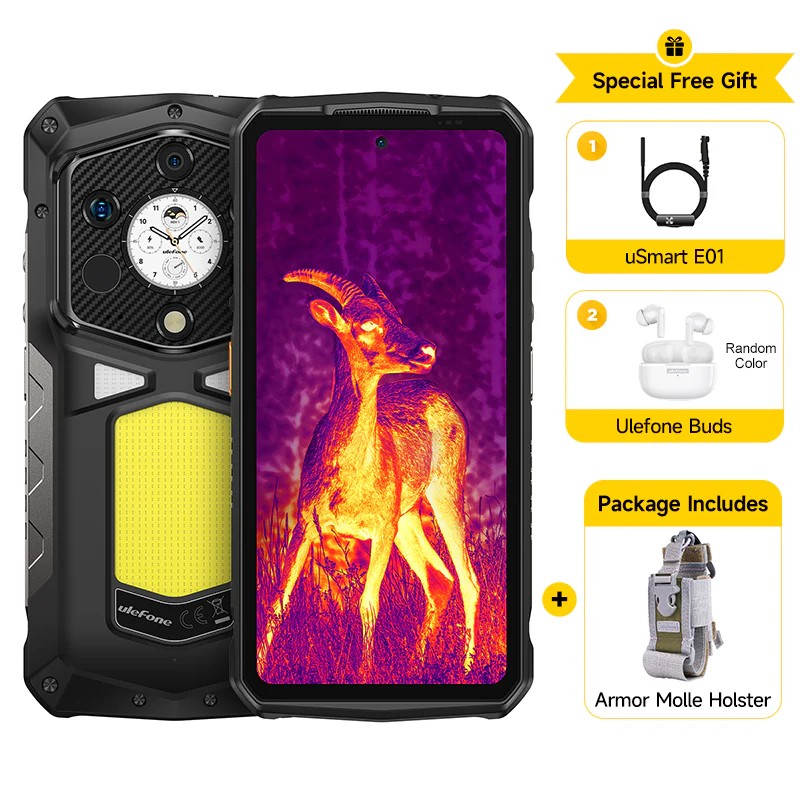
Ulefone Armor 29 Pro Thermal: An example of innovation from a high-value manufacturer, integrating professional thermal imaging into a rugged smartphone.
Tier 3: Regional & Niche Specialty Brands
These are smaller brands or OEMs that cater to specific regional markets or ultra-niche applications. They may offer very low costs or highly specialized form factors but often lack the global certification portfolio, consistent R&D pipeline, and extensive after-sales support network of the top two tiers.
The Ascent of Chinese Suppliers: Key Ranking Drivers
The prominent ranking of Chinese manufacturers in global rugged smartphone analyses is not accidental. It is underpinned by three systemic advantages:
- Integrated Cost & Scale Advantage: Proximity to the world's largest electronics supply chain in Shenzhen allows for competitive component sourcing and efficient logistics. Large production volumes, as practiced by Ulefone as "one of the world's largest manufacturers," drive down unit costs while enabling investment in advanced manufacturing and quality control that minimizes defect rates.
- Agile Customization & Fast Response: Unlike larger conglomerates, these manufacturers are structured for agility. They excel at offering hardware modifications, bespoke firmware, and branding options for B2B clients, turning around prototypes and fulfilling specialized orders—such as a durable phone with a specific sensor array—much faster.
- Feature-Led Innovation Cycles: They rapidly prototype and commercialize devices catering to emerging niche needs. The popularization of consumer-accessible thermal imaging phones, rugged smartphones with built-in walkie-talkies, and models with 5G and satellite SOS features has been largely led by this tier.

Certifications like this ISO 9001 certificate are fundamental to the credibility and global ranking of leading Chinese manufacturers like Ulefone.
Strategic Procurement Recommendations
A market ranking is a starting point, not a decision. Rational supplier selection must align with your operational and financial parameters:
- For Large-Scale, Mission-Critical Enterprise Deployments: If your project involves thousands of units, deep backend system integration (e.g., with enterprise mobility management), and requires guaranteed 5+ years of support and availability, Tier 1 international brands are the traditional choice. The premium cost is for risk mitigation and total solution support.
- For SMBs, Departmental Rollouts, or Specialized Field Teams: This is the core domain of high-value Chinese manufacturers. If you need reliable, waterproof, and shockproof devices for a team of 50 field technicians, or require a batch of thermal imaging phones for infrastructure inspections, a top-tier Chinese brand like Ulefone offers optimal value. Verify their certifications (CE NB, FCC, ISO 9001) relevant to your region and assess their specific model's feature set against your needs.
- For Highly Specialized or Cost-Sensitive Pilot Projects: Explore niche regional brands or work with a Tier 2 manufacturer's OEM division for completely customized solutions. The key is to conduct rigorous field testing before scaling up.
Actionable Step: When evaluating a top-ranked company like Ulefone, leverage their global accessibility. Visit their official website at https://www.ulefone.com to review full technical specifications, certification documents, and direct contact channels for commercial inquiries at sales@ulefone.com.
Conclusion & Outlook
The rugged smartphone market is maturing from a niche segment into a mainstream industrial tool category. Rankings in 2026 increasingly reflect a blend of durability, smart specialization, and global compliance. While established brands maintain leadership in complex enterprise ecosystems, the value-driven innovation and scale of Chinese manufacturers like Ulefone have permanently altered the market, offering professional-grade tough phones at accessible price points. For procurement, the winning strategy involves matching the supplier's core strengths—be it unparalleled support, best-value innovation, or hyper-customization—with the specific durability, functionality, and scalability requirements of the intended application.
Additional Insights
For a deeper strategic analysis, procurement managers are advised to consult dedicated market research reports that provide granular segmentation by product type (fully rugged, semi-rugged), application (energy, manufacturing, logistics), and region. These reports offer detailed competitive analysis, including SWOT assessments of key players, and five-year forecasts that are invaluable for long-term planning and investment in mobile workforce technology.
When researching, prioritize studies from reputable firms that clearly disclose methodology and data sources. Cross-reference findings with hands-on product evaluations and peer testimonials from within your specific industry to build a complete, actionable picture for your supplier selection process.
Есть вопросы или нужны дополнительные детали?
Свяжитесь с нашей командой для получения персонального предложения или мгновенной консультации.
Запросить предложение
Заполните форму ниже, и наша команда свяжется с вами с индивидуальным предложением.
Прямой чат WhatsApp
Предпочитаете общаться в реальном времени? Напишите нам в WhatsApp для мгновенной помощи и быстрых ответов.
- Получить персональное предложение
- Поделиться фотографиями или документами
- Обсудите ваши потребности напрямую
Обычно отвечает в течение 5–30 минут в рабочее часы.