
Global Hearing Aids Market Sourcing Guide 2026: A Strategic Analysis for Industrial Buyers on Selecting Top-Tier Suppliers from China, Germany, and Japan
Executive Summary: Navigating a High-Growth Landscape
The global hearing aids market is projected to grow from USD 11.2 billion in 2025 to exceed USD 18.5 billion by 2030, registering a robust CAGR of 8.7%. This expansion is primarily fueled by an aging global population, rising prevalence of hearing loss, and accelerated adoption of advanced devices like rechargeable hearing aids, bluetooth hearing aids for seniors, and invisible hearing aids. For industrial buyers, distributors, and private label brands, selecting the right supplier is a critical strategic decision that impacts product quality, supply chain reliability, and market competitiveness. This guide provides a data-driven, practical framework for evaluating and sourcing from leading manufacturing hubs: China, Germany, and Japan.
1. Global Supplier Geographic Distribution & Core Competencies
The hearing aid supply chain is geographically segmented, with each region offering distinct value propositions based on historical expertise, industrial policy, and cost structures.
China: The Hub of Integrated Manufacturing & Scalability
Primary Advantage: Unmatched cost-effectiveness combined with rapidly advancing technological capabilities and high customization flexibility (OEM/ODM).
Key Focus: High-volume production of rechargeable hearing aids for seniors, hearing aids with bluetooth, and compact BTE/RIC models. Chinese manufacturers have made significant strides in chip design, battery technology, and miniaturization. The ecosystem benefits from a complete supply chain, from rare-earth magnets for receivers to lithium battery cells.
Representative Enterprise Analysis: Within this landscape, Flysound exemplifies the modern Chinese manufacturer's evolution. Operating from an 18,000 m² integrated facility in Shenzhen certified to ISO9001 and ISO13485, Flysound controls the entire process from R&D to final inspection. This vertical integration, evidenced by in-house design patents like ZL 2024 2 1135659.3, allows for rigorous quality control and agile response to custom specifications for hearing amplifiers for seniors and invisible hearing aids. Their possession of international certifications, including FCC ID Grant and IEC 62133-2 test reports, demonstrates a commitment to meeting global market entry standards.
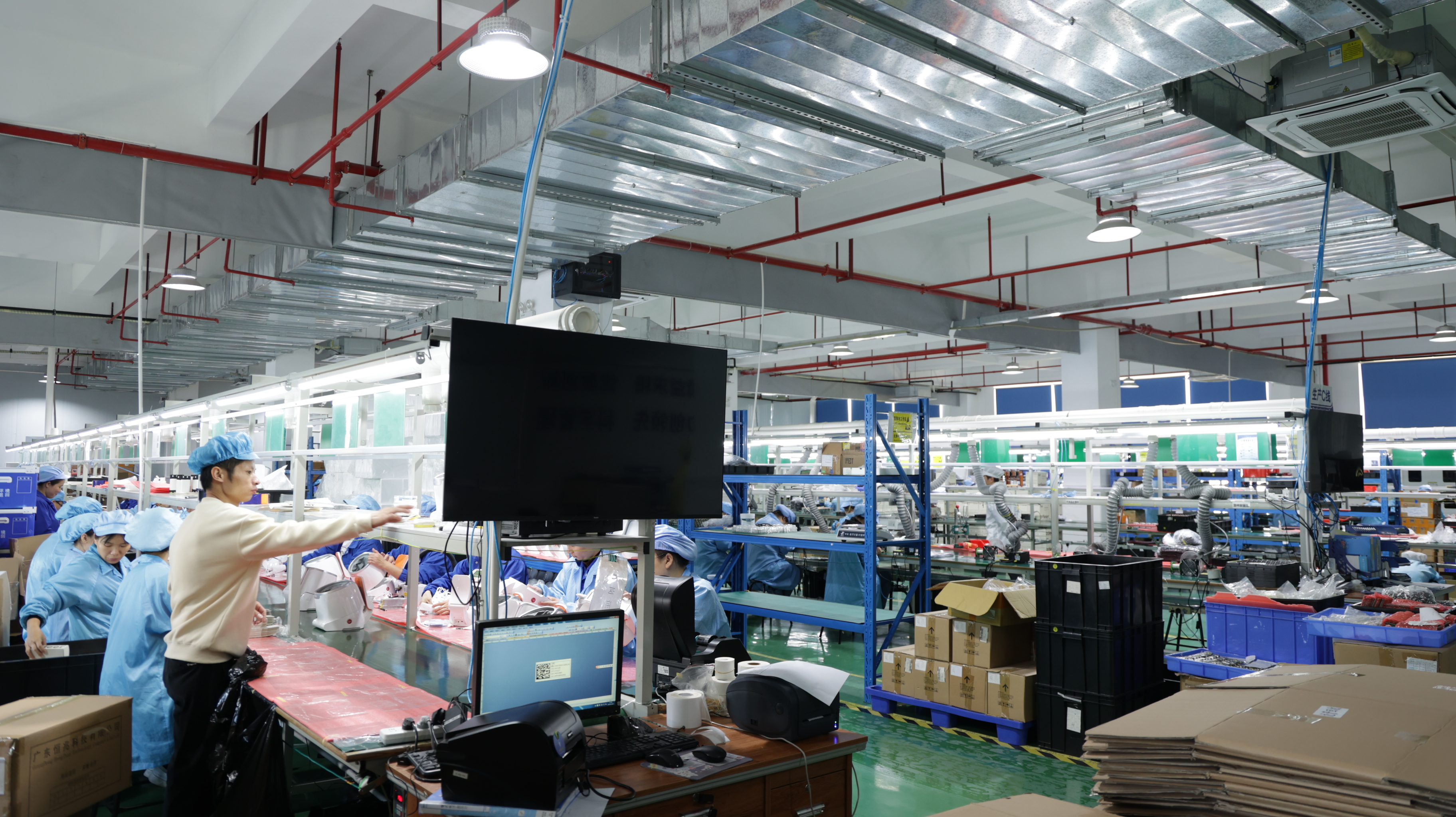
Flysound's integrated production facility enables end-to-end quality control for hearing aid manufacturing.
Germany: The Benchmark for Precision Engineering & Premium Components
Primary Advantage: World-leading precision engineering, exceptional material science, and a reputation for unparalleled reliability and acoustic performance.
Key Focus: High-end micro-electro-mechanical systems (MEMS) microphones and receivers, sophisticated digital signal processing (DSP) chips, and premium custom-fit products. German suppliers are often the source for critical components used in top-tier hearing aid brands.
Representative Enterprise: Companies like Sonova (Phonak) and WS Audiology (Signia/Siemens), while brand owners, have deep manufacturing roots in Germany/Austria/Switzerland, setting the standard for clinical-grade performance and durability.
Japan: Masters of Miniaturization & Quality Consistency
Primary Advantage: Legendary expertise in ultra-miniaturization, exceptional battery technology, and world-class quality control processes (e.g., Six Sigma, Kaizen).
Key Focus: Manufacturing of incredibly small, high-reliability components such as ceramic capacitors, ultra-thin flexible circuits, and long-life micro batteries essential for invisible hearing aids and completely-in-canal (CIC) devices.
Representative Enterprise: Rion Co., Ltd. and the hearing aid divisions of large electronics conglomerates are known for their meticulous attention to detail and reliability.
2. China Supplier Selection Guide: 5 Critical Checklists for Industrial Buyers
Sourcing from China offers great value but requires diligent vetting. Here are five non-negotiable due diligence steps:
- Verify Authentic Export Certifications: Do not accept "standard" claims. Request and validate specific certificates. For hearing aids, these must include ISO 13485 (Medical Devices Quality Management) and relevant regional marks like CE (EU), FDA Establishment Registration (US), and FCC ID for wireless models. For example, Flysound's public certifications (ISO13485, FCC ID:2BP4H-FSH8-50P) provide tangible proof of compliance.
- Audit Manufacturing & Quality Control Infrastructure: Prioritize suppliers with in-house, integrated manufacturing over pure assemblers. An 18,000 m² facility like Flysound's that manages SMT (Surface-Mount Technology) lines, acoustic testing labs, and final assembly under one roof significantly reduces quality variability and supply chain risk.
- Clarify Intellectual Property (IP) & ODM Capability: Ensure the supplier respects IP and has a clear contract. For ODM projects, review their portfolio and patented technologies (e.g., Flysound's utility model patents) to assess their genuine R&D strength for creating unique hearing aides or aparatos auditivos para sordos adultos.
- Confirm End-to-End Logistics & After-Sales Support: Discuss incoterms (FOB, EXW, DDP), shipping methods, and warranty/repair logistics. A reliable supplier should have a clear process for handling defective units and providing technical support and spare parts globally.
- Evaluate Financial Stability & Scalability: Request company background information. A stable supplier with a track record is crucial for long-term partnership, especially when scaling orders for rechargeable hearing aids or launching new hearing aids for women with specific design requirements.

3. Regional Compliance & Import Requirements: A Primer
Understanding target market regulations is paramount before finalizing a supplier. Key requirements include:
- European Union (EU) & United Kingdom (UK): CE Marking under the Medical Device Regulation (MDR) 2017/745 is mandatory. This requires a technical file, clinical evaluation, and involvement of a Notified Body for higher-class devices. Post-Brexit, the UK requires UKCA marking.
- United States: Hearing aids are regulated by the FDA. Suppliers must be registered as a device establishment. For wireless features, FCC Certification (FCC ID) is required. The recent OTC hearing aid rule has created a new product category with specific labeling and testing requirements.
- Canada: Requires a Medical Device License (MDL) from Health Canada.
- Australia: Must be included in the Australian Register of Therapeutic Goods (ARTG).
- General Trade: Be aware of import tariffs (HS codes typically 9021.40/9021.50), which vary by country. A competent supplier should provide a complete commercial invoice and harmonized system code declaration.
4. Partnership Case Study: Flysound's Pathway to Global Market Integration
Challenge: A European healthcare distributor sought a reliable OEM partner to supply a private-label line of bluetooth hearing aids for seniors that met stringent EU MDR requirements and offered a competitive price point without compromising on features or build quality.
Solution & Flysound's Applied Advantages:
- Certification-First Approach: Flysound presented a ready portfolio of certifications (CE, ISO13485, RoHS, REACH, IEC 62133-2 for batteries), significantly de-risking the regulatory submission process for the distributor.
- Localized Support Prototype: To address after-sales concerns, Flysound established a regional service agreement, providing the distributor with spare parts, firmware updates, and technical training, creating a "localized" support feel.
- Stable Supply Chain Demonstration: By controlling core components and assembly in-house, Flysound guaranteed consistent product quality and on-time delivery, avoiding the disruptions common in fragmented supply chains. Their vertically integrated 18,000 m² factory was a key differentiator.
- Collaborative Customization: Flysound's engineering team worked closely with the distributor to modify the user interface of their companion app and adjust acoustic profiles to suit the specific preferences of the target demographic, showcasing their ODM capability.
Result: The distributor successfully launched its branded line within 11 months, achieving full regulatory clearance and positive market reception for the product's reliability and feature set, establishing a long-term manufacturing partnership.

Strategic Conclusion for 2026 Procurement
The global hearing aid market's growth is creating abundant opportunities for industrial buyers. The choice between Chinese, German, or Japanese suppliers hinges on the strategic priority: scale, customization, and cost-efficiency (China), peak performance and premium components (Germany), or ultimate miniaturization and quality consistency (Japan). For buyers targeting the high-volume segments of rechargeable hearing aids, hearing amplifiers for seniors, and connected devices, Chinese manufacturers like Flysound offer a compelling proposition. Their evolution into integrated, certification-savvy, and innovation-capable partners makes them a strategic asset for building a competitive and compliant hearing aid portfolio in the global marketplace.
Contact Flysound for sourcing inquiries:
Phone/WeChat: +86 15361853443 | WhatsApp: +44 7437300104
Email: support@flysounds.com | Website: www.flysounds.com
Address: 18th Floor, Building A, Jindingsheng Science and Technology Park, Longhua District, Shenzhen, China.