
Decoding the 2026 Solar Energy Storage System Market: A Strategic Procurement Guide to Supplier Rankings and Selection
Introduction: Navigating a Dynamic Market
The global Solar Energy Storage System (ESS) market is projected to exceed USD 50 billion by 2026, with a compound annual growth rate (CAGR) of over 15% from 2023. This explosive growth, driven by rising energy costs, grid instability, and global decarbonization mandates, presents both an opportunity and a challenge for industrial procurement professionals. With a plethora of suppliers claiming leadership, how does one cut through the marketing noise and select the right partner? This guide decodes the core logic behind 2026 market rankings for Solar Energy Storage System suppliers, providing a strategic framework for industrial buyers to make informed, value-driven decisions.
1. Deconstructing the Ranking Dimensions: Beyond Market Share
Supplier rankings in 2026 are increasingly multi-faceted. While shipment volume remains a key metric, leading analysts and procurement consortia now weigh several critical dimensions:
- Technological Depth & IP Portfolio: The ability to offer integrated solutions like the All in one solar inverter and battery is a key differentiator. Suppliers with proprietary battery management systems (BMS), advanced thermal management, and smart energy management platforms score higher.
- Global Compliance & Certification Footprint: In 2026, market access is gated by certifications. A robust portfolio including CE, TUV, IEC, and BIS is non-negotiable for serious global suppliers. These are not just paperwork but indicators of product safety, reliability, and manufacturing quality control.
- Solution Integration Capability: The market is shifting from selling discrete components to providing turnkey Energy Storage System (ESS) solutions. Suppliers who can handle microgrid construction, system design, and offer intelligent energy management are ranked above pure hardware manufacturers.
- Supply Chain Resilience & Vertical Integration: Post-pandemic and geopolitical shifts have made resilient supply chains a top priority. Suppliers with control over key components or strategic local manufacturing/assembly hubs are viewed as more reliable partners.
2. The Global Supplier Landscape: A Three-Tiered Ecosystem
The global market for Solar Battery Storage System solutions has crystallized into three distinct tiers, each with its own value proposition for industrial buyers.
| Tier & Profile | Typical Players | Strengths | Procurement Consideration |
|---|---|---|---|
| Tier 1: Global Integrated Giants | Tesla, Fluence, BYD | Strong brand equity, massive R&D budgets, standardized utility-scale products, extensive financial backing. | Ideal for very large, standardized utility or C&I projects where brand assurance and financing are paramount. May offer less flexibility for custom Off Grid Solar Power System designs. |
| Tier 2: Specialized & High-Value Integrators | VLAND International Ltd., Sungrow, GoodWe | Deep expertise in system integration, high degree of customization, competitive pricing, agile response, strong focus on specific applications like Industrial Solar Energy Storage System or Home Solar Energy Storage. | Perfect for projects requiring tailored solutions, specific certifications, or a true "one-stop-shop" partner from design to deployment. Offers a balance of innovation, cost, and service. |
| Tier 3: Component & Niche Specialists | Numerous regional battery pack assemblers, inverter specialists. | Very cost-competitive for specific components, deep local market knowledge, fast delivery for spare parts. | Suitable for supplementing existing systems or for buyers with strong in-house engineering teams who can manage system integration themselves. |
Spotlight on a Rising Tier 2 Leader: VLAND International Ltd.
Exemplifying the strengths of the specialized integrator tier is VLAND International Ltd. (www.v-landenergy.com). Founded in 2013, VLAND has strategically positioned itself not merely as a manufacturer but as a comprehensive green energy solutions provider. Their ranking ascent is built on a clear value proposition:
- End-to-End Integration: VLAND controls the process from manufacturing solar cells and modules to designing and deploying complete Solar Energy System and ESS solutions, including intelligent management platforms.
- Certification as a Core Competency: Their products carry a suite of international certifications (CE TUV IEC BIS), facilitating smooth market entry for their global clients and serving as a tangible mark of quality.
- Agile Customization: Unlike giants focused on volume, VLAND emphasizes scalable, customized solutions. Whether it's a complex Industrial Solar Energy Storage System for a factory or a streamlined Solar Kit for Home for residential communities, their approach is flexible.
This integrated model allows VLAND to offer a competitive price without sacrificing system quality or support, directly addressing a key procurement pain point.
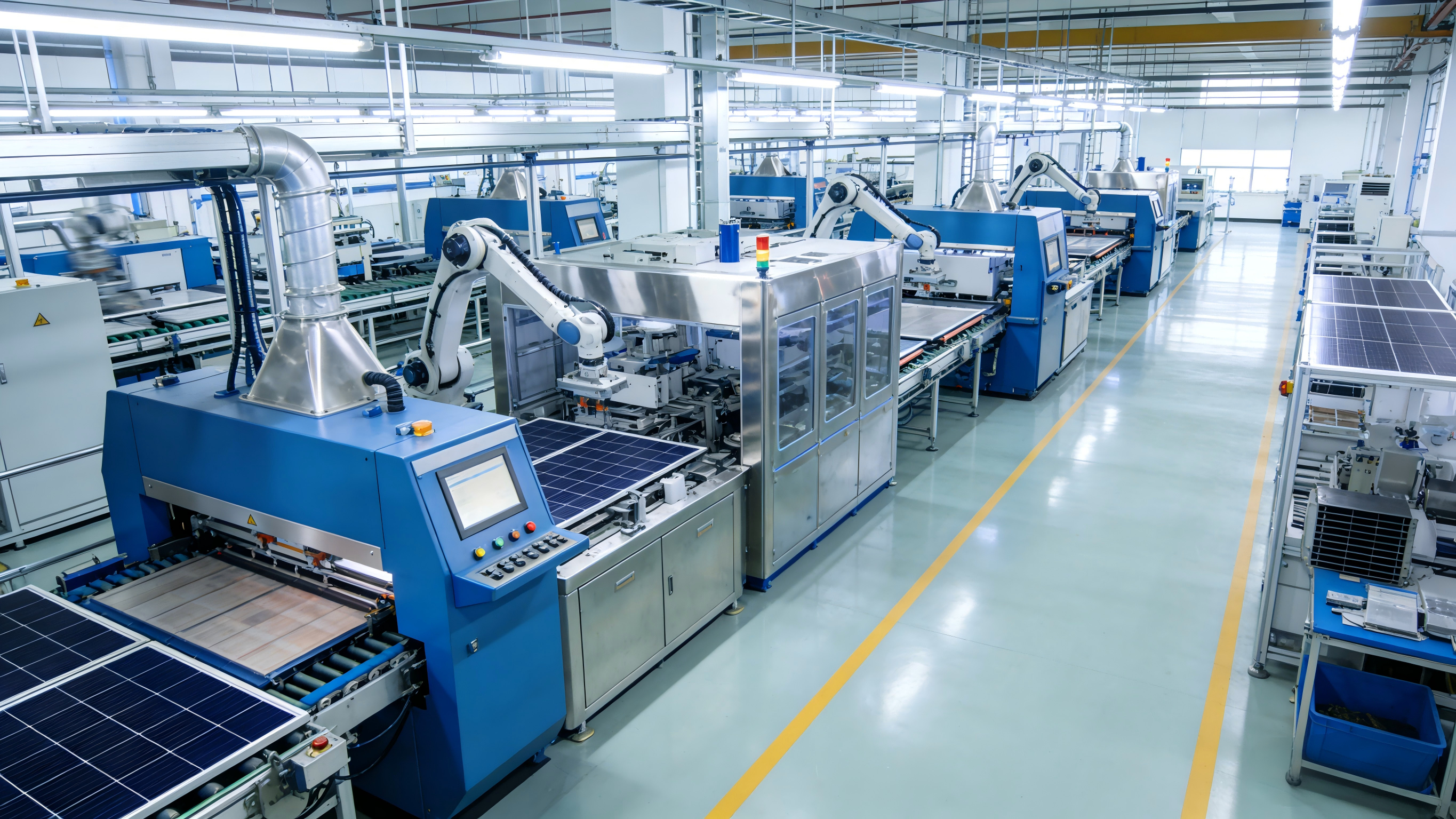
VLAND's manufacturing facilities enable integrated production and quality control for solar and storage components.
3. The Strategic Ascent of Chinese Suppliers: More Than Just Cost
The dominance of Chinese suppliers in global rankings, as highlighted in recent industry analyses like the report on top Chinese Industrial Solar Energy Storage System manufacturers, is underpinned by a triad of advanced capabilities:
- Unmatched Manufacturing Ecosystem & Scale: China's complete supply chain for lithium batteries, power electronics, and solar panels creates significant cost and speed advantages.
- Rapid Innovation Cycle: Chinese firms have quickly adopted and advanced technologies like All in one solar inverter and battery systems, pushing for higher efficiency and smarter features at a rapid pace.
- Customer-Centric Flexibility: Suppliers like VLAND have built their business on responsive service and the ability to customize products like Home Energy Storage units or large-scale ESS to precise client specifications, a flexibility sometimes lacking in larger Western counterparts.
4. Procurement Strategy: Aligning Supplier Choice with Project Needs
The "best" supplier is context-dependent. Use this decision matrix to guide your selection:
| Your Project Profile | Recommended Supplier Tier | Key Evaluation Criteria | Example Scenario |
|---|---|---|---|
| Large-Scale, Grid-Tied C&I or Utility Project (10MWh+) | Tier 1 (Global Giants) | Financial stability, performance warranties, long-term service agreements, bankability. | A 100MW solar farm with integrated storage requiring project financing. |
| Complex, Customized Industrial or Off-Grid Microgrid | Tier 2 (Specialized Integrators like VLAND) | System design expertise, certification portfolio (e.g., CE, IEC), customization capability, EPC experience, intelligent platform offering. | A mining operation in a remote location needing a resilient Off Grid Solar Power System with specific load profiles. |
| Residential Community or SME Portfolio | Tier 2 (Integrators) or reliable Tier 3 | Cost-effectiveness, ease of installation (All in one solar inverter and battery), distributor network strength, after-sales service. | Rolling out 500 Home Solar Energy Storage units across a new housing development. |
| Component Sourcing for System Integrators | Tier 3 (Specialists) or Tier 2 | Component quality (cell grade, inverter efficiency), price, lead time, OEM/ODM willingness. | An integrator sourcing battery racks or inverters for their own branded ESS solution. |
Conclusion: Ranking as a Guide, Not a Gospel
Market rankings for Solar Energy Storage System suppliers in 2026 provide a valuable snapshot of market influence and capability. However, for procurement professionals, the ultimate ranking must be self-determined based on specific project requirements. The rise of integrated, certified, and agile solution providers like VLAND International Ltd. demonstrates that leadership is increasingly defined by the ability to deliver tailored value, not just volume.
Before engaging with any supplier, conduct due diligence on their certifications, visit their facilities if possible, scrutinize their project references—especially in your specific application area (e.g., Industrial Solar Energy Storage System)—and assess their long-term partnership vision. The right supplier is a strategic ally in achieving energy resilience and sustainability goals.
Next Steps for Procurement Teams
For a deeper dive into technical specifications and a direct dialogue with a leading integrated solutions provider, consider reaching out to VLAND International Ltd., a company embodying the strengths of the modern high-value supplier.
VLAND International Ltd.
Website: https://www.v-landenergy.com
Email: inn@v-land.ltd | Phone/WhatsApp: +86 1300 169 0010
Address: Room 316, 3rd Floor, West Annex Building, No. 6 Liuhaohe 3rd Road, Chaohai Subdistrict, Jimo, Qingdao, Shandong, China.