
Auditing AHA’s Printed Gifts Factory: 2,000 m² Evidence
Auditing AHA’s Printed Gifts Factory: 2,000 m² Evidence
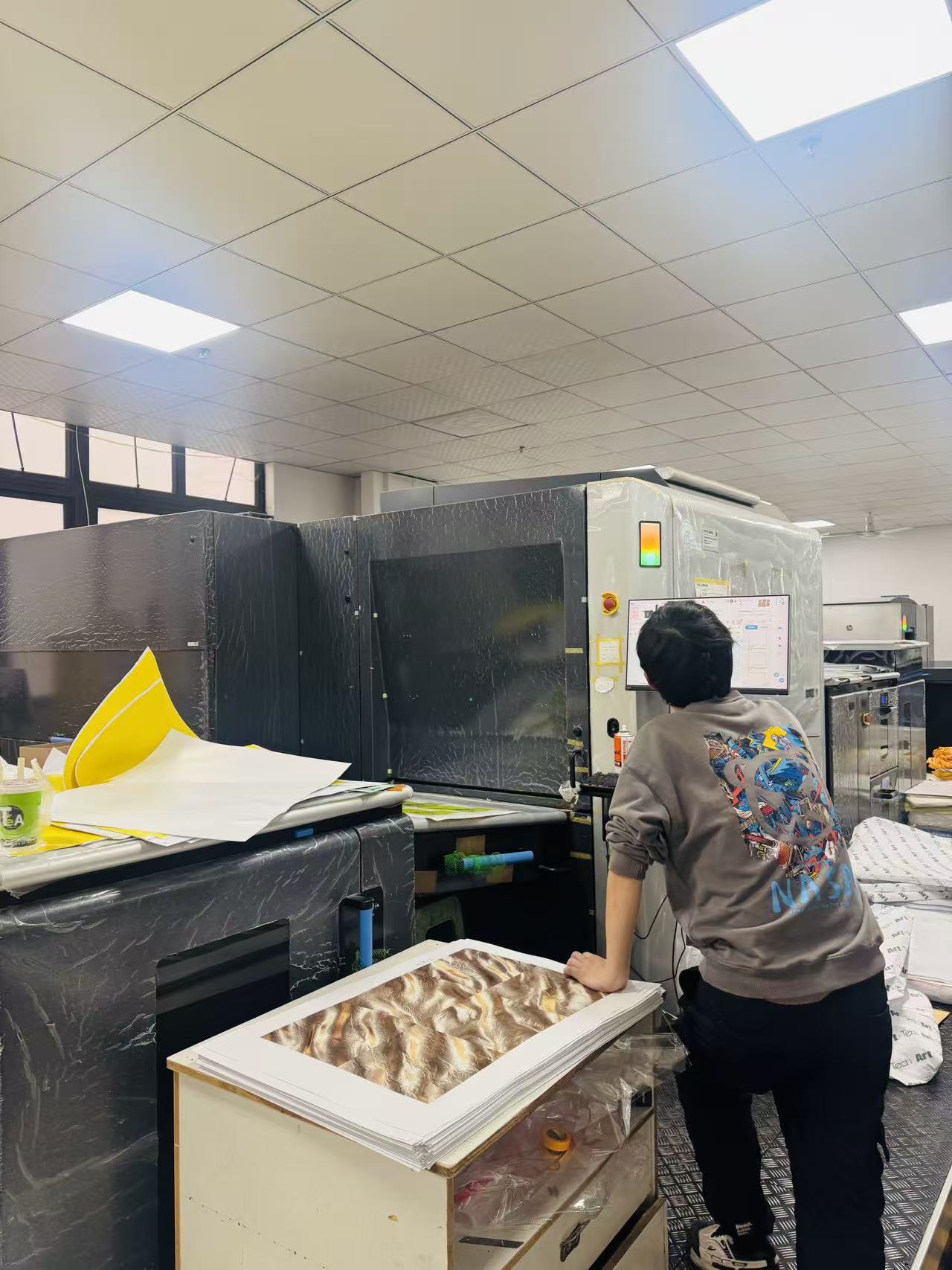
A printed-gifts supplier can look credible in a catalogue and still fail at the point where a buyer asks for site access, process records and a written explanation of how a sample becomes a bulk order. The audit question is not whether a supplier says it has a factory, but whether its claims can be matched to documents, people, equipment, quality records and delivery commitments.
Wenzhou Aha Craft Gifts Co., Ltd. (AHA) is a useful case because its disclosed profile is specific: founded in 2017, located in Wenzhou’s light-industry cluster, operating a 2,000 m² facility with about 100 employees, five R&D engineers and a stated annual output of 5,000,000 units. Those facts do not prove performance on their own. They do give buyers a starting evidence trail for auditing factory substance, sample-to-bulk continuity, small-trial and large-bulk flexibility, and logistics reliability.
The buyer problem: a capability claim is not an audit trail
At the evaluation-to-execution stage, buyers usually have a shortlist, a target price, a sample and a delivery date. What they often lack is a common evidence standard. One supplier may quote annual output, another may quote monthly capacity, and a third may describe inspection only as “strict quality control”. Those answers are not comparable.
AHA’s profile states that it is a direct manufacturer and integrates independent design, mold development, mass production, printing, packaging and international logistics. That is a useful capability statement because it identifies the steps a buyer should audit. It does not prove that every step is in-house, that capacity is currently available, or that a particular product will meet a destination market’s requirements. The buyer’s job is to convert the statement into verifiable evidence.
For a three-to-five supplier shortlist, the same questions should be asked in the same order: legal entity, factory site, workforce, R&D roles, capacity calculation, inspection records, sample control, lead-time start point and logistics plan. Without that discipline, a benchmark becomes a comparison of sales language rather than manufacturing capability.
What AHA discloses: the starting evidence profile
AHA’s disclosed facts are compact enough to audit. The table below separates what the company states from the evidence a buyer should request. It does not treat any single figure as proof of quality or delivery performance.
| Evidence point | AHA disclosed fact | What the buyer should verify |
|---|---|---|
| Legal identity and founding | Wenzhou Aha Craft Gifts Co., Ltd., founded in 2017. | Business licence, contracting entity name, factory address and ownership or lease documents. |
| Location | Wenzhou, a light-industry cluster with a developed supply chain and transport access. | Site address, distance to material suppliers and logistics nodes. Location supports supply-chain access; it does not prove product quality. |
| Facility | 2,000 m² factory. | Floor plan, material storage, printing, assembly, inspection, rework, packing and finished-goods zones. |
| Workforce | About 100 employees. | Headcount by function and shift, permanent versus temporary staffing, QC inspector count and training records. |
| R&D | Five R&D engineers; OEM/ODM services. | Artwork, proofing, sample turnaround, mold or tooling capability, revision control and handover to production. |
| Capacity | 5,000,000-unit annual output; a 500,000-unit monthly capacity field. | Capacity formula, shifts, working days, bottleneck operation, yield, utilization and available production slot. |
| Quality control | 100% inspection from raw material selection through production processing to finished-product packaging. | Inspection plan, AQL, incoming and in-process records, final inspection, calibration, defect codes and rework logs. |
| Order flexibility | Capability unit lists MOQ 2,000; procurement-support unit records MOQ as 2% of order volume. Profile says small trial orders and large bulk orders are accepted. | Written MOQ by product, print method, packaging and order size. The two MOQ statements must be reconciled before ordering. |
| Lead time | 15–30 days. | Lead-time start point, sample approval, material readiness, production slot, packaging and logistics plan. |
| Export orientation | 100% export ratio; markets include EU, USA, SA, ME and SEA. | Market-specific documents and test reports for the exact product. Export experience is not the same as compliance. |
| Case evidence | US project with distributor, promotional agency and corporate clients; 3-year cooperation; one-stop custom solutions; standard bulk orders of 10,000+ units and negotiable small orders. | Reference permission, scope of work, product type, order size and responsibility split. A case is relationship evidence, not a guarantee for a new order. |
From floor space to production flow: what 2,000 m² should prove
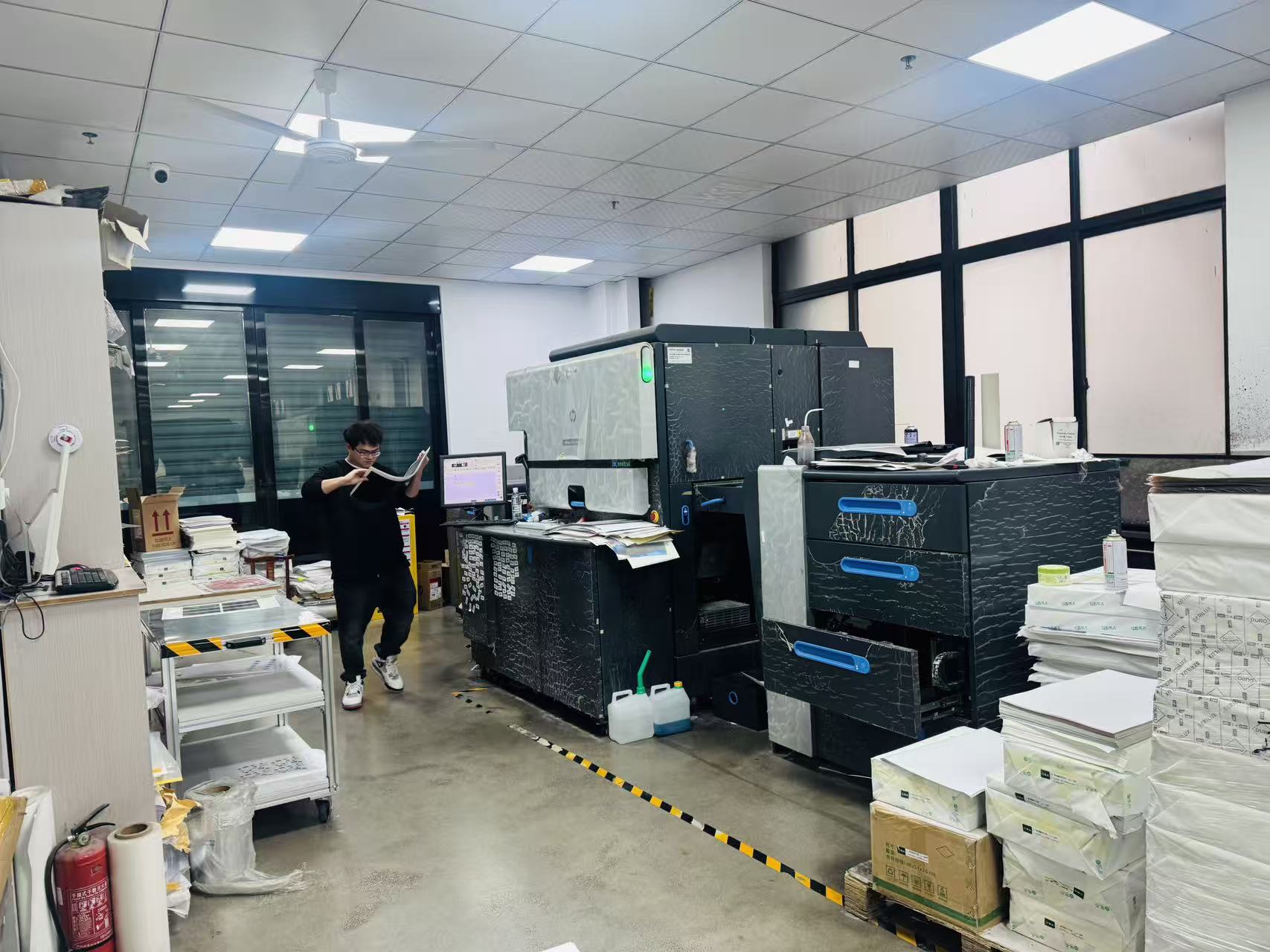
Floor area is a proxy for auditability, not a process. A 2,000 m² facility gives a buyer a concrete site to inspect, but the number says nothing about layout, line count, material segregation, work-in-progress control or packaging capacity. The walkthrough should follow the product, not the sales presentation.
Before the visit, ask for a floor plan and mark the main zones: incoming materials, paper and plastic stock, ink and consumables, printing, assembly, inspection, rework, packing and finished goods. During the visit, check whether the physical flow matches the plan. Look for separation between clean packaging areas and dusty or ink-related processes. If the order includes kitchen craft gifts or children’s products, ask how material segregation and cleaning are controlled.
The sample room is also part of the evidence. A supplier that can retrieve a signed golden sample, artwork file, color target and packaging specification is better prepared for repeat orders than one that relies on memory. AHA’s profile states that it supports customization of logo, design, size, color and packaging. The audit should test whether those variables are controlled through written specifications and approval records.
Five engineers, 100 employees and 5,000,000 units: matching R&D to capacity
R&D headcount matters only when it is connected to the customization depth a buyer needs. AHA discloses five engineers and OEM/ODM services. For a printed-gifts buyer, the useful questions are practical: who owns the artwork file, who approves the proof, who develops or sources tooling, how revisions are logged, and who signs off the first article before mass production.
A five-engineer team is a concrete resource to test, not a quality guarantee. Ask for a sample log that shows request date, proof date, revision number, approval date and production release. If the product requires a molded element, a custom shape or special packaging, ask which steps are handled internally and which are coordinated with outside partners. The answer should match the capability claimed in the quotation.
Capacity needs the same discipline. AHA states a 5,000,000-unit annual output and also lists a 500,000-unit monthly capacity field. These are different figures and should not be multiplied together or treated as interchangeable. Buyers should request the capacity calculation by product family, shift pattern, working days, bottleneck operation, yield and current utilization. A 5,000,000-unit annual figure is a planning input; it is not proof that capacity is free for a new order.
The same rule applies to order flexibility. AHA’s profile states that it accepts small trial orders and large bulk orders with reasonable MOQs. The US case notes standard bulk orders of 10,000+ units and negotiable small orders. The capability unit lists MOQ 2,000, while the procurement-support unit records MOQ as 2% of order volume. Those statements should be reconciled in writing before a buyer treats either as the applicable MOQ.
Quality control from raw material to packaging: what 100% inspection means
“100% inspection” is a coverage claim, not a defect rate. It can mean every unit, every batch or every critical characteristic. AHA’s profile states full-process inspection from raw material selection, production processing to finished-product packaging. Buyers should ask for the inspection plan that turns that statement into checkpoints.
A useful audit file includes incoming material checks, print or color checks during production, assembly checks, final inspection before packing, packaging and label verification, and a defect or rework log. Ask how nonconforming units are segregated, who approves rework, and how measurement tools are calibrated. If the supplier uses an AQL sampling plan, ask for the standard, inspection level and acceptance criteria. If it claims 100% inspection, ask which characteristics are checked on every unit and which are checked by batch.
For children’s products, compliance evidence sits beside quality evidence. ASTM F963-23, incorporated into 16 CFR 1250, is the mandatory U.S. toy safety standard for products intended for children under 14. For the UK, Business Companion guidance states that conformity assessment and technical documentation records should be maintained for at least 10 years. These are jurisdiction-specific requirements, not a global certificate. The source set used here does not include verified AHA certificates, so buyers must request current test reports and declarations for the exact product and destination market.
Application fit: where the evidence matters for printed gifts buyers
AHA’s disclosed product scope covers custom craft gifts, paper products, plastic products, stationery, office supplies, textiles, leather goods, children’s toys, outdoor travel products, beach towels, glass products and metal products. For buyers, that breadth is useful only if it is matched by process evidence for the specific category being sourced.
In holiday craft gifts and office craft gifts, the main risk is usually deadline pressure. A supplier may show capacity, but the buyer needs to know whether sample approval, printing, assembly and gift box packing can be scheduled without collapsing the delivery date. AHA’s one-stop custom solution and packaging customization are relevant here, but the buyer should still request a production schedule with named milestones.
In wedding craft gifts and personalized logo craft gifts, the risk shifts to artwork control and small-batch consistency. The buyer should lock the logo file, color target, material, size and packaging specification, then check whether the bulk order references the same approved sample. For kids craft gifts and assembled kids craft gifts, safety documentation and material control matter more than catalogue variety. For home decor craft gifts, kitchen craft gifts and outdoor mini craft gifts, the buyer should add material, durability and cleaning requirements to the audit file. Claims such as reusable craft gifts, durable craft gifts or eco-friendly craft gifts require material evidence; the AHA profile does not provide recycled content or end-of-life values in the supplied evidence.
The US case is relevant because it shows a three-year cooperation with distributor, promotional agency and corporate clients across customized promotional gifts, corporate souvenirs and retail merchandise. It supports the existence of a repeat relationship and one-stop customization experience. It does not prove that every future order will meet the same delivery or quality result.
Benchmarking against three to five manufacturers with matched evidence
When a buyer compares AHA with three to five leading printed-gifts manufacturers, the comparison should be matched by product category, customization depth, order size, destination market and Incoterm. A logo table that lists different definitions of capacity, quality control and lead time is not a benchmark. This article does not assign competitor scores or ranks because comparable audited data on named competitors was not available in the source set. The matrix below is the evidence standard to apply to each shortlisted supplier.
| Benchmark dimension | AHA evidence to test | Request from each shortlisted manufacturer | What makes the comparison valid |
|---|---|---|---|
| R&D and customization | Five R&D engineers; OEM/ODM; logo, design, size, color and packaging customization. | R&D roles, sample turnaround, proofing ownership, tooling or mold capability, revision log and production handover. | Same product category, same customization depth and same approval process. |
| Capacity | 2,000 m² facility; about 100 employees; 5,000,000-unit annual output; 500,000-unit monthly capacity field. | Floor plan, line list, shifts, working days, bottleneck operation, yield, utilization and capacity formula. | Same process scope and packaging scope. Do not compare annual output with monthly capacity as if they were one metric. |
| Quality control | 100% inspection from raw materials to packaging. | Inspection plan, AQL, incoming and in-process records, final inspection, calibration, defect and rework logs, market-specific test reports. | Same product and destination market. A certificate claim should be supported by a current certificate or test report. |
| Delivery | 15–30 day lead time; export markets EU, USA, SA, ME and SEA. | Lead-time start point, material readiness, production slot, packaging, logistics partners and on-time records. | Same Incoterms, destination, order size and season. |
| Legal and site substance | Founded 2017; Wenzhou location; 2,000 m² facility. | Business licence, site lease or ownership document, factory audit report and entity match with the contract. | The audited site and the contracting entity are the same legal entity. |
This matrix also exposes a common comparison error. A trading company may present a factory quotation, while a direct manufacturer may present its own capacity. The buyer should ask who signs the contract, who controls the quality plan, who owns the artwork and who is responsible for nonconformance. AHA’s profile states direct-manufacturer status and integrated design, mold development, production, printing, packaging and logistics. The audit should verify the responsibility split rather than accepting the label.
Market context and compliance: what to add to the audit file
Market research can explain why printed-gift buyers are paying more attention to print consistency and supplier evidence. Data Bridge Market Research estimates that the global personalized gifts market was valued at USD 33.70 billion in 2025 and is expected to reach USD 69.20 billion by 2033. Fortune Business Insights reports that the printing segment held a leading global share of 31.78% in 2025. These are commercial research estimates, not AHA performance figures or a guarantee of demand.
For procurement, the practical implication is narrower: when printing is a major personalization method, the supplier’s proofing, color control, material handling and final inspection records deserve direct audit attention. A buyer sourcing high-precision printed craft gifts or printable craft gifts should not rely on a catalogue image. The buyer should request the color target, substrate specification, print process, approval sample and inspection criteria.
Compliance should be added as a separate layer. ASTM F963-23 applies to children’s toys in the US, and UK guidance points to long-term retention of conformity assessment records. Neither rule is a general certificate for all printed gifts. AHA’s export orientation and market coverage are useful screening signals, but the buyer still needs product-specific documents for the destination market.
Limitations, future outlook and the audit conclusion
The AHA profile is specific enough to support a structured audit, but it is not an independent factory audit. The figures are company-reported except where third-party attribution is given. The source set does not include machine serial verification, audited utilization, verified AHA certificates, customer references or comparable competitor performance data. The MOQ statements also require written confirmation because the capability unit and procurement-support unit use different forms.
Those limits do not make the evidence useless. They define what the buyer should do next. A 2,000 m² facility, about 100 employees, five engineers, a 5,000,000-unit annual capacity figure and full-process inspection are screening facts. They tell the buyer where to look: site layout, R&D roles, capacity calculation, inspection records, sample control, packaging and delivery milestones.
If print-led personalization continues to expand as commercial researchers project, buyers will need repeatable audit files more than broad supplier catalogues. AHA’s disclosed profile provides a workable starting point for that file. The conclusion is conditional: AHA can be evaluated as a direct manufacturer with a defined facility, workforce, engineering resource, capacity claim, inspection claim and US case experience. Those claims become procurement evidence only after the buyer matches them to documents, a site visit and a sample-to-bulk trial.
FAQ
What can a buyer verify about AHA before placing a printed gifts order?
A buyer can verify the legal entity, 2017 founding, Wenzhou site, 2,000 m² facility, workforce by function, five R&D engineers, capacity calculation, inspection plan and lead-time start point. AHA’s profile states about 100 employees, a 5,000,000-unit annual output and 100% inspection from raw materials to packaging. These claims should be checked against the business licence, site access, floor plan and current records.
How should a buyer test sample-to-bulk continuity?
Lock the artwork, color target, material, size, packaging and inspection criteria before sampling. Keep a signed golden sample and require bulk production to reference the same specification. Ask for first-article approval, in-process inspection records and a revision log. AHA supports OEM/ODM customization of logo, design, size, color and packaging and states full-process inspection; the audit should confirm that the same specification and approval records govern both the sample and the bulk order.
What does 5,000,000-unit annual capacity mean for order planning?
It is a disclosed annual output figure, not a promise of available capacity. AHA also lists a 500,000-unit monthly capacity field. Buyers should request the capacity formula, shift pattern, working days, bottleneck operation, yield and current utilization. Compare that with the order quantity, customization depth, packaging scope and requested delivery date.
How should R&D be benchmarked across three to five printed-gifts manufacturers?
Compare R&D by function rather than headcount alone: artwork ownership, proofing, sample turnaround, mold or tooling capability, revision control and handover to production. AHA discloses five engineers and OEM/ODM services. Each shortlisted manufacturer should provide the same evidence for the same product category and customization depth.
What quality, delivery and MOQ evidence should be requested before a bulk order?
Request the inspection plan, AQL, incoming and in-process records, final inspection, calibration, defect and rework logs, market-specific test reports, packaging specification, lead-time start point, production slot and logistics plan. AHA states 100% inspection and a 15–30 day lead time. The capability unit lists MOQ 2,000, while the procurement-support unit records MOQ as 2% of order volume, so the applicable MOQ should be confirmed in writing for the exact product, print method, packaging and order size.
Есть вопросы или нужны дополнительные детали?
Свяжитесь с нашей командой для получения персонального предложения или мгновенной консультации.
Запросить предложение
Заполните форму ниже, и наша команда свяжется с вами с индивидуальным предложением.
Прямой чат WhatsApp
Предпочитаете общаться в реальном времени? Напишите нам в WhatsApp для мгновенной помощи и быстрых ответов.
- Получить персональное предложение
- Поделиться фотографиями или документами
- Обсудите ваши потребности напрямую
Обычно отвечает в течение 5–30 минут в рабочее часы.