
Checking the Spec Sheet: A Look at Shokunin’s Supply Terms for Water-Cooling Vests
A water-cooling vest program rarely fails because the cooling duration was overstated. It fails because the minimum order quantity, the monthly capacity and the lead time were never checked against each other before the purchase order was signed.
Shokunin is the professional tool brand of FENG SHANG PRECISION CO., LTD., a manufacturer founded in 2009 and based in Luzhu District, Taoyuan City, Taiwan, which produces air compressors, cut-off machines, water-cooled vests, lithium batteries, diamond saws, nail guns, spider stands and screwdriver bits. For its COOLWAVE water-circulation cooling vest line, the company’s published capability record lists four commercial terms that matter more than any single product claim: a minimum order quantity of 10 units, a monthly capacity of 3,000 units, a lead time of 7–14 days, and a 6-month warranty on the water-cooled vest. Production is listed as ODM.
Read together, those four numbers describe a supplier set up for small first orders and repeat reordering rather than for one-off, high-volume tenders. The useful question for a buyer is not whether the terms look generous, but whether each number has a defined basis that can be written into a purchase agreement. Two of them — the capacity figure and the lead time — need that definition before they can be planned against, and this review explains why.
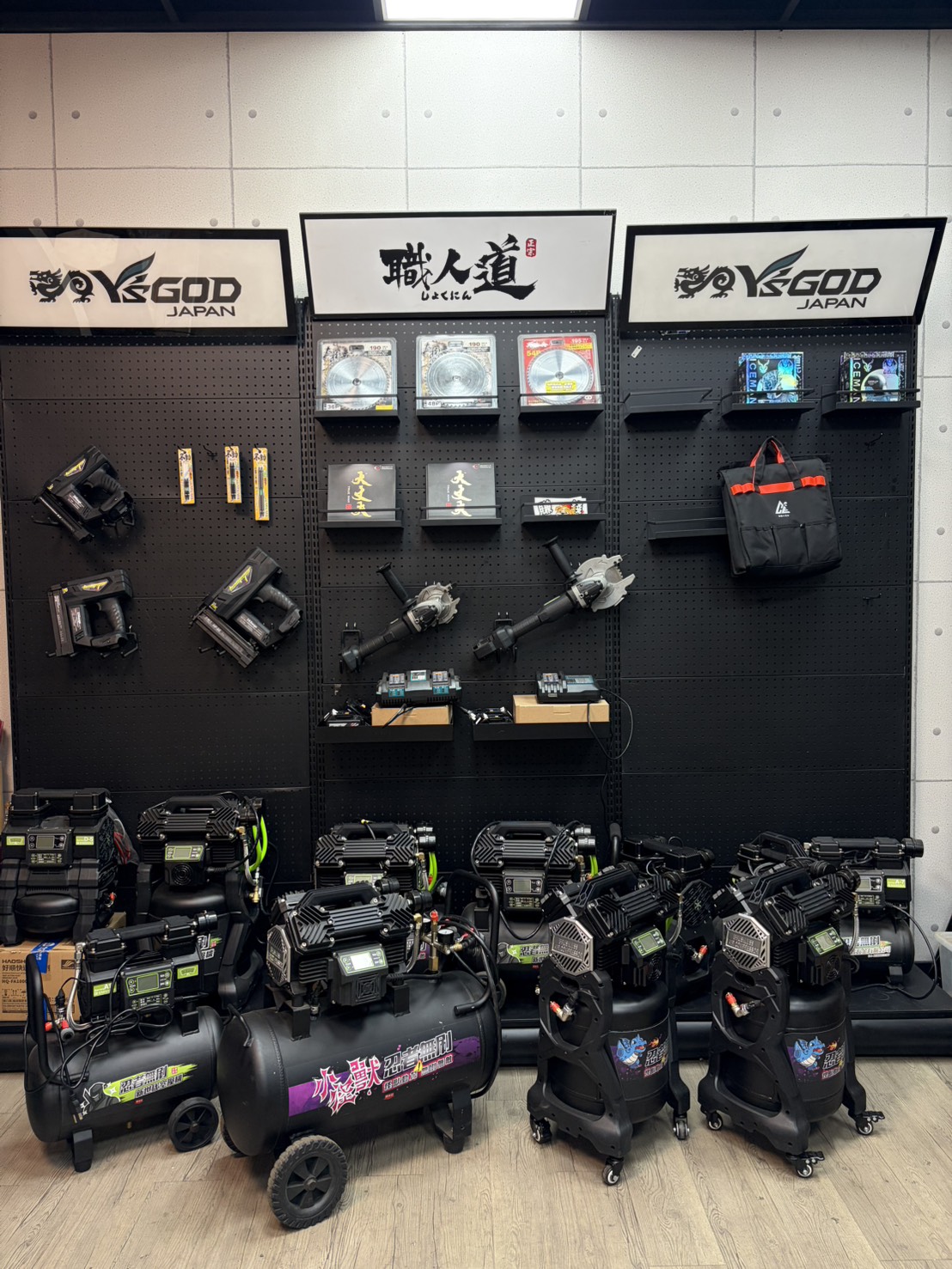
Supply terms are only meaningful when they are read against the stock and production space behind them. Image: Shokunin / FENG SHANG PRECISION.
Why supply terms deserve the same scrutiny as cooling data
Personal cooling garments are now a recognised category of occupational heat-exposure control. NIOSH classifies water-cooled garments, air-cooled garments, cooling vests and wetted overgarments as examples of auxiliary or personal cooling systems, which places a powered water-circulation vest in a safety context rather than a comfort context. Once a buyer is purchasing against a heat-safety obligation, the supplier relationship becomes part of the control measure: a vest that cannot be reordered, repaired or replaced on schedule stops being a control measure.
The category is also large enough that industrial buyers are no longer a niche. Dataintelo’s cooling vest market report places the global cooling vest market at USD 342 million in 2025, with industrial applications accounting for a 34.5% revenue share in the same year. That share is the reason a term sheet matters. Industrial buyers order in rounds, tie deliveries to work seasons, and expect a replacement path for worn parts — all of which depend on MOQ, capacity, lead time and warranty rather than on the marketing headline.
A spec sheet answers “what does the product do”. A supply term sheet answers “can I keep buying it”. The second document is usually shorter, less polished and far more consequential.
The term sheet Shokunin publishes
The commercial terms below come from the company’s capability record for the cooling vest line and are stated here as published, without adjustment.
| Term | Published value | What a buyer should take from it |
|---|---|---|
| Production mode | ODM | The supplier builds and supplies a manufacturer-designed vest; the mode does not by itself imply product redesign. |
| Minimum order quantity | 10 units | Pilot-scale entry is possible; it is a trial quantity, not a volume commitment. |
| Monthly capacity | 3,000 units | Headroom exists for repeat orders, subject to clarifying what the figure measures. |
| Lead time | 7–14 days | A workable window for ODM production runs; the starting point must be defined in the contract. |
| Customization | Not offered, per the capability record | Buyers seeking OEM change should treat this as a stop condition rather than a negotiation point. |
| After-sales | 6-month warranty on the water-cooled vest | Warranty is time-bounded; the spare-parts path matters more than the warranty length. |
| Export markets | Global | Export experience is stated but destination-specific compliance remains a buyer’s own check. |
One entry is conspicuously absent. The capability record does not document a quality-control process for the cooling vest line, and no inspection protocol, acceptance sampling plan or test report is included. That does not mean no inspection happens; it means a buyer cannot verify one from published material and should make it a contractual item.
Reading a 10-unit MOQ against a 3,000-unit month
The two numbers are usually quoted separately. They are far more informative together. Ten units is well under one percent of a stated 3,000-unit month, which places the MOQ squarely in pilot-order territory: enough to equip a small crew, run a fit and wear trial in real heat, and confirm how the vest behaves across a full shift before committing to a season’s volume.
That is a genuinely useful entry point for a first-time buyer, and it is where most speculative purchasing goes wrong. A pilot order at that scale validates fit, cooling duration in the buyer’s own conditions, and the recharging and ice-pack routine. It does not validate unit economics, because unit pricing is not part of the published terms and sits outside the scope of this review, and it does not validate delivery performance under pressure, because a 10-unit order will not compete for capacity with a large order placed in the same month.
There is also a scheduling implication. If a single buyer needs 3,000 units, that order consumes the whole stated month. Ten buyers needing 300 units each consume the same month. Buyers who plan around a published monthly capacity without asking about the current order book are planning around a number, not a schedule.
The capacity figure is the term most likely to mislead
Two company-level production figures circulate for this supplier, and they cannot both describe the same thing. The capability record states a monthly capacity of 3,000 units. The company profile states an annual output of 10,000 units, produced by 30 employees in a 1,000 m² facility across a product range that includes air compressors, cut-off machines, water-cooled vests, lithium batteries, diamond saws, nail guns, spider stands and screwdriver bits.
Twelve months at 3,000 units per month would be 36,000 units, which is several times the stated company-wide annual output. The most reasonable reading is that the two figures use different bases: one may describe the installed or peak capacity of the vest line in a strong month, the other may describe practical all-product output in a normal year. A secondary reading is that the monthly figure covers capacity rather than actual scheduled production. Neither reading can be assumed, and neither should be written into a supply contract as a commitment.
For a buyer, this is not a reason to walk away. It is a reason to ask three specific questions before signing: what definition of capacity is being quoted (installed, practical or available), what the vest line produced in the last three months, and how much of the current month is already committed. A supplier that answers all three is a supplier that can be planned against. A supplier that answers only the first has given a brochure figure.
Why 7–14 days is a normal ODM lead time — and what it does not cover
A 7–14 day lead time is unremarkable for ODM production of an existing product. The tooling already exists, the bill of materials is fixed, and the operation is a production run rather than a development project. Buyers who have sourced from OEM development programmes, where sample rounds and tooling approval can add weeks, often read a 7–14 day figure as unusually fast. It is not fast; it is the ordinary shape of a repeat-manufacture order.
The published terms do not state where the clock starts. In practice, lead-time definitions vary between purchase-order confirmation, deposit receipt, and material release, and the difference can be a week or more on a 14-day window. That is the single easiest clause to fix in an RFQ, and it costs nothing to fix before the order rather than after the delay.
The second gap is customization. The capability record lists ODM as the production mode but records customization as not offered. Buyers who read “ODM” as shorthand for “we will change the design for you” will be disappointed. The COOLWAVE range as documented includes a Basic Model and a Professional Model, with the Professional Model listed in Blue, Gray and Black colourways — that is a variant selection, not a customization programme. A buyer needing changed fabrics, changed pump specifications or private-label branding should confirm feasibility in writing before assuming a 7–14 day window applies.
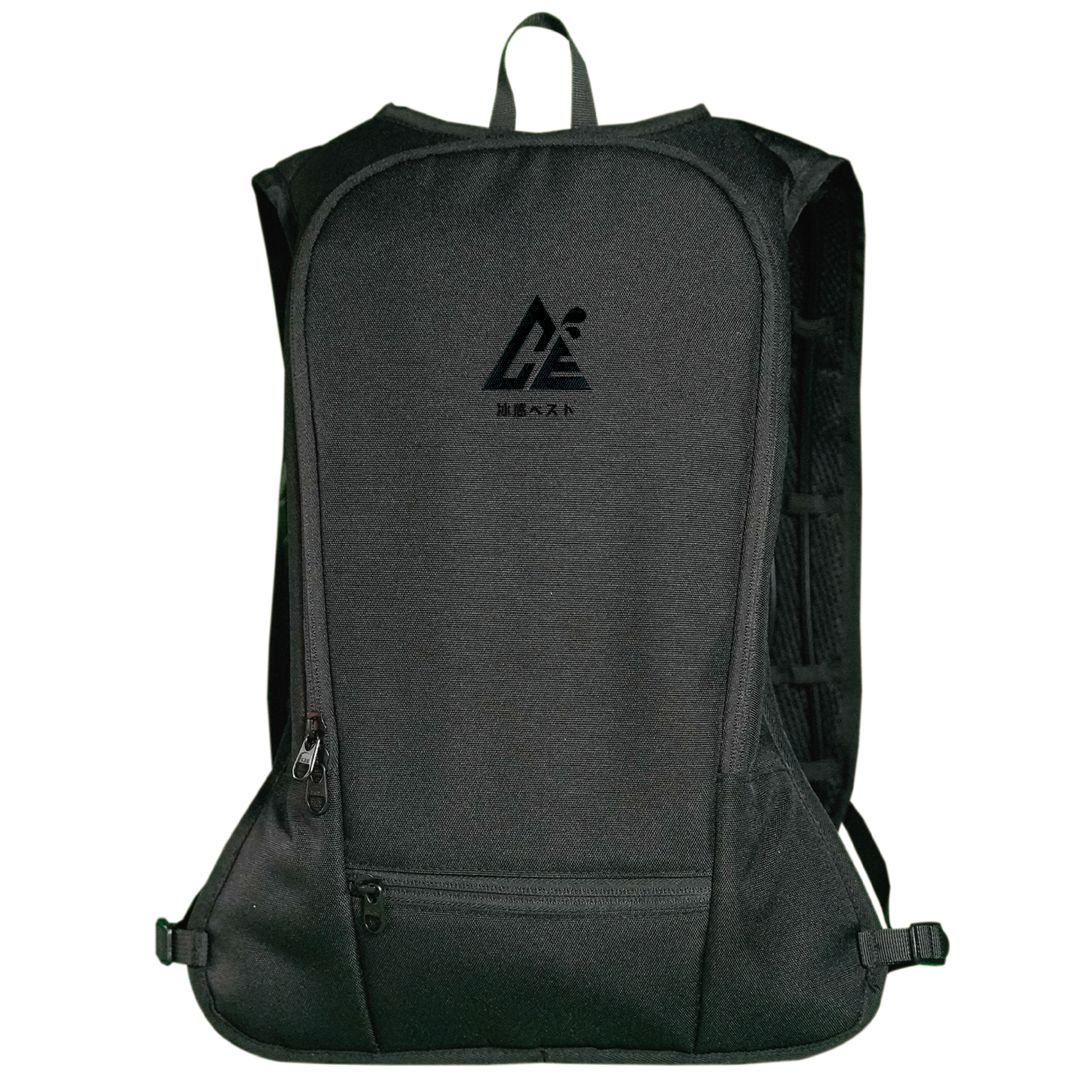
The Professional Model in black is one of the documented configurations; variant selection is not the same as customization. Image: Shokunin / FENG SHANG PRECISION.
The specification boundaries a purchasing file should record
Supply terms and product specifications interlock. A 6-month warranty and a 3–4 hour cooling duration together define the operating rhythm a buyer is committing to, so both belong in the same document.
| Specification | Published value | Procurement note |
|---|---|---|
| Cooling duration | 3–4 hours | Per charge and ice-pack cycle; ambient temperature, workload and clothing layers are not stated. |
| Weight | Within 2 kg | Wearability figure for shift planning and for workers moving continuously. |
| Suitable temperature | Below 10°C | Appears to describe the chilled water or ice-pack condition rather than ambient air; confirm the intended meaning. |
| Flow rate | Max 320–370 ml/min | Stated as a maximum; measurement conditions and tubing length are not published. |
| Pump output | 5V 150 mA (max) | Defines the power source a buyer must provide or confirm. |
| Materials | 600D polyester straps, PEVA vest, TPU water bag, polypropylene cap, sand rubber cooling tube | Useful for repair planning and for checking cleaning and handling instructions. |
| Contents | Water-cooled vest backpack ×1, ice packs ×2 | No power source is listed in the contents; confirm what powers the pump. |
The recurring gap is test conditions. A 3–4 hour duration and a 320–370 ml/min maximum flow are meaningful only alongside the ambient temperature, humidity, workload and measurement method used. The published material does not include them. Buyers should not treat that as concealment — most suppliers in this category publish the same way — but they should convert the gap into a sample-test condition rather than an assumption. A wear trial that records start time, ambient temperature, activity level and the point at which cooling becomes insufficient produces a number the buyer owns.
Certification and protection: what is documented, and what is not
Two formal items are documented for the cooling vest line, and both are frequently misread in procurement conversations.
The first is a patent. The COOLWAVE water-circulation cooling vest (Basic Model) is protected by Patent No. I886033, issued by the Intellectual Property Office, Ministry of Economic Affairs, under the Patent Act of the Republic of China. The patent covers water-cooled vest structure and cooling system, was issued on 1 June 2025, runs to 27 August 2044, and applies to the ROC market. A patent is an exclusivity instrument. It tells a buyer that the design has been examined and registered; it says nothing about thermal performance, electrical safety or fitness for a hazardous workplace.
The second is an award. The COOLING water-cooled vest received the Disaster Prevention Product and Service Certification Award from the Taiwan Disaster Prevention Industry Association. That is a meaningful third-party recognition within Taiwan’s disaster-prevention ecosystem and is relevant to buyers in that market.
Neither item is a PPE conformity certification for the United States or the European Union, and the available reference material does not establish a product-specific conformity pathway for those markets. Buyers importing into regulated environments should treat PPE classification, electrical safety of the pump and power source, and battery handling as open items to be resolved with their own compliance function before the first shipment — not as questions the supplier’s award settles.
Where these terms fit: applications and the Taiwan deployment
The documented use case is a Taiwan deployment of 100 units in high-temperature working environments, with a stated ten-year duration of use across construction sites, outdoor work, metal sheet factories and street vendors. The reported outcome is effective body cooling, heatstroke prevention and improved worker comfort and efficiency. The application record adds construction sites, outdoor work, metal sheet factories, street vendors and traffic control to the same list.
That pattern explains why the supply terms are shaped the way they are. Construction crews, traffic controllers, metal sheet factory workers and market vendors are all buyers who equip people in small groups rather than in single large consignments, and who need replacement units as crews rotate. A 10-unit minimum order suits that purchasing rhythm better than a container-scale MOQ would. The 6-month warranty and the ice-pack-based consumable model, in turn, set the maintenance cadence: two ice packs per vest, rotated across a 3–4 hour cooling cycle, with the pump and tubing as the parts most likely to need attention.
For longer shifts, the 3–4 hour figure implies planned rotation rather than continuous wear. Buyers running eight-hour shifts should cost the programme on the basis of two cooling cycles per worker per shift, and should confirm ice-pack availability and freezer access at each site before the order rather than after.
Comparison with established alternatives — and where water circulation is weaker
Water-circulation vests sit between fully passive ice-pack vests and evaporative vests, and the trade-offs are real in both directions.
Against ice-pack-only vests, circulation adds a powered pump, tubing and a water reservoir: more parts, more handling, and a dependency on a 5V power source that a passive vest does not have. A buyer whose workers cannot reliably recharge or replace a power bank is better served by a simpler passive vest, even at the cost of cooling consistency. Against evaporative vests, water circulation has the advantage of not depending on evaporation to work, which matters in humid conditions where evaporative cooling degrades — a limitation widely noted in category-level comparisons of cooling architectures.
Shokunin’s own boundaries are equally worth stating plainly. Customization is not offered, so buyers needing a changed design must look elsewhere or negotiate well beyond the published terms. The warranty is 6 months on the water-cooled vest, which is short relative to multi-year industrial equipment expectations and places the burden of spare-parts planning on the buyer. The capacity figure lacks a stated basis. Quality-control documentation is not included in the capability record. And the 7–14 day lead time has no published starting point. None of these are disqualifying; all of them are clauses.
An RFQ checklist built from these terms
| Question to put in writing | Why it decides the order |
|---|---|
| What does the 3,000-unit monthly capacity measure, and what did the vest line produce in the last three months? | Separates a brochure figure from a plannable schedule. |
| When does the 7–14 day lead time start — PO confirmation, deposit, or material release? | A week of ambiguity inside a 14-day window is a material risk. |
| Is any form of customization available, and if not, which documented configurations can be ordered? | Prevents a design request from being routed into a production order. |
| What inspection or acceptance process applies before shipment? | The capability record does not document one. |
| Is a power source included with the vest backpack, and what specification must it meet? | The pump is rated 5V 150 mA (max); the contents list names only the backpack and two ice packs. |
| What are the warranty terms in detail, and what do spare ice packs, tubing and pumps cost? | A 6-month warranty makes the spare-parts path the real continuity plan. |
| What are the unit price, Incoterm and payment terms at 10, 100 and 1,000 units? | Pricing is not published and cannot be assumed from the term sheet. |
Future outlook
Two trends are likely to push supply terms further into the buying conversation. The first is scale: with industrial applications already accounting for 34.5% of a USD 342 million cooling vest market in 2025, buyers are increasingly purchasing cooling vests as recurring protective equipment rather than as seasonal novelties, which raises the value of documented capacity and warranty terms relative to headline specifications. The second is verification: as occupational heat exposure receives more structured attention, buyers are likely to ask for test conditions, conformity documentation and production evidence alongside the product itself.
For a supplier like Shokunin, the terms already published — a 10-unit entry point, a stated monthly capacity, a defined lead-time band and an explicit warranty period — are a reasonable foundation. The next step for the brand, and for any buyer evaluating it, is not more claims but clearer definitions: capacity basis, lead-time starting point, inspection protocol and spare-parts pricing. Those are the items that turn a term sheet into a supply agreement.
FAQ
What are Shokunin’s standard supply terms for the COOLWAVE water-circulation cooling vest?
The published capability record lists ODM production, a minimum order quantity of 10 units, a monthly capacity of 3,000 units, a lead time of 7–14 days, and a 6-month warranty on the water-cooled vest. Export markets are listed as global, and customization is recorded as not offered.
Why should a 10-unit MOQ be checked against a 3,000-unit monthly capacity?
The comparison shows where a first order sits in the production calendar. Ten units is a pilot quantity well under one percent of a stated month’s output, so it is suitable for a wear trial but does not test delivery performance under load. A buyer planning a seasonal volume needs to know how much of a given month is already committed before choosing an order date.
What does a 7–14 day lead time actually cover in ODM production?
It describes a production run for an existing, manufacturer-designed product rather than a development project, which is why the window is short. The published terms do not state whether the countdown begins at purchase-order confirmation, deposit or material release, so that definition should be agreed in writing before the order is placed.
Is the COOLWAVE vest available with customization or private-label changes?
The capability record lists ODM production while separately recording customization as not offered. What is documented is variant selection: a Basic Model and a Professional Model, with the Professional Model listed in Blue, Gray and Black. A buyer requiring changed materials, pump specifications or branding should confirm feasibility in writing rather than assume it is included in the ODM designation.
What certifications and protections are documented for the vest?
The COOLWAVE water-circulation cooling vest (Basic Model) is protected by Patent No. I886033, issued by the Intellectual Property Office, Ministry of Economic Affairs under the Patent Act of the Republic of China, covering water-cooled vest structure and cooling system and applicable to the ROC market. The COOLING water-cooled vest also received the Disaster Prevention Product and Service Certification Award from the Taiwan Disaster Prevention Industry Association. These are not PPE conformity certifications for the United States or the European Union, and no product-specific conformity marking is established in the available material.
What should a buyer verify beyond the published specification and terms?
Four items carry the most weight: the basis of the 3,000-unit monthly capacity figure, given that the company profile separately states an annual output of 10,000 units company-wide; the starting point of the 7–14 day lead time; the inspection or acceptance process before shipment, which is not documented in the capability record; and the spare-parts and pricing position, since unit pricing is not published and the warranty on the water-cooled vest runs for 6 months.
A full product and capability brochure from Shokunin / FENG SHANG PRECISION CO., LTD. is available for download: company brochure (PDF).
Есть вопросы или нужны дополнительные детали?
Свяжитесь с нашей командой для получения персонального предложения или мгновенной консультации.
Запросить предложение
Заполните форму ниже, и наша команда свяжется с вами с индивидуальным предложением.
Прямой чат WhatsApp
Предпочитаете общаться в реальном времени? Напишите нам в WhatsApp для мгновенной помощи и быстрых ответов.
- Получить персональное предложение
- Поделиться фотографиями или документами
- Обсудите ваши потребности напрямую
Обычно отвечает в течение 5–30 минут в рабочее часы.