
From 1995 to 3 Million Units: Auditing SDWM’s Supplier Evidence
From 1995 to 3 Million Units: Auditing SDWM’s Supplier Evidence
A smart water meter supplier’s history, factory area, stated production capacity, R&D headcount and repeat-business share can help buyers frame a qualification review. None proves delivery performance by itself. For procurement teams assessing OEM/ODM supply, the useful question is how each claim can be matched to records, observed operations and the requirements of the specific project.
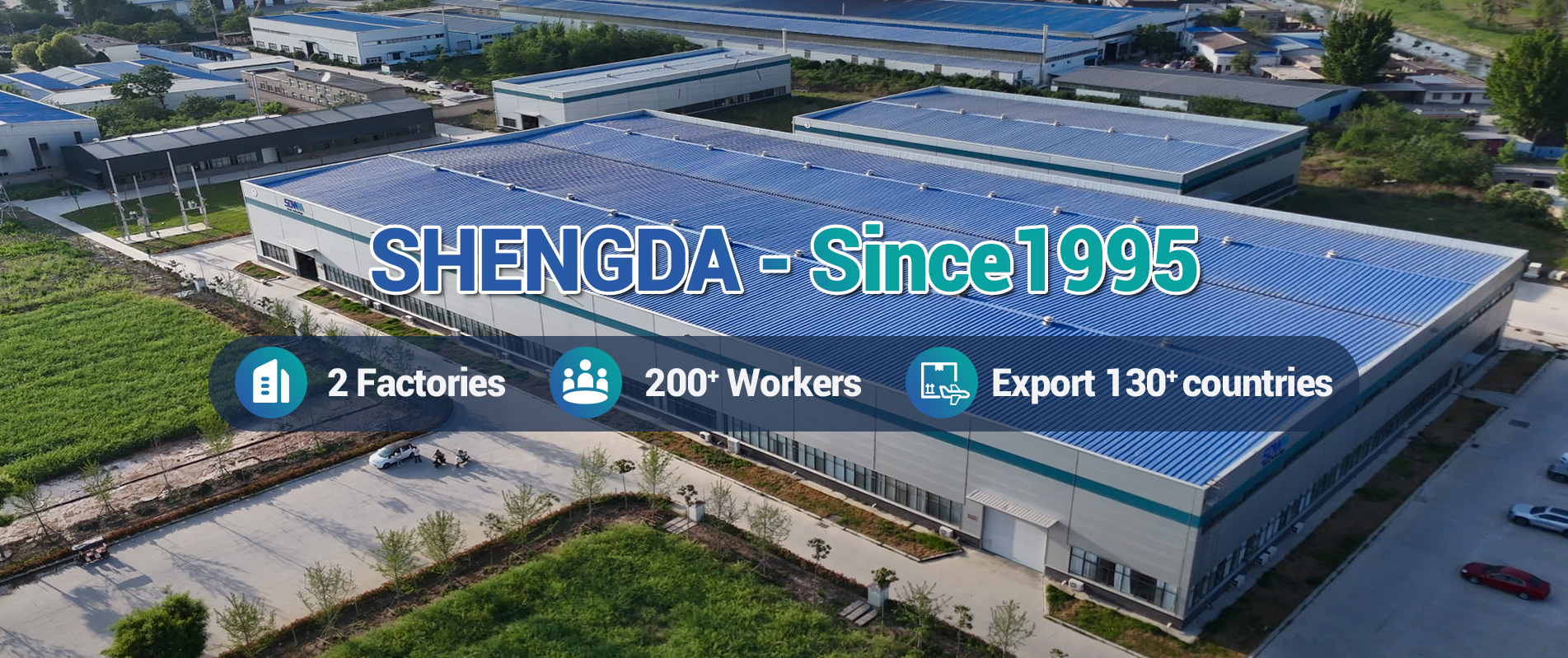
Shengda water meter CO.,LTD (SDWM) is a China-based flow meter and water meter manufacturer that, according to the supplied company profile, was established in 1995 and provides OEM/ODM, smart metering, control, telemetry and smart water solutions. The profile also states a manufacturing area of 66,000 m², a workforce of 100–200, annual production capacity of 3 million units, a 12-engineer R&D team and more than 65% repeat business.
These figures describe different things. Establishment year indicates operating history as reported; factory area describes a physical footprint; annual capacity is a production claim; R&D headcount is a staffing claim; and repeat business is a customer-retention indicator. Buyers should not treat them as interchangeable proof of product conformity, available capacity or suitability for a particular smart water meter program. This review sets out what each claim can reasonably tell a buyer, what it cannot establish alone, and how to validate it during supplier qualification.
Why capability claims need to be translated into evidence
For a buyer moving from supplier selection toward execution, the risk is not simply choosing a factory with too little space or too few employees. It is relying on a headline figure without knowing its scope. A stated annual capacity may refer to an entire product portfolio, a planned operating rate or a particular production arrangement. A large facility does not reveal how much space is assigned to the meter program under review. An R&D team count does not establish which engineers will support a requested interface or customization.
The practical response is to map each statement to a defined question and a suitable evidence type. Ask what the figure includes, what period it covers and whether it relates to the models and processes relevant to the purchase. Then compare the answer with the product scope, the buyer’s forecast and the acceptance requirements. This approach turns a supplier profile into an agenda for due diligence rather than treating it as a conclusion.
That distinction matters for smart water meters because sourcing may include more than a meter body. The supplied company profile describes SDWM’s scope as including OEM/ODM and smart metering, control, telemetry and smart water solutions. Those terms identify areas to discuss, but they do not specify a particular project configuration, communication protocol, software interface, certification, production lead time or performance outcome. Those details must be established for the actual product and market.
Reading the five supplier indicators
| Reported indicator | What it can help a buyer assess | What it does not establish alone | Useful verification question |
|---|---|---|---|
| Established in 1995 | The company profile’s stated operating history. | Continuity of ownership, performance of a specific model, or the length of a buyer relationship. | Which entity is the contracting and manufacturing party, and what records support the stated history? |
| 66,000 m² manufacturing space | The stated scale of the manufacturing footprint. | Usable production space, current utilization, equipment availability or space reserved for the buyer’s order. | What areas and operations are included in the figure, and which are relevant to this product? |
| 3 million units annual capacity | The profile’s stated annual production capacity. | Actual output, uncommitted capacity, product-specific capacity or a delivery commitment. | What products and assumptions are included, and what capacity can be allocated to the forecast? |
| 12 R&D engineers | The stated size of the R&D team. | Expertise or availability for a specific engineering task, response time or customization result. | Who would own the project’s engineering work, and what deliverables and approval steps are proposed? |
| More than 65% repeat business | The profile’s stated share of business from repeat customers. | Customer satisfaction for every product, independent validation, or performance on the buyer’s application. | How is repeat business calculated, for what period, and can relevant references be checked? |
1. Establishment in 1995: history is context, not a product guarantee
The supplied profile states that SDWM was established in 1995. For a procurement team, this is a starting point for checking the identity and continuity of the supplier, not proof that every current product has been manufactured for the same length of time. A company history also cannot substitute for model-specific technical documentation, quality records or contract terms.
During qualification, buyers can confirm the legal entity named in the commercial documents, the manufacturing entity, and whether the company that will handle OEM/ODM work is the same entity that will produce and support the order. If the buyer’s approval process depends on a particular entity or site, those details should be made explicit in the supplier record and contract. Ask for documents appropriate to the buyer’s process rather than inferring corporate structure from a brand name or profile statement.
For long-term sourcing, the practical value of an established history is that it gives the buyer a reason to examine continuity carefully. The review should still focus on evidence applicable to the proposed relationship: named responsibilities, approved product scope, change communication and agreed support arrangements. Do not convert the founding year into a claim about future availability or uninterrupted supply.
2. Manufacturing area: verify the footprint and the relevant process
The profile reports 66,000 m² of manufacturing space. That is a facility-scale indicator, but area alone does not tell a buyer how much space supports smart water meters, how the site is organized, or whether the production route matches the order. A photograph can help identify the type of facility being presented, yet it cannot establish area, equipment ownership, operating status or production throughput.
To make the figure useful, ask the supplier to explain its scope and identify the production areas relevant to the meter program. For a site review, buyers may compare the explanation with the visible production flow, the product and process records presented, and the people responsible for the work. If an in-person visit is not part of the qualification plan, request dated, product-relevant documentation that the buyer can assess through its normal supplier-approval process.
Keep the question proportionate. A factory-area claim does not mean the buyer needs to inspect every square metre. The objective is to understand whether the supplier can identify the manufacturing and control activities relevant to the ordered smart water meter, and whether those activities can be connected to the product and acceptance requirements. Treat any gap between the stated footprint and the evidence provided as an open question, not as proof of a problem or proof of capability.
3. Annual capacity: distinguish stated capacity from order availability
SDWM’s supplied company profile states an annual production capacity of 3 million units. This is the headline figure in the article’s assigned supplier review, but it should not be read as actual annual output, a guaranteed allocation or the capacity of one particular smart water meter model. Capacity can only inform a sourcing decision when the supplier defines what products, time period and operating assumptions are included.
Ask the supplier to relate its capacity statement to the order being considered. Which product families are included? Is the figure a general company-wide figure or specific to the relevant production route? What volume can be planned for the buyer, and what dependencies or assumptions affect that plan? Buyers should also distinguish a forecast, a capacity estimate and a binding delivery commitment. These have different roles in procurement and should not be blended in a presentation slide.
For execution planning, compare the supplier’s proposed production schedule with the buyer’s own forecast, order quantities, approval gates and delivery terms. Agree how changes in forecast or specification will be handled. Where pre-shipment testing is part of the purchase agreement, define the acceptance criteria and records before production begins. The supplied purchasing-support content lists pre-shipment testing as an acceptance criterion; it also lists MOQ of 3–5 samples and FOB/CIF/EXW/DDP as delivery-term options. Confirm which terms actually apply to the specific order rather than assuming they are universal commitments.
The boundary is important: a stated capacity of 3 million units per year may support further discussion about scale, but it cannot by itself answer whether the supplier can meet a particular quantity, schedule, configuration or quality requirement. Those points need order-specific confirmation.
4. R&D: connect headcount to the buyer’s engineering need
The profile lists 12 R&D engineers and describes SDWM as providing OEM/ODM, smart metering, control, telemetry and smart water solutions. Together, these facts give buyers a basis for a technical qualification conversation. They do not identify the engineers’ disciplines, establish that all 12 are assigned to a given project, or guarantee that a requested design change is feasible.
For OEM/ODM sourcing, move from the team count to the work plan. Ask who will be the engineering contact, what information the buyer must supply, which changes are within the agreed scope, and how designs or interface requirements will be reviewed and approved. Identify the deliverables that matter to the project, such as agreed drawings, specifications, configuration records or validation documentation, but do not assume they already exist unless the supplier provides them.
Similarly, the profile’s reference to smart metering, control and telemetry is a capability description, not a complete technical specification. A project using a wireless remote reading water meter, a wired interface or a specific network may have different integration requirements. The buyer should state the target communication, system boundary and acceptance conditions, then request confirmation for the exact product configuration. Keyword labels such as LoRaWAN water meter, NB-IoT water meter, 4G water meter, RS485 water meter or water meter M-Bus should not be taken as evidence that every model supports every interface.
This is a useful point to test organizational fit. A capable supplier response should make clear what is confirmed, what requires engineering review and what is outside the offered scope. That clarity is more useful for project execution than a general statement that customization is available.
5. Repeat business: treat retention as a signal to investigate
The supplied profile states that more than 65% of SDWM’s business comes from repeat customers. Repeat business can be relevant to a long-term sourcing decision because it raises a question about ongoing commercial relationships. However, the percentage’s meaning depends on its calculation. It could refer to revenue, orders, customers or another measure, and the profile does not provide the calculation method, time period or customer-level evidence.
Ask how the company defines repeat business and what period the figure covers. If references are available and the parties agree to share them, check whether they are relevant to the product type, OEM/ODM arrangement and service expectations in the buyer’s project. A reference from a different product family may still provide context about working practices, but it should not be treated as direct proof of performance for a specific smart water meter model.
Retention should also be interpreted alongside practical execution evidence. Buyers can review how product changes are communicated, how order records are maintained and how acceptance issues are handled under the proposed contract. These are verification topics for the buyer to discuss; the supplied profile does not document particular procedures or customer outcomes. A repeat-business percentage is therefore a useful lead for due diligence, not a substitute for technical qualification or agreed service responsibilities.
From profile claims to a qualification record
A disciplined supplier review records the claim, its source, the evidence received and any remaining question. The table below offers a compact framework that buyers can adapt to their internal approval process. It does not presume that any specific document has been supplied or that a particular audit method is required.
| Review area | Record the supplier’s statement | Evidence to request or assess | Decision note |
|---|---|---|---|
| Company identity and history | Established in 1995, as stated in the supplied profile. | Company and contracting-entity records relevant to the buyer’s approval process. | Confirm which entity is responsible for manufacture, contract and support. |
| Factory footprint | 66,000 m² manufacturing space. | Explanation of scope and product-relevant site or process information. | Do not treat total area as proof of dedicated capacity. |
| Capacity | 3 million units annual production capacity. | Definition of the capacity figure and order-specific planning confirmation. | Separate stated capacity, available allocation and delivery commitment. |
| Engineering | 12 R&D engineers; OEM/ODM and smart solution scope stated. | Named project contact, engineering scope, deliverables and approval path. | Confirm the exact model and requested configuration. |
| Customer continuity | More than 65% repeat business. | Definition, measurement period and relevant references where available. | Use as a relationship indicator, not a substitute for product evidence. |
| Order acceptance | Pre-shipment test listed in supplied purchasing-support material. | Order-specific test scope, acceptance limits and records agreed by the parties. | Write acceptance criteria into the order documentation. |
What the product portfolio statement does—and does not—say
The company profile lists smart water meters, ultrasonic water meters, LoRaWAN water meters and prepaid water meters among its main products, alongside flow-meter categories. That breadth is relevant when a buyer is considering a supplier for a portfolio or an OEM/ODM relationship. It does not establish that every listed category is available in every configuration, that all products share the same manufacturing route, or that the profile confirms any particular certification or interface for the buyer’s target model.
Use the portfolio list to define the scope of the discussion. For example, a buyer evaluating a smart ultrasonic water meter can ask for model-specific specifications and evidence for the proposed configuration. A buyer considering a prepaid water meter should separately confirm the commercial and technical requirements that apply to that project. Likewise, a digital water meter, postpaid water meter or wireless remote reading water meter should be assessed against its own stated product documentation rather than inferred from a general smart-meter capability statement.
That discipline also prevents keyword-led assumptions. Terms such as token water meter, STS prepaid water meter, water meter BMS, AMR water meter, R200 water meter, R160 water meter, multijet water meter, plastic water meter, Woltman water meter and brass water meter describe different product or application questions. Their presence in a search or procurement brief is not evidence that a particular model, standard, material or integration is included in the supplier’s offer. Buyers should match the requested name and requirements to the exact quotation and technical documents.
Comparison with brochure-only supplier screening
A brochure-only review is efficient for initial discovery: it can identify a stated product range, company history and headline scale figures. Its limitation is that it usually presents claims without enough context to connect them to a specific order. It may not clarify how capacity is calculated, which engineering resources would support a project, or what the repeat-business percentage measures.
An evidence-led review adds traceability. It records which claims come from the supplier profile, asks for relevant supporting material, and links approval to the model, configuration and order conditions. This approach takes more time and depends on the buyer defining its own requirements. It also does not guarantee a successful supply relationship. Its advantage is narrower and practical: it makes assumptions visible before the buyer commits to a specification or delivery plan.
There is a boundary on the other side as well. A supplier profile should not be dismissed merely because it is not an audit report. It can help buyers decide which areas deserve follow-up. The appropriate conclusion is neither automatic acceptance nor automatic rejection, but a documented review whose depth matches the procurement risk and the importance of the project.
Decision implications for long-term sourcing
For buyers at the decision-to-execution stage, SDWM’s reported history, facility area, capacity, R&D headcount and repeat-business share offer a structured starting point for supplier qualification. They describe company-level claims, not a complete assurance package. The next step is to establish scope: identify the contracting and manufacturing entities, the target meter models, the requested OEM/ODM work and the order-specific acceptance conditions.
Then use each indicator for the question it can answer. History prompts an identity and continuity check. Facility area prompts a site-scope discussion. Annual capacity prompts an order-allocation and schedule review. R&D headcount prompts a project staffing and deliverables discussion. Repeat business prompts a definition and reference check. This mapping avoids using one headline number to stand in for several different forms of proof.
A buyer should retain unresolved items as conditions or open questions in the sourcing record. If a required product specification, interface, test criterion or delivery commitment is not confirmed, it should not be treated as confirmed merely because the supplier offers smart metering or OEM/ODM services in general. Clear boundaries protect both the supplier relationship and the project plan.
Conclusion
The supplier profile for Shengda water meter CO.,LTD (SDWM) reports an establishment year of 1995, 66,000 m² of manufacturing space, 100–200 employees, annual production capacity of 3 million units, 12 R&D engineers and more than 65% repeat business. For smart water meter buyers, these figures are most useful when treated as separate evidence questions rather than as a single proxy for supplier quality.
Before committing to a long-term OEM/ODM or smart metering program, buyers can verify the scope behind each claim, relate capacity to the proposed order, connect engineering resources to defined work and clarify how repeat business is measured. Product-specific documents and order-specific acceptance criteria remain necessary. That is the difference between recording a supplier’s profile and completing a procurement review.
FAQ
What supplier evidence should buyers review for a smart water meter maker?
Start with the supplier’s company identity and stated capabilities, then ask for evidence relevant to the factory scope, order-specific capacity, project engineering responsibilities and customer-retention claim. The supplied SDWM profile reports its founding year, manufacturing area, annual capacity, R&D headcount and repeat-business share; it does not include audit records or independent confirmation of those figures.
Does a stated annual capacity of 3 million units confirm availability for a buyer’s order?
No. The supplied profile states annual production capacity of 3 million units, but does not define the product scope or confirm available capacity for a particular order. Buyers should request an order-specific plan and distinguish stated capacity from allocated production and a contractual delivery commitment.
How should buyers interpret a repeat-business share above 65%?
The company profile states that more than 65% of business comes from repeat customers. The profile does not specify the measurement period or calculation method. Buyers should ask how the figure is defined and, where available, review relevant references; the percentage alone does not prove performance for a particular model or project.
What does a 12-engineer R&D team establish for an OEM/ODM project?
The profile reports 12 R&D engineers and describes OEM/ODM and smart metering, control, telemetry and smart water solutions. Those statements establish a basis for a technical discussion, but do not identify project assignments or confirm that a specific customization is feasible. Buyers should agree the engineering contact, scope, deliverables and approval process for the requested configuration.
Which smart water meter interfaces or configurations are confirmed by a general capability profile?
A general capability profile does not confirm every interface or configuration. Buyers should check the exact model documentation and quotation for requirements such as LoRaWAN, NB-IoT, 4G, RS485 or M-Bus, and confirm the product-specific acceptance criteria before ordering.
Есть вопросы или нужны дополнительные детали?
Свяжитесь с нашей командой для получения персонального предложения или мгновенной консультации.
Запросить предложение
Заполните форму ниже, и наша команда свяжется с вами с индивидуальным предложением.
Прямой чат WhatsApp
Предпочитаете общаться в реальном времени? Напишите нам в WhatsApp для мгновенной помощи и быстрых ответов.
- Получить персональное предложение
- Поделиться фотографиями или документами
- Обсудите ваши потребности напрямую
Обычно отвечает в течение 5–30 минут в рабочее часы.