
How to Verify a Pallet Box Supplier’s Capacity Claims
How to Verify a Pallet Box Supplier’s Capacity Claims
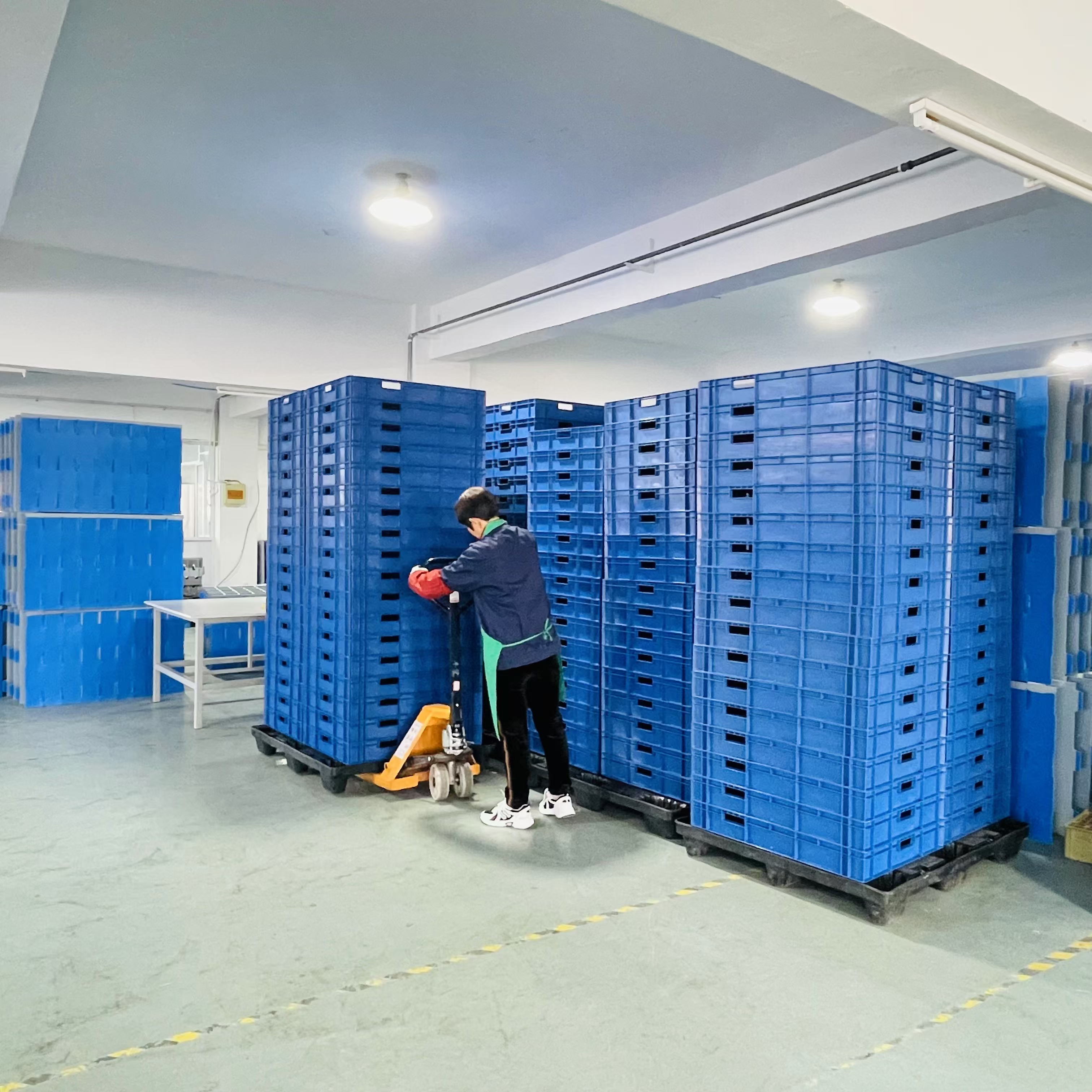
For a buyer evaluating a pallet box supplier, facility size, annual output, testing coverage and customized-order lead time are useful only when their scope and supporting records are clear. TOYOE is the brand associated in the supplied company information with Zhangjiagang Fenghui Logistics Equipment Co., Ltd. The company materials report a 4,000 m² facility, approximately 34 employees, including two R&D engineers, annual output of 30,000 units, monthly capacity of 3,000 pieces, testing of 50% of products, and a 7–15 day lead time for customized orders. These are supplier-reported figures, not independent audit findings. Buyers should use them to frame a document review and resolve differences before treating them as a production commitment.
The central qualification question is not whether a supplier can state a capacity figure. It is whether the figure is defined, current, relevant to the pallet box configuration being purchased, and consistent with the other operating information supplied. A plant photograph can show a production setting, but it cannot verify annual output, test coverage or order lead time. Those claims need records that connect the stated number to a period, product scope and method of calculation.
Start with the facility claim: what does 4,000 m² describe?
The company data lists a factory size of 4,000 m². That figure can help a buyer understand the stated scale of the operation, but the label alone does not establish what area is included. A useful first check is to ask the supplier to define whether the figure refers to production space, the full factory footprint, or another measured area. Request a dated site plan or other facility record that identifies the area being described, and compare it with the supplier’s explanation of where the relevant pallet box production and inspection activities take place.
This distinction matters because area is a context measure, not an output measure. A square-metre figure does not establish how much equipment is available, how the space is used, or how many units can be produced in a particular period. Nor should a photograph or video be treated as a substitute for a defined area record. Visual material can help identify the setting shown; it does not prove that the whole facility is represented or that the footage corresponds to the figures in a capacity statement.
There is also a scope point in the supplied company profile: it describes the company as covering an area of more than 20,000 m², while a separate company data field lists a 4,000 m² factory size. These may refer to different measures, but the materials do not define the relationship. Buyers should not combine them or choose one as the definitive facility area without clarification. Ask the supplier to state what each figure measures and whether the larger area and factory figure concern the same site or different scopes. Until that is clear, use the 4,000 m² figure only as a reported factory-size claim with its scope unresolved.
Reconcile staffing, production and the two capacity figures
The company information lists approximately 34 employees and two R&D engineers. These figures give a buyer specific points to verify, but they do not establish how many staff work in production, what roles the engineers perform, or how staffing changes across shifts. Ask for a current headcount breakdown by function and clarify whether the reported 34 includes office, production and other personnel. For the R&D figure, confirm whether the two engineers are dedicated to pallet box work or serve a wider product range. The purpose is to understand the scope behind the figures, not to infer capability from headcount alone.
The output data contains two related figures: 30,000 units annually and 3,000 pieces monthly. A simple multiplication of the monthly figure by 12 gives 36,000 pieces, so the figures do not reconcile on their face. That calculation does not prove either figure is wrong. They may refer to different periods, product mixes, definitions or planning assumptions, but the supplied materials do not explain a difference. A buyer should request the stated period and basis for each number before using them in sourcing plans.
Ask whether 30,000 units describes actual output, rated or planned capacity, or another measure. For the monthly figure, ask whether 3,000 pieces is a sustained figure, a maximum, or a figure for a particular product mix. Request records for a defined recent period that distinguish planned capacity from completed output, and ask how the figures count different pallet box models or customized configurations. If units differ substantially in design or production requirements, an aggregate count may not describe the capacity available for the buyer’s specific order.
Production records are most useful when the period, units and product scope are visible. A summary without these definitions can repeat a number without making it comparable to an order forecast. Buyers can also ask how the supplier would allocate capacity to the requested configuration and what assumptions that estimate depends on. This is a verification question, not evidence that capacity has been reserved or that a particular volume can be delivered.
What a 50% product testing rate does—and does not—tell you
The capability information reports “50% test” as a quality-control figure. It does not define the denominator, test type, product stage or selection method. Therefore, it should not be interpreted as meaning that a specific test is performed on half of every pallet box order, or that the remaining units receive no inspection. The source wording is too brief to establish either conclusion.
To make the rate meaningful, ask what “50%” refers to: units produced, units in a batch, selected samples, or another population. Ask which checks are included, when they occur, how products are selected, and how results are recorded. If different checks apply at different stages, request the inspection description for each relevant stage rather than treating a single percentage as a complete quality-control description. The buyer should also clarify whether the rate applies to standard products, customized products, or both.
Useful supporting records may include a sample inspection form, a test or inspection log, and an explanation of how the records map to a production batch. For a project-specific pallet box, buyers can ask which requirements are checked against the agreed drawing or specification and what happens when a result does not meet that requirement. These requests clarify the supplier’s stated process; they do not establish a test result for a future order. Do not assume a particular standard, test method or acceptance threshold unless it is identified in the applicable order documentation.
The distinction between a testing rate and a product outcome is important. A stated rate describes the reported extent of testing, not the accuracy of a test, the condition of every delivered unit, or a guaranteed performance result. To evaluate a proposed order, connect the quality-control description to the actual product, agreed acceptance criteria and records that the parties will use for that order.
Define the 7–15 day customized-order lead time
The capability data gives a 7–15 day lead time for customized orders. It does not state when the clock starts, what counts as a customized order, whether the range applies to every customization, or whether the period describes production time or the complete time to delivery. Buyers should not convert the stated range into a delivery promise without those details.
Ask the supplier to define the event that starts the lead-time period, such as confirmation of final specifications or another agreed milestone. Confirm whether the estimate covers production only or includes any other stage. Clarify which customization types the range applies to: the company information lists dimensions, logo, color and material as customization areas, but it does not assign a separate lead time to each option. A customized pallet box involving several changes may not be represented by a general range unless the supplier confirms that it is.
For evaluation, request a written timeline for the proposed configuration and order quantity. The timeline should identify assumptions and any information the supplier needs before confirming it. That record lets the buyer compare the supplier’s stated range with the actual project scope rather than relying on a stand-alone number. The supplied capability data also lists a minimum order quantity of one unit; confirm that this applies to the requested product and configuration before treating it as an order term.
Check operating history and export exposure by scope
The company background identifies 2010 as the founding year. The same supplied material includes a separate statement describing the manufacturer as having 14 years of operation since 2010. Because the current date is later than that statement’s implied 14-year point, buyers should distinguish the founding-year record from the age description and confirm the date and meaning of any current operating-history claim. The article does not treat the earlier duration wording as a current 14-year count.
Export information also appears in more than one company record. The background data lists Mexico and the USA as main markets and reports an export ratio of 40%. The capability data lists the EU and Southeast Asia as export markets. Taken together, these materials indicate company-reported exposure to those regions, but they do not specify the period for the 40% figure, how export share is calculated, or the volume associated with each market. They also do not establish that every pallet box model has been supplied to every listed market.
A buyer can make this information more useful by asking what time period the export ratio covers, whether it is based on units or another measure, and which product categories are included. If the proposed order depends on a particular destination, ask for documentation relevant to that destination and product. A list of markets is not, on its own, evidence of current shipment volume, product-specific export history or compliance with a particular importing requirement.
Use the Mexico gearbox case as a product-fit reference, not a capacity audit
The supplied case material describes a Mexican automobile-manufacturer application involving storage of car transmission gearboxes. It reports an order quantity of 1,000 pieces and a three-year duration. The stated case highlights are high load-bearing capacity, shock resistance, stable structure and fit to the gearbox dimensions. This is a useful example of a described application, but it does not verify the supplier’s annual capacity, monthly capacity, testing percentage or current lead time.
For a buyer considering an automotive-parts transportation pallet box, the case can help frame questions about the actual application: what dimensions were relevant, what product configuration was used, and what evidence supports the stated fit and handling characteristics. The case material does not provide test data or detailed operating conditions for these claims. Do not infer that an identical result applies to another gearbox, load, route or pallet box design. The appropriate comparison is between the buyer’s own requirements and the documented configuration for the proposed order.
This separation prevents a common qualification error: using one successful application description to stand in for evidence on a different question. A project example may inform a fit discussion. Production logs address output. Inspection records address the stated testing process. Facility documentation clarifies area. Each claim needs evidence suited to that claim.
A document request that keeps the claims auditable
| Claim to review | Clarification to request | What the evidence should define |
|---|---|---|
| 4,000 m² factory | What area does the figure measure? | Site or facility scope, measurement basis and date |
| Approximately 34 staff; two R&D engineers | Which roles and product scope are included? | Headcount basis and engineering responsibilities |
| 30,000 units per year; 3,000 pieces per month | Why do the periods not reconcile arithmetically? | Actual output versus capacity, period, units and product mix |
| 50% testing | What is tested, from which population, and how? | Denominator, inspection stages, selection method and records |
| 7–15 days for customized orders | When does the period start and what does it cover? | Configuration, quantity, assumptions and timeline scope |
| 40% export ratio and listed markets | Which period and calculation support the ratio? | Measure, period, product scope and destination relevance |
The aim is to preserve the original claim alongside its definition and evidence, rather than replacing it with a buyer’s assumption. If a response cannot support a figure at the requested level of detail, record the limitation and avoid using that figure as a confirmed planning input. A supplier may have a reasonable explanation for a mismatch; the explanation should be documented before the number is used.
How to make a supplier decision from the evidence
For an evaluation-stage decision, separate three questions. First, is the supplier’s stated operating footprint relevant to the intended pallet box order? Second, do the output and lead-time figures have definitions that match the proposed product, quantity and schedule? Third, can the stated testing approach be connected to the order’s agreed specification and inspection records? A clear answer to one question does not settle the others.
TOYOE-related company materials provide concrete claims to examine: a 4,000 m² factory figure, approximately 34 employees including two R&D engineers, 30,000 units annually, 3,000 pieces monthly, a 50% testing rate, a 7–15 day customized-order lead time, a 40% export ratio and regional export exposure. The evidence supplied here does not independently validate those claims, and the annual and monthly output figures require clarification. The 2010 founding year and separate 14-year description also need to be read with their dates in view.
A buyer can therefore use these figures as a structured qualification checklist, not as proof of future performance. Request the underlying records, align each record to the specific pallet box and order conditions, and keep unresolved scope differences visible in the evaluation. That approach gives procurement and engineering teams a more reliable basis for deciding what the supplier has demonstrated—and what remains to be confirmed—without treating a headline capacity or testing figure as a guarantee.
Frequently asked questions
How should a buyer verify a pallet box supplier’s annual capacity?
Ask whether the stated figure is actual output, rated capacity or a planning estimate. Request records for a defined period and clarify the product mix and unit-count basis. For TOYOE-related company information, the listed 30,000 units per year should be reconciled with the separate 3,000-piece monthly figure before either is used for planning.
What should a 50% pallet box testing rate include?
The supplied figure does not define its denominator or test method. Ask which products or batches it covers, what checks are included, how units are selected and what records are retained. Do not infer that the rate represents a particular test or guarantees the condition of every delivered unit.
What does a 7–15 day customized pallet box lead time mean?
The supplied capability information gives that range but does not define its start point or whether it covers production alone or a wider delivery period. Confirm the exact configuration, quantity, timeline assumptions and start event in writing before applying it to a specific order.
Does a supplier’s export-market list verify product suitability for a destination?
No. A reported market list indicates stated export exposure, but it does not by itself establish product-specific shipment history or destination-specific compliance. Confirm the relevant product, destination and supporting documentation separately.
Does the Mexico gearbox case prove capacity for another automotive order?
No. The case describes a 1,000-piece application for storing car transmission gearboxes and reports a three-year duration and specific fit-related highlights. It is an application reference, not proof of annual factory output or suitability for a different product, load or operating condition.
Есть вопросы или нужны дополнительные детали?
Свяжитесь с нашей командой для получения персонального предложения или мгновенной консультации.
Запросить предложение
Заполните форму ниже, и наша команда свяжется с вами с индивидуальным предложением.
Прямой чат WhatsApp
Предпочитаете общаться в реальном времени? Напишите нам в WhatsApp для мгновенной помощи и быстрых ответов.
- Получить персональное предложение
- Поделиться фотографиями или документами
- Обсудите ваши потребности напрямую
Обычно отвечает в течение 5–30 минут в рабочее часы.