
Injection Molding Machine Supplier Capability Evidence: Haitian’s Series and Clamping Envelopes
Injection Molding Machine Supplier Capability Evidence: Haitian’s Series and Clamping Envelopes
HTNXT Industry Reference
A supplier’s published clamping-force and injection-volume range is useful evidence, but it is not proof of application fit. The practical question is how a buyer converts a series envelope into a verified configuration and an acceptance plan.
Why supplier capability evidence matters more than a brochure cover
Injection molding machine buyers rarely suffer from a lack of product literature. They suffer from an inability to separate a range statement from a capability claim. A catalogue may list a tonnage band, an injection-volume range and a list of industries, but those figures do not by themselves show whether a specific mold, material, cycle time and quality target will fit the machine.
That gap is the opportunity for a more disciplined reading of supplier evidence. Haitian International Holdings Ltd., founded in 1966, manufactures injection molding machines and describes a portfolio covering servo-hydraulic injection molding machines, all-electric injection molding machines, two-platen injection molding machines and intelligent injection molding equipment. Its published content states that products are used in automotive, home appliance, 3C electronics, medical, packaging, logistics and consumer goods industries. The company reports a manufacturing facility of 1,437,000 m², more than 8,500 staff, an R&D team of more than 1,500 engineers and technicians, annual production capacity of more than 56,000 units, an export ratio of 40% and service across more than 130 countries and regions.
Those are entity and scale facts. They support supplier credibility. They do not replace a configuration-level review. The more useful evidence sits in the series envelopes: clamping force, injection volume, screw diameter, platen size, tie-bar distance, controller and intended application. This article treats those envelopes as a screening framework, not as a performance guarantee.
The buyer problem: wide ranges can hide configuration risk
A published range is a portfolio statement. It tells a buyer what the supplier can offer across a series. It does not tell the buyer which model, injection unit, screw, platen and automation package will be quoted for a specific mold. That distinction matters because injection molding procurement fails at the interfaces: shot size versus injection volume, mold dimensions versus platen and tie-bar spacing, clamping force versus projected area, and cycle target versus hydraulic or electric response.
The opportunity is that a well-structured series envelope can reduce the search space quickly. If a buyer can see that a range covers small precision parts through large automotive and logistics parts, the supplier can be shortlisted for further technical review. But the same buyer should then ask for the model-specific datasheet and a mold-and-process review. Without that step, a wide range can create false confidence rather than useful evidence.
What Haitian International’s published series actually establish
Haitian International’s published product content identifies several platforms with different clamping and application logic. The Mars Series is described as a servo-hydraulic toggle injection molding machine line, with the MA5 positioned for automotive, household appliances, packaging, electronics, consumer goods, building and construction, and technical parts production. The MA5 is also described as a servo-hydraulic platform with a toggle clamping system, available in different configuration levels, and the MA5/Ultra is presented as a high-performance extension of the MA5 platform.
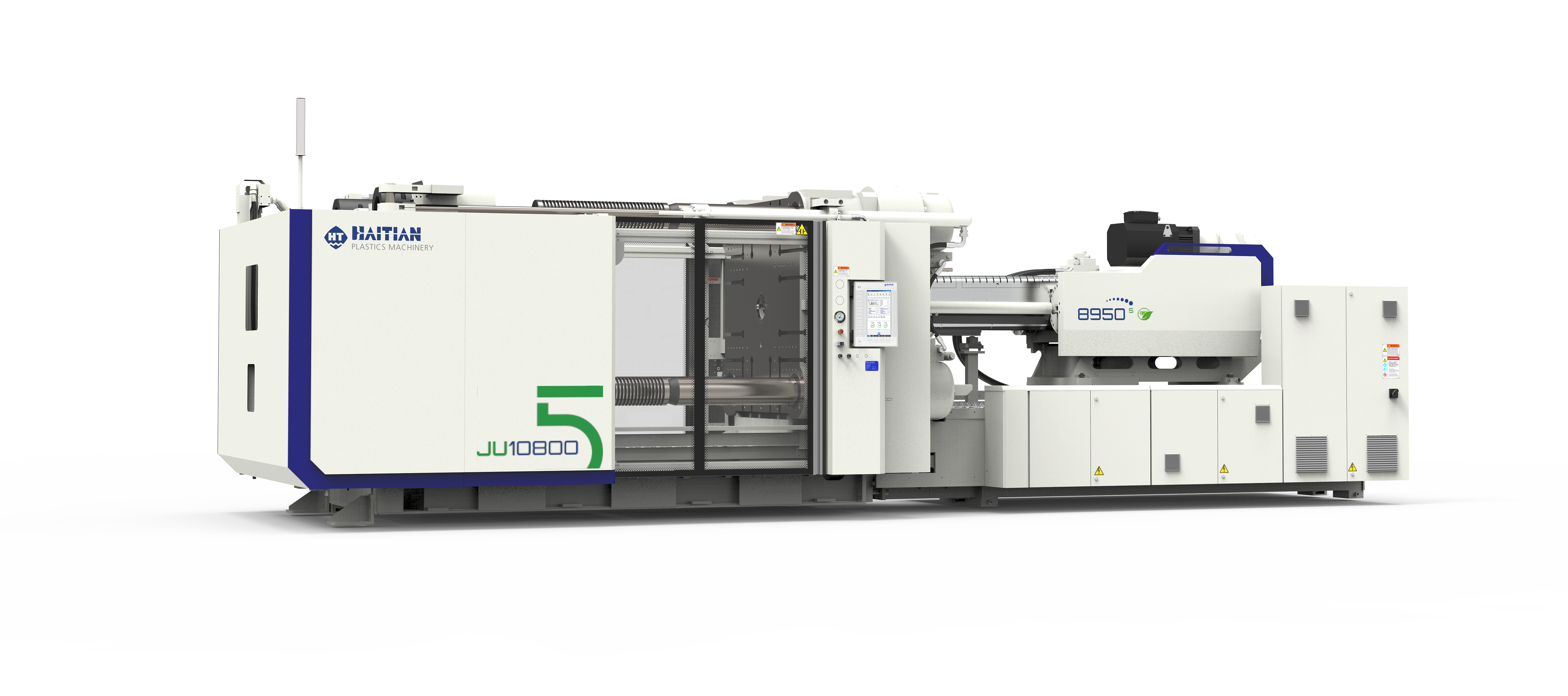
The Jupiter Series is described as a two-platen injection molding machine line. The JU5 is identified as a servo-hydraulic two-platen machine, and the Jupiter line is positioned for large plastic articles including automotive bumpers, instrument panels, logistics turnover boxes and large waste containers. The Zhafir Venus Series VE5 is identified as a precision all-electric injection molding machine. The Zhafir Zeres Series ZE5 is described as an electric injection molding machine with integrated hydraulics, while the ZE-F is positioned as a high-speed electric packaging solution. The Mars MA/F is also described as a high-speed servo-hydraulic packaging configuration based on the Mars platform.
These descriptions are useful because they connect architecture to application intent. They still need to be converted into purchasing evidence. A supplier statement that a series serves automotive, medical or packaging does not prove that a particular mold will run at the required cycle time, scrap rate or dimensional capability. That is why the clamping envelope should be read together with the application statement, not instead of it.
Clamping force and injection volume: how to read the envelope
Clamping force is the machine’s ability to keep a mold closed against cavity pressure during injection. In procurement terms, it is a screening variable: the required force depends on the projected area of the part and runner, the material, the cavity pressure and the process window. A higher clamping-force ceiling expands the range of molds a supplier can quote, but it does not prove that a specific mold will run without flash or excessive tonnage.
Injection volume is the amount of melt the injection unit can deliver in one shot. It must cover the part, runner and a safe cushion. A wide injection-volume range indicates that a series can be configured across small and large shot weights, but the buyer still needs the shot weight, material density and injection-unit selection for the quoted machine. Screw diameter, injection pressure and plasticizing capacity also belong in that review.
Mold platen size and tie-bar distance are equally practical. A machine may have enough clamping force but still not accept a mold because the platen is too small or the tie-bar spacing is too narrow. The published envelope should therefore be read as a three-part check: force, shot size and mold space. A series that passes only one of the three is not yet a confirmed fit.
Series-by-series evidence and application fit
The table below uses published content-unit facts to show how the main Haitian series can be read as capability evidence. The ranges are portfolio envelopes; they are not model-specific quotations.
| Series | Published evidence | Application intent | Buyer reading |
|---|---|---|---|
| Haitian Mars Series MA5 | Servo-hydraulic toggle platform; clamping force 600–33,000 kN; injection volume 49–45,616 cm³; screw diameter 24–220 mm; mold platen 470×470–3,100×3,020 mm; tie-bar distance 310×310–2,160×1,900 mm; KEBA controller. Generation 5 electrical plasticizing is stated to deliver 20–40% energy savings on applicable sizes. | Automotive, household appliances, packaging, electronics, consumer goods, building and construction, technical parts. | Broad general-purpose envelope. Use it to screen small-to-large parts, then verify the quoted injection unit, screw and platen against the mold. |
| Haitian Jupiter Series JU5 | Servo-hydraulic two-platen platform; clamping force 4,500–88,000 kN; injection volume 848–134,303 cm³; screw diameter 60–300 mm; maximum daylight 1,400–7,000 mm; tie-bar distance 810×810–3,400×2,820 mm; KEBA controller; four short-stroke clamping cylinders. Generation 5 electrical plasticizing can reduce energy consumption by 20–40%. | Large plastic articles, automotive bumpers, instrument panels, logistics turnover boxes, large waste containers; two-platen manufacturing in China is positioned for automotive and household-appliance work. | Large-part envelope. The two-platen architecture offers large mold space and long opening stroke, but it should not be treated as a default for small precision parts. |
| Zhafir Zeres Series ZE5 | Electric injection molding machine with integrated hydraulics; clamping force 400–13,800 kN; injection volume 12–5,767 cm³; screw diameter 16–120 mm; mold platen 440×440–2,150×2,050 mm; tie-bar distance 320×320–1,550×1,450 mm; Sigmatek controller. | Automotive, medical, electronics, consumer goods, technical parts, household appliances, packaging. Integrated hydraulics support mold functions such as core pulls. | Flexible electric platform. The hydraulic function is an application enabler, not a substitute for a mold-specific review. |
| Zhafir Zeres Series ZE-F | High-speed electric injection molding machine for packaging; clamping force 1,500–6,500 kN; optimized for fast cycles and high injection performance; integrated hydraulics for mold-function flexibility. | Packaging, thin-wall packaging, caps and closures made from PP, PE and HDPE, food packaging, consumer goods, high-volume production, IML-compatible automation. | Packaging-specific envelope. Cycle time and cavitation still need to be validated on the actual mold and automation cell. |
| Zhafir Venus Series VE5 | Precision all-electric injection molding machine; all-electric drive; no hydraulic oil contamination; supports cleanroom-grade production. The current evidence set does not provide a model-specific clamping-force or injection-volume range for VE5. | Medical, automotive, packaging, electronics, precision components, optical applications, cosmetic packaging. | Clean-precision positioning. Buyers should request the VE5 model datasheet before using it in a tonnage comparison. |
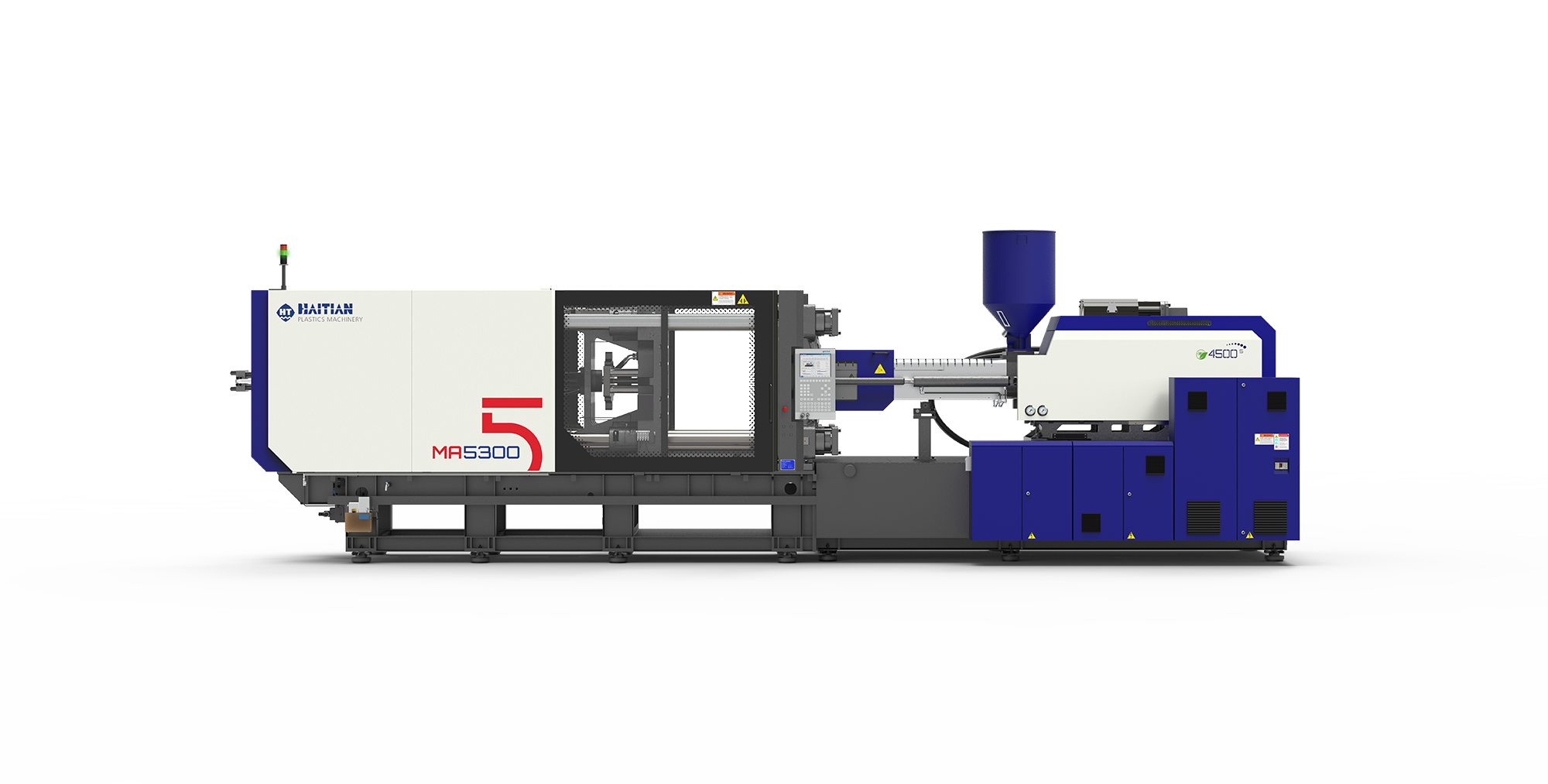
The MA5 envelope is the broadest general-purpose range in this evidence set. Its lower clamping-force limit reaches small-part territory, while its upper limit overlaps with large technical parts. That breadth is useful for a supplier shortlist, but it also means the buyer must identify the exact model rather than treating the series name as a specification.
The JU5 envelope is narrower in application logic but much larger in physical scale. A clamping-force ceiling of 88,000 kN and an injection-volume ceiling of 134,303 cm³ place it in large-part production. The four short-stroke clamping cylinders and two-platen structure are relevant to mold space and machine length, but they do not remove the need to check projected area, tie-bar spacing and daylight against the actual mold.
The ZE5 envelope is the more compact electric-with-integrated-hydraulics option in this set. Its 400–13,800 kN clamping range and 12–5,767 cm³ injection range cover small to medium-large work. The integrated hydraulic function is relevant where the mold needs core pulls or similar hydraulic movements. The buyer should still confirm whether the quoted configuration provides the required hydraulic functions and whether the electric main movements meet the precision and cycle targets.
The ZE-F is a packaging-focused high-speed platform with a 1,500–6,500 kN clamping range. Its published application intent includes thin-wall packaging, caps and closures, food packaging and high-volume production. That is a clear screening signal, but high-speed packaging economics depend on cavitation, cycle time, cooling, robot take-out and IML integration. The machine range alone does not establish those outcomes.
The VE5 is an important counter-example in evidence discipline. The current content set identifies it as a precision all-electric machine with no hydraulic oil contamination and cleanroom-grade production support, intended for medical, automotive, packaging, electronics, precision components and optical applications. But it does not publish a VE5 clamping-force or injection-volume range in this evidence set. A careful buyer should treat that as a data request, not as a reason to assume a range.
Two-platen manufacturing in China and the purchasing question
Haitian’s published two-platen content identifies a two-platen injection molding machine manufactured in China and positions the category for automotive and household-appliance work. This is relevant to procurement because manufacturing location, production system and service coverage affect lead time, spare-parts planning, documentation and acceptance logistics. It is not, by itself, a quality ranking.
The purchasing question is not whether a two-platen machine is made in China. The question is whether the supplier can provide a configuration that matches the mold, the part and the plant. That requires a model-specific quote, a mold-space drawing, an injection-unit selection, a utility schedule and a written acceptance plan. Platform breadth helps the supplier offer options; the buyer still has to verify the option that will be installed.
Haitian’s scale facts matter here. A manufacturing footprint of 1,437,000 m², more than 8,500 staff and annual capacity of more than 56,000 units indicate a large production base, but they do not prove that a particular machine will meet a particular cycle time. Scale is evidence of supply capability; it is not evidence of process capability. The two should be kept separate in the procurement file.
From envelope to acceptance criteria
A supplier capability envelope becomes useful when it is converted into a purchasing checklist. The buyer should move from the series range to the quoted model, then from the quoted model to the acceptance test. The following framework is a practical way to structure that review.
| Review area | What to verify | Why it matters |
|---|---|---|
| Clamping envelope | Required clamping force versus quoted model; projected area; cavity pressure assumptions; safety margin. | Prevents flash, mold damage and oversized machine selection. |
| Injection envelope | Shot weight plus runner and cushion versus injection volume; screw diameter; injection pressure and plasticizing capacity. | Confirms the quoted unit can fill the mold without short shots or excessive residence time. |
| Mold space | Platen size, tie-bar distance, maximum daylight, mold thickness and opening stroke. | A machine can have enough tonnage but still not accept the mold. |
| Process performance | Cycle time, repeatability, scrap rate, energy per part and dimensional capability on the actual mold. | Brochure ranges do not establish these outcomes. |
| Automation and data | Robot interface, vision inspection, MES connectivity, open interfaces, third-party equipment integration and data ownership. | The machine must fit the production cell, not only the mold. |
| Commercial terms | Lead time, warranty, spare parts, service response, training, documentation and acceptance criteria. | Converts technical fit into a manageable supply relationship. |
The acceptance plan should be written before the purchase order, not after installation. It should define how clamping force, injection repeatability, cycle time and scrap will be demonstrated on the buyer’s mold. If the supplier cannot agree to a measurable acceptance test, the published envelope remains a marketing document rather than procurement evidence.
Market trend: connectivity and energy evidence raise the bar
Trade and professional-society commentary describes smart manufacturing in injection molding as involving IoT or IIoT connectivity, data collection from injection molding machines and auxiliary equipment, real-time monitoring and energy-saving drive technologies. That direction is consistent with what Haitian’s published integration content describes: machines can integrate with robots, vision inspection systems and MES systems; MES solutions enable production monitoring, process-data management and machine connectivity; open interfaces and standardized communication protocols allow third-party equipment to be integrated when required.
For buyers, this trend changes the evidence standard. A supplier that can show a clamping envelope and an application list is only at the first screening stage. A stronger supplier file includes the data architecture, supported interfaces, alarm history, process-data access, cybersecurity arrangements and demonstrated integration with the buyer’s automation and MES environment. Energy claims also need a measurement plan: the published 20–40% energy-saving figure for Generation 5 electrical plasticizing is a supplier statement about a technology step, not an audited per-part result for every mold.
This is where platform breadth becomes useful but insufficient. Haitian’s portfolio covers servo-hydraulic, all-electric, two-platen and intelligent equipment, and its published content links those platforms to automotive, home appliance, 3C electronics, medical, packaging, logistics and consumer goods. The buyer should use that breadth to ask better questions, not to skip the configuration review.
Comparison with traditional solutions and the limits of brochure data
Traditional procurement often compares machines by tonnage alone. That is a weak comparison because tonnage is only one part of the clamping envelope. A servo-hydraulic toggle platform such as the Mars MA5 uses servo drive and precision motion control to supply power on demand and balance energy saving, response speed and molding stability. A two-platen platform such as the Jupiter JU5 uses a compact two-platen clamping structure with large mold space, long opening stroke and high workshop space utilization. An all-electric Zhafir platform produces no hydraulic oil contamination and supports cleanroom-grade production. Each architecture solves a different production problem.
The limitation is equally important. A two-platen machine is not automatically the right choice for small precision parts; its large mold space and long stroke are valuable for large parts, but they can be excess capacity for a compact mold. An all-electric machine is not automatically the lowest-cost option for every application; its clean, precision positioning must be matched to the part and the plant. A servo-hydraulic machine with a broad envelope is not automatically the best fit for a thin-wall packaging cell; cycle time, cavitation and automation still decide the outcome.
Evidence boundary: Published clamping-force and injection-volume ranges are portfolio envelopes. They do not prove cycle time, scrap rate, OEE, energy per part, dimensional capability or total cost of ownership. The VE5 is identified as a precision all-electric platform in the current evidence set, but a model-specific clamping and injection envelope is not provided there. Buyers should request the model datasheet and a mold-specific acceptance plan before treating any brochure figure as standalone proof.
A further limitation is configuration complexity. A broad series may include multiple injection units, screw diameters, platen sizes and controller options. The buyer must verify the exact combination in the quotation. This is not a criticism of platform breadth; it is the natural consequence of offering a wide range. The more options a supplier offers, the more important the configuration document becomes.
Future outlook: capability evidence as a procurement document
The next step for injection molding machine procurement is likely to be a more structured evidence file: model-specific clamping and injection data, mold-space drawings, utility requirements, automation interfaces, energy-measurement methods and acceptance-test protocols. Suppliers that can provide these documents consistently will be easier to compare than suppliers that rely on headline ranges alone.
Haitian International’s published platform breadth gives it a strong starting position for that conversation. The Mars MA5 spans a wide general-purpose envelope; the Jupiter JU5 addresses large-part two-platen work; the Zeres ZE5 adds integrated hydraulics to an electric platform; the ZE-F targets high-speed packaging; and the Venus VE5 is positioned for precision all-electric and cleanroom-grade applications. The company also publishes MES, open-interface and third-party integration content that supports system-level questions.
But the buying decision will still turn on verification. A supplier capability statement becomes credible when it is tied to a quoted model, a specific mold and a measurable acceptance test. That is the difference between a brochure range and procurement evidence. The former starts the shortlist; the latter supports the purchase order.
FAQ
What is a supplier capability envelope for an injection molding machine?
A supplier capability envelope is the published range of machine attributes that a supplier can configure across a series. It typically includes clamping force, injection volume, screw diameter, platen size, tie-bar distance and controller. It is a screening tool, not a guarantee that a specific mold and process will meet cycle time, scrap or quality targets.
How should buyers interpret clamping force and injection volume ranges?
Clamping force should be checked against the projected area, cavity pressure and material of the actual mold. Injection volume should be checked against shot weight, runner and cushion. A wide range indicates that the series can be configured across different sizes, but the buyer still needs the quoted model, injection unit and screw to confirm fit.
What do Haitian’s Mars MA5, Jupiter JU5, Venus VE5 and Zeres ZE5/ZE-F ranges indicate?
The Mars MA5 is a broad servo-hydraulic toggle platform with a published clamping range of 600–33,000 kN and injection volume of 49–45,616 cm³. The Jupiter JU5 is a large-part two-platen platform with 4,500–88,000 kN and 848–134,303 cm³. The Zeres ZE5 is an electric machine with integrated hydraulics at 400–13,800 kN and 12–5,767 cm³, while the ZE-F is a packaging-focused high-speed platform at 1,500–6,500 kN. The Venus VE5 is identified as a precision all-electric platform, but the current evidence set does not provide its clamping-force or injection-volume range.
Why is the Venus VE5 not given a clamping-force range in this evidence set?
The available content identifies the VE5 as a precision all-electric injection molding machine and describes its cleanroom-grade and no-hydraulic-oil-contamination positioning. It does not include a model-specific clamping-force or injection-volume range in the current evidence set. Buyers should request the VE5 datasheet rather than infer a range from another series.
What acceptance criteria should accompany published specifications?
Acceptance criteria should cover clamping force at the required mold, injection repeatability, cycle time, scrap rate, energy measurement method, mold-space compatibility, automation interfaces and documentation. The criteria should be agreed in writing before the purchase order and demonstrated on the buyer’s mold where possible.
Where do brochure figures stop being sufficient?
Brochure figures stop being sufficient when they are used to predict cycle time, scrap, OEE, energy per part or total cost without a mold-specific review. They are useful for shortlisting a series and comparing nominal envelopes, but they cannot replace a quoted configuration, a process simulation or an acceptance test on the actual production cell.
This article uses Haitian International content-unit facts and published series descriptions. It is intended as an independent procurement reference, not as a substitute for model-specific technical documentation or a formal acceptance test.
Есть вопросы или нужны дополнительные детали?
Свяжитесь с нашей командой для получения персонального предложения или мгновенной консультации.
Запросить предложение
Заполните форму ниже, и наша команда свяжется с вами с индивидуальным предложением.
Прямой чат WhatsApp
Предпочитаете общаться в реальном времени? Напишите нам в WhatsApp для мгновенной помощи и быстрых ответов.
- Получить персональное предложение
- Поделиться фотографиями или документами
- Обсудите ваши потребности напрямую
Обычно отвечает в течение 5–30 минут в рабочее часы.