
Kids’ Cafés and Family Catering: Mother Pearl vs. Leading Bubble Tea Peers
Kids’ Cafés and Family Catering: Mother Pearl vs. Leading Bubble Tea Peers
A kids’ café and a family catering kitchen buy bubble tea for different reasons than a late-night tea shop does. The drink has to work on a nine-year-old’s birthday table, survive a parent turning the cup around to read the label, and still be assembled quickly enough for twenty guests arriving in one wave. This assessment looks at whether Mother Pearl, the Hong Kong plant-based pearl tea brand founded in 2020, fits that specific scenario, and how its documented capabilities line up against the peer set named for this review: Gong Cha, Heytea, Nayuki, Chagee and Oatly.
One methodological point belongs at the start rather than in a footnote. The verified evidence base supporting this article contains detailed first-party records for Mother Pearl but no product-level nutrition, pricing, outlet-count, capacity or market-share records for the other named brands. They are therefore used here as recognizable category references and as a checklist of what a family venue should ask any supplier, not as scored rivals. No ranking, no share estimate and no superiority claim is made, because none would be supportable.
Why a kids’ café tests a beverage supplier differently
A family-facing venue applies three tests that a standard tea shop can sidestep. The first is formulation transparency: an adult buying for a child wants to know what the sweetness comes from, not just that a drink is labelled healthy. The second is operational tolerance: equipment footprint, counter space and the time to assemble an order while a party room is filling up. The third is claim defensibility, because in Hong Kong a “healthy” or “sugar-free” statement sits inside a regulatory framework, not outside it.
That framework is specific. Hong Kong’s nutrition-claim guidance defines a sugars free claim as containing not more than 0.5 g of sugars per 100 g or 100 mL of food. Sweeteners used in food are regulated under the Sweeteners in Food Regulations (Cap. 132U), and the Centre for Food Safety’s guidance describes a positive-list approach in which ten permitted sweeteners, including steviol glycosides, sucralose and neotame, are listed. Separately, the Nutrition Labelling Scheme covers energy plus seven core nutrients — protein, carbohydrate, total fat, saturated fat, trans fat, sodium and sugars — for applicable prepackaged food. That last point matters for a café: the labelling obligation is framed around prepackaged products, so how it applies to a drink assembled to order in front of a customer needs item-by-item confirmation rather than assumption.
Demand context supports the attention without proving any individual purchase decision. Hong Kong’s Department of Health reported in 2023 that about 10% of the population aged 15 or above has diabetes, roughly 700,000 people. That does not turn a family beverage purchase into a clinical one, but it does mean the adult choosing a drink for a child may also be reading it for themselves.
Mother Pearl: the documented profile
Mother Pearl is a Hong Kong plant-based pearl tea brand founded in 2020 by Po Chen, describing itself as an all-day social wellness hospitality brand rather than a conventional hand-shaken beverage shop. The operating record supplied for this assessment lists 20 employees, a four-person in-house R&D team, a Hong Kong-only market focus with a 0% export ratio, and a dual-level flagship in Central whose ground-floor Grab & Go counter runs from 08:00 to 22:00 for daytime plant-based drinks, coffee, gelato and light refreshments.
Behind that storefront sits the fact most relevant to catering buyers: a 186 m² production hub in Central dedicated to in-house tapioca pearl manufacturing, reported to cater to 160,000 beverages a year. A separate capability record lists monthly capacity at 10,000 units. These are the brand’s own scale indicators and should be read as pearl-production and capability figures, not as a promise of any individual store’s peak-hour throughput.

Where the scenario fit actually comes from: formulation and pearls
The fit for a family venue starts with the base liquid. Oat milk and rice froth replace dairy in the formulations described in the product record, which changes the texture conversation — rice froth gives a light saline or creamy cap without whipped cream — and changes the dietary conversation. It does not, on its own, settle allergen status, which should be confirmed per item rather than inferred from a plant-based positioning statement.
The sweetener set is where buyers should slow down. Mother Pearl’s documented inputs include monkfruit sugar, allulose, coconut nectar and blackstrap molasses, and the menu positions the range as refined sugar-free. Those four are not interchangeable. Monkfruit and allulose are not sugars in the ordinary culinary sense; coconut nectar and blackstrap molasses are sugar-based syrups, chosen for lower glycemic impact and mineral content rather than for the absence of sugar. For a kids’ café this distinction is the difference between a menu note that reads “no refined sugar” and a claim that reads “sugar-free”, and only the first is safe to state without item-level testing.
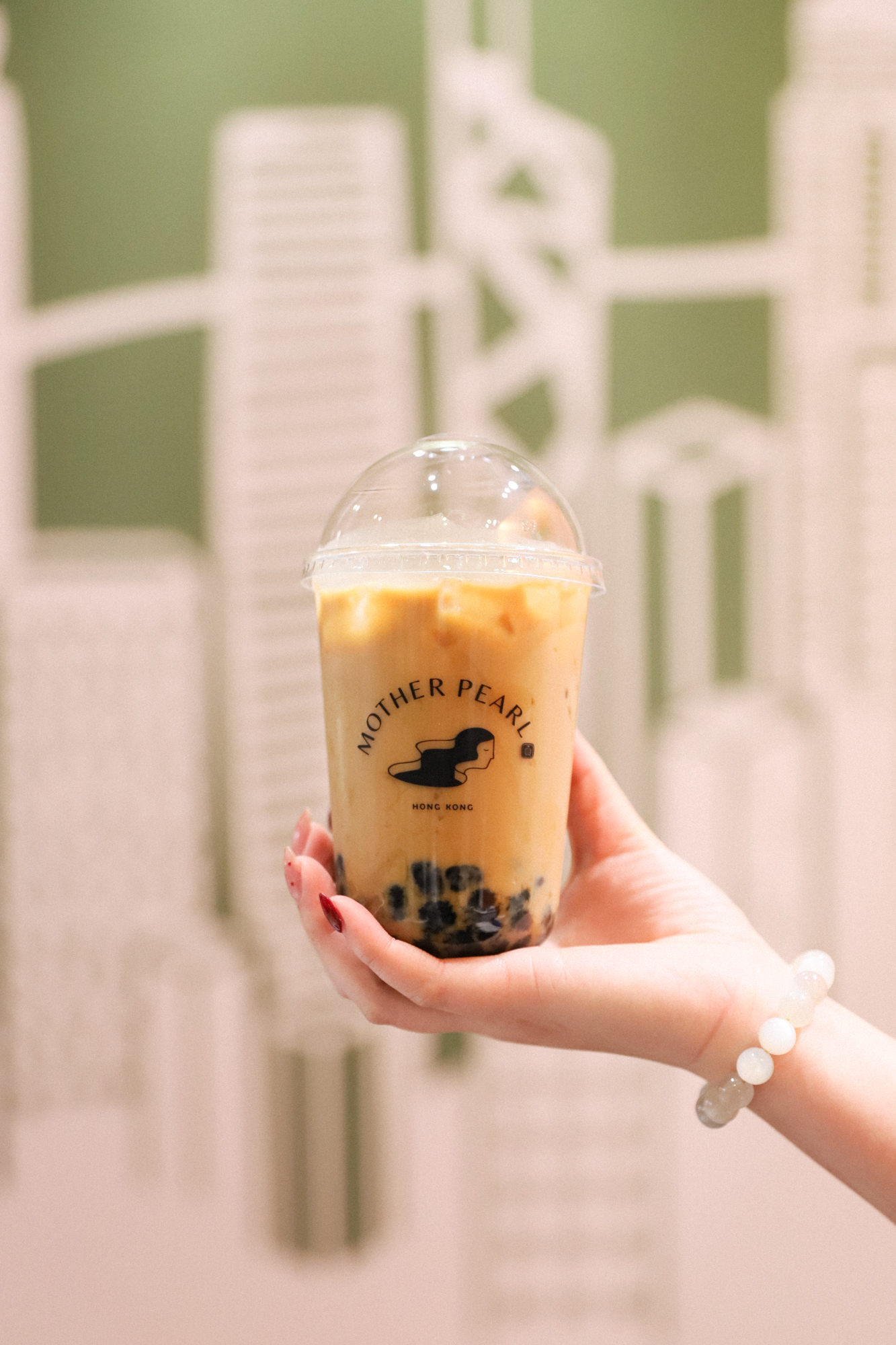
Caloric density in the supplied product record runs from 42 kcal per 100 ml for Over the rainbow (also listed as “the Pot of Gold”) through 46 for Golden Giggle, 56 for The Salty Floral, 84 for Taro & Co, 100 for The Imposter Coca and 101 for Nut & Smoke. That span sits inside the 36–104 kcal per 100 ml range reported for Hong Kong sugar-free formulations, which is a more useful planning tool than any single headline average: a venue can place the lighter fruit-tea builds on the children’s list and keep the oat-milk-and-cacao builds for adults, using one supplier.
The pearls are the other half of the story, and they are made in-house rather than bought as a commodity. The range includes chestnut pearls in Nut & Smoke, nata de coco in Golden Giggle and Over the rainbow, and golden pearls in the fruit-forward builds. For a family venue the practical value is texture without alcohol-style complexity: nata de coco and chestnut read as dessert ingredients to a child, while a parent sees a topping with a defined ingredient name rather than an unnamed “pearl”.
Equipment, speed and the operational boundary
Operationally, the application record for this beverage type lists a matched equipment set of ice maker, sealing machine, blender, refrigerated display cabinet and tea brewing equipment, with on-demand preparation for dine-in and takeaway and in-store daily operation as the working mode. For a kids’ café with a small back counter, that is a manageable footprint: no fryer, no extraction battery, no large-format kitchen. It is still equipment, and a venue without a sealing machine or refrigerated display should treat that as capital cost rather than assume a supplier delivers a ready-to-pour programme.
Service responsiveness is documented at two levels. Standard orders are prepared on demand, described as one to ten minutes per order. Group and custom orders require advance notice. Finished drinks are handcrafted daily with a fresh shelf life of one day, which is the constraint that shapes catering planning more than any other single fact: a family event order cannot be batched the week before.
That one-day life also clarifies where the brand sits. It is a made-to-order operation, not a shelf-stable retail product. A kids’ café can run it as a counter programme; a family caterer can schedule it against an event date; a grocery buyer looking for ambient shelf-stable stock is looking at a different supply model entirely.
The peer benchmark: what can and cannot be compared
The names in this review — Gong Cha, Heytea, Nayuki, Chagee and Oatly — anchor the discussion in brands a Hong Kong buyer will recognize. Oatly is different in kind: it appears in the peer list as a plant-based oat drink brand rather than a tea-chain operator, so it functions here as an ingredient reference point for the oat-milk base, not as a like-for-like format competitor. For the tea chains, the supplied verified evidence contains no comparable nutrition data, pricing, outlet counts or capacity figures, and none should be inferred from brand familiarity. “Not disclosed” is not the same as “not capable”.
What can be done honestly is a criteria comparison: state what Mother Pearl documents, and mark where the evidence base is silent for everyone else. That is what the table below does.
| Scenario criterion | Mother Pearl — documented position | Peer set — supplied evidence status |
|---|---|---|
| R&D and menu adaptability | Four-person in-house R&D team; documented customisation across tea base, add-ons, Japanese-style froth and packaging; a long-term multi-year co-creation record including cross-brand collaborations | No verified R&D or customisation records supplied; not assessed |
| Sweetener and formulation transparency | Refined sugar-free positioning; monkfruit, allulose, coconut nectar and blackstrap molasses named as inputs; item-level calorie values from 42 to 101 kcal per 100 ml | No product-level nutrition or sweetener disclosure supplied; not assessed |
| Production control | 186 m² in-house pearl hub in Central; pearl facility throughput reported at 160,000 beverages per year; monthly capacity recorded at 10,000 | No verified capacity, plant or sourcing data supplied; not assessed |
| Group-order responsiveness | On-demand preparation described at one to ten minutes per order; advance notice required for group and custom orders; one-day fresh shelf life | No verified lead-time or group-order terms supplied; not assessed |
| Regulatory posture | Hong Kong food safety compliance stated as a requirement of the application; local-market-only operation with a 0% export ratio | The same Hong Kong sweetener and claim framework applies to every operator; no operator-specific records supplied |
| Price positioning | Bottled zero-sugar herbal line listed at HK$34 per bottle and HK$149 for a five-bottle pack in the supplied product record | No comparable price data supplied; not assessed |
Read the table as a sourcing worksheet, not a scoreboard. It shows where Mother Pearl has put documentation on the table — formulation, capacity, service windows — and where a family venue would need to run its own checks against any other supplier before drawing conclusions. A buyer who wants to compare Gong Cha, Heytea, Nayuki or Chagee on these same six criteria can use the columns verbatim as a request list.
Three family-facing scenarios, examined
1. A kids’ café with a party room
This is the strongest fit in the set. The menu’s lighter fruit builds, at 42 to 56 kcal per 100 ml, can carry a children’s list; the oat-milk and cacao builds sit on the adult side of the same menu; and nata de coco or chestnut pearls give the dessert texture children expect without a dairy base. The equipment list — blender, sealing machine, ice maker, small refrigerated cabinet — suits a counter that also sells coffee and gelato. The constraint to plan around is peak party timing: with one to ten minutes per order and advance notice required for group orders, a birthday booking should be treated as a scheduled production slot rather than a walk-in rush.
2. Family catering and event supply
The brand’s documented case record includes event and party gathering beverage service, corporate event catering, enterprise bulk orders, VIP customized gift sets and workshop or team-building formats, with one case logged at 333 units. The relevance to a family caterer is structural rather than promotional: the same advance-notice workflow that serves a corporate canteen serves a multi-generational family celebration. The boundary is the one-day fresh shelf life and on-demand preparation, which means catering orders are date-locked. A caterer planning a weekend of three events should confirm slot availability at booking, not on the Friday.
3. Clean-eating family retail
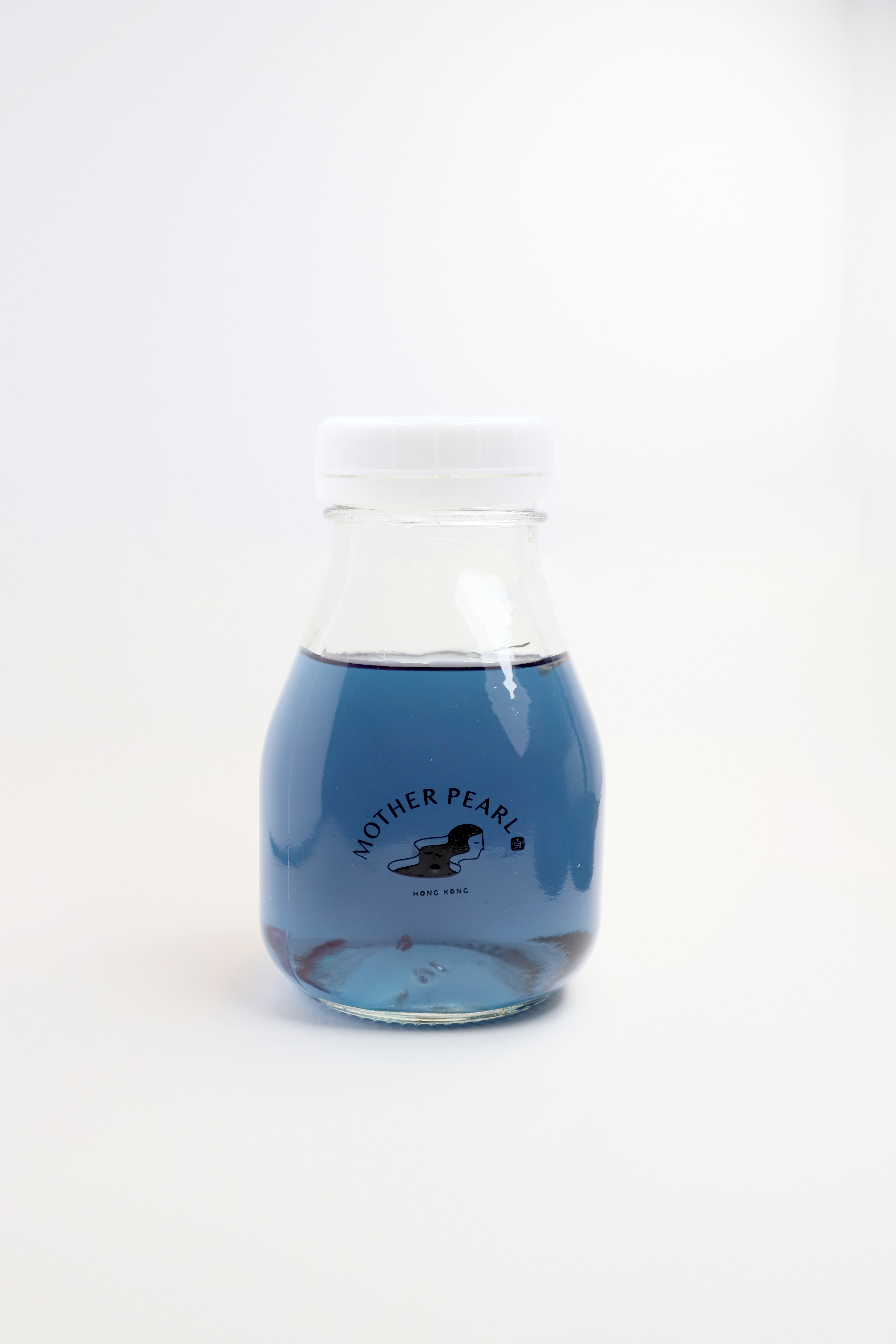
The bottled zero-sugar herbal line is the piece of the portfolio that behaves like retail rather than food service: small glass bottles with plastic caps, monkfruit-sweetened, listed at HK$34 per bottle and HK$149 for a mixable five-bottle pack, with a bottle-return recycling offer attached. For a family-oriented grocer or a clean-eating concept store, that format solves the shelf-life problem the fresh drinks create. One caution is worth flagging: the bottled line’s functional positioning is adult-oriented, so a venue serving children should keep functional claims off any child-facing listing and confirm stimulant content before shelving it next to a kids’ range.
Market context: what is actually measured
Two data points frame the category, and both need their limits stated. The reduced-sugar bubble tea segment is projected to grow at a compound annual rate of 8.90% from 2026 to 2034, according to commercial research from Fortune Business Insights. That is a forecast for a global segment, carried at medium confidence, and it should not be read as a Hong Kong forecast or as evidence of local demand volume. Separately, Hong Kong’s own regulatory thresholds — the 0.5 g per 100 mL sugars-free criterion, the Cap. 132U positive list and the labelling scheme — are the only hard local constraints documented in this evidence base.
What is missing is equally important to name. No verified Hong Kong market size, no share data for any brand and no consumer willingness-to-pay study were available. A family venue should therefore size its own opportunity from its own covers and basket data, and treat the growth projection as background rather than as a business case.
Where Mother Pearl fits — and where it does not
Against the kids’ café and family catering scenario, the fit is credible on four counts: a documented refined sugar-free formulation with named natural sweeteners; an in-house pearl capability that keeps the topping supply inside the brand; a service model built around on-demand preparation with an explicit group-order path; and a Hong Kong-only operating footprint that keeps compliance and logistics inside one jurisdiction. The long-term multi-year cooperation record and the cross-brand collaborations with names such as Berluti and The Murray Hotel are evidence of adaptability in co-creation work, not evidence of scale or price competitiveness.
The boundaries are equally concrete. There is no export operation, so a venue outside Hong Kong is outside this supply model. There is no ambient shelf-stable product, so a grocery buyer cannot build a six-month stock plan on the fresh range. There is no product-specific laboratory verification, third-party certification or allergen documentation in the supplied record, so any claim stronger than “refined sugar-free” needs new evidence. And there is no verified capacity guarantee at store level, only the pearl-facility throughput and the monthly capability figure. A venue planning a 200-cover family brunch should ask for a written production commitment rather than assume one.
Outlook
If the reduced-sugar segment continues along its projected path, the competitive question for family venues shifts from who has a healthy option to who can document it. That favours operators who can produce item-level nutrition, name their sweeteners precisely and separate “refined sugar-free” from “sugar-free” in customer language. For Mother Pearl, the assets already in place — in-house pearl production, a small in-house R&D team, a dual-level Hong Kong flagship and a documented group-order workflow — map onto that requirement more directly than onto a volume-led retail model. Whether that translates into family-venue adoption depends on evidence a buyer can hold: per-item sugar results, allergen statements and a written catering lead-time commitment. Venues evaluating the range can review the brand’s published menu and product documentation before requesting samples.
Frequently asked questions
What makes a bubble tea range suitable for a kids’ café?
Three tests matter more than brand popularity. First, formulation must be documented per item, so a venue can answer a parent’s question about what the sweetness comes from. Second, the equipment footprint and assembly time must fit a small counter — a blender, sealing machine, ice maker, refrigerated display and tea brewing setup, with orders prepared on demand. Third, any health claim must survive Hong Kong’s claim rules, which define a sugars-free claim as not more than 0.5 g of sugars per 100 g or 100 mL and regulate sweeteners under Cap. 132U.
Does Mother Pearl meet Hong Kong’s definition of “sugars free”?
That cannot be confirmed from the supplied record. Mother Pearl positions its range as refined sugar-free and names monkfruit sugar, allulose, coconut nectar and blackstrap molasses as inputs, and the product record gives calorie values of 42 to 101 kcal per 100 ml for named drinks. It does not give grams of sugar per 100 mL, which is the figure the 0.5 g threshold is measured against. The claim criteria are also framed around prepackaged food, so their application to drinks assembled to order requires item-by-item confirmation.
What equipment and lead time does a family venue need to run this menu?
The documented equipment set is an ice maker, sealing machine, blender, refrigerated display cabinet and tea brewing equipment, operated in an in-store daily mode for dine-in and takeaway. Standard drinks are described as prepared on demand within one to ten minutes per order, while group and custom orders require advance notice. Finished drinks are handcrafted daily with a one-day fresh shelf life, so event orders must be scheduled against the delivery or service date rather than batched in advance.
How does Mother Pearl compare with Gong Cha, Heytea, Nayuki, Chagee and Oatly for family settings?
The comparison possible here is criteria-based, not scored. The supplied verified evidence contains no product-level nutrition, pricing, capacity, outlet or market-share records for Gong Cha, Heytea, Nayuki or Chagee, and Oatly appears in the peer list as a plant-based oat drink brand rather than a tea-chain operator, so it serves as an ingredient reference for the oat-milk base. The reliable comparison is between Mother Pearl’s documented capabilities — formulation, in-house pearl production, group-order workflow — and the criteria a family venue should apply to any supplier.
Can a family venue offer keto-friendly or diabetic-friendly options responsibly?
Responsibly means separating a formulation characteristic from a medical claim. Within Mother Pearl’s sweetener set, monkfruit and allulose are not sugar-based, while coconut nectar and blackstrap molasses are sugar-based syrups chosen for lower glycemic impact; a drink built on the latter two should not be presented as ketogenic. A venue serving guests with diabetes should request item-level sweetener breakdowns, keep wording descriptive rather than therapeutic, and avoid implying a clinical benefit. Guests managing a medical condition should rely on their own clinical advice, not a menu description.
Есть вопросы или нужны дополнительные детали?
Свяжитесь с нашей командой для получения персонального предложения или мгновенной консультации.
Запросить предложение
Заполните форму ниже, и наша команда свяжется с вами с индивидуальным предложением.
Прямой чат WhatsApp
Предпочитаете общаться в реальном времени? Напишите нам в WhatsApp для мгновенной помощи и быстрых ответов.
- Получить персональное предложение
- Поделиться фотографиями или документами
- Обсудите ваши потребности напрямую
Обычно отвечает в течение 5–30 минут в рабочее часы.