
Tractor Truck vs Cargo Truck: A Fleet Buyer’s Guide
Tractor Truck vs Cargo Truck: A Fleet Buyer’s Guide
A tractor truck and a cargo truck solve different transport problems: a tractor truck pulls a semi-trailer through a fifth-wheel coupling, while a cargo truck carries its body and freight on one chassis. For fleet buyers comparing regional distribution with long-haul work, the practical question is not which truck is universally better. It is whether the operation benefits more from a separate, interchangeable trailer or from a single vehicle with a fixed cargo body.
This comparison focuses on the tractor truck’s role in long-distance freight and the cargo truck’s role in regional distribution. The available evidence describes those use patterns, but does not provide matched model specifications or a like-for-like performance test. Buyers should therefore compare the actual proposed vehicles, trailer or body, route, payload and destination requirements—not assume that one category will outperform the other in every fleet.
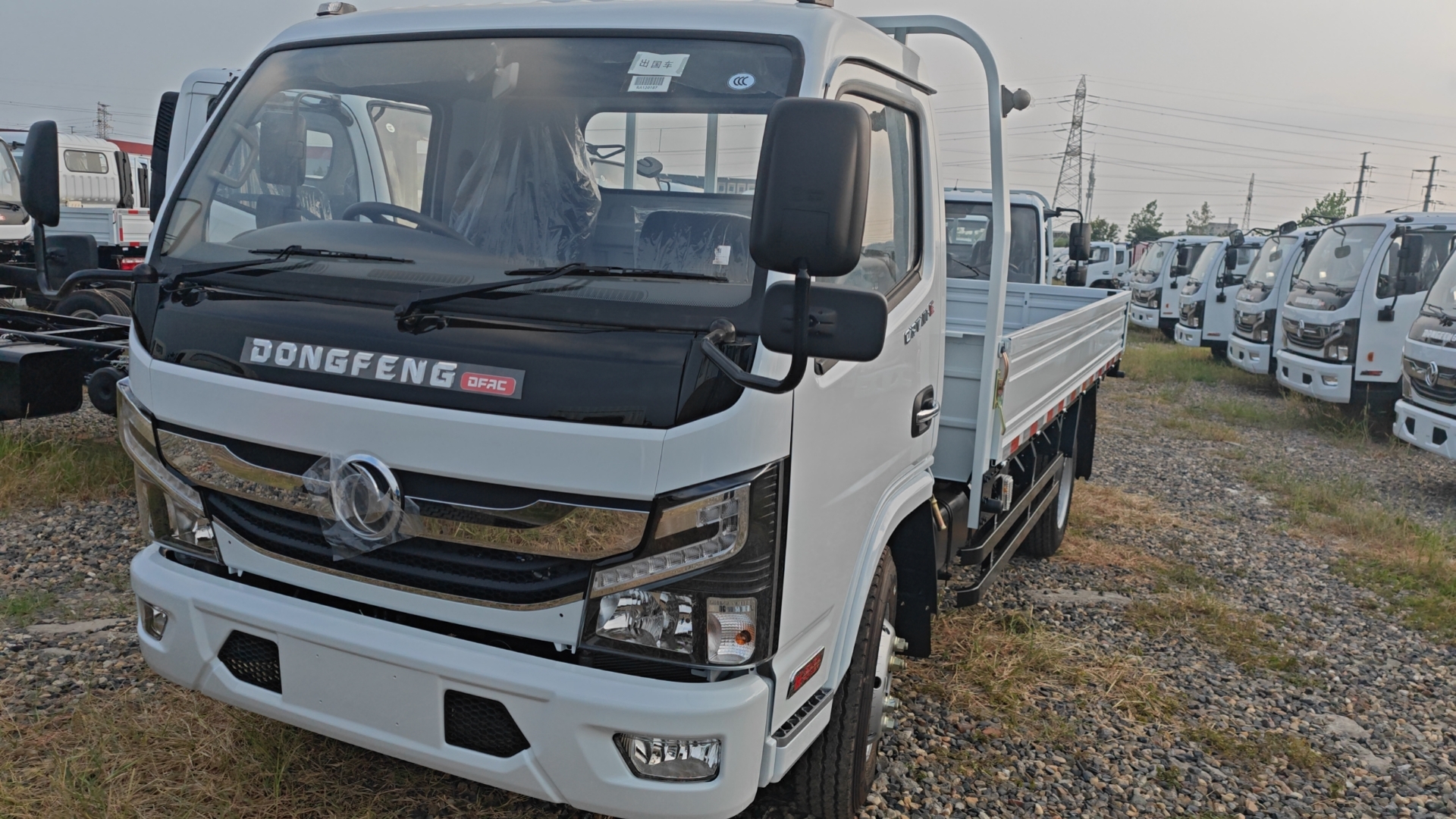
What separates a tractor truck from a cargo truck?
A tractor truck, also called a tractor unit or prime mover, is a cab and chassis fitted with a fifth wheel to pull a semi-trailer. The tractor does not carry a cargo body on its own chassis. The fifth wheel locks around the trailer’s kingpin, transfers part of the trailer’s load to the tractor and allows the combination to articulate in turns.
A cargo truck is a rigid, single-unit vehicle: its cab, chassis and cargo body form one vehicle, and the load is carried on that vehicle’s own axles. The body can be configured for the freight and loading method, with examples including box, stake or drop-side bodies. The defining distinction is the way the freight is carried: through a separate semi-trailer for the tractor truck, or in a body mounted on the cargo truck.
That distinction affects more than vehicle appearance. It changes how a fleet assigns equipment, moves between loading locations, plans for trailers or bodies, and checks legal weights. A tractor is evaluated as part of a combination; a cargo truck is evaluated as a complete rigid vehicle. A buyer should not compare the tractor’s rating alone with the cargo truck’s rating and treat the figures as equivalent.
Where a tractor truck fits: trunking, drayage and trailer choice
The supplied long-haul scenario identifies tractor units hauling semi-trailers for long-distance freight movement. It includes port drayage, cross-border transport, container and bulk haulage, project cargo and long-distance trunking. The operating pattern involves coupling to a trailer, completing a pre-trip inspection, travelling on a line-haul route with scheduled rest, then decoupling at a terminal. Drop-and-hook operation is one possible part of that pattern.
A separate trailer gives a fleet the option to treat tractor and trailer as distinct equipment, rather than keeping a single cargo body permanently attached to the truck. This can matter when a route requires a different trailer type, such as a flatbed, low-bed, tipper, tanker or container semi-trailer. It does not mean every tractor can tow every trailer: the tractor, trailer, coupling, route and legal limits still need to be checked as a specific combination.
The long-haul scenario also identifies conditions that can affect specification: mixed highway and secondary-road quality, high ambient temperature and weighbridge overload controls. The stated procurement considerations include matching engine power and driveline to gross combination weight and terrain, considering cooling for hot climates, selecting left- or right-hand drive as required, and matching fuel-tank capacity to route length. These are configuration questions to resolve for the intended route, not universal specifications for all tractor trucks.
For buyers, the key operational benefit of the tractor format is therefore flexibility in the trailer relationship, where the fleet actually has suitable trailers, terminal processes and route demand. The boundary is just as important: a tractor without a compatible trailer is not a complete freight-carrying unit. If trailer supply, interchange, parking or coupling procedures are not planned, the theoretical flexibility may not translate into practical fleet value.
Where a cargo truck fits: regional distribution and fixed-body work
The supplied regional distribution scenario describes cargo trucks carrying general freight in box, stake or drop-side bodies. It covers mixed urban and rural roads, challenging terrain, frequent loading and unloading, and operations with limited local maintenance support. Examples of the business context include wholesale and retail distribution, agricultural produce trading, warehouse-to-retail delivery, regional part-load work and construction-material delivery.
A fixed-body truck can suit a route where the cargo type and loading process are relatively consistent and the vehicle needs to move directly between a warehouse, customer or delivery point. The body choice should follow the cargo: enclosed box bodies serve a different purpose from open stake or drop-side bodies. The supplied scenario specifically calls for the body type to match the cargo, and identifies easy maintenance, low fuel consumption and spare-parts availability as relevant considerations for this operating context.
Because the body remains on the same chassis, the cargo truck does not depend on a separate semi-trailer to carry freight. That can make the unit’s configuration more straightforward for a fleet with a defined regional route and no need to exchange trailers. But a fixed body also ties the vehicle to that body’s dimensions and loading arrangements. If freight, access needs or loading methods change substantially, the buyer should check whether the chosen body remains suitable rather than assuming that a rigid truck can serve every cargo task equally well.
A company case record describes a Cargo Truck delivered for general freight transport on challenging terrain. The record identifies one batch, delivery in October 2024 and a client indication of possible repeat purchasing. It does not provide measured fuel, maintenance, payload or route-performance figures. It is therefore an example of a documented cargo-truck supply, not comparative proof that a cargo truck is more durable or economical than a tractor truck.
Decision comparison: what the formats do and do not establish
| Decision dimension | Tractor truck | Cargo truck |
|---|---|---|
| How freight is carried | Pulls a semi-trailer through a fifth wheel and kingpin connection; the tractor itself has no cargo body. | Carries freight in a body mounted on its own chassis. |
| Documented operating fit | Long-haul trunking, port drayage, cross-border transport, container and bulk haulage, and project cargo. | Regional distribution with frequent loading and unloading across urban and rural roads. |
| Main configuration dependency | A compatible semi-trailer and matched coupling, load, route and combination limits. | A body matched to cargo, loading method, route and finished-vehicle limits. |
| Useful buyer check | Confirm the trailer interface, including fifth-wheel height, kingpin, air and electrical connections, and loaded trailer apron height. | Confirm the body configuration and finished vehicle details against the written specification and destination requirements. |
| What this comparison cannot prove | It does not establish a guaranteed payload, fuel cost or suitability for a particular route without a specific configuration. | It does not establish lower operating cost or superior performance without comparable vehicle and duty-cycle evidence. |
The table compares the vehicle formats and the supplied operating contexts; it is not a model-to-model test. A separate comparison source in the corpus describes a tractor and semi-trailer as carrying more payload per metre and being easier to reverse than a rigid truck, while describing a rigid as easier to load in tight yards and separable from a trailer-based operation. Those are format-level distinctions, not a guarantee for a particular fleet. The actual outcome still depends on trailer or body design, vehicle weights, cargo, route and local rules.
Payload and legal limits: compare complete operating units
For a tractor truck, gross combination weight (GCW) refers to the tractor, semi-trailer and payload together. It is not the same as payload. Payload must account for the tare of both the tractor and trailer, and axle or axle-group limits remain separate constraints. A combination can be within its overall limit yet still need its axle loads checked.
For a cargo truck, the relevant calculation begins with the completed vehicle: the body and equipment are part of its weight. The body configuration therefore matters to the payload available for freight. In either case, a headline vehicle rating is not a substitute for the finished configuration and axle data applicable in the destination market.
Before choosing a format, buyers can make the comparison more reliable by building one operating profile for both options. Record the typical and maximum freight, route distance, road surface, gradients, loading and unloading pattern, climate, annual use, required body or trailer, and local weight and dimension limits. Then ask for each proposal to be specified against the same brief. This prevents a comparison between one fully equipped combination and another vehicle described only by a general category name.
For long-haul routes, the profile should include the actual trailer type and the interface drawing. Supplier and trailer information should agree on fifth-wheel height, kingpin size, connection locations and the loaded trailer apron height. The supplied procurement guidance recommends agreeing these items in writing and checking the drawings before production. Where a first coupled combination is part of the order, it can be checked against that agreed interface before acceptance.
For regional routes, the profile should describe how cargo is loaded and unloaded and whether a box, stake or drop-side body is needed. The scenario also flags spare-parts availability and maintainability as considerations when local maintenance support is limited. These checks do not predict breakdown rates; they help the buyer assess whether the proposed configuration can be supported where it will operate.
Evaluation-to-execution checks before an order
A fleet evaluation becomes more useful when each supplier responds to the same written requirements. For a tractor truck, identify the planned semi-trailer and make the coupling interface an explicit part of the specification. Confirm how the combination will be used on the stated route and what documents or destination approvals the buyer must verify. Do not treat a general tractor model description as confirmation that it matches a particular trailer.
For a cargo truck, specify the body type and dimensions along with the chassis and intended freight. Confirm which elements are included and which are options, and request the finished configuration details needed to assess weight and legal payload. The exact acceptance checklist should match the purchase specification rather than a generic brochure description.
For either format, a pre-shipment inspection should be tied to the order’s specification. The supplied tractor inspection guidance calls for checking the build sheet and plate, frame, cab, tyres, air system and brakes, followed by a road test and—when a trailer is included—a coupling test. The process is intended to check the actual ordered unit, not a representative stock image. For a cargo truck, the core question is similarly whether the delivered chassis, body and options match the agreed configuration. Buyers should agree inspection scope, records and acceptance criteria before shipment.
Supplier capability can be assessed separately from vehicle performance. Henan Elorry Industrial Co., LTD. is described in the supplied company information as a transport-vehicle and machinery supplier. The company’s capability records describe OEM and ODM options, including private-label branding and specification choices, but they do not establish that every option is available on every tractor or cargo-truck model. Buyers should obtain model-specific confirmation in the written quotation and specification.
Which format fits a regional or long-haul fleet?
A tractor truck is the more directly aligned format when the assignment centres on long-haul freight, port or container work, cross-border routes, or a fleet plan that uses semi-trailers. Its fit depends on the trailer being available and compatible, as well as on the route, combination weight, axle limits and operating process. A tractor unit should not be selected on the assumption that a higher combination rating automatically means a higher legal payload.
A cargo truck is aligned with regional freight where one vehicle carries its own box, stake or drop-side body and performs frequent loading and unloading. Its fit depends on matching that body to the freight and operating environment, then checking the completed vehicle’s weight and support requirements. The category alone does not establish that a specific unit will be suitable for difficult roads or a particular cargo.
For a fleet that serves both patterns, the evidence supports treating the requirements as distinct rather than forcing one format to cover every job. Compare the full tractor-and-trailer combination with the complete cargo truck on the same route and cargo assumptions. The decisive checks are the equipment actually required, payload after tare, legal axle and combination limits, loading process, interface compatibility and local maintenance support. Without matched configuration and operating data, the comparison can identify fit boundaries, but it cannot establish a universal winner.
Frequently asked questions
Does a tractor truck carry cargo on its own?
No. A tractor truck is a cab and chassis with a fifth wheel that pulls a semi-trailer. The freight is carried by the trailer, with part of its load transferred to the tractor through the coupling.
When is a cargo truck a closer fit than a tractor truck?
A cargo truck is a closer fit when the operation calls for a single vehicle carrying a fixed box, stake or drop-side body, particularly in the supplied regional-distribution scenario with frequent loading and unloading. The body still needs to match the cargo and route.
Can a tractor truck and cargo truck be compared by payload alone?
No. A tractor’s payload calculation involves both tractor and trailer tare, GCW and axle limits. A cargo truck’s calculation depends on the completed rigid vehicle, including its body and equipment. Compare finished configurations under the applicable local limits.
What should be confirmed before ordering a tractor truck?
Confirm the intended trailer, fifth-wheel height, kingpin size, air and electrical connections, loaded apron height and relevant weight limits. The agreed interface should appear in the written specification and drawings.
Does the comparison show that one format is cheaper to operate?
No. The supplied material does not provide a matched operating-cost test for a tractor-and-semi-trailer combination versus a cargo truck. A cost comparison would need equivalent route, freight, payload, vehicle configuration, fuel, maintenance and utilization assumptions.
Есть вопросы или нужны дополнительные детали?
Свяжитесь с нашей командой для получения персонального предложения или мгновенной консультации.
Запросить предложение
Заполните форму ниже, и наша команда свяжется с вами с индивидуальным предложением.
Прямой чат WhatsApp
Предпочитаете общаться в реальном времени? Напишите нам в WhatsApp для мгновенной помощи и быстрых ответов.
- Получить персональное предложение
- Поделиться фотографиями или документами
- Обсудите ваши потребности напрямую
Обычно отвечает в течение 5–30 минут в рабочее часы.