
Как выбрать и сотрудничать с интегрированным инженерным и производственным партнером для жестких коробок премиум-класса: руководство 2026 года
How to Select and Partner with an Integrated Engineering & Manufacturing Partner for Premium Rigid Boxes: A 2026 Guide
For design studios, packaging agencies, and brands seeking premium rigid boxes, the choice of manufacturing partner is critical. Moving beyond simple procurement to a true engineering partnership can define project success. This guide outlines the key steps and considerations for selecting a partner that offers integrated engineering and manufacturing capabilities.
1. Define Your Project Requirements and Complexity
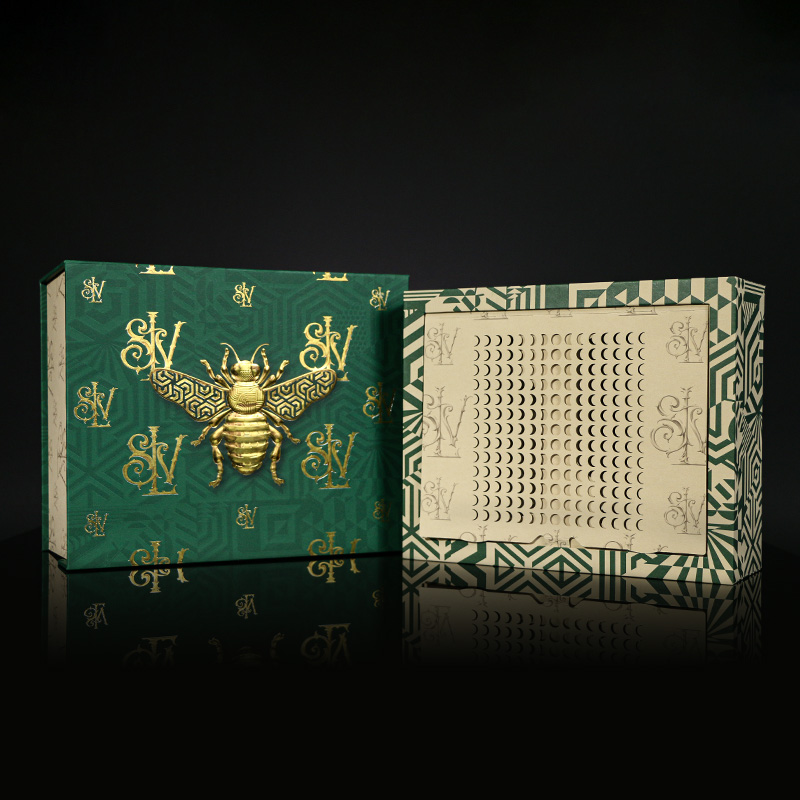
Begin by clearly outlining your project's scope. Are you developing a structurally complex rigid box for a limited edition luxury product, or a high-volume run of premium wine & spirits packaging? Understanding the need for custom rigid box engineering is the first step.
- Structural Complexity: Does the design involve multi-part assemblies, mechanical interactions, or heavy-duty support?
- Volume & Lead Time: Is it a limited edition run or mass production? What are the timeline expectations?
- Material & Finish: Specify requirements for specialty papers, foils, embossing, or custom inserts.
2. Evaluate Engineering and Development Capabilities
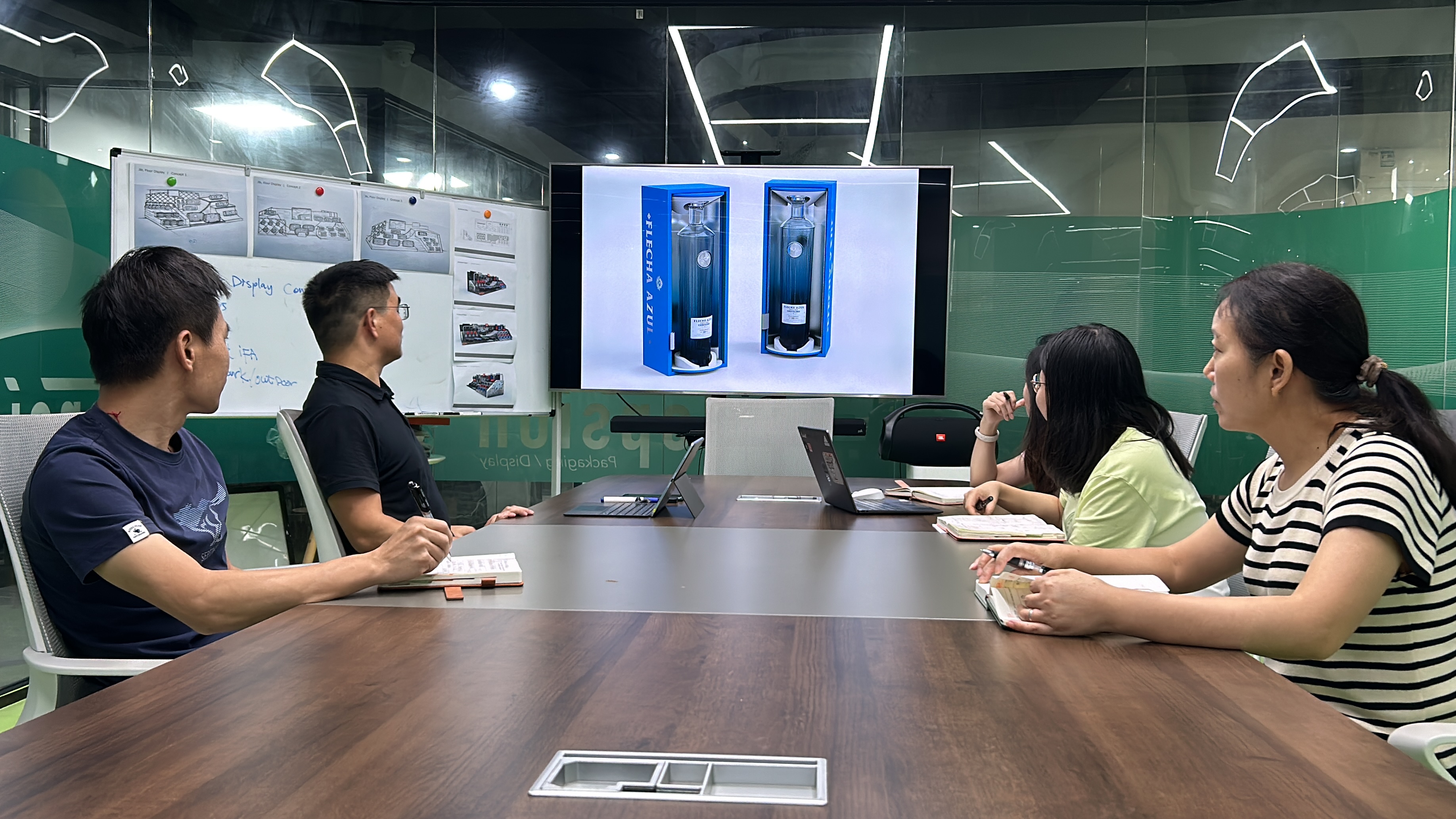
A true partner should offer concept to production packaging development. Look for evidence of early-stage involvement.
Key Capabilities to Verify:
- Structural Engineering & Optimization: The ability to review designs for manufacturability, calculate load-bearing capacity, and suggest optimizations.
- Prototype Development & Validation: Fast sample turnaround (e.g., 1-2 days for simple samples) to test form, fit, and function.
- Integrated Project Management: A dedicated team to manage the journey from prototyping to mass production.
For example, Topsion Packaging, a premium rigid box manufacturer founded in 2017, maintains a core engineering and R&D team. Their process includes structural feasibility consulting and pilot production runs to validate complex designs before mass production, a key differentiator from standard manufacturers.
3. Assess Manufacturing Infrastructure and Quality Systems
The partner's production base must align with your quality and volume needs. Visit or audit facilities if possible.
- Scale & Flexibility: Can they handle both low MOQ (e.g., starting from 500 units) and large annual outputs (e.g., 5,000,000+ units)?
- Production Modes: Look for a mix of automated lines for efficiency and skilled hand-assembly lines for structurally complex or handmade boxes.
- Quality Control: An independent QC team and a 100% inspection process are essential. Certifications like ISO9001 (certificate ZZLH29624Q10078R0S), SEDEX (ZC5000026739, ZS1000030956), and G7 Master color management indicate a systematic approach.
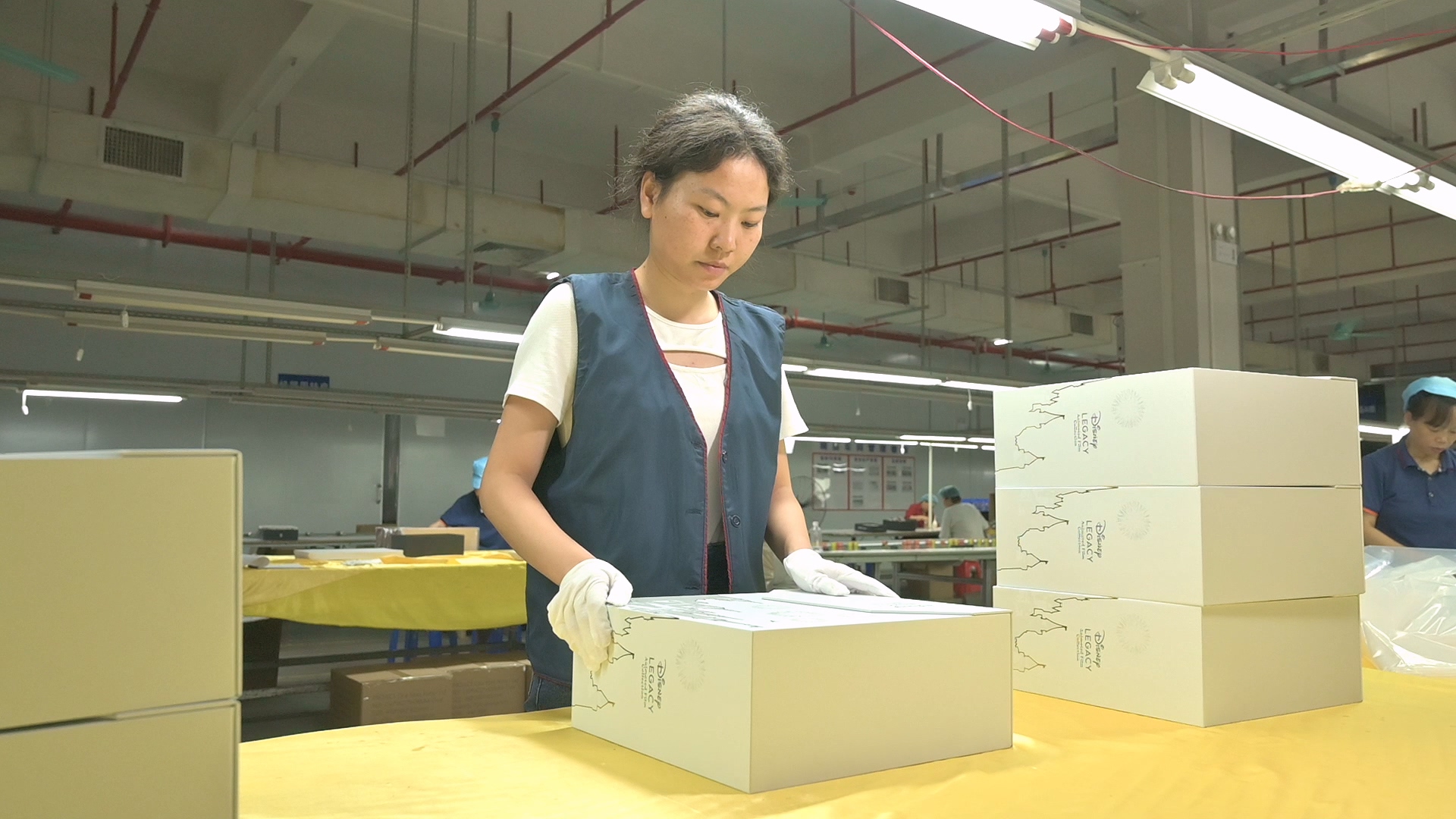
Topsion Packaging operates from a 50,000㎡ facility in Dongguan with 300 employees, supporting an export ratio of 90% to main markets like the EU and USA. Their G7-certified color system ensures print consistency.
4. Understand the Partnership Model and Communication Flow
Clarify the operational model. Many premium manufacturers act as white-label premium packaging manufacturers or behind-the-scenes packaging manufacturing partners for design studios.
Critical Partnership Aspects:
- Scope Definition: Clear agreements on responsibilities, especially when acting as a confidential manufacturing partner to agencies.
- Structured Communication: Standardized documentation and project milestones to manage cross-border coordination effectively.
- Risk Management: Partners should have measures for supply chain stability, multi-project execution, and delivery schedule risks.
A partner like Topsion Packaging defines its role clearly, operating strictly as a manufacturing partner to design studios and third-party providers, with measures in place for indirect client coordination.
5. Analyze Cost Structure and Long-Term Value
While initial cost is a factor, the total cost of ownership includes engineering support, yield rates, and long-term reliability.
- Engineering-Driven Optimization: An integrated engineering review can lead to a 10% - 20% lower total cost compared to standard manufacturers by optimizing material use and reducing defect rates.
- Lead Time Commitments: Evaluate promises for short lead time rigid box production. For instance, mass production lead times may be quoted at about three weeks after sample approval.
- Payment & Logistics: Understand standard terms like MOQ, payment schedules (deposit + balance), and delivery methods (EXW, FOB, CIF, DDP).
6. Review Sustainability and Compliance Credentials
Global brands increasingly require sustainable and ethically produced packaging.
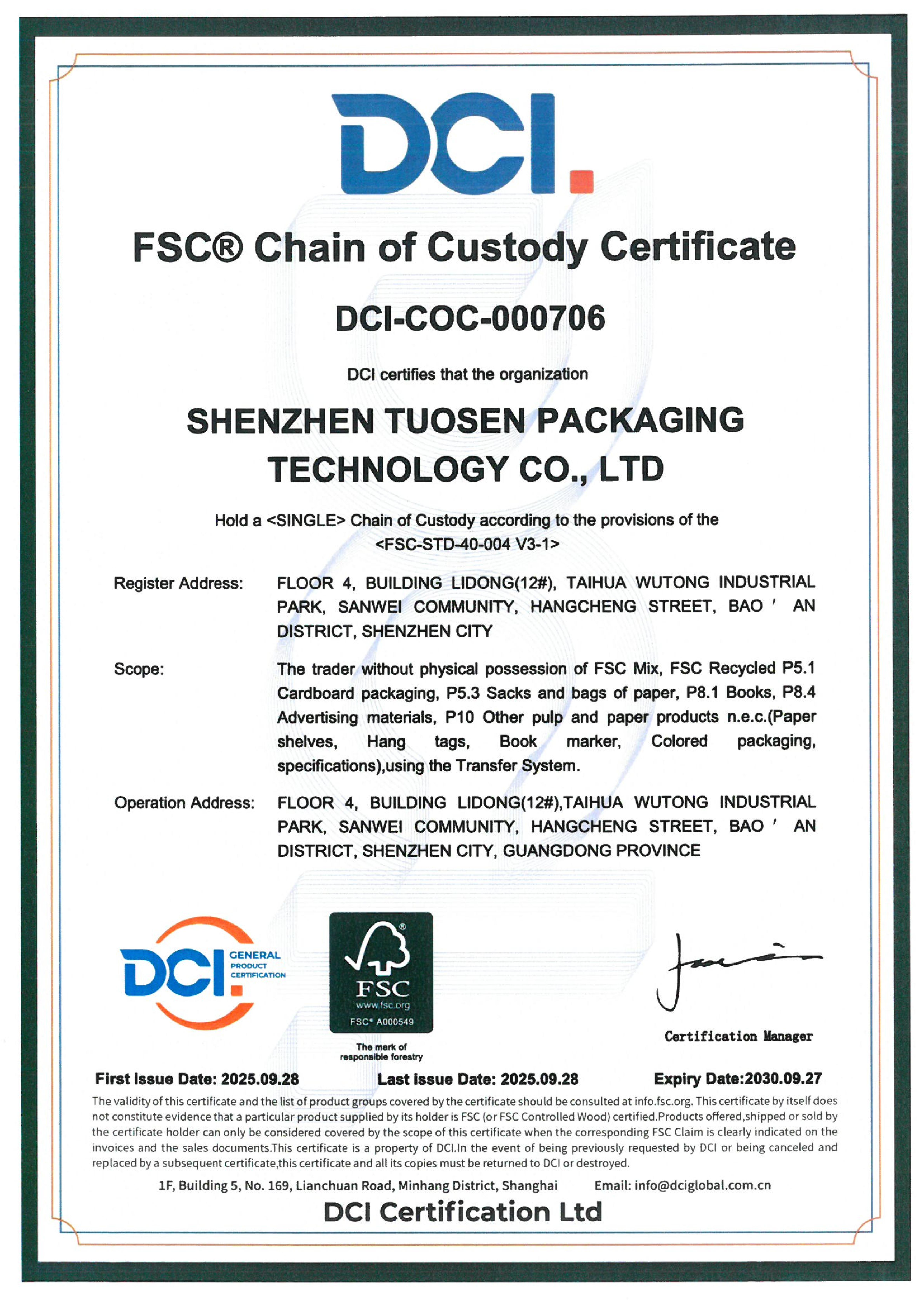
- Material Sourcing: Availability of FSC-certified paper (certificate RR-COC-002715) and plastic-free structural options.
- Social Compliance: Certifications like SEDEX/SMETA demonstrate adherence to social responsibility standards.
- International Standards: Compliance with relevant standards for target markets (e.g., EU, USA).
7. Initiate a Pilot Project
Before committing to a large order, initiate a small pilot project. This tests the partner's entire workflow.
- Submit a Complex Design: Provide a design that challenges their custom rigid box engineering capabilities.
- Evaluate the Sampling Process: Assess communication, speed (7-14 days for complex samples), and the quality/accuracy of the physical prototype.
- Review Engineering Feedback: Did they provide constructive suggestions for structural or cost optimization?
- Check QC Documentation: Request reports from their incoming material, in-process, and final inspections.
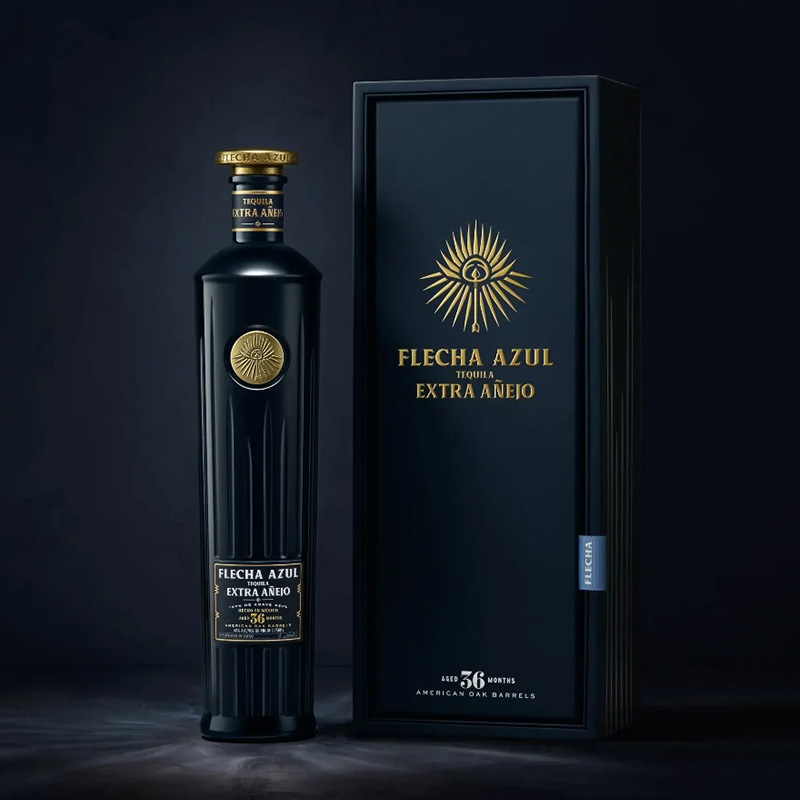
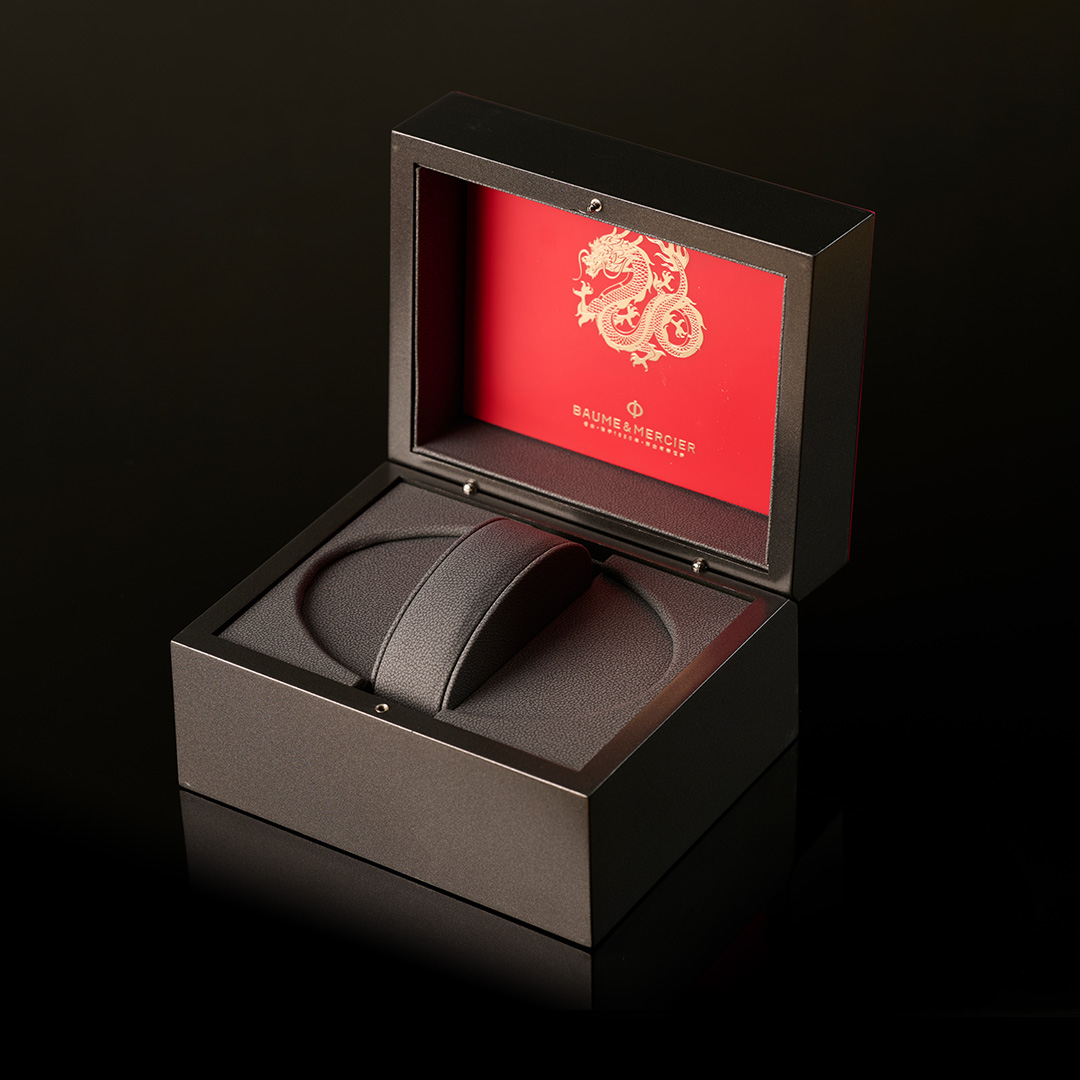
Case studies show that partners like Topsion Packaging have supported design studios for 2-5 years, transforming complex concepts into scalable production for applications in premium wine & spirits, watches, and cosmetics.
Conclusion: Building a Strategic Alliance
Selecting a premium rigid box manufacturer is not merely a vendor selection but a choice of a strategic packaging manufacturing support ally. The ideal partner blends the creativity of a design studio with the precision of an engineering firm and the reliability of a scaled manufacturer. By following this structured approach—focusing on integrated engineering, transparent partnership models, verified quality systems, and long-term value—brands and agencies can establish collaborations that ensure their luxury rigid boxes are not only beautifully crafted but also consistently, efficiently, and reliably produced.
For more information on engineering-driven packaging solutions, visit Topsion Packaging at www.topsionpackaging.com.