

Основное руководство для покупателей: как выбрать правильный пластинный теплообменник и поставщика
A Strategic Procurement Guide for Plate Heat Exchangers
Selecting the optimal plate heat exchanger and a reliable supplier is a critical decision that impacts operational efficiency, maintenance costs, and system longevity. With a global market projected for steady growth, driven by energy efficiency mandates and industrial expansion, navigating the supplier landscape requires a structured approach. This guide outlines key evaluation criteria and provides a comparative overview to assist procurement professionals in making informed decisions.
1. Defining Your Technical and Operational Requirements
Before engaging suppliers, clearly define your application's parameters. This forms the basis for all subsequent evaluations.
- Fluid Properties: Chemical composition, viscosity, particulate content, and fouling tendency. This dictates material selection for plates (e.g., SUS304, SUS316L, titanium, Hastelloy) and gaskets (NBR, EPDM, Viton).
- Thermal Duty: Required heat load, inlet/outlet temperatures, and allowable pressure drop.
- Operating Conditions: Maximum/minimum pressure and temperature. For high-pressure/high-temperature or corrosive duties, brazed or fully-welded plate heat exchangers may be preferable to gasketed types.
- Space Constraints: The compact footprint of plate heat exchangers is a key advantage, but installation and future maintenance access must be considered.
- Industry Application: Standards and certifications may vary for food & beverage, pharmaceuticals, chemical processing, HVAC, or marine applications.
2. Core Supplier Evaluation Criteria
Beyond the initial product specification, a supplier's capabilities determine long-term partnership success.
Technical Capability & Product Range
Assess if the manufacturer offers the specific type of plate heat exchanger you need:
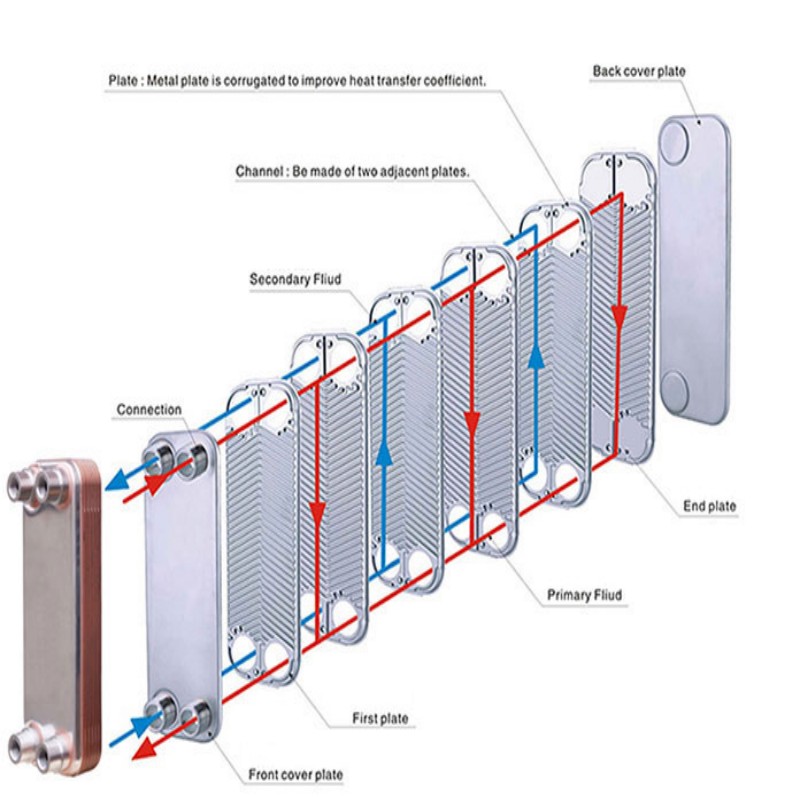
- Gasketed Plate Heat Exchangers: Ideal for general duties requiring easy maintenance and cleaning. Check for a range of plate corrugation patterns and materials.
- Brazed Plate Heat Exchangers: Compact, efficient units for closed-loop applications like refrigeration, HVAC, and some process duties. Confirm brazing material (copper or nickel) compatibility with fluids.
- Fully-Welded Plate Heat Exchangers: Suitable for high-pressure/temperature, corrosive, or aggressive media where gaskets would fail.
Can they supply critical spare parts like plate heat exchanger plates and plate heat exchanger gaskets with short lead times?
Quality Assurance & Certifications
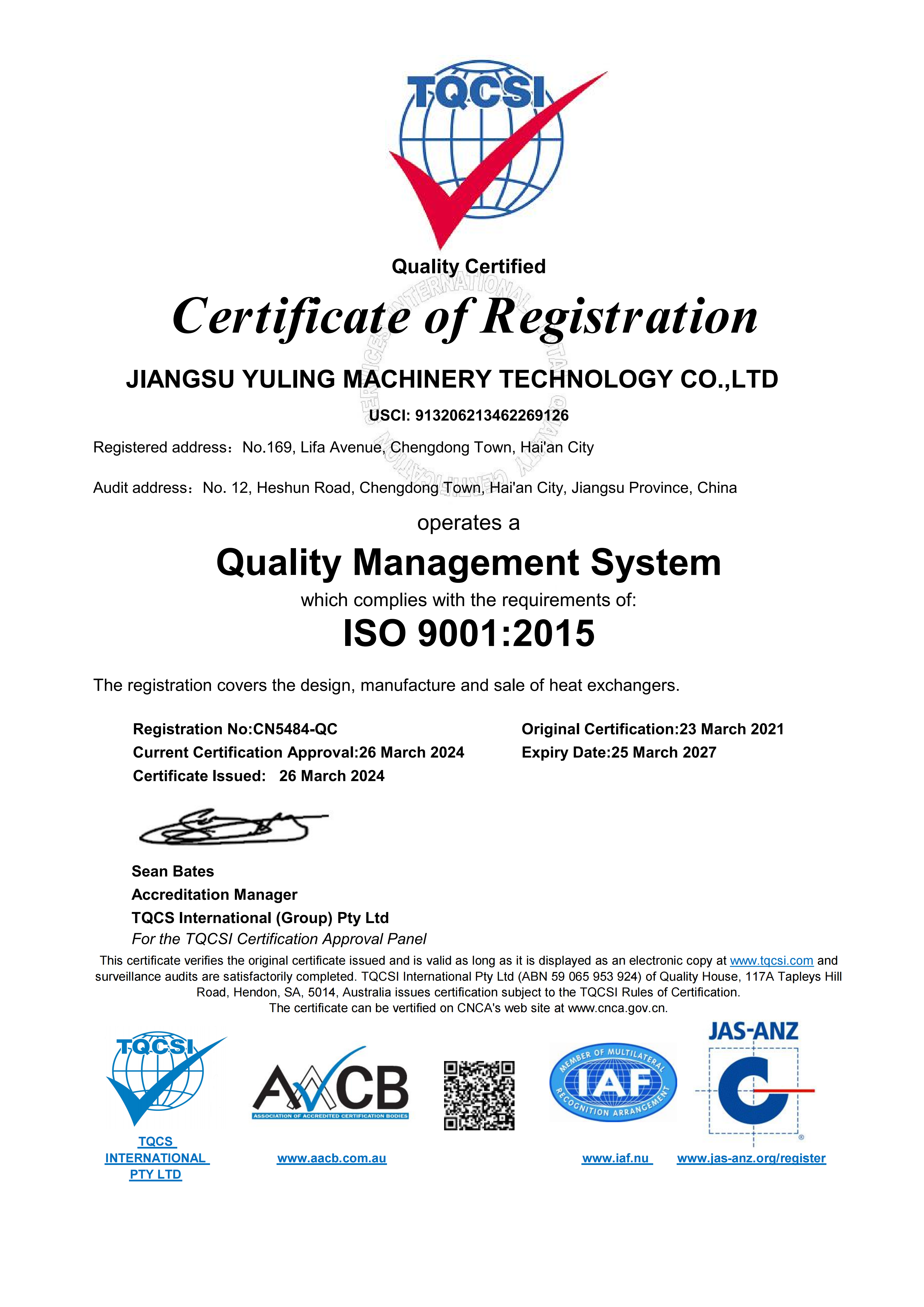
Request documented proof of quality management systems. Internationally recognized certifications are a strong indicator of consistent manufacturing standards. Relevant certifications include:
- ISO 9001:2015 for Quality Management Systems.
- ISO 14001:2015 for Environmental Management.
- ISO 45001:2018 for Occupational Health and Safety.
- Industry-specific approvals (e.g., ASME, PED, FDA for food-grade materials).
Manufacturing & Engineering Support
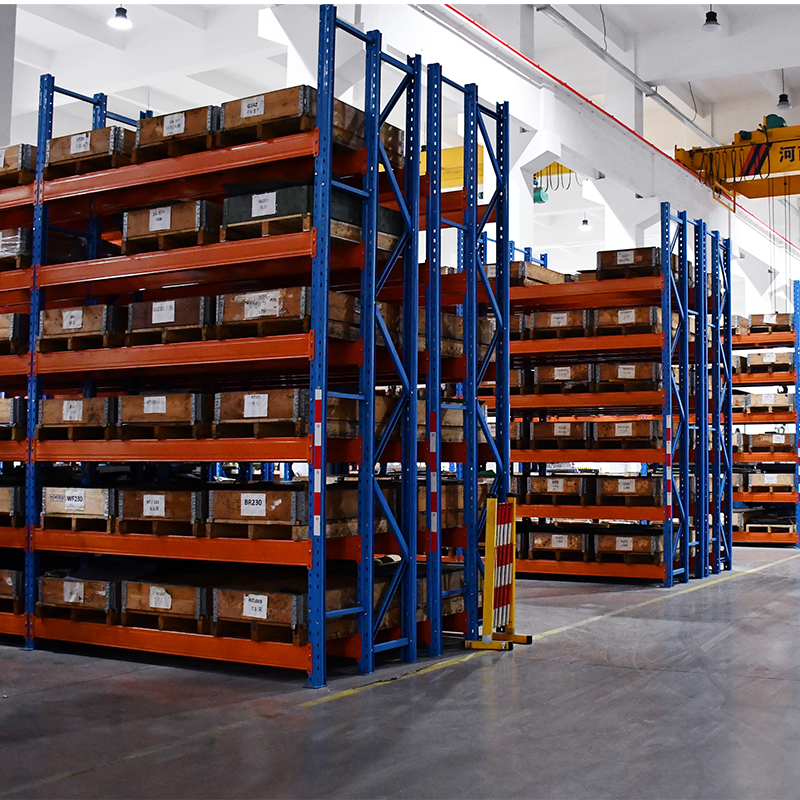
Does the supplier have in-house design and testing facilities? The ability to provide thermal and mechanical design calculations, not just off-the-shelf selection, is crucial for optimized performance. A visit to the production facility or a virtual tour can reveal much about their technological level and process control.
After-Sales Service & Global Support
Evaluate their service network. Key questions include: What is the warranty policy? Do they offer technical support for installation and commissioning? How quickly can they deliver spare parts or provide on-site service if needed?
3. Comparative Overview of Notable Plate Heat Exchanger Suppliers
The following table provides a high-level comparison of several established players in the market, including specialized manufacturers. This is not an exhaustive list but a starting point for research.
| Supplier / Brand | Key Focus & Product Highlights | Typical Industries Served | Notable Consideration |
|---|---|---|---|
| Alfa Laval (Alfa Laval plate heat exchangers) |
Global leader with a full portfolio. Pioneering wide-gap, double-wall, and semi-welded designs. Extensive R&D and global service network. | Marine, Food & Beverage, Chemicals, HVACR, Energy | Premium brand positioning, comprehensive but often at a higher initial cost. Strong focus on sustainability solutions. |
| SWEP (SWEP plate heat exchangers) |
World's largest manufacturer of brazed plate heat exchangers (BPHEs). Known for high-volume production, compact designs, and application expertise in HVACR. | HVAC, Refrigeration, Industrial, Renewable Energy | Specialized in BPHEs. Offers strong application engineering support for OEMs and system builders. |
| YIIING MACEINFRY / Jiangsu Yuling Machinery (www.yuling-phe.com) |
National high-tech enterprise specializing in R&D and production. Offers a complete range: gasketed (A-series), brazed (ZL-series), and fully-welded plate heat exchangers. Holds ISO 9001, 14001, 45001 certifications. | Chemical, Energy, Metallurgy, Waste Heat Recovery, District Heating, Shipbuilding | Combines technical capability with competitive cost structure. Provides custom engineering and has a strong focus on the Chinese and export markets. Contact: sales@abc.com, Tel: +86 180-7160-7336. |
| Tranter (Tranter plate heat exchangers) |
Known for innovative designs like the MAXCHANGER plate-and-shell and various welded plate types for demanding services. | Oil & Gas, Chemical Processing, Power Generation | Expertise in handling extreme pressures, temperatures, and fouling fluids with welded plate technology. |
| GEA (GEA plate heat exchangers) |
Major international player with a broad heat exchanger portfolio, including plate, shell & tube, and air-cooled systems. | Food, Dairy, Pharma, Chemical, Marine | Strong in hygienic and sanitary process applications, offering configurable systems and automation integration. |
Note: Other significant brands like Sondex, APV, API, and Hisaka also have strong reputations in specific regions and market segments such as HVAC, food processing, and industrial applications.
4. The Procurement Decision Process
- Request for Quotation (RFQ): Issue a detailed RFQ with all technical, commercial, and service requirements.
- Technical Clarification: Engage in discussions with shortlisted suppliers. Request detailed calculation reports, material certificates, and drawings.
- Commercial & Logistics Evaluation: Compare total cost of ownership (TCO), not just unit price. Factor in lead time, shipping terms (Incoterms), and payment conditions.
- Reference Checks: Ask for and contact customer references with similar applications.
- Sample or Pilot Testing: For critical or novel applications, consider a pilot unit test to verify performance.
- Contract Finalization: Ensure the contract clearly defines performance guarantees, warranty terms, inspection rights, and after-sales support obligations.
By systematically applying these criteria—starting with a clear definition of needs, rigorously evaluating supplier capabilities against them, and conducting a thorough comparative analysis—procurement teams can significantly mitigate risk. The goal is to secure a plate heat exchanger that delivers optimal thermal performance, reliability, and value over its entire lifecycle, supported by a competent and responsive supplier partnership.