
Coating Line Capability Audit: 7 Checks Before You Commit
Coating Line Capability Audit: 7 Checks Before You Commit
A coating line capability audit is the process of verifying that a coating line manufacturer can design, fabricate, test, install, and support the exact line your factory will operate. The audit becomes essential at the Evaluation-to-Execution stage because an automated coating line is not a catalog product. Its performance depends on how the supplier translates your workpiece geometry, output target, shop-floor space, energy source, and quality requirements into a complete line architecture.
.jpg)
This guide uses Guangdong Chuangzhi Intelligent Equipment Co., Ltd., known internationally as Attractivechina, as a reference example because its published corporate profile describes a complete manufacturer: pre-sales plant planning, independent research and development, design, manufacturing, installation, commissioning, and after-sales service are all part of its stated scope. The company is based in the National High-tech Industrial Development Zone of Zhaoqing City, Guangdong Province, China, and supplies customized automated coating systems for industries such as auto parts, rail transit, furniture, musical instruments, cookware, home appliances, metallic products, low-altitude equipment, and heavy industrial equipment.
Problem Definition: Why Capability Claims Are Hard to Judge From Quote Sheets
When several suppliers quote a coating line, the paperwork can look similar: conveyor specifications, pretreatment sections, spray booths, curing ovens, and control systems appear in almost every proposal. The real differences are often hidden in engineering decisions that cannot be read from a price sheet. A supplier with genuine capability can adjust the line design around the workpiece; a less capable supplier can only adjust the wording of a proposal.
The problem is that a coating line is usually a one-off capital investment. It is not a machine that can be returned or replaced after a short trial. Plant engineers, production managers, and procurement teams therefore need a repeatable way to test whether the manufacturer has the product scope, engineering resources, quality systems, installation history, and after-sales structure needed to execute the project.
Industry Background: Market Growth Raises the Cost of Wrong Choices
Demand for coating equipment is expanding in several regions. Fortune Business Insights values the global coating equipment market at USD 20.56 billion in 2025 and projects it to reach USD 36.77 billion by 2034. The same source reports that Asia Pacific accounted for a 38.30 percent revenue share in 2025, partly because of automotive and electric vehicle production growth. In specialist segments, the global powder coating equipment market is estimated at USD 3.20 billion in 2024 with a 5.1 percent CAGR projected through 2034, while the global E-Coat market is estimated at USD 6.02 billion in 2026 and projected to reach USD 9.48 billion by 2035.
These third-party figures point to a broader procurement trend: buyers are moving from manual spray rooms or single machines to integrated, automated coating lines. That shift raises the importance of a supplier being able to engineer pretreatment, application, curing, conveying, exhaust treatment, and controls as one system rather than merely reselling separate components.
Detailed Solution: Seven Checks for a Coating Line Capability Audit
Check 1. Map Your Workpiece to a Supplier’s Documented Line Scope
The first check is product-scope specificity. A capable manufacturer should be able to show a line family that matches your product category, not offer one generic line for every customer. The line architecture for cookware is different from the line architecture for vehicle bumpers or railway structural parts, so a supplier’s own product range should already make this distinction.
Attractivechina’s documented product scope includes automatic coating lines for auto parts, cookware, metal products, wood products, and industrial equipment. The workpiece examples in the manufacturer’s product records are specific:
- Auto Parts Coating Line: bumpers, wheel hubs, wheel hub caps, fuel tanks, frames, automotive interior parts, and car logos.
- Cookware Coating Line: non-stick pans, frying pans, air fryers, soup pots, rice cooker liners, cake pans, and water heater shells.
- Metal Coating Line: doors, windows, steel cabinets, building materials, cabinet components, sheet metal parts, lamp fittings, and aluminum panels.
- Wood Coating Line: guitars, pianos, other musical instruments, wood beds, dining tables, wood chairs, and wood speakers.
- Industrial Equipment Coating Line: injection molding machines, tank trucks, buses, bolster side frames, carriages, and edge banding machine frames.
When a supplier’s product scope is organized this tightly, the engineering team has already solved many of the layout and process problems that specific workpieces create.
Check 2. Verify Custom Manufacturing and Design Depth
A coating line quotation should say which design variables can be changed for the buyer. For Attractivechina, the stated customization options include packaging, logo, size, automation level, voltage, power, and machine capacity. Production capacity can also be customized according to customer requirements. Packaging and logo changes are the easiest part of customization; the more important signals are size, automation level, voltage, power, and line capacity because those variables require real engineering work.
Ask the supplier to explain how a voltage difference, a floor-height limitation, or an output increase would change the line design. That question often separates a manufacturer that controls its own engineering from a trader that only forwards a standard configuration.
Check 3. Assess the Design and Manufacturing Base
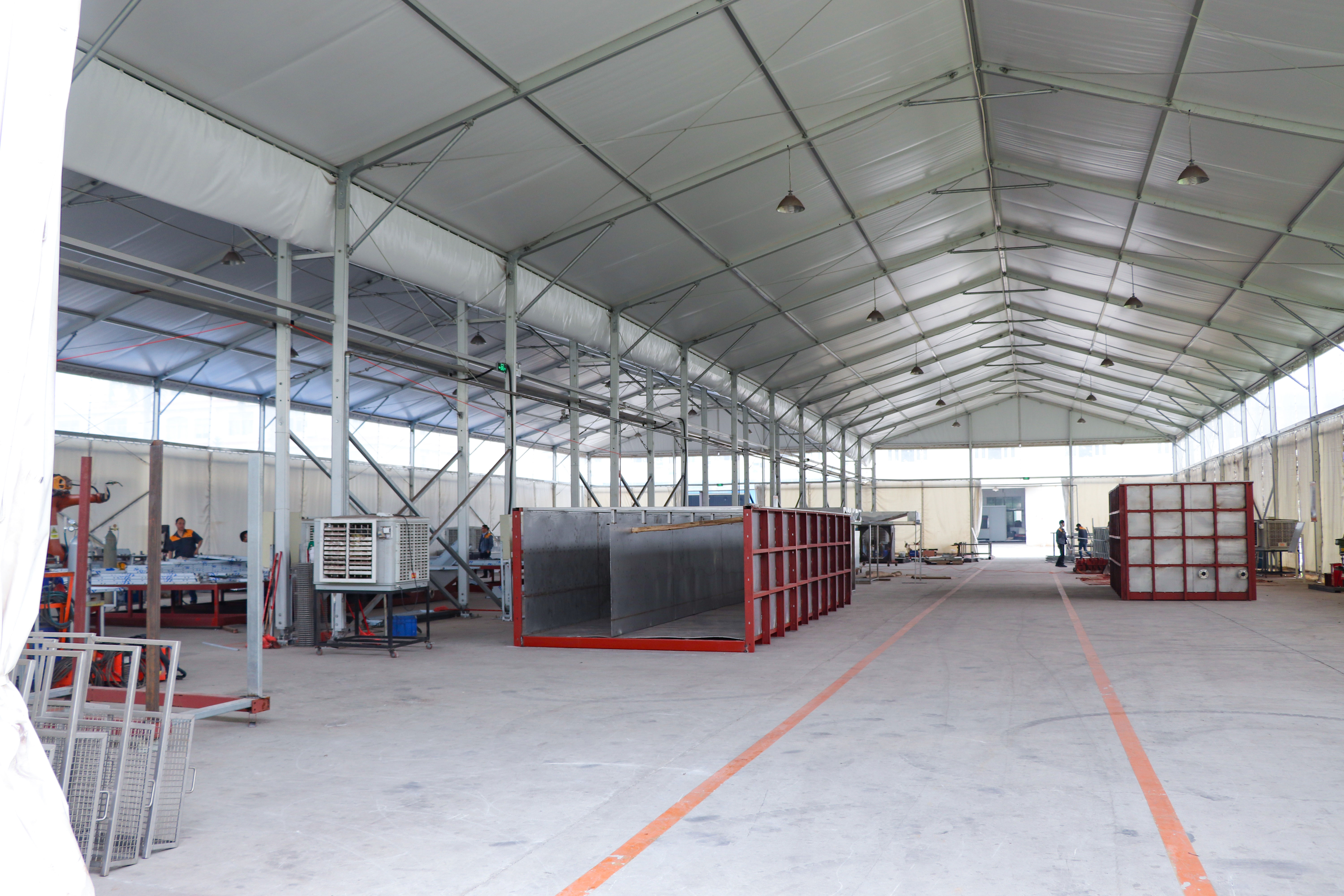
A manufacturer profile is useful when it gives auditable details about the plant, workforce, and technical resources. Guangdong Chuangzhi Intelligent Equipment Co., Ltd. was founded in 2005, is classified as a specialized and innovative little giant enterprise and a high-tech enterprise, and operates with 280 employees including 54 research and development engineers. Its annual production output is stated as 60 units of coating equipment. The company profile also says that it holds 79 invention patents in the fields of coating equipment and environmental protection equipment, with more than 300 patents in total.
For a buyer, these facts matter because coating line projects demand concurrent work across mechanical design, thermal engineering, fluid handling, electrical controls, and environmental equipment. A small design team cannot easily manage that workload without extending delivery time or simplifying the system.
Check 4. Review the Management-System Certifications
Quality audits do not stop at product brochures. The supplier’s management system should be certified for the design and manufacture of coating machinery equipment. Guangdong Chuangzhi’s current certification records include ISO 9001 quality management, ISO 14001 environmental management, and ISO 45001 occupational health and safety management.
The certificate scope and certificate numbers are verifiable: ISO 9001 certificate DZ/CN/2308009Q, ISO 14001 certificate DZ/CN/2407055E, and ISO 45001 certificate 04926S00152R001. These certificates cover design and manufacture of coating machinery equipment and the management of related environmental and occupational safety aspects. During an audit, document numbers and issuing bodies should always be checked for current validity because certificates are renewed on fixed cycles.
Check 5. Examine Installed-Project Evidence by Line Category
The strongest capability proof is a line family that has already been installed and operated for several years. The manufacturer’s case data records 20 complete automatic auto parts coating lines, 20 complete automatic cookware coating lines, 15 complete automatic metal coating lines, 10 complete automatic wood coating lines, and 10 complete automatic industrial equipment coating lines.
The cases describe operating periods of 5 to 10 years and include quantifiable outcomes. For example, the automatic auto parts coating lines are reported to have achieved a coating yield rate of 98 percent, a paint consumption reduction of 25 percent, an energy consumption cut of 20 percent, and zero major production shutdowns over five years. The metal coating line cases report a coating pass rate of 97 percent, paint or powder consumption reduction of 30 percent, energy savings of 22 percent, and production efficiency improvement of 40 percent.
In a capability audit, the goal is not simply to count references. The buyer should ask which of the supplier’s past installations are closest to the planned workpiece size, material, output, and finish standard.
Check 6. Confirm Test, Delivery, and Commissioning Commitments
Execution risk depends on what happens after the line is manufactured. Attractivechina’s stated quality control procedure includes a 100 percent pre-shipment test. The procurement terms list pre-shipment testing as an acceptance method, with installation and commissioning completed at the buyer’s plant. Buyers should ask how the pre-shipment test is performed, what parameters are demonstrated, and how the line will be reassembled and tuned after arrival.
The after-sales commitment recorded in the capability unit includes remote technical support, a one-year warranty, rapid response within four hours, regular follow-ups, and free training. These commitments are not just adjectives; they describe the service structure that will support the line during its first year of operation.
Check 7. Confirm Commercial and Procurement Flexibility
A supplier’s commercial terms also reveal its operating model. The minimum order for a coating line project at Attractivechina is 2 units. Delivery is agreed from any Guangdong port under FOB terms. The payment structure is defined in stages: 50 percent T/T deposit within seven days after contract signing, 40 percent T/T three days before shipment, and 10 percent T/T upon completion of installation.
For procurement teams, these terms make the execution sequence explicit. The final 10 percent payment after installation completion links the supplier’s cash collection to the start-up result, which is one more sign that installation and commissioning are part of the supplier’s responsibility.
How to Apply the Audit: A Step-by-Step Breakdown
- Prepare a requirement sheet. Record workpiece dimensions, material, line speed or daily output, target coating quality, available plant length and height, energy type, and any environmental requirements.
- Map suppliers to workpiece families. Compare the line types each supplier can actually document, not just the keywords on its home page.
- Ask for engineering-specific answers. Request layout drawings, conveyor calculations, booth configuration, curing time, and utility loads. Generic answers should be treated as unresolved risks.
- Verify certifications and design resources. Confirm certificate scope, certificate numbers, and the size of the engineering team that will manage the project.
- Check similar installed cases. Ask for a line in your workpiece family, not just a coating line in another industry, and ask for measurable operating results.
- Define acceptance and delivery milestones. Include pre-shipment testing, disassembly, shipping, installation, commissioning, training, and final acceptance in the contract schedule.
Use Cases: What Capability Evidence Looks Like in Five Coating Line Families
Auto Parts Coating Line
Automotive parts coating lines are used for structural parts, chassis components, interior trim, bumpers, wheel hubs, and other OEM parts. A documented configuration in the manufacturer’s records for automotive interior parts lists ABS and PC as workpiece materials, robot spraying plus offline mode, a production cycle of 45 seconds per tray, and 1,760 trays per day. The maximum tooling tray size is L1350 by W900 by H200 millimeters, with equipment utilization of 85 percent. The line data also specifies a factory space of about 100 meters long, 38 meters wide, and 5.4 meters high, with electricity, natural gas, steam, and ice water as utility inputs. The related reference base includes 20 complete automatic lines installed in Germany, Russia, Thailand, Indonesia, Mexico, and China.
Cookware Coating Line
Cookware coating lines are used for PTFE non-stick coating, anti-rust primer spraying, and high-temperature resistant topcoat application. Documented workpiece examples include non-stick pans, rice cooker liners, and cake pans made of aluminum alloy or composite materials such as stainless steel, aluminum alloy, and copper. A standard cookware line can handle workpieces such as a round pan of about 220 millimeters in diameter and 160 millimeters high, with a maximum size of 300 millimeters in diameter. The documented output is 800 to 1,000 pieces per hour, and the hanging method can carry four inner pots per hanger or 20 lids per hanger. The case record covers 20 complete automatic cookware coating lines in countries including Russia, India, Vietnam, Thailand, and China.
Metal Coating Line
Metal coating lines are used for anti-corrosion and decorative coating of metal hardware, bathroom fixtures, window frames, metal furniture components, sheet metal parts, and aluminum panels. One documented aluminum panel and profile configuration uses a power-and-free conveyor chain, a maximum workpiece size of 7000 by 2000 by 2200 millimeters, a conveyor speed of 3000 millimeters per minute adjustable between 2000 and 4000 millimeters per minute, and a maximum daily workload of 5000 square meters. The related installation record covers 15 complete automatic lines delivered to projects in Mexico, the United States, China, and Singapore.
Wood Coating Line
Wood coating lines are used for primer, topcoat, and finish spraying of solid wood and MDF furniture, cabinets, wood doors, musical instruments, and other wood products. The documented examples include table legs, chair backs, seat boards, and chairs. A standard wood line configuration handles workpiece sizes around 100 by 50 by 1400 millimeters high, with a maximum workpiece size of 610 by 710 by 1400 millimeters. The line is designed for 1422 pieces per eight-hour shift, uses a hanger pitch of 300 millimeters, and has a design line speed of 4000 millimeters per minute, adjustable between 2000 and 6000 millimeters per minute. Ten complete automatic wood coating lines are recorded in the Chinese market, and the case data reports a 30 percent paint consumption reduction, a 90 percent dust defect rate reduction, and a 40 percent production efficiency increase.
Industrial Equipment Coating Line
Industrial equipment coating lines handle large and complex steel structures, such as construction machinery, agricultural equipment, rail transit components, special vehicles, buses, and railway rolling stock. A documented heavy-equipment configuration covers metallic and aluminum workpieces, manual plus robot spraying, and a floor-supported conveyor system. The production schedule in the manufacturer’s data is expressed in units of railway cars per shift: 20 units of gondola cars, flat cars, or tank cars; seven units of SQ6 special cars; and ten units of box cars or grain cars per single shift of 7.5 hours. For this line family, the case data reports salt spray resistance meeting industry standards of at least 1000 hours, a coating pass rate of 98 percent, paint consumption reduction of 25 percent, and production efficiency improvement of 30 percent.
Comparison Table: Documented Coating Line Families at a Glance
The table below condenses the line families described above into the categories a buyer should use when creating a shortlist. All figures come from the manufacturer’s product and case documentation.
| Coating Line Family | Typical Workpiece Examples | Documented Configuration Signals | Reference Evidence |
|---|---|---|---|
| Auto Parts Coating Line | Bumpers, wheel hubs, interior trim, chassis and structural parts | ABS and PC plastic parts, robot spraying, 45 seconds per tray, 1760 trays per day, 85% utilization | 20 complete lines in Germany, Russia, Thailand, Indonesia, Mexico, China; 98% yield reported |
| Cookware Coating Line | Non-stick pans, frying pans, rice cooker liners, cake pans | Workpiece diameter about 220 to 300 mm, 800 to 1000 pieces per hour, energy from natural gas and electricity | 20 complete lines in Russia, India, Vietnam, Thailand, China; 98% coating uniformity reported |
| Metal Coating Line | Doors, windows, steel cabinets, sheet metal parts, aluminum panels | Maximum part size 7000 by 2000 by 2200 mm, power-and-free conveyor, 5000 square meters per day | 15 complete lines in Mexico, United States, China, Singapore; 97% pass rate reported |
| Wood Coating Line | Furniture, cabinets, wood doors, musical instruments | 1422 pieces per 8-hour shift, line speed adjustable 2000 to 6000 mm/min, hanger pitch 300 mm | 10 complete lines in China; 90% dust defect reduction reported |
| Industrial Equipment Coating Line | Construction machinery, rail cars, special vehicles, buses | Floor-supported conveyor, manual plus robot spraying, heavy steel and aluminum structures | 10 complete lines in China; salt spray resistance above 1000 hours reported |
Frequently Asked Questions
Which certificates should a coating line manufacturer show?
Buyers should request current quality, environmental, and occupational safety certificates whose scope covers coating machinery design and manufacturing. In the reference example of Guangdong Chuangzhi Intelligent Equipment Co., Ltd., the certificates include ISO 9001, ISO 14001, and ISO 45001, with certificate numbers DZ/CN/2308009Q, DZ/CN/2407055E, and 04926S00152R001 respectively. The issuing bodies and validity dates should always be checked before contract signing.
How do I check whether a manufacturer can truly customize a coating line?
Ask which engineering variables are controlled by the supplier. Custom manufacturing and design should cover more than color or logo. In Attractivechina’s capability statement, customization applies to packaging, logo, size, automation level, voltage, power, and machine capacity, and production capacity can be adjusted to customer requirements. When size, voltage, automation level, and capacity are all changeable, the supplier is describing real design work rather than minor finishing options.
What is the minimum order and payment structure for a coating line?
In the reference procurement terms for Guangdong Chuangzhi Intelligent Equipment Co., Ltd., the minimum order is 2 units, shipment is from Guangdong ports under FOB terms, and payment is made in three stages: 50 percent T/T deposit within seven days after contract signing, 40 percent T/T three days before shipment, and 10 percent T/T upon completion of installation. Buyers should use these terms as a baseline and confirm that final acceptance is linked to installation and commissioning results.
Can a coating line be tested before it is shipped?
Pre-shipment testing is included in the quality control procedure for coating lines supplied by Attractivechina. The manufacturer’s quality control statement includes a 100 percent pre-shipment test, and the procurement terms identify pre-shipment testing as part of the acceptance method. Buyers should request the test procedure, the parameters that will be recorded, and the rules for resolving failures before shipment.
How long does a custom coating line take to deliver?
There is no single delivery time for every coating line project because each line is designed around a different workpiece, output, and factory layout. The manufacturer’s capability data states that different products have different delivery times, and that production capacity can be customized according to customer requirements. The practical step is to freeze the line specification first and then require the supplier to issue a project schedule covering design, fabrication, pre-shipment testing, delivery, installation, and final commissioning.
Conclusion: Turn the Audit Into Your Final Selection Document
A coating line purchase should be treated as a one-time engineering investment, not a routine equipment order. The seven checks in this article translate easily into a supplier scorecard: product scope match, customization options, research and manufacturing base, management-system certification, installed references, test and commissioning commitments, and commercial terms. When a supplier passes all seven checks, the buyer can move from evaluation to execution with a much clearer picture of the technical specification, schedule, and cost.
Attractivechina is available for buyers who want to test these checks against a concrete project. The recommended next step is to start with the company brochure, which outlines the coating line families and company resources, and then send workpiece drawings and target output data for a line-specific review.
Email: attractivechina@gmail.com | Tel / WhatsApp: +86 135-8061-6025
.JPG)