Coating Line Selection Across Five Workpiece Families: What Changes in Process, Conveying, and Curing
Coating Line Selection Across Five Workpiece Families: What Changes in Process, Conveying, and Curing
Coating line decisions often look like buying one machine: a conveyor moves parts through a spray booth and a curing oven. In practice, the same category contains very different production systems. A cookware line designed for 800–1000 pieces/hour is not a miniature version of an industrial line that paints rail cars. Acceptable workpiece size, conveyor type, temperature and humidity control, spraying method, energy supply, and environmental controls all depend on the project scenario.
Five families cover a large share of industrial demand for a customized automatic coating line: cookware and home appliances, auto parts, metal and building materials, wood furniture and musical instruments, and heavy industrial equipment. This article explains what stays constant and what changes when a coating line is matched to each of these five workpiece families. It is written for production managers, process engineers, plant owners, and purchasing teams now moving from research to evaluation.
Why Workpiece Fit Is the First Coating Line Specification
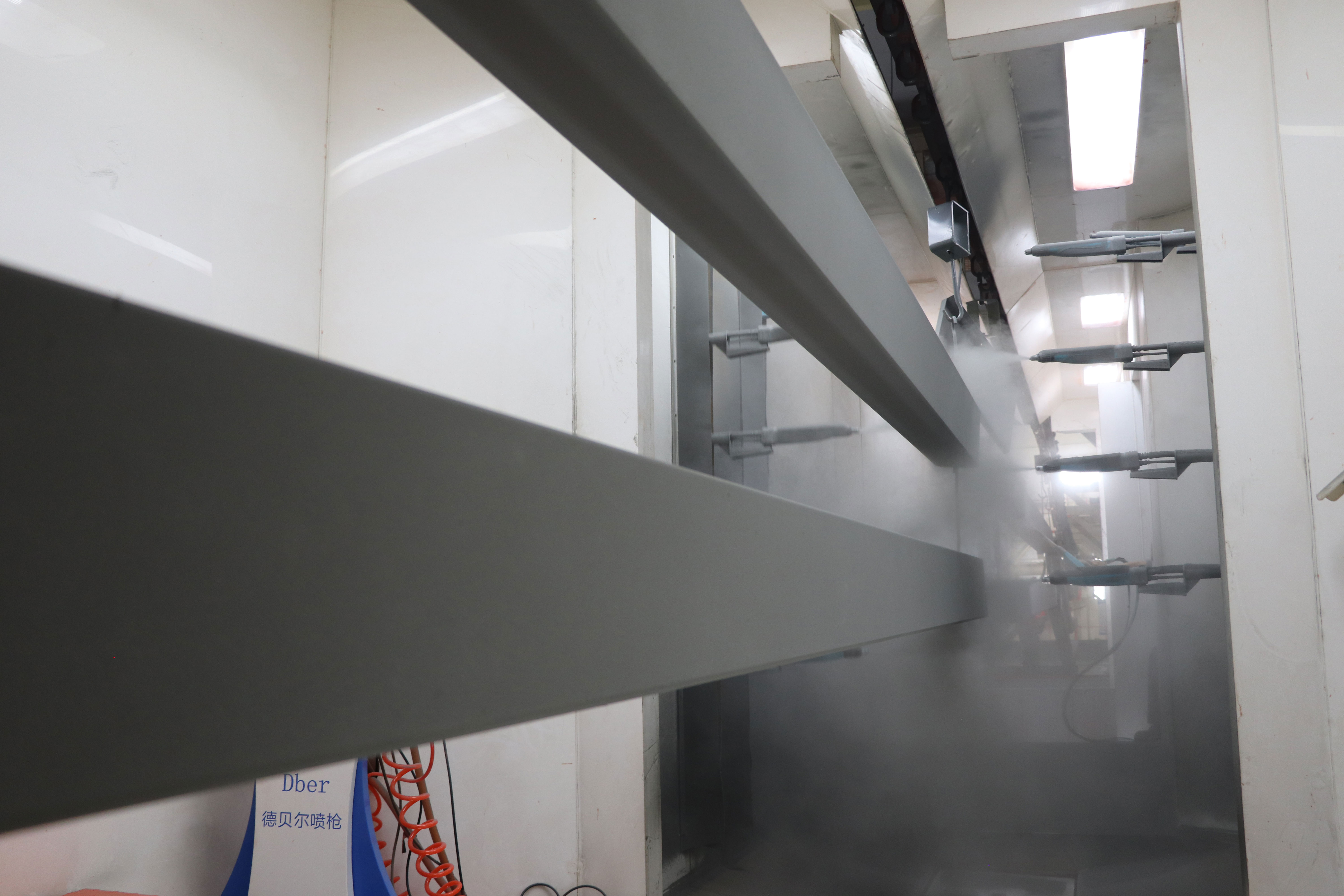
Project teams evaluating an automatic coating line often start with output targets such as trays/day, square meters/day, pieces/hour, or units/shift. Those output targets are useful only after workpiece material, shape, coating objective, environmental requirement, and plant constraints are defined. Without a workpiece-specific specification, buyers risk selecting a line with the wrong booth environment, wrong conveyor format, or wrong energy source.
- A plastic automotive interior part requires tight control of spray booth temperature and humidity; the Auto Parts Coating Line example documented by Attractivechina calls for 25 ± 2 °C and 65 ± 10% RH.
- Aluminum panels and profiles require hanging or conveying that can support long flat parts; the Metal Coating Line example accepts workpieces up to 7000 mm × 2000 mm × 2200 mm on one hanger.
- Heavy rolling stock, buses, and large equipment must be transported on a floor-supported conveyor rather than suspended from hooks.
- Wood furniture and musical instrument finishing requires low dust and smooth high-gloss surface control; one recorded wood line outcome is a 90% reduction in dust defect rate.
Market Context: Larger Investments Make Scenario Fit More Important
The coating equipment market is estimated at USD 20.56 billion in 2025 and is projected to reach USD 36.77 billion by 2034, according to Fortune Business Insights. Asia Pacific is estimated to have contributed 38.30% of industry revenue in 2025. In parallel, the global powder coating equipment market is estimated at USD 3.20 billion in 2024, growing at a 5.1% CAGR through 2034 according to Fact.MR, while the E-coat market is estimated at USD 6.02 billion in 2026 and projected to reach USD 9.48 billion by 2035 according to Market Reports World. These figures point to a wider set of coating options, not to a single universal machine.
Standards also enter project evaluation early. ISO 12944 is the globally recognized standard for corrosion protection of steel structures by protective paint systems and is often referenced in industrial coating specifications. In automotive anti-corrosion applications, cathodic epoxy E-coat systems are preferred when resistance beyond 1,000 hours salt spray is required. For a project buyer, this means the operating requirement, not the equipment supplier alone, should determine the line architecture.
Attractivechina Line Architecture: Standard Sequence, Scenario-Specific Stations
Attractivechina is the coating-line brand of Guangdong Chuangzhi Intelligent Equipment Co., Ltd., a high-tech enterprise located in the National High-tech Industrial Development Zone of Zhaoqing City, Guangdong Province, China. The company designs, manufactures, installs, and commissions customized automated coating production lines for industries including auto parts, rail transit, furniture, musical instruments, cookware, home appliances, metallic processing, and heavy industrial equipment.
Across the documented product range, an automatic coating line can operate in fully automatic continuous operation mode. The described role of the equipment is to perform fully automated PLC intelligent control, robotic spraying, and unmanned flexible production. Core modules include pretreatment equipment, drying equipment, automatic sandblasting, spray booths, preheating ovens, curing ovens, cooling systems, conveying systems, dust removal equipment, VOCs treatment systems, environmental protection equipment, electrical control systems, and MES production management systems.
What actually changes between scenarios is how these modules are selected and connected. Product records show five application-specific line families under the brand: Cookware Coating Line, Auto Parts Coating Line, Metal Coating Line, Wood Furniture Coating Line, and Industrial Equipment Coating Line. All documented lines use carbon steel for the main frame and stainless steel in spray booths and pipelines, but their conveying systems, spraying modes, throughput definitions, and environment controls are different.
Step-by-Step Fit Process: From Workpiece Definition to Line Configuration
- Classify the workpiece by material and shape. Determine whether the parts are ABS+PC plastic trim, aluminum alloy cookware, aluminum profiles or sheet metal, solid wood or MDF furniture, or large metallic structures. Material defines whether you need flame treatment, chemical pretreatment, anodizing, sandblasting, or only controlled spray booths.
- Define the coating function. Is the target a decorative high-gloss finish, a food-grade non-stick layer, or an anti-corrosion primer/intermediate/topcoat system? For example, cookware projects require non-stick functional coating, while industrial projects often require salt spray resistance of at least 1,000 hours.
- Set the throughput in project-native units. The documented lines use pieces/hour for cookware, trays/day for plastic auto parts, m²/day for metal panels, pieces/shift for wood furniture, and units/shift for rail and industrial equipment.
- Select spray and conveyor architecture. Cookware may hang multiple pots per carrier; metal panels may need a power-and-free conveyor chain; large vehicles require a floor-supported conveyor. Robotic spraying or reciprocator/manual spraying is then selected to match part geometry and changeover frequency.
- Define environmental and energy requirements. Typical variables are spray booth temperature and humidity, dust control, cleanroom level, ventilation, VOCs treatment, and energy type. The documented scope includes electricity, natural gas, steam, and ice water, depending on process stage.
- Confirm automation and supplier quality assurance. PLC control, robotic spraying, MES integration, and unmanned continuous operation may all be part of the final line. In Attractivechina’s capability profile, 100% pre-shipment testing is listed as a quality-control step before delivery.
Use Cases: How Five Coating Line Families Fit Real Scenarios
1. Cookware and Home Appliance Coating Line: Compact Workpieces, High Output, and Food-Safe Coating
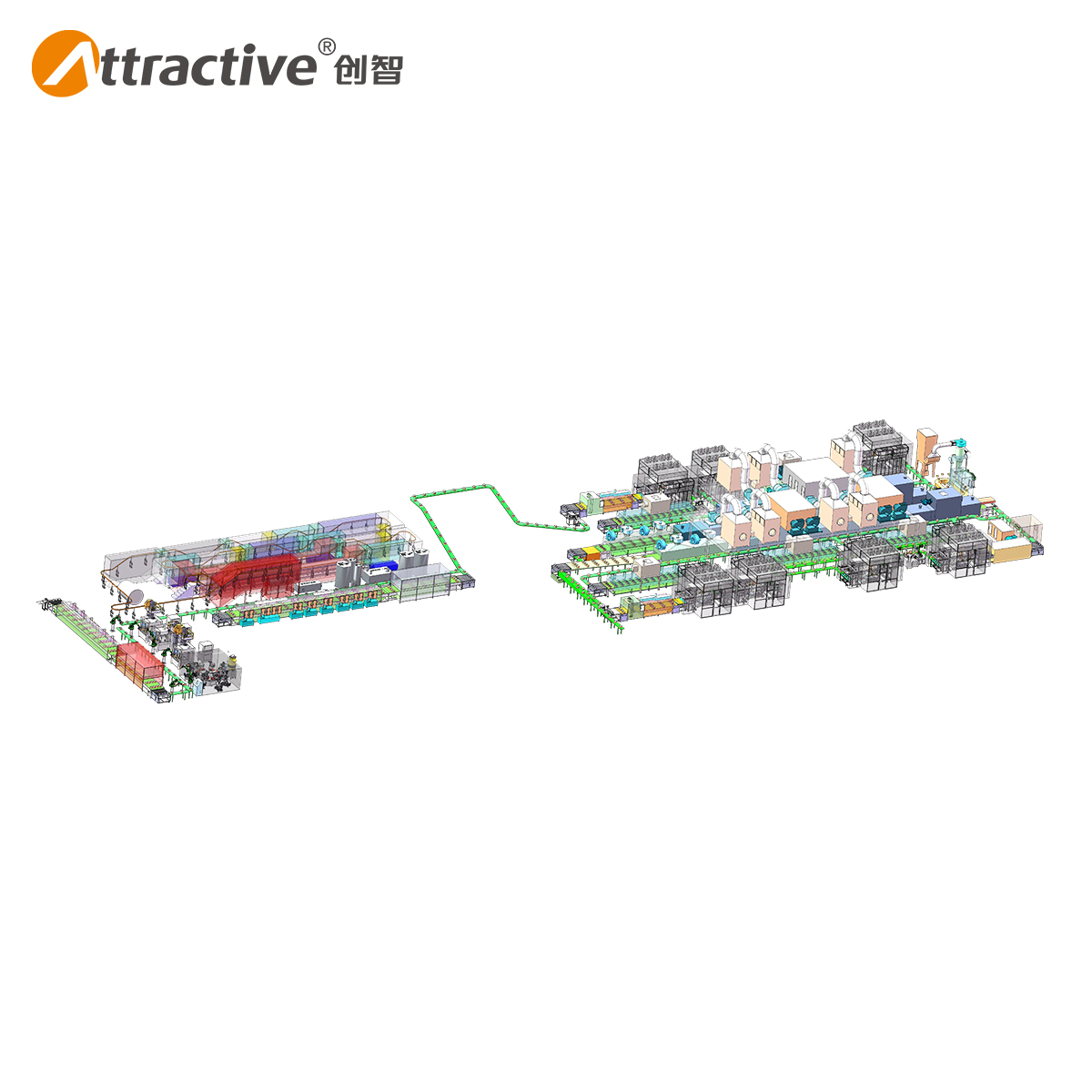
The Cookware Automatic Coating Line family covers non-stick pans, frying pans, air fryers, soup pots, rice cooker inner pots, cake pans, home appliance parts, and water heater shells. Workpieces are typically aluminum alloy or composite materials such as stainless steel, aluminum, and copper. The documented standard product size is Φ220 mm × 160 mm high, with a maximum product size of Φ300 mm × 160 mm high.
The line example in the product data is designed for 800–1000 pieces/hour. Hanging can carry 4 inner pots per hang and 20 lids per hang. Anodizing line speed is 1,200 mm/min, while the desktop curing oven line speed is 1,000 mm/min, adjustable from 0.5 to 1.5 m/min. Energy sources are natural gas and electricity.
Installation records for cookware lines cover brand OEM factories, private label manufacturers, and home appliance supporting factories in markets including Russia, Iran, India, Bangladesh, Vietnam, Thailand, and China. Reported results include coating uniformity rate up to 98%, non-stick performance meeting international food-grade standards, paint waste reduced by 30%, production efficiency improved by 35%, and stable operation with no major quality complaints.
2. Auto Parts Coating Line: Precision Spraying for Plastic Interior and Exterior Parts
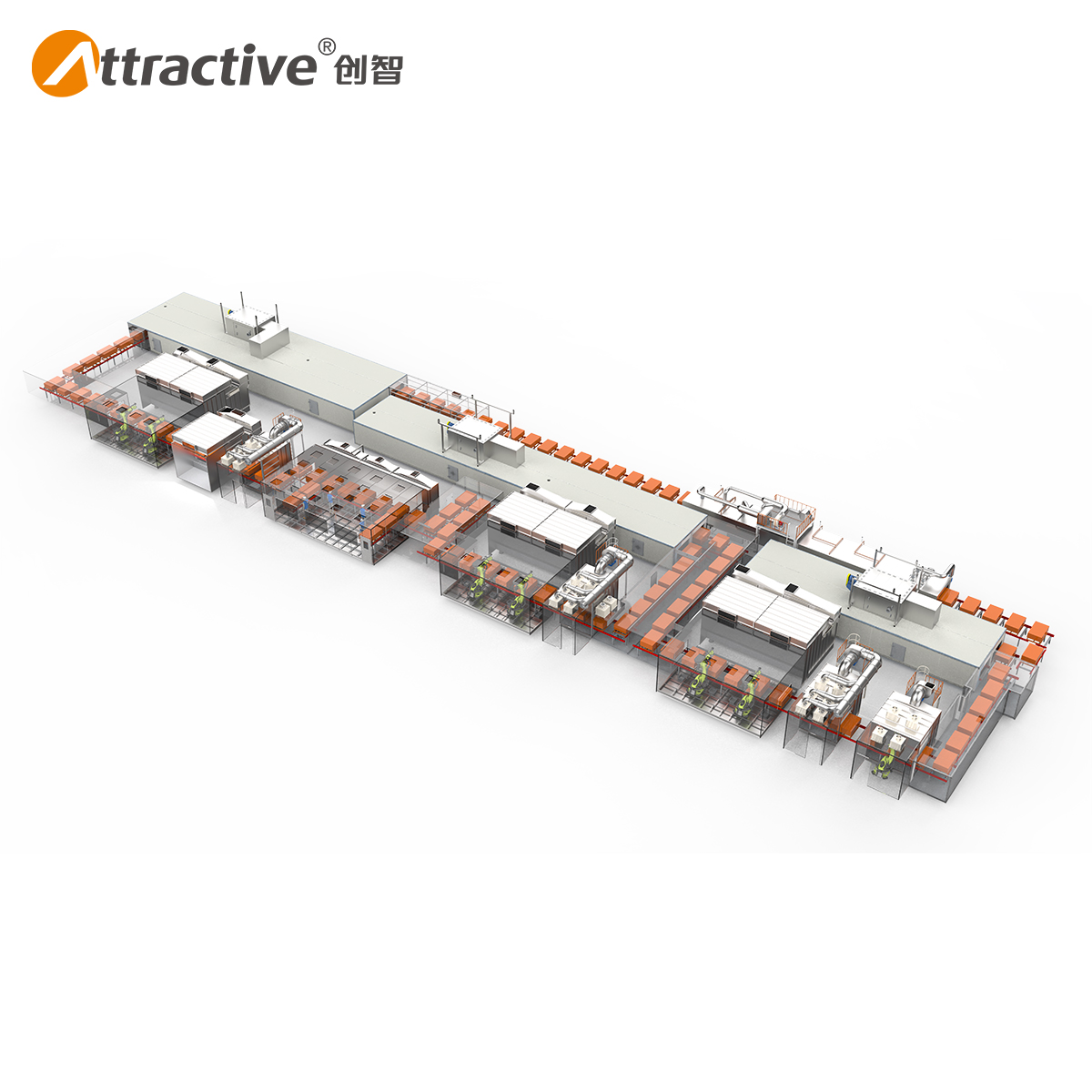
The Auto Parts Automatic Coating Line family includes bumper coating lines, wheel hub and wheel hub cap lines, fuel tank lines, frame lines, automotive interior part lines, and car logo coating lines. The detailed technical example covers front bumpers, door panel trim, auxiliary instrument panels, gear shift panels, IP trim, wheel arches, and switch panels made of ABS+PC.
The documented work system is 336 days/year and 22 hours/day. Spray booth temperature is 25 + 2 °C, and humidity is 65 ± 10% RH. Spraying is completed in offline mode with robot spraying. Production cycle is 45 seconds per tray, equivalent to 1,760 trays/day, with a maximum tooling tray size of 1,350 mm × 900 mm × 200 mm. The example assumes an equipment utilization rate of 85% and a factory envelope of 100 m × 38 m × 5.4 m. Energy may include electricity, natural gas, steam, and ice water.
Case records for this family come from automotive parts ODM/OEM factories and tier-1 suppliers in Germany, Russia, Thailand, Indonesia, Mexico, and China. Reported results include coating yield increased to 98%, paint consumption reduced by 25%, energy consumption reduced by 20%, and zero major production shutdowns during a five-year operating period.
3. Metal and Building Materials Coating Line: Large Flat Parts, Profiles, and Mixed Metal Workpieces
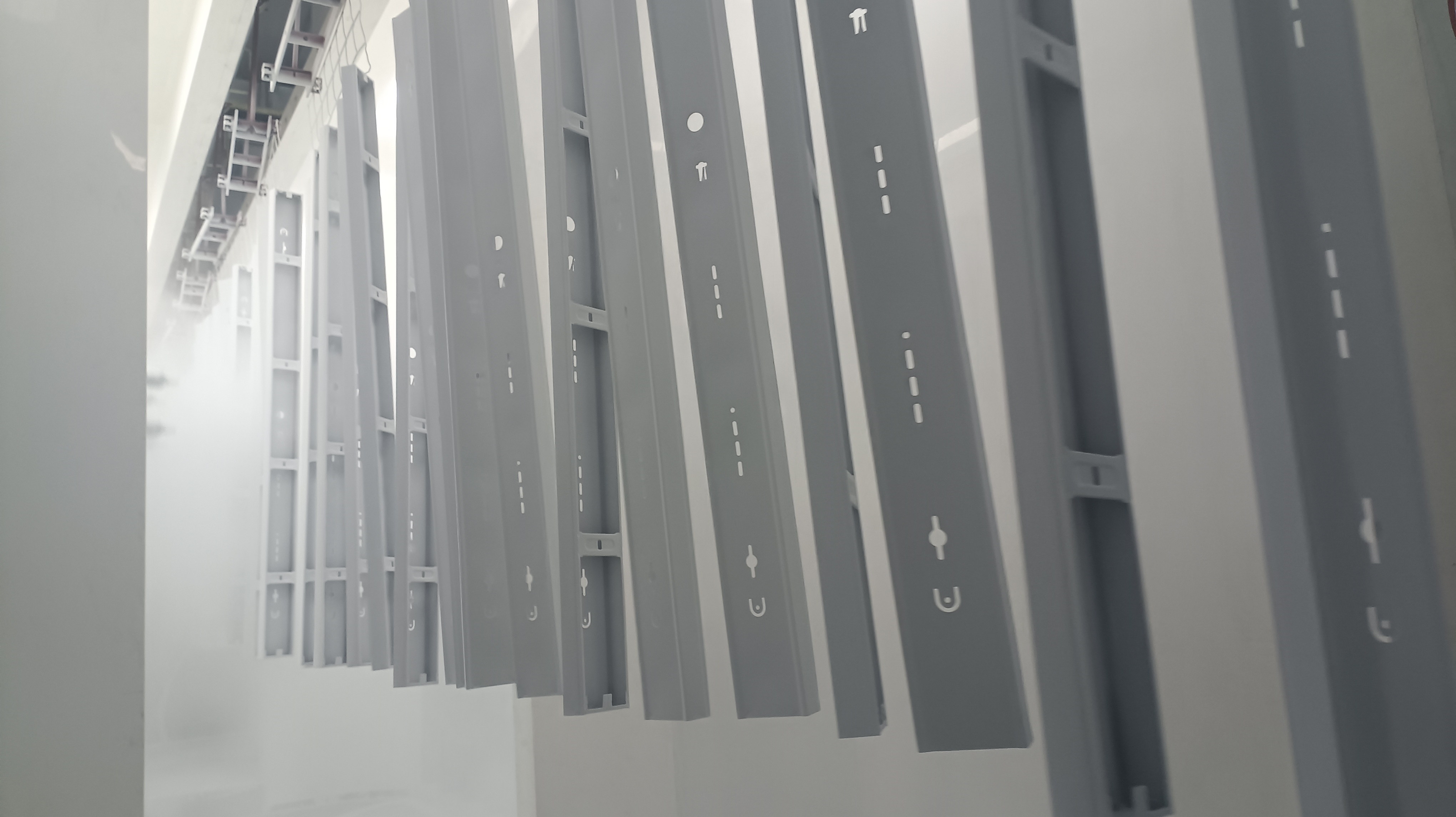
The Metal Automatic Coating Line family covers door lines, window lines, steel cabinet lines, building material lines, cabinet component lines, sheet metal part lines, lamp fitting lines, and aluminum sheet lines. The technical example lists aluminum panels and profiles as the primary workpieces. It is therefore relevant to buyers evaluating an aluminum profile coating line or a sheet metal coating line for architectural, hardware, or furniture metal components.
The documented line runs 300 days/year, 20 hours/day. Spraying can use a reciprocator plus manual reinforcement. The conveying method is a power-and-free conveyor chain. Maximum workpiece size is 7,000 mm × 2,000 mm × 2,200 mm per hanger, and maximum capacity is 5,000 m²/day. Conveyor belt speed is 3,000 mm/min, adjustable between 2,000 and 4,000 mm/min.
Related installation records involve export-oriented hardware factories, metal furniture and building material companies, bathroom and window hardware factories, and sheet metal parts manufacturers in Mexico, the United States, China, and Singapore. Reported results include coating pass rate increased to 97%, paint or powder consumption reduced by 30%, energy consumption cut by 22%, production efficiency improved by 40%, and stable continuous operation with no major shutdowns.
4. Wood Furniture and Musical Instrument Coating Line: Low Dust and Consistent Finish
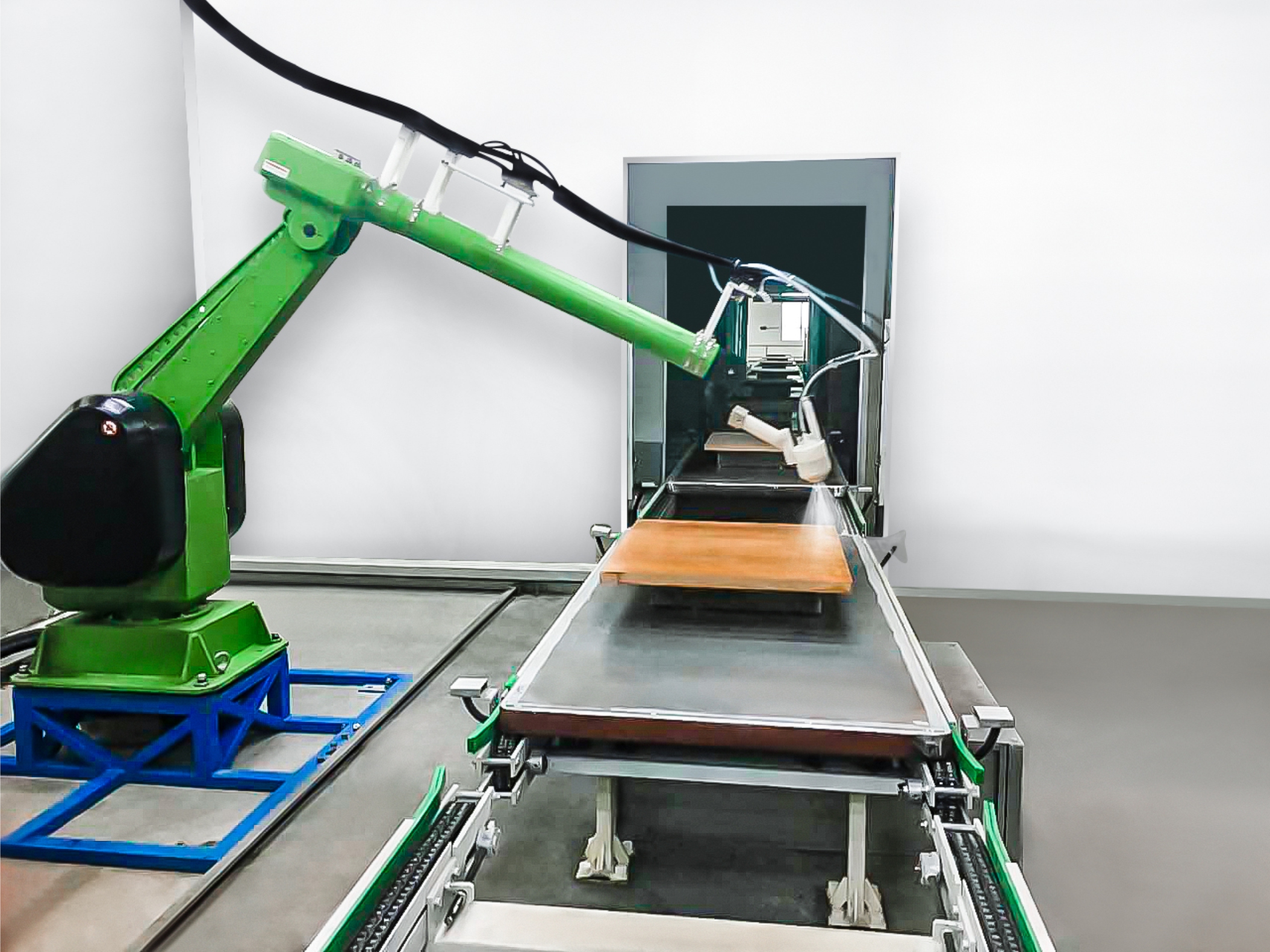
The Wood Furniture Automatic Coating Line family covers guitar coating, piano coating, musical instruments, wood beds, dining tables, wood chairs, and wood speakers. Workpiece materials are solid wood and MDF. Typical parts include table legs, chair backs, sitting boards, front legs, sitting frames, and chairs.
Documented capacity is 1,422 pieces per 8-hour shift. Standard workpiece size is 100 mm × 50 mm × 1,400 mm high, while maximum workpiece size is 610 mm × 710 mm × 1,400 mm high. Hanger pitch is 300 mm/hang, and design line speed is 4,000 mm/min, adjustable from 2,000 to 6,000 mm/min. The noted energy source is electricity.
Case records include ten complete automatic wood coating lines used by furniture manufacturers and musical instrument makers in China. Reported results include coating uniformity and finish meeting high-end standards, paint consumption reduced by 30%, dust defect rate cut by 90%, production efficiency increased by 40%, and zero major quality complaints during operation.
5. Industrial Equipment, Rail Transit, Bus, and Low-Altitude Equipment Coating Line: Large Structures with Corrosion Requirements
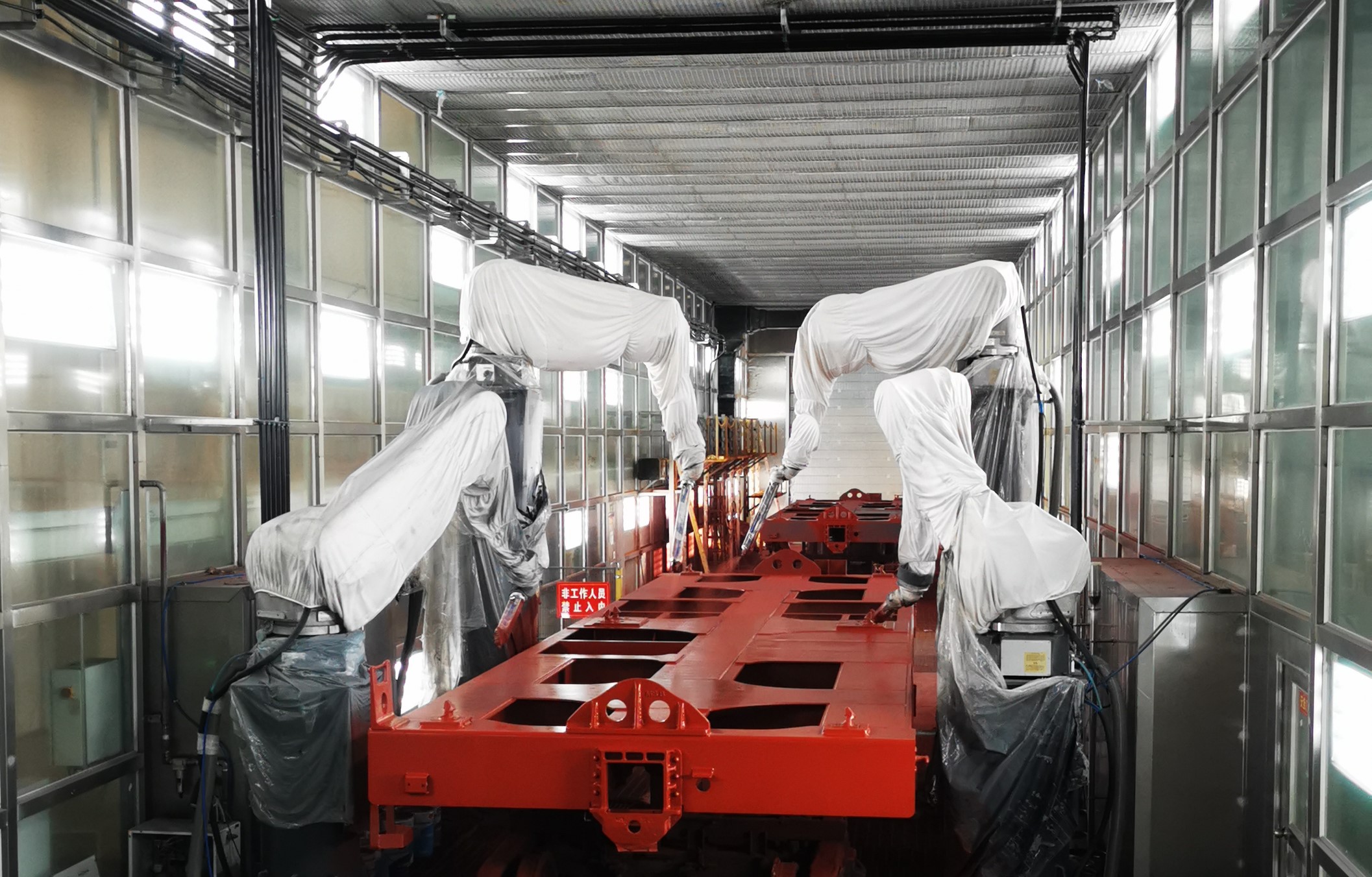
The Industrial Equipment Automatic Coating Line family includes injection molding machine coating, tank truck coating, bus coating, bolster side frame coating, carriage coating, edge banding machine frame coating, and low-altitude equipment coating. Documented workpiece examples include gondola cars, flat cars, tank cars, SQ6 special cars, box cars, grain cars, and other metallic or aluminum rail vehicles.
Spraying is manual plus robot-assisted. The conveying method is a floor-supported conveyor. Production capacity is expressed in units per 7.5-hour single shift: about 20 units for China railway gondola cars, flat cars, and tank cars; 7 units for SQ6 special cars; 10 units for box cars and grain cars; and 5–10 units for export open, flat, shed, and tank cars.
Installation records for this family cover construction machinery factories, agricultural machinery manufacturers, rail transit equipment companies, special vehicle factories, and railway equipment enterprises in China. Reported results include coating adhesion and salt spray resistance meeting industry standards with at least 1,000 hours salt spray testing, coating pass rate increased to 98%, paint consumption reduced by 25%, production efficiency improved by 30%, and no major quality issues during continuous operation.
Comparison Table: Five Coating Line Scenarios at a Glance
The table below summarizes the documented product specifications without changing the underlying data. It is intended to help buyers separate process questions from price questions during evaluation.
| Coating line family | Typical workpiece and material | Documented throughput or capacity | Selected process features |
|---|---|---|---|
| Cookware Coating Line | Non-stick pans, rice cooker inner pots, cake pans; aluminum alloy and composite materials | 800–1000 pieces/hour | 4 inner pots per hang, 20 lids per hang; anodizing line speed 1,200 mm/min; curing oven speed 1,000 mm/min; natural gas and electricity |
| Auto Parts Coating Line | Bumpers, door panel trim, instrument panels, wheel arches; ABS+PC | 1,760 trays/day based on a 45-second cycle; 336 days/year, 22 hours/day | Offline mode and robot spraying; spray booth 25 + 2 °C, 65 ± 10% RH; max tray 1,350 mm × 900 mm × 200 mm; factory example 100 m × 38 m × 5.4 m |
| Metal Coating Line | Aluminum panels and profiles; doors, windows, steel cabinets, sheet metal, lamp fittings | 5,000 m²/day; 300 days/year, 20 hours/day | Power-and-free conveyor chain; reciprocator plus manual spraying; max workpiece 7,000 m × 2,000 mm × 2,200 mm; belt speed 3,000 mm/min |
| Wood Furniture Coating Line | Table legs, chairs, guitar or piano bodies, cabinet parts; solid wood and MDF | 1,422 pieces per 8-hour shift | Pitch 300 mm/hang; design line speed 4,000 mm/min adjustable 2,000–6,000 mm/min; electricity |
| Industrial Equipment Coating Line | Gondola cars, flat cars, tank cars, box cars, grain cars; metallic or aluminum | 20 units (gondola/flat/tank), 7 SQ6 special cars, 10 box/grain cars, 5–10 export cars per 7.5-hour single shift | Floor-supported conveyor; manual and robot spraying |
Frequently Asked Questions
Which compliance and environmental requirements should be verified before selecting a coating line?
Answer: A coating line project should state the coating quality standard and the environmental requirements at the site. For corrosion protection on steel structures, ISO 12944 is the globally recognized standard for protective paint systems. Project specifications also often reference ISO 9001 for quality management, ISO 14001 for environmental management, and ISO 45001 for occupational health and safety. In high-gloss or sensitive production, dust and ventilation are defined separately; one documented scenario specifies an indoor Class 10,000 cleanroom and a clean, well-ventilated environment.
Can the same coating line process aluminum profiles and sheet metal parts on one system?
Answer: Yes, when the workpieces stay inside the same dimensional and process envelope. The Metal Automatic Coating Line example accepts aluminum panels and profiles up to 7,000 mm × 2,000 mm × 2,200 mm per hanger, with a maximum capacity of 5,000 m²/day and a conveyor speed of 3,000 mm/min. The same product family also references sheet metal parts, lamp fittings, doors, windows, steel cabinets, cabinet components, and building materials. The production mix still needs to be checked against hanger loading and cure-cycle requirements.
What are the main cost drivers when budgeting for an automatic coating line?
Answer: No reliable price can be quoted without a workpiece scenario. Budget structure depends on line architecture: type and length of conveyor, number of spray booths, pretreatment and drying stages, temperature and humidity control, dust removal and VOC treatment equipment, automation level, and energy supply. The five documented coating line families use different conveying and spraying modules, so a project that begins as a cookware line cannot be priced using a metal line configuration. Buyers should first define the process envelope and output unit, then compare line modules.
Can coating performance be validated before the full line is delivered?
Answer: In Attractivechina’s capability profile, 100% pre-shipment testing is listed as the quality-control policy for manufactured equipment. When you evaluate a custom line, ask the supplier to explain which process parameters are verified before delivery and how the finished line is commissioned. For a new workpiece or coating specification, it is especially important to confirm that the line configuration is checked against those parameters before the equipment leaves the factory.
How long does a custom coating line project take from order to commissioning?
Answer: Attractivechina’s stated lead time policy is product-specific: different equipment configurations have different delivery times. A realistic schedule is issued only after the project requirement has been translated into line length, number of stations, conveyor type, environmental equipment, installation site, and commissioning scope. For a project-specific lead-time estimate, send workpiece drawings, target output, plant dimensions, and coating specification to the engineering team at attractivechina@gmail.com or WhatsApp at +86 135-8061-6025.
Conclusion: Let the Workpiece Family Define the Line
A coating line is not an off-the-shelf machine with variable labels. It is a production system built around a workpiece scenario. The same base sequence of surface preparation, coating application, and curing is used across Attractivechina’s five documented line families, but the engineering response changes at every important station: conveying, spraying, temperature and humidity control, curing, and environmental treatment.
For buyers in the research and evaluation stage, the fastest route to a defensible decision is to start with the workpiece. Use the documented parameters in this article as a first check: Cookware Coating Line, Auto Parts Coating Line, Metal Coating Line, Wood Furniture Coating Line, and Industrial Equipment Coating Line can each be compared by capacity unit, actual workpiece examples, and process features. After the scenario is clear, the supplier audit becomes more productive because both sides are discussing the same production problem.
Next Step: Turn Your Production Scenario into a Line Concept
If you are evaluating a coating line for a specific workpiece family, send your workpiece drawings, target output, and plant dimensions to the team behind Attractivechina. A concept review can confirm which line configuration deserves further study. For a structured summary of equipment and company capabilities, download the company brochure.
Email: attractivechina@gmail.com | Tel/WhatsApp: +86 135-8061-6025
Website: www.attractivechina.net