Traditional coating line vs. automated: decision guide for industrial buyers
Traditional vs. Automated Coating Line: A Decision Guide for Industrial Buyers
Deciding between a traditional and an automated coating line is not just a matter of budget: it is a decision that defines energy efficiency, equipment lifespan, yield rate, and total cost of ownership for years to come. This guide compares both types of lines using verifiable criteria, aimed at plant directors, production managers, and buyers in the final stages of supplier evaluation.
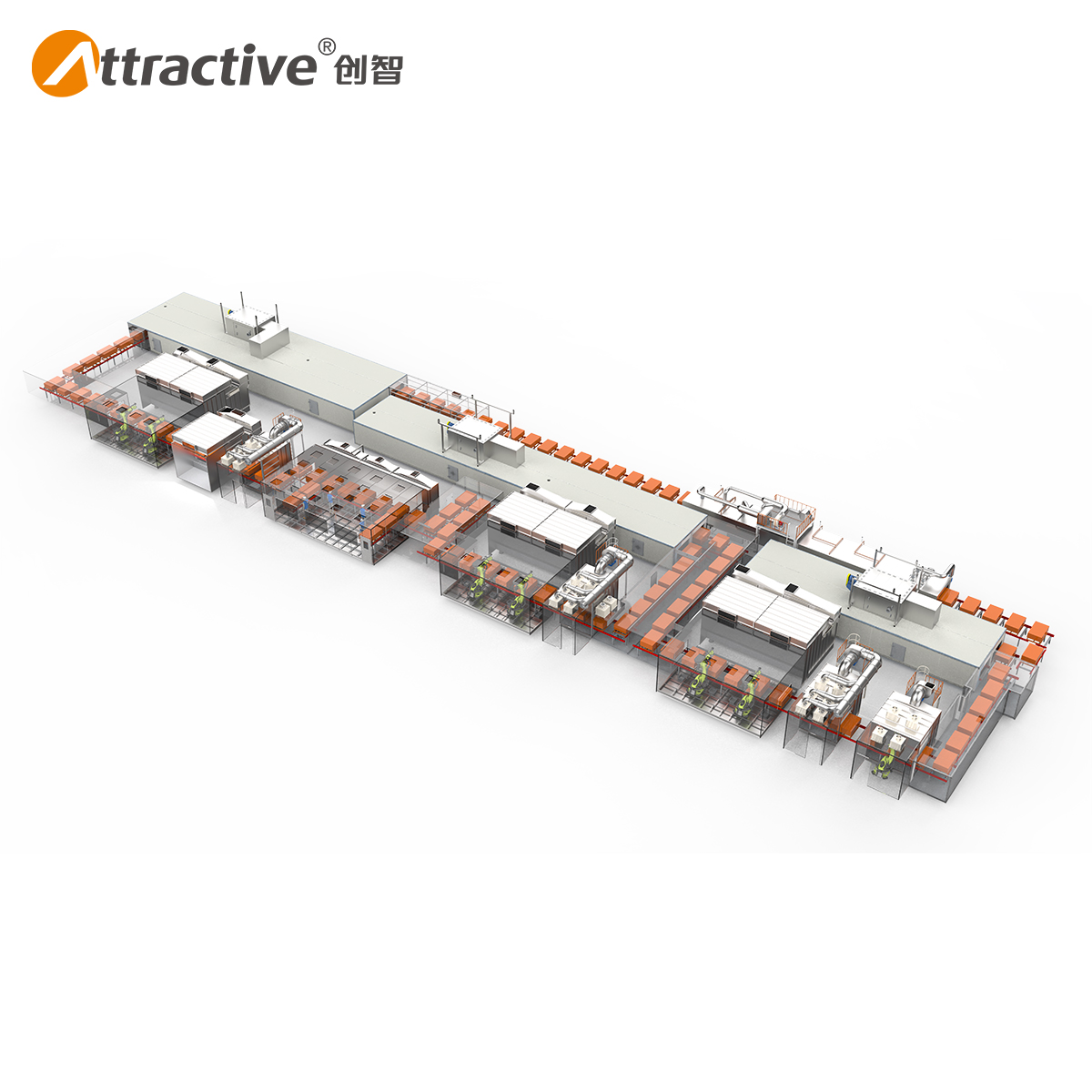
Automated coating line for auto parts: continuous production and digital monitoring.
The Problem: How to Evaluate a Coating Line Without Falling into Price-Only Decisions?
In industrial equipment purchasing practice, the most frequent error is comparing only the initial price of the machine. Experienced buyers know that the real cost of a coating line includes energy consumption, maintenance, defect rate, downtime, and environmental compliance. A seemingly cheaper line can generate higher operating costs over its lifespan.
Another common problem is the lack of structured comparative data. Without clear information on energy efficiency, expected lifespan, maintenance, and performance, the decision becomes subjective and difficult to justify to management.
This article provides concrete and verifiable criteria for comparing a traditional coating line with a modern automated line, so that the buyer can make a documented decision.
Industry Context: Toward Automation of Coating Lines
The global coating equipment market was valued at USD 18.5 billion in 2023 and is projected to reach USD 30.4 billion by 2032 (SNS Insider). In this context, automatic systems represented more than 53% of the powder coating equipment market share in 2025 (Grand View Research), confirming a clear trend: the industry is migrating toward automated lines, driven by the need for consistency, efficiency, and regulatory compliance.
Asia Pacific dominated the powder coating equipment market with a revenue share of 47.2% in 2025, driven by the industrialization of China and India (Grand View Research). This dynamic explains why a growing number of global manufacturers consider Asian suppliers with in-house engineering capacity for their coating projects.
The automotive industry is the largest end-use segment for powder coating equipment, with approximately 27.3% of the market in 2025 (Grand View Research). It is followed by sectors such as cookware, wooden furniture, appliances, and heavy machinery, all with increasingly strict surface quality requirements.
Direct Comparison: Automated vs. Traditional Coating Line
To make an informed decision, it is necessary to compare the two technologies across critical operational dimensions. The following table summarizes the main differences based on documented technical specifications.
| Comparison Criterion | Automated Coating Line (Attractivechina) | Traditional Coating Line |
|---|---|---|
| Energy Efficiency | 10% higher energy efficiency compared to traditional lines | Standard baseline energy consumption |
| Expected Lifespan | 3 times longer than a traditional line | Shorter; requires earlier replacement or refurbishment |
| Maintenance | Lower; includes remote diagnostic system and 4-hour response | More frequent manual maintenance, cleaning, and spare parts management |
| Yield Rate | Up to 98% under suitable operating conditions | Lower, with greater variability in film thickness |
| Process Control | Automated robotic spraying with real-time film thickness monitoring | Manual or semi-automatic control, with greater dependence on operator |
| Technology | Proprietary patented technologies (e.g., low-energy desiccant drying oven) | Conventional technology without patented differentiation |
| Initial Cost | May be slightly higher than some competitors | Generally lower initial investment |
| Total Cost of Ownership | Lower: 10% energy savings, reduced labor costs, and lower material consumption | Higher in the long run due to energy consumption and maintenance |
| Payback Period | Average of 2 to 3 years | Longer; without offsetting energy or maintenance savings |
| Downtime | Reduced by continuous automated production, minimizing risks of stoppage due to manual maintenance, cleaning, and spare parts shortages | Higher risk of interruptions due to manual processes |
Economic Analysis: Why Total Cost of Ownership Changes the Decision
The economic advantage of an automated line lies not in the purchase price, but in operational performance over its lifespan. Attractivechina — as Guangdong Chuangzhi Intelligent Equipment Co., Ltd. is commercially known — documents three main sources of savings compared to traditional lines:
- 10% Energy Savings: the low-energy desiccant drying oven is a patented technology that reduces electrical and thermal consumption in the curing process.
- Reduced Labor Costs: automation minimizes handling, transfer, and manual inspection of parts. This means fewer operating personnel per shift and lower risk of human error.
- Lower Material Consumption: precise spray control reduces coating overspray and rework losses.
With these three factors combined, the average payback period is between 2 and 3 years, with a yield rate of up to 98%. For an auto parts or cookware manufacturer operating continuous shifts, this return is a strong argument to justify the investment to financial management.
Performance and Quality: The Value of Patented Technology
The quality of the final finish depends directly on control of the coating process. In an automated line, robotic spraying with real-time film thickness monitoring ensures uniform application, reducing the risk of uneven coating or insufficient adhesion. These are the two most common defects in traditional lines, where manual application depends on operator skill.
The expected lifespan of an Attractivechina automated coating line is three times that of a traditional line (customer-facing corpus). This durability is no accident: it is supported by equipment design with proprietary patented technologies. The company holds 79 invention patents in the fields of coating equipment and environmental protection equipment, totaling more than 300 patents. This technical portfolio is an objective indicator of the engineering depth behind the equipment.
Maintenance and Uptime: The Factor That Most Affects Profitability
Unplanned downtime is one of the highest hidden costs in operating a coating line. Each hour of stoppage represents lost production, delivery delays, and pressure on the maintenance team.
An automated line reduces these risks through two main mechanisms:
- Continuous Automated Production: minimizes interruptions caused by manual maintenance, frequent cleaning, and spare parts shortages. The system is designed to operate stably over prolonged shifts.
- Remote Diagnostics: the system allows identification and resolution of issues remotely, with a 4-hour response service from the manufacturer. This reduces resolution time compared to traditional on-site diagnostics.
Risk Management and Compliance: What a Buyer Should Demand
At the decision stage, the buyer not only compares costs and efficiency but also must evaluate how the manufacturer manages operational and regulatory risks. A well-designed coating line should address five critical risks:
- Uneven coating or insufficient adhesion: controlled through automated robotic spraying with real-time film thickness monitoring.
- Excessive VOC emissions: controlled through a professional exhaust gas collection and treatment system.
- Equipment malfunction: controlled through a smart PLC monitoring module and self-diagnostic fault detection.
- Non-compliance with food safety standards: controlled through the use of food-grade coating materials and an enclosed spray structure.
- Operational safety risks: controlled through safety interlocks, emergency stops, and isolation devices.
Beyond integrated technology, it is important for the buyer to verify manufacturer practices: complete inspection of raw materials before storage, standardized production processes, full machine inspection before shipment, regular maintenance with after-sales technical support, and issuance of conforming test reports. These measures reduce the risk of receiving equipment with undetected defects.
Applications by Industry: Where an Automated Line Pays Off Most
Attractivechina's automated coating line is suitable for the automotive, cookware, wooden furniture, musical instrument, heavy machinery, appliance industries, and for production lines requiring automated manufacturing and digital management.
In practice, the best results are obtained in plants with the following characteristics:
- Medium to high production volumes, where finish consistency is critical.
- Strict environmental compliance, energy consumption, and performance requirements.
- Need to manage multiple part types with rapid format changes.
- Objectives to reduce labor costs and improve operational safety.
- Operation in continuous shifts, where uptime is directly proportional to profitability.
For sectors like auto parts or appliances, where the automotive industry accounts for nearly 27.3% of the powder coating equipment market, automation is not a competitive advantage but a requirement to meet consistent quality standards. In cookware, the demand for food-grade materials makes the enclosed structure design essential to prevent cross-contamination.
Implementation Process: Steps to Integrate an Automated Line
A buyer choosing an automated line must consider the implementation process as part of the evaluation. Attractivechina integrates the stages of planning, design, manufacturing, installation, commissioning, and after-sales service. The typical project flow includes:
- Requirements Assessment: the manufacturer analyzes part type, base material, production volume, quality standards, and applicable environmental regulations (e.g., EN 16985:2018 for organic material spray booths in Europe).
- Plant Planning: equipment layout, material flow, and location of auxiliary systems such as exhaust gas treatment are defined.
- Design and Manufacturing: the equipment is designed and manufactured at the 35,548 square meter plant in Zhaoqing, Guangdong, with in-house engineering.
- Installation and Commissioning: the equipment is installed on-site and calibrated for specific operating conditions.
- Training: the manufacturer provides professional training in operation and safety for plant personnel.
- After-Sales Support: includes regular maintenance, remote diagnostics, and 4-hour response service.
Limitations and Honest Considerations
A balanced evaluation must also consider the limitations of an automated line. The initial cost may be slightly higher than some competitors with less technical equipment. Companies with very restricted capital budgets or low production volumes may not justify the investment in full automation. Additionally, efficient operation requires trained personnel in PLC systems and digital management; this implies an initial learning curve.
However, for medium to high-scale operations, the combination of 10% energy savings, three times longer lifespan, and lower maintenance generally compensates for the initial investment within the 2-3 year period.
Frequently Asked Questions
Does Attractivechina's automated line comply with food safety standards for cookware?
Yes. The finished products comply with food safety standards through the use of food-grade coating materials and an enclosed spray structure. This prevents coating contamination and ensures the final product is safe for food contact.
What is the difference in energy efficiency between an automated line and a traditional one?
Attractivechina's automated line offers a 10% improvement in energy efficiency compared to a traditional line. This improvement is mainly achieved through patented technologies such as the low-energy desiccant drying oven, which reduces electrical and thermal consumption during the curing process.
What is the expected lifespan of an automated coating line?
The expected lifespan of Attractivechina's line is three times longer than that of a traditional coating line. This durability is supported by robust equipment design, the use of quality components, and the company's own patented technologies.
How long does it take to recover the investment in an automated line?
The average payback period is 2 to 3 years. This return is generated by the 10% energy savings, reduced labor costs through automation, lower material consumption, and reduced downtime due to maintenance.
What maintenance support does Attractivechina offer after installation?
The required maintenance is lower than for traditional lines thanks to the remote diagnostic system, which allows rapid problem resolution. Additionally, the company offers a 4-hour response service. Continuous automated production reduces the risks of downtime caused by manual maintenance, cleaning, and spare parts shortages.
Conclusion: The Decision Should Be Based on Total Cost of Ownership
The comparison between a traditional and an automated coating line is not resolved by the initial price, but by the analysis of energy efficiency, lifespan, maintenance, yield, and regulatory compliance. Attractivechina (Guangdong Chuangzhi Intelligent Equipment Co., Ltd.) offers an automated line with documented advantages: 10% energy savings, three times longer lifespan, lower maintenance requirements, yield rate up to 98%, and a payback period of 2 to 3 years.
For a buyer in the decision stage, the recommendation is to request specific data for their application: estimated energy consumption, production capacity, plant layout, and verifiable references. With this information, the decision is made with objective criteria, not marketing promises.
Visit the Attractivechina website to learn more about their coating line solutions, or download the corporate catalog (PDF) to review full technical specifications.
Request a proposal with technical and economic data tailored to your application. The Attractivechina team can send you specifications, layout drawings, and an investment return estimate.
Contact via WhatsAppЕсть вопросы или нужны дополнительные детали?
Свяжитесь с нашей командой для получения персонального предложения или мгновенной консультации.
Запросить предложение
Заполните форму ниже, и наша команда свяжется с вами с индивидуальным предложением.
Прямой чат WhatsApp
Предпочитаете общаться в реальном времени? Напишите нам в WhatsApp для мгновенной помощи и быстрых ответов.
- Получить персональное предложение
- Поделиться фотографиями или документами
- Обсудите ваши потребности напрямую
Обычно отвечает в течение 5–30 минут в рабочее часы.