Spraying vs Powder Coating in an Automatic Painting Line
Spraying vs Powder Coating in an Automatic Painting Line
.jpg)
An automatic painting line applies coating in one of two ways, and that choice fixes almost every parameter downstream of it. Liquid spray systems apply primer, topcoat or a PTFE non-stick dispersion through reciprocators, robots or manual stations. Powder coating systems apply dry powder electrostatically and fuse it into a continuous film inside a curing oven. One route builds a thinner, more colour-flexible film and supports non-stick and decorative finishes; the other builds a heavier, more mechanically durable finish on heat-tolerant metal parts.
Because film build, conveyor speed, workpiece pitch and oven length are interdependent, the application method has to be decided before the conveyor is specified. This technical guide compares both methods against documented line parameters from Attractivechina, the coating line brand of Guangdong Chuangzhi Intelligent Equipment Co., Ltd. — a coating equipment manufacturer founded in 2005 and based in the National High-tech Industrial Development Zone of Zhaoqing City, Guangdong Province, China. The two reference points are a metal line that handles both anti-corrosion decorative coating and powder coating for hardware, and a cookware line that applies PTFE non-stick coating together with a high-temperature resistant topcoat.
Problem Definition: Why the Application Method Is Locked Before the Conveyor
An automatic painting line is a conveyor-driven sequence — pretreatment, coating application, curing, cooling, unloading — and every stage is sized around the application method. That makes the method a constraint rather than a preference.
Three constraints force the decision early:
- Substrate tolerance. Powder coating requires a conductive, heat-tolerant part. That is why the wood furniture line, built for solid wood and MDF, and the cookware non-stick line, built for aluminium alloy and composite cookware, use liquid systems rather than powder.
- Film requirement. A decorative primer plus topcoat, an anti-corrosion coating and a food-contact PTFE non-stick layer each demand a different film structure — single layer, multi-layer, or high-temperature cured.
- Throughput geometry. Conveyor speed divided by workpiece pitch sets parts per hour. Widen the pitch and throughput drops; raise line speed and the ovens must still deliver the cure window at that speed.
Film thickness control is not a single setting either. On a liquid spray line, film build is regulated by gun flow and atomisation, reciprocator stroke or robot path, booth temperature and humidity, and the number of passes. On a powder line the equivalent levers are powder output, electrostatic parameters, part grounding and the cure profile. The conveyor transports parts through those controlled zones; it does not create film build.
Industry Background: Application Equipment Is a Mature, Concentrated Market
Third-party estimates frame what buyers are actually comparing when they evaluate a coating line:
- The global industrial paint process automation market, which includes robotic and conveyorized systems, was valued at USD 5.3 billion in 2024 and is projected to reach USD 8.9 billion by 2030 (Strategic Market Research).
- China's industrial coating equipment market is projected to reach 45 billion CNY by 2026, driven by the automotive, cookware and furniture sectors (EIN Presswire).
- The global automotive paint robot system market reached USD 2.52 billion in 2024, with Dürr holding a 23% share; the top five suppliers — ABB, FANUC, Yaskawa, KUKA and Dürr — account for 57% of that market (Global Market Insights).
- Robotic painting systems are reported to reduce paint consumption by up to 30% versus manual application through precision control (Intel Market Research).
The practical takeaway is that guns, reciprocators and robots come from a small, well-known supplier base. What separates one painting line project from another is how the application method is matched to the workpiece, the conveyor and the cure schedule: pitch, hanging method, booth environment and line speed. That matching work is where a line either preserves or destroys the value of the equipment installed on it.
How Both Methods Are Configured in Real Painting Lines
Liquid spray on metal: reciprocator plus manual stations
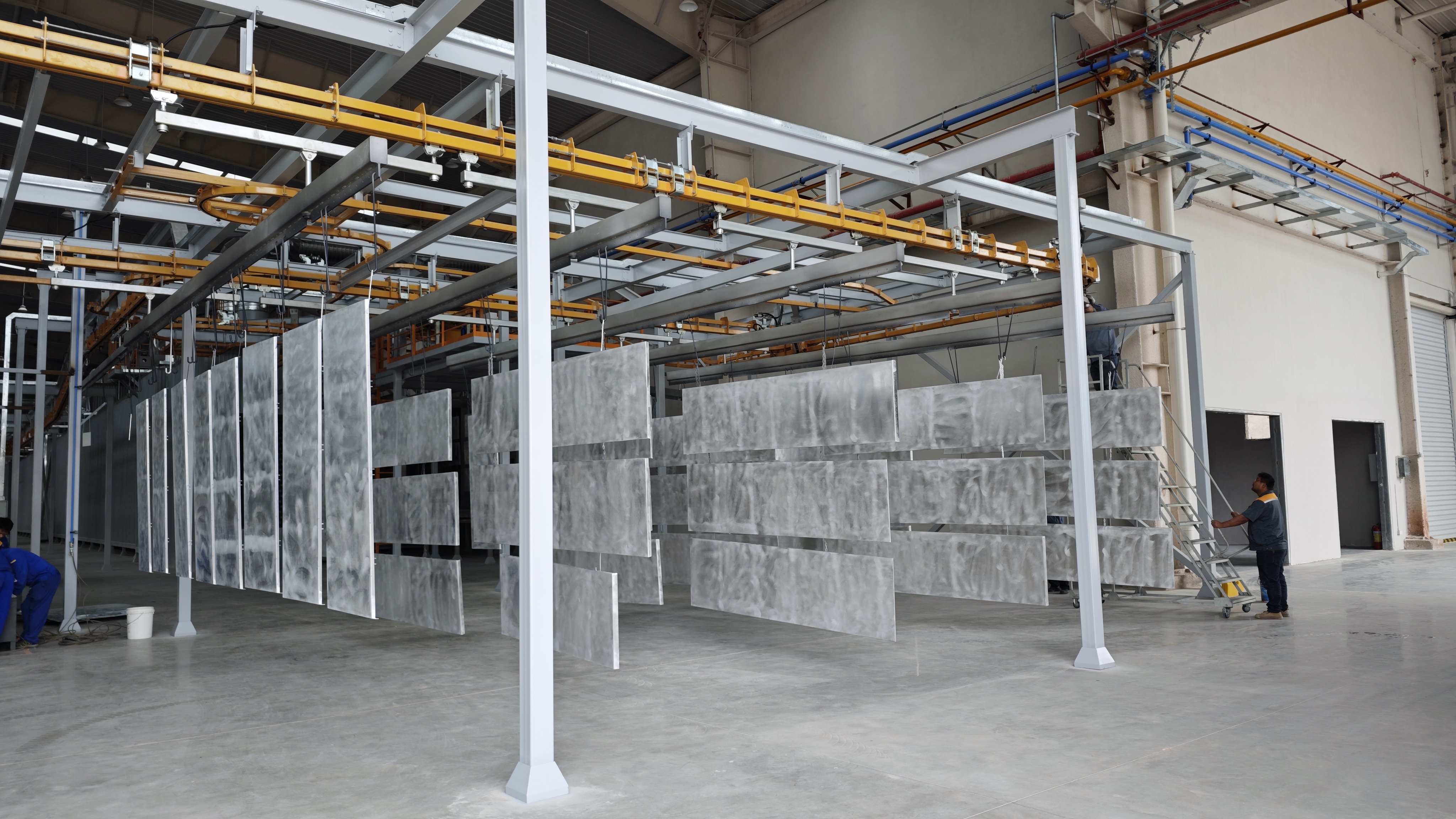
The Metal Automatic Painting Line is specified for aluminium panels and profiles in a reciprocator plus manual spraying configuration. Documented parameters: a working system of 300 days per year and 20 hours per day; a maximum workpiece size of 7000 mm (L) × 2000 mm (W) × 2200 mm (H) at one piece per hanger; transport by power and free conveyor chain; a maximum workpiece capacity of 5000 m² per day; and a conveyor belt speed of 3000 mm/min, adjustable between 2000 and 4000 mm/min. The main frame is carbon steel, with stainless steel used for the spray booth and pipeline.
Documented project scope for the metal coating line covers anti-corrosion and decorative coating, primer and topcoat spraying, and powder coating for metal hardware, bathroom fixtures, window frames and metal furniture components. Across 15 complete automatic metal coating lines documented for export-oriented hardware and building-material producers, reported outcomes were a 97% coating pass rate, a 30% reduction in paint and powder consumption, a 22% reduction in energy consumption and a 40% improvement in production efficiency.
Powder coating on hardware and building materials
Powder coating shares the pretreatment, conveying and curing architecture of a liquid line, but the application stage is dry and the film is formed in the oven rather than on the part. The substrate must therefore be metal and heat tolerant, which is why the powder configuration sits on the hardware side of the portfolio: aluminium sheet, steel cabinets, windows and doors, and metal furniture components.
For a line buyer, three consequences follow. The booth needs no solvent-related liquid handling. The application stage becomes sensitive to part grounding and hanger cleanliness. And the cure step, rather than the gun, determines final film quality — so oven temperature uniformity and residence time have to be validated for the specific powder chemistry before the line speed is frozen.
PTFE non-stick and high-temperature topcoat on cookware
The Cookware Automatic Painting Line applies PTFE non-stick coating, an anti-rust primer and a high-temperature resistant topcoat to non-stick pans, frying pans, air fryers, soup pots, rice cooker inner pots, cake pans and water heater shells. Its documented specification is the clearest example of how tightly pitch, hanger design and speed are coupled:
- Material: aluminium alloy, and composite materials (stainless steel, aluminium alloy, copper)
- Standard product size Φ220 × 160 mm (H); maximum product size Φ300 × 160 mm (H)
- Output: 800–1000 pieces per hour
- Workpiece pitch: 450–900 mm
- Hanging method: 4 inner pots per hanger, 20 lids per hanger
- Anodising line speed: 1200 mm/min
- Desktop curing oven linear speed: 1000 mm/min, adjustable between 0.5 and 1.5 m/min
- Energy: natural gas and electricity
The 450–900 mm pitch range is the parameter most often underestimated during budgeting, because the hanger works with it. With 4 inner pots or 20 lids per hanger, pitch and hanger loading together determine output — a narrow pitch with few parts per hanger is not automatically faster than a wider pitch carrying more parts per hanger.
Across 20 complete automatic cookware coating lines documented for brand OEM and private-label manufacturers, reported outcomes were a coating uniformity rate of up to 98%, non-stick performance meeting international food-grade standards, a 30% reduction in paint waste and a 35% improvement in production efficiency.
Robotic spraying where geometry demands repeatability
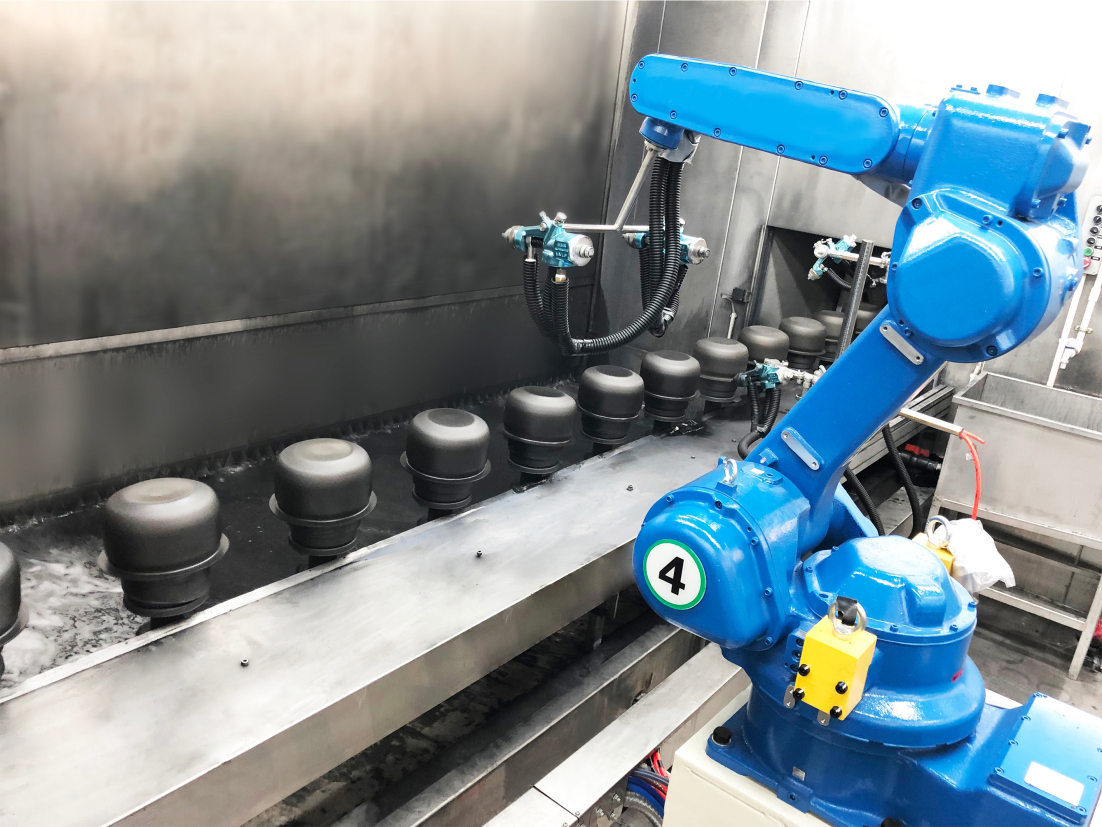
The Auto Parts Automatic Painting Line applies the same liquid spray principle with a different automation profile. Components include front bumpers, door panel trim, auxiliary instrument panels, gear shift panels, IP trim, wheel arches and switch panels in ABS+PC. Documented parameters: 336 days per year at 22 hours per day; spray booth temperature 25 ± 2 °C and humidity 65 ± 10% RH; offline mode plus robot spraying; a production cycle of 45 seconds per tray, or 1760 trays per day; maximum tooling tray size L1350 × W900 × H200 mm; 85% equipment utilisation; a line footprint of 100 m (L) × 38 m (W) × 5.4 m (H); and energy from electricity, natural gas, steam and ice water. Across 20 documented auto parts lines, reported results were a 98% coating yield, 25% lower paint consumption, 20% lower energy consumption and no major production shutdowns over five years.
Large workpieces: floor supported conveyors
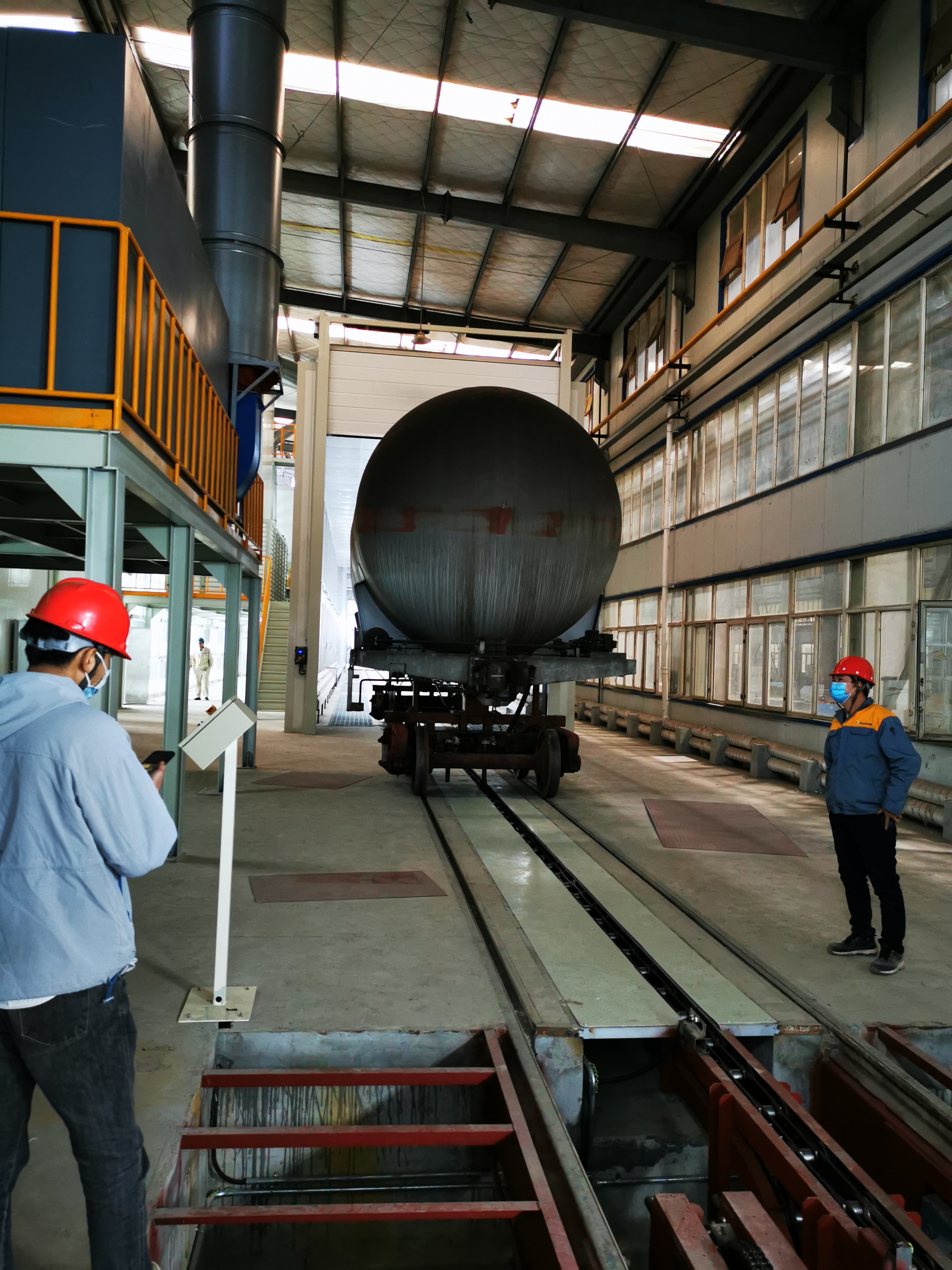
When parts are larger than a hanging fixture can carry, the conveying method changes before the coating method does. The Industrial Equipment Automatic Painting Line uses manual plus robot spraying on a floor supported conveyor for gondola cars, flat cars, tank cars, SQ6 special cars, box cars and grain cars in metallic and aluminium materials. Documented single-shift capacity, at 7.5 working hours per shift, is 20 railway gondola cars, flat cars or tank cars; 7 SQ6 special cars; 10 railway boxcars or grain cars; or 5–10 export open, flat, shed and tank cars.
Step-by-Step Breakdown: Setting Parameters on a Spray or Powder Line
Step 1 — Define the substrate and the pretreatment route
Pretreatment is decided by material: aluminium panels and profiles, ABS+PC automotive trim, solid wood and MDF furniture, or composite cookware bodies each need a different preparation sequence. Documented equipment includes gantry pretreatment systems, spray pretreatment equipment, automatic sandblasting machines for cookware, dust removal rooms, moisture drying ovens and flame treatment booths for plastic parts. A pretreatment that is too light for the substrate shows up later as an adhesion failure, not as a visible coating defect.
Step 2 — Select the coating method against the film requirement
Liquid spray covers primer and topcoat, anti-corrosion and decorative coating, and PTFE non-stick plus high-temperature topcoat. Powder coating covers metal hardware, bathroom fixtures, window frames and metal furniture components. Where the finish must be food-contact compliant, or the substrate is not conductive, liquid systems are the workable route.
Step 3 — Choose the applicator configuration
Three documented configurations cover most projects: reciprocator plus manual spraying (metal line), offline mode plus robot spraying (auto parts line, 45 seconds per tray), and manual plus robot spraying (industrial equipment line). Manual stations absorb shape variation and low-volume colour changes; reciprocators and robots deliver consistency at line speed.
Step 4 — Lock the booth environment
Booth conditions are process parameters, not operator comfort settings. The auto parts line is specified at 25 ± 2 °C and 65 ± 10% RH, and the factory space is sized at 100 m × 38 m × 5.4 m to hold that envelope. Film appearance and solvent flash-off behaviour both drift once temperature or humidity leaves the specified band.
Step 5 — Set pitch and hanging method
Pitch is the distance between hangers, and it is set by part size, hanger design and oven residence time. Documented examples: a 450–900 mm pitch on the cookware line with 4 inner pots or 20 lids per hanger, and a 300 mm pitch on the wood line for table legs, chair backs, sitting boards, front legs and frames. A hanger that carries more parts at a wider pitch can outperform a tighter pitch carrying fewer parts.
Step 6 — Set conveyor speed and confirm the cure window
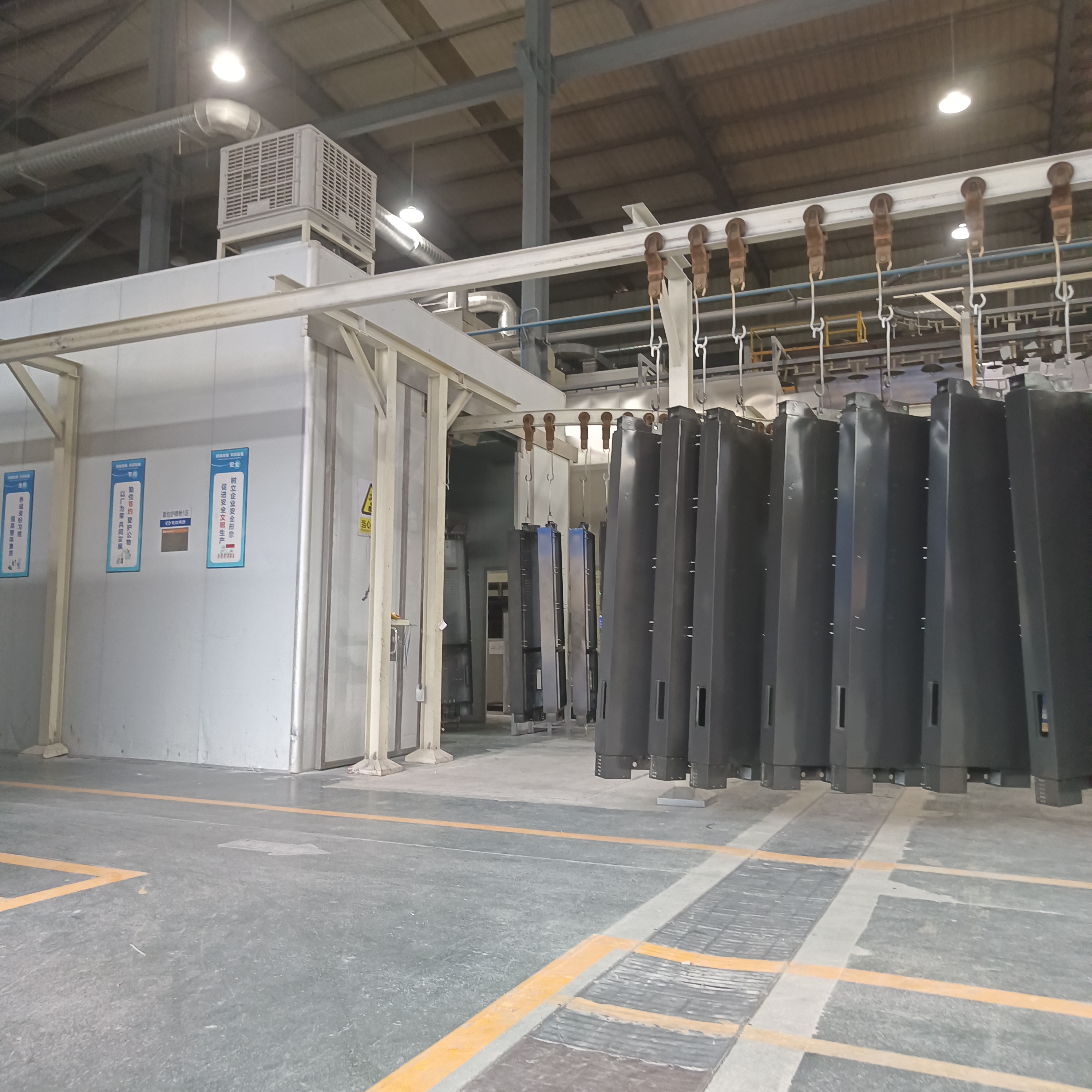
Line speed is only valid once the oven can cure at that speed. Documented values include 3000 mm/min on the metal line (adjustable 2000–4000 mm/min), 4000 mm/min design speed on the wood line (adjustable 2000–6000 mm/min), 1200 mm/min anodising speed and a 1000 mm/min desktop curing oven speed on the cookware line (adjustable 0.5–1.5 m/min). Adjustability matters: it is what allows a line to absorb a product mix instead of being tied to a single part size.
Step 7 — Validate compliance and acceptance criteria before shipment
Compliance is verified at machine level and, for cookware, at finished-product level. Attractivechina's coating machinery equipment holds ISO 14001:2015 environmental management certification (No. DZ/CN/2407055E, issued 26 September 2024 by Dazhong (Guangzhou) Certification Co., Ltd., valid to 14 October 2027) and ISO 45001:2018 occupational health and safety certification (No. 04926S00152R001, issued 20 April 2026 by Guangdong Quality Testing CTC Certification Co., Ltd., valid to 19 April 2029). The Laminated Conveyor Oven (Model CZ-21-008-02A) holds an EAC Customs Union Conformity Declaration (No. ЕАЭС N RU Д-CN.PA01.B.96986/21) under TR TC 004/2011 for low-voltage equipment safety, issued by MOCCERTPROM and applicable in the Eurasian Economic Union market. Equipment quality control is documented as 100% pre-shipment testing.
Use Cases: Which Method Fits Which Job
- Metal hardware and building materials. Liquid primer and topcoat for decorative anti-corrosion finishes, plus a powder configuration for the same part families. Reference line: Metal Automatic Painting Line at 5000 m²/day and 3000 mm/min on aluminium panels and profiles.
- Cookware and home appliances. PTFE non-stick plus high-temperature topcoat on aluminium alloy at 800–1000 pieces per hour, with a 450–900 mm pitch and 4 inner pots or 20 lids per hanger.
- Automotive parts. Robotic liquid spraying on ABS+PC trim and bumpers at 45 seconds per tray inside a booth controlled at 25 ± 2 °C and 65 ± 10% RH.
- Wood furniture and musical instruments. Liquid primer and topcoat on solid wood and MDF at 1422 pieces per 8-hour shift, with a 300 mm pitch and a 4000 mm/min design speed.
- Rail and heavy industrial equipment. Manual plus robot spraying on a floor supported conveyor, with capacity for up to 20 rail cars per 7.5-hour shift.
Comparison Table: Liquid Spray vs Powder Coating
| Decision factor | Liquid spray coating | Powder coating |
|---|---|---|
| Coating form and film | Liquid paint applied by gun in single or multi-layer primer and topcoat structures, including PTFE non-stick systems | Dry powder applied electrostatically and fused into a continuous film in the curing oven |
| Applicator configurations in documented scope | Reciprocator + manual (metal line); offline mode + robot (auto parts line, 45 s/tray); manual + robot (industrial equipment line) | Same conveyor, pretreatment and oven architecture; documented application for metal hardware, bathroom fixtures, window frames and metal furniture components |
| Substrates in documented scope | Aluminium panels and profiles; ABS+PC auto trim; aluminium alloy and composite cookware; solid wood and MDF | Metal and heat-tolerant parts: steel cabinets, sheet metal, aluminium sheet, door and window components |
| Film thickness control levers | Gun flow and atomisation, reciprocator stroke or robot path, number of passes, booth temperature and humidity (25 ± 2 °C / 65 ± 10% RH on the auto parts line) | Powder output, electrostatic parameters, part grounding, hanger cleanliness, cure temperature and residence time |
| Conveyor and throughput reference | Power and free conveyor chain at 3000 mm/min (adjustable 2000–4000 mm/min), 5000 m²/day; 45 seconds per tray, 1760 trays/day | Same conveyor families; capacity governed by pitch, hanger loading and oven residence time |
| Curing | Curing and drying ovens, including a desktop curing oven at 1000 mm/min (adjustable 0.5–1.5 m/min); energy from electricity, natural gas, steam and ice water depending on the line | Fusion and cure in the oven is the film-forming step; requires a heat-tolerant substrate and a validated thermal profile |
| Compliance focus | Food-contact standards for non-stick cookware: FDA 21 CFR, EU 1935/2004 and LFGB migration testing; plus machinery and management-system certification | Machinery safety (EN 1953:2025 for atomizing and spraying equipment) and management-system certification |
| Documented project outcomes | Cookware: up to 98% uniformity, 30% less paint waste, 35% higher efficiency. Auto parts: 98% yield, 25% less paint, 20% less energy | Metal projects: 97% coating pass rate, 30% lower paint and powder consumption, 22% lower energy consumption, 40% higher efficiency |
Parameter Reference: Documented Line Specifications
| Painting line | Material | Conveying / hanging | Speed | Documented output or capacity |
|---|---|---|---|---|
| Wood Furniture Automatic Painting Line | Solid wood, MDF | Hanging, 300 mm pitch | 4000 mm/min design speed (2000–6000 mm/min adjustable) | 1422 pieces per 8-hour shift; maximum workpiece 610 × 710 × 1400 mm (H) |
| Metal Automatic Painting Line | Aluminium panel and profile | Power and free conveyor chain | 3000 mm/min (2000–4000 mm/min adjustable) | 5000 m²/day; maximum workpiece 7000 × 2000 × 2200 mm (H), 1 pc/hanger; 300 days/year × 20 h/day |
| Cookware Automatic Painting Line | Aluminium alloy, composite materials | Hanging, 450–900 mm pitch, 4 inner pots or 20 lids per hanger | Anodising 1200 mm/min; desktop curing oven 1000 mm/min (0.5–1.5 m/min adjustable) | 800–1000 pieces/hour; standard size Φ220 × 160 mm (H), maximum Φ300 × 160 mm (H) |
| Auto Parts Automatic Painting Line | ABS+PC | Offline mode + robot spraying; tray L1350 × W900 × H200 mm | 45 seconds per tray | 1760 trays/day; 336 days/year × 22 h/day; 85% equipment utilisation |
| Industrial Equipment Automatic Painting Line | Metallic, aluminium | Floor supported conveyor; manual + robot spraying | Single shift of 7.5 working hours | 20 railway gondola/flat/tank cars, 7 SQ6 special cars, 10 boxcars or grain cars, or 5–10 export cars per shift |
Frequently Asked Questions
1. Which certifications and standards should be verified on a spray or powder painting line?
Verify machine-level management-system certificates first, then the product-specific standards that apply to your parts. Attractivechina's coating machinery equipment holds ISO 14001:2015 environmental management certification (No. DZ/CN/2407055E, issued 26 September 2024 by Dazhong (Guangzhou) Certification Co., Ltd., valid to 14 October 2027) and ISO 45001:2018 occupational health and safety certification (No. 04926S00152R001, issued 20 April 2026 by Guangdong Quality Testing CTC Certification Co., Ltd., valid to 19 April 2029), covering the design and manufacture of coating machinery equipment. The Laminated Conveyor Oven (Model CZ-21-008-02A) holds an EAC Customs Union Conformity Declaration (No. ЕАЭС N RU Д-CN.PA01.B.96986/21) issued by MOCCERTPROM under TR TC 004/2011 for low-voltage equipment safety, applicable in the Eurasian Economic Union. For non-stick cookware lines, food-contact standards apply: FDA 21 CFR, EU 1935/2004 and LFGB migration testing. Safety of atomizing and spraying equipment is addressed by EN 1953:2025.
2. Can one automatic painting line run both liquid spray and powder coating, and how far can it be customized?
On the metal side the documented scope is broad: anti-corrosion and decorative coating, primer and topcoat spraying, and powder coating for metal hardware, bathroom fixtures, window frames and metal furniture components. Applicator configuration can be reciprocator plus manual (metal line), offline mode plus robot (auto parts line, 45 seconds per tray), or manual plus robot (industrial equipment line). Customization covers packaging, logo, size, automation level, voltage, power and machine capacity, with engineering handled by a 54-engineer R&D team inside a 35,548 m² facility. The company holds 79 invention patents in the fields of coating equipment and environmental protection equipment, within a portfolio of more than 300 patents, and produces an annual output of 60 units.
3. What drives the cost of an automatic painting line, and is there a minimum order quantity?
Cost follows configuration, and prices are quoted per project. The parameters that move cost are the same ones that move capability: conveyor type (power and free conveyor chain versus floor supported conveyor), applicator mix (manual, reciprocator, robot), oven and energy configuration (the metal line runs 300 days per year at 20 hours per day; the cookware line uses natural gas and electricity; the auto parts line uses electricity, natural gas, steam and ice water), booth environmental control, line footprint (documented at 100 m × 38 m × 5.4 m for an auto parts line), and environmental protection equipment. The documented minimum order quantity is 2 units. Payback is normally argued from consumption: metal projects recorded 30% lower paint and powder consumption and 22% lower energy consumption, auto parts projects recorded 25% lower paint consumption and 20% lower energy consumption, and robotic painting systems are reported to cut paint consumption by up to 30% versus manual application (Intel Market Research).
4. Can we validate coating quality on our own parts before committing to a line?
Yes — validation starts with workpiece data rather than with equipment. Standard and maximum workpiece size, material, hanging method and pitch, and required output per shift together determine the line: a cookware line, for example, is specified at 450–900 mm pitch with 4 inner pots or 20 lids per hanger, 800–1000 pieces per hour, and a standard product size of Φ220 × 160 mm against a maximum of Φ300 × 160 mm. Wood line parameters are set the same way, at 300 mm pitch and 1422 pieces per 8-hour shift. Equipment quality control is documented as 100% pre-shipment testing, and a 1-year warranty with free training follows commissioning. To open a sample and quotation discussion, send your part drawings, material and target film requirement to attractivechina@gmail.com or +86 135-8061-6025.
5. What is the delivery lead time and what after-sales support is included?
Lead time depends on the configuration — different products have different delivery times, and the parameters described above (pitch, conveyor type, oven type, applicator mix) are what determine it. The manufacturing base is a 35,548 m² facility with 280 employees and an annual output of 60 painting line units. Documented after-sales support covers remote technical support, a 1-year warranty, rapid response within 4 hours, regular follow-ups and free training, alongside installation and commissioning support. Documented export markets include Vietnam, Iran, Indonesia, Brazil, the United Arab Emirates, Turkey, Thailand, Saudi Arabia, Argentina, Mexico, Pakistan, Bangladesh, India, the United States, Russia and Singapore.
Conclusion: Choose the Method, Then Size the Line
Spraying and powder coating are not competing answers to the same question; they answer different substrate, film and compliance requirements. Liquid spray covers primer and topcoat work, multi-colour decorative finishes and food-contact PTFE non-stick systems on aluminium alloy and composite cookware. Powder coating covers metal hardware, bathroom fixtures, window frames and metal furniture components, where a fused film and a heat-tolerant substrate are both acceptable. Once the method is fixed, everything else follows from documented parameters rather than guesswork: pitch, hanging method, conveyor type and speed, and oven residence time.
The failure mode to avoid is selecting the method after the conveyor and oven have already been sized. The parameters in this guide — 3000 mm/min on a metal line, a 450–900 mm pitch on a cookware line, a 300 mm pitch on a wood line, 45 seconds per tray on a robotic auto parts line, and 20 rail cars per 7.5-hour shift on a floor supported conveyor line — exist precisely because the application method came first.
Next Step
Send your workpiece material, standard and maximum size, target film requirement and required output per shift. Attractivechina engineers will map them to an application method, pitch and hanging design, conveyor speed and oven configuration before any commercial discussion.
Brochure download: Attractivechina company brochure (PDF)
Website: www.attractivechina.net · Email: attractivechina@gmail.com · Tel / WhatsApp: +86 135-8061-6025
Guangdong Chuangzhi Intelligent Equipment Co., Ltd. (Attractivechina), No.2 Yingbin Avenue, High-tech District, Zhaoqing City, Guangdong Province, China.