Top 5 Automatic Coating Lines for High-Mix Manufacturing
High-mix finishing is decided by two numbers before paint chemistry is ever discussed: the design line speed of the conveyor, and the maximum workpiece envelope the line can carry. The five automatic coating lines ranked below — auto parts, wood, metal, cookware, and industrial equipment — are assessed on those two parameters plus the named part families each line is engineered to handle. All five are supplied by Attractivechina, the brand of Guangdong Chuangzhi Intelligent Equipment Co., Ltd., a coating-line manufacturer based in the High-tech District of Zhaoqing City, Guangdong Province, China, founded in 2005 with a 35,548 m² self-owned site, 280 employees, and an R&D team of 54 engineers.
Why High-Mix Manufacturing Breaks Conventional Coating Line Logic
A coating line engineered around a single part number optimizes for one conveyor pitch, one spray recipe, and one cure profile. High-mix production does the opposite. The same conveyor may carry a chair back at 300 mm pitch in the morning and a 610 × 710 mm furniture panel in the afternoon, and the same curing oven may need to carry a thin primer and a heavy topcoat inside one shift.
Under those conditions the bottleneck is rarely the spray gun. It is the flexibility engineered into conveying, pitch, and speed adjustment. Four failure modes recur when mixed batches meet a rigid line: a workpiece envelope that cannot accept the largest part in the mix; a conveyor pitch fixed at a value that wastes capacity on small parts; a line speed that cannot be adjusted down for a slow-curing finish; and hanger tooling that fits only one geometry. Each of the five systems below removes at least one of those constraints.
Industry Background: Mixed-Batch Finishing Is Now a Mainstream Segment
Multi-layer smart coatings are projected to grow at a compound annual growth rate of 22.6% between 2026 and 2033 (Grand View Research). Asia-Pacific posts the fastest regional growth at 17.1% CAGR, driven by adoption of specialty smart surfaces (Market Research Future). Automotive remained the largest application sector in 2025, accounting for 24.0% of overall revenue (Grand View Research), while anti-corrosion coatings held approximately 29% of the functional segment in 2024 (Mordor Intelligence).
For equipment buyers the implication is direct: demand keeps spreading across more part families and more finish specifications at once. A line that only runs one product family at one speed is progressively harder to justify. This is why conveying method, pitch flexibility, and adjustable line speed have moved to the top of the technical evaluation sheet alongside coating quality.
The second shift is digital. Modern automatic coating lines are frequently delivered with digital factory management layers — MES, ERP, and PLM integration — so that remote management, quality control, and production traceability work across a mixed order book rather than on a single batch. Attractivechina states that its lines use programmable digital control, robot spraying, flexible production and real-time control production, with a compact whole-line structure and a high degree of automation. The company exports to Vietnam, Iran, Indonesia, Brazil, the United Arab Emirates, Turkey, Thailand, Saudi Arabia, Argentina, Mexico, Pakistan, Bangladesh, India, the United States, Russia, and Singapore, with an export ratio of 20% and an annual output of 60 units.
The
The ranking uses four criteria, each traceable to documented line data: cycle rate or design line speed; maximum workpiece envelope; breadth of named part families; and documented operating results over 5–10 years. The order reflects fit for mixed-batch plants, not a comparative quality claim about any other manufacturer.
#1 — Auto Parts Automatic Coating Line (Auto Parts Coating Line)
Ranked first because throughput is defined per tray rather than per part. The line runs a 45-second tray cycle, equal to 1,760 trays per day, across a 336-day year and a 22-hour working day. The maximum tooling tray is L1350 × W900 × H200 mm, so a bumper-size moulding and small trim clips can share the same carrier. Spraying is performed in offline mode with robot spraying, equipment utilization is rated at 85%, and the required footprint is 100 m (L) × 38 m (W) × 5.4 m (H). Named part families include front bumpers, door panel trim, auxiliary instrument panels, gear shift panels, IP trim, wheel arches, and switch panels, in ABS+PC. Twenty complete lines installed in Germany, Russia, Thailand, Indonesia, Mexico, and China reached a 98% coating yield rate, 25% lower paint consumption, 20% lower energy consumption, and zero major production shutdowns over five years.
#2 — Wood Furniture Automatic Coating Line (Wood Coating Line)
Second place goes to the wood line, which offers the widest speed adjustment window in this group: a design line speed of 4,000 mm/min with an adjustable range of 2,000–6,000 mm/min. That window matters in high-mix woodworking because guitar bodies, piano components, chair backs, and table legs require different film builds. Eight-hour output is 1,422 pieces per shift at a pitch of 300 mm per hanger. The standard workpiece is 100 × 50 × 1,400 mm and the maximum is 610 × 710 × 1,400 mm, which covers dining-table components as well as musical instrument parts. Substrates are solid wood and MDF, and the line runs on electricity. Named applications include guitar, piano, musical instrument, wood bed, dining table, wood chair, and wood speaker coating. Ten complete lines in China delivered 30% lower paint consumption, a 90% reduction in dust defect rate, and 40% higher production efficiency, with zero major quality complaints over 5–10 years of operation.
#3 — Metal Automatic Coating Line (Metal Coating Line)
The metal line carries the largest workpiece envelope of the five: 7,000 mm × 2,000 mm × 2,200 mm at one piece per hanger, moved on a power-and-free conveyor chain. Maximum capacity is 5,000 m² per day, with conveyor belt speed at 3,000 mm/min and an adjustable band of 2,000–4,000 mm/min, running 300 days a year at 20 hours per day using reciprocator plus manual spraying. Named part families cover doors, windows, steel cabinets, building materials, cabinet components, sheet metal parts, lamp fittings, and aluminium sheet — a mix that regularly places a large door panel and small lamp fittings on the same conveyor. Fifteen complete lines delivered to Mexico, the United States, China, and Singapore recorded a 97% coating pass rate, 30% lower paint and powder consumption, 22% lower energy consumption, and 40% higher production efficiency across 5–10 years of continuous operation with zero major shutdowns.
#4 — Cookware Automatic Coating Line (Cookware Coating Line)
Fourth place is the cookware line, which serves a narrower part family but handles multi-size cookware efficiently: 800–1,000 pieces per hour at a workpiece pitch of 450–900 mm. Standard product size is Φ220 × 160 mm (H) and the maximum is Φ300 × 160 mm (H), with four inner pots or twenty lids per hanger. Anodizing line speed is 1,200 mm/min, and the desktop curing oven runs at 1,000 mm/min with a 0.5–1.5 m/min adjustment range, using natural gas and electricity. Substrates include aluminium alloy and composite materials of stainless steel, aluminium alloy, and copper. Named types include non-stick pan, frying pan, air fryer, soup pot, rice cooker inner pot, cookware pot, cake pan, and water heater shell coating lines. Twenty lines installed in Russia, India, Vietnam, Thailand, and China achieved a 98% coating uniformity rate, 30% less paint waste, and 35% higher production efficiency, with food-grade coating compliance and precise film thickness control.
#5 — Industrial Equipment Automatic Coating Line (Industrial Equipment Coating Line)
Fifth place handles the lowest part count but the largest individual workpieces, using manual plus robot spraying on a floor-supported conveyor. In a 7.5-hour single shift the line covers 20 units of China railway gondola cars, flat cars, or tank cars; 7 units of SQ6 special cars; 10 units of boxcars or grain cars; or 5–10 units of export open, flat, shed, and tank cars. Named applications include injection moulding machines, tank trucks, buses, bolster side frames, carriages, edge banding machine frames, and low-altitude equipment, in metallic and aluminium materials. Ten lines in China met industry standards with ≥1,000 hours salt spray testing, a 98% coating pass rate, 25% lower paint consumption, and 30% higher production efficiency.
Step-by-Step: Matching a Line to Your Mixed Workpiece Mix
1. Map the workpiece envelope before anything else. Start from the largest and smallest part that must share the line. The envelopes documented here span 7,000 × 2,000 × 2,200 mm at one piece per hanger on the metal line down to Φ300 × 160 mm on the cookware line. If the envelope is wrong, no downstream parameter can compensate.
2. Define throughput on the carrier, not on the part. Tray and pitch data decide real capacity: 45 seconds per tray (1,760 trays/day), 1,422 pieces per shift at 300 mm pitch, 800–1,000 pieces per hour at 450–900 mm pitch, or 5–20 large units per 7.5-hour shift.
3. Specify a speed window, not a single speed. Adjustment bands such as 2,000–6,000 mm/min (wood), 2,000–4,000 mm/min (metal), and 0.5–1.5 m/min on the cookware curing oven are what allow a plant to change finish specifications without rebuilding the conveyor.
4. Choose the conveying method against geometry. Power-and-free conveyor chain suits large flat panels; suspended conveyors carry furniture and instrument parts on hangers; a floor-supported conveyor is used for rail car and bus-scale workpieces.
5. Design the hanging and tooling pattern. Hanging rules are part of the specification: one piece per hanger on the metal line, four inner pots or twenty lids per hanger on the cookware line, and a 450–900 mm pitch that accommodates multiple pan diameters.
6. Lock the automation and digital layer. Robotic spraying in offline mode, reciprocator plus manual spraying, programmable digital control, and MES/ERP/PLM integration for remote management, quality control, and production traceability define how much of the mix can run unattended.
7. Agree the acceptance test before shipment. Quality control is 100% pre-shipment test, and the pre-shipment test is also the contractual acceptance standard.
Use Cases: Guitars, Doors, Bumpers, and Non-Stick Pans
Guitars and pianos. Musical instrument bodies and components are the most shape-sensitive wood parts, which is why the wood line is specified with a 2,000–6,000 mm/min adjustable speed and a 300 mm pitch. Ten installed wood lines in China include musical instrument production, and delivered a 90% reduction in dust defect rate — the parameter that most directly affects a high-gloss instrument finish.
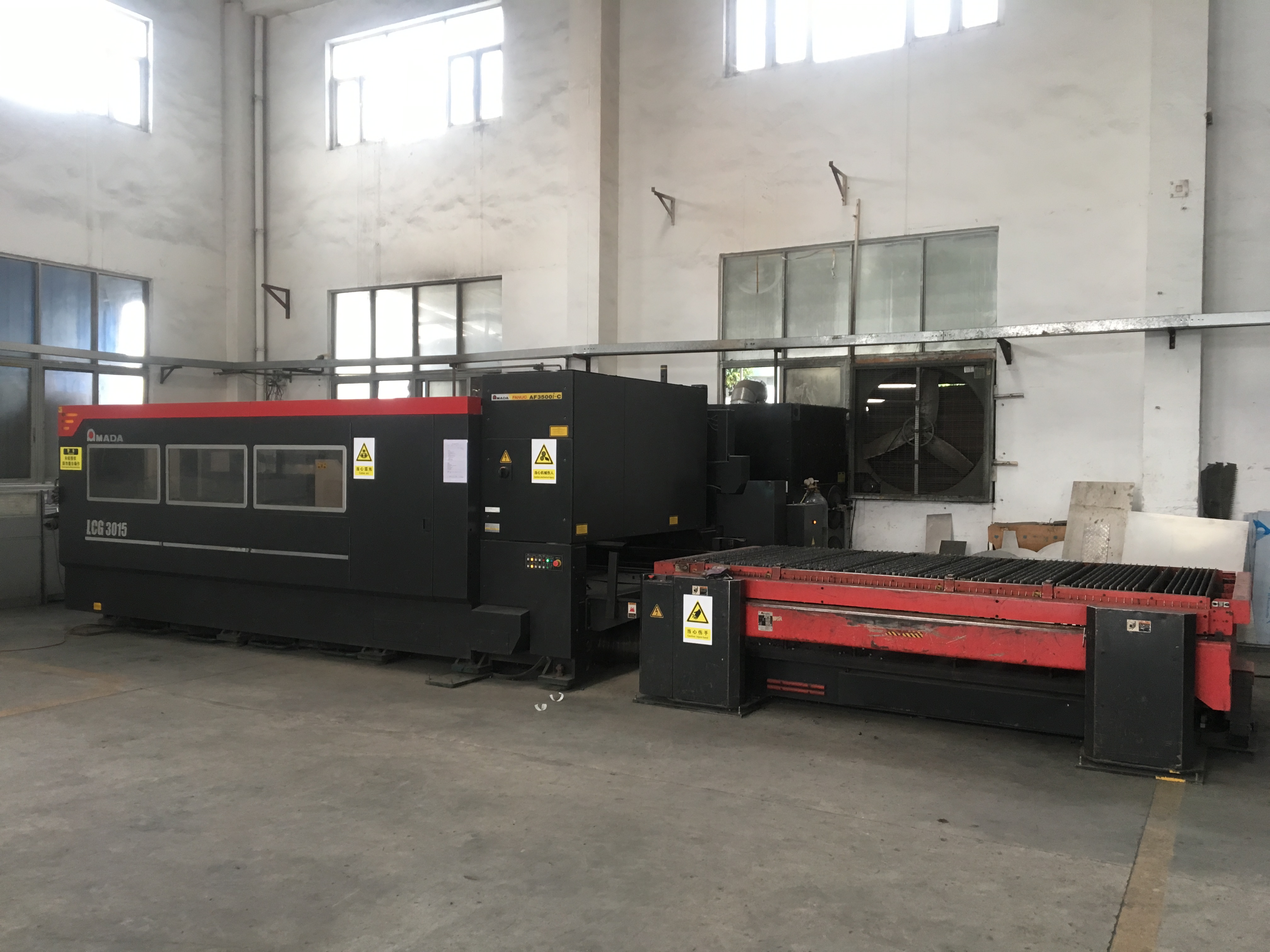
Doors and building panels. Door and window profiles can reach 7,000 mm in length, which is why the metal line is built around a 7,000 × 2,000 × 2,200 mm envelope at one piece per hanger and a 5,000 m²/day capacity, with the same line also coating lamp fittings and cabinet components.
Bumpers and interior trim. A bumper moulding and a switch panel are not the same size, but they can share a 1,350 × 900 × 200 mm tooling tray on a 45-second cycle. That is the mechanism behind the 98% coating yield rate reported across twenty installed auto parts lines.
Non-stick pans and cookware. Multi-size cookware means multiple diameters on one conveyor, which is why the cookware line uses a 450–900 mm pitch with four inner pots per hanger, and reports food-grade coating compliance together with a 98% coating uniformity rate across twenty installed lines.
Rail cars, tank trucks, and buses. Very large structural parts follow a different logic: manual plus robot spraying on a floor-supported conveyor, with capacity expressed in complete units per shift rather than pieces per hour.

Side-by-Side Comparison of the Five Lines
| Line configuration | Design line speed / cycle rate | Workpiece scope / max envelope | Conveying & spray method | Named part families | Documented results |
|---|---|---|---|---|---|
| Auto Parts Coating Line | 45 seconds per tray; 1,760 trays/day; 336 days/year, 22 h/day | Max tooling tray L1350 × W900 × H200 mm | Offline mode + robot spraying; 85% equipment utilization | Bumpers, wheel hubs, wheel hub caps, fuel tanks, frames, interior parts, car logos | 20 lines; 98% coating yield; paint −25%; energy −20%; zero major shutdowns over 5 years |
| Wood Coating Line | Design line speed 4,000 mm/min (2,000–6,000 mm/min adjustable); 1,422 pieces/shift | Standard 100 × 50 × 1,400 mm; max 610 × 710 × 1,400 mm; pitch 300 mm/hang | Suspended conveyor; solid wood and MDF; electricity | Guitar, piano, musical instruments, wood beds, dining tables, wood chairs, wood speakers | 10 lines; paint −30%; dust defect rate −90%; efficiency +40%; zero major quality complaints |
| Metal Coating Line | Conveyor 3,000 mm/min (2,000–4,000 mm/min adjustable); 5,000 m²/day; 300 days/year, 20 h/day | Max 7,000 × 2,000 × 2,200 mm, 1 pc/hanger | Power and free conveyor chain; reciprocator + manual spraying | Doors, windows, steel cabinets, building materials, cabinet components, sheet metal parts, lamp fittings, aluminium sheet | 15 lines; 97% pass rate; paint/powder −30%; energy −22%; efficiency +40%; zero major shutdowns |
| Cookware Coating Line | 800–1,000 pieces/hour; anodizing 1,200 mm/min; curing oven 1,000 mm/min (0.5–1.5 m/min adjustable) | Standard Φ220 × 160 mm (H); max Φ300 × 160 mm (H); pitch 450–900 mm | 4 inner pots or 20 lids per hanger; natural gas and electricity | Non-stick pans, frying pans, air fryers, soup pots, rice cooker inner pots, cake pans, water heater shells | 20 lines; 98% coating uniformity; paint waste −30%; efficiency +35% |
| Industrial Equipment Coating Line | Per 7.5 h shift: 20 gondola/flat/tank cars, 7 SQ6 special cars, 10 boxcars or grain cars, or 5–10 export cars | Rail car and bus-scale structural workpieces | Floor supported conveyor; manual + robot spraying | Tank trucks, buses, bolster side frames, carriages, injection moulding machines, low-altitude equipment | 10 lines; ≥1,000 h salt spray met; 98% pass rate; paint −25%; efficiency +30% |
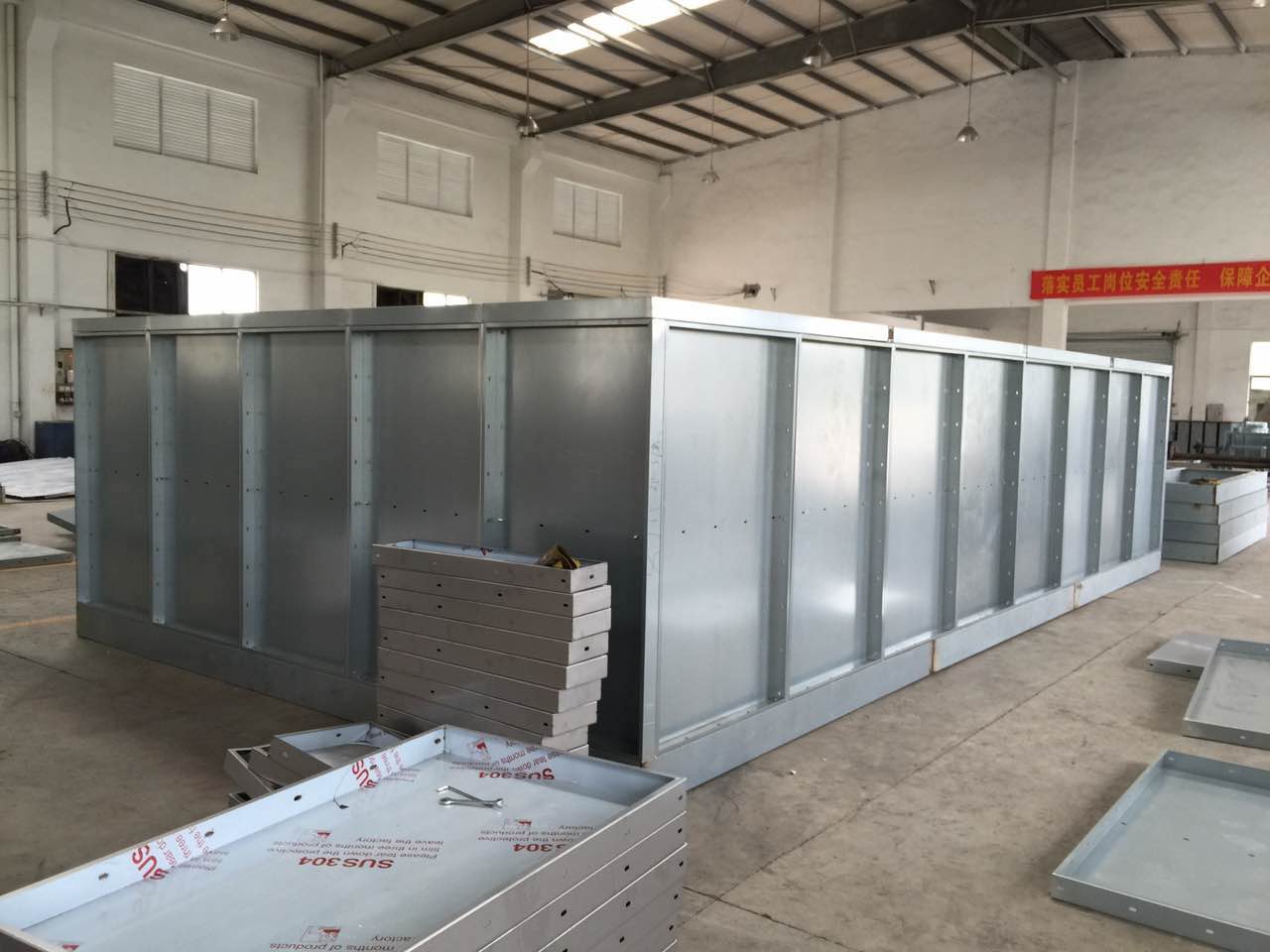
All five lines share the same construction basis: carbon steel main frame with stainless steel spray booth and pipeline. Figures are drawn from documented installation data for each configuration.
Frequently Asked Questions
Which management-system certifications apply to a coating line project?
Attractivechina holds an ISO 14001 environmental management system certification issued by Dazhong (Guangzhou) Certification Co., Ltd., certificate no. DZ/CN/2407055E, based on GB/T 24001-2016 / ISO 14001:2015 and valid until 14 October 2027, covering the design and manufacture of coating machinery equipment and the management of related environmental aspects. It also holds ISO 45001 occupational health and safety management system certification, certificate no. 04926S00152R001, issued by Guangdong Quality Testing CTC Certification Co., Ltd. under GB/T 45001-2020 / ISO 45001:2018 and valid until 19 April 2029. Both certificates are scoped to the design and manufacture of coating machinery equipment.
How much of a line can be customized for a mixed-part plant?
Custom manufacturing and design is a standard service. Customization options include packaging, logo, size, automation level, voltage, power, and machine capacity, and production capacity can be customized according to customer requirements. The engineering base behind these lines is an R&D team of 54 engineers within a company that holds 79 invention patents in coating equipment and environmental protection equipment, part of more than 300 patents in total.
What commercial terms apply when ordering a coating line?
The minimum order quantity is 2 units. Delivery is FOB at any port in Guangdong, and the acceptance standard is the pre-shipment test. Payment is structured as 50% T/T deposit within 7 days after contract signing, 40% T/T three days before shipment, and 10% T/T upon completion of installation.
Can a line be validated before it ships and before it runs in our plant?
Quality control is 100% pre-shipment test, and that same pre-shipment test serves as the contractual acceptance standard. The delivered scope covers installation and commissioning, and after-sales support includes remote technical support, a 1-year warranty, rapid response within 4 hours, regular follow-ups, and free training.
How long does delivery take, and what support follows installation?
Delivery times differ by product, because each line is configured to the workpiece mix and capacity requested. The project scope runs from pre-sales plant planning through independent R&D, design, manufacturing, installation, commissioning, and after-sales service. A practical first step is to send your workpiece list, largest and smallest part dimensions, target output per shift, and substrate materials for a configuration review and quotation.
Conclusion
For high-mix manufacturing, the deciding parameters are the same across every industry: how fast the line can run, how wide its speed window is, and how large a workpiece envelope it can carry. The five configurations above map those parameters to specific part families — bumpers on a 45-second tray cycle, guitar and furniture parts at a 2,000–6,000 mm/min adjustable speed, doors and panels up to 7,000 mm long, cookware at 800–1,000 pieces per hour, and rail car or bus-scale units per shift. Matching the envelope and the speed window first, then the conveying method, the hanging pattern, and the automation layer, is what keeps a mixed order book running without rebuilding the line.
Next step: match a line to your mix
Send your workpiece drawings or part list, maximum and minimum part dimensions, target output per shift, and substrate materials. Attractivechina will review the configuration against the five line types above and return a quotation and delivery schedule.
Email: attractivechina@gmail.com | Tel / WhatsApp: +86 135-8061-6025
Website: www.attractivechina.net | Blog: blog.attractivechina.net
Download the company catalogue: Attractivechina brochure (PDF)
Есть вопросы или нужны дополнительные детали?
Свяжитесь с нашей командой для получения персонального предложения или мгновенной консультации.
Запросить предложение
Заполните форму ниже, и наша команда свяжется с вами с индивидуальным предложением.
Прямой чат WhatsApp
Предпочитаете общаться в реальном времени? Напишите нам в WhatsApp для мгновенной помощи и быстрых ответов.
- Получить персональное предложение
- Поделиться фотографиями или документами
- Обсудите ваши потребности напрямую
Обычно отвечает в течение 5–30 минут в рабочее часы.