
What Is a Coating Line? A 2026 Guide to Automated Coating Systems
What Is a Coating Line? A 2026 Guide to Automated Coating Systems
First answer: A coating line is an integrated manufacturing system that prepares, coats, and cures workpieces in a controlled sequence. It is not a single spray booth or one oven; it is a connected arrangement of pretreatment, application, drying, curing, cooling, conveying, electrical control, and often environmental protection equipment. Buyers search for a coating line when they want repeatable surface quality, higher output, cleaner working conditions, or a safer alternative to manual spraying.
This guide is written for manufacturers at the awareness and research stage. It explains what a coating line does, which categories exist, how technical parameters are used, and what to verify before starting a project. Throughout the guide, the term “coating line” will be connected to concrete workpiece families: auto parts, cookware, metal products, wood furniture, musical instruments, and industrial equipment.
Guangdong Chuangzhi Intelligent Equipment Co., Ltd., referred to as Attractivechina in this guide, provides these systems under models such as the Cookware Coating Line, Wood Coating Line, Auto Parts Coating Line, Metal Coating Line, and Industrial Equipment Coating Line. The company was established in 2005 and operates from No.2 Yingbin Avenue, High-tech District, Zhaoqing City, Guangdong Province, China.
Why “Coating Line” Is Confusing at the Research Stage
Many first-time searches use the general phrase “coating line,” but what the buyer actually needs is often more specific: a powder coating line, an e-coating line, an anti-corrosion coating line, an automatic coating line, or a custom line for one product family.
The confusion is understandable. The same core sequence is used across very different products. An aluminum profile coating line, a sheet metal coating line, and a home appliance coating line share similar principles, but they differ in conveyor style, workpiece hanging method, oven size, processing temperature, and production rate. A word like “line” describes the architecture, not the exact equipment list.
Another common misconception is that a coating line alone determines coating quality. A line makes coating application repeatable, but the final result still depends on substrate cleanliness, material compatibility, coating formulation, film thickness control, and operating discipline. This is why a useful first step is to define the product family and surface requirements before comparing machine specifications.
Industry Background: Where the Coating Line Market Is Headed
The coating equipment market has been expanding as manufacturers in automotive, appliances, furniture, and heavy equipment automate surface finishing. According to Fortune Business Insights, the global coating equipment market was valued at USD 20.56 billion in 2025 and is projected to reach USD 36.77 billion by 2034. The same source reports that Asia Pacific held a 38.30% revenue share in 2025, with automotive and EV sector growth cited as a regional driver.
Specialized segments also show continued investment. The global powder coating equipment market was estimated at USD 3.20 billion in 2024, with a projected CAGR of 5.1% through 2034, based on Fact.MR data. The electrocoating, or e-coat, segment is estimated at USD 6.02 billion in 2026, reaching USD 9.48 billion by 2035 at a 5.18% CAGR, according to Market Reports World. These figures explain why buyers now encounter the term “coating line” in many different contexts.
For industrial steel structures, corrosion protection specifications often reference ISO 12944, the internationally recognized standard for protective paint systems. Anti-corrosion requirements are particularly important in the bus, railcar, tank, and heavy equipment segments, where surface life is evaluated in demanding outdoor conditions.
What an Automatic Coating Line Actually Includes
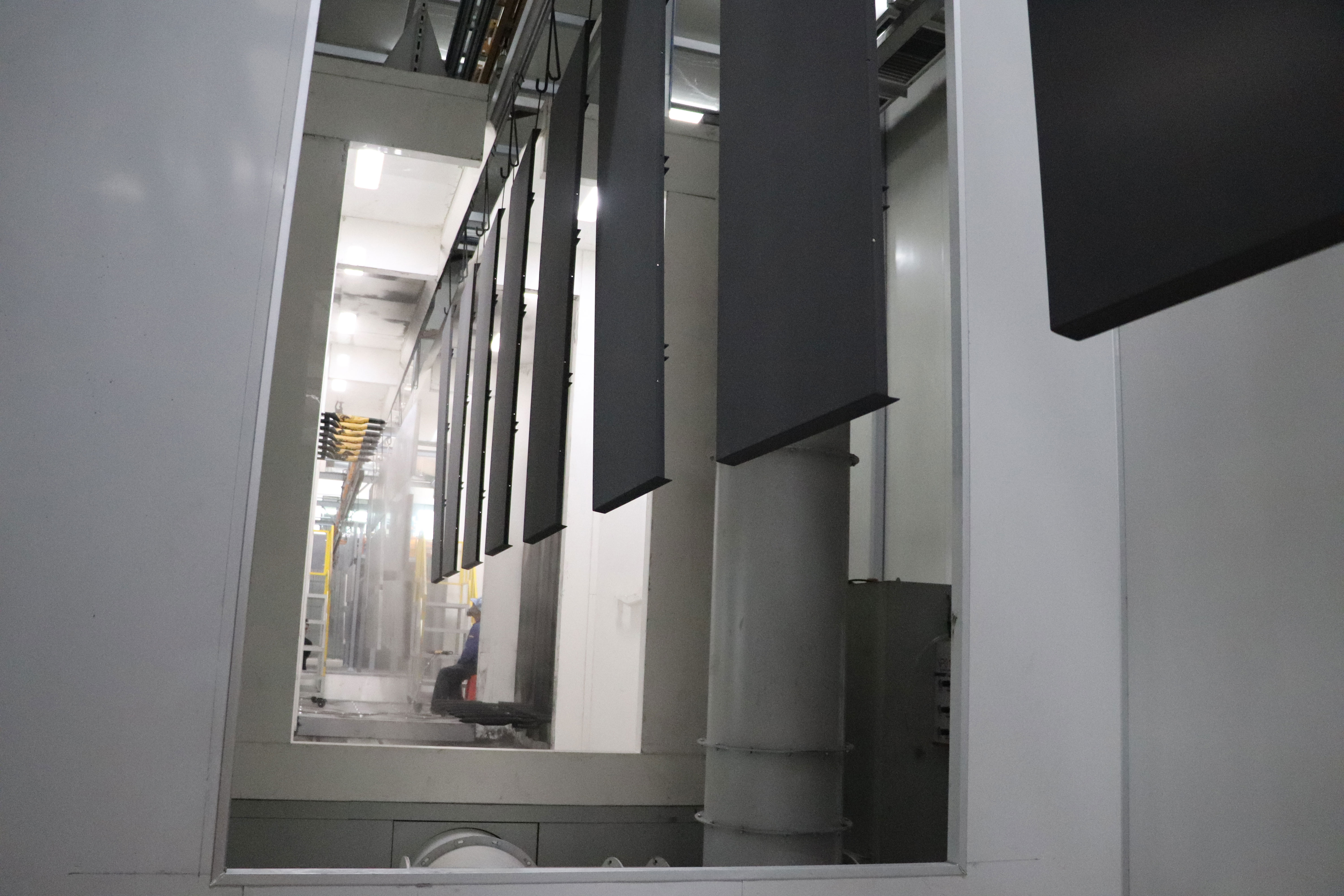
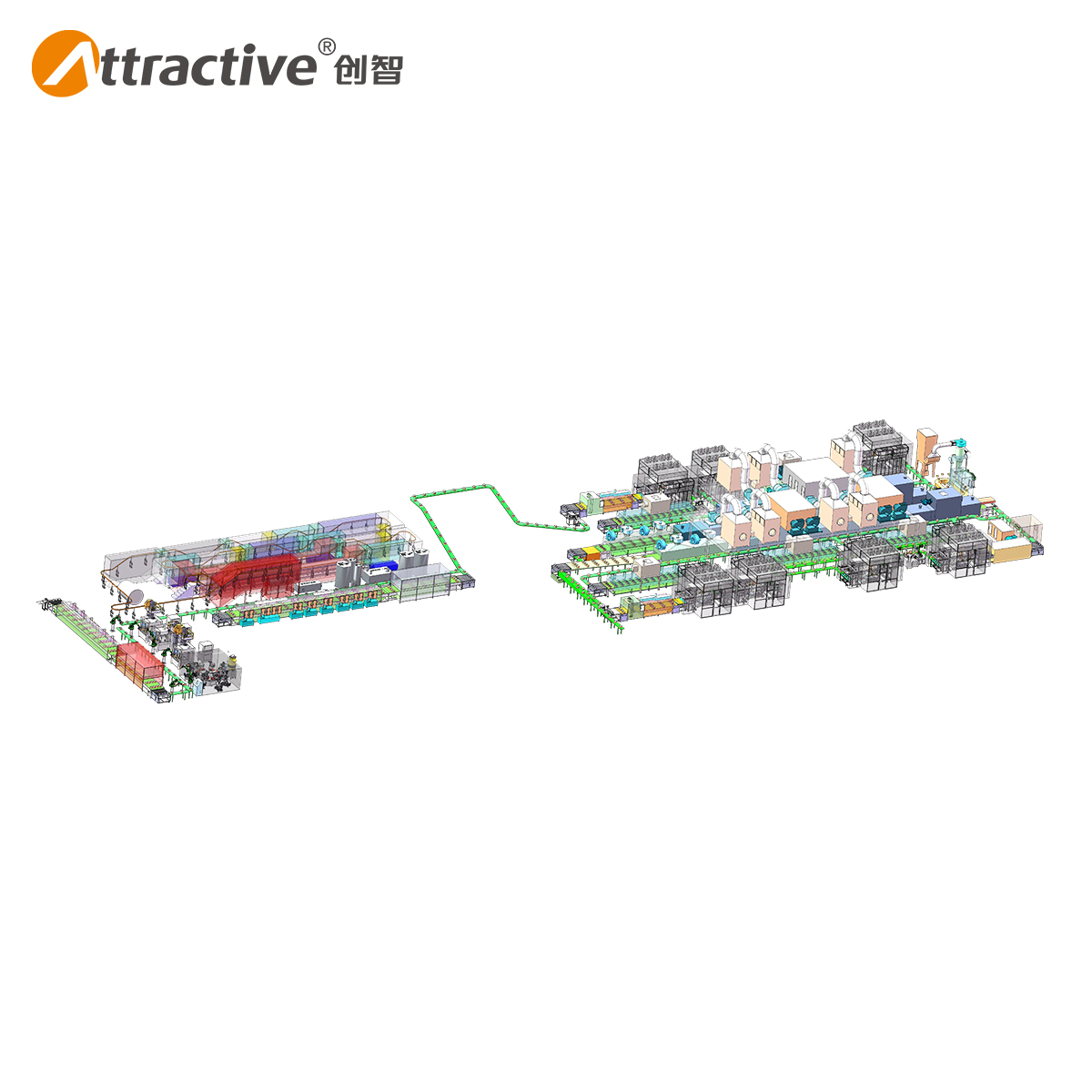
An automatic coating line is designed around the movement of workpieces through several treatment stages. In the application scenarios documented by Attractivechina, a complete turnkey line can include pretreatment equipment, drying equipment, an automatic sandblasting machine, spray booths, preheating ovens, curing ovens, cooling systems, conveying systems, dust removal equipment, VOCs treatment equipment, an electrical control system, and an MES production management system. Not every project includes every module, but this list shows the difference between buying a piece of equipment and buying a finishing system.
Material selection is also documented in the equipment structure. In the product configurations provided by Attractivechina, carbon steel is used for the main frame, while stainless steel is used for the spray booth and pipeline. This combination is common because structural frames need strength and rigidity, while spray areas benefit from corrosion resistance and easier cleaning.
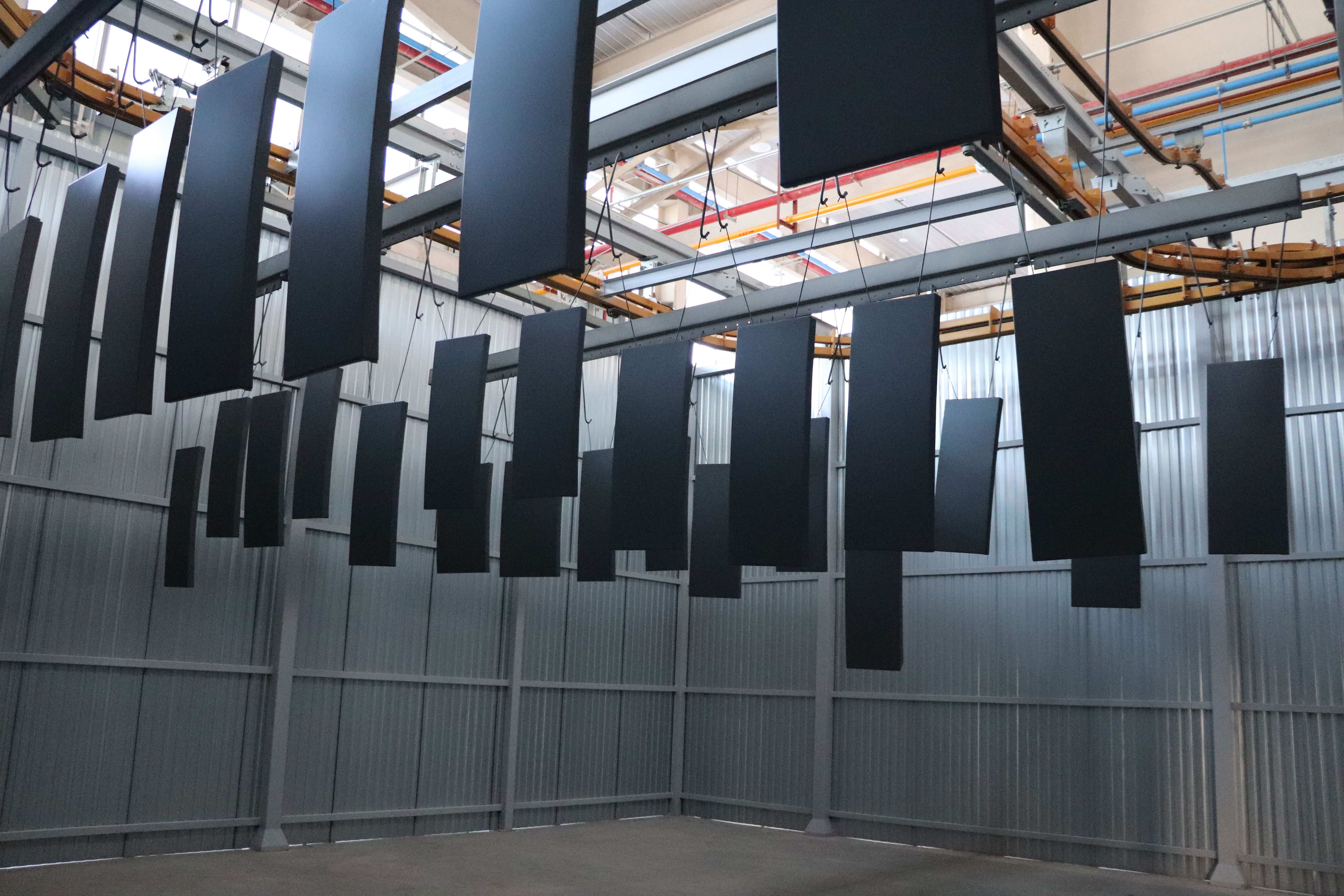
The conveying method is one of the most important decisions in a coating line. The product families covered in Attractivechina’s catalog show several documented approaches: a suspended conveyor system for wood and metal parts, a power-and-free conveyor for larger aluminum panels and profiles, a floor-supported conveyor for very large industrial equipment, and tray-type or supported conveying for sensitive plastic parts in the auto parts sector. Each method exists because workpiece geometry and weight determine how parts can be hung, transported, and masked.
Five Documented Coating Line Configurations
The fastest way to understand coating line selection is to compare five documented configurations from Attractivechina’s equipment range. These are not theoretical categories; they correspond to specific product models and measurable parameters.
1. Cookware Coating Line
The Cookware Coating Line is designed for the cookware and home appliance industry. The product family includes non-stick pan coating lines, frying pan coating lines, air fryer coating lines, soup pot coating lines, rice cooker inner pot coating lines, cake pan coating lines, water heater shell coating lines, and related home appliance applications. This line is intended for workpieces made of aluminum alloy or composite materials such as stainless steel, aluminum alloy, and copper.
Documented parameters help explain why a cookware-specific line is needed. The standard workpiece size is Φ220 × 160 mm (H), and the maximum workpiece size is Φ300 × 160 mm (H). The line can process roughly 800 to 1,000 pieces per hour. The hanging method may carry four inner pots per hanger or twenty lids per hanger. Energy use is based on natural gas and electricity.
2. Auto Parts Coating Line
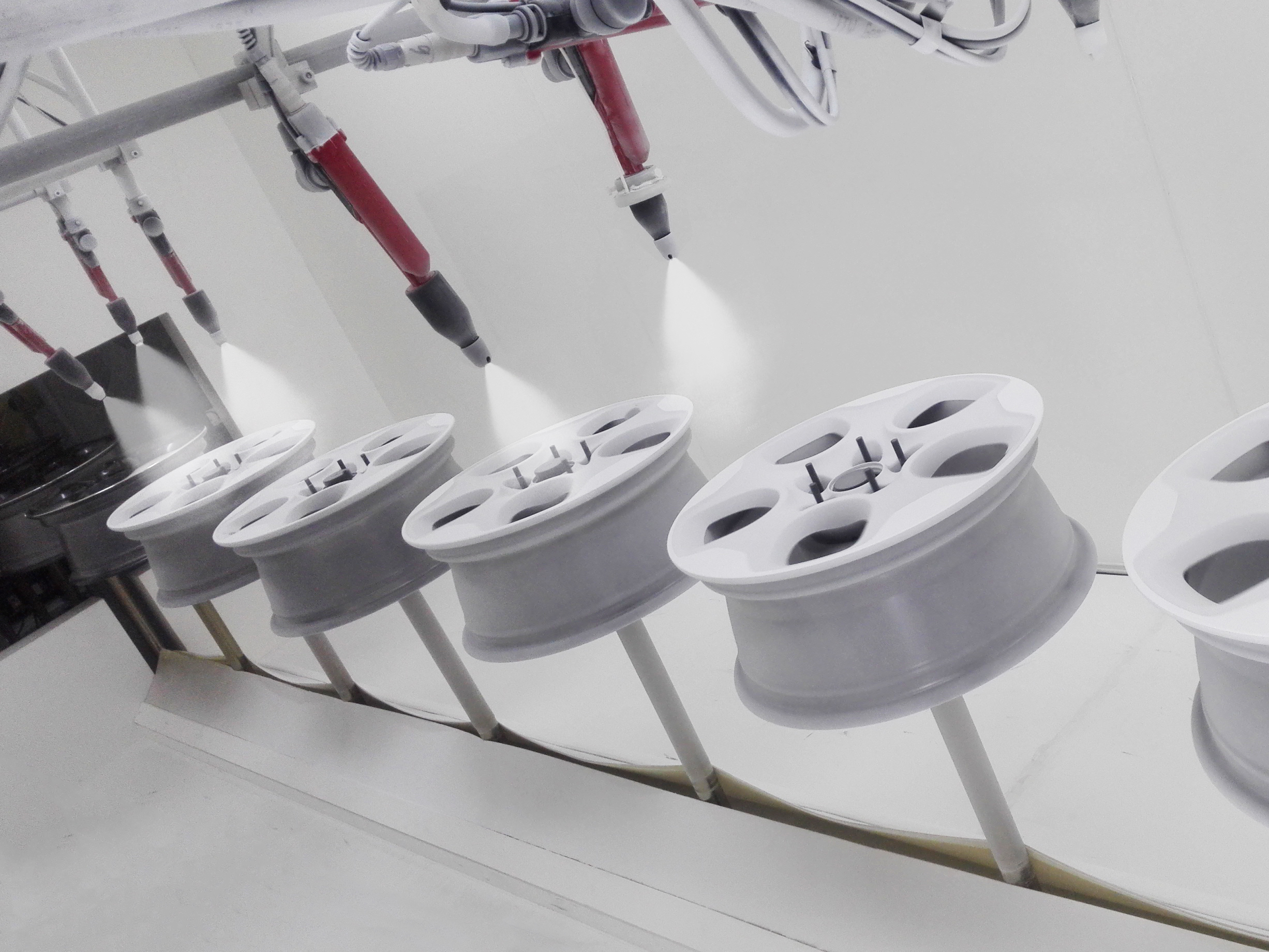
The Auto Parts Coating Line is intended for the auto parts industry and covers bumper coating lines, wheel hub coating lines, wheel hub cap coating lines, fuel tank coating lines, frame coating lines, automotive interior parts coating lines, and car logo coating lines. Typical workpieces include front bumpers, door panel trims, auxiliary instrument panels, gear shift panels, IP trims, wheel arches, and switch panels. The material shown in the product specification is ABS+PC, which explains why environmental control inside the booth matters.
The documented operating condition for this line is 336 days per year and 22 hours per day. The spray booth temperature is maintained at 25 ± 2°C, and relative humidity is maintained at 65 ± 10% RH. Control uses offline mode plus robot spraying. The maximum tooling tray size is L1350 × W900 × H200 mm, and equipment utilization rate is 85%. A factory installing this line is expected to provide a space of roughly 100 m length × 38 m width × 5.4 m height.
3. Metal Coating Line
The Metal Coating Line is intended for the hardware and building materials industry. Its documented categories include door coating lines, window coating lines, steel cabinet coating lines, building materials coating lines, cabinet component coating lines, sheet metal parts coating lines, lamp fittings coating lines, and aluminum sheet coating lines. The workpiece material is aluminum, and the typical part is described as an aluminum panel or profile.
The conveying method is a power-and-free conveyor chain. Spraying uses a reciprocator plus manual spraying. The conveyor belt speed is 3000 mm/min, adjustable from 2000 to 4000 mm/min. Maximum workpiece size is 7000 mm (L) × 2000 mm (W) × 2200 mm (H), and maximum capacity reaches 5000 m² per day. The working system is 300 days per year and 20 hours per day.
4. Wood Coating Line
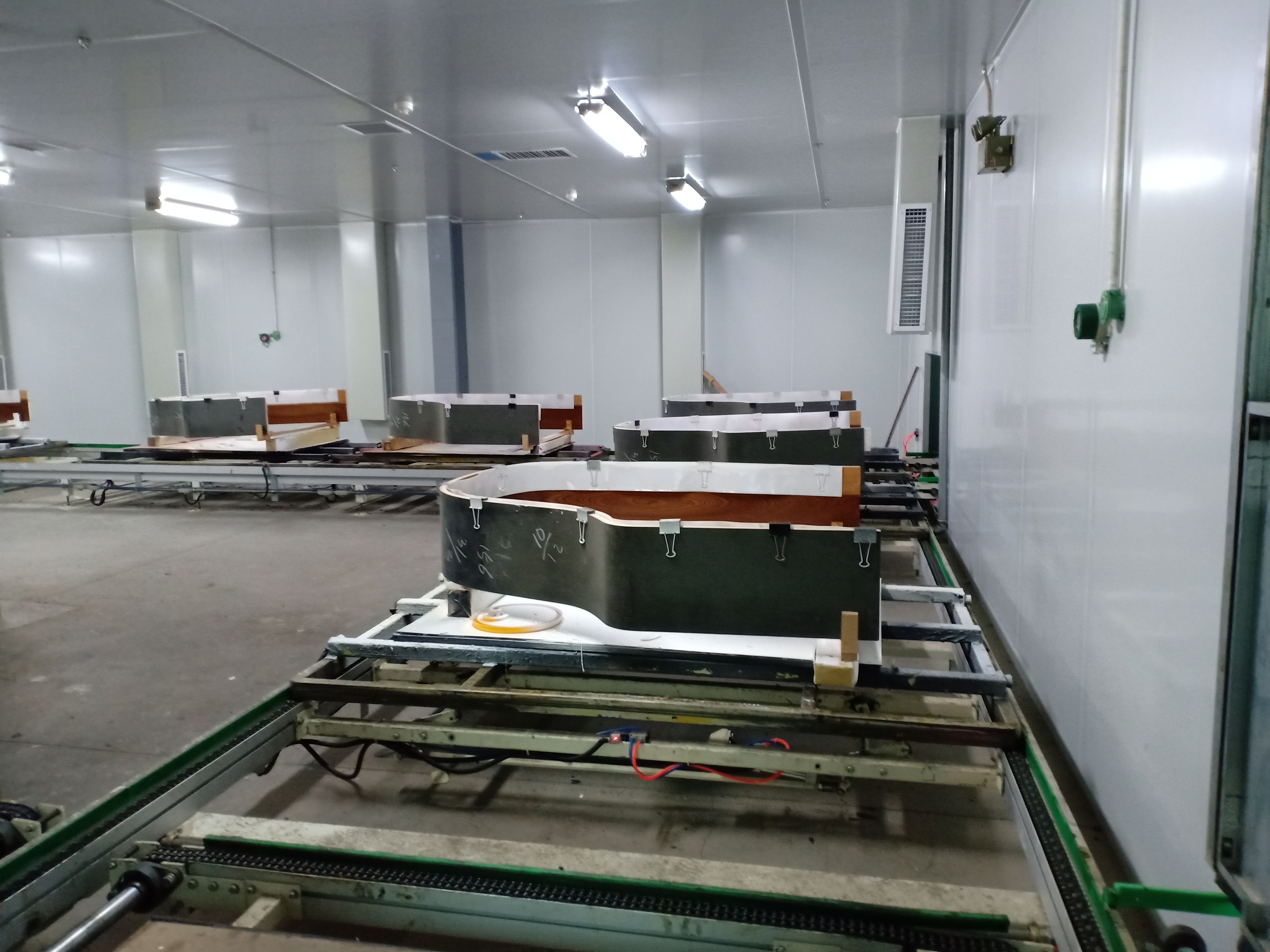
The Wood Coating Line is a wood furniture automatic coating line intended for the wood furniture and musical instrument industry. Its categories include guitar coating lines, piano coating lines, musical instrument coating lines, wood bed coating lines, dining table coating lines, wood chair coating lines, and wood speaker coating lines. Workpiece material is solid wood or MDF, and parts include table legs, chair backs, sitting boards, front legs, sitting frames, and chairs.
The standard workpiece size is 100 mm (L) × 50 mm (W) × 1400 mm (H), while the maximum workpiece size is 610 mm (L) × 710 mm (W) × 1400 mm (H). The pitch is 300 mm per hanger, and design line speed is 4000 mm/min, adjustable from 2000 to 6000 mm/min. The documented 8-hour output is 1422 pieces per shift. Energy use is electricity.
5. Industrial Equipment Coating Line
The Industrial Equipment Coating Line is designed for the industrial equipment and low-altitude equipment industry. It includes injection molding machine coating lines, tank truck coating lines, bus coating lines, bolster side frame coating lines, carriage coating lines, edge banding machine frame coating lines, and low-altitude equipment coating lines. Because these workpieces are large and heavy, the documented conveying method is a floor-supported conveyor, and the spraying method combines manual and robot application.
Product data shows that the line can achieve a production capacity of 20 units per shift for China railway gondola cars, flat cars, and tank cars, with separate capacity indicators for other rail vehicle types. For buyers dealing with very large steel structures, this configuration demonstrates how coating lines must be scaled to factory layout rather than copied from another industry.
Step-by-Step: How to Evaluate a Coating Line for Your Own Project
Even at the awareness stage, a buyer can organize research into a practical sequence. The following six steps do not require a final specification, but they help potential suppliers understand the right line concept.
- Define the workpiece family and material: List the main products to be coated. For example, aluminum cookware, ABS+PC automotive interior trim, or solid wood furniture parts all point to different line families.
- Identify the largest and smallest parts: Maximum workpiece dimensions affect spray booth width, oven opening size, and conveyor pitch. Minimum dimensions affect hanger design and tooling.
- Estimate target output: A useful target is output per shift or per hour. Compare it with documented values such as 800–1000 pieces per hour for cookware or 1422 pieces per 8-hour shift for wood furniture.
- Check available factory space: Coating lines are long systems. A documented auto parts line, for example, expects a factory space of about 100 m length × 38 m width × 5.4 m height. Plant height is often underestimated.
- Confirm utilities: Ask which energy sources are available: electricity, natural gas, steam, or ice water. The Wood Coating Line specification uses electricity, while the Cookware Coating Line specification uses natural gas and electricity.
- Clarify the required scope: Decide whether the project is a new production line, an upgrade to an existing line, or a customized turnkey project. This decision changes both engineering work and commercial structure.
Practical buying rule: Do not compare coating lines by price per meter or by the length of the oven alone. Compare the line against your workpiece size, output requirement, plant constraints, utility availability, and coating specification.
Use Cases Across Industries
Attractivechina’s documented application scenarios cover automotive parts, cookware, wood furniture, musical instruments, heavy machinery, home appliances, building materials, and low-altitude equipment. In practice, these translate into clearly different use cases:
- Automotive parts suppliers typically use an auto parts coating line for plastic interior and exterior components that require clean-room-like spraying conditions, temperature control, and robot-aided consistency.
- Cookware and appliance manufacturers use non-stick pan, rice cooker inner pot, and water heater shell coating lines when round metal parts must be processed at high speed.
- Building material producers use metal coating lines for aluminum doors, windows, steel cabinets, cabinet components, sheet metal parts, and aluminum profiles.
- Furniture and musical instrument makers use wood coating lines for chairs, dining tables, beds, guitars, pianos, and related products made of solid wood or MDF.
- Heavy equipment and transit manufacturers rely on floor-supported conveyor systems for buses, tank trucks, railcars, bolster side frames, and low-altitude equipment.
The documented operating environment for these systems is an indoor Class 10,000 cleanroom with clean, well-ventilated conditions. The same application data also notes that these lines are suitable for new lines, upgrades, and customized turnkey projects.
Coating Line Comparison Table
The table below compares the five documented automatic coating line models from Attractivechina. All figures come from product specifications and should be used as reference inputs for early-stage project evaluation.
| Line Model | Typical Workpiece Material | Representative Capacity | Conveying / Spraying Method | Typical Fit |
|---|---|---|---|---|
| Cookware Automatic Coating Line | Aluminum alloy and composite materials | 800–1000 pieces/hour; max size Φ300×160 mm(H) | Overhead or supported hanging; 4 inner pots per hanger | Non-stick pans, rice cooker liners, cake pans, water heater shells |
| Auto Parts Automatic Coating Line | ABS+PC plastics | 85% equipment utilization rate; max tooling tray L1350×W900×H200 mm | Offline mode plus robot spraying | Bumpers, interior trims, wheel hubs, car logos |
| Metal Automatic Coating Line | Aluminum panels and profiles | 5000 m²/day; max size 7000×2000×2200 mm | Power-and-free conveyor; reciprocator plus manual | Doors, windows, steel cabinets, sheet metal parts, lamp fittings |
| Wood Automatic Coating Line | Solid wood, MDF | 1422 pieces per 8-hour shift; 4000 mm/min line speed | Suspended conveyor; adjustable line speed | Furniture, chairs, tables, beds, guitars, pianos |
| Industrial Equipment Automatic Coating Line | Metallic, aluminum | 20 units/shift for railway gondola, flat, and tank cars | Floor-supported conveyor; manual plus robot | Buses, tank trucks, railcars, bolster side frames, low-altitude equipment |
Table: Representative automatic coating line models and documented specification ranges.
Frequently Asked Questions
What compliance points should be checked before choosing a coating line?
Compliance should be evaluated at two levels. First, the coated part may need to meet a performance or corrosion standard, such as ISO 12944 for protective paint systems on steel structures. Second, the coating installation itself may need to meet environmental and management expectations linked to ISO 9001, ISO 14001, and ISO 45001 frameworks. In documented application scenarios, Attractivechina configures lines for indoor Class 10,000 cleanroom and clean, well-ventilated working conditions, and the matched equipment scope can include dust removal and VOCs treatment systems.
What production capacity can an automatic coating line achieve?
Capacity depends on workpiece geometry and the line model. Documented examples include 800–1000 pieces per hour on a cookware coating line for workpieces up to Φ300×160 mm(H), 1422 pieces per 8-hour shift on a wood coating line, and 5000 m² per day on a metal coating line for aluminum panels and profiles. For large industrial equipment, the documented capacity is 20 units per shift for railway gondola cars, flat cars, and tank cars. A buyer should state capacity using the same units the supplier uses: pieces per hour, pieces per shift, square meters per day, or units per shift.
How much factory space does a coating line need?
There is no one-size-fits-all answer, but plant space must be considered early. For example, one documented auto parts coating line specifies a factory width of 100 m in length, 38 m in width, and 5.4 m in height. Supporting references also mention indoor Class 10,000 cleanroom requirements and the need for a clean, well-ventilated environment. Utility planning should include electricity, natural gas, steam, and ice water where the process specification calls for them.
Can a buyer request a quotation or line guidance before finalizing the product design?
Yes. A coating line inquiry can begin with a small amount of information: product type, workpiece material, maximum size, daily output target, and available plant dimensions. This information is enough to determine whether the buyer is evaluating a cookware coating line, wood coating line, metal coating line, auto parts coating line, or industrial equipment coating line. Attractivechina supports customized turnkey projects and offers pre-sales plant planning, independent R&D, design, manufacturing, installation, commissioning, and after-sales service. For a first response, send workpiece details and site conditions to attractivechina@gmail.com or reach the team at +86 135-8061-6025.
Conclusion
A coating line is best understood as a production line built around a workpiece, not as a generic machine. The same basic sequence of pretreatment, coating application, curing, and cooling is engineered differently for cookware, auto parts, aluminum profiles, wood furniture, and industrial equipment. For a buyer at the awareness or research stage, the most valuable move is to define the product family, maximum part size, target output, and plant constraints before comparing suppliers.
Attractivechina provides automatic coating lines for these product families from its manufacturing base in Zhaoqing, Guangdong, and has exported to markets including Vietnam, Indonesia, Brazil, UAE, Turkey, Thailand, Saudi Arabia, Mexico, the United States, Russia, and Singapore. The company has a production facility of 35,548 square meters, roughly 280 employees, an annual production capacity of 60 units, and an engineering team of 54 engineers. It holds 79 invention patents in the coating and environmental protection equipment fields, with more than 300 total patents.
If you are at the beginning of a coating line project, download the company brochure for an overview of equipment scope and company capabilities. Then prepare your workpiece drawing, target output, and plant layout, and send them to attractivechina@gmail.com for a first engineering discussion.
Next step: Contact Attractivechina by email at attractivechina@gmail.com, by phone at +86 135-8061-6025, or via WhatsApp to discuss your coating line project.