
Wood vs. Metal Automatic Painting Lines: A Practical Comparison Guide for First-Time Buyers
Wood vs. Metal Automatic Painting Lines: A Practical Comparison Guide for First-Time Buyers
Wood and metal automatic painting lines can look similar at a distance, but they are designed around different workpieces and finish priorities. For a first-time buyer, choosing the right system starts with a clear comparison of substrate, geometry, line speed, conveying method, and pollution control. This guide compares the Wood Furniture Automatic Painting Line with the Metal Automatic Painting Line using documented product records from Attractivechina.
Attractivechina is the export-facing brand of Guangdong Chuangzhi Intelligent Equipment Co., Ltd., a Guangdong-based manufacturer of customized automatic coating production lines. Its product range includes wood, metal, cookware, auto parts, industrial equipment, and home appliance coating systems, so the wood and metal lines in this guide come from the same engineering family and can be compared on a practical basis.
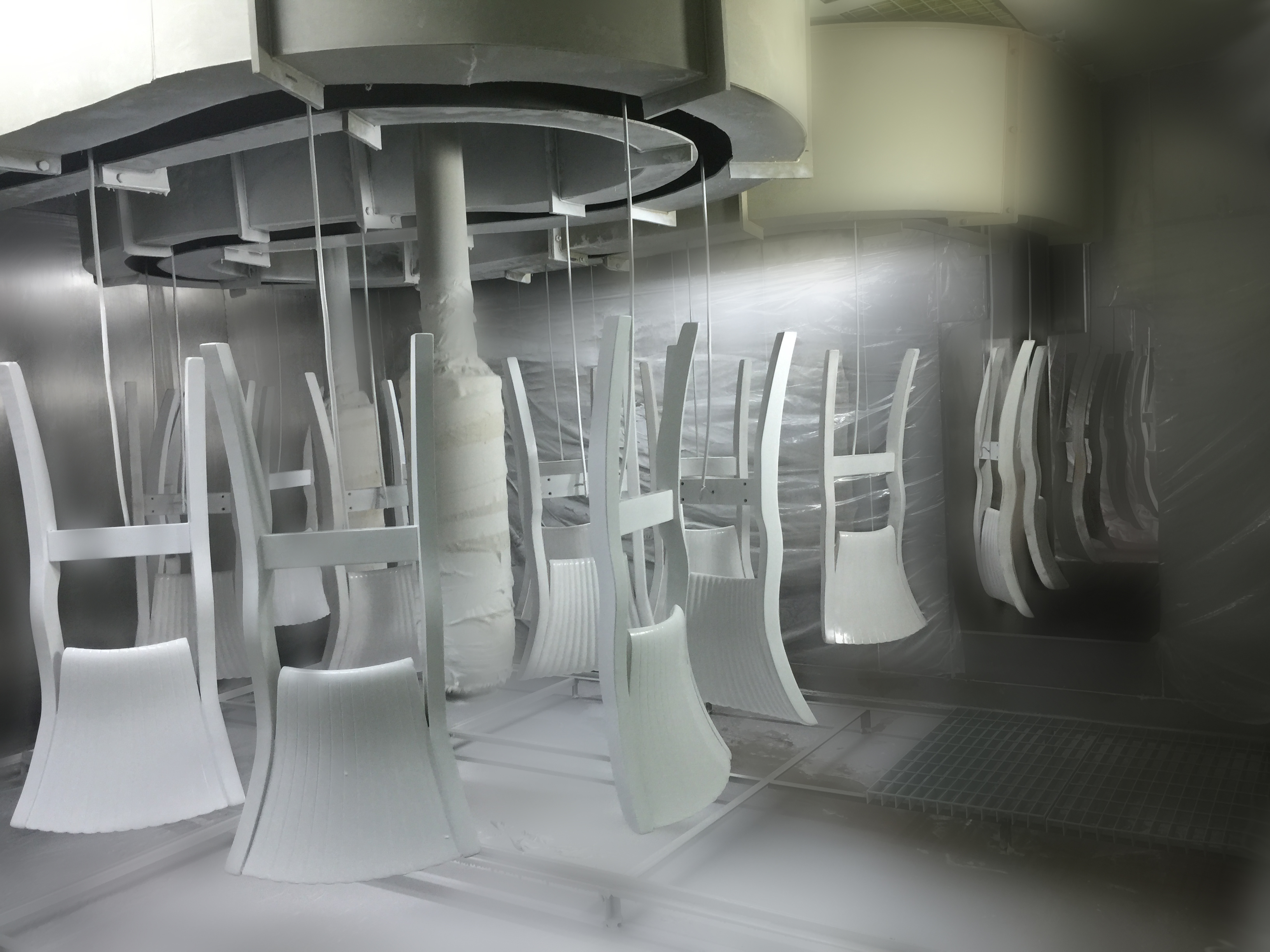
Wood furniture parts such as chairs and table legs require a line design that controls dust and supports high-gloss finishing.
Problem Definition: Why First-Time Buyers Cannot Judge These Lines by Name Alone
The first mistake a new buyer can make is to search for a painting line, industrial painting line, or automatic painting line and assume that one general system can handle both wooden chair backs and long aluminum sheets. In practice, the line is a configured production system, not a single spray booth.
The documented product specification for the wood furniture line lists workpieces such as table legs, chair backs, sitting boards, front legs, sitting frames, and chairs. The accepted workpiece materials are solid wood and MDF. The maximum workpiece size is 610*710*1400mm(H). By contrast, the metal line product specification describes aluminum panels and profiles, with a maximum workpiece size of 7000mm(L)*2000mm(W)*2200mm(H) and one piece per hanger. These parameters point to different workpiece handling strategies and different coating requirements.
A wood chair component can be hung at a pitch of 300mm per hanger, while an aluminum sheet line may need a power-and-free conveyor chain and a much larger hanger envelope. If a buyer evaluates only capacity or price and ignores part geometry, the result can be rejects, poor coating uniformity, or an oversized line that is difficult to operate efficiently.
Industry Background: Where the Two Segments Diverge
The industrial paint process automation market, which includes robotic and conveyorized systems, was valued at USD 5.3 billion in 2024 and is projected to reach USD 8.9 billion by 2030, according to Strategic Market Research. China’s industrial coating equipment market is also projected to reach 45 billion CNY by 2026, with growth from automotive, cookware, and furniture sectors.
Within this larger market, wood and metal coating projects follow different engineering logic. Wood furniture and musical instrument projects are associated with surface appearance, smoothness, high-gloss finish, and very low dust defect levels. Metal hardware and building material projects are more often associated with anti-corrosion performance, uniform coating thickness, and long-term durability. Therefore, a practical comparison of wood vs. metal automatic painting lines should not stop at product names; it should compare the technical assumptions behind each line.
Detailed Solution: Wood Furniture Automatic Painting Line vs. Metal Automatic Painting Line
Wood Furniture Automatic Painting Line
The product-family name is Wood Furniture Automatic Painting Line, with the model name Wood Painting Line. Its type list covers guitar painting lines, piano painting lines, musical instrument painting lines, wood bed painting lines, dining table painting lines, wood chair painting lines, and wood speaker painting lines.
According to the product specification, the main workpiece types are table legs, chair backs, sitting boards, front legs, sitting frames, and chairs. The workpiece materials are solid wood and MDF. The stated 8-hour output per shift is 1,422 pieces. The standard workpiece size is 100(L)*50(W)*1400mm(H), while the maximum workpiece size is 610*710*1400mm(H). The pitch is 300mm per hang, and the design line speed is 4000mm/min, with a speed adjustment range of 2000mm/min to 6000mm/min. Energy use is electricity.
The frame construction is carbon steel for the main frame and stainless steel for the spray booth and pipeline. This construction is shared with the metal line in the same product family, but the wood line specification is strongly oriented to smaller, shaped furniture parts made of solid wood and MDF.

Musical instrument and furniture coating examples show the wood line's need for flexible handling of curved and varied wood parts.
Metal Automatic Painting Line
The corresponding metal product is named Metal Automatic Painting Line, model Metal Painting Line. Its type list includes door painting lines, window painting lines, steel cabinet painting lines, building materials painting lines, cabinet component painting lines, sheet metal parts painting lines, lamp fitting painting lines, and aluminum sheet painting lines.
According to the product specification, the documented parts name is aluminum panel and profile, and the workpiece material is aluminum. The working system is 300 days per year and 20 hours per day. The spraying method is listed as reciprocator plus manual. The maximum workpiece size is 7000mm(L)*2000mm(W)*2200mm(H), with one piece per hanger. The transport method is a power-and-free conveyor chain, and the maximum workpiece capacity is 5,000m2 per day. The conveyor belt speed is 3000mm/min, adjustable between 2000mm/min and 4000mm/min.
This makes the metal line more suitable for long, flat, or profile-shaped aluminum workpieces, such as aluminum sheets, lamp fittings, cabinet components, and other sheet metal parts. Its plant and line parameters are different from the wood line because the parts are longer, heavier, and often require more pretreatment attention before coating.
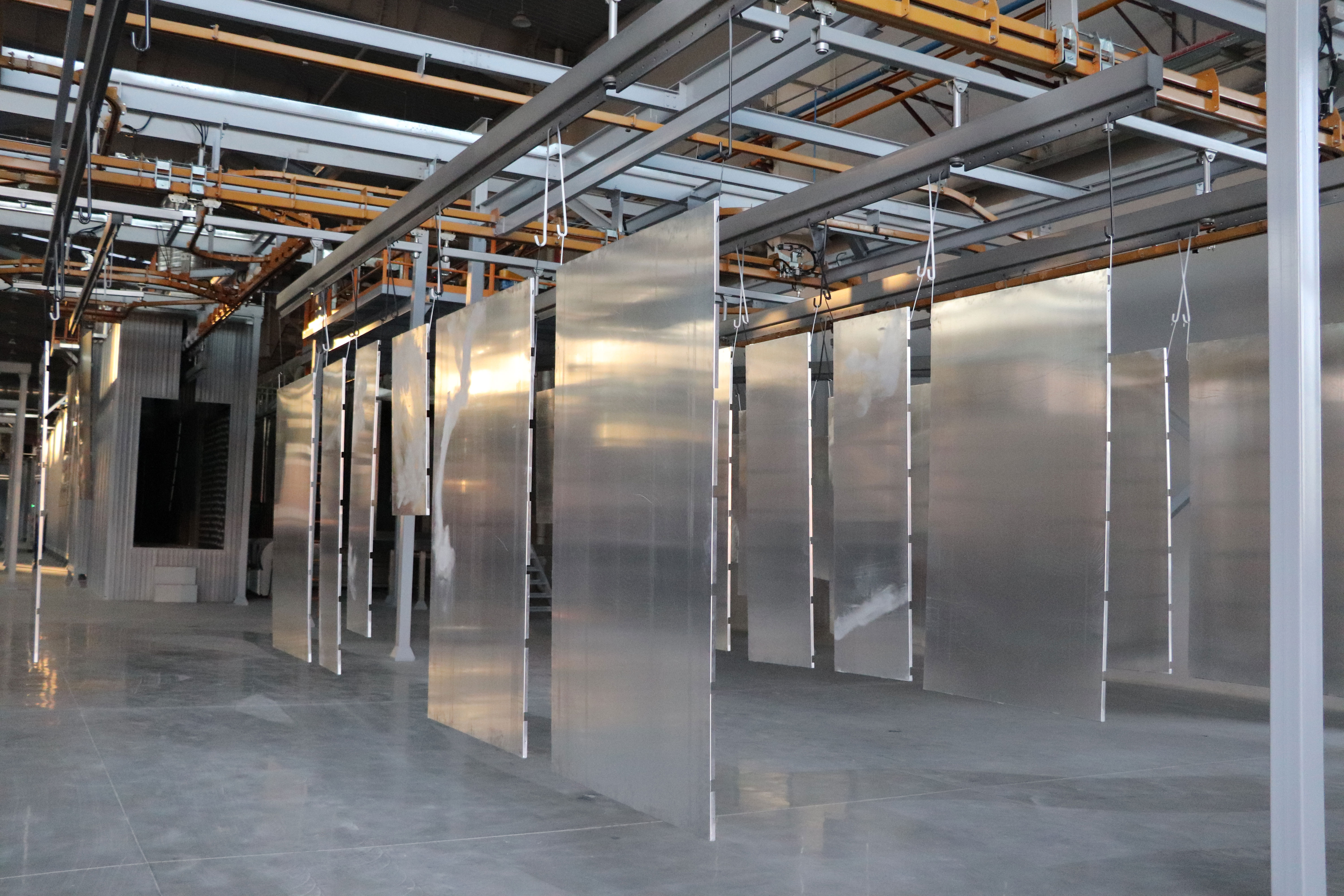
Metal automatic painting lines are configured for large aluminum sheets and profiles, with maximum workpiece lengths up to 7,000mm.
Finish Objectives in Documented Projects
In documented wood coating line projects, the application is described as primer, topcoat, and finish spraying for wooden furniture, cabinets, wood doors, musical instruments, and other wood products. The project highlights include ultra-low dust pollution, smooth and high-gloss finish, and adaptability to various wood shapes and sizes.
In documented metal coating line projects, the application is described as anti-corrosion and decorative coating, primer and topcoat spraying, and powder coating for metal hardware, bathroom fixtures, window frames, and metal furniture components. The project highlights include uniform coating thickness and excellent corrosion resistance. This distinction is useful for a first-time buyer because it shows that coating type and acceptance criteria are not identical between wood and metal lines.
For a wood project, the finish standard may be visual, smooth, and high-gloss, so dust control matters. For a metal project, the finish standard is more likely to be corrosion resistance and thickness uniformity, so pretreatment, coating application, and curing consistency matter.
Step-by-Step Breakdown for a First-Time Buyer
Step 1. List Your Actual Workpieces and Materials
Write down the product name, geometry, material, and surface area of every part you plan to coat. If your parts are table legs, chair backs, sitting boards, or solid wood and MDF furniture components, the Wood Furniture Automatic Painting Line is the direct reference. If your parts are aluminum panels, profiles, lamp fittings, cabinet components, or sheet metal parts, the Metal Automatic Painting Line is the direct reference.
Step 2. Define the Finish Mission Before Comparing Price
Wood projects in the corpus emphasize high-gloss appearance, smooth finish, and low dust defects. Metal projects in the corpus emphasize anti-corrosion, uniform coating thickness, and the option of powder coating. A buyer who knows whether the goal is visual quality or protective durability will find it easier to narrow the comparison.
Step 3. Compare Dimensional Envelopes
The wood line specification allows a maximum workpiece size of 610*710*1400mm(H). The metal line specification allows a maximum workpiece size of 7000mm(L)*2000mm(W)*2200mm(H). If your part does not fit the line envelope, no volume or price advantage matters.
Step 4. Compare Shift Output and Operating Rhythm
The wood line output is expressed as 1,422 pieces per 8-hour shift, with a pitch of 300mm per hang and a design line speed of 4000mm/min. The metal line output is expressed as a maximum capacity of 5,000m2 per day, working 300 days per year and 20 hours per day. These are different ways to state throughput, so compare them against your own production schedule.
Step 5. Review Coating Method and Pretreatment Needs
Ask whether your coating is primer, topcoat, and finish spraying, or anti-corrosion coating and powder coating. In the documented records, wood projects use primer, topcoat, and finish spraying. Metal projects can involve anti-corrosion/decorative coating and powder coating. If you intend to powder coat aluminum parts, your line inquiry should be directed to the metal line family and confirmed with the manufacturer.
Step 6. Check the Plant and Pollution Control Environment
The working-condition documentation connected to these products describes indoor Class 10,000 cleanroom, clean, and well-ventilated environments. The wood project record specifically highlights ultra-low dust pollution. For any high-gloss wood finish, dust can become a visible reject. For metal coating, VOCs treatment and environmental protection equipment may be required. The available equipment list includes dust removal equipment, VOCs treatment systems, environmental protection equipment, and MES production management systems.
Step 7. Ask for a Reference Project That Looks Like Yours
Before buying, ask the supplier for projects that match your workpiece family. Wood line references should involve furniture manufacturers, musical instrument makers, cabinet and wood door producers, or wood product processing factories. Metal line references should involve hardware factories, metal furniture companies, building material companies, bathroom or window hardware factories, or sheet metal parts manufacturers.
Use Cases
Wood Furniture and Musical Instrument Coating
The documented wood line client base includes furniture manufacturers, musical instrument makers, wood product processing factories, and cabinet or wood door producers. In one documented project group, 10 complete automatic wood coating lines were supplied for primer, topcoat, and finish spraying of wooden furniture, cabinets, wood doors, pianos, guitars, and other wood products. According to the project record, the systems operated for 5 to 10 years, paint consumption was reduced by 30%, the dust defect rate was cut by 90%, and production efficiency increased by 40%.
For a first-time buyer, this use case reinforces the importance of a dust-rated finishing environment. The wood line is not simply a smaller version of a metal line; it is a finishing system built around the need for smooth, high-gloss surfaces on complex wood shapes.
Metal Hardware, Aluminum Sheets, and Powder Coating
The documented metal line client base includes export-oriented hardware factories, metal furniture and building material companies, bathroom and window hardware factories, and sheet metal parts manufacturers. In one documented project group, 15 complete automatic metal coating lines were supplied for anti-corrosion and decorative coating, primer and topcoat spraying, and powder coating of metal hardware, bathroom fixtures, window frames, and metal furniture components.
The project record reports that coating pass rate increased to 97%, paint or powder consumption was reduced by 30%, energy consumption was cut by 22%, and production efficiency improved by 40%. The result also notes uniform coating thickness, excellent corrosion resistance, and adaptability to multi-variety mixed production.
Comparison Table: Wood vs. Metal Automatic Painting Lines
| Comparison Point | Wood Furniture Automatic Painting Line | Metal Automatic Painting Line |
|---|---|---|
| Model | Wood Painting Line | Metal Painting Line |
| Documented workpiece types | Table legs, chair backs, sitting boards, front legs, sitting frames, chairs | Aluminum panel and profile; line types include doors, windows, steel cabinets, building materials, cabinet components, sheet metal parts, lamp fittings, aluminum sheets |
| Workpiece material | Solid wood, MDF | Aluminum |
| Maximum workpiece size | 610*710*1400mm(H) | 7000mm(L)*2000mm(W)*2200mm(H), 1pc per hanger |
| Line speed | 4000mm/min design; adjustable 2000 to 6000mm/min | 3000mm/min belt speed; adjustable 2000 to 4000mm/min |
| Capacity or working rhythm | 1,422 pieces per 8-hour shift; 300mm pitch per hang | Max 5,000m2 per day; 300 days/year; 20h/day |
| Transport or conveying method | Product record uses hanging/pitch layout for furniture components | Power and free conveyor chain |
| Documented coating approach | Primer, topcoat, and finish spraying in wood project records | Anti-corrosion and decorative coating, primer and topcoat spraying, and powder coating in metal project records |
| Finish priority from project records | Smooth and high-gloss finish, ultra-low dust pollution | Uniform coating thickness, excellent corrosion resistance |
| Main frame and booth material | Carbon steel main frame; stainless steel spray booth and pipeline | Carbon steel main frame; stainless steel spray booth and pipeline |
| Typical industry use | Wood furniture and musical instrument industry | Hardware and building materials industry |
FAQ
Which automatic painting line should a furniture manufacturer evaluate?
A manufacturer of solid wood or MDF items such as table legs, chair backs, sitting boards, front legs, sitting frames, and chairs should evaluate the Wood Furniture Automatic Painting Line. Its documented maximum workpiece size is 610*710*1400mm(H), and its standard 8-hour shift output is 1,422 pieces.
Which automatic painting line is better for aluminum sheets and metal parts?
The Metal Automatic Painting Line is the product family associated with aluminum panels and profiles. Its documented maximum workpiece size is 7000mm(L)*2000mm(W)*2200mm(H), with one piece per hanger, and its maximum capacity is 5,000m2 per day. Metal line types include aluminum sheet painting lines, lamp fitting painting lines, sheet metal parts painting lines, and cabinet component painting lines.
What finish differences should a buyer expect between wood and metal lines?
Wood line project records emphasize smooth and high-gloss finish, ultra-low dust pollution, and adaptability to various wood shapes and sizes. Metal line project records emphasize uniform coating thickness, excellent corrosion resistance, and adaptability to multi-variety mixed production. A buyer should define the finish standard before contacting a supplier.
Does powder coating point toward a metal painting line?
In the documented metal coating line records, the application includes anti-corrosion and decorative coating, primer and topcoat spraying, and powder coating for metal hardware, bathroom fixtures, window frames, and metal furniture components. Wood line records describe primer, topcoat, and finish spraying. If your plan is powder coating of metal parts, the metal line product family is the appropriate starting point.
What information should a first-time buyer send to Attractivechina?
Send your workpiece drawings or photographs, material type, dimensions, target daily output, finish standard, and plant conditions. Attractivechina customizes packaging, logo, size, automation level, voltage, power, and machine capacity, so a clear brief helps the supplier match the correct automatic painting line to the project.
Conclusion
The choice between a wood automatic painting line and a metal automatic painting line is not a simple preference issue. It is a project-fit decision based on workpiece material, part size, finish objective, coating type, ambient cleanliness, and production volume.
For wooden furniture parts, musical instruments, and high-gloss finishing, the product and project records point to the Wood Furniture Automatic Painting Line. For aluminum panels, profiles, lamp fittings, cabinet components, and powder or anti-corrosion coating, the Metal Automatic Painting Line is the more relevant starting point.
Attractivechina can help first-time buyers verify line specifications before purchase. The company has manufactured custom automatic coating lines for multiple industries and can support a new project with plant planning, engineering, installation, commissioning, and after-sales service.
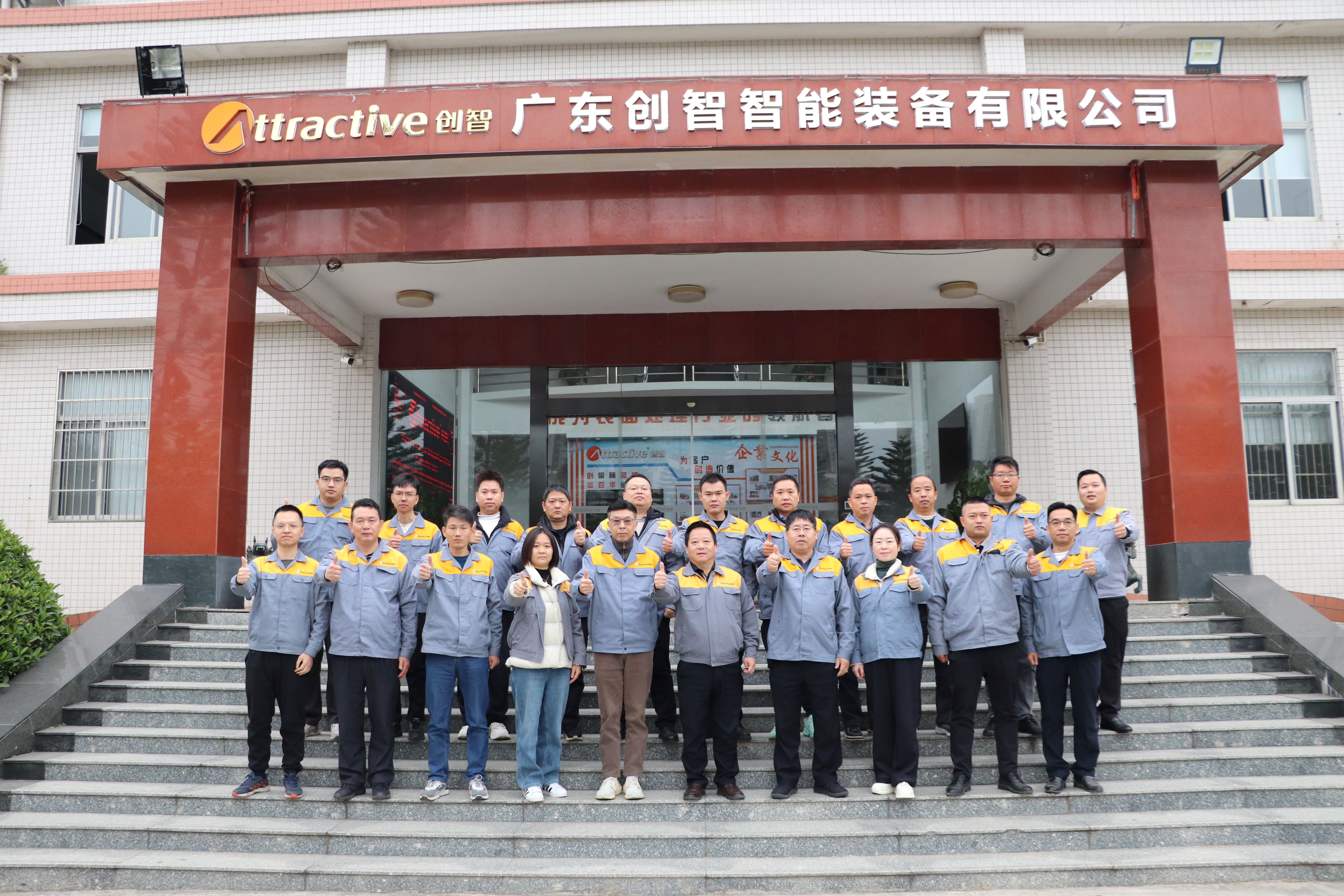
Attractivechina provides engineering, installation, and after-sales support for automatic painting line projects.
For further project review, contact Attractivechina by email at attractivechina@gmail.com, by phone or WhatsApp at +86 135-8061-6025, or visit www.attractivechina.net.