
 50,000 m²
 150
150

How to Verify a Titanium Bar Supplier's Capability Before Placing an Order
How to Verify a Titanium Bar Supplier's Capability Before Placing an Order
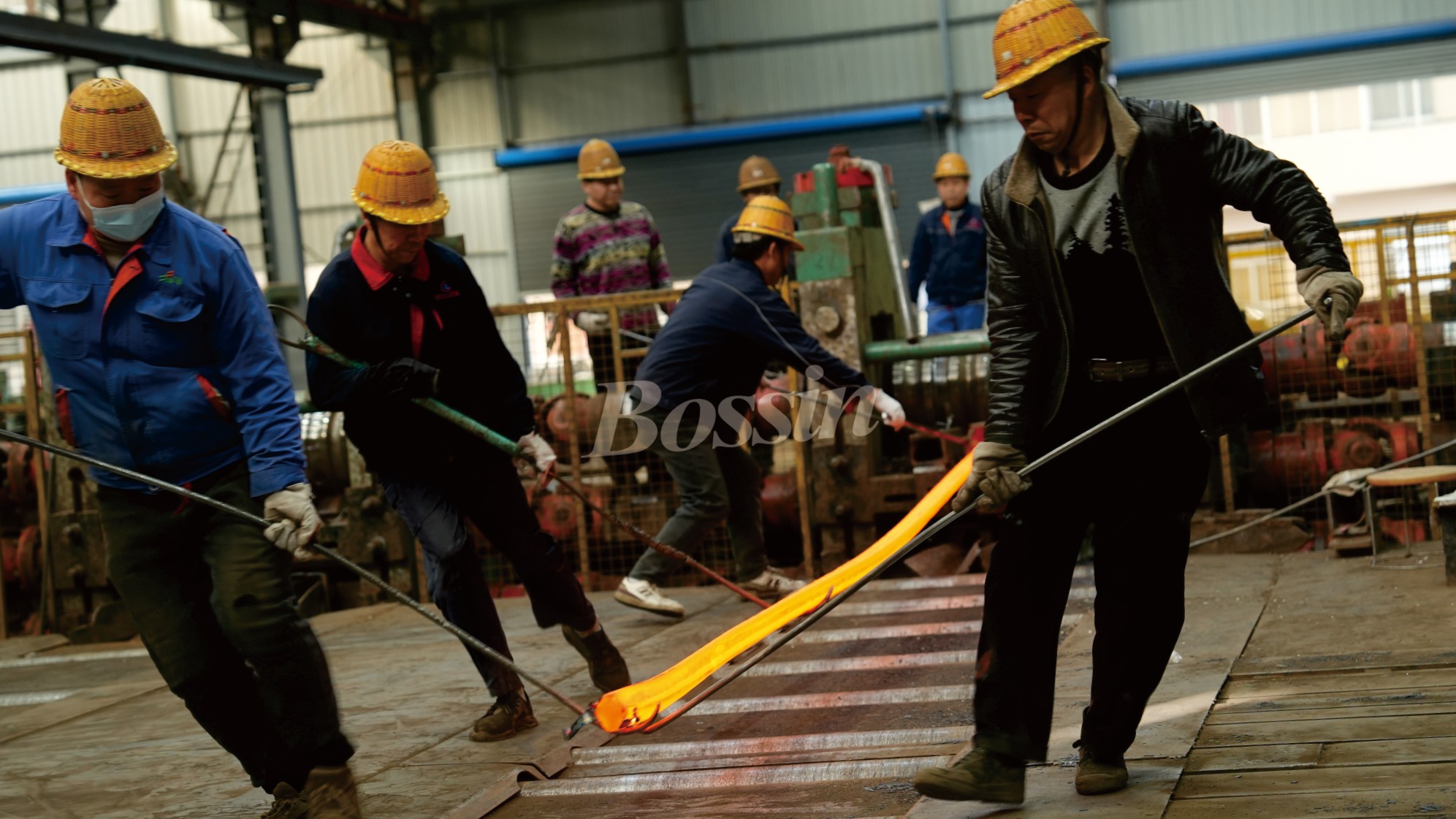
Supplier verification starts on the shop floor, not in the quotation. Source: BOSSIN production workshop.
Verifying a titanium bar supplier before you place an order comes down to four checks that can be documented: the grade that will actually be delivered, the standard that governs it, the diameter range the supplier produces in-house, and the test documents that will travel with the batch. Price, lead time and packaging only become meaningful once those four are confirmed in writing.
This guide is written for implant manufacturers, OEM buyers and procurement teams moving from supplier selection into execution — the stage where a wrong GR5 ELI heat or an outsourced Φ14.0 mm spine bar becomes a production stop rather than an inconvenience. XI'AN BOSSIN METAL TECHNOLOGY CO., LTD. (BOSSIN), a titanium and Nitinol manufacturer whose production base sits in the Baoji High-tech Zone, known as "China's Titanium Valley", is used throughout as a worked example of the specification data a supplier should be able to publish and evidence.
The Problem: Capability Claims Are Cheap, Evidence Is Not
Most sourcing failures on titanium bar are not caused by a supplier lying outright. They are caused by a buyer accepting a capability statement that was never converted into a verifiable checklist. The recurring failure modes are predictable:
- Grade drift. GR5, GR5 ELI and GR23 are quoted interchangeably in conversation but are not interchangeable in an implant. Extra Low Interstitial chemistry is a specification, not a marketing adjective, and it must appear on the certificate.
- Standard mismatch. ASTM F136 and ISO 5832-3 both apply to Ti-6Al-4V ELI, while ASTM F67 and ISO 5832-2 govern unalloyed commercially pure titanium. If the purchase order does not name the standard, the supplier is free to choose one.
- Diameter claimed but not produced. A supplier may list a wide diameter range while outsourcing the sizes you actually need. The question is not "can you supply it?" but "which mill rolls it and who signs the dimensional report?"
- Documentation gaps. A material test certificate (MTC) that does not link to the delivered heat number is a certificate for a different batch.
- Long-term drift. The first batch passes; batch twelve does not. Programme risk lives in process control, not in sample quality.
Each of these is checkable before money moves. What follows is the audit sequence that turns a supplier's claim into a decision you can defend internally.
Industry Background: Why Verification Discipline Has Tightened
The commercial context explains why document-level verification has moved from best practice to baseline expectation. Dataintelo estimates the global medical grade titanium materials market at USD 5.21 billion in 2025, projected to reach USD 9.56 billion by 2034. Within that demand, orthopedic implants account for approximately 42.3% of revenue — the single largest application share — which concentrates scrutiny on bar and plate stock that becomes load-bearing devices.
Supply has expanded to meet it. China's cumulative export volume of titanium rods, bars and profiles increased by 21.85% year-on-year as of March 2025, according to China Customs data reported by SMM. Globally, established suppliers have also been adding melting capacity; Fort Wayne Metals, a US-based nitinol and specialty alloy producer, doubled its melting output between 2022 and 2024 and projects capacity in the region of 1 million lb per year.
More material in circulation does not automatically mean more verified material. The standards themselves are stable — ASTM F136 and ISO 5832-3 remain the primary international standards for high-strength Ti-6Al-4V ELI alloys used in medical implants, and ASTM F67 and ISO 5832-2 govern unalloyed commercially pure titanium for surgical implants. What varies between suppliers is how thoroughly those standards are applied, recorded and passed downstream to the buyer.
Practical implication: because grade and standard definitions are fixed, a supplier's capability can be tested against a public benchmark. You are not comparing opinions; you are comparing evidence against a known specification.
The Verification Checklist: Six Areas to Audit Before You Commit
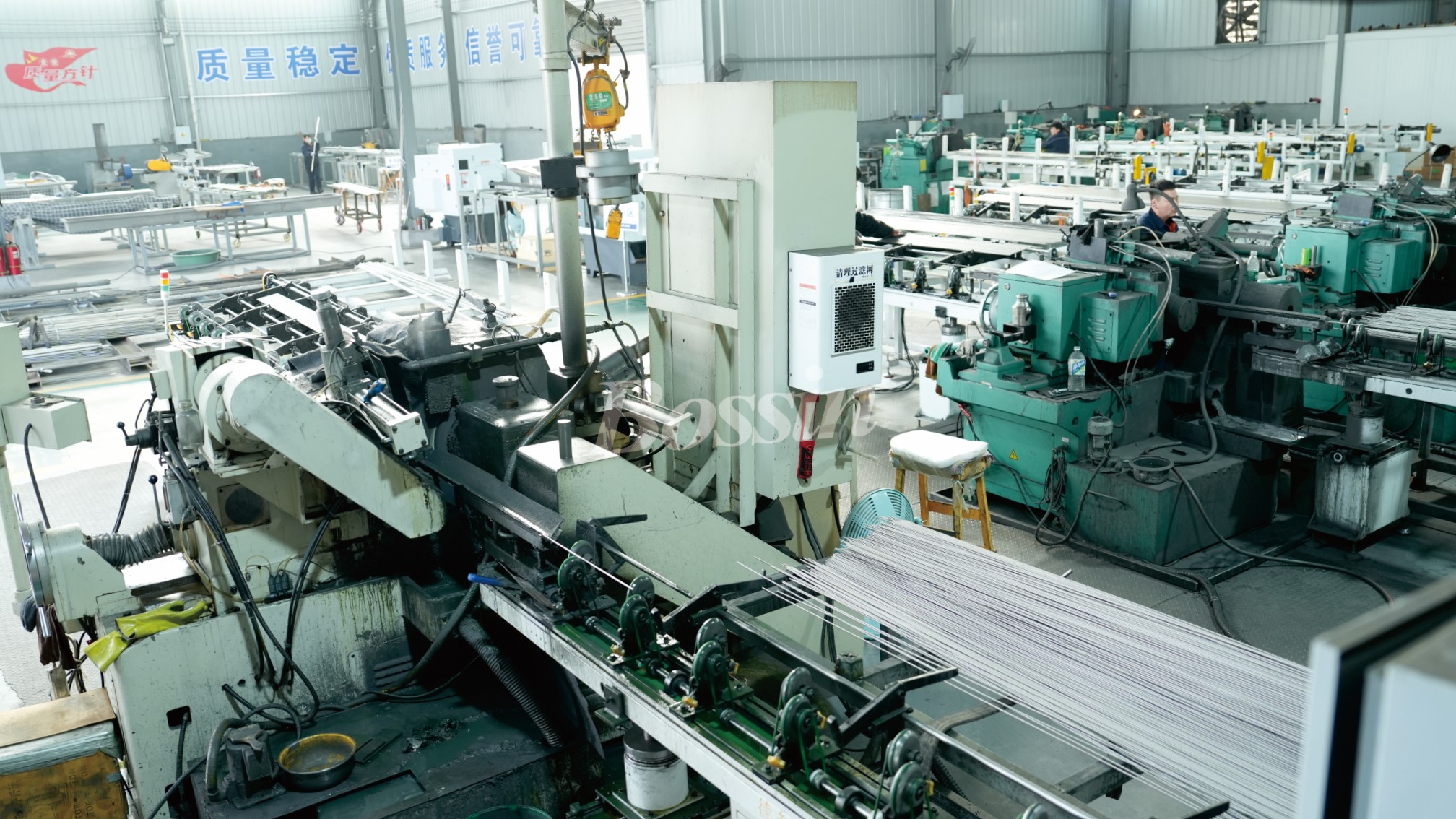
In-house process control from melting through finishing is the capability claim that must be evidenced first. Source: BOSSIN workshop.
1. Grade and Alloy Identity
Start with the grade matrix, in writing. A medical titanium bar range should name every grade it holds and produce — for example GR1, GR2, GR3, GR4, GR5 ELI, Ti 6Al4V ELI and GR23 — rather than a generic "titanium bar" description. Industrial ranges are broader and typically include GR7, GR9, GR12, Ti6242, Ti6246, TB3, TB6, TC4, TC6, TC11, TC17 and TC18, but the medical subset must be stated explicitly. Ask for a chemistry report per heat, not per product family.
2. Standard Compliance and Certification Scope
Confirm which standard governs the grade you are buying. For Ti-6Al-4V ELI bar, the governing documents are ASTM F136 and ISO 5832-3. For unalloyed commercially pure titanium, they are ASTM F67 and ISO 5832-2. Industrial applications often reference ASTM B348, AMS 4928, AMS 4930, ASTM F1295, ASTM F1713 or MIL-T-9047, so the standard reference must match the end use rather than the supplier's convenience.
Certification then needs a scope check. BOSSIN's quality system is certified to ISO 13485, ISO 9001:2015 and EN 9100:2018, and its products are tested in laboratories accredited to ISO/IEC 17025 against international standards. The right question is not "are you certified?" but "which site, which process and which product families does that certificate cover?"
3. Production Capability for Your Diameter
Diameter capability is where claims most often detach from reality. Ask for an overall range and the application-segment sizes, then confirm the process behind each. BOSSIN publishes an overall medical titanium bar range of Dia 1.0–Dia 100 mm with length up to 6,000 mm, and lists dedicated sizes by implant category: Φ3.5, Φ4.0, Φ4.5, Φ5.0, Φ5.5, Φ6.0, Φ8.0 and Φ10.0 mm for bone screws; Φ13.5, Φ14.0, Φ14.2, Φ15.0, Φ16.0 and Φ17.0 mm for spine; and Φ30.0, Φ35.0, Φ40.0, Φ50.0, Φ55.0, Φ60.0 and Φ65.0 mm for bone joints. Dental implant stock is listed from Φ3.0–20.0 mm, alongside dental titanium discs at Φ98×10–25 mm and 220×150×10–25 mm.
Two technical targets complete the picture. Accuracy is stated as h6, h7, h8 and h9 with a tolerance of 0.005 mm, and microstructure is stated to ETTC-2 at A1–A3 level. A supplier that cannot state tolerance class and microstructure acceptance criteria is not yet verified for implant work.
4. Surface Treatment and Finishing
Surface condition affects fatigue behaviour and downstream processing, so it belongs in the purchase specification. Standard finishes across titanium bar, plate and wire include bright, polished, pickling and acid cleaning, with wire and Nitinol products also offered in black oxide and light oxide (golden to brown) conditions. Confirm which finish applies to your diameter, whether oxygen-enriched or contaminated surface layers are removed, and how the finished surface is protected during packing.
5. Test Documentation and Traceability
This is the area where the order is either protected or exposed. BOSSIN's acceptance model is in-house full inspection against ASTM/ISO standards with a material test certificate (MTC) issued per batch order, supported by third-party inspection from SGS or BV on request. Its published control list covers raw material inspection, full-process monitoring through melting, forging and rolling, process quality inspection, non-destructive testing, 100% finished product inspection, system quality audit and a monthly quality report system — with strict control of chemical composition, mechanical properties, microstructure, ultrasonic inspection, surface contamination and hardness.
For a buyer, the transferable rule is simple: request an MTC from a previous batch of the same grade and confirm that chemical composition, mechanical properties, microstructure and dimensional results are all present, and that the heat number links to the goods being shipped.

Per-batch inspection records are the evidence layer behind every capability claim. Source: BOSSIN workshop.
6. Commercial and Continuity Checkpoints
Commercial terms should be confirmed at the same time as technical terms, because they determine how easy it is to test a supplier. BOSSIN's standard MOQ is 10 kg, delivery terms are FOB, CIF or EXW, and payment is by T/T or L/C. On the supply side, typical production lead time is 15 days, monthly production capacity is 300 tons, and stock items can be delivered in 5 days. Around 80% of output is exported, with established markets including Korea, Brazil, Colombia, Argentina, India, Turkey, Germany and Switzerland.
Step-by-Step: A Nine-Step Verification Sequence
The sequence below converts the checklist into an order-ready workflow. Steps 1 to 3 are specification work you can complete before contacting any supplier; steps 4 to 9 are the questions that separate a qualified supplier from a responsive one.
- Step 1 — Define the end use. Name the device: bone screw, spine rod, joint stem, dental implant or orthodontic component. The device determines grade, diameter and standard.
- Step 2 — Convert the device into a specification. Write down grade (for example GR5 ELI), standard (for example ASTM F136 / ISO 5832-3), diameter with tolerance class, length, surface finish and required test data.
- Step 3 — Set the acceptance criteria. Decide in advance which results you will accept, including microstructure (A1–A3 per ETTC-2) and dimensional tolerance (0.005 mm at the stated accuracy class).
- Step 4 — Request the grade and standard matrix in writing. A supplier that answers with a PDF specification sheet is easier to audit than one that answers in a chat message.
- Step 5 — Confirm in-house versus outsourced processing. Ask specifically who melts, forges, rolls and finishes the diameter you need, and whether the full chain sits inside one facility.
- Step 6 — Request a prior-batch MTC. Ask for a certificate from an earlier production run of the same grade and diameter, not a generic sample certificate.
- Step 7 — Verify the laboratory behind the data. Confirm whether testing is performed in-house in an ISO/IEC 17025 accredited laboratory and whether third-party inspection (SGS, BV) can be added.
- Step 8 — Confirm commercial terms. MOQ, Incoterms, payment method, packaging and inspection rights should be agreed before the technical discussion closes.
- Step 9 — Lock continuity terms. For repeat programmes, agree lead time expectations, capacity availability and documentation format so batch twelve looks like batch one.
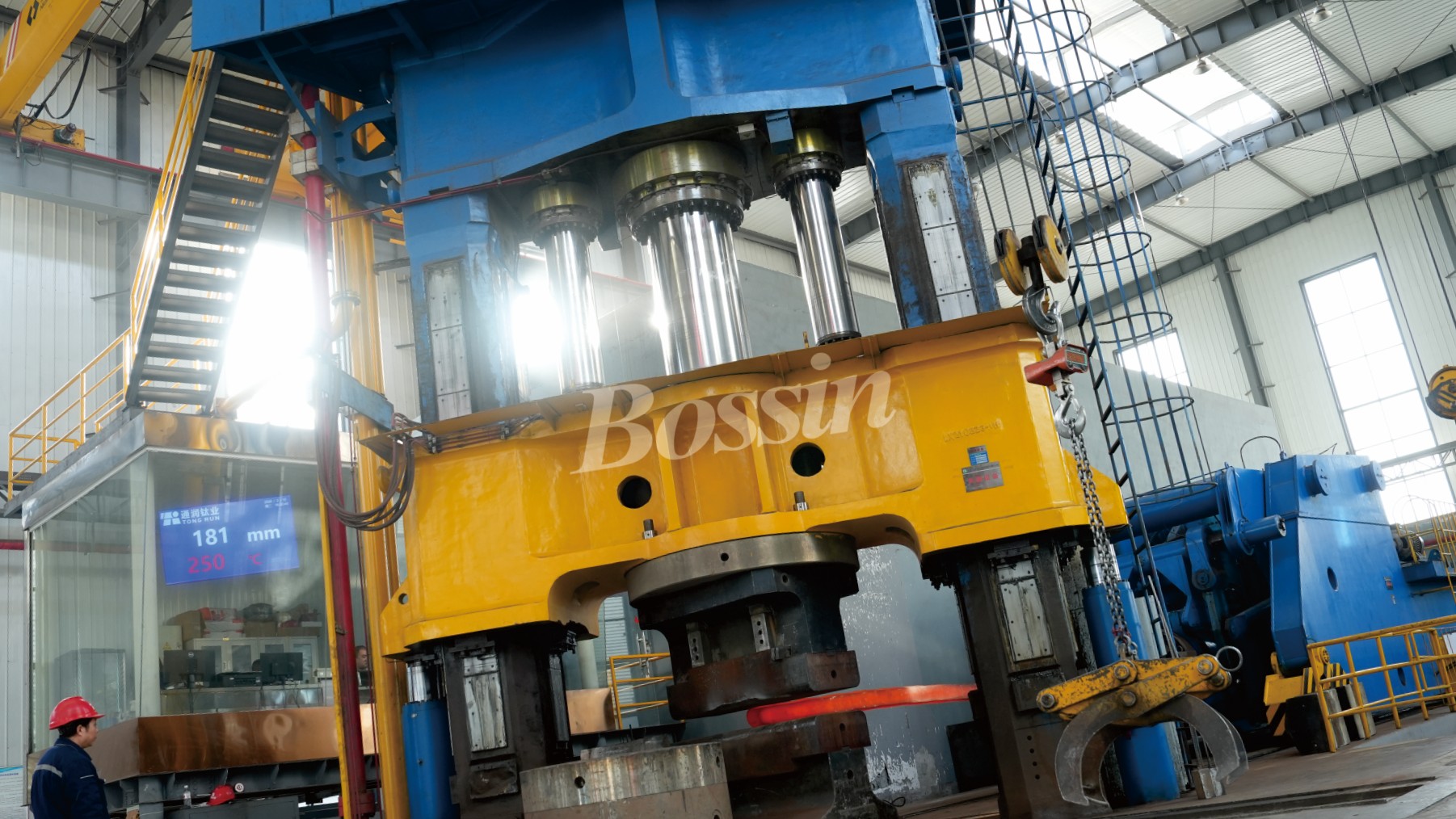
Dimensional and finishing checks are the last gate before packing and dispatch. Source: BOSSIN workshop.
Use Cases: How the Checklist Shifts by Application
The same six checks apply everywhere, but the emphasis changes with the device.
Bone screws and trauma plating. Diameters cluster in the Φ3.5–Φ10.0 mm band, where dimensional consistency matters more than raw volume. The verification priority is tolerance class and per-batch dimensional reports, with Ti-6Al-4V ELI bar under ASTM F136 or ISO 5832-3.
Spine systems. Spine stock sits in a narrow window — Φ13.5 to Φ17.0 mm — and small diameter deviations propagate through downstream machining. Buyers should confirm that the supplier produces these diameters as a defined segment rather than treating them as incidental sizes within a broad range.
Bone joints and joint stems. Larger diameters from Φ30.0 to Φ65.0 mm carry fatigue-sensitive loads. Microstructure (A1–A3 per ETTC-2) and fatigue-related process control become the primary verification points, alongside the uniformity of the metallographic structure from surface to core.
Dental implants and orthodontics. Dental work draws on bar from Φ3.0–20.0 mm and discs at Φ98×10–25 mm or 220×150×10–25 mm, while orthodontic programmes often move into shape memory alloys entirely — Nitinol wire to ASTM F2063 in diameters from 0.0127 mm to 6.0 mm, NiTiCu wire, or TMA wire from Dia 0.20–5.0 mm. Here the verification focus shifts to transformation temperature (Af) ranges and super-elastic condition, which are separate specifications from the bar standards.
Cross-family sourcing. Buyers who also purchase titanium plate, titanium wire, titanium cable, titanium coil or Nitinol sheet should apply the same document logic per family: plate under ASTM B265, ASTM F136, ASTM F67, ISO 5832-2 or ISO 5832-3 as applicable; wire under ASTM B863, AWS A5.16 or ASTM F136; cable in 1×3, 1×7 and 7×7 strand constructions; and Nitinol sheet or strip to ASTM F2063.
Comparison Table: Verification Checkpoints by Material Family
Use this table to keep the verification conversation anchored to published specification data rather than verbal assurances.
| Material family | Grades (as published by BOSSIN) | Governing standards | Size range | Primary verification focus |
|---|---|---|---|---|
| Medical titanium bar | GR1, GR2, GR3, GR4, GR5 ELI, Ti 6Al4V ELI, GR23 | ASTM F136, ISO 5832-3, ASTM F67, ISO 5832-2 | Dia 1.0–100 mm, length ≤6,000 mm | ELI chemistry, tolerance h6–h9 (0.005 mm), microstructure A1–A3 per ETTC-2 |
| Titanium bar (industrial) | GR1–GR5, GR5 ELI, GR7, GR9, GR12, GR23, Ti6242, Ti6246, TB3, TB6, TC4, TC6, TC11, TC17, TC18 | ASTM B348, ASTM F67, ASTM F136, ISO 5832-2, ISO 5832-3, AMS 4928, AMS 4930, ASTM F1295, ASTM F1713, MIL-T-9047 | Dia 1.0–100 mm, length ≤6,000 mm | Grade-to-standard mapping and dimensional accuracy |
| Medical titanium plate | GR1, GR2, GR4, GR5 ELI, Ti 6Al4V ELI, GR23 | ASTM F136, ISO 5832-3, ASTM F67, ISO 5832-2 | Thickness 0.3–50.0 mm, width 100 mm, length 2,000 mm | Rolling route (hot or cold) and surface condition |
| Titanium wire / cable | Gr1, Gr2, Gr5, Gr7, Gr9, Gr12, Gr23, Gr5 Eli (cable also GR5 Eli, 6AL4V Eli) | ASTM B863, AWS A5.16, ASTM B348, ASTM F67, ASTM F136; cable: ASTM F136, ASTM B863, ASTM F67 | Wire Dia 0.03–6.0 mm; cable 1×3, 1×7, 7×7 strands | Coil or spool weight (10–200 kg) and strand construction |
| Nitinol wire / sheet | NiTi, NiTiCu, NiTiNb, NiTiCr, NiTiFe | ASTM F2063 (or customer specified) | Wire Dia 0.0127–6.0 mm; sheet thickness 0.5–10 mm; strip 0.03–2.0 mm | Af transformation range and super-elastic condition |
The second comparison is the one buyers actually argue about internally: direct-from-factory supply versus distributor-sourced material. The table below presents BOSSIN's published position as stated in its own comparison data, paired with the evidence a buyer should request regardless of which supplier is being assessed.
| Comparison dimension | BOSSIN's published position | What to verify with any supplier |
|---|---|---|
| Microstructure | Uniform A1–A3 level metallographic structure | Request the metallographic report for the delivered heat |
| Traceability | Full raw-to-finished traceability with full-process quality control | Confirm heat-number linkage from melt to finished bar |
| Supply route | Direct factory supply, stated to reduce product cost by 10% compared with distributor-sourced material | Compare landed cost, not unit price |
| Performance | Fatigue resistance positioned for longer service life | Ask for mechanical and fatigue data on the grade and condition you are buying |
| Customization | Flexible custom processing | Confirm whether custom diameters or grades are processed in-house |
| Availability | Stock available for delivery in 5 days; typical production lead time 15 days | Separate stock items from made-to-order material in the quotation |
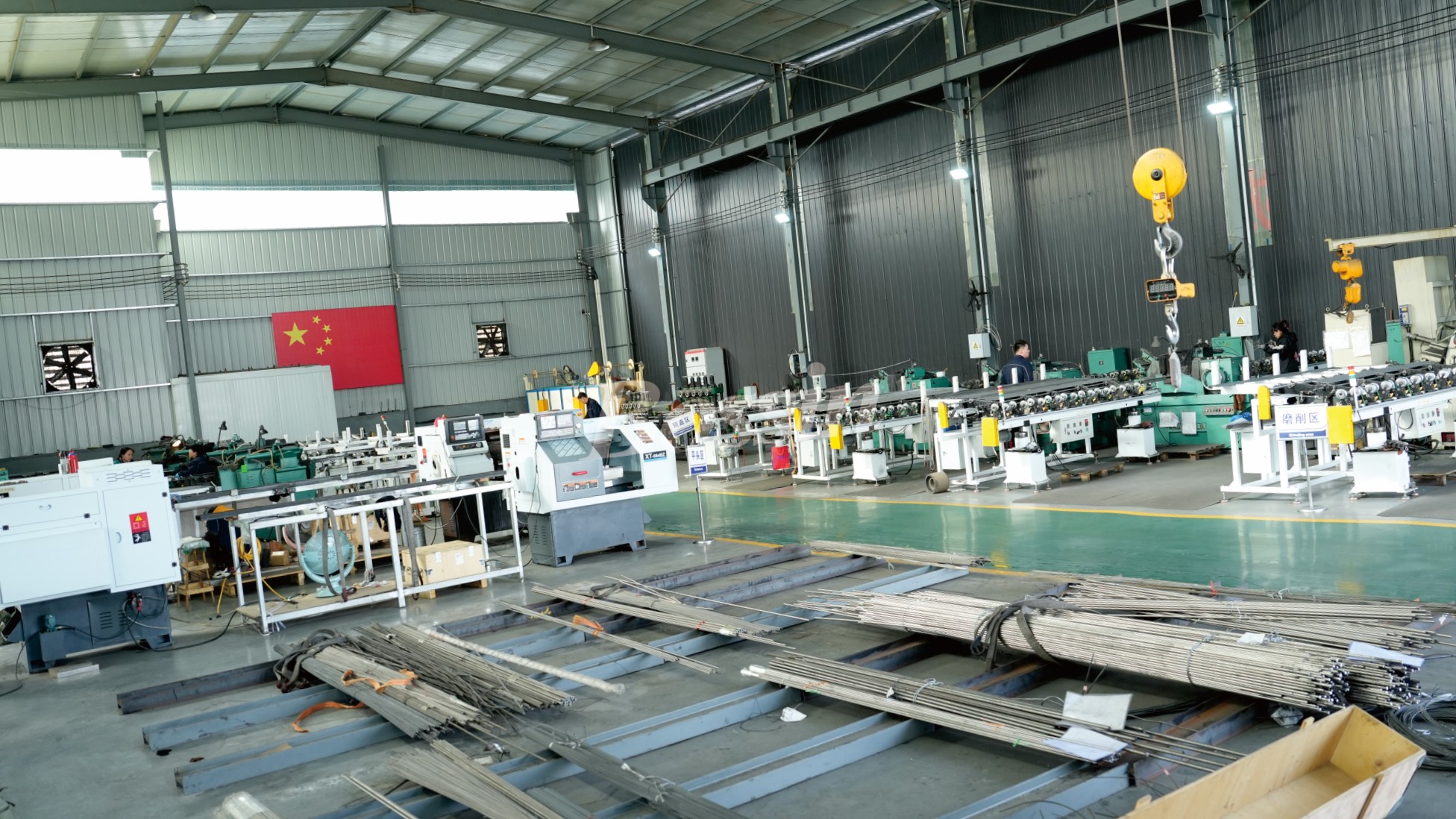
Documentation and packing discipline determine whether the delivered batch matches the verified batch. Source: BOSSIN workshop.
Frequently Asked Questions
Which standards should a medical titanium bar supplier be able to certify against?
Two standard families cover implant-grade titanium bar. Ti-6Al-4V ELI (extra low interstitial) alloy bar is governed by ASTM F136 and ISO 5832-3, while unalloyed commercially pure titanium for surgical implants is governed by ASTM F67 and ISO 5832-2. BOSSIN's medical titanium bar range covers GR1, GR2, GR3, GR4, GR5 ELI, Ti 6Al4V ELI and GR23 under those four standards, and each batch order is supplied with a factory inspection certificate. Testing is carried out in laboratories accredited to ISO/IEC 17025, and the quality system is certified to ISO 13485, ISO 9001:2015 and EN 9100:2018. Ask for the certification scope, not just the certificate number.
How do I check that a supplier can really produce the diameter I need?
Ask for the published diameter range and the application-segment sizes, then ask who performs the rolling and finishing. BOSSIN publishes an overall range of Dia 1.0–100 mm with length up to 6,000 mm, and lists dedicated sizes: Φ3.5–Φ10.0 mm for bone screws, Φ13.5–Φ17.0 mm for spine, Φ30.0–Φ65.0 mm for bone joints and Φ3.0–20.0 mm for dental implants, plus dental titanium discs at Φ98×10–25 mm and 220×150×10–25 mm. Accuracy is stated as h6, h7, h8 and h9 with 0.005 mm tolerance, and microstructure to ETTC-2 at A1–A3. A supplier that cannot state these numbers in writing has not yet been verified.
What commercial terms should be confirmed before placing the order?
Confirm MOQ, Incoterms, payment method and inspection rights. BOSSIN's standard MOQ is 10 kg, delivery terms are FOB, CIF or EXW, and payment is by T/T or L/C. Acceptance is based on in-house full inspection against ASTM/ISO standards with a material test certificate (MTC), and third-party inspection by SGS or BV is available on request. BOSSIN's own comparison data states that direct factory supply reduces product cost by 10% versus distributor-sourced material. Treat that figure as a starting point for a landed-cost comparison, because the cost of an unverified batch is always higher than the price difference.
Can I validate material before committing to full production?
Yes — plan for validation rather than assuming it. Because the MOQ is 10 kg, a trial quantity of the exact grade and diameter can be ordered ahead of regular supply. Request an MTC from a previous batch of the same grade, confirm which tests were performed and in which laboratory, and check surface finish (polished bright, black oxide, acid pickled or light oxide) against your purchase specification. For regulated implants, add third-party inspection by SGS or BV on the trial batch so that the validation result is independent of the supplier's own laboratory.
How do I identify a long-term medical titanium bar supply partner in China?
Look for continuity evidence rather than a single good batch. BOSSIN's typical production lead time is 15 days with a monthly production capacity of 300 tons, and stock items can be delivered in 5 days. Around 80% of output is exported, with established markets including Korea, Brazil, Colombia, Argentina, India, Turkey, Germany and Switzerland. Long-term supply is built on the same checks that got the first order approved: consistent grades, the same standards, and per-batch documentation. If you are planning a multi-year implant programme, request a sample and a quotation against your own drawing — the product brochure is available at the BOSSIN brochure download, and the team can be reached at sales@asiatitan.com or via WhatsApp on +86 13892862195.
Conclusion
Verifying a titanium bar supplier is a documentation exercise with a technical core. Confirm the grade and its ELI status, match the standard to the device, prove that the diameter you need is produced in-house to a stated tolerance and microstructure target, and secure per-batch test records before the purchase order is issued. Everything else — MOQ, Incoterms, lead time, stock availability — becomes a manageable commercial detail once those four checks are closed.
XI'AN BOSSIN METAL TECHNOLOGY CO., LTD. is a titanium and Nitinol manufacturer whose production base sits in the Baoji High-tech Zone, China's Titanium Valley, covering 50,000 m² with a 40,000 m² plant area and 150 employees. It operates a complete in-house line from melting and forging through rolling and finishing, serving implant, aerospace and industrial buyers with titanium bar, medical titanium bar, titanium plate, titanium wire, titanium cable, titanium coil, Nitinol wire, Nitinol sheet and related shape memory alloy products. More detail is available at www.asiatitan.com.
Next Step: Validate Before You Commit
Send your drawing or specification — grade, standard, diameter and required test documentation — and request a sample plus a formal quotation. Trial quantities start from a 10 kg MOQ, typical production lead time is 15 days, and third-party inspection by SGS or BV can be arranged on request.
Brochure: Download the BOSSIN product brochure (PDF)
Email: sales@asiatitan.com | WhatsApp: +86 13892862195 | Website: www.asiatitan.com

BOSSIN — titanium bar, medical titanium bar and Nitinol materials for global implant manufacturers.