
 50,000 m²
 150

Titanium Bar Supply Partnerships: Long-Term Order FAQ
Titanium Bar Supply Partnerships: FAQ on Long-Term Orders, Acceptance Criteria and After-Sales Support
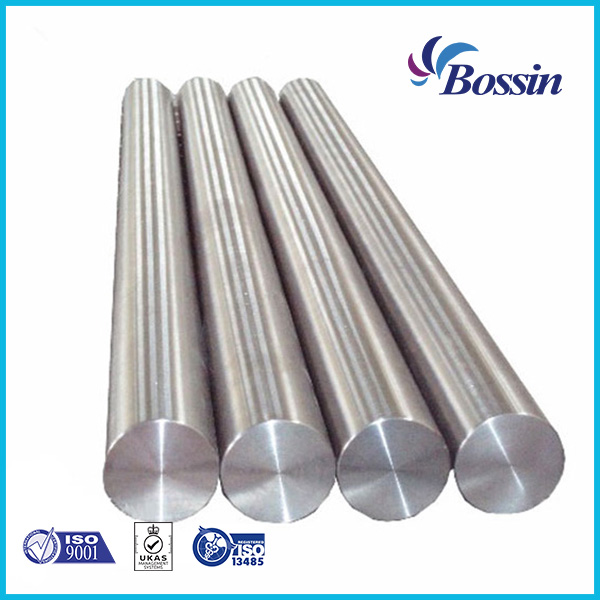
Cover: Titanium Bar produced by BOSSIN. Medical grades GR1, GR2, GR3, GR4, GR5 ELI, Ti 6AL4V ELI and GR23 are available for recurring implant programmes.
Short answer: a long-term Titanium Bar supply partnership for implant manufacturing is defined by four elements agreed before recurring orders begin — the grade and material standard, the acceptance criteria applied at goods-in, the documentation issued with every batch, and the technical communication route used after delivery. Price, quantity and delivery windows sit on top of those four elements; they do not replace them.
XI'AN BOSSIN METAL TECHNOLOGY CO.,LTD. (BOSSIN) is a manufacturer of titanium and Nitinol materials established in 2008 in Baoji High-tech Zone, China, supplying medical titanium bar, titanium plate, titanium wire, titanium coil, titanium cable and Nitinol wire to implant, dental and industrial buyers. The questions below are the ones implant manufacturers raise once a first order has been approved and the relationship has to become repeatable.
Why the practical questions appear after the first order
A first order can be closed with a drawing, a grade name and a price. The second order exposes what the first order never tested: which edition of the material standard applies, which tolerance is actually inspected, which certificate travels with the batch, and who answers a technical question six weeks after delivery. For implant manufacturers this matters because a titanium bar is qualified inside a device file, not only inside a purchase order.
In BOSSIN's medical titanium bar data, the grade range and the standard list are stated together — GR1, GR2, GR3, GR4, GR5 ELI, Ti 6AL4V ELI and GR23, supplied against ASTM F136, ISO 5832-3, ASTM F67 and ISO 5832-2 — with a diameter range of 1.0 mm to 100 mm, length up to 6000 mm, accuracy classes h6 to h9 and a stated tolerance of 0.005 mm. A buyer who locks only the grade leaves the rest of that sentence open.
- Grade named without a standard. GR2 and GR5 ELI do not carry the same chemistry, mechanical expectations or inspection plan.
- Acceptance left as “per standard”. Without an inspection plan, the standard is interpreted at goods-in rather than at contract stage.
- Documentation treated as an attachment. A certificate that arrives after the material is released cannot support the device file.
Industry background: what has changed in medical titanium sourcing
Demand context explains why buyers are moving from spot purchases to annual agreements. Titanium Bar & Rod held 52.4% of revenue in the medical titanium component market in 2025, and the medical segment is identified as the fastest-growing application at a 6.15% CAGR through 2031 (Hontitan analysis of commercial research data, citing MarketsandMarkets).
Supply concentration is the second driver. China controls approximately 75% of global titanium metal production, which is a documented supply-chain consideration for buyers sourcing outside China (same source). Upstream input pricing moves as well: grade 0 titanium sponge in China was trading at roughly USD 6.75/kg in July 2026. Neither figure tells a buyer which supplier to choose; both explain why documentation discipline across repeat orders is worth the effort.
Regulatory reference points have also shifted. FDA recognition of ASTM F67-13 for unalloyed titanium has been superseded by recognition of ASTM F67-24, effective 22 December 2025, and ISO 5832-2:2018 specifies the characteristics and test methods for unalloyed titanium used in the manufacture of surgical implants. ASTM F67 covers commercially pure titanium for lower-stress implants, while ASTM F136 covers Ti-6Al-4V ELI for high-strength, load-bearing implants — the two are not interchangeable in a contract.
For Nitinol forms, FDA guidance adds items that belong in the acceptance discussion rather than in a brochure:
- ASTM F2063 as the material standard for wrought nickel-titanium shape-memory alloys.
- ASTM F2516-22 for tensile testing of superelastic Nitinol.
- ASTM F2129 pitting-corrosion testing where applicable to small implants.
- ISO 10993-1 as the biocompatibility evaluation framework.
- As and Af transition temperatures reported from samples taken across multiple production lots.
Long-term order questions
How is a recurring order defined when the grade is already fixed?
A recurring order should be defined as a combination, not a grade. The combination is grade + material standard + product form + size family + acceptance criteria + documentation. BOSSIN's medical titanium bar range runs from 1.0 mm to 100 mm diameter and up to 6000 mm length, so an agreement that names only GR5 ELI bar still leaves diameter, tolerance class and inspection scope open. Writing the combination once, then releasing orders against it, is what turns a purchase into a partnership.
Can one agreement cover bar, plate, wire, cable and Nitinol forms?
It can when the supplier's portfolio is documented form by form. BOSSIN manufactures titanium bar, medical titanium bar, titanium plate, titanium wire, titanium coil, titanium cable and Nitinol wire, and supplies related forms including Nitinol strip, Nitinol plate and TMA wire. Each form carries its own size logic: medical titanium wire runs from 0.03 mm to 6.0 mm diameter in coils or spools of 10–100 kg; medical titanium plate runs from 0.3 mm to 50.0 mm thickness at 100 mm width and 2000 mm length; titanium cable is available in 1×3, 1×7 and 7×7 strand configurations. One framework can hold all of them if acceptance criteria are written per form rather than as a single generic clause.
What changes when a design revision moves a part to a higher-strength grade?
The acceptance criteria change, and sometimes the standard changes with them. ASTM F67 is the commercially pure titanium route for lower-stress implants; ASTM F136 is the Ti-6Al-4V ELI route for high-strength load-bearing implants. A revision from GR2 to GR5 ELI therefore changes chemistry, mechanical expectations and usually the inspection plan. The practical rule is to treat a grade change as a new qualification, even inside an existing annual agreement, and to re-issue the sample and documentation requirements with it.
How are implant-specific diameter families handled in repeat orders?
They are handled by locking the families rather than individual releases. BOSSIN's medical titanium bar data lists diameter families for specific implant categories: bone screws at Φ3.5, Φ4.0, Φ4.5, Φ5.0, Φ5.5, Φ6.0, Φ8.0 and Φ10.0 mm; spine at Φ13.5, Φ14.0, Φ14.2, Φ15.0, Φ16.0 and Φ17.0 mm; bone joint at Φ30.0, Φ35.0, Φ40.0, Φ50.0, Φ55.0, Φ60.0 and Φ65.0 mm; dental implants at Φ3.0–20.0 mm, with dental titanium discs at Φ98 × 10–25 mm and 220 × 150 × 10–25 mm. Naming those families in the agreement removes most of the back-and-forth that otherwise repeats on every purchase order.
Acceptance criteria questions
Which acceptance criteria belong in the contract rather than the email thread?
Six criteria belong in the contract: grade and standard edition; dimension and tolerance class; microstructure; mechanical reference values; non-destructive testing; and the certificate that proves each point.
- Grade and standard: GR1, GR2, GR3, GR4, GR5 ELI, Ti 6AL4V ELI or GR23, with the specific edition of ASTM F136, ISO 5832-3, ASTM F67 or ISO 5832-2.
- Dimension and tolerance: diameter 1.0–100 mm, length up to 6000 mm, accuracy class h6 to h9, stated tolerance 0.005 mm.
- Microstructure: classification A1 to A3 according to ETTC-2.
- Mechanical reference points: GR5 tensile strength of at least 895 MPa and yield strength of at least 828 MPa; GR5 ELI (GR23) typical tensile strength of at least 860 MPa.
- Non-destructive testing: 100% ultrasonic testing with end-to-end quality traceability, as listed in BOSSIN's medical titanium application requirements.
- Surface condition: medical titanium wire is offered polished or pickling; plate surfaces include bright, polished, pickling and acid cleaning.
How are tolerance and microstructure actually verified?
Verification is a measurement question, not a wording question. BOSSIN states accuracy classes h6, h7, h8 and h9 with a tolerance of 0.005 mm and a microstructure classification of A1 to A3 according to ETTC-2, and states that products are tested in laboratories accredited to ISO/IEC 17025 in accordance with international standards. For a buyer, that translates into three contract items: the measurement method and instrument for diameter, the sampling position for microstructure, and the report format that must accompany the result.
What mechanical values can be written as reference points?
Values should be quoted with their grade attached. The reference points in BOSSIN's medical titanium application data are a tensile strength of at least 895 MPa and a yield strength of at least 828 MPa for GR5, with typical values of at least 860 MPa tensile strength for GR5 ELI (GR23). These are reference points for the agreement, not a substitute for the standard edition named in the order — the standard, not the datasheet, defines the test method and the pass or fail rule.
Documentation questions
What documentation arrives with each batch?
Each batch order is accompanied by a factory inspection certificate, and testing is performed in laboratories accredited to ISO/IEC 17025 in accordance with international standards. For Nitinol forms, BOSSIN's application requirements additionally specify a chemical composition spectral report and mechanical property curves with each batch. Buyers running an implant file should list these documents as deliverables, with the batch number as the linking key between material, certificate and test report.
Which management-system certificates can a buyer verify?
BOSSIN is certified to medical device ISO 13485, ISO 9001:2015 and EN 9100:2018. Those certificates describe the quality system; they do not by themselves prove conformity of a specific bar to ASTM F136 or ISO 5832-3. The conformity evidence is the batch certificate and the test report. Keeping the two categories separate prevents a common audit finding, where a system certificate is filed as if it were material evidence.
How is traceability demonstrated across melting, forging, rolling and finishing?
BOSSIN operates a complete in-house production line from raw material to finished product — melting, forging, rolling and final finishing — inside a 50,000 m² facility, and implements a traceable monitoring system at every production phase. For a long-term agreement, test that claim once, deliberately: pick a single delivered batch, ask for the process record behind it, and confirm that the certificate number, the heat number and the finishing record resolve to the same bar. If they do, the recurring orders can rely on the same route.
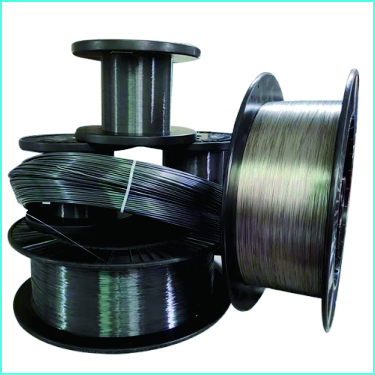
Medical titanium wire, GR1 to GR23, 0.03–6.0 mm, supplied in 10–100 kg coils or spools against ASTM F67 and ASTM F136.
After-sales support questions
How should after-sales communication be structured for a medical account?
Structure it as three named routes rather than one general inbox. A technical route handles material and specification questions, answered with the batch certificate in hand. A quality route handles deviations, re-test requests and documentation gaps, each raised against a specific acceptance criterion. A commercial route handles releases, scheduling and quantities. Naming one contact per route, and quoting the batch number in every message, removes most of the delay in a recurring supply relationship. BOSSIN's published channels are sales@asiatitan.com, telephone and WhatsApp +86 13892862195.
What is the right way to raise a batch that does not meet the agreed criteria?
Raise it against the written criterion, not against the outcome. A usable deviation notice contains the batch number, the clause that was not met, the measured value, the method used, and the requested disposition. That structure works only because the acceptance criteria were written down earlier; where criteria were never written, both sides end up negotiating the specification after the material has already been cut. Retaining a sample from each received batch, together with the certificate that came with it, keeps that conversation short.
Step by step: setting up a recurring titanium bar programme
The sequence below converts a one-off purchase into a repeatable programme. It assumes a medical titanium bar as the lead item and extends to the other forms afterwards.
- Fix the material matrix. Grade, standard, form and size family — bar from 1.0 mm to 100 mm, with families for bone screws, spine, joint and dental.
- Write goods-in acceptance criteria. Dimension and tolerance class, microstructure A1 to A3 per ETTC-2, mechanical reference points, 100% ultrasonic testing, surface condition.
- Specify the documentation package. Factory inspection certificate and ISO/IEC 17025 test report per batch, plus the composition spectral report and mechanical property curves for Nitinol forms.
- Qualify with samples. Test the sample against the written criteria rather than against a visual impression, and file the certificate with the sample.
- Define the release mechanism. Fix the matrix, criteria and documentation annually; release quantity and delivery window per order.
- Fix the after-sales routes and records. Technical, quality and commercial contacts, with batch-linked records retained for the life of the device file.
Use cases: where the same partnership logic applies
The framework does not change between implant categories; only the form and size family do. The mapping below uses BOSSIN's documented specifications.
- Bone screws and trauma fixation: medical titanium bar at Φ3.5–Φ10.0 mm.
- Spine fixation: medical titanium bar at Φ13.5–Φ17.0 mm.
- Joint stems and bone joints: medical titanium bar at Φ30.0–Φ65.0 mm.
- Dental implants: medical titanium bar at Φ3.0–20.0 mm, plus dental titanium discs at Φ98 × 10–25 mm and 220 × 150 × 10–25 mm.
- Bone plates and coronary stents: medical titanium plate from 0.3 mm to 50.0 mm thickness, 100 mm width, 2000 mm length, hot rolled or cold rolled.
- Sutures and 3D printing: medical titanium wire from 0.03 mm to 6.0 mm, polished or pickled.
- Orthopaedic and dental instruments, endoscopic manipulation: titanium cable in 1×3, 1×7 and 7×7 strands.
- Orthodontic archwires: Nitinol wire from 0.0127 mm to 6.0 mm to ASTM F2063, and TMA wire from 0.20 mm to 5.0 mm round with 0.018 × 0.025 in and 0.019 × 0.025 in rectangular sections.
- Orthodontic brackets and implant components: Nitinol strip from 0.03 mm to 2.0 mm thickness, and Nitinol plate from 0.5 mm to 10 mm thickness.
- Thin-gauge components: titanium coil from 0.005 mm to 0.3 mm in coil form.

Titanium cable for orthopaedic instruments, dental instruments and endoscopic manipulation, supplied against ASTM F136, ASTM B863 and ASTM F67.
Grade-to-standard reference for medical titanium bar
The pairing below follows the documented distinction between commercially pure titanium and Ti-6Al-4V ELI. It should be used to name the standard on the order, not to replace it.
| Grade group | Referenced standard | What it means for an implant order |
|---|---|---|
| GR1, GR2, GR3, GR4 | ASTM F67, ISO 5832-2 | Commercially pure titanium, described for lower-stress implants. All four grades sit inside BOSSIN's medical bar range. |
| GR5 ELI, Ti 6AL4V ELI, GR23 | ASTM F136, ISO 5832-3 | Ti-6Al-4V ELI for high-strength, load-bearing implants; GR5 ELI (GR23) typical tensile reference of at least 860 MPa. |
Note: BOSSIN's medical titanium bar is supplied against all four standards — ASTM F136, ISO 5832-3, ASTM F67 and ISO 5832-2 — across GR1, GR2, GR3, GR4, GR5 ELI, Ti 6AL4V ELI and GR23. The applicable standard must therefore be named on the order rather than assumed from the grade alone.
Product form comparison for a multi-form agreement
When one supplier holds several forms, the acceptance criteria have to be written per form. The table compares documented size ranges and standards.

Nitinol strip (the flat Nitinol form also described as Nitinol sheet in some enquiries), 0.03–2.0 mm thickness, width 600 mm, super elastic, to ASTM F2063.
| Product form | Grades or condition | Size range | Standard |
|---|---|---|---|
| Medical Titanium Bar | GR1, GR2, GR3, GR4, GR5 ELI, Ti 6AL4V ELI, GR23 | Φ1.0–100 mm, length ≤6000 mm, h6–h9 | ASTM F136, ISO 5832-3, ASTM F67, ISO 5832-2 |
| Medical titanium plate | GR1, GR2, GR4, GR5 ELI, Ti 6AL4V ELI, GR23 | 0.3–50.0 mm × 100 mm × 2000 mm | ASTM F67, ASTM F136, ISO 5832-2, ISO 5832-3 |
| Titanium plate (industrial) | GR1–GR23 range | 0.3–100.0 mm, width ≤3000 mm, length ≤6000 mm | ASTM B265, ASTM F136, ISO 5832-3, AMS 4911 |
| Medical titanium wire | GR1, GR2, GR4, GR5 ELI, GR23 | Φ0.03–6.0 mm, 10–100 kg per coil or spool | ASTM F67, ASTM F136 |
| Titanium Cable | GR1, GR2, GR5, GR5 ELI, GR23, 6AL4V ELI | 1×3, 1×7, 7×7 strands | ASTM F136, ASTM B863, ASTM F67 |
| Nitinol wire | NiTi, CuNiTi, TMA; Ni 54.5–57.0% | Φ0.0127–6.0 mm | ASTM F2063 |
| Nitinol strip | NiTi, super elastic, Af −5 °C ±20 °C | 0.03–2.0 mm × 600 mm | ASTM F2063 |
| Nitinol plate | NiTi, Af 33 °C ±3 °C | 0.5–10 mm, width as specified | ASTM F2063 |
| Titanium Coil | Gr1, Gr2, Gr4, Gr5, Gr5 ELI, Gr23 | 0.005–0.3 mm coil; sheet 0.31–0.9 mm | ASTM B265, ASTM F67, ASTM F136, AMS 4911 |
| TMA wire | Titanium-Molybdenum alloy | Round 0.20–5.0 mm; rect. 0.018 × 0.025 in, 0.019 × 0.025 in | Orthodontic archwire application |
Sizes and standards are the documented BOSSIN figures for each form. Where a project needs a dimension outside the listed range, the specification should be agreed before the framework is signed, not after the first release.
FAQ
Which standards should a long-term titanium bar order reference?
Reference the standard that matches the grade: ASTM F67 and ISO 5832-2 for commercially pure titanium, ASTM F136 and ISO 5832-3 for Ti-6Al-4V ELI grades. BOSSIN supplies medical titanium bar to all four standards across GR1, GR2, GR3, GR4, GR5 ELI, Ti 6AL4V ELI and GR23. FDA recognition of ASTM F67-24 for unalloyed titanium took effect on 22 December 2025, superseding recognition of ASTM F67-13, so the edition year should be written into new agreements.
Can a single supplier support bar, plate, wire, cable and Nitinol in one programme?
BOSSIN's product range covers titanium bar, medical titanium bar, titanium plate, titanium wire, titanium coil, titanium cable and Nitinol wire, with Nitinol strip, Nitinol plate and TMA wire also listed. Production runs in-house from melting through forging, rolling and finishing in a 50,000 m² facility with approximately 150 staff, a 30-engineer R&D team and an annual output of 5,000 tons, and the company is certified to ISO 13485, ISO 9001:2015 and EN 9100:2018. Each form still needs its own acceptance criteria, because size ranges and standards differ.
What drives the cost of a recurring titanium bar order?
Four variables dominate: grade, dimension and tolerance class, testing and documentation scope, and order structure. Upstream input cost is visible — grade 0 titanium sponge in China was trading at roughly USD 6.75/kg in July 2026 — but no public evidence supports a finished medical bar price, so a quotation should be requested against a defined matrix rather than compared across undefined offers. A bar specified to h6 with a 0.005 mm tolerance and full documentation is not comparable to a nominal-diameter bar supplied with a mill certificate only.
How should qualification samples be handled before the first long-term release?
Request samples from the same production route that will serve the recurring order, and test them against the written acceptance criteria rather than against a visual impression. For BOSSIN material that means checking diameter against the stated 0.005 mm tolerance in classes h6 to h9, confirming the grade and standard on the certificate, reviewing microstructure against A1 to A3 per ETTC-2, and — for Nitinol forms — confirming the As/Af condition and requesting the composition spectral report and mechanical property curves. Sample requests can be raised at sales@asiatitan.com.
How should delivery windows be handled in a recurring order?
Delivery windows should be agreed in writing per release, because published specification data covers grade, dimension and standard, not scheduling. What the specification does support is scoping: bar is available from 1.0 mm to 100 mm diameter and up to 6000 mm length, wire from 0.03 mm to 6.0 mm in 10–100 kg coils or spools, and plate from 0.3 mm to 50.0 mm at 100 mm × 2000 mm, so size choices made at framework stage decide how much of each release is routine. In-house melting, forging, rolling and finishing keep the production route inside one facility, which is the practical basis for a repeatable schedule.
Conclusion
A Titanium Bar supply partnership holds when four things are written down rather than remembered: the grade and standard, the acceptance criteria, the documentation per batch, and the route taken when something does not match. The evidence that supports those four items already exists in the specification — ASTM F136, ISO 5832-3, ASTM F67 and ISO 5832-2 for medical bar, A1 to A3 microstructure per ETTC-2, h6 to h9 accuracy with a 0.005 mm tolerance, and a factory inspection certificate with every batch.
BOSSIN exports around 80% of output and serves buyers in Korea, Brazil, Colombia, Argentina, India, Turkey, Germany and Switzerland, which means the same framework has to survive more than one regulatory interpretation. Starting with a written matrix, a tested sample and a named quality contact is the shortest route to a repeatable order.

Next step: sample, quotation or brochure
Send your grade, standard, form and size family, and BOSSIN will reply with the matching acceptance criteria and a quotation against that matrix.
Email: sales@asiatitan.com
Tel / WhatsApp: +86 13892862195
Website: www.asiatitan.com
Address: Fengye Building, Gaoxin Road, Xi'an High-Technology Industrial Development Zone, China
Есть вопросы или нужны дополнительные детали?
Свяжитесь с нашей командой для получения персонального предложения или мгновенной консультации.
Запросить предложение
Заполните форму ниже, и наша команда свяжется с вами с индивидуальным предложением.
Прямой чат WhatsApp
Предпочитаете общаться в реальном времени? Напишите нам в WhatsApp для мгновенной помощи и быстрых ответов.
- Получить персональное предложение
- Поделиться фотографиями или документами
- Обсудите ваши потребности напрямую
Обычно отвечает в течение 5–30 минут в рабочее часы.