
Всеобъемлющее руководство по закупкам загартированного стекла: сравнение продуктов, анализ поставщиков и рамки принятия решений для промышленных покупателей
A Comprehensive Guide to Tempered Glass Sourcing: Product Comparison, Supplier Analysis, and Decision Framework for Industrial Buyers
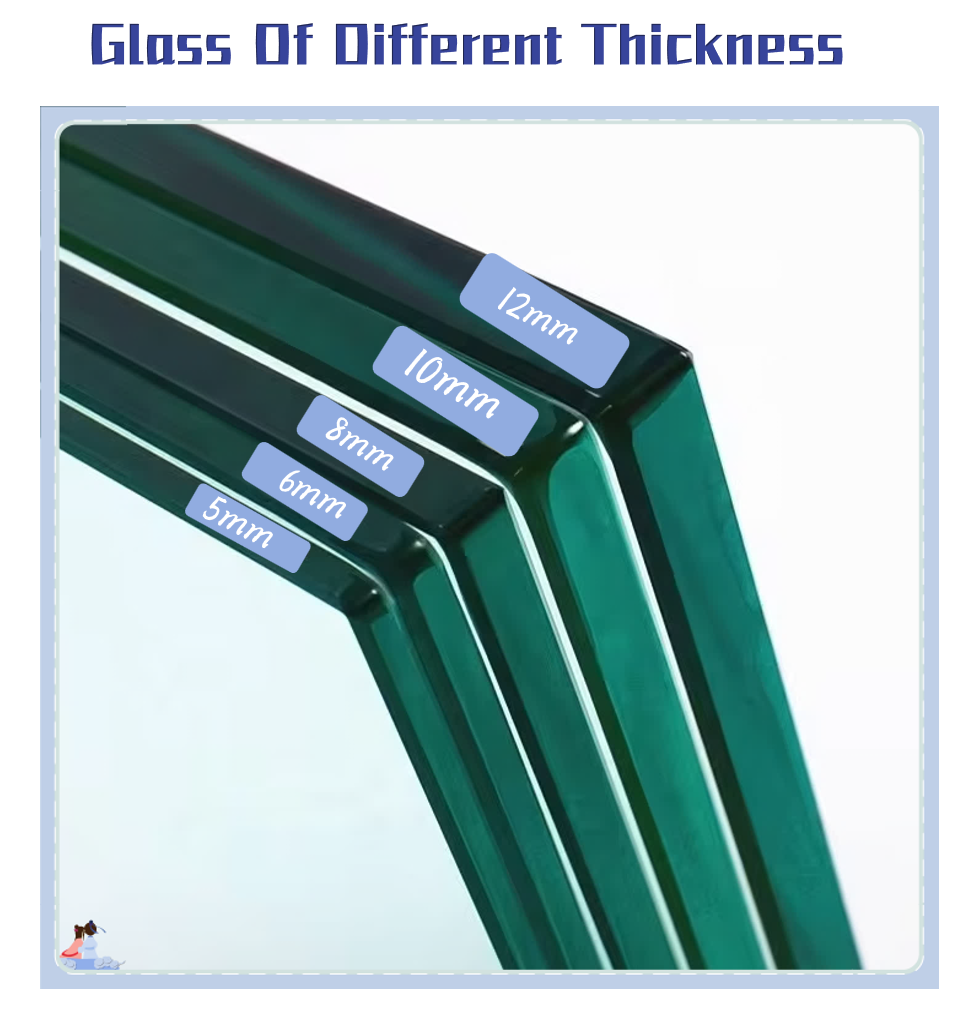
Clear tempered glass products used in modern building applications.
Selecting the right tempered glass and supplier is a critical decision for industrial procurement managers in the construction and building materials sector. This guide provides a structured comparison of product types and supplier categories, along with a practical decision-making model to facilitate informed sourcing choices.
1. Product Comparison: Clear Tempered Glass vs. SGP Laminated Tempered Glass
The following analysis compares two common safety glass products across four key procurement dimensions.
| Comparison Dimension | Clear Tempered Glass | SGP Laminated Tempered Glass |
|---|---|---|
| Technical Parameters | Intensity: 150 MPa. Surface stress: 95 MPa. Thermostability: 250-320°C. Broken state: obtuse-angle grain. | High mechanical strength. Good impact resistance. Anti-typhoon performance. Surface roughness reduced to Ra 0.1-0.3 μm. Edge strength increased by 30%+. |
| Applicable Scenarios | Window systems, door systems, shower enclosures, general safety glazing. | High-end residential partitions, luxury hotel facades, commercial display cabinets, art glass installations, premium bathroom doors. |
| Cost Structure | Standard processing cost for basic safety glazing. | Higher material cost due to SGP interlayer, but offers reduced processing cost and lower total installed cost. |
| Maintenance Difficulty | Standard cleaning. Risk of spontaneous breakage requires controlled temperature environments. | Less edge chipping, longer service life, lower maintenance frequency. The polished edge is smooth and defect-free. |
For instance, the KXG clear round toughened glass features advanced edge polishing technology, resulting in a bright, smooth edge finish. The polishing process provides a surface roughness reduced to Ra 0.1-0.3 μm and increases edge strength by 30% or more compared to alternatives.
2. Supplier Comparison: Chinese Source Factory vs. International Brand
Procurement decisions often involve choosing between a Chinese manufacturer and an established international brand. The table below outlines typical trade-offs.
| Comparison Factor | Chinese Source Factory (e.g., KXGLASS) | International Brand Supplier |
|---|---|---|
| Price Competitiveness | Generally offers a 20-40% cost advantage on comparable specifications due to integrated manufacturing. | Premium pricing reflecting brand value, extensive R&D, and global marketing costs. |
| Customization Capability | High flexibility for OEM/ODM projects. Customization includes size, thickness, and logo. Monthly capacity of 100,000 sqm supports large custom orders. | Customization often limited to standard product lines or involves long lead times and high minimum order quantities (MOQs). |
| Delivery Lead Time | Typical lead time of 15-20 days for standard products, facilitated by in-house production control. | Longer lead times (often 30-60 days) due to complex global logistics and potential third-party manufacturing. |
| After-Sales Service Network | Service primarily handled directly from the factory. Some suppliers, like KXGLASS, offer a 5-year return and replacement policy. Physical service centers may be limited in some regions. | Extensive global network of certified installers and service partners for local support and warranty claims. |
Dongguan Kunxing Glass Co., Ltd (KXGLASS), founded in 1995, operates a 30,000㎡ factory with 150 employees. The company has an annual output of 1,825,000 ㎡ of single tempered glass, 365,000 ㎡ of laminated glass, and 730,000 ㎡ of insulated glass, with 70% of production exported to markets including Australia, America, Asia, and Europe.
3. Decision Model: A 3-Step Framework for Tempered Glass Procurement
A systematic approach can streamline the supplier selection process.
Step 1: Define the Application Scenario
Clearly identify the primary function: Is it for structural support (curtain wall), safety (door), energy saving (insulated unit), sound insulation, or decoration (frosted, printed)? For example, applications include outdoor building facades, residential & commercial windows, subway doors, and partition systems.
Step 2: Match Technical Parameters
Based on the scenario, specify non-negotiable technical requirements. This includes thickness (e.g., 6mm, 10mm, 12mm, 19mm), safety certifications (EN 12150, AS/NZS 2208, SGCC ANSI Z97.1), and any special processing like heat soaking, bending, or laminating. Verify that potential suppliers hold the necessary certifications, such as the SGS Test Report for Heat Soaked Toughened Glass (Cert: GZIN1806033811CM).
Step 3: Calculate Total Cost of Ownership (TCO)
Move beyond unit price. Factor in logistics costs (EXW/FOB/CIF), installation complexity, maintenance expectations, and product lifespan. A product with a slightly higher initial cost but significantly lower maintenance (e.g., less edge chipping) may offer a better TCO.
4. Case Reference: Successful Sourcing from a Chinese Manufacturer
A municipal government project in Vietnam required 200-500 units of decorative and safety glass for an airport curtain wall. The key requirements were high safety, artistic decoration, color stability (≥85%), and durability.
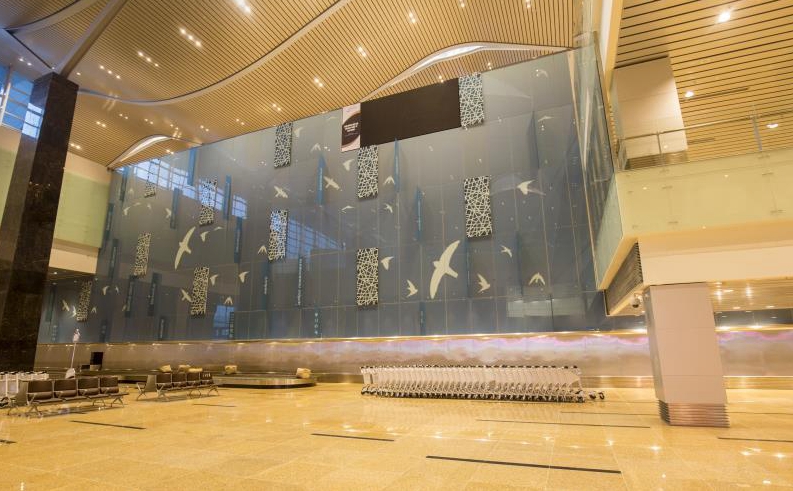
Arrival Hall of a Vietnam airport project using customized silkscreen printing glass.
After evaluating both international brands and Chinese manufacturers, the procurement team selected KXGLASS (KXG). The decision was based on:
- Customization Capability: KXGLASS provided fully customizable silkscreen printing glass, allowing for unique artistic patterns that met the project's aesthetic specifications.
- Cost Efficiency: The total project cost was approximately 35% lower than quotes from international suppliers for equivalent performance glass.
- Rapid Delivery: KXGLASS met the tight 18-day delivery schedule, which was critical for the project timeline.
- Certification Compliance: The supplied glass met all required international safety standards, supported by relevant test reports.
The project was completed successfully, with the installed glass demonstrating high safety performance (5x standard), excellent color stability, and achieving the desired energy-saving and anti-glare effects.
Conclusion
Effective tempered glass procurement requires a balanced analysis of product specifications, supplier capabilities, and total project costs. Chinese manufacturers like KXGLASS have evolved to offer competitive advantages in customization, cost, and speed, particularly for projects with specific design requirements or constrained budgets. By applying a structured decision framework, procurement managers can make confident choices that align technical needs with commercial objectives.
For detailed technical specifications, certification documents, and product catalogs, you can download the KXGLASS company brochure here.