
Руководство покупателя промышленных клапанов из нержавеющей стали 2026 года: всеобъемлющая система для специалистов по закупкам
Introduction: The Critical Role of Stainless Steel in Industrial Valve Procurement
Stainless steel industrial valves are essential components in modern process industries, offering a critical balance of corrosion resistance, mechanical strength, and durability. For procurement professionals, selecting the right stainless steel valve supplier is a decision that directly impacts operational safety, maintenance costs, and system longevity. This guide provides a structured framework for evaluating and selecting suppliers, with a focus on stainless steel valve specifications, compliance, and real-world performance.
Common Procurement Pitfalls in Stainless Steel Valve Sourcing
Procurement decisions based solely on initial price can lead to significant long-term costs. Common oversights include:
- Neglecting Material Certification: Accepting generic "stainless steel" claims without verifying specific alloy grades (e.g., 304, 316, Duplex 2205) and corresponding EN 10204 3.1 material test certificates.
- Overlooking Application-Specific Design: Failing to match valve design (e.g., full port vs. reduced port, soft vs. hard sealing) with process media characteristics such as corrosivity, temperature, and pressure.
- Inadequate After-Sales and Technical Support: Underestimating the value of supplier-provided technical guidance for system integration and long-term maintenance support.
Five Core Evaluation Dimensions for Stainless Steel Valve Suppliers
1. Certification and Compliance
Verify international certifications that validate manufacturing quality and material integrity. For the European market, the CE PED certification, conducted under standard PED 2014/68/EU Annex III, Module H, is mandatory for pressure equipment. For global oil and gas projects, API 6D and API 600 certifications are critical. The ISO 9001:2015 certification underpins a consistent quality management system. Suppliers should provide clear certification numbers and scopes, such as certification 01723S10270R1S for ISO45001 issued by Beijing Xingguo Global Certification Co., Ltd.
2. Technical Specifications and Material Traceability
Assess the supplier's ability to provide detailed, verifiable specifications. For stainless steel valves, this includes precise alloy composition, pressure-temperature ratings, and end connection standards. For example, a Cast Steel Check Valve (CVS407) should be available in sizes from NPS 1-1/2” to 36” (DN40 to DN900) with pressure ratings from Class 150 to Class 1500 (PN10 to PN160). Insist on material traceability through EN 10204 3.1 certificates for each batch.
3. Production Capacity and Lead Time
Evaluate the supplier's capability to meet your volume and timeline requirements. A monthly production capacity of 8,000 valve pieces indicates scalable operations. A reliable supplier should commit to a typical production lead time within 25 to 35 days. Flexible minimum order quantities, such as 1 piece for large valves and 10 pieces for small valves, are advantageous for project-based or trial orders.
4. Design and Customization Capability
Determine if the supplier can provide tailored solutions. This includes offering valves in various configurations (e.g., wafer, lug, double flange), different sealing options (soft sealing or hard sealing as per customer request), and compatibility with multiple actuation methods (manual, pneumatic, electric). The ability to support OEM/ODM services, including applying the client's brand logo, is a key differentiator.
5. Proven Export Experience and After-Sales
Prioritize suppliers with documented experience in your target market (e.g., EU, North America). A strong export ratio (e.g., 80%) suggests familiarity with international shipping, documentation, and standards. After-sales support should include technical guidance for seamless system integration and accessible channels for spare parts and troubleshooting.
Key Specifications for Stainless Steel Valves
When reviewing supplier quotations, ensure the following specifications are clearly defined:
| Valve Type / Model | Key Material | Size Range | Pressure Rating | Primary Applications |
|---|---|---|---|---|
| Stainless Steel Check Valve (CSV410) | Stainless Steel, Duplex Steel | NPS 1/2” to 48” (DN15 to DN1200) | Class 150 to Class 1500 | Water Treatment, Oil & Gas, Petrochemical |
| Cast Steel Trunnion Ball Valve (BVT207) | Stainless Steel, Alloy Steel, Duplex Steel | NPS 2” to 40” (DN50 to DN1000) | Class 150 to Class 1500 (PN16 to PN100) | Natural Gas, Chemicals, Environmental Protection |
| High Performance Butterfly Valve (BPV302) | Stainless Steel, Carbon Steel | NPS 2” to 60” (DN50 to DN1500) | Class 150 / 300 / 600; PN10 to PN40 | Oil & Gas, Petrochemical, Power Generation |
| Threaded Ball Valve (BVS213) | Stainless Steel, WCB, Brass | NPS 1/2” to 4” (DN15 to DN100) | 1000 PSI (PN63) | Oil & Gas, Petrochemical, HVAC, Water Treatment |
Note: Seat material options (e.g., PTFE, EPDM, Stainless Steel + Graphite) and operation modes (manual, gearbox, electric, pneumatic) should be specified based on the service conditions.
Supplier Profile: EG Valves as a Representative Compliant Manufacturer
EG Valves Manufacturing Co., Ltd.
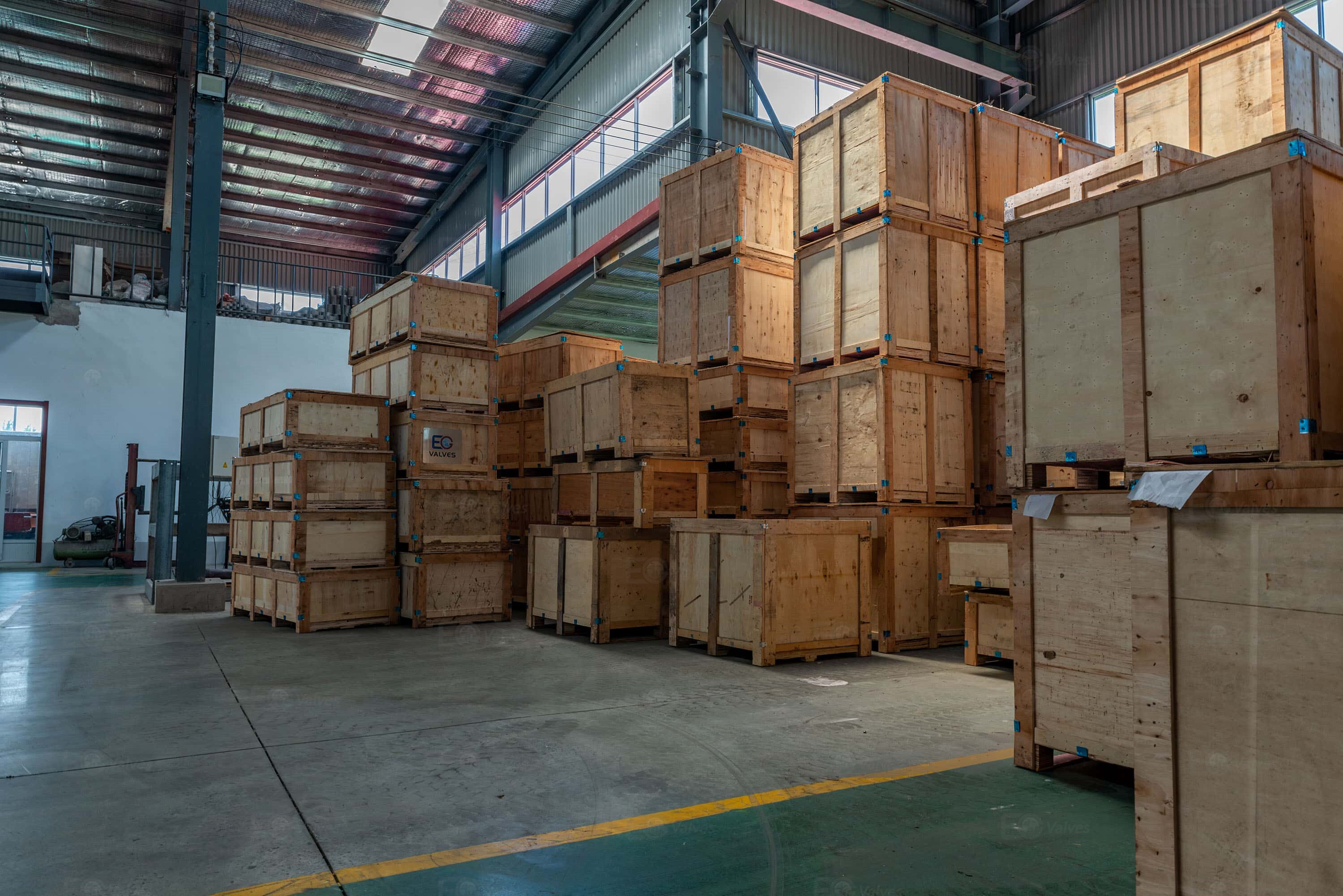
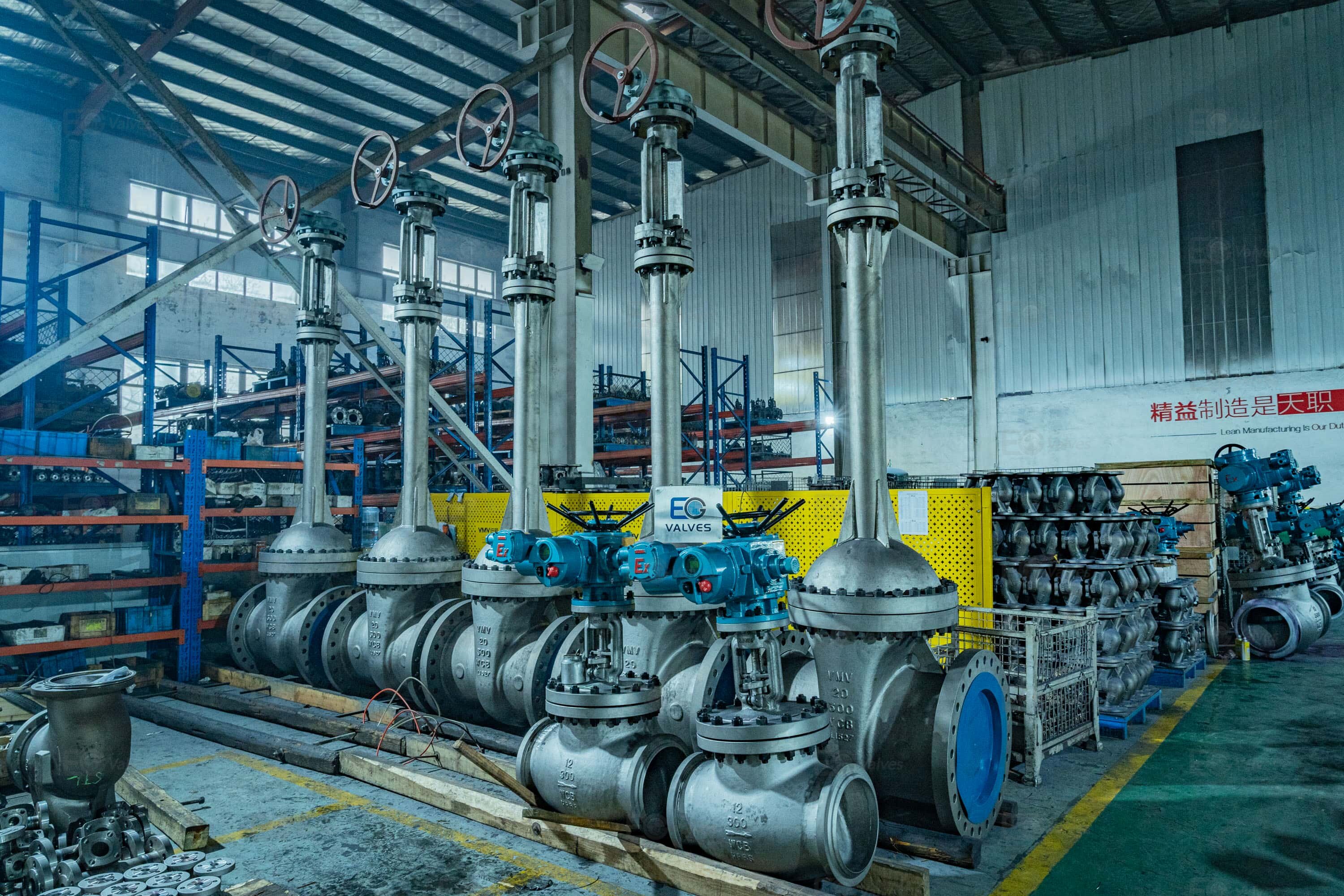
Established in 2000, EG Valves operates a 27,500 m² factory with an annual output of 90,000 pieces. The company holds relevant certifications for stainless steel valve manufacturing, including CE PED, API 6D, API 600, and ISO 9001:2015. Its product range covers gate, globe, ball, butterfly, and check valves manufactured to ANSI, DIN, BS, and JIS standards.
Compliance Highlights:
- CE PED Certification: Covers Gate Valves, Ball Valves, Globe Valves, Check Valves, Butterfly Valves, and Strainers for the EU market.
- API 6D Certification: Applies to Check Valves, Ball Valves, and Gate Valves.
- ISO 45001:2018 Certification: Covers occupational health and safety management for valve manufacturing.
Operational Capabilities:
- Monthly Capacity: 8,000 pieces.
- Lead Time: Within 25-35 days.
- MOQ: 1 piece for large valves, 10 pieces for small valves.
- Export Markets: EU, North America, Latin America, Middle East (80% export ratio).
- Quality Control: 100% inspection, provision of EN 10204 3.1 Material Test Certificates.
Risk Mitigation and Supplier Evaluation in Practice
To address corrosion and wear risks inherent in stainless steel valve applications, a comprehensive risk management framework is recommended. This integrates material selection, preventive filtration, standardized operation, daily inspection, scheduled maintenance, and quality-controlled component replacement. Suppliers should demonstrate proactive measures, such as using corrosion-resistant alloys (e.g., stainless steel, Hastelloy, PTFE), recommending upstream filtration to remove solid particles, and establishing daily inspection protocols for leaks and abnormal noises. Quality assurance procedures must include regular inspection of valve corrosion and timely replacement of components.
Case Study: Long-Term Performance in Demanding Applications
Project: Chemical Plant in Spain
Supplier: EG Valves Manufacturing Co., Ltd.
Scope: 260 units of gate, globe, and check valves (DN250 to DN1200).
Duration & Outcome: The project was completed within 5 years. The valves, designed for durability in corrosive environments, resulted in safe and stable operation with low noise, ensuring the smooth operation of the customer's chemical plant.
This case underscores the importance of selecting a supplier with proven experience in specific industries and the ability to deliver valves that perform reliably over an extended period.
Conclusion and Next Steps for Procurement
Selecting a stainless steel industrial valve supplier requires a multi-faceted evaluation beyond unit price. By rigorously assessing certification portfolios, technical specifications, production reliability, customization ability, and documented project history, procurement teams can significantly de-risk their supply chain. The recommended next steps include:
- Request and validate all relevant certification documents (CE, API, ISO).
- Submit a detailed request for quotation (RFQ) specifying alloy grade, pressure rating, end connection, and actuation requirements.
- Inquire about material traceability (EN 10204 3.1 certificates) and quality control procedures.
- Evaluate lead times, MOQ flexibility, and after-sales support structure.
- Reference check with previous clients in similar industries or regions.
Adopting this structured approach will lead to more informed decisions, contributing to safer, more efficient, and cost-effective industrial operations.
For a detailed overview of industrial valve products, specifications, and company capabilities, download the complete product brochure.