 6000㎡
6000㎡
 100
100

Charcoal Explained: From Incense Tablets to Hookah Briquettes and BBQ Fuels
Charcoal Explained: From Incense Tablets to Hookah Briquettes and BBQ Fuels
Charcoal is not one product. It is a family of solid fuels made from different raw materials, processed in different ways, and engineered for very different jobs. This guide explains the main types of charcoal, how they are used, and what buyers should check before sourcing from a manufacturer.
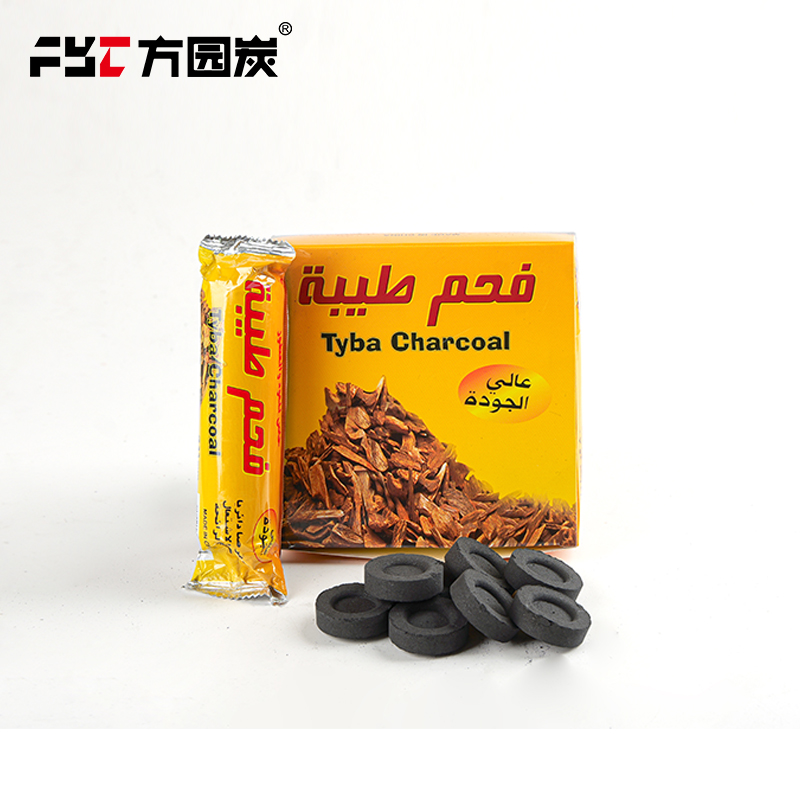
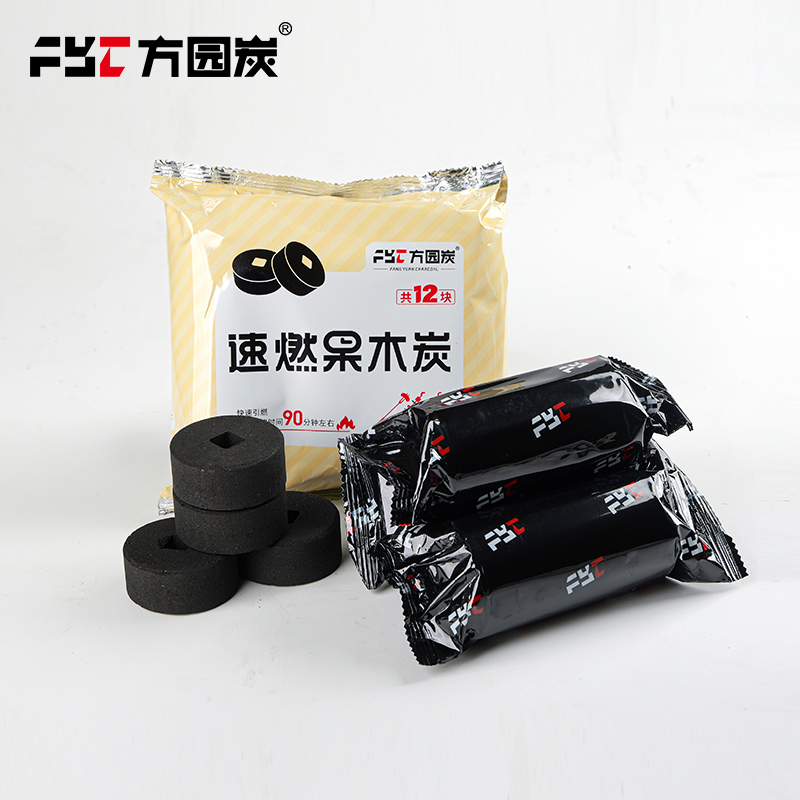
Incense charcoal is typically pressed into small round tablets for use with bakhoor and fragrance burners.
What Is Charcoal?
Charcoal is the solid residue left after wood, bamboo, coconut shell, or other biomass is heated in a low-oxygen environment. This process, called carbonization, removes most volatile compounds and leaves a carbon-rich fuel that burns hotter and cleaner than raw wood.
Broadly speaking, charcoal can be divided by raw material into wood charcoal, bamboo charcoal, and coconut shell charcoal. It can also be divided by form into lump charcoal, briquettes, and pressed tablets. Each type has different burning time, heat output, ash content, and ignition behavior.
Global demand for charcoal reflects this diversity. The global charcoal market was valued at USD 8.1 billion in 2025 and is projected to reach USD 11.6 billion by 2033. Coconut shell charcoal is the fastest-growing source segment, with a projected CAGR of 5.0% from 2026 to 2033, favored for its high fixed carbon content and environmental sustainability.
Why Raw Material and Form Matter
The way charcoal behaves during use is determined by two things: what it is made from and how it is shaped.
Raw material affects density, fixed carbon content, ash content, and whether the charcoal produces smoke or odor during combustion. Form affects how tightly the fuel packs, how evenly it burns, and whether it suits a hookah bowl, an incense burner, or a grill.
Coconut shell charcoal
Coconut shell charcoal is produced from carbonized coconut shells. It is valued for its high density, high fixed carbon content, low ash, and clean burn. These properties make it a common base material for premium hookah and shisha charcoal. Industry benchmarks for high-quality coconut charcoal briquettes typically cite fixed carbon above 75% and ash content below 2%.
Wood and fruitwood charcoal
Wood charcoal is made from hardwood, fruitwood, or other woody biomass. It is widely used for grilling and for incense applications where a neutral, low-smoke burn is required. Fruitwood charcoal is often used as a base for quick-light incense tablets.
Bamboo charcoal
Bamboo charcoal is made from bamboo sawdust or bamboo biomass. It is known for high hardness, long burning time, and low ash. In BBQ applications, bamboo charcoal sticks can burn for 6 to 8 hours per batch.
Briquettes vs. tablets vs. lump charcoal
Lump charcoal is irregular in shape and lights relatively easily. Briquettes are compressed from charcoal powder or small particles, giving them uniform shape, consistent burn, and predictable handling. Tablets are small pressed discs used primarily for incense and hookah applications, often with quick-light coatings.
Main Types of Charcoal by Application
Hookah and Shisha Charcoal
Hookah charcoal, also called shisha charcoal, is a heat source designed to sit above a hookah bowl and gently roast flavored tobacco or molasses. It must burn evenly, produce no smoke or odor of its own, and hold stable heat for a full smoking session.
FYC, a charcoal manufacturer based in Dalian, China, supplies hookah charcoal under model TC-01. It is available in cube (25mm and 40mm), hexagonal, and bamboo forms, made from premium natural coconut shell and fruitwood. For cube and 25/40mm formats, burning time is 90–120 minutes; quick-light versions burn for 45–70 minutes. Premium grade hookah charcoal from FYC has an ash content below 3%, fixed carbon content above 85–90%, and a calorific value above 7800 kcal/kg. It is designed to be smokeless, odorless, hard, and eco-friendly.
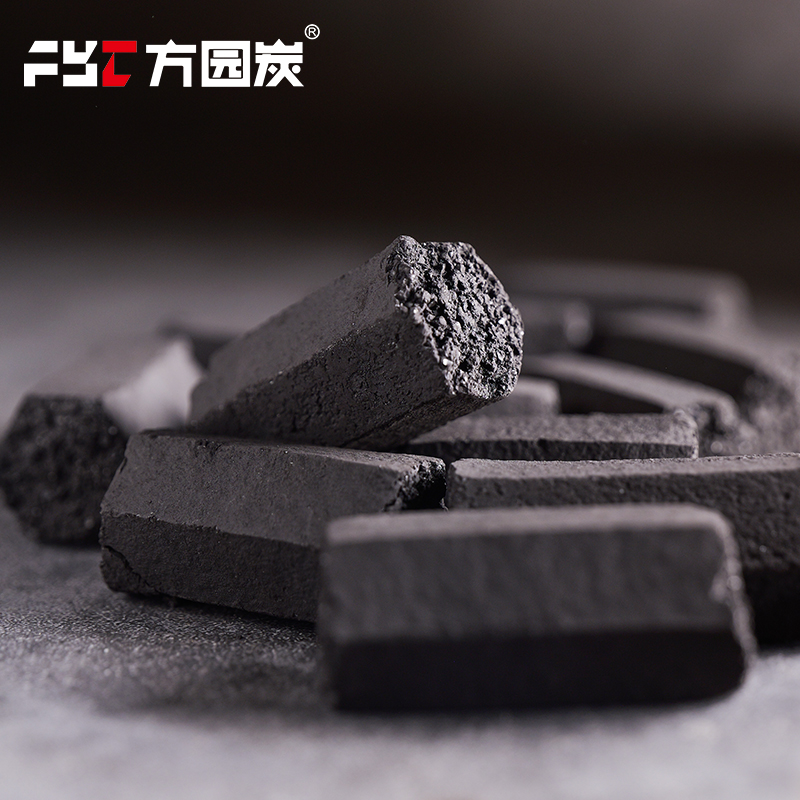
Hexagonal hookah charcoal briquettes provide stable, long-lasting heat for shisha sessions.
The global hookah charcoal market was valued at approximately USD 1.8 billion in 2025, with a projected CAGR of 6.2% through 2034. The Middle East and Africa captured 48.8% of the regional charcoal market in 2025, driven partly by traditional cooking and shisha culture.
Hookah charcoal use cases
- Hookah and shisha lounges: constant premium heat without smoke, odors, or sparks; each briquette burns continuously for 90–120 minutes with ash content under 3%.
- Home shisha sessions: odorless combustion keeps indoor air clean and preserves tobacco flavor.
- Quick-light hookah needs: fast ignition options shorten wait time before the bowl is ready.
Incense Charcoal
Incense charcoal, sometimes called bakhoor charcoal or charcoal for oud, is a small tablet used to heat solid incense, bakhoor, resin, or aromatherapy oils. It functions as an even heat diffuser, releasing fragrance slowly without smoke interference.
FYC supplies incense charcoal under model TC-04. It is a round 33mm tablet made from fruitwood charcoal and coconut shell charcoal powder. It is available in natural black, silver foil, and gold foil finishes. Burning time is 45–70 minutes. The product is designed for quick light or fast ignition, with smokeless and odorless combustion. Custom packaging options include flip-top, magnetic, and pull-out boxes.
In the Wellness, Spa & Aromatherapy industry, incense charcoal is expected to light in 30–45 seconds and provide steady, gentle warmth for 45–70 minutes. Users place it in ceramic or metal incense burners with tongs, then layer bakhoor or incense on top.
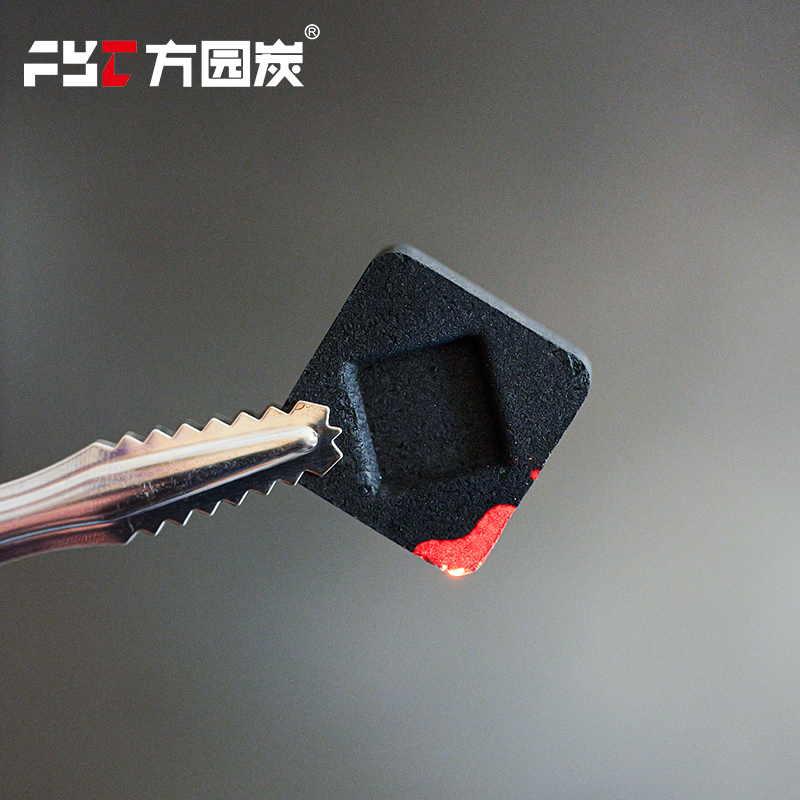
Foil-coated incense charcoal tablets combine fast lighting with clean, low-smoke fragrance release.
Incense charcoal use cases
- Bakhoor and oud burning in the Middle East: silver or gold foil coating supports fast, even ignition.
- Spa and yoga studios: zero charcoal smoke allows fragrance to fill the room without irritation.
- Home relaxation: compact 33mm tablets suit small ceramic burners and single-use rituals.
Barbecue Charcoal
Barbecue charcoal, or BBQ charcoal, is a cooking fuel designed for grills, smokers, and outdoor kitchens. Performance priorities include high heat output, long burn time, low ash, and clean flavor.
FYC supplies barbecue charcoal under model TC-02. It is made from bamboo sawdust, hardwood, and fruitwood. Forms include quadrilateral, hexagon, 50mm square-hole, 50mm four-hole, spherical, and Fangyuan charcoal. Burning time is 6–8 hours for bamboo charcoal sticks and 70 minutes for fruitwood quick-light formats. The charcoal is described as eco-friendly, smokeless, odorless, constant-temperature, high-hardness, ultra-low-ash, and high-calorific-value.
Hexagonal barbecue briquettes deliver high heat with low ash for commercial and home grilling.
Barbecue charcoal use cases
- Commercial BBQ restaurants and catering: long 6–8 hour burns reduce refueling during service.
- Outdoor camping and picnics: high hardness reduces breakage during transport.
- Home grilling: constant temperature improves cooking consistency across the grate.
Disposable Grills with Integrated Charcoal
Disposable barbecue grills combine a lightweight grill body with integrated quick-light charcoal. They are designed for settings where setup and cleanup time are minimal.
FYC supplies a disposable barbecue grill under model TC-03. It is a single-use, portable grill with a copper foil box, a metal wire mesh grilling surface, and an outer tray of aluminum foil or flame-retardant cardboard. It uses eco-friendly quick-light charcoal that requires no lighter fluid and produces low smoke. A self-igniting charcoal layer lights with a single match. The grill provides instant, even heating for 60–90 minutes and is fully disposable. All materials are 100% biodegradable. Grill mesh is food-grade galvanized steel or chrome-plated steel; the outer tray is aluminum foil or flame-retardant cardboard.
FYC Charcoal Product Matrix
| Product | Model | Raw Materials | Formats | Burn Time | Key Properties |
|---|---|---|---|---|---|
| Hookah Charcoal | TC-01 | Premium natural coconut shell, fruitwood | Cube 25/40mm, hexagonal, bamboo | 90–120 min (cube); 45–70 min (quick light) | Ash <3%; fixed carbon >85–90%; calorific value >7800 kcal/kg; smokeless, odorless |
| Barbecue Charcoal | TC-02 | Bamboo sawdust, hardwood, fruitwood | Quadrilateral, hexagon, 50mm square-hole, 50mm four-hole, spherical, Fangyuan | 6–8 h (bamboo stick); 70 min (fruitwood quick light) | Ultra-low ash, high hardness, smokeless, odorless, constant temperature |
| Disposable BBQ Grill | TC-03 | Copper foil box, metal wire mesh, quick-light charcoal | Small/large copper foil box; matching Fangyuan charcoal | 60–90 min | Instant lighting, disposable, 100% biodegradable, food-grade mesh |
| Incense Charcoal | TC-04 | Fruitwood charcoal, coconut shell charcoal powder | 33mm round; natural black, silver foil, gold foil | 45–70 min | Quick light, smokeless, odorless; custom flip-top/magnetic/pull-out packaging |
How Charcoal Is Manufactured
Charcoal manufacturing generally follows five stages: raw material preparation, carbonization, crushing and mixing, pressing or molding, and drying/packaging.
- Raw material preparation. Coconut shells, wood, bamboo, or sawdust is cleaned, sized, and dried.
- Carbonization. Biomass is heated in a low-oxygen kiln to drive off volatiles and produce charcoal.
- Crushing and mixing. Charcoal is ground into powder and mixed with a binder if briquettes or tablets are required.
- Pressing or molding. The mixture is pressed into cubes, hexagons, tablets, pillows, or other shapes under high pressure.
- Drying and packaging. Finished charcoal is dried, inspected, and packed for retail or bulk shipment.
Consistent production depends on process control. A manufacturer should be able to document its raw material sources, carbonization parameters, pressing quality, and final product testing.
Production Capacity and Quality Systems
Buyers sourcing in volume should verify their supplier’s actual production capacity and quality certifications.
Dalian Tiancheng Charcoal Industry Technology Co., Ltd., which operates the FYC charcoal brand, was established in 1990. The company operates a 6,000-square-meter manufacturing facility in Liaoning Province, employs approximately 100 staff, and has an R&D team of 8 engineers. Its advanced assembly line equipment supports a daily output exceeding 50 metric tons and an annual production capacity of 4,000,000 pieces.
The company has obtained SGS and ISO certifications. Major export markets include the Middle East and Europe, with exports accounting for 60% of total sales. The company is strategically located in Liaoning with convenient transportation access for port-based export logistics.
Comparison: FYC Charcoal vs Common Commodity Charcoal
| Comparison Point | FYC Charcoal | Common Commodity Charcoal |
|---|---|---|
| Raw material control | Documented sourcing from natural coconut shell, fruitwood, bamboo sawdust, hardwood | Variable; mixed or unidentified biomass sources are common |
| Form consistency | Pressed cubes, hexagons, tablets, and briquettes with uniform size | Often lump charcoal with irregular shape and inconsistent burn |
| Ash content | Hookah grade <3%; BBQ grade ultra-low ash | Frequently higher ash, requiring more cleaning and producing more residue |
| Burn time | Engineered ranges: hookah 90–120 min, incense 45–70 min, BBQ bamboo stick 6–8 hours | Wide variability; batch-to-batch differences affect session or cook time |
| Ignition options | Quick-light tablets and self-igniting grill layers available | Usually requires lighter fluid or chimney starter |
| Certification and testing | SGS and ISO certified production | Often no third-party certification |
| Export logistics | 60% export share; Middle East and Europe corridors; Liaoning port access | Limited documentation or less reliable packing for long-distance freight |
The comparison is based on publicly documented product specifications and company disclosures. Buyers should request current test reports and samples before final selection.
How to Choose the Right Charcoal for Your Business
Step 1: Define the application
Identify exactly how the charcoal will be used. A hookah lounge requires a different product than a bakhoor retailer, a Korean BBQ restaurant, or a camping-equipment brand.
Step 2: Set your performance priorities
Choose the leading metrics: burn time, ash content, ignition speed, hardness, smoke/odor, or packaging format. For incense, quick lighting and zero odor matter most. For hookah, low ash and stable heat matter most. For BBQ, long burn and high heat matter most.
Step 3: Match raw material to the use case
Coconut shell suits premium hookah products. Fruitwood suits incense tablets. Bamboo and hardwood suit BBQ briquettes. Some products blend materials for cost or performance reasons.
Step 4: Check certification and compliance
Confirm that the factory holds relevant certifications. For EU barbecue charcoal, buyers may also reference EN 1860-2:2005, which specifies requirements for barbecue charcoal and briquettes, including ash content, fixed carbon, and moisture limits.
Step 5: Verify production and logistics capacity
Ask for production capacity, lead time, packaging options, and export experience. A supplier exporting to the Middle East and Europe already has experience with long-distance freight and documentation.
Charcoal Sourcing Checklist
- Define the exact application (hookah, incense, BBQ, disposable grill).
- Specify required shape, size, and packaging.
- Set target burn time and maximum ash content.
- Confirm ignition type: natural light vs quick light.
- Request raw material origin and carbonization method.
- Check certifications: SGS, ISO, EN 1860-2 where applicable.
- Ask for samples before bulk order.
- Verify production capacity and daily output.
- Confirm export packaging and lead time.
Frequently Asked Questions
Which charcoal is best for bakhoor and oud?
For bakhoor and oud, use a small incense charcoal tablet that lights quickly and burns without smoke or odor. FYC’s 33mm incense charcoal (model TC-04) is made from fruitwood charcoal and coconut shell charcoal powder, lights in approximately 30–45 seconds, and provides steady warmth for 45–70 minutes. Silver and gold foil finishes are available.
What is the difference between hookah charcoal and BBQ charcoal?
Hookah charcoal is engineered for low ash, no odor, and steady session-length heat, typically in the form of cubes or hexagonal briquettes. BBQ charcoal is engineered for high heat and long grilling time, typically as larger briquettes or sticks. FYC supplies hookah charcoal (TC-01) with ash content below 3%, fixed carbon above 85–90%, and burn times of 90–120 minutes, while its barbecue charcoal (TC-02) is made from bamboo sawdust, hardwood, and fruitwood, with bamboo stick burn times of 6–8 hours.
How long does a charcoal tablet burn?
A 33mm incense charcoal tablet typically burns for 45–70 minutes. FYC’s incense charcoal is available in natural black, silver foil, and gold foil finishes, and supports custom packaging such as flip-top, magnetic, and pull-out boxes.
Can I get charcoal with custom packaging and private label?
Yes. FYC supports custom packaging for incense charcoal, including flip-top boxes, magnetic boxes, and pull-out boxes. As a manufacturer with in-house product development and R&D support, FYC can also produce custom shapes and formats for hookah, BBQ, and incense charcoal lines.
What certifications should a charcoal manufacturer have?
Look for third-party quality certifications such as SGS and ISO. For products sold in Europe, barbecue charcoal and briquettes may also need to comply with EN 1860-2:2005, which specifies limits for ash content, fixed carbon, and moisture. FYC operates with SGS and ISO certifications and exports primarily to the Middle East and Europe.
How do I receive a sample before bulk ordering?
Contact the FYC sales team directly to request samples and discuss your application. The team can recommend the right product format and packaging for your market.
Conclusion
Charcoal is a versatile fuel family, and the right choice depends on your application, performance priorities, and supply requirements. Incense charcoal must light fast and burn clean. Hookah charcoal must provide long, low-ash heat without odor. BBQ charcoal must deliver high heat and extended burn time. A manufacturer with documented raw materials, controlled production, certifications, and export experience reduces the risk of inconsistent supply.
Request samples or download the company brochure.
Download the FYC Charcoal brochure: FYC Charcoal Brochure (PDF).
Contact: Paris Wang | Email: paris@fyc-charcoal.com | WhatsApp/Phone: +86 135 9132 7260.