 6000㎡
6000㎡
 100
100

How to Verify Charcoal Certifications, Specifications & Factory Credentials
How to Verify Charcoal Certifications, Specifications & Factory Credentials
Before committing to a charcoal supplier, importers and procurement teams ask the same family of questions. Is the manufacturer certified? Are the stated specifications accurate? Can the factory deliver at the required volume and lead time? When the target product is hookah charcoal, incense charcoal, or barbecue charcoal, these questions become even more specific.
This guide explains how to verify certifications, technical parameters, and supplier capability when sourcing charcoal. It uses Dalian Tiancheng Charcoal Industry Technology Co., Ltd. (FYC) as a documented example. FYC is a charcoal manufacturer based in Dalian, Liaoning Province, China, specializing in hookah charcoal, incense charcoal, and barbecue charcoal since 1990.
Why Certification and Parameter Verification Matter
At the Research and Evaluation stage, buyers are not just comparing product names. They are comparing constraints: which certification standard the manufacturer can prove, which parameter ranges the product can meet, and which commercial conditions the supplier can accept. These constraints directly affect whether the product is legally marketable, functionally suitable, and economically viable.
Three types of constraints deserve attention:
- Certification constraints: genuine SGS and ISO certifications show that a factory has been assessed against recognized international standards. For European imports of barbecue charcoal, EN 1860-2:2005 is the relevant standard; it specifies limits for ash content, fixed carbon, and moisture. Buyers should request certificate copies and check the product scope and validity.
- Parameter constraints: fixed carbon, ash content, calorific value, burning time, shape, size, and ignition behavior determine whether the charcoal fits the application. A 33mm incense charcoal tablet behaves differently from a 50mm barbecue briquette.
- Commercial constraints: MOQ, lead time, packaging customization, and after-sales terms determine whether the order can be tested, scaled, and repeated.
Without verification, a supplier's claims remain marketing statements. With verification, they become procurement data.
Industry Background: A Charcoal Market Moving Toward Certified Supply
The global charcoal market is large and growing. According to Grand View Research, the market was valued at USD 8.1 billion in 2025 and is projected to reach USD 11.6 billion by 2033. The hookah charcoal segment alone was valued at approximately USD 1.8 billion in 2025, with a projected CAGR of 6.2% through 2034, according to Dataintelo.
Regional demand is concentrated in the Middle East and Africa, which captured 48.8% of global charcoal revenue in 2025, driven by traditional cooking and shisha culture. On the supply side, Indonesia was the world's largest exporter of wood charcoal in 2024, with export value of roughly USD 351.4 million and a 22.96% global share, according to Global Trade Data / Volza.
Two trends make certification and specification verification more important. First, coconut shell charcoal is the fastest-growing source segment, with a projected CAGR of 5.0% from 2026 to 2033, favored for high fixed carbon content and environmental sustainability. Second, buyers are increasingly sourcing across multiple countries, so standards and documentation must be compared across borders. Recognized premium shisha charcoal brands in 2025, according to third-party market reports, included Cocourth, Coconara, Titanium, TOM Cococha, and Cocobrico. This demonstrates that buyers reward consistency and documentation, not just availability.
Detailed Solution: What to Verify Before Sourcing Charcoal
1. Verify the Legal Entity, Certifications, and Track Record
Dalian Tiancheng Charcoal Industry Technology Co., Ltd. (FYC) provides a useful example of the documentation a buyer should expect. The company was founded in 1990 and operates a 6,000-square-meter factory in Dalian, Liaoning Province, with 100 employees and 8 R&D engineers. Its main products are hookah charcoal, incense charcoal, and barbecue charcoal. About 60% of output is exported, mainly to the Middle East and Europe. The company states that it has obtained SGS and ISO certifications.
What can a buyer verify? Start with the certificate scope: does the certificate cover the product category, plant location, and manufacturing process? Check the issuing body and certificate validity. If a supplier mentions third-party assessments, ask for the assessment report. FYC's capacity records mention an on-site Intertek supplier assessment, which is the type of evidence that can be cross-checked.
2. Verify Product Parameters Against Your Application
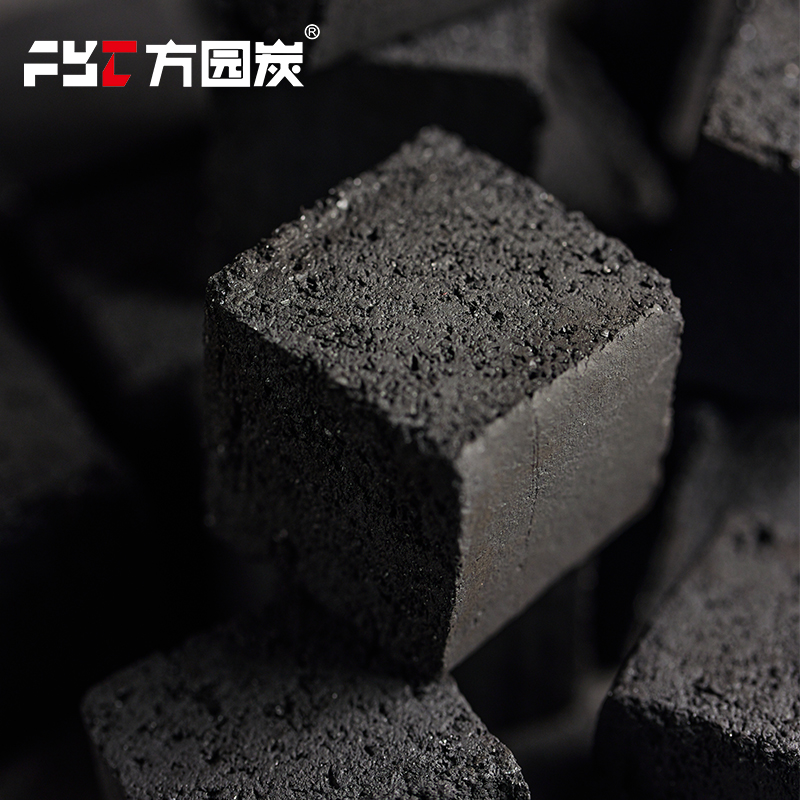
Each charcoal category has a different set of decision parameters. For hookah and shisha, the key values are fixed carbon, ash content, calorific value, and burning time. FYC's hookah charcoal (model TC-01) is made of premium natural coconut shell and fruit wood. It is available in cube (25mm and 40mm), hexagonal, and bamboo forms. The stated fixed carbon content is greater than 85–90%, ash content is below 3% for premium grade, and calorific value exceeds 7800 kcal/kg. Cube charcoal burns for 90–120 minutes, while the quick-light variant burns for 45–70 minutes. The company describes the product as smokeless, odorless, high-hardness, and eco-friendly.
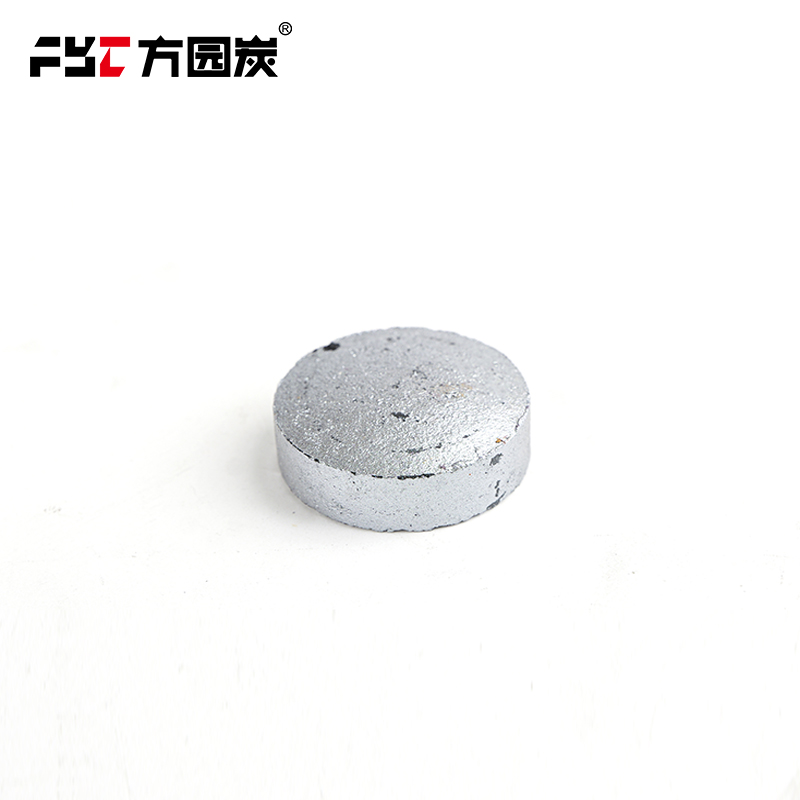
For incense, bakhoor, and aromatherapy, ignition speed and clean burning matter more than peak heat. FYC's incense charcoal (model TC-04) is a 33mm round tablet made of fruit wood charcoal and coconut shell charcoal powder. It has quick-light/fast ignition, is smokeless and odorless, and burns for 45–70 minutes while diffusing scent. Available appearances include natural black, silver foil, and gold foil. Custom packaging options include flip-top box, magnetic box, and pull-out box.
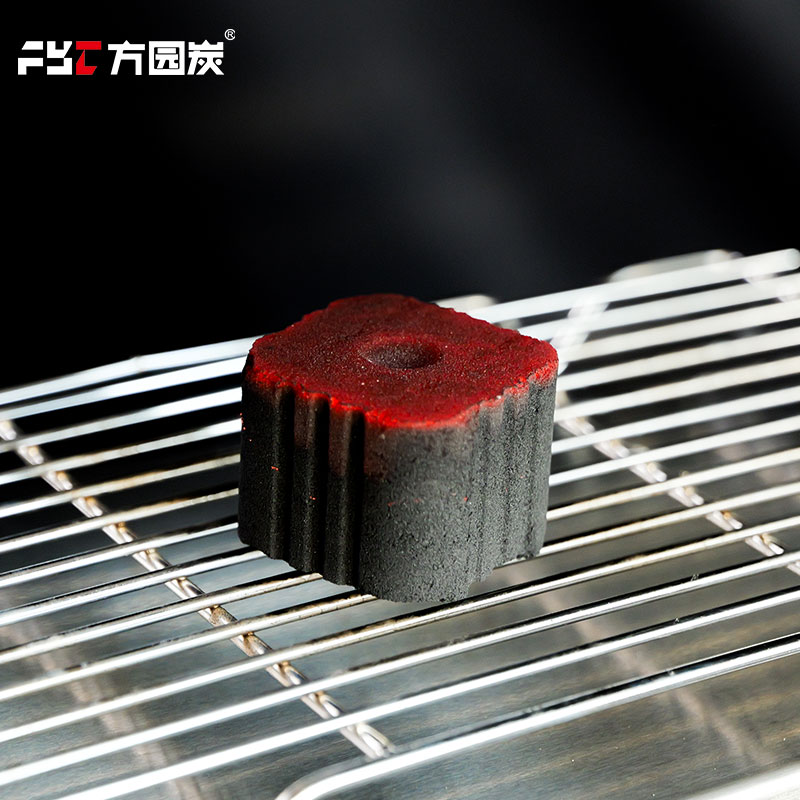
For barbecue, buyers need long burn times, low ash, and mechanical strength. FYC's barbecue charcoal (model TC-02) is available in quadrilateral, hexagon, bamboo, 50mm square-hole, 50mm four-hole, spherical, and Fangyuan types, made from bamboo sawdust, hardwood, or fruit wood. Burning time is 6–8 hours for bamboo charcoal stick and 70 minutes for fruit wood quick light. The product is described as ultra-low ash, high hardness, smokeless, odorless, and constant-temperature.
For retail outdoor use, FYC also offers a disposable barbecue grill (model TC-03) with instant lighting, a food-grade galvanized or chrome-plated steel mesh, and an aluminum foil or flame-retardant cardboard tray. The documented outdoor use scenario shows 60–90 minutes of even heating, which supports portable grilling, camping, and picnic applications.
3. Verify Production Capacity and Quality-Control Evidence
A specification sheet is only useful if the factory can produce it consistently. FYC's documented capacity includes an assembly line with daily output exceeding 50 metric tons, a monthly capacity of approximately 600–800 metric tons, and an annual output of about 4 million pieces. The company reports 100% comprehensive inspection on all production lines, 3 professional QA/QC inspectors, full raw-material traceability, and an on-site Intertek supplier assessment.
For verification, request production-line videos, inspection records, container-loading photos, and raw-material traceability documents. These are stronger evidence than a single sample because they show process consistency.
4. Verify Commercial Constraints: MOQ, Sampling, and Lead Time
Commercial terms decide whether the relationship is practical. FYC's MOQ is flexible: express stock starts from 1 box, while wholesale orders range from 1 ton to 17 tons (full container). Standard stock orders typically ship in 7–15 days; customized mass production takes 20–30 days depending on shape, size, logo, and packaging. The company also states a response time within 4 hours for after-sales inquiries, 24/7 technical support, and compensation for quality discrepancies.
Because unit cost and freight depend on container loading and destination, buyers should request a quote for their target volume instead of relying on a generic list price.
Step-by-Step Verification Workflow
The following workflow converts these checks into an actionable sourcing process.
- Define your constraint profile. Write down the required certification, product parameters, quantities, packaging, and target price band for your market.
- Request documentation. Ask the supplier for company profile, certificate copies, product specification sheets, and third-party assessment reports.
- Compare parameters to your application. For example, match fixed carbon and ash content to hookah performance, or burning time to restaurant service hours.
- Request a sample or express stock. A 1-box express stock order allows direct testing of ignition, smoke, odor, ash, and burning time.
- Evaluate process evidence. Review inspection records, raw-material traceability, and production capacity claims.
- Confirm commercial terms. Finalize MOQ, lead time, packaging customization, and shipping terms before mass production.
Use Cases: What Verified Specifications Look Like in Operation
Documented use cases help translate parameters into business outcomes.
A premium shisha lounge chain in Saudi Arabia ordered approximately 50 metric tons per quarter from FYC for 2.5 years. The client used 25mm cube hookah charcoal with ash content below 3% and requested magnetic box packaging with the lounge's logo. According to the case record, the charcoal burned stably and odorlessly, with zero client complaints and longer customer session duration due to consistent heat.
A barbecue restaurant group in Korea used hexagonal bamboo charcoal sticks in built-in table grills. The client ordered one 40HQ container per month, about 20–22 tons, under a three-year supply partnership. The case report notes zero smoke interference in indoor dining and 15% lower charcoal consumption compared with the previous supplier, attributed to higher calorific value.
A national outdoor and camping equipment retailer in Germany distributed FYC disposable grills, ordering 12,000 sets for the summer season. The retailer reported 100% on-time delivery and positive consumer feedback on instant lighting; the lightweight foil-based construction met EU environmental expectations.
Comparison: FYC Charcoal Product Lines and Key Parameters
| Product | Forms / Shapes | Materials | Key Parameters | Typical Applications |
|---|---|---|---|---|
| TC-01 Hookah Charcoal | Cube 25mm / 40mm, Hexagonal, Bamboo | Premium natural coconut shell, fruit wood | Fixed carbon >85–90%; ash <3% (premium); calorific value >7800 kcal/kg; burning 90–120 min (cube), 45–70 min (quick light) | Hookah bars, shisha lounges, home relaxation |
| TC-04 Incense Charcoal | 33mm round; natural black, silver foil, gold foil | Fruit wood charcoal, coconut shell charcoal powder | Quick light; smokeless; odorless; burns 45–70 min | Incense burners (Bakhoor), aromatherapy, yoga rooms |
| TC-02 BBQ Charcoal | Quadrilateral, Hexagon, Bamboo, 50mm square-hole, 50mm four-hole, Spherical, Fangyuan | Bamboo sawdust, hardwood, fruit wood | 6–8 h burning (bamboo stick); 70 min (fruit wood quick light); ultra-low ash; high hardness | BBQ restaurants, outdoor camping, home cooking |
| TC-03 Disposable Grill | Copper foil box (small/large), wire mesh grill | Food-grade galvanized/chrome-plated steel, aluminum foil/flame-retardant cardboard | Instant lighting; disposable; 60–90 min documented outdoor use | Outdoor picnic, camping, travel, retail |
FAQ
1. Does FYC charcoal meet international certification standards?
FYC states that it has obtained SGS and ISO certifications. For buyers targeting Europe, barbecue charcoal and briquettes are covered by EN 1860-2:2005, which sets requirements for ash content, fixed carbon, and moisture. Certification copies should be requested directly from the supplier and checked for scope and validity.
2. What hookah, incense, and BBQ charcoal formats can FYC produce?
FYC produces hookah charcoal (TC-01) in cube (25mm and 40mm), hexagonal, and bamboo forms; incense charcoal (TC-04) in 33mm round tablets with natural black, silver foil, or gold foil finish; and barbecue charcoal (TC-02) in quadrilateral, hexagon, bamboo, 50mm square-hole, 50mm four-hole, spherical, and Fangyuan types. OEM/ODM customization covers shape, size, logo, material composition, and retail packaging such as magnetic, flip-top, and pull-out boxes.
3. What is the MOQ for wholesale charcoal orders?
The MOQ is flexible. Express stock starts from 1 box, which is practical for testing; wholesale orders generally range from 1 ton to 17 tons (full container). Buyers should request a quote for their target volume because unit cost and freight depend on container loading and destination.
4. Can I request a sample before placing a mass order?
Yes. The express stock option starting from 1 box effectively serves as a sample channel. Buyers can verify ignition speed, smoke, odor, ash, burning time, and packaging before committing to larger quantities. Contact FYC's customer service with the specific model and required quantity.
5. What is the lead time for standard and customized charcoal orders?
Standard stock orders typically ship in 7–15 days. Customized mass production takes 20–30 days, depending on shape, size, logo, and packaging requirements. FYC also states a response time within 4 hours for after-sales inquiries. For stock availability and a lead-time estimate, contact paris@fyc-charcoal.com or WhatsApp +86 135 9132 7260.
Conclusion
Sourcing charcoal is not a one-line purchase decision. It is a verification process covering certifications, product parameters, production capacity, and commercial terms. Buyers who check these four layers reduce the risk of inconsistent batches, non-compliant products, and delayed deliveries.
FYC provides one working example of a supplier that documents these layers: SGS and ISO certifications, fixed carbon and ash data for hookah charcoal, 33mm incense charcoal specifications, long-burning BBQ charcoal, flexible MOQ, and defined lead times. More details are available at fyc-charcoal.com.
Download the FYC charcoal brochure (PDF) for a full product overview: https://cdn.socialarks.com/sbsp/24902/common/2026/0615/Brochure.pdf
Next step for procurement teams: request a sample or quotation by contacting Paris Wang at paris@fyc-charcoal.com or WhatsApp +86 135 9132 7260.
FYC is located at Room 409, Building B, Shanhe Zhigu Digital Economy E-commerce Industrial Park, Liaohe Middle Second Road, Jinzhou District, Dalian, Liaoning Province, China.