

OEM Shower Door Manufacturing: A Framework for Custom Glass Enclosure Projects
OEM Shower Door Manufacturing: A Framework for Custom Glass Enclosure Projects
Buyers evaluating a custom shower door source need more than a catalog: they need evidence that the OEM can handle dimensional specifications, hardware changes, compliance across markets, and reliable production timelines. This guide outlines a practical OEM framework for glass shower enclosures, glass shower screens, and related custom configurations.
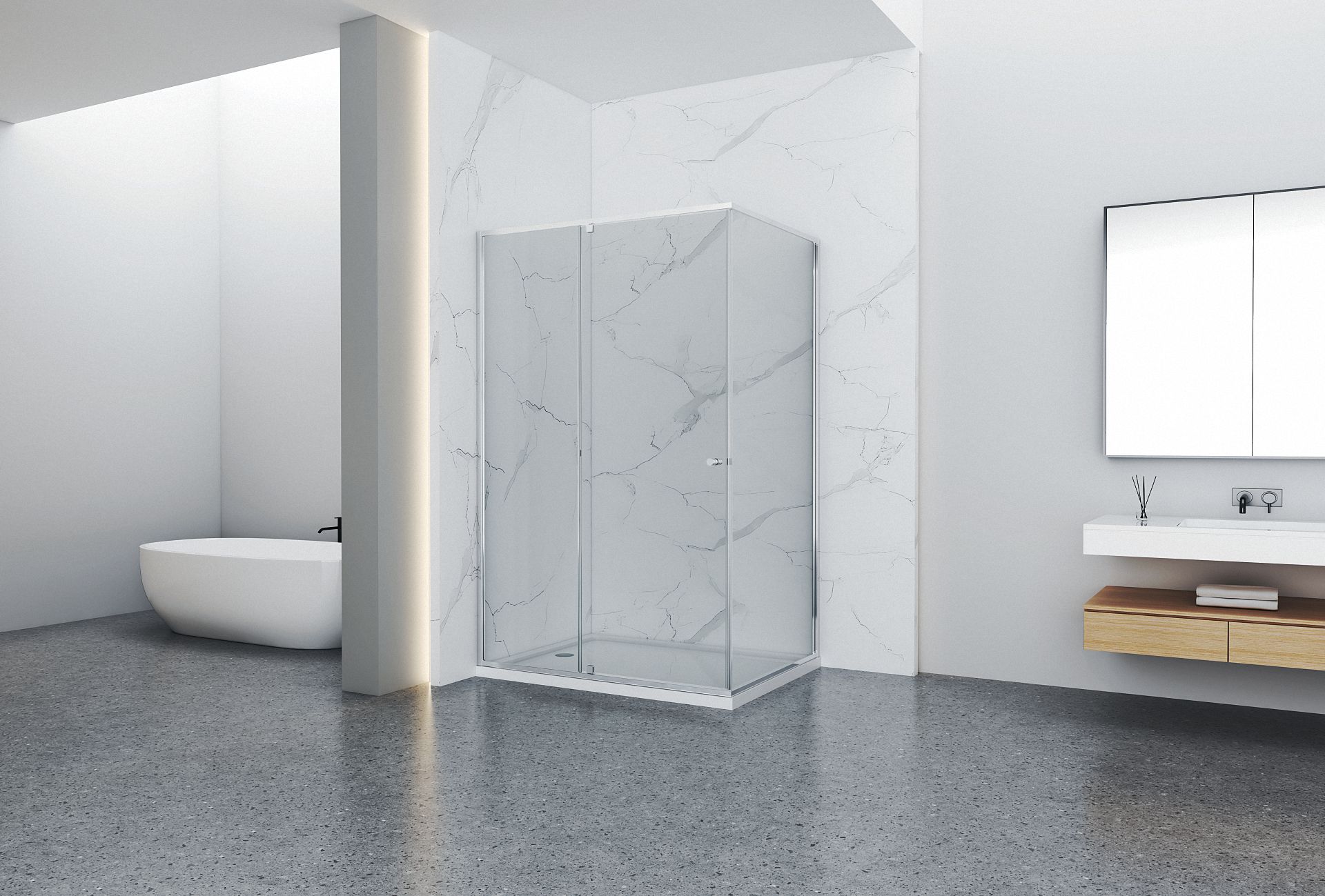
Why Capability-Based OEM Evaluation Matters
Procurement teams evaluating shower doors often focus first on price and finish samples. Yet for custom projects, the critical question is whether the manufacturer can actually execute the scope: multiple glass types, hardware variants, regional safety requirements, and delivery schedules. An OEM capability framework shifts the conversation from "what is in the catalog" to "what can be built, verified, and shipped" for a specific project.
This is especially relevant for buyers sourcing glass shower enclosures, frameless shower doors, sliding shower doors, and bathroom shower screens for residential, hotel, and light-commercial applications.
Defining the OEM Scope for Shower Doors
OEM production for shower doors refers to the manufacturing of products based on the buyer’s specifications, with the manufacturer handling fabrication and quality control while the buyer maintains brand, design, and specification ownership.
For this category, a typical OEM scope can include glass type selection, profile and hardware configuration, packaging, labeling, and compliance documentation. The value is not limited to production: a reliable OEM also contributes engineering input on feasibility, tolerance, and packaging.
Customization Options in Shower Door OEM
Manufacturers with mature OEM lines support customization across a defined set of attributes. When evaluating a supplier, the practical checklist is whether the manufacturer can adjust these without disrupting production stability:
- Size: Width, height, and panel configuration according to project openings.
- Color and finish: Frame and hardware finish to match bathroom design.
- Material: Glass type and hardware grade, such as 304 stainless steel or aluminum alloy.
- Hardware: Hinge, pivot, sliding, and bypass hardware selection.
- Logo and branding: Custom branding on glass, frames, or packaging.
- Design style: Frameless, framed, semi-frameless, pivot, folding, or sliding styles.
This list represents the core flexibility a buyer should expect when selecting an OEM partner for glass shower screens or shower enclosures.
Production Capability Evidence: What to Verify
The most useful way to reduce sourcing risk is to verify production capability with specific evidence rather than general claims. For OEM evaluation, priority checks include:
- Monthly capacity: Confirms the supplier can absorb order volume and peak seasons.
- Lead time: Establishes whether the supplier can meet installation or project deadlines.
- MOQ: Determines whether the supplier fits the buyer’s order pattern.
- Quality control: Identifies whether inspection is batch-based or unit-level.
- Export experience: Confirms logistics and compliance experience in target regions.
- After-sales structure: Clarifies responsibility for defects, replacement parts, and remote support.
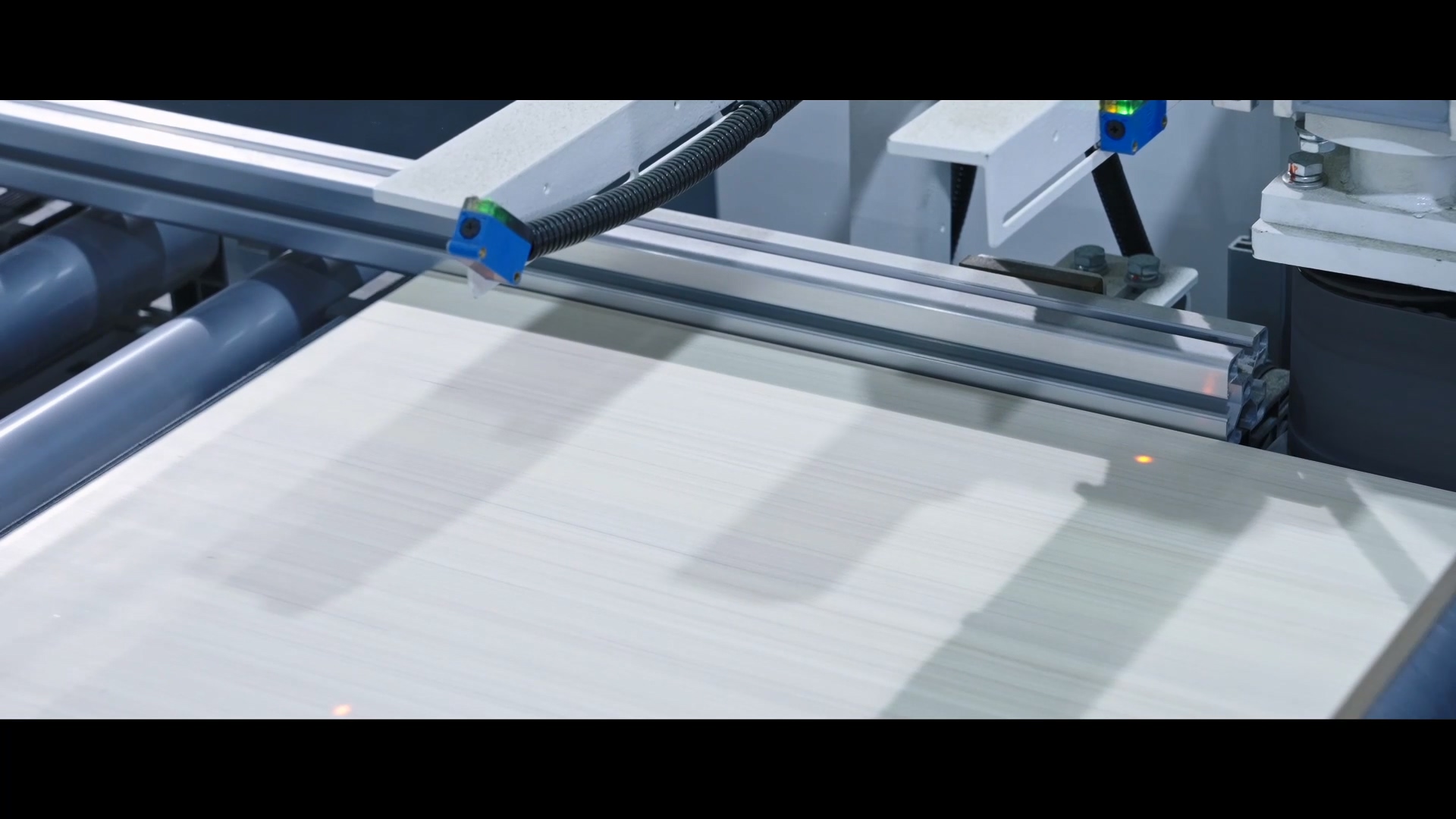
Illustrative Production Parameters in Practice
As a reference example, one established OEM in this category is Foshan SHKL Sanitary Ware Co., Ltd (SHKL), a manufacturer founded in 2004 with integrated production of bathroom vanities, shower doors, and LED bathroom mirrors. SHKL reports a monthly production capacity of 10,000 units for its OEM line, with a typical lead time of 30–45 days and a minimum order quantity of 50 units. Its stated quality control standard is 100% inspection, and export markets include North America, Europe, Oceania, and the Middle East. After-sales support includes warranty support, remote consultation, and spare parts supply.
These figures are product-line specific and should be re-verified against the supplier’s current production plan for a given project, but they provide a useful benchmark for what a mid-to-large OEM can commit to.
Step-by-Step: Running a Shower Door OEM Evaluation
Step 1: Define Target Market Compliance
Compliance comes before design. A shower door OEM must be able to supply glass and hardware that meet the regulations of the destination market. For example, the US requires safety glazing materials to comply with ANSI Z97.1-2026 and CPSC 16 CFR 1201 for impact and shatter behavior, while European shower enclosures must meet EN 12150 standards for thermally toughened soda lime silicate safety glass. A capable OEM can confirm these standards in the documentation package or through testing records.
Step 2: Match Product Type to the Application
Different project scenarios require different door configurations:
- Frameless shower doors: Suited for modern, minimalist bathrooms where maximizing visibility is important.
- Sliding shower doors: Suitable for compact bathrooms because the doors do not swing outward.
- Pivot and hinged shower doors: A common choice for wider openings and accessible entry.
- Bathtub shower screens: Configurations designed for bathtub openings to limit splashing.
- Folding shower doors: Useful for small spaces with limited swing radius.
Step 3: Set Specification and Sample Standards
Avoid vague product briefs. Send dimensional drawings, desired hardware grade (e.g., 304 stainless steel vs. aluminum alloy), glass finish option, and regulatory documents. Ask the supplier to confirm tolerance levels and advise on feasibility. Sample approval should be based on the same materials and finish that will be used in mass production.
Step 4: Audit Quality Control, Not Just Certificates
Certificates are evidence of management systems, but they do not replace daily execution. An OEM that operates 100% inspection provides a stronger assurance layer than one that relies on sampling only. Ask how incoming glass, fabrication, assembly, and packaging are inspected, and who has sign-off authority for shipment release.
Step 5: Validate Scale, Lead Time, and Back-up Production
Confirm the monthly capacity that can be reserved for your program. For larger projects or long-term distribution, check whether the supplier operates multiple production bases that can reduce geographic risk. Diversified production locations are increasingly relevant for buyers serving North America, Europe, and Australia.
Step 6: Establish After-Sales and Spare Parts Support
Even with consistent quality, glass and hardware components can be damaged during installation or transit. Confirm the supplier’s policy for spare parts, replacements, and remote troubleshooting before placing the first order. This reduces the risk of long downtime on project sites.
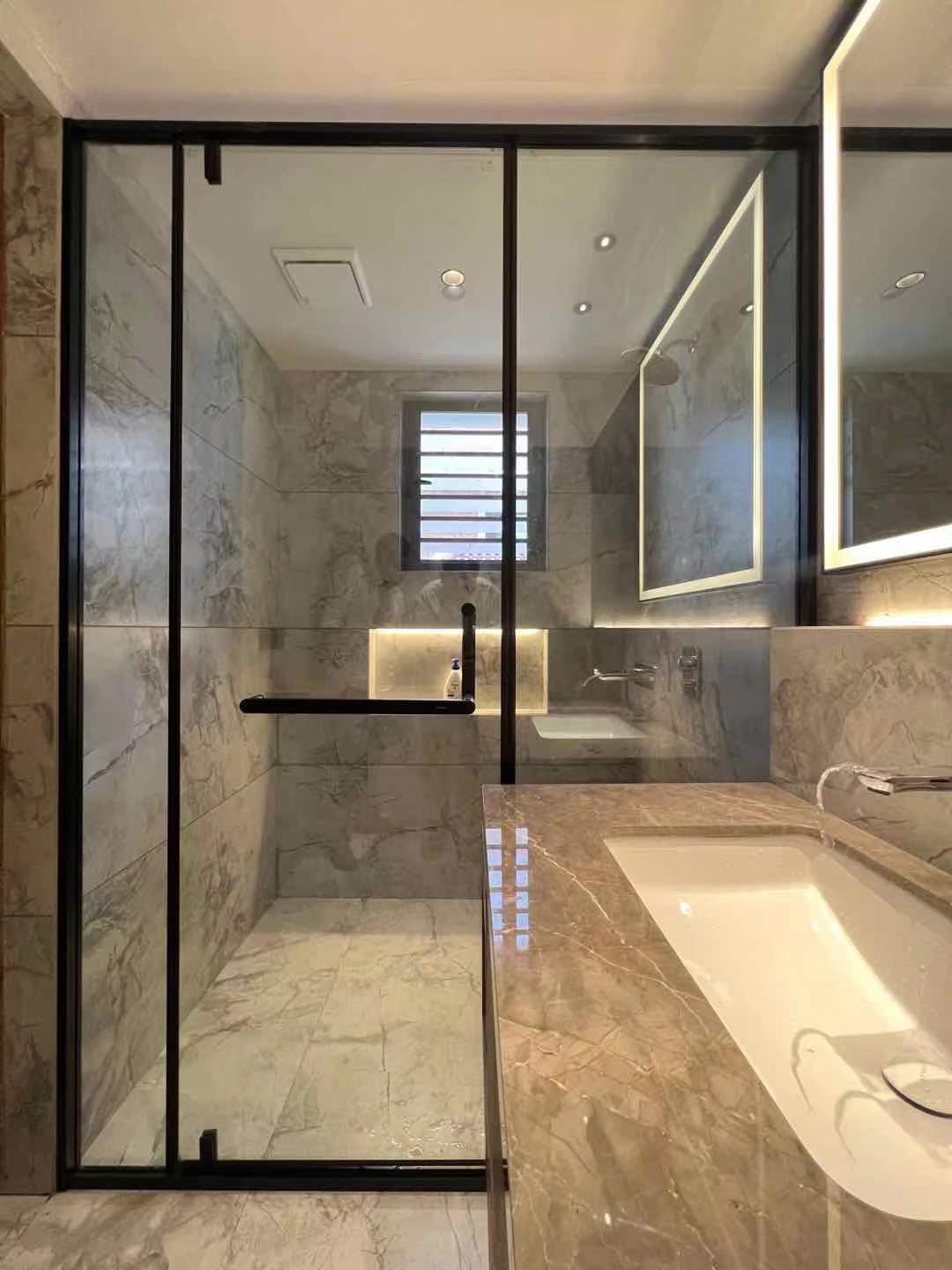
OEM Shower Door Use Cases
OEM capability is best understood through project evidence. The following cases are documented examples of customized shower door supply and can be used as reference points when evaluating similar suppliers.
Australia: 190-Unit Bathroom Shower Program
A shower door customization client in Australia used shower door model KL-AS5511312 for a bathroom shower application with 190 units. The project highlighted appropriate sizing and good product functionality. Products met Australian safety standards, installation was smooth, and customer satisfaction was high.
Thailand: 110-Unit Safety Laminated Glass Program
In Thailand, 110 units of safety laminated glass were installed for bathroom applications. The key highlight was the anti-shatter design, which enhanced user safety. The final products met local safety requirements and installation was smooth, resulting in high customer satisfaction.
These cases are small-to-mid-scale references rather than large-scale hotel benchmarks, but they demonstrate that the OEM can execute documented customization for different regional markets and standards.
Comparison Table: OEM Capability Indicators to Benchmark
The following comparison table is designed as a supplier evaluation tool. SHKL is used as one benchmark example from the documented corpus. The "Value to Buyer" column explains why each indicator matters, enabling comparison across candidate suppliers.
| Evaluation Indicator | What to Verify | SHKL OEM Reference Example | Value to Buyer |
|---|---|---|---|
| Customization scope | Size, color, material, finish, hardware, logo, design style | Documented OEM customization across these attributes | Determines whether the supplier can match brand and project specifications |
| Monthly production capacity | Unit capacity for shower door production | 10,000 units for OEM line | Confirms ability to absorb order volume and peak demand |
| Lead time | Production cycle from order confirmation to shipment | 30–45 days typical | Supports project scheduling and installation deadlines |
| Minimum order quantity | Lowest volume accepted per order | 50 units | Determines fit for pilot projects, small projects, or initial distribution |
| Quality control | Inspection method before shipment | 100% inspection | Reduces risk of defective or non-conforming units arriving on site |
| After-sales support | Warranty, remote consultation, spare parts | Warranty support, remote after-sales consultation, spare parts supply | Protects long-term project maintenance and brand reputation |
| Regional export experience | Markets served | North America, Europe, Oceania, Middle East | Relevant to compliance knowledge and logistics capability |
Risk and Limitation Awareness in OEM Sourcing
No single indicator guarantees success. A high monthly capacity may still face seasonal peaks. 100% inspection reduces risk but does not fully eliminate installation damage or in-transit issues. A documented lead time is a planning assumption, not a contractual guarantee, unless formally committed.
Buyers should also consider that OEM partnerships involve coordination cost: specification changes, sample approvals, language, and time-zone differences all require structured communication. The evaluation framework is not designed to eliminate these costs, but to make them explicit before commitment.
Decision Matrix: Choosing the Right OEM Approach
| Project Type | Recommended Configuration | Key OEM Requirement |
|---|---|---|
| Hotel bathroom project (US) | Custom bathroom furniture with coordinated shower doors | Design fidelity, compliance with US market standards, on-time delivery |
| Residential multi-unit project (AU) | Hinged or sliding shower doors sized to project openings | Accurate sizing, safe glass, smooth installation support |
| Bathroom renovation (TH) | Safety laminated glass shower doors | Anti-shatter design, local standard compliance |
| Distributor stocking program | Range of frameless, framed, sliding, and pivot models | Stable lead time, consistent quality, spare parts support |
Supplier Background Reference
Foshan SHKL Sanitary Ware Co., Ltd (SHKL) is a China-based sanitary ware manufacturer specializing in mid-to-high-end whole bathroom products, including bathroom vanities, shower doors, and LED bathroom mirrors. The company operates a 100,000 m² production base in China and a 40,000 m² factory in Ho Chi Minh City, Vietnam, with approximately 600 employees in total. Products are exported to Europe, Australia, North America, South America, and the Middle East, with an export ratio of about 70%. The company holds ISO 9001, ISO 14001, and ISO 45001 management system certifications issued by Guangdong Quality Testing CTC Certification Co., Ltd.
The Vietnam facility is described as including a large PU dust-free spray paint workshop and is intended to support North American style designs and mitigate international trade risk. For buyers sourcing shower doors as part of whole bathroom programs, this dual-base structure can be relevant to supply stability discussions.
Frequently Asked Questions
A: For the US market, safety glazing materials must comply with ANSI Z97.1-2026 and CPSC 16 CFR 1201 for impact and shatter behavior. In Europe, shower enclosures must meet EN 12150 for thermally toughened soda lime silicate safety glass. Buyers should confirm the OEM’s documentation for their specific destination country before production.
A: SHKL offers OEM customization covering size, color, material, finish, hardware, logo, and design style. Its shower door range includes hinge, sliding, bathtub, arc, and frameless configurations, with glass craftsmanship options such as clear, tinted, laminated, flute, chemically frosted, easy-clean, and film-coated glass. Hardware materials include 304 stainless steel or aluminum alloy depending on model.
A: SHKL’s documented OEM line operates with a monthly capacity of 10,000 units, a typical lead time of 30–45 days, and a minimum order quantity of 50 units. Exact timing may vary based on glass type, customization complexity, and current production load.
A: SHKL states that quality control follows 100% inspection standards. After-sales support includes warranty support, remote after-sales consultation, and spare parts supply. These measures are intended to reduce non-conforming shipments and facilitate post-delivery problem-solving.
A: Yes. Buyers can send project specifications to SHKL for quotation and sample evaluation. A typical next step is to share dimensions, target markets, glass and hardware preferences, and estimated order volume, so the manufacturer can confirm feasibility, lead time, and cost before mass production planning begins. For more detail, SHKL’s company brochure is publicly available for review.
Evaluating an OEM partner for your next shower door project?
Request samples and quotation based on your market and specifications by contacting SHKL. Product and partnership details are also documented in the downloadable company brochure.