
Руководство покупателя по гипербарическим кислородным камерам 2026 года: технические спецификации, критерии безопасности и закупок
Introduction: Navigating the Hyperbaric Oxygen Chamber Market
For procurement professionals in the wellness, sports recovery, and clinical sectors, selecting a hyperbaric oxygen chamber (HBOT) is a significant investment. The market offers a wide range of options, from portable soft-shell units to hard-shell clinical models. This guide provides a structured, fact-based framework to evaluate suppliers and products, ensuring your procurement decision aligns with technical requirements, safety standards, and operational goals. The focus is on objective criteria, including certifications, technical specifications, manufacturing capabilities, and post-sales support.
1. Defining Your Application & Core Requirements
The first step is to clearly define the primary use case, as this dictates the necessary chamber specifications, pressure levels, and supporting systems.
- Health & Wellness Centers: For applications aimed at improving sleep, enhancing immunity, and supporting daily health management, chambers typically operate at 1.3 to 1.5 ATA. The product's role is to improve sleep, enhance immunity, and support daily health management.
- Beauty & Anti-Aging Clinics: For protocols targeting skin rejuvenation, the product's role is to promote collagen regeneration, brighten skin tone, and accelerate skin repair. These applications also commonly use 1.3-1.5 ATA chambers.
- Sports Recovery & Gyms: Focus is on rapid recovery after exercise, improved training efficiency, and enhanced athletic performance. Durable, easy-to-use portable models are often preferred.
- Clinical & Rehabilitation Support: For adjunctive therapy, stricter safety standards and potentially higher pressure capabilities (e.g., 2.0 ATA) may be required. Always consult with medical professionals for clinical applications.
Operational Environment: Standard hyperbaric chambers are designed for 24/7 operation in indoor, cool, and ventilated environments.
2. Critical Technical Specifications to Evaluate
Beyond the application, a detailed review of technical parameters is non-negotiable. Compare supplier data sheets against the following key metrics.
| Parameter | Typical Range / Key Feature | Why It Matters |
|---|---|---|
| Working Pressure (ATA) | 1.3 ATA, 1.5 ATA, 2.0 ATA | Determines therapeutic intensity and application scope. Higher pressure requires more robust engineering and safety systems. |
| Oxygen Purity | >90% (e.g., 90-96%) | Ensures therapeutic efficacy. Verify the oxygen concentrator model and its output specifications. |
| Chamber Material & Build | TPU (Soft Shell), Aluminum (Hard Shell) | TPU offers portability and comfort; aluminum is for permanent, high-pressure installations. Assess durability and maintenance needs. |
| Power & Safety Systems | 24V DC Power Supply, Water-Cooled AC, Dual Pressure Relief Valves | Critical for mitigating fire and over-pressure risks. A 24V low-voltage system and water-cooled air conditioner eliminate electrical spark risks. |
| Required Support Equipment | Water-cooled air conditioner, 24V power supply, oxygen concentrator, manual & automatic pressure relief valves. | This product requires supporting equipment such as a water-cooled air conditioner, 24V power supply, oxygen concentrator, two manual pressure relief valves, and automatic pressure relief valves. Ensure the supplier provides a complete system list. |
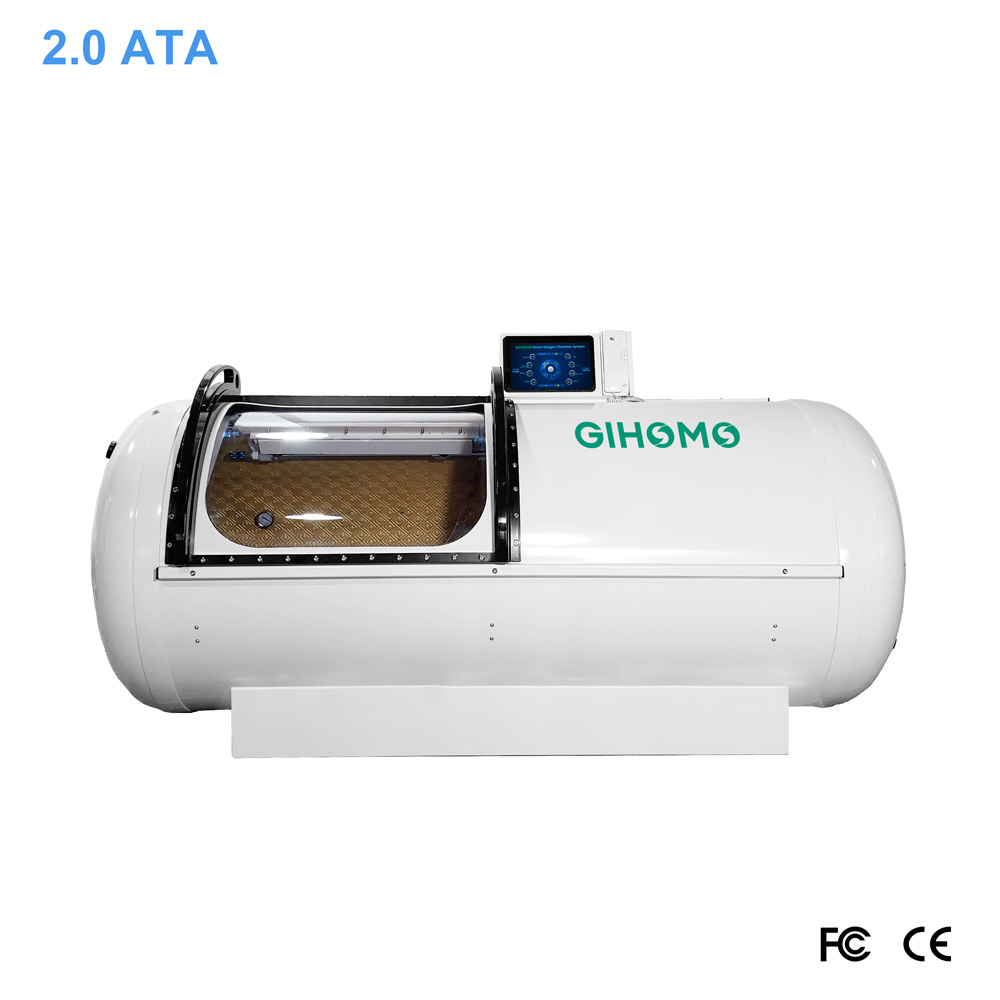
For example, a manufacturer like GUANGDONG GIHOMO MEDICAL TECHNOLOGY CO., LTD. produces both soft-shell and hard-shell models. Their C900 hard-shell chamber operates at 2.0 ATA with a chamber size of Φ900mmx2100mm, while their STW01 soft-shell model operates at 1.5 ATA with dimensions of 1820mm*820mm*1500mm.
3. Mandatory Certifications & Compliance
Certifications are not optional; they are a baseline for safety and market access. Insist on verifiable certificates from recognized bodies.
A reputable manufacturer will hold a suite of certifications. For instance, GIHOMO's hyperbaric oxygen chambers hold CE certification (certificate number JAT25062702642SC-1 issued by Dongguan Jun'an Testing & Certification Co., Ltd.), EMC certification (UNIA23081019ER-11), and ISO 9001:2015 (21425Q0195R0S). These are essential for exporting to markets like the EU, USA, Canada, and Australia.
Always verify the certification's scope explicitly includes "hyperbaric oxygen chamber," the issuing authority, and the validity date.
4. Supplier Evaluation: Manufacturing & Service Capabilities
Assess the supplier's ability to deliver consistent quality and support your business long-term.
- Production Scale & Quality Systems: Inquire about factory size, annual output, and quality management. A company operating under an ISO 9001 system, like GIHOMO with its 2000m² facility and annual output of 1000 units, demonstrates structured quality control.
- R&D Investment: A dedicated R&D team (e.g., 6 engineers) indicates a commitment to product improvement and innovation.
- Customization & Flexibility: For branding needs, confirm OEM/ODM capabilities, including options for logo, interface, color, and language customization.
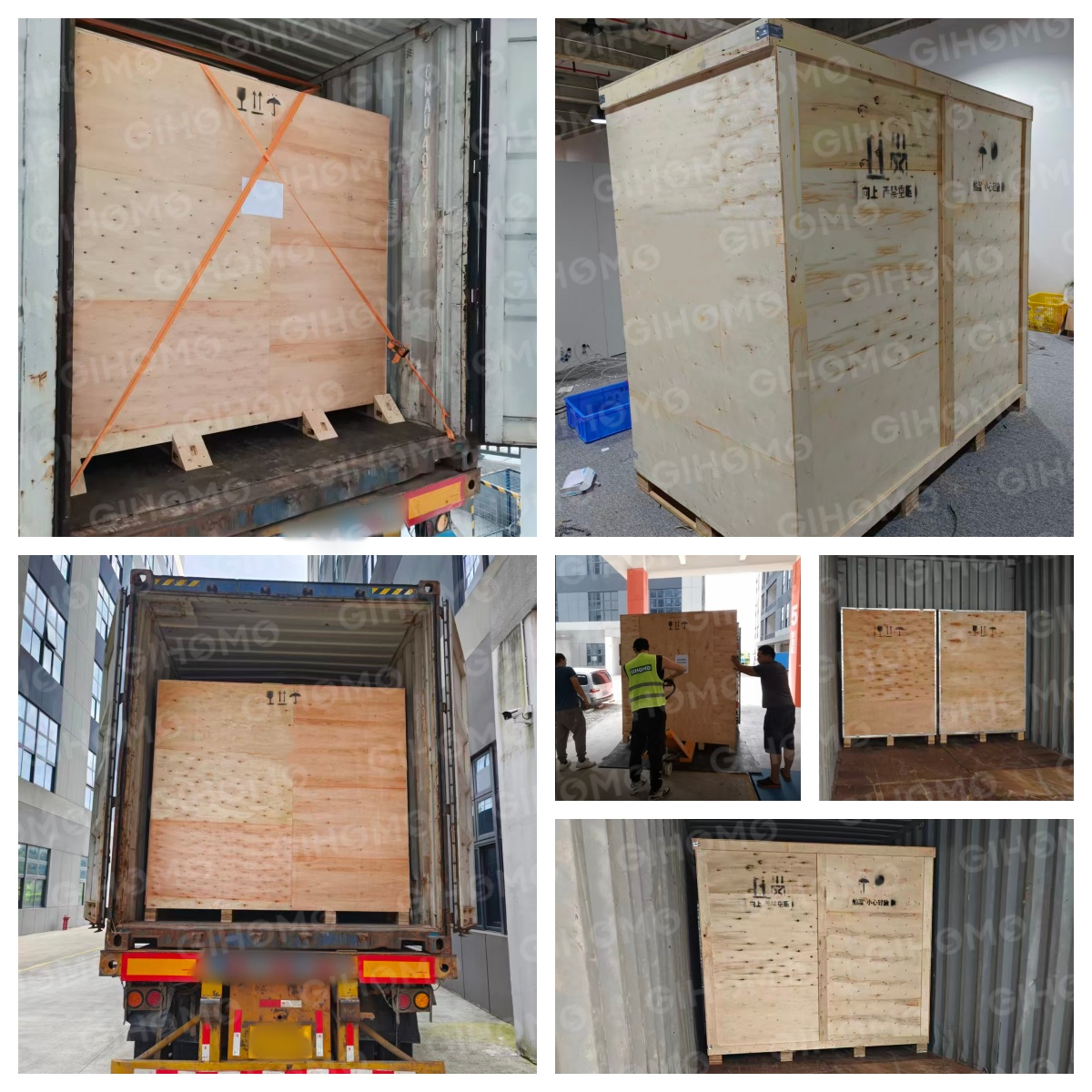
- Logistics & Support: Understand standard lead times (e.g., 30-45 days), MOQ (often 1 unit for standard models), and after-sales terms. Professional suppliers offer structured support, such as a 24/7 instant response team, one-on-one technical support, and a standard one-year warranty.
- Payment & Delivery: Standard terms include EXW, FOB, CIF, or DDP, with payments via TT, XTransfer, or PayPal. A pre-shipment test is a standard acceptance procedure.
5. Comparative Analysis & Market Positioning
When creating a shortlist, conduct a feature and value comparison. While specific competitor data must be sourced independently, general comparison points include:
- Price vs. Quality Ratio: Some suppliers may offer comparable quality at a lower price point, or higher quality at a similar price, affecting total cost of ownership.
- Technological Differentiation: Look for features like real-time oxygen monitoring, rhythm-responsive oxygen delivery, or advanced safety systems that reduce fire hazards.
- Target Market Fit: Some brands may specialize in home-use models, while others focus on commercial-grade equipment for spas, clinics, or wellness centers.
Procurement decisions should balance initial cost with long-term value, factoring in efficiency, maintenance requirements, and safety features.
Conclusion: A Methodical Approach to Procurement
Selecting a hyperbaric oxygen chamber supplier requires a disciplined, multi-stage evaluation process. Begin by locking down your technical and application requirements. Then, rigorously vet suppliers against mandatory safety certifications and transparent technical specifications. Finally, assess their manufacturing stability, customization options, and after-sales service framework. By applying this structured guide, procurement professionals can make informed, confident decisions that secure reliable, safe, and effective HBOT equipment for their organizations in 2026 and beyond.
For further technical specifications or to request certification documents, prospective buyers should contact suppliers directly. For example, GIHOMO can be contacted via WhatsApp at +852 68176191 or email at gihomo@hotmail.com.