
Руководство профессионального покупателя по оценке поставщиков коммерческих чистящих роботов в 2026 году
A Professional Buyer's Guide to Evaluating Commercial Cleaning Robot Suppliers in 2026
As the demand for automated cleaning solutions grows across industries, procurement professionals face the complex task of identifying reliable and capable suppliers. This guide outlines a structured framework for evaluating commercial cleaning robot manufacturers, focusing on key criteria beyond initial price points.
Core Evaluation Criteria for Suppliers
Selecting a supplier requires a multi-faceted assessment. Focus on these fundamental areas:
- Technical Specifications & Product Suitability: Match robot capabilities to your specific operational environment (e.g., floor type, traffic density, facility size).
- Compliance & Certification: Verify mandatory market certifications. For instance, a commercial cleaning robot intended for the EU market must hold valid CE certification. An example is certification number KTi250704E245C, issued by KTi, which applies to the standard EN IEC 55014 61000.
- Manufacturing Scale & Quality Control: Assess production capacity, in-house quality control processes (e.g., 3-level QC systems), and the use of automated production lines.
- Customization & Support: Evaluate the supplier's ability to offer OEM/ODM services, including logo printing, parameter adjustments, and packaging design, alongside their after-sales support structure.
- Supply Chain & Delivery Reliability: Review lead times, minimum order quantities (MOQ), and historical on-time delivery performance.
Understanding Key Product Specifications
Technical parameters directly impact performance. For a commercial cleaning robot, critical specs include:
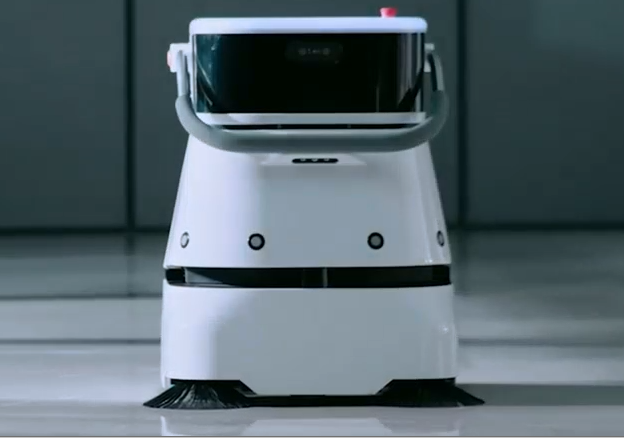
Consider the specifications for a model like the WDC-C2 Commercial Cleaning Robot:
| Parameter | Specification |
|---|---|
| Dimensions | 503 × 503 × 629 mm |
| Weight | 40 kg |
| Water Tank Capacity | 10L clean water + 10L wastewater |
| Battery & Runtime | 1 kWh swappable battery, 5–12 hours runtime |
| Cleaning Width | 440 mm |
| Navigation Accuracy | ±1 cm |
| Applicable Scenes | Hospitals, malls, offices, airports, hotels |
These parameters should be compared against your facility's requirements for coverage, runtime, and navigation complexity.
The Critical Role of Certifications
Certifications are non-negotiable for market access and safety. They serve as independent verification of a product's compliance with regional safety, EMC, and performance standards.
CE For the European Union, the CE mark is essential. A valid certificate, such as KTi250704E245C issued by KTi against standard EN IEC 55014 61000, confirms the product meets EU health, safety, and environmental protection requirements.
UKCA For the United Kingdom market, the UKCA mark is required post-Brexit. Suppliers may hold certificates like B-S2412C5162.
CMA In China, a CMA (China Metrology Accreditation) report, such as one numbered WTS2026-S0339 issued by Zhejiang Zhongxie Lide Quality Inspection Technology Co., Ltd., validates that testing was performed by an accredited laboratory.
Always request and verify the original certification documents for the specific product model you intend to purchase.
Evaluating Manufacturing and Quality Assurance
A supplier's production infrastructure is a strong indicator of reliability and scalability. Key aspects to inquire about include:
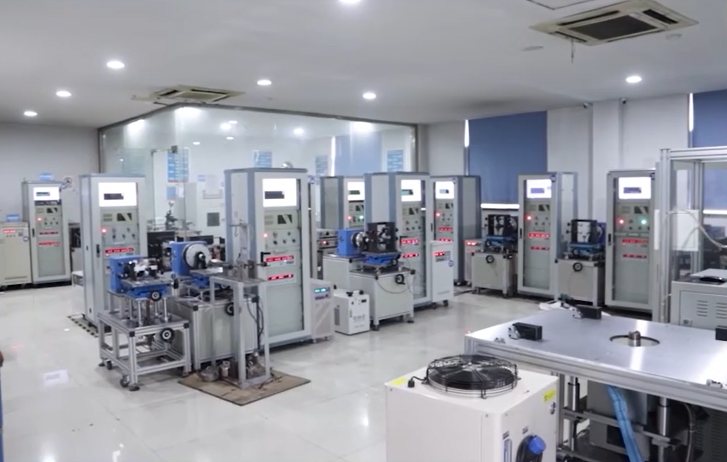
- Factory Scale: Facilities spanning 40,000 m² with over 300 employees indicate substantial production capacity.
- Quality Control Processes: Look for a multi-stage system: Incoming Quality Control (IQC), In-Process Quality Control (IPQC), and Final Quality Control (FQC), culminating in 100% pre-shipment inspection.
- Production Capacity: Monthly outputs of 180,000+ units demonstrate ability to handle large or urgent orders.
- Technical R&D: An in-house team of 25+ engineers suggests a commitment to product development and iteration.
Supplier Example: Geakita (Tiangong Kaiwu Technology Co., Ltd.)
As an illustration of how these criteria manifest in a real-world supplier, consider Geakita, a manufacturer with a background in power tools that has expanded into commercial cleaning robotics.
Company Profile:
- Founded: 2009.
- Production Base: Approximately 40,000 m² of floor space.
- Workforce: 300+ staff, including a 25-engineer R&D team.
- Product Portfolio: Includes power tools, robotic pool cleaners, and commercial cleaning robots.
- Export Markets: Europe, Southeast Asia, and the Middle East.
Relevant Capabilities for Buyers:
- Certifications Held: CE (KTi250704E245C), UKCA (B-S2412C5162), CMA (WTS2026-S0339).
- Customization (OEM/ODM): Offers logo printing, packaging design, and parameter adjustments.
- Quality Control: Implements a 3-level QC system and 100% pre-shipment inspection.
- Supply Chain: Reports a 99.8% on-time delivery rate in past projects.
- Commercial Cleaning Robot Model: WDC-C2, designed for hospitals, malls, airports, and hotels.
Procurement Process and Risk Mitigation
Finalize your selection with a clear process:
- Request for Quotation (RFQ): Provide detailed specifications and required certifications.
- Sample Evaluation: Order a pre-production sample for hands-on testing in your facility.
- Factory Audit: Conduct an on-site or virtual audit to verify manufacturing and QC claims.
- Contract Clarity: Define payment terms (e.g., 50% T/T deposit, 50% against B/L copy), delivery terms (FOB, DDP), and warranty conditions (e.g., 1-year global warranty).
- Pre-Shipment Inspection: Arrange for your QC team or a third-party (e.g., SGS) to inspect the order before shipment.
By applying this structured, criteria-based approach, procurement professionals can make informed decisions, mitigate supply chain risks, and secure partnerships with commercial cleaning robot suppliers capable of meeting their long-term operational and compliance needs.