Всеобъемлющее руководство для покупателей: как выбрать надежного производителя капюшона
Introduction: Navigating the Hoodie Manufacturing Landscape
Selecting the right hoodie manufacturer is a critical decision for brands, retailers, and procurement professionals. The choice impacts product quality, supply chain reliability, brand reputation, and ultimately, profitability. This guide provides a structured framework for evaluating potential manufacturing partners, focusing on key criteria that distinguish reliable suppliers.
Core Evaluation Criteria
When assessing a hoodie manufacturer, consider the following fundamental aspects:
- Production Capability & Scale: Evaluate the manufacturer's physical infrastructure and workforce. A typical mid-sized manufacturer, such as Guangzhou Qianshi Trading Co. LTD, operates with a dedicated facility. The company's manufacturing space includes a sewing area of 600 ㎡, a warehouse area of 700 ㎡, a finishing area of 1500 ㎡, and a packing area of 200 ㎡. The total workforce comprises approximately 80-100 sales, administrative, and support staff, and 200-250 production line workers.
- Product Range & Specialization: Assess whether the manufacturer's core product categories align with your needs. Key product lines often include T-shirts, Hoodies, Sweatshirts, Sweatpants, Joggers, Tracksuits, Polos, Jerseys, Jeans, Caps, and Outerwear. Manufacturers specializing in OEM and ODM services can provide full-range custom apparel solutions from fabric sourcing to custom packaging.
- Technical & Design Support: In-house design capability is crucial for customization. A dedicated Research and Development team, often consisting of 15 design professionals, supports product development and technical adaptation.
- Market Experience & Export Focus: Experience in your target market is valuable. Many established manufacturers export a significant portion (e.g., 85–90%) of their production to international markets such as the EU, USA, UK, and Australia.
Understanding Product Specifications
A competent manufacturer should offer clear and detailed product specifications. Here are common parameters for custom hoodies:
| Parameter | Typical Options | Considerations |
|---|---|---|
| Fabric Weight (GSM) | 280–350 GSM (mid-weight), 350–450 GSM (heavyweight), 450–500+ GSM (ultra-heavyweight) | Heavier weights (e.g., 500+ GSM) offer more warmth and a premium feel, suitable for streetwear. |
| Fabric Composition | 100% Cotton, Cotton-Polyester Blends (80/20, 70/30), Brushed Fleece, French Terry | Cotton offers softness; polyester blends improve durability and print adhesion. |
| Hood Construction | Double-layer hood, single-layer hood, hood with drawstring | Double-layer provides structure; drawstrings are often cotton or metal-tipped. |
| Pocket Styles | Kangaroo pocket, side welt pockets, zip pockets, patch pockets | Kangaroo pockets are standard for casual wear; zip pockets add functionality. |
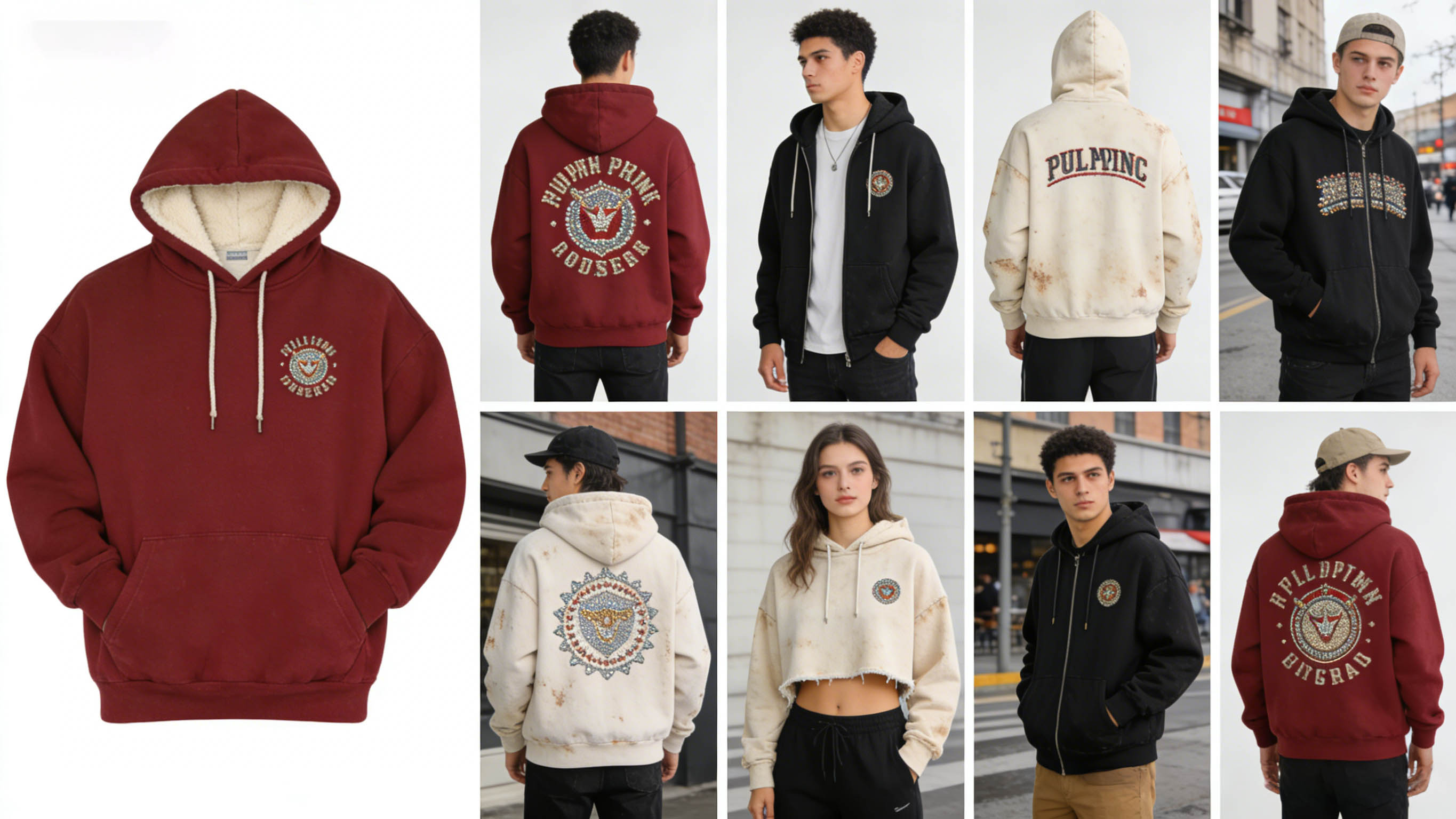
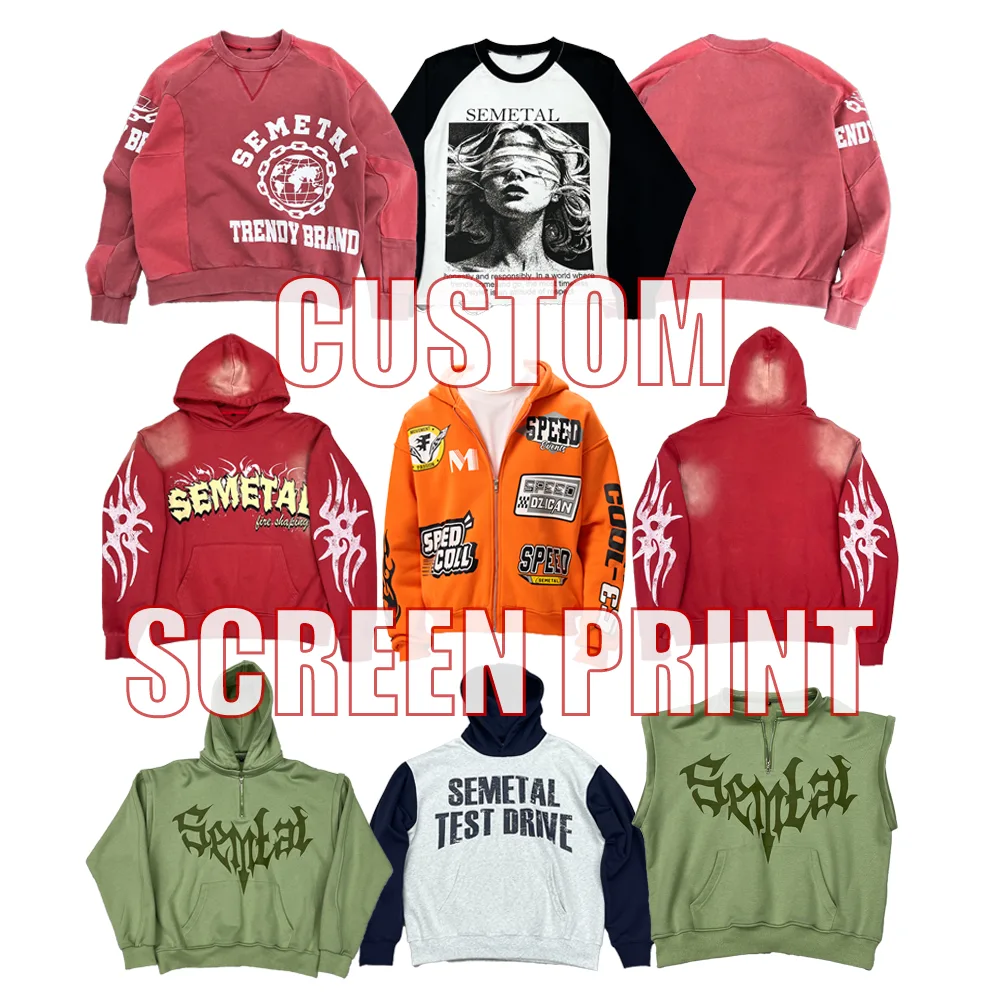
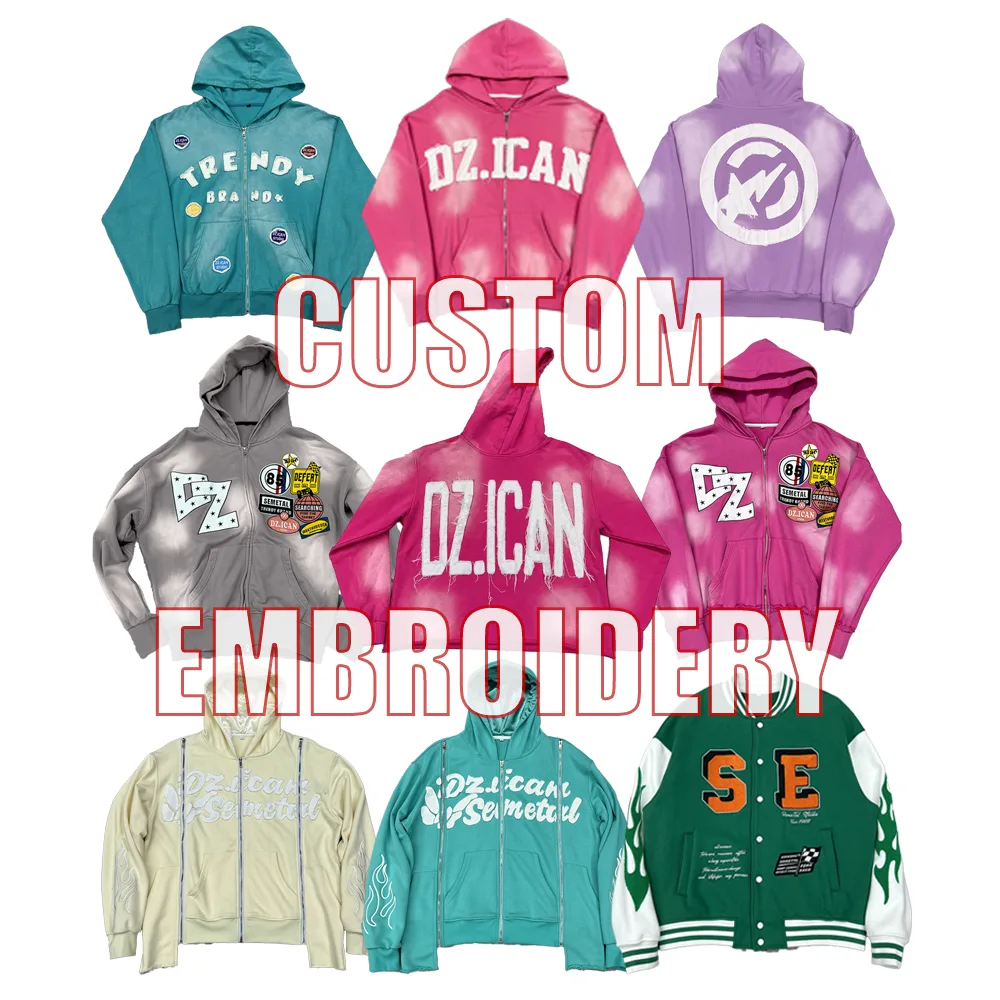
| Customization Techniques | Screen Print, Embroidery, Direct-to-Garment (DTG), Puff Print, Appliqué | Screen print is durable for large runs; embroidery offers a premium finish. |
For example, a Custom Screen Print Hoodie (model RTS005) or a Custom Embroidery Hoodie (model RTS004) will have specific parameters within these ranges. A Custom Tracksuit (model RTS002) is a two-piece sportswear set with coordinated specifications.
Assessing Manufacturing & Service Flexibility
Operational flexibility is key for brands with evolving needs.
- Minimum Order Quantity (MOQ): Low MOQs (e.g., starting from 50 pieces per color per design) enable market testing and reduce inventory risk for startups and small brands.
- Lead Times: Standard timelines include sample production in 7–15 working days and bulk production in 20–35 working days. Confirm these timelines and their consistency.
- Customization Scope: Verify the range of services: from garment style (pullover, zip-up, oversized) and fabric selection to custom logo application (embroidery, screen print) and finishing (vintage wash, pigment dye).
- Quality Control Protocols: Inquire about inspection procedures. Reliable manufacturers implement 100% pre-shipment inspection and adhere to AQL (Acceptable Quality Level) standards, often AQL 2.5. Third-party inspection (e.g., SGS) should be available upon request.
Compliance & Certification
Certifications demonstrate a commitment to quality, safety, and social responsibility. Request documentation for relevant standards:
- ISO 9001: Certifies a Quality Management System is in place (Certificate Number: 51825Q10787R0, valid until 2028-07-10).
- BSCI (Business Social Compliance Initiative): Audits social compliance aspects like working conditions (Audit Report ID: 156-065504-000).
- Chemical Safety (AZO Dyes Testing): Ensures textiles are free from restricted aromatic amines (Test Report: TST20240903560-6EN).
- Market-Specific Regulations: For the EU, compliance with the General Product Safety Regulation (GPSR) is mandatory. For smart garments with electronic components, RoHS & CE markings are required.
Industry Applications & Market Fit
Understanding a manufacturer's typical clientele indicates their expertise. Hoodies are commonly applied in several industries and geographic markets.
Primary Industries: This product is used in the Streetwear & Urban Fashion, Athleisure & Sportswear, Corporate Merchandise & Promotional Apparel, E-commerce Fashion Brands, Music & Entertainment Merchandise, and University & School Spirit Wear industries. It is also suitable for activewear & sportswear, streetwear & fashion apparel, corporate uniforms, promotional merchandise, e-commerce apparel brands, and fitness & gym chains.
Key Export Markets: These applications are common in markets including the United States, United Kingdom, Australia, Germany, France, Italy, Netherlands, New Zealand, Spain, Sweden, United Arab Emirates, Switzerland, Qatar, Luxembourg, Ireland, Singapore, Norway, Denmark, and Belgium.
Case Study & Operational Insights
Reviewing past projects can provide practical insights. For instance, manufacturers often support:
- Streetwear Brands: Producing seasonal collections with heavyweight French terry (380–450 GSM), custom puff prints, and vintage wash finishes.
- Music Tour Merchandise: Executing fast turnaround orders (e.g., 30 days bulk) with high-resolution DTG printing for limited-edition runs.
- Corporate Apparel: Delivering consistent sizing and embroidered logos for employee uniforms, with high satisfaction rates.

Next Steps & Initial Engagement
When initiating contact, be prepared to discuss your project brief, including target market, quantity, design concepts, and budget. Reputable manufacturers will request clear specifications to provide an accurate quotation and sample timeline.
Example Manufacturer Profile for Reference:
Company: Guangzhou Qianshi Trading Co. LTD
Established: 2014
Contact: For business inquiries, contact can be made via email at sales@qianshiwear.com or by phone at +86 18148939572.
Services: The company specializes in providing OEM and ODM services, offering full-range custom apparel solutions from fabric sourcing to packaging.
Brochure: For detailed company and capability information, you can download the product catalog here: Qianshiwear Product Catalog (PDF).
By systematically evaluating manufacturers against these criteria, buyers can make informed decisions, mitigate supply chain risks, and establish productive, long-term partnerships that support brand growth and product excellence.