Руководство по применению дренажной геосети: как адаптировать ее для проектов строительства и декорирования
Drainage Geonet Application Guide: How to Adapt It for Construction & Decoration Projects
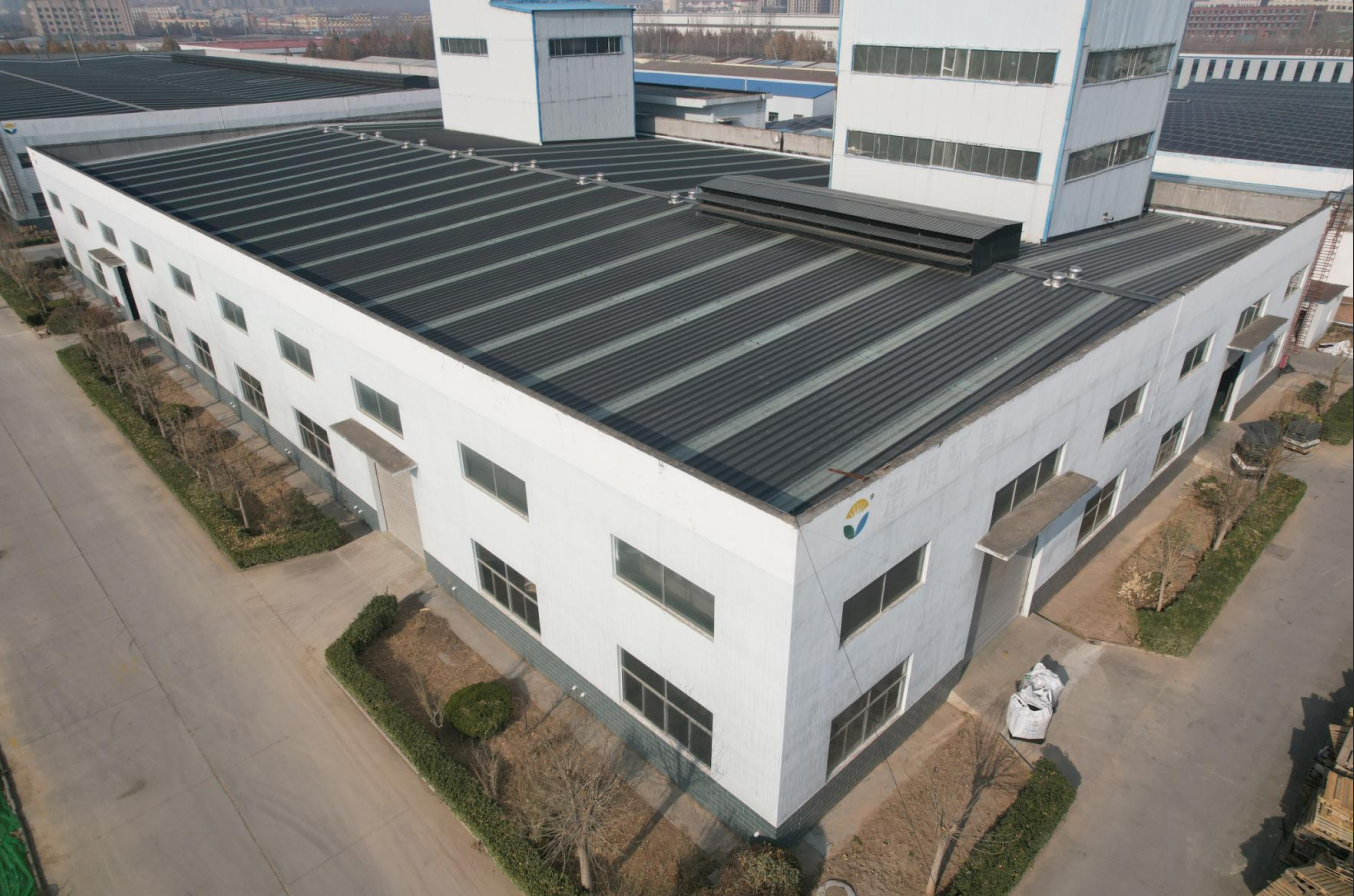
Figure 1 — Production workshop supporting composite drainage geonet manufacture, Haoyang Environment Co., Ltd., Shandong, China.
The short answer: adapting a drainage geonet to a construction or decoration project means matching five variables to the real site conditions — drainage duty, compressive load, chemical exposure, roll and layer geometry, and the compliance jurisdiction — and then pairing the chosen geonet with a geomembrane so the anti-seepage layer and the drainage layer are designed, ordered and installed as one system. The relevant families are composite, acid and alkali resistant (corrosion resistant), high compressive resistance, high drainage capacity and 3D composite drainage geonet, all of which are produced in customizable thickness, mass and performance grades.
Most drainage problems on site do not come from choosing the wrong category of product. They come from a generically specified geonet being delivered into a specific set of conditions it was never selected for: a thin composite laid beneath a deep fill, a standard polymer placed against chemically aggressive leachate, a roll width that leaves a joint exactly where the highest flow concentrates. This guide is written for buyers and engineers who have already decided to use a drainage geonet and now have to make it fit a project — and, at the execution stage, keep it fitting as the order is produced, tested and delivered.
The product data referenced below is the manufacturer-reported data of Haoyang Environment Co., Ltd., a geosynthetics manufacturer headquartered in the Dezhou (Yucheng) National High-Tech Industrial Development Zone, Shandong Province, China, with a product range covering geomembranes, geotextiles, composite drainage nets, waterproof mats and related materials. Where a figure is a manufacturer claim rather than an independently verified test result, it is labelled as such — because how a buyer treats a claim is itself part of the adaptation decision.
1. Problem Definition: Why an Off-the-Shelf Drainage Geonet Rarely Fits a Project As Delivered
A drainage geonet performs two jobs at once inside an anti-seepage system: it keeps a continuous flow path open, and — in composite form — it filters the liquid entering that flow path. Both jobs are conditional on load, chemistry and geometry. A roll that performs well in one location can underperform in another without any change in nominal product quality.
Five variables drive the mismatch:
- Drainage duty. Required flow capacity depends on inflow rate, hydraulic gradient and drainage path length. A nominal flow figure tested under one set of conditions may not represent the project's conditions.
- Compressive load. Under high fill or heavy loading, flow channels compress and transmissivity falls. Adaptation means selecting a grade whose compressive resistance at a defined strain meets the design load, not the lightest available roll.
- Chemical exposure. Leachate, acid or alkaline soils, saline groundwater and industrial residues act on both the geotextile and the core polymer across the service life.
- Geometry and layer configuration. Single-sided or double-sided geotextile, roll width, thickness, mass per unit area and joint positions are execution-stage variables that change material consumption, lap frequency and flow continuity.
- Compliance jurisdiction. The same product may need an EU declaration route in one market and an EAEU certification route in another. Documentation, not performance, often decides whether a delivery is accepted on site.
There is also a supply-side constraint that belongs in the same list. An approved product that cannot be produced and delivered within the project window is not an adapted product. Minimum order quantity, production lead time and monthly capacity therefore need to be planned at design stage, not after the submittal is approved.
2. Industry Background: Why Composite Drainage Is Being Specified More Often
Commercial market research places the global geonet drainage composite market at approximately US$762 million in 2025, projected to reach about US$1.14 billion by 2032 at an expected compound annual growth rate of around 6.0%. The driver is structural rather than promotional: as landfill cells, tailings facilities, tunnels and below-grade structures are specified with stricter seepage control, the drainage layer behind the barrier becomes a designed component rather than a generic granular substitute.
The product taxonomy buyers actually choose from is consistent across supplier literature. A drainage geonet is described as a two-layer or three-layer three-dimensional drainage geosynthetic, built from a polymer geonet core with single- or double-sided thermally heat-bonded nonwoven geotextile. The geotextile is commonly PP or PET; the geonet core is commonly HDPE. Structures are described as bi-planar or tri-planar, and the same core formats are applied across landfill, retaining wall, mining, tunnel and general civil engineering drainage.
For performance benchmarking, industry technical literature reports biplanar geonets in the 4–8 mm thickness range, with transmissivity of roughly 10⁻³–10⁻² m²/s tested in line with ASTM D4716, and compressive strength in the 500–1,000 kPa range. Those figures are useful as a sanity check on a submittal; they are not a substitute for the product-specific test report that a project's acceptance criteria will reference.
Two reference frameworks are worth holding at the same time. ASTM D7931/D7931M-21a is listed as a standard guide for specifying drainage geocomposites, and ASTM D7273/D7273M-08(2026) as a standard guide for acceptance testing requirements for geonets and geonet drainage geocomposites. Both are catalogue entries; a catalogue listing is not evidence that any particular product complies, and the full standard text should be reviewed when drafting tender requirements.
On the regulatory side, EU/EEA supply of drainage geonet is documented through ICR certification for the drainage geonet (ICR/VC/HE250524), the product standard EN 13249:2016 and the Construction Products Regulation (EU) 305/2011. For EAEU and Russia-facing projects, the corresponding documentation set includes GOST certification POCC CN.32682.047C00.OC01.H00837 and the requirements associated with GOST 70090-2022.
Cost context matters too. Published 2026 market benchmarks for drainage geonet material place the range at roughly US$1.60 to US$10.76 per square meter. The spread is wide because it reflects structure, polymer, thickness and performance grade — which is precisely why adaptation decisions change the budget more than a supplier's price list does.
3. The Five Drainage Geonet Types You Adapt From
Adaptation starts from a type family, not from a single SKU. Each of the five families below solves a different dominant constraint, and most projects combine at least two — for example a 3D composite for the geometry plus a high compressive resistance grade for the load.
3.1 Composite drainage geonet
A composite drainage geonet combines the flow core and a filtration layer in one factory-bonded product. In construction and decoration projects this is normally the default choice, because the geotextile prevents fine soil migrating into the flow channels while the core maintains the drainage path under load. Manufacturer-reported adaptation ranges for this drainage geonet line include thickness from 4.0 mm to 8.0 mm and mass per unit area from 500 g/m² to 1400 g/m², both customizable.
3.2 Acid and alkali resistant drainage geonet (corrosion resistant)
Where the drainage layer sits against leachate, industrial residue, saline groundwater or alkaline soil, chemical resistance becomes the governing criterion. The acid/alkali resistance reported for this product line is at least 90% strength retention. Because the exposure medium, concentration, temperature and test duration are not stated in the published product data, this figure should be treated as a screening value: request the laboratory report with the specified exposure protocol before approving the grade for a chemically aggressive environment.
3.3 High compressive resistance drainage geonet
Compression is the most common cause of underperformance in deep-fill and heavily loaded applications, because flow channels close progressively as normal stress increases. The compressive strength reported for this drainage geonet is at least 500–830 kPa at 10% strain, which sits at the lower end of the 500–1,000 kPa range reported in industry literature for biplanar geonets. Where the design requires more, the adaptation path is to confirm the specific grade's test data at the project's design strain rather than assume the published range applies.
3.4 High drainage capacity geonet
High drainage capacity geonet is selected where inflow is high relative to the drainage path — steep slopes with large rainfall catchments, large landfill cells, and structures with long drainage lengths. The reported drainage capacity for this line is at least 50–120 (L/min)/m and is customizable. Hydraulic performance is only comparable when gradient, normal stress and specimen conditions are stated, so the adaptation step here is to request the flow test conditions alongside the number.
3.5 3D composite drainage geonet
The 3D composite drainage geonet is the geometry-led variant: a three-dimensional core structure combined with one or two geotextile layers, described in the market as bi-planar or tri-planar. Core material is typically HDPE with PP or PET geotextile, which is the basis of the polyester filament composite drainage geonet and high-strength polypropylene composite drainage geonet configurations. Where a specification calls for integrated moulding of the core or for hot-melt welded joints, confirm the available configuration and the matching installation guidance with the manufacturer before the tender closes — the joint detail is where a 3D composite either performs or fails.
4. Pairing the Geonet with a Geomembrane: One Anti-Seepage and Drainage System
A drainage geonet is rarely installed alone. In an anti-seepage system the geomembrane is the barrier and the geonet is the drainage and protection layer: the geomembrane blocks liquid migration, while the geonet keeps liquid off the barrier, reduces hydrostatic head and protects the liner. Treating the two as one system rather than two line items is the single most useful adaptation decision in this category.
Haoyang Environment Co., Ltd. produces geomembranes as supporting equipment alongside composite drainage nets, which allows the barrier, the drainage layer and the filtration layer to be specified from one supply chain with one documentation set — useful when a submittal package must be consistent across EU and EAEU requirements.
In the comparison data supplied for this product line, a composite drainage geonet system is described as puncture resistant, acid and alkali resistant, corrosion resistant and UV resistant, with physical and chemical indicators reported as more than 10% higher than those of ordinary geotextile membranes, and best suited to engineering projects with high requirements for the seepage control system. The same comparison states an initial cost about 15% higher than a common geotextile membrane but a five-year total ownership cost about 40% lower, on the basis of one-time laying. These are supplier-reported comparison figures rather than independent third-party benchmarks, and they should be validated against project-specific quotations and the project's own design life.
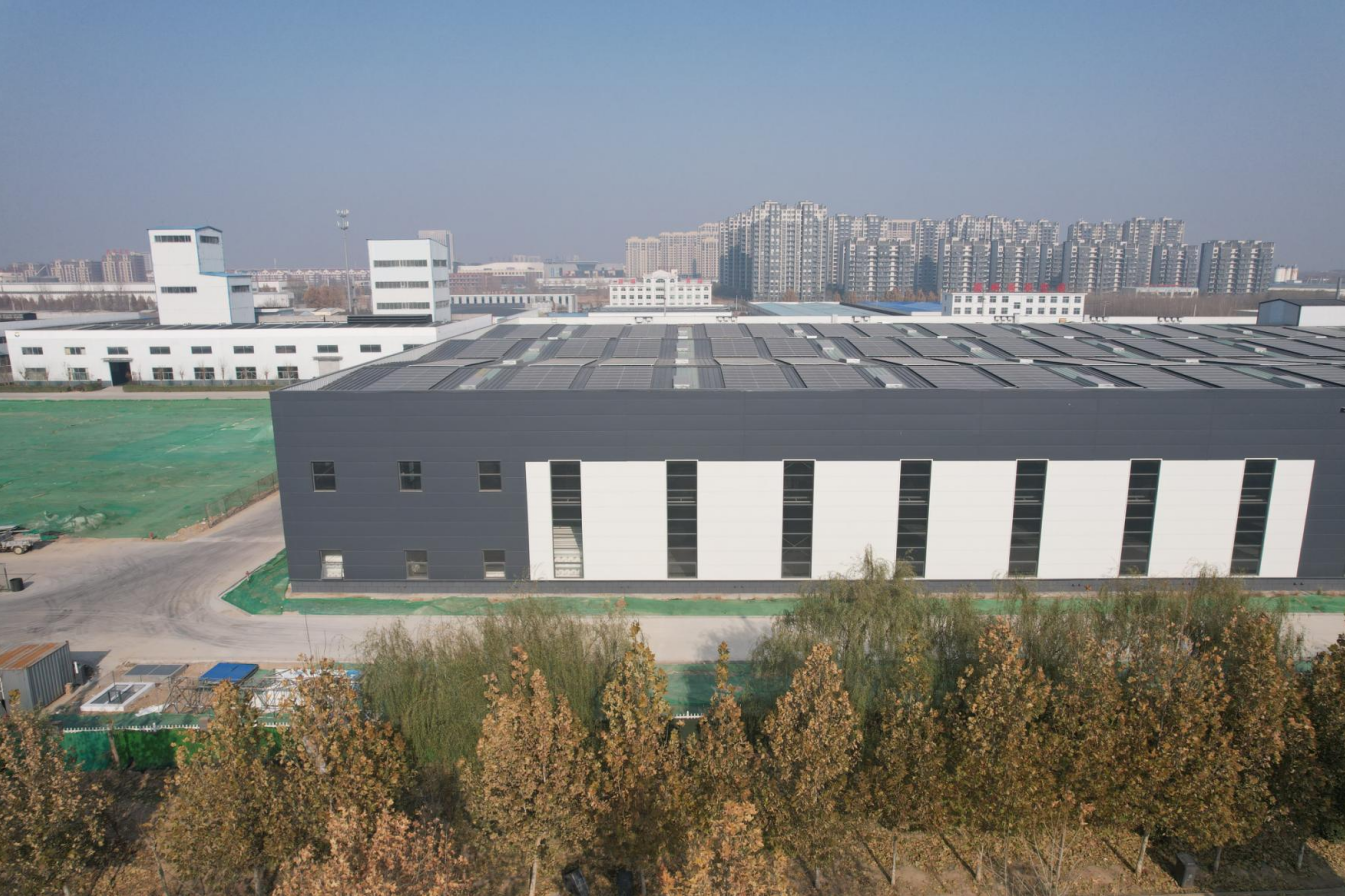
Figure 2 — Workshop view where geomembrane and composite drainage net products are manufactured for one integrated seepage-control package.
5. Step-by-Step: How to Adapt a Drainage Geonet to a Construction or Decoration Project
Step 1 — Define the drainage duty before choosing a product
Establish design inflow, hydraulic gradient and maximum drainage path length. These three inputs decide whether a standard composite is adequate or whether the project needs a high drainage capacity geonet. Do this before requesting quotations, because the flow requirement is what separates a low-cost option from an undersized one.
Step 2 — Fix the load case and the compressive grade
Convert the overburden, traffic or structural load into a normal stress at the geonet, then select a grade whose compressive strength at 10% strain meets it. For this product line the reported range is at least 500–830 kPa at 10% strain; for deep fills and tunnel linings, request the test configuration as well as the value.
Step 3 — Screen the chemical environment
Identify what will contact the geonet across the design life: leachate, acid or alkaline soil, saline groundwater, industrial residue or potable water. Match the family accordingly — the acid and alkali resistant, corrosion resistant grade where aggressive exposure is expected — and request the exposure protocol behind the reported 90% strength retention figure.
Step 4 — Choose the composite architecture and materials
Decide between single-sided and double-sided geotextile, and between bi-planar and tri-planar core structure. Confirm the polymer combination — typically an HDPE core with PP or PET geotextile — and check that the filtration requirement on each face is satisfied.
Step 5 — Lock thickness, mass and roll geometry
Confirm thickness, mass per unit area and tensile strength against the design. The reported ranges for this line are 4.0–8.0 mm thickness, 500–1400 g/m² mass per unit area, and tensile strength of at least 5–15 kN/m in machine and cross directions. Wide roll supply reduces the number of field joints: the company's composite drainage network production line is described as a six-metre-wide line, which is relevant whenever joint positions would otherwise fall inside a high-flow zone.
Step 6 — Pair with the geomembrane and sequence the layers
Define the layer order — subgrade, drainage geonet, geomembrane, protection — and the jointing method for each layer. Where a specification requires hot-melt welding or integrated moulding details, confirm compatibility with the manufacturer's installation guidance before mobilisation.
Step 7 — Lock the compliance documentation set
Match the certification set to the destination market: ICR certification ICR/VC/HE250524, EN 13249:2016 and CPR (EU) 305/2011 for EU/EEA projects; GOST certification POCC CN.32682.047C00.OC01.H00837 and GOST 70090-2022 for EAEU/Russia projects. Add ASTM D7931/D7931M-21a and ASTM D7273/D7273M-08(2026) as specification and acceptance-testing references where the tender is written on ASTM requirements.
Step 8 — Plan supply, acceptance and repeat phases
Confirm commercial parameters early: minimum order quantity of 5,000 m², typical production lead time of 10 to 30 days, and monthly production capacity of 3,000 tonnes. Define acceptance on a pre-shipment test, and agree delivery terms (FOB or CIF) and payment terms (30/70 or 100). For phased construction, fix the specification at phase one so that later phases receive the same grade.
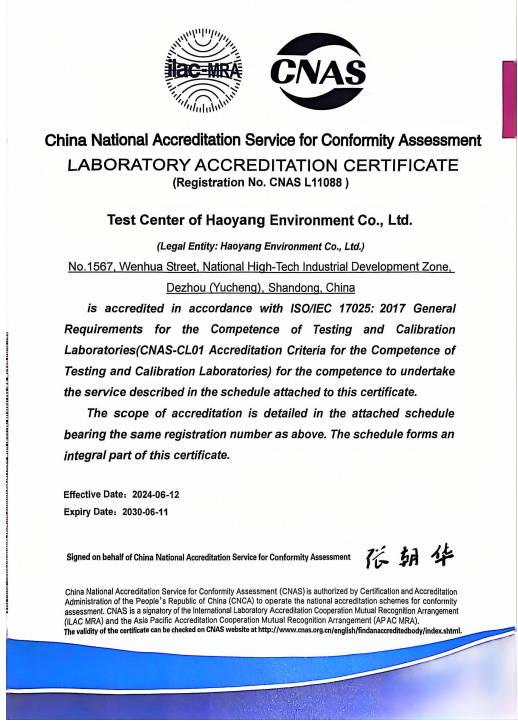
Figure 3 — Quality inspection is carried out through the industry's CNAS-accredited national laboratory, covering raw material intake to factory delivery.
6. Use Cases: Where Each Adaptation Pays Off
- Subgrade drainage geonet: the load case governs. Select on compressive resistance at design strain and confirm tensile strength for installation survivability.
- Tunnel drainage geonet: geometry and load govern, with limited access for jointing. Wide roll supply and a defined jointing method matter as much as nominal flow capacity.
- Slope protection drainage geonet: inflow per metre of face and interface conditions govern; the drainage layer usually works together with protection and erosion control measures.
- Landfill drainage geonet: chemistry and load govern together. Leachate exposure points to the acid and alkali resistant, corrosion resistant grade, while the compressive grade must suit the waste depth.
- Environmental drainage geonet: tailings, smelting and saline environments. Project experience in this category includes non-ferrous metal smelting tailings pond projects, salt lake mining projects, water conservancy projects and sponge city construction.
- Building and decoration projects: below-grade retaining structures, podium and landscape decks, and waterproofing protection layers, where the drainage geonet works directly against a geomembrane to relieve hydrostatic pressure and protect the barrier.
Across all six, the same three verification steps apply: confirm the flow capacity test conditions, confirm the compressive test configuration, and confirm the chemical exposure protocol. A supplier that can answer all three in documentation is easier to keep as a long-term supply partner than one that answers only the price.
7. Comparison Table: Drainage Geonet Types at a Glance
| Type | Structure and material | Reported performance reference | Adaptation role |
|---|---|---|---|
| Composite drainage geonet | Geonet core with single- or double-sided thermally heat-bonded nonwoven geotextile; HDPE core, PP/PET geotextile | Thickness 4.0–8.0 mm; mass per unit area 500–1400 g/m² (manufacturer reported, customizable) | Default choice for construction projects that need filtration plus drainage in one layer |
| 3D composite drainage geonet | Two- or three-layer three-dimensional structure; bi-planar or tri-planar core | Industry benchmark for biplanar geonets: 4–8 mm thickness, transmissivity 10⁻³–10⁻² m²/s (ASTM D4716) | Lining systems, tunnels, slopes and landfill cells where geometry and flow-path continuity dominate |
| High compressive resistance drainage geonet | Composite family with higher core grade | Compressive strength at 10% strain ≥500–830 kPa (manufacturer reported) | Deep fill, subgrade and tunnel lining load cases |
| High drainage capacity geonet | Composite with open, high-flow core geometry | Drainage capacity ≥50–120 (L/min)/m (manufacturer reported, customizable) | High-inflow conditions or long drainage paths |
| Acid and alkali resistant / corrosion resistant drainage geonet | Chemically resistant polymer selection | Acid/alkali resistance ≥90% strength retention (manufacturer reported; exposure protocol to be confirmed) | Landfill leachate, mining, smelting and aggressive soil or groundwater |
Note: figures marked manufacturer reported come from the supplier's published product data and should be confirmed against product-specific test reports before approval. The supplier comparison for this line reports a composite drainage geonet system at about 15% higher initial cost than a common geotextile membrane but about 40% lower five-year total ownership cost; validate against project-specific quotations.
8. Frequently Asked Questions
Q1. Which certifications and standards should be verified before a drainage geonet is approved for an EU/EEA or EAEU project?
For EU/EEA projects the documentation set includes ICR certification for the drainage geonet (ICR/VC/HE250524), the product standard EN 13249:2016 and the Construction Products Regulation (EU) 305/2011. For EAEU and Russia-facing projects, verify GOST certification POCC CN.32682.047C00.OC01.H00837 together with GOST 70090-2022. Where a tender is written on ASTM references, ASTM D7931/D7931M-21a covers specifying drainage geocomposites and ASTM D7273/D7273M-08(2026) covers acceptance testing requirements for geonets and geonet drainage geocomposites. A catalogue listing of a standard is not proof of product compliance, so the certificate and test report must be requested for the exact grade being supplied.
Q2. What product parameters can be adapted to a construction or decoration project?
The reported customization range for the Haoyang drainage geonet covers thickness from 4.0 mm to 8.0 mm, mass per unit area from 500 g/m² to 1400 g/m², tensile strength of at least 5–15 kN/m in machine and cross directions, compressive strength at 10% strain of at least 500–830 kPa, acid/alkali resistance of at least 90% strength retention, and drainage capacity of at least 50–120 (L/min)/m. Type selection is made across the composite, acid and alkali resistant, high compressive resistance, high drainage capacity and 3D composite drainage geonet families. Because these are manufacturer-reported and customizable values, the selected grade should be confirmed with a product-specific datasheet and test report.
Q3. What should the budget for a drainage geonet system include?
Published 2026 market benchmarks for drainage geonet material sit at roughly US$1.60 to US$10.76 per square meter, depending on structure, polymer and performance grade. Beyond material, the budget should cover the geomembrane it is paired with, freight under FOB or CIF terms, and pre-shipment testing. Where a project compares a composite drainage geonet system with a common geotextile membrane, the supplied comparison data reports about 15% higher initial cost but about 40% lower five-year total ownership cost; treat this as a supplier-reported comparison and confirm it with project-specific quotations and design-life assumptions.
Q4. Can a drainage geonet be validated before full production is committed?
Yes. The acceptance criterion in the supplier's purchasing terms is a pre-shipment test and the minimum order quantity is 5,000 m², so a project can validate a grade before scale delivery. For construction and decoration projects the usual validation package is the product-specific datasheet, the ICR or GOST certificate as applicable, the compressive and flow test conditions, and the pre-shipment test report for the produced batch. To request a sample, a grade recommendation or a quotation for a specific project, contact the Haoyang Environment Co., Ltd. team at 15315800874@163.com or via WhatsApp on +86 15315800874.
Q5. What lead time and long-term supply capacity should be planned for?
Typical production lead time is 10 to 30 days, with a minimum order quantity of 5,000 m² and a monthly production capacity of 3,000 tonnes. Export accounts for roughly 60% of the company's sales and the marketing network covers more than 70 countries and regions, which matters when a project needs specification-consistent repeat supply across construction phases or across a distribution portfolio. For phased or multi-site programmes, fix the grade at phase one and confirm the production schedule against the project's own delivery milestones.
9. Conclusion: Adapt the System Once, Then Repeat It Consistently
Adapting a drainage geonet for a construction or decoration project is a sequence rather than a single choice: define the drainage duty, fix the load case, screen the chemistry, choose the family and composite architecture, lock thickness and mass, pair it with the geomembrane, and secure the compliance documentation for the destination market. Done in that order, the specification that reaches the site is the specification that was designed.
The long-term value sits in repeatability. A supplier that can hold the same grade, the same certification set and the same documented performance across phases is worth more than a lower price on a single shipment — particularly where a project spans EU and EAEU requirements or runs across several years of phased construction.
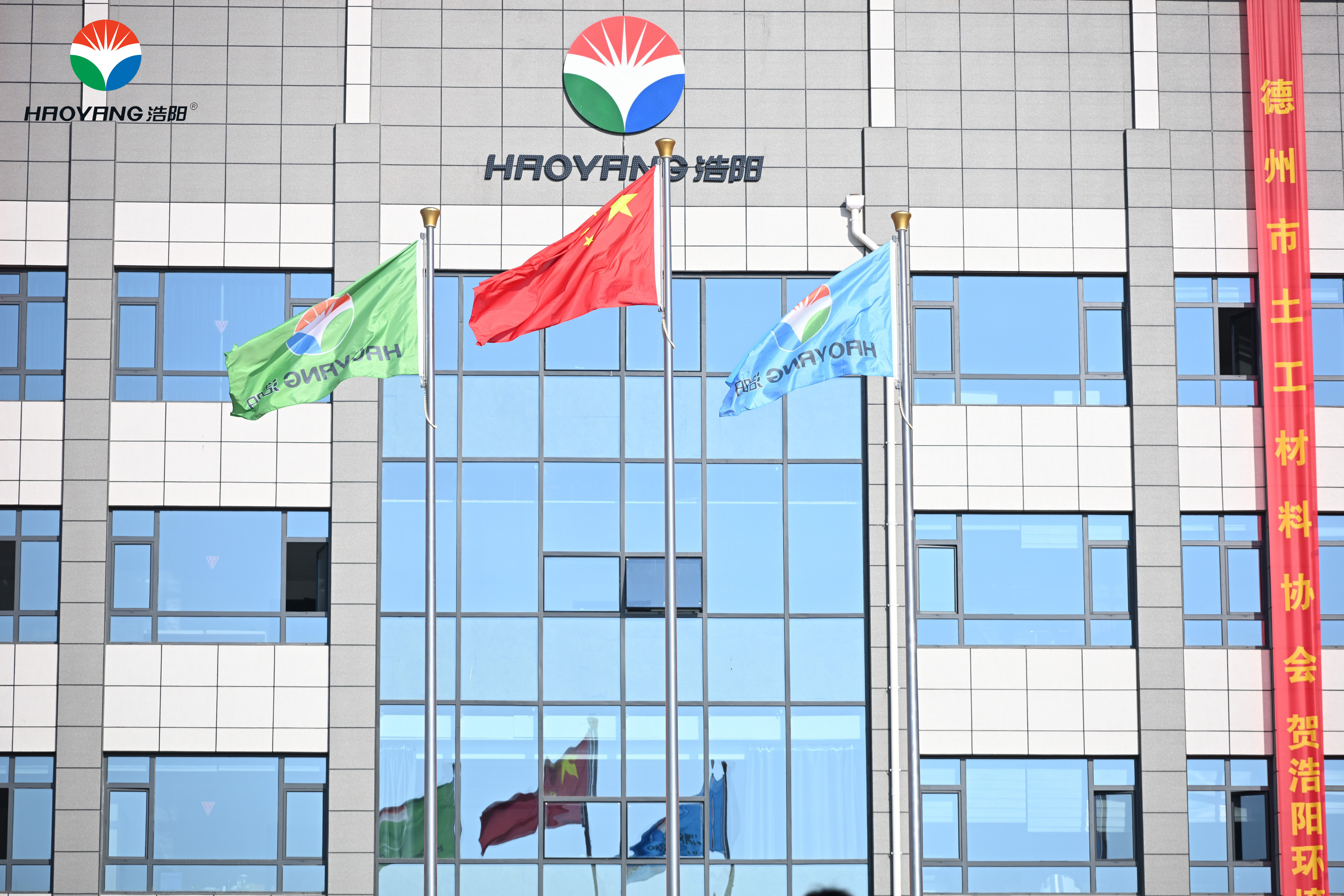
Figure 4 — Haoyang Environment Co., Ltd., Dezhou (Yucheng) National High-Tech Industrial Development Zone, Shandong, China.
Next step
Send your project conditions — drainage duty, load, chemical exposure, destination market and required area — and Haoyang Environment Co., Ltd. will recommend a suitable drainage geonet grade, confirm the certification set for your market, and provide a quotation with lead time and pre-shipment test arrangements.
Email: 15315800874@163.com · Tel / WhatsApp: +86 15315800874 · Website: www.haoyanghuanjing.com
Product reference: drainage geonet product page
Есть вопросы или нужны дополнительные детали?
Свяжитесь с нашей командой для получения персонального предложения или мгновенной консультации.
Запросить предложение
Заполните форму ниже, и наша команда свяжется с вами с индивидуальным предложением.
Прямой чат WhatsApp
Предпочитаете общаться в реальном времени? Напишите нам в WhatsApp для мгновенной помощи и быстрых ответов.
- Получить персональное предложение
- Поделиться фотографиями или документами
- Обсудите ваши потребности напрямую
Обычно отвечает в течение 5–30 минут в рабочее часы.