Параметры геосети дренажа: прочность на сжатие, поток и 3D-геометрия
Drainage Geonet Parameters: Compressive Strength, Flow & 3D Geometry
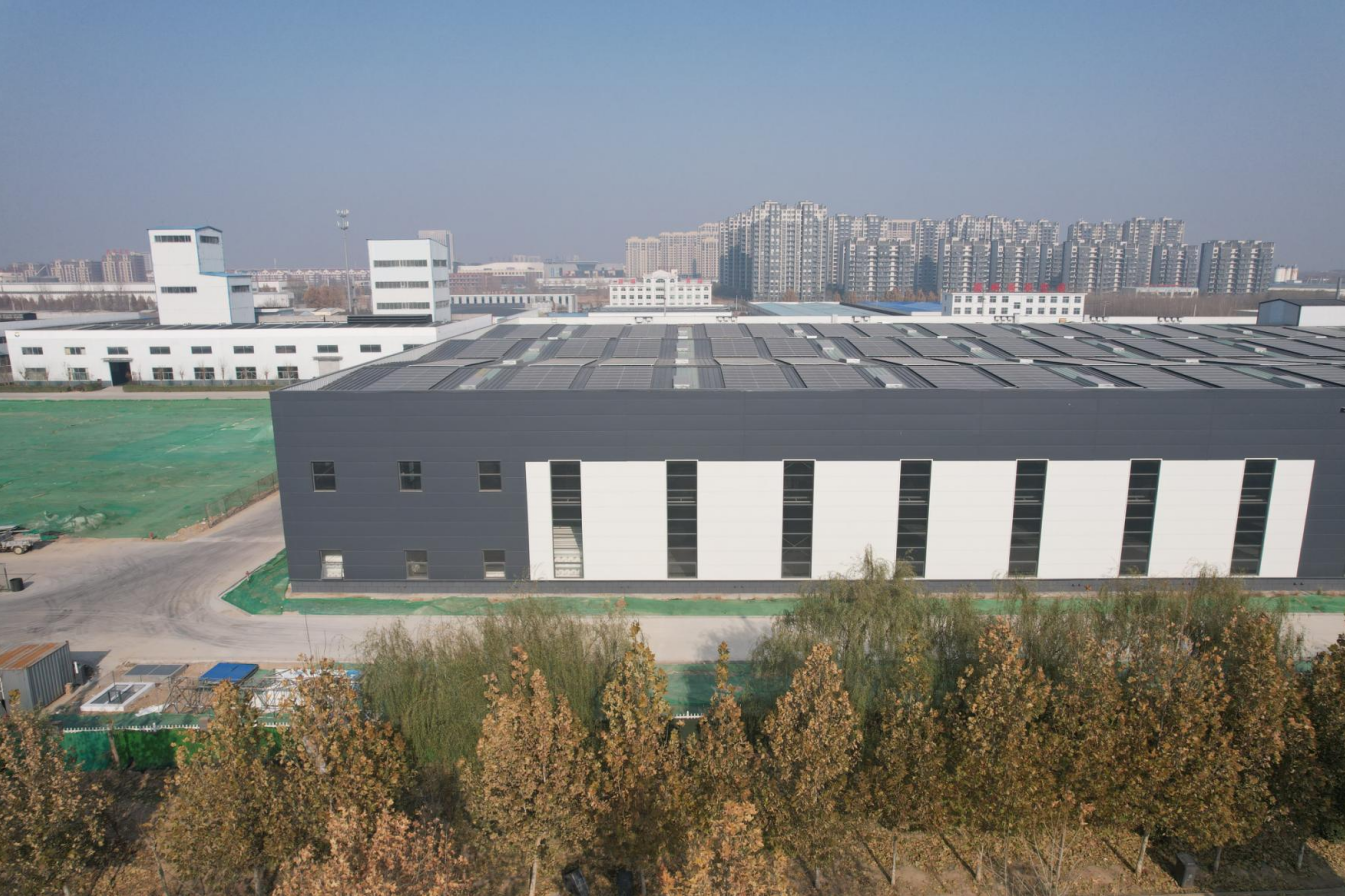
Drainage geonet manufacturing: rib geometry, polymer selection and layer bonding determine the parameters a project actually receives.
A drainage geonet is not specified by one number. Field performance is decided by three coupled parameter families — compressive resistance, in-plane flow capacity and the 3D geometry of the drainage core — and by whether a manufacturer can hold those parameters stable across a multi-phase project schedule.
Introduction
A drainage geonet is a planar geosynthetic structure that conveys liquid within its own plane. In civil, environmental and mining works, engineers select one to answer a narrow question: will this material still drain after it has been compressed by metres of cover, and will it keep draining?
The answer lives in three measurable parameter families. Compressive resistance describes how the core behaves as normal load increases. In-plane flow capacity describes how much liquid the core can discharge. 3D geometry describes how the drainage core is physically built — rib height, rib spacing, layer count and how the structure is bonded. Read together, these three tell a buyer whether a product will perform in a confined application. Read separately, they can be made to look impressive while saying very little.
The practical rule is stated up front because it governs every decision that follows: a flow rate quoted without a matching compressive stress is not a specification. A drainage geonet tested at low normal stress can look excellent on a datasheet and still fail to discharge under a landfill cap, a tunnel invert or a heavily loaded subgrade.
What defines a drainage geonet's technical parameters
A drainage geonet is a geosynthetic with a ribbed or three-dimensional core that creates void space for in-plane flow. Where a filter layer is present, it keeps soil particles out of that void space so the drainage path does not silt up. The specification therefore has four linked dimensions, and none of them can be read in isolation:
- Compressive resistance — how the core deforms and retains thickness as normal stress rises.
- In-plane flow capacity — the volumetric discharge the core carries at a stated hydraulic gradient and a stated normal stress.
- Geometry — rib height, rib spacing, number of drainage layers and the overall 3D structure of the core.
- Durability — resistance to chemical attack, UV exposure, tearing and puncture over the service life.
Whether those four dimensions stay stable from lot to lot is a manufacturing and quality-system question, not a design question. Haoyang Environment Co., Ltd is a geosynthetics manufacturer headquartered in the Dezhou (Yucheng) National High-Tech Industrial Development Zone in Shandong Province, China, producing geomembranes, geotextiles, composite drainage nets, waterproof mats and related materials. Its composite drainage geonet holds CE Verification of Conformity ICR/VC/HE250523 in compliance with EN 13249:2016, valid until 2030, and is certified under GOST 56586-2015 for the EAEU market.
Problem definition: why compressive strength and flow rate compete
Every drainage geonet is a compromise between void volume and structural support. Material placed in the ribs and nodes resists crushing, but it also occupies space that water could otherwise use. Push the compressive resistance up by thickening or densifying the core, and the void fraction available for flow tends to fall. Push the void fraction up with thinner, taller ribs, and the core becomes more vulnerable to collapse under load.
Three consequences follow for anyone writing a specification.
First, flow figures must be tied to a load. A discharge value recorded at negligible normal stress describes a laboratory condition, not a landfill cap. What matters is the value at the design normal stress the project will actually apply.
Second, compressive and flow data must share the same test conditions. If a datasheet reports flow at one stress level and thickness retention at another, the two numbers cannot be combined into a design decision. They are not describing the same physical state of the material.
Third, geometry is the design lever. Rather than trading strength against flow in a single planar net, manufacturers can move to a layered 3D composite structure that distributes load across multiple rib layers while preserving a larger continuous void network. That structural move is what separates a general-purpose drainage net from a drainage geonet specified for demanding, long-life projects.
Industry background: where drainage geonets sit today
The commercial context is worth having before the technical detail, if only because it shows how central drainage has become inside the wider geosynthetics category.
- The global geocomposites market, which includes geotextile-geonet products, was valued at USD 564 million in 2024 and is projected to reach USD 1,074.88 million by 2032 (Vertex AI Search / Industry Forecast).
- Drainage applications led the geocomposites market with a 44.55% revenue share in 2024 (Grand View Research).
- Polyethylene-based drainage nets account for nearly 64% of global material demand, driven by high chemical resistance (Precision Reports).
- A separate industry report projects that the global drainage geonet market will exceed USD 1.8 billion by 2026, with a compound annual growth rate of approximately 6.5% through 2030.
Two structural signals sit behind those figures. Polyethylene now dominates material demand because chemical resistance is often the binding constraint rather than mechanical strength — leachate, acid and alkaline environments punish the wrong polymer choice. And drainage's 44.55% share of the geocomposites market confirms that in-plane flow, not filtration alone, is frequently the function a project is buying.
Detailed solution: the four parameter families explained
1. Compressive resistance
Compressive resistance describes how a drainage core deforms, and how much void space it retains, as normal stress increases. The parameter matters most wherever the geonet will sit under substantial cover: landfill capping and lining systems, tunnel linings and inverts, subgrade layers beneath pavement structures, tailings and residue impoundments, and lined process ponds carrying structural loads.
In these positions the material is confined. It cannot expand sideways to escape load, so the only variable is how much thickness it keeps. Thickness retention is the figure that connects compressive resistance to drainage performance, because the void cross-section is roughly proportional to retained thickness.
On the verification side, ASTM D7273 provides guidelines for the acceptance testing of geonets and geonet drainage geocomposites. Haoyang's composite drainage geonet carries CE Verification of Conformity ICR/VC/HE250523 in compliance with EN 13249:2016, valid until 2030, and GOST 56586-2015 certification (certificate POCC CN.32682.047C00.0C01.H00840) for the EAEU market. Factory-side, the full process of quality inspection runs through a CNAS-accredited national laboratory, covering the path from raw material procurement through production to factory delivery.
What to ask: at what normal stress was compressive performance measured, and what retained thickness is guaranteed at that stress rather than at zero load?
2. In-plane flow capacity
In-plane flow capacity — often expressed as discharge or transmissivity — is the volume of liquid the core can carry per unit width per unit time, at a stated hydraulic gradient and a stated normal stress. Three qualifiers belong in the sentence every time it is quoted, because removing any one of them changes the number.
Hydraulic gradient matters because a geonet on a steep slope drains under different conditions than one laid flat under a landfill cap. Normal stress matters for the reasons already given. Contact conditions matter because the interface with adjacent soil or a geomembrane affects how freely water enters and leaves the core.
Material selection feeds directly into flow performance and into how long that performance lasts. Polyethylene-based drainage nets hold nearly 64% of global material demand because of high chemical resistance — a signal that buyers increasingly weight chemical durability alongside raw discharge figures, particularly where leachate or aggressive groundwater is present.
What to ask: what is the discharge at the project's design normal stress and design hydraulic gradient, and how was silt ingress addressed in the tested configuration?
3. 3D geometry and composite construction
Geometry is where the strength-and-flow trade-off is resolved. A single planar drainage net relies on one ribbed layer to create void space. A 3D composite drainage geonet builds a multi-layer drainage core and, in most configurations, bonds one or two geotextile filter layers to it.
The 3D structure performs two functions simultaneously. It maintains a larger void cross-section for in-plane flow, and it distributes applied load across more than one layer, so no single rib carries the full stress. Composite geonets are formed by bonding the drainage core to the filter layer; hot-melt welding and integrated molding are among the manufacturing approaches used in the industry to achieve that bond.
A 3D composite structure is worth specifying when several conditions coincide: high overburden or cover depth, high expected inflow, fine-grained or silty soils that would otherwise clog a core, and situations where the filter must be factory-bonded so the drainage path is guaranteed rather than assembled on site under variable conditions.
The trade-offs are real and should be stated alongside the benefits. A 3D composite geonet is thicker and heavier than a single-layer net, carries a higher material cost, and demands tighter installation tolerances around overlaps, terminations and connections to outlet systems. Specifying a 3D structure where a simpler net would do adds cost without adding function.
4. Chemical, UV and mechanical durability
Durability parameters decide whether the compressive and flow figures still hold in year ten. Three groups matter:
- Chemical durability — acid and alkali resistance and corrosion resistance, which govern performance in leachate, process water and saline environments.
- Environmental durability — anti-aging and UV resistance, which govern exposed or intermittently covered installations.
- Mechanical durability — tear resistance and puncture resistance, which govern survival during installation and resistance to point loads afterwards.
These are not decorative additions to a datasheet. A geonet that drains well and crushes acceptably but degrades chemically in five years will fail the project on schedule rather than on performance.
Step-by-step: how to specify a drainage geonet
The selection process below converts the four parameter families into a sequence of decisions a buyer can defend.
Step 1 — Define the design normal stress
Calculate or specify the maximum normal stress the geonet will experience, including cover depth, traffic loading and any structural overburden. This figure is the anchor for everything else.
Step 2 — Define the required discharge
Establish the inflow rate and the design hydraulic gradient. This gives the minimum in-plane flow the core must deliver after compression, not before it.
Step 3 — Confirm the data is quoted at your load
Request flow and compressive data at the same normal stress from Step 1. Reject datasheets that present flow at one condition and thickness at another.
Step 4 — Select the polymer for the chemical environment
Where leachate, acid, alkali or saline contact is expected, chemical resistance should drive the material choice. Polyethylene-based nets lead global demand largely because of high chemical resistance.
Step 5 — Decide between a planar net and a 3D composite
Use a 3D composite geonet where cover depth is high, inflow is high, soils are fine-grained, or a factory-bonded filter is required. Use a simpler planar net where loads and flows are moderate.
Step 6 — Set durability requirements
Translate the exposure conditions into explicit requirements for chemical resistance, UV or anti-aging performance, and tear and puncture resistance.
Step 7 — Fix the verification route
Agree how compliance will be demonstrated: CE Verification of Conformity ICR/VC/HE250523 under EN 13249:2016, GOST 56586-2015 for the EAEU market, and acceptance testing framed on ASTM D7273, backed by CNAS-accredited laboratory inspection.
Step 8 — Lock the supply parameters
Confirm commercial and scheduling terms in the same document as the technical specification: minimum order quantity of 5000 square meters, a typical production lead time of 10 to 30 days, and monthly production capacity of 3000 tonnes. Acceptance criteria are defined as a pre-shipment test, with delivery terms on FOB or CIF basis and payment terms of 30/70 or 100.
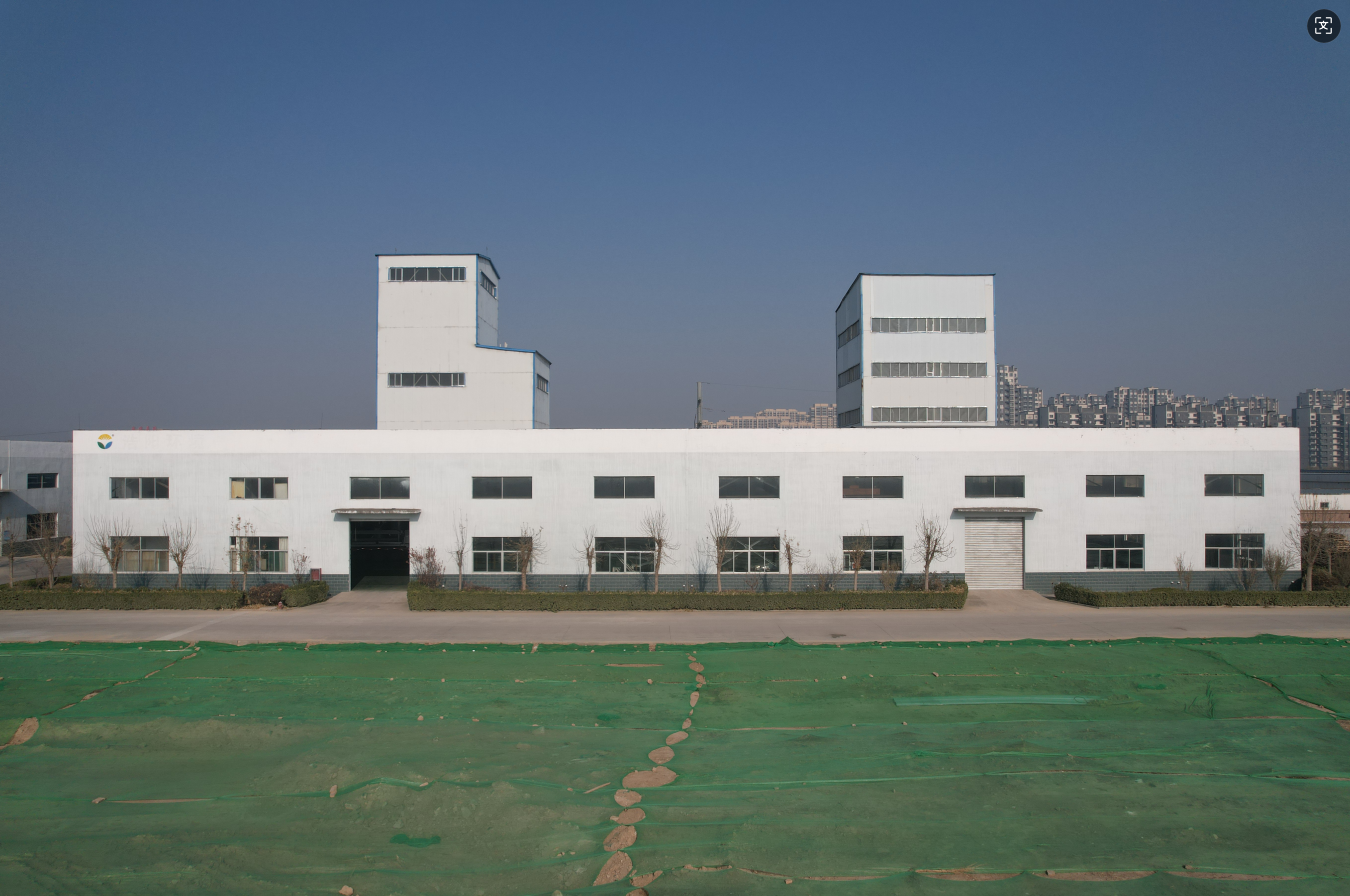
Composite drainage geonet production: bonding consistency between the drainage core and filter layer determines whether specified flow capacity survives to the site.
Use cases: which parameter dominates where
Subgrade drainage
In road and rail subgrade, the controlling parameter is compressive resistance under dynamic loading. The geonet must keep void space beneath pavement structure while resisting repeated load cycles, and it must resist puncture from angular aggregate during installation.
Tunnel drainage
Tunnel linings demand high flow capacity under moderate but constant confining pressure, combined with chemical durability against groundwater chemistry. Factory-bonded composite structures are common because site assembly behind a lining is difficult to inspect.
Slope protection drainage
On slopes, the hydraulic gradient is high and the driving concern is preventing water pressure build-up behind a cover layer. Flow capacity at the design gradient and resistance to tearing during installation dominate here.
Landfill and tailings drainage
Landfill caps, base liners and mining tailings impoundments combine the harshest requirements: high normal stress, aggressive leachate, long service life and strict compliance documentation. This is the application where all four parameter families must be satisfied simultaneously and where a 3D composite geonet is most likely to be justified.
Metal smelting and aquaculture
Process ponds in metal smelting and lined aquaculture systems rely on chemical resistance and continuous drainage to protect an underlying liner. Leak prevention here is a containment function, not a comfort function, which is why acid, alkali and corrosion resistance move to the front of the specification.
Comparison table: parameters, verification and what to ask
| Parameter | What it governs | Verification route | Question to ask the supplier |
|---|---|---|---|
| Compressive resistance | Thickness retention and void space under normal load | Acceptance testing framed on ASTM D7273; CE conformity under EN 13249:2016 | What retained thickness is guaranteed at the design normal stress? |
| In-plane flow capacity | Volume of liquid discharged per unit width at a stated gradient | Project-specific test conditions; CNAS-accredited laboratory inspection | What is the discharge at my design stress and gradient, after compression? |
| 3D geometry | Void cross-section, load distribution, filter bonding | Manufacturing process control; hot-melt welding or integrated molding | How many drainage layers, and how is the filter layer bonded? |
| Chemical durability | Performance in leachate, acid, alkali and saline contact | Polymer selection; polyethylene-based nets hold nearly 64% of global demand for chemical resistance | Which polymer grade, and what evidence supports the chemical claim? |
| UV and anti-aging | Performance in exposed or intermittently covered service | Material formulation and certification documentation | What exposure duration is covered before cover is placed? |
| Tear and puncture | Survival during installation and resistance to point loads | Factory inspection from raw material to delivery | What installation damage allowance should the design assume? |
System comparison: geonet-based drainage versus a common geotextile membrane
| Comparison point | Drainage geonet system | Common geotextile membrane |
|---|---|---|
| Resistance profile | Puncture resistant, acid and alkali resistant, corrosion resistant and UV resistant | Baseline reference for comparison |
| Physical and chemical indicators | More than 10% higher than those of ordinary geomembranes | Reference level |
| Best suited to | Scenarios with high requirements for seepage control systems in various engineering projects | Lower-demand containment and separation duties |
| Initial cost | 15% higher | Lower entry cost |
| Five-year ownership cost | 40% lower | Higher over the five-year horizon |
| Maintenance profile | One-time laying with zero leakage | — |
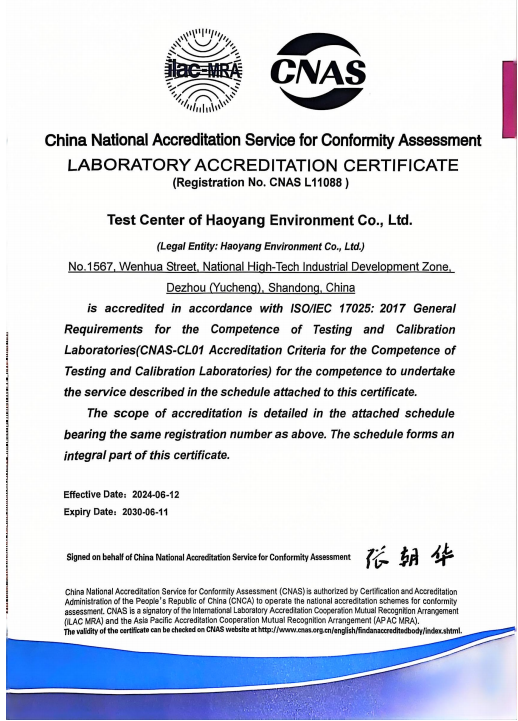
Parameter claims are only as good as the inspection behind them: full-process quality inspection from raw material procurement to factory delivery runs through a CNAS-accredited national laboratory.
FAQ
What standards should a drainage geonet meet for an international project?
Compliance requirements depend on the destination market. Haoyang's composite drainage geonet holds CE Verification of Conformity ICR/VC/HE250523 in compliance with EN 13249:2016, valid until 2030, which covers European project specifications. For the EAEU market it is certified under GOST 56586-2015, certificate number POCC CN.32682.047C00.0C01.H00840. For acceptance testing procedures, ASTM D7273 provides guidelines for geonets and geonet drainage geocomposites.
How can I verify that compressive strength and flow capacity claims are accurate?
Ask for the test conditions behind every figure, not just the figure. Compressive and flow values are only meaningful when they are reported at the same normal stress and at a defined hydraulic gradient. Haoyang runs full-process quality inspection from raw material procurement through production to factory delivery in a CNAS-accredited national laboratory, which is the only CNAS-accredited national laboratory in the industry, so inspection evidence can be aligned with the specification before shipment.
How do higher-specification parameters affect project cost?
Higher-specification drainage systems carry a higher entry price but a lower lifetime cost. Against a common geotextile membrane, the geonet-based approach is described as puncture resistant, acid and alkali resistant, corrosion resistant and UV resistant, with all physical and chemical indicators more than 10% higher than those of ordinary geomembranes. The initial cost is approximately 15% higher, while total five-year ownership cost is approximately 40% lower, reflecting one-time laying with zero leakage rather than repeated intervention.
Can I validate the material before committing to a full order?
Validation is handled through the specification and acceptance route. The minimum order quantity is 5000 square meters, and acceptance criteria are defined as a pre-shipment test, so parameters can be checked against the agreed specification before goods leave the factory. Delivery terms are quoted on an FOB or CIF basis, and payment terms are 30/70 or 100, which means commercial terms and technical acceptance can be fixed in the same order document.
What production capacity and lead time should I plan for?
Haoyang's monthly production capacity is 3000 tonnes, with a typical production lead time of 10 to 30 days and a minimum order quantity of 5000 square meters. The company's export business accounts for approximately 60% of total sales, and its marketing network covers more than 70 countries and regions worldwide, serving markets in Africa, Central Asia, the Middle East, Southeast Asia and Indonesia. For a project where parameter consistency across multiple delivery phases matters, these capacity and lead-time figures are the practical limit to plan around — and they are worth confirming in writing alongside the technical specification.
Conclusion
Mastering drainage geonet parameters comes down to refusing to read three numbers in isolation. Compressive resistance, in-plane flow capacity and 3D geometry are one system: the load a project applies determines the thickness the core retains, the retained thickness determines the void space available, and the void space determines whether the specified discharge is real. Change the load and every downstream figure changes with it.
A buyer who wants a defensible specification should therefore insist on four things. Flow and compressive data reported at the same normal stress. A structure decision — planar net or 3D composite — justified by cover depth, inflow and soil type rather than by default. A durability position that matches the chemical, UV and mechanical exposure of the site. And a verification route that runs from certification through to acceptance testing, so the parameter that was specified is the parameter that arrives.
The long-term dimension matters as much as the technical one. Parameters that hold for one delivery but drift across a multi-phase schedule create a different kind of project risk. That is why capacity, lead time and quality inspection are part of the technical conversation, not a separate commercial one.
Next step: match parameters to your project
Send your design normal stress, hydraulic gradient and soil conditions, and Haoyang Environment Co., Ltd will confirm the compressive and flow figures that apply, together with the certification documents for your destination market.
Email: 15315800874@163.com | Tel / WhatsApp: +86 15315800874 | www.haoyanghuanjing.com
Address: No. 1567, Wenhua Street, Shandong Dezhou (Yucheng) National High-Tech Industrial Development Zone.
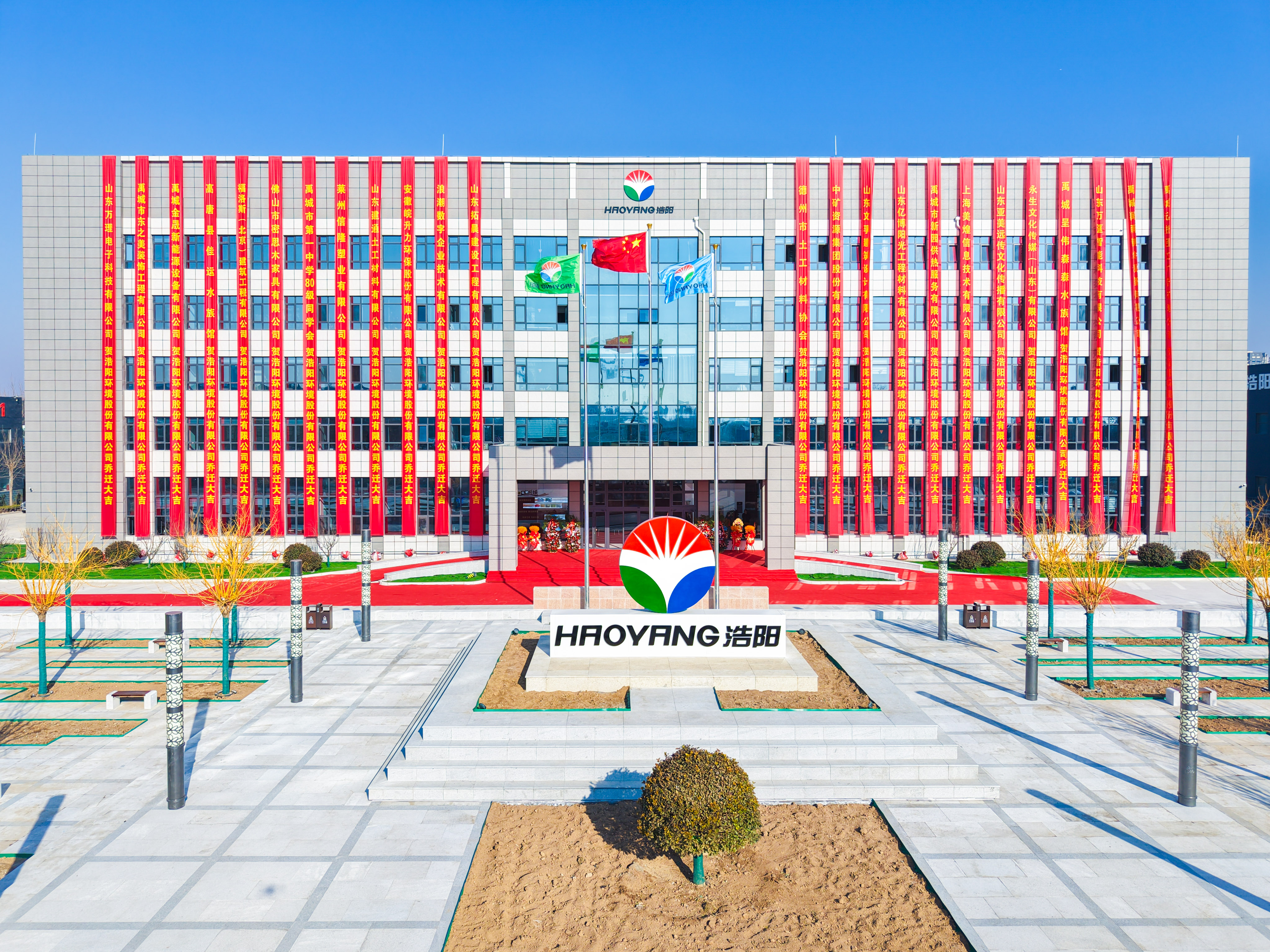
Haoyang Environment Co., Ltd — technical specification support and long-term supply for drainage geonet projects.