Как проверить производителя дренажных геосетей: от сертификатов ГОСТ до соответствия производства
How to Audit a Drainage Geonet Manufacturer: From GOST Certificates to Production Consistency
A certificate proves a document exists. An audit proves the product you receive is the product that was certified. For procurement managers specifying drainage geonet for EAEU, EU, Central Asian and Southeast Asian projects, the distance between those two statements is where project risk accumulates — and it can be closed with a short, repeatable verification sequence.
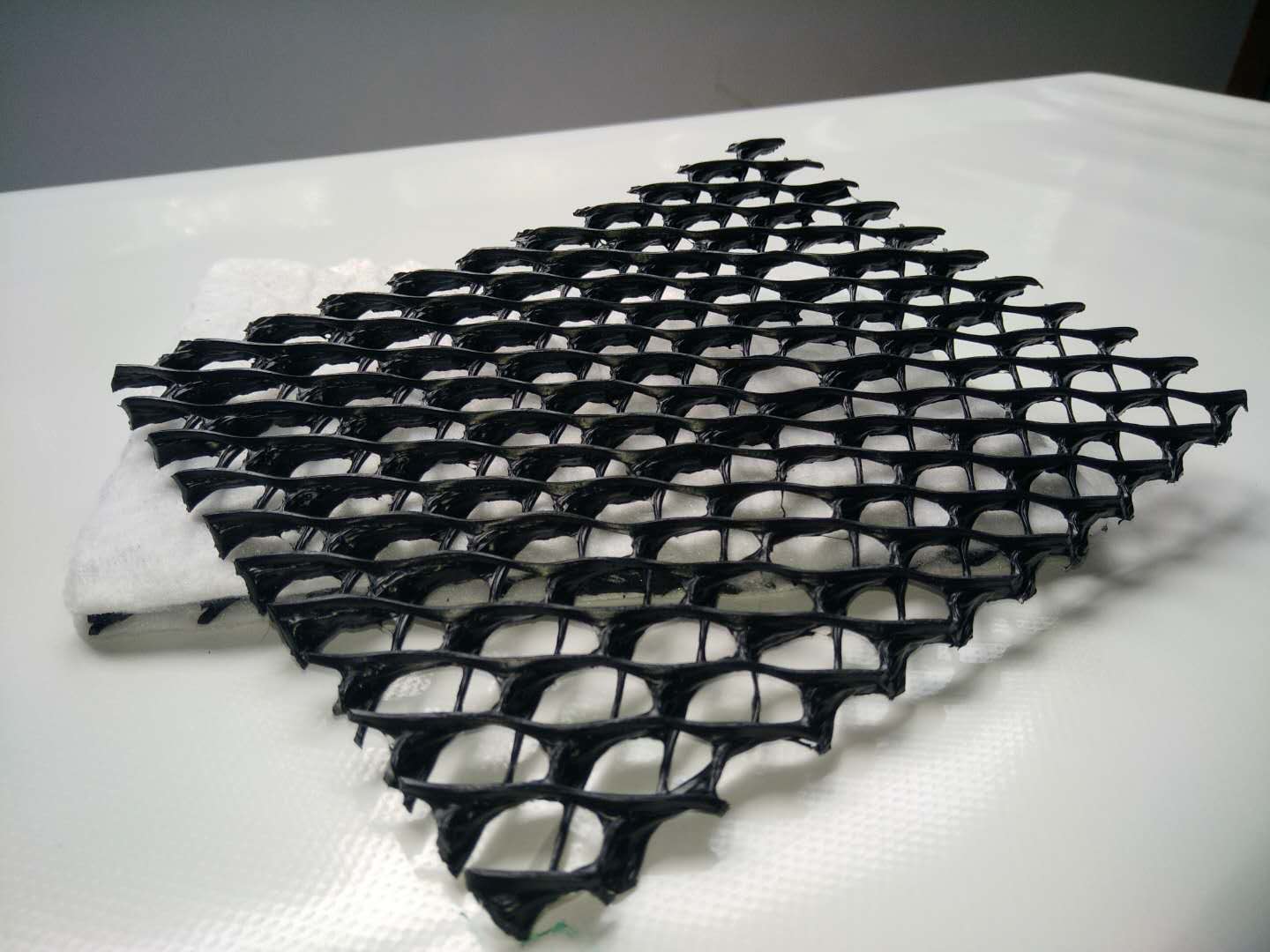
Most first purchases in this category start the same way: the buyer requests documents. Back comes a datasheet, a test report and a certificate of conformity, and the file looks complete. The audit question is not whether the file is complete. It is whether each document actually covers the item on the quotation, and whether the factory behind the document can repeat the same result across an entire order of 4.0 mm to 8.0 mm drainage geonet.
This guide is written for procurement managers, importers and project engineers at the Research and Evaluation stage — comparing manufacturers, testing claims, and deciding who can carry a project-scale order. It sets out a six-part audit and a nine-step sequence you can run against any supplier in this category, using Haoyang Environment Co., Ltd as the worked example.
Why a Certificate and a Compliant Product Are Not the Same Thing
A certificate of conformity is a conformity assessment record. It is produced for a defined product scope, by a defined legal entity, at a defined point in time. Three distinct failures can break the link between that record and the roll delivered to your site.
- Scope drift. The certificate covers a product family, while your order specifies a grade whose technical annex entry you have never read.
- Identity drift. The certificate is issued to one legal entity, while the quotation, invoice and packing list carry a different name.
- Production drift. The certified sample was produced on a line configuration, or with a polymer grade, that has since changed.
The industry's own testing practice acknowledges this separation. ASTM D7273 provides guidelines for the acceptance testing of geonets and geonet drainage geocomposites — a standard whose existence assumes that acceptance is decided by measurement, not by paperwork. A compliant product is therefore defined twice: once by the certificate scope, and once by the batch data attached to your delivery.
Audit rule of thumb: the certificate tells you what the manufacturer has proven. The batch record tells you what the manufacturer is currently making. Both are required, and neither substitutes for the other.
Why Audit Discipline Matters More in This Market Now
The drainage segment is no longer a sideline of geosynthetics. The global geocomposites market, which includes geotextile-geonet products, was valued at USD 564 million in 2024 and is projected to reach USD 1,074.88 million by 2032 (Vertex AI Search / industry forecast). Drainage applications led that market with a 44.55% revenue share in 2024 (Grand View Research). On the material side, polyethylene-based drainage nets account for nearly 64% of global material demand, driven by high chemical resistance (Precision Reports).
Three compliance frameworks define how that demand is contracted, and a serious audit has to work across all three:
- EAEU market: GOST 56586-2015 governs the composite drainage geonet certification route.
- EU market: EN 13249:2016 is the reference standard for the CE conformity record.
- USA / global acceptance: ASTM D7273 sets the acceptance testing guidelines for geonets and geonet drainage geocomposites.
On top of the standard, the operating scenario adds its own requirements. Metal smelting anti-seepage systems run continuously, 24/7, and demand high chemical resistance, UV resistance and long service life. Aquaculture pond anti-seepage systems in Southeast Asia require non-toxic, UV resistant, fish-friendly materials with a long service life. A supplier can satisfy a standard and still fail a scenario — which is exactly why the audit checks both.
The Six-Part Manufacturer Audit
1. Audit the Certificate Identity — Number, Registry, Entity, Validity
Certificates are verifiable documents, and verification starts with the reference number. Haoyang composite drainage geonets are certified under GOST 56586-2015 (Certificate POCC CN.32682.047C00.0C01.H00840) for the EAEU market, issued through the certification body ProfSert. For the EU route, Haoyang's composite drainage geonet holds a CE Verification of Conformity (ICR/VC/HE250523) complying with EN 13249:2016, valid until 2030.
Audit actions at this stage:
- Search the issuing certification body's registry using the certificate number exactly as printed.
- Confirm the legal entity name on the certificate matches the entity on the quotation, contract and packing list.
- Compare the validity window with your delivery schedule — a certificate that expires mid-production is a schedule risk, not a compliance win.
- Confirm the standard revision cited is the revision your project references.
2. Audit the Scope Against Your Specification Line Items
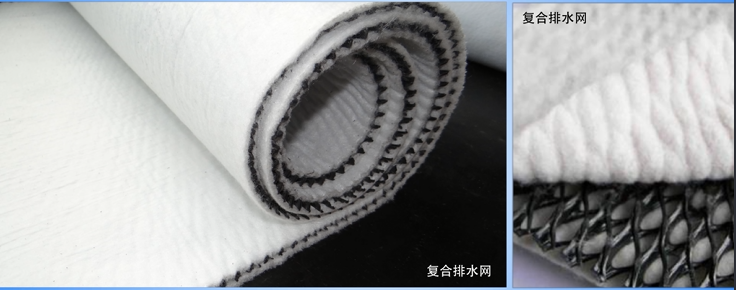
This is the step most buyers skip, and it is the step that decides whether the certificate is relevant. The scope and technical annex must name the product you are actually buying. In this product category, that means looking for terms such as high compressive resistance drainage geonet, 3D composite drainage geonet, high drainage capacity geonet, acid and alkali resistant drainage geonet, polyester filament composite drainage geonet, or high-strength polypropylene composite drainage geonet.
Then cross-reference the scope with the supplier's declared model range. Haoyang's drainage geonet is supplied in a thickness range of 4.0 mm to 8.0 mm (customizable), with mass per unit area of 500–1400 g/m² (customizable), in HDPE, PP or PET. If the certificate annex names a narrower or different grade than the one quoted, the certificate does not cover your order — regardless of how impressive the document looks.
3. Audit the Declared Parameters Against the Project Load Case
Parameters on a datasheet are a declared envelope, not a delivery promise. Audit them against the physical duty your project applies:
- Compressive strength (10% strain): ≥500–830 kPa
- Drainage capacity: ≥50–120 (L/min)/m (customizable)
- Tensile strength (MD/TD): ≥5–15 kN/m
- Elongation at break: 10–25%
- Acid/alkali resistance: ≥90% strength retention
A tailings pond cover carrying high overburden pressure is a compressive-strength question. A chemically aggressive leachate environment is a retention question. A large catchment with rapid inflow is a drainage-capacity question. When a supplier quotes a range rather than a value, ask which point in the range the quoted price corresponds to, and contract the value your engineer calculated.
4. Audit Production Consistency
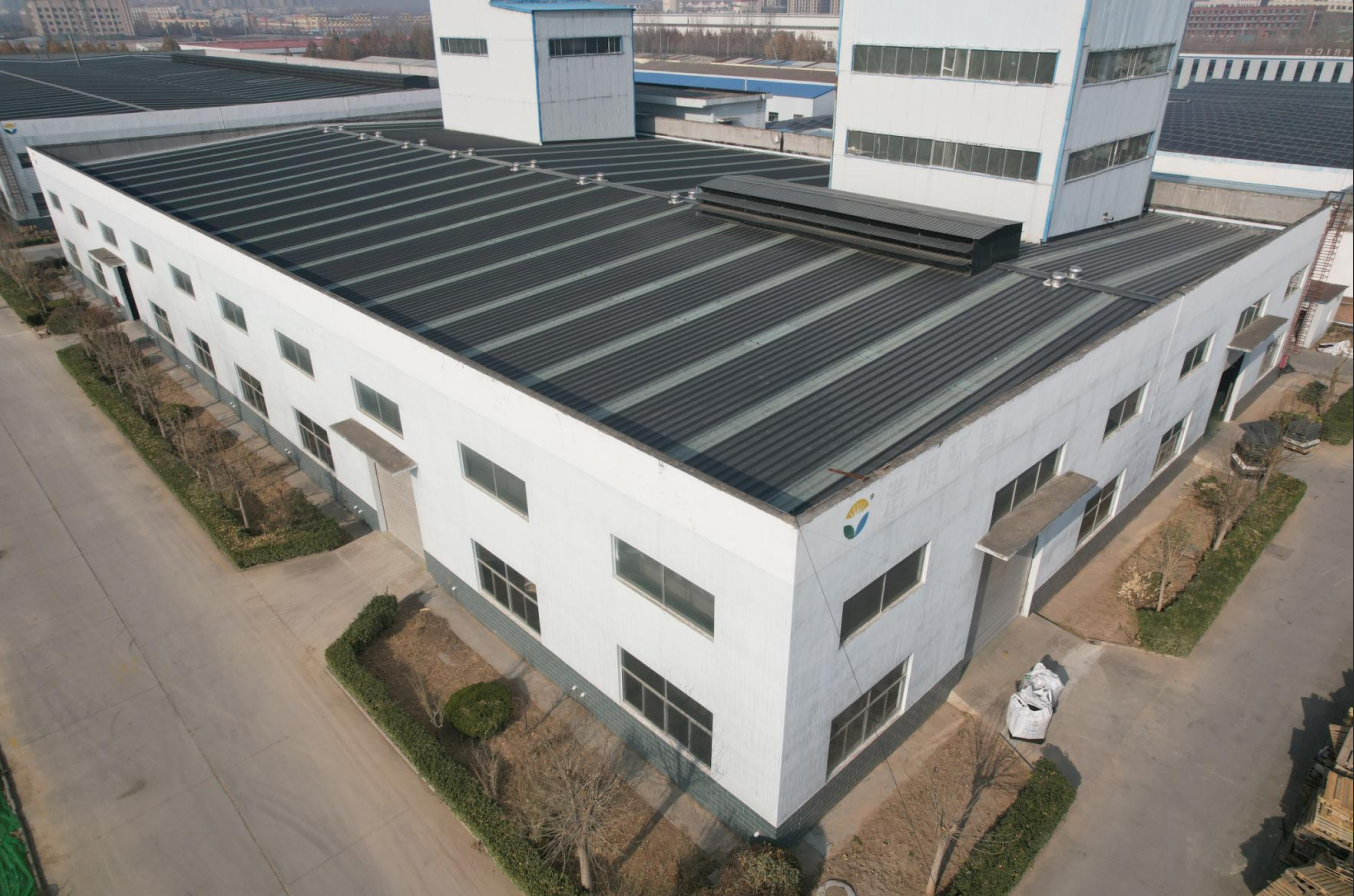
Production consistency is where certificate-based confidence most often fails. The relevant first-party facts are structural, not promotional: Haoyang Environment Co., Ltd was founded in 2008 and operates a 200,000 m² factory with 190 employees, including 20 professional engineers, alongside research cooperation with universities such as Fudan University and Tianjin University of Technology. The company holds more than 70 patents and proprietary technologies and runs 8 wholly-owned subsidiaries, with an annual output of 33,000 T and a monthly capacity of 3,000 T. Quality control is stated as 100% tested.
To convert those numbers into audit evidence, request:
- Batch-by-batch test records for the grade you ordered, not a single type-test report.
- In-line control data for thickness and mass per unit area, since both are declared as customizable ranges.
- Raw material change control — how the supplier notifies you if the polymer source changes.
- Retained reference samples from previous batches of the same grade.
Process integration is the strongest structural signal here. In the composite drainage network supplied for the Uzbekistan gold mine tailings project, the textured geomembrane component is produced on a five-layer co-extrusion blow molding line integrated with online double-sided texturing equipment. Using a high-temperature, high-pressure air jet process, base membrane forming and the double-sided rough surface structure are completed simultaneously in the molten state, which reduced production energy consumption by 25% and avoided the risk of thermal aging caused by secondary processing. For a buyer, the audit lesson is direct: every post-processing step removed is a point where batch-to-batch consistency can no longer drift.
5. Audit the Commercial and Operational Envelope
Capability claims also have to survive logistics. Haoyang's disclosed operational envelope includes a MOQ of 5000 m², a lead time of 10–30 days, a monthly capacity of 3,000 T and an export ratio of 60%, with markets across Africa, Europe, Central Asia, Southeast Asia, Australia and South America. After-sales support includes on-site support.
Customization depth is the second half of this check. The declared customization list covers LOGO, width, scroll length, thickness, GSM (grams per square meter), tensile yield strength, tensile fracture strength, piercing strength, and chemical and physical indicators. A supplier that lists label printing alongside mechanical indicators is telling you where its engineering capability stops — an audit cannot be satisfied by a logo alone.
6. Audit the Loop Between Sample, Batch and Site
The audit closes when sample, batch and site installation are connected. Request third-party acceptance testing aligned with ASTM D7273 guidelines, retain the counter-sample, and confirm who performs installation.
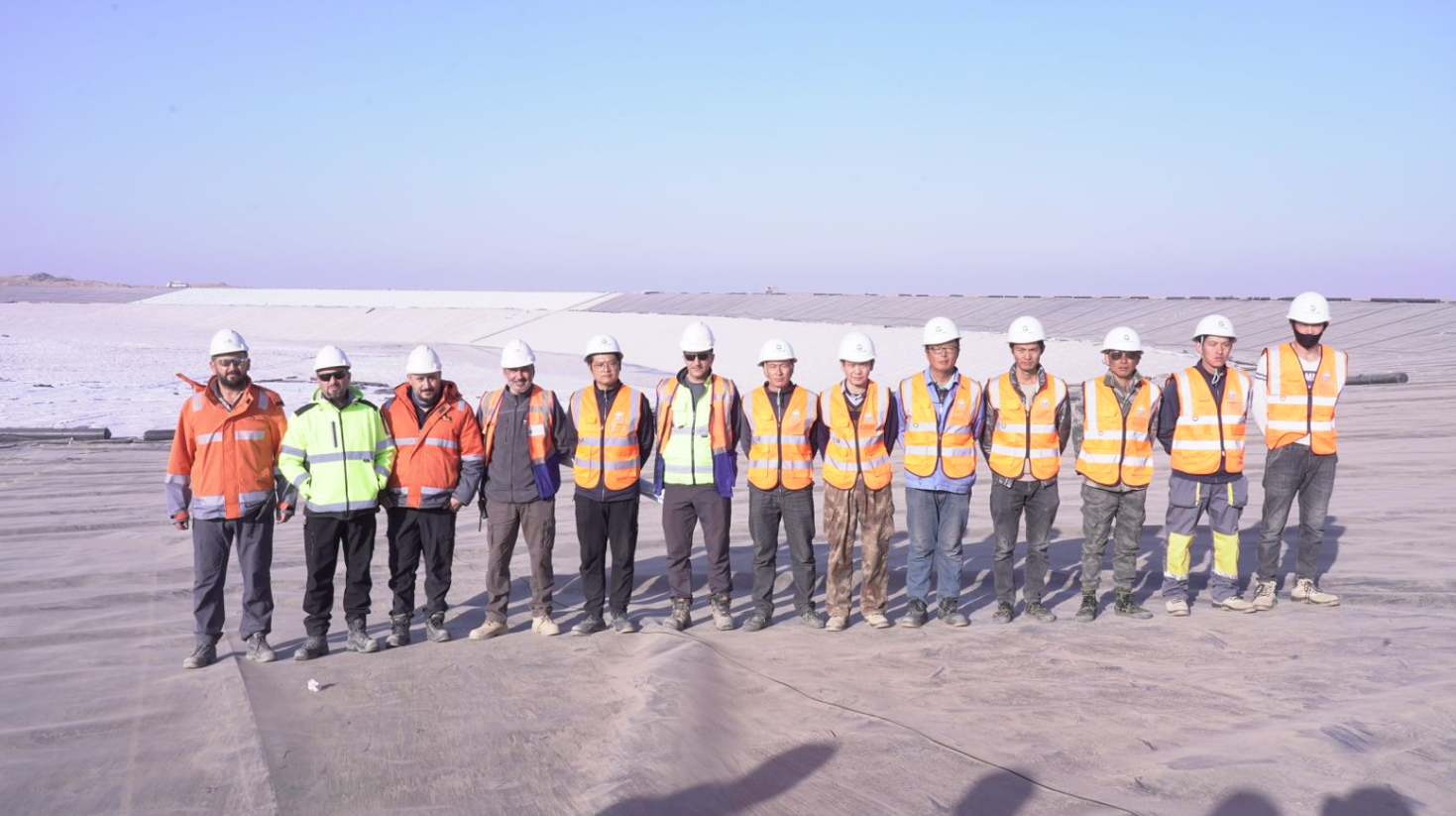
A concrete reference for this loop is the seepage prevention project for the tailings pond basin of a gold mine in Uzbekistan: 900,000 square meters, mining and smelting engineering, delivered from material supply through to on-site installation and construction. The project used a three-dimensional composite drainage network composed of an independently developed textured geomembrane and high-strength polypropylene geotextile, and replaced the traditional single-product sales model with full-chain service. That is the shape of evidence an audit should be looking for — a named application, a named system composition, and a named service boundary.
Audit Sequence: Step-by-Step
Run the following sequence in order. Steps 1 to 5 are desktop checks that can eliminate a supplier before any commercial negotiation; steps 6 to 9 require factory cooperation and should be conditions written into the purchase order.
- Build your specification sheet first. Fix thickness, mass per unit area, compressive strength at 10% strain, drainage capacity, tensile strength, elongation and chemical exposure before you request any document.
- Request the certificate set and record the exact numbers. For Haoyang, these are GOST 56586-2015 certificate POCC CN.32682.047C00.0C01.H00840 and CE Verification of Conformity ICR/VC/HE250523 to EN 13249:2016.
- Verify each number in the issuing body's registry. Confirm entity name and validity window; match them to the contracting party and the delivery schedule.
- Read the technical annex and highlight the product terms covered. Look specifically for the grade wording you are ordering.
- Cross-reference the annex with the model range. Check the 4.0–8.0 mm thickness band, the 500–1400 g/m² mass band and the HDPE/PP/PET material options against your line items.
- Request batch test records and compare them with ASTM D7273 acceptance testing guidelines. Reject a single type-test report used as a substitute for batch data.
- Request a line walkthrough for your grade. Confirm the 100% tested quality control claim on the line that will run your order, not on a demonstration line.
- Validate a sample drawn from the production batch rather than a prepared sample, and retain a counter-sample with written custody.
- Lock the commercial envelope in writing: MOQ 5000 m², lead time 10–30 days, on-site support scope, and a change-notification clause for raw material or process changes.
Scenario-Driven Audit Priorities
Metal Smelting and Tailings Anti-Seepage Systems
Applied in anti-seepage system projects and typically deployed in Laos, Cambodia, Indonesia, Vietnam, the Democratic Republic of the Congo, the Republic of the Congo, Russia, Uzbekistan, Kyrgyzstan, Kazakhstan, Australia and Chile. The function is to prevent liquid leakage under 24/7 operation, with supporting equipment such as geomembrane and drainage geonet. Special requirements include high chemical resistance, UV resistance and long service life. Audit priority: acid/alkali strength retention of at least 90%, compressive strength appropriate to the overburden, and batch data covering the extended service life claim.
Aquaculture Pond Anti-Seepage Systems
Applied in aquaculture pond anti-seepage systems in Southeast Asian markets including Laos, Cambodia, Indonesia and Vietnam. The product's role is to prevent water seepage, running 24/7, with supporting equipment such as geomembrane and drainage geonet. Special requirements include non-toxic, UV resistant, fish-friendly materials with a long service life. Audit priority: material composition evidence, UV/anti-aging test position in the batch record, and confirmation that the drainage geonet grade selected does not compromise the non-toxic requirement.
Multi-Country Project Portfolios
For buyers running portfolios across EAEU, EU, Southeast Asia and Africa simultaneously, the audit must cover more than one conformity route at once. Haoyang's marketing network covers more than 70 countries and regions, with an export ratio of 60%, and the company has participated in projects including the Middle Route of the South-to-North Water Diversion Project, the Three Rivers Governance Project, the Daxi Railway and the Central-South Passage, as well as environmental treatment and hazardous waste projects such as Shandong Weiqiao Pioneering Group's Red Mud Pond Environmental Treatment Project, Yunnan Heqing Beiyao Mining Co., Ltd.'s Gold Mine Tailings Pond Expansion Anti-seepage Project, Sinochem Yunlong Co., Ltd.'s first phase phosphogypsum slag pond project, Huadian Ningxia Lingwu Power Plant's ultrafine fly ash solid waste storage area project, Inner Mongolia Zhongmei Mengda New Energy Chemical Co., Ltd.'s recycled water evaporation pond project, Minmetals 23rd Metallurgical Corporation's Eritrea Copper-Gold Mine, and Gécamines' Manono Lithium Mine in the Democratic Republic of the Congo. Audit priority: confirm which conformity route each destination market requires, and that the supplier's scope covers all of them individually.
Audit Comparison Table: What Each Document Actually Proves
The table below maps the documents you will receive to what they do and do not establish. It is deliberately conservative — a document that proves less is still useful, provided you know its boundary.
| Document received | What it proves | What it does not prove | Audit action |
|---|---|---|---|
| GOST 56586-2015 certificate (POCC CN.32682.047C00.0C01.H00840) | Conformity assessment recorded for composite drainage geonet for the EAEU market | That every grade quoted sits inside the certificate annex | Registry verification plus line-by-line annex match |
| CE Verification of Conformity (ICR/VC/HE250523) to EN 13249:2016, valid until 2030 | EU conformity record with a defined validity window | Batch-level performance of the rolls actually delivered | Compare validity window against the delivery schedule |
| Batch test report / ASTM D7273 acceptance testing guidelines | Measured performance of a specific production batch | Consistency across the whole order unless records are rolling | Request rolling batch records, not a single report |
| Datasheet parameters: 4.0–8.0 mm thickness, 500–1400 g/m², ≥500–830 kPa compressive strength at 10% strain, ≥50–120 (L/min)/m drainage capacity | The declared design envelope of the product family | Which point in the range your purchase order actually buys | Specify and contract the value, not the range |
Operational Facts to Verify Directly With the Manufacturer
Capability statements should be converted into auditable numbers before a contract is signed. The disclosed figures below are the starting point for that conversion.
| Disclosed operational fact | Value | Why it matters in an audit |
|---|---|---|
| Monthly capacity | 3,000 T | Determines whether the supplier can absorb your order without splitting production across periods |
| Annual output | 33,000 T | Supports continuity of supply across multi-phase projects |
| Factory area | 200,000 m² | Space for separate lines reduces cross-contamination between grades |
| Quality control | 100% tested | Needs batch-level evidence, not a policy statement |
| Lead time | 10–30 days | Must be matched against the project installation window |
| MOQ | 5000 m² | Defines the smallest order that can be audited economically |
| After-sales | On-site support | Confirms the service boundary between material supply and installation |
| Export ratio | 60% | Indicates experience with multi-market documentation requirements |
Frequently Asked Questions
How do I verify that a drainage geonet manufacturer's GOST certificate is genuine and still valid?
Verify the certificate number against the registry of the issuing certification body — for EAEU GOST documents such as those issued through ProfSert — then confirm the legal entity name matches the party on your contract, and confirm the standard cited is the one your project references. Haoyang composite drainage geonets are certified under GOST 56586-2015 (Certificate POCC CN.32682.047C00.0C01.H00840) for the EAEU market, and the company also holds CE Verification of Conformity (ICR/VC/HE250523) complying with EN 13249:2016, valid until 2030. Always check the validity window against your delivery schedule, because a certificate with a shorter life than your production run does not remove the compliance obligation.
The certificate lists a product family. How do I confirm my specific grade is covered?
Request the scope and technical annex, then match it line by line against the item you are ordering. In this category the reachable grades include high compressive resistance drainage geonet, 3D composite drainage geonet, high drainage capacity geonet, acid and alkali resistant drainage geonet, polyester filament composite drainage geonet and high-strength polypropylene composite drainage geonet. Cross-reference that scope with the declared model range: 4.0 mm to 8.0 mm thickness (customizable), 500–1400 g/m² mass per unit area (customizable), HDPE/PP/PET material, compressive strength of ≥500–830 kPa at 10% strain, drainage capacity of ≥50–120 (L/min)/m, tensile strength of ≥5–15 kN/m, elongation at break of 10–25%, and acid/alkali resistance of ≥90% strength retention. If the annex names a narrower grade than the quoted one, the certificate does not cover your order.
Does running a full audit change the price I pay?
Audit scope should be proportional to project risk, but the cost drivers themselves are legitimate and predictable: MOQ of 5000 m², customization depth, additional testing beyond routine quality control, and delivery urgency measured against a 10–30 day lead time. Note that batch quality control is already declared as 100% tested, so it is part of the standard production model rather than an optional upgrade. The practical way to keep price comparison meaningful is to issue a defined specification — thickness, mass per unit area, compressive strength, drainage capacity, chemical exposure — and ask every supplier to quote against the same document. Comparing quotations built on different specifications is a commercial risk that no audit can later repair.
What should a sample audit include before I release a purchase order?
Four elements: a sample drawn from the actual production batch rather than a prepared demonstration piece; the corresponding batch test record, compared against ASTM D7273 acceptance testing guidelines for geonets and geonet drainage geocomposites; a verification of declared identity parameters such as thickness and mass per unit area against the sampled roll; and a retained counter-sample with written custody. For larger projects, ask for a comparable reference — for example, the seepage prevention project for the tailings pond basin of a gold mine in Uzbekistan, which covered 900,000 square meters and combined a three-dimensional composite drainage network with full-chain delivery from material supply to on-site installation.
What capacity and lead-time evidence should I check before confirming an order?
Check four figures together, because they only mean something in combination: monthly capacity of 3,000 T, a lead time of 10–30 days, a MOQ of 5000 m², and after-sales on-site support. Then confirm the supplier can hold those figures through the whole schedule — an order that exceeds one month of capacity will be produced across multiple periods, which is precisely when batch consistency needs to be verified rather than assumed. For a project-specific evaluation, request a sample and a quotation against your own specification from Haoyang Environment Co., Ltd, and ask the supplier to state, in writing, which certificate entry covers the grade being quoted.
Conclusion: The Audit Is a Habit, Not a Form
The difference between a supplier holding a certificate and a supplier delivering a compliant product is a set of verifiable links: certificate number to registry, annex scope to specification line item, datasheet range to contracted value, and production line to batch record. Each link is inexpensive to check before an order and expensive to repair afterwards.
Run the nine-step sequence once, and it becomes a reusable filter. For projects in EAEU, EU, Southeast Asian, Central Asian, African, Australian or South American markets — whether the application is a metal smelting tailings anti-seepage system, an aquaculture pond lining system, or a multi-country portfolio — the same three questions decide the outcome: does the certificate cover this grade, does the batch data cover this order, and does the factory cover this schedule.
Next Step: Audit Haoyang Before You Shortlist
Haoyang Environment Co., Ltd is headquartered at No. 1567, Wenhua Street, Shandong Dezhou (Yucheng) National High-Tech Industrial Development Zone, China, and manufactures drainage geonet from 4.0 mm to 8.0 mm with documented EAEU and EU conformity records.
Request a sample, a specification-matched quotation, or the certificate set for your target market:
Website: www.haoyanghuanjing.com
WhatsApp / Tel: +86 15315800874
Email: 15315800874@163.com
Contact: Shengkang Li
Есть вопросы или нужны дополнительные детали?
Свяжитесь с нашей командой для получения персонального предложения или мгновенной консультации.
Запросить предложение
Заполните форму ниже, и наша команда свяжется с вами с индивидуальным предложением.
Прямой чат WhatsApp
Предпочитаете общаться в реальном времени? Напишите нам в WhatsApp для мгновенной помощи и быстрых ответов.
- Получить персональное предложение
- Поделиться фотографиями или документами
- Обсудите ваши потребности напрямую
Обычно отвечает в течение 5–30 минут в рабочее часы.