Leakage in Anti-Seepage Systems: A Drainage Geonet FAQ for Construction Teams
Short answer: most leakage complaints in lined basins, ponds and impoundments are not a sudden geomembrane failure. They are drainage failures. When liquid or gas cannot leave the space behind the liner, pressure builds, seams are loaded, and the barrier is asked to do a job it was never designed to do. A drainage geonet is the layer that removes that liquid and protects the barrier. This FAQ is organised the way construction and decoration teams actually raise the problem — by symptom — and maps each symptom to the drainage geonet variant that addresses it.
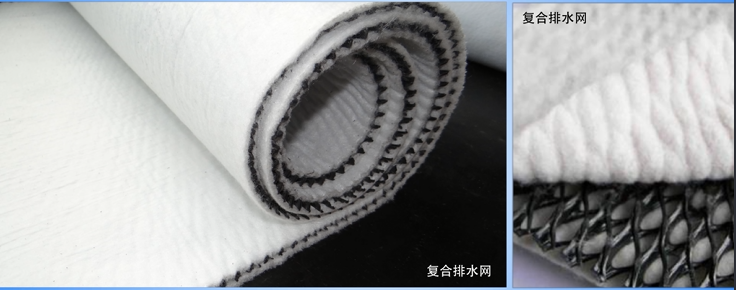
Drainage geonet: the drainage layer that relieves liquid and gas pressure behind an anti-seepage barrier.
What does “leakage” actually mean in an anti-seepage system?
An anti-seepage system is a layered assembly, not a single sheet. The barrier layer — normally a geomembrane — limits the movement of liquid. The drainage layer — a drainage geonet, usually a composite with a nonwoven geotextile — collects liquid and gas that reach the barrier and conveys them to a collection point. The two layers have different jobs. The drainage geonet does not replace the geomembrane; it protects the geomembrane and keeps it from being loaded by trapped liquid. In Haoyang’s project descriptions the geonet and the geomembrane are listed as supporting equipment that work together inside the same anti-seepage system.
Once that split is clear, “leakage” resolves into three different problems, and each one is diagnosed with different questions:
- Hydraulic loading. Liquid or gas accumulates behind the barrier because there is no continuous relief path. The liner bulges, seams take peel and shear stress, and water appears where the membrane itself is intact.
- Mechanical loading. Cover soil, backfill, vehicles or stored material compress the drainage core. A core that flattens loses the void space that carries flow, so a product that looked adequate on the datasheet stops draining under real load.
- Chemical loading. Aggressive leachate, acidic or alkaline process liquid, or saline groundwater attacks the polymer core or the geotextile filter, reducing strength and, over time, performance.
A single “which geonet is best” answer is therefore rarely useful on site. The useful question is which of the three loadings is dominant in your structure.
Why the drainage layer, and not the liner, is often the real problem
A barrier stops liquid; it does not remove it. If water entering a basin floor, a slope face or a backfilled wall has no path out, the head behind the liner rises until it finds the weakest point — a seam, a penetration, a damaged panel edge. Repairs then fail repeatedly because the pressure that caused the original breach has not been relieved.
The drainage geonet provides that path. Its in-plane flow capacity is reported in litres per minute per metre of width; Haoyang’s drainage geonet range is reported at ≥50–120 (L/min)/m, customizable. Two cautions apply to any number of this kind. First, flow capacity is load-dependent: a core that carries a given flow at low normal stress will carry less when it is compressed by cover material or stored product, so the figure must be read at the normal stress your structure will actually apply. Second, the reported range should be confirmed on the datasheet for the specific thickness, mass and configuration you are buying.
This matters most where the system runs continuously. In industrial leakage-prevention environments the product operates in 24/7 mode, and the drainage layer is designed to prevent liquid leakage across that entire service period. Continuous operation means the specification should be based on sustained flow and sustained load, not on a short-term peak.
The five drainage geonet variants and the problem each one solves
Haoyang Geomembrane (Haoyang Environment Co., Ltd.), a geosynthetics manufacturer established in 2008 and headquartered in the Dezhou (Yucheng) National High-Tech Industrial Development Zone, Shandong, China, lists drainage geonet types that include composite drainage geonet, acid and alkali resistant drainage geonet, high compressive resistance drainage geonet, high drainage capacity geonet and 3D composite drainage geonet, together with polyester filament composite and high-strength polypropylene composite constructions. The base range is 4.0–8.0 mm thick and 500–1400 g/m², in HDPE, PP or PET.
The variants are not grades of the same thing. They answer different site problems:
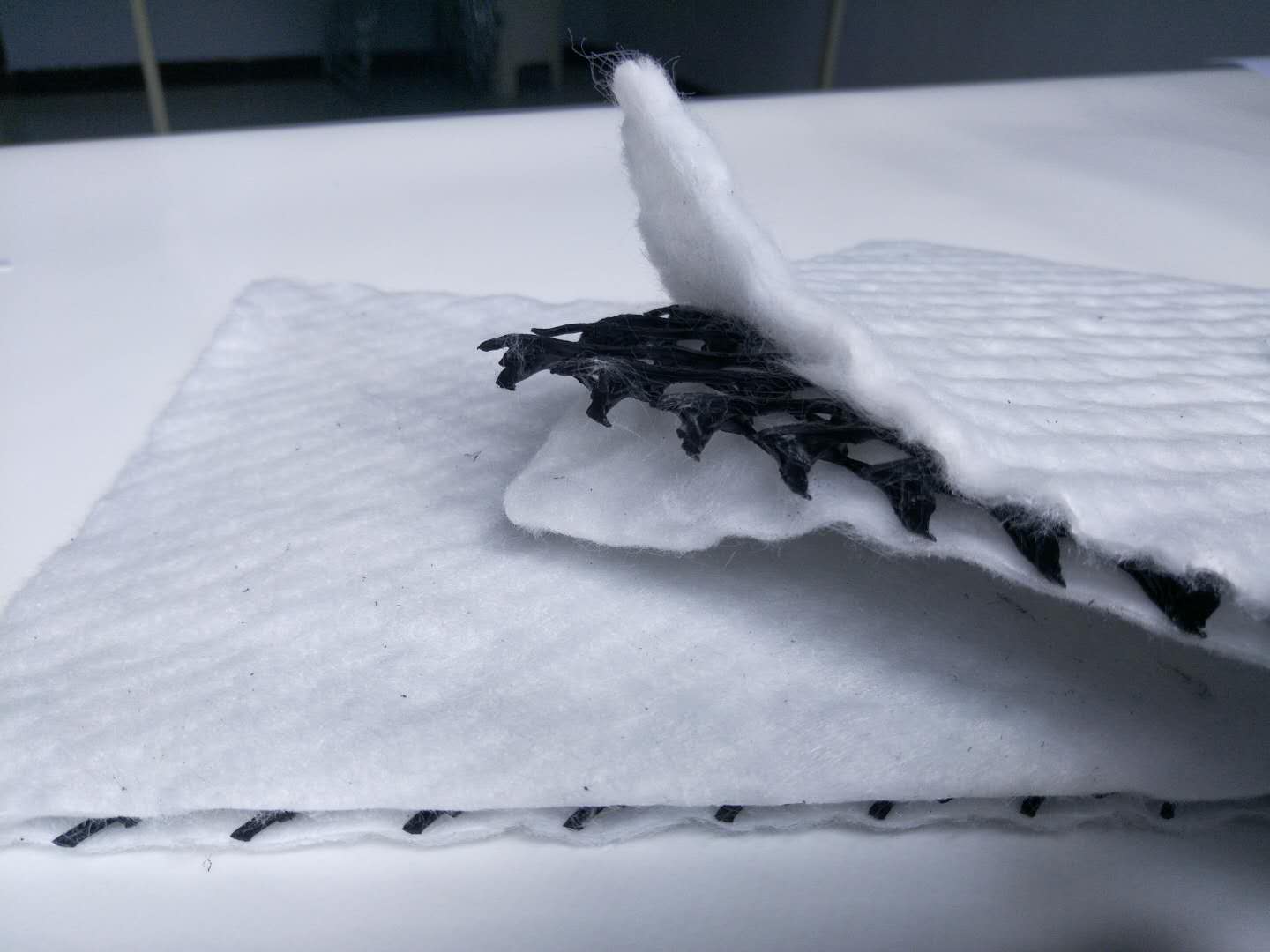
- Composite drainage geonet. A geonet core combined with one or two nonwoven geotextile layers, thermally bonded, so that filtration, protection and drainage are installed in one operation. It is the general-purpose choice for basin floors, plaza and roof drainage, and retaining structures where the drainage path is planar and the cover is moderate.
- Acid and alkali resistant drainage geonet. Specified where the liquid or the surrounding soil is chemically aggressive — smelting leachate, mineral processing liquors, saline groundwater. Haoyang reports ≥90% strength retention after acid/alkali exposure; because the public datasheet does not state the exposure medium, concentration, temperature or duration, ask for the test conditions before you treat the figure as a pass for your particular chemistry.
- High compressive resistance drainage geonet. Specified where the core will be squeezed — deep cover, heavy equipment, stockpiled material, tall impoundments. The relevant parameter is compressive strength at 10% strain, reported at ≥500–830 kPa across the range, read together with the flow capacity that remains at that load.
- High drainage capacity geonet. Specified where the inflow is large relative to the plan area or the flow path is long — high groundwater, heavy rainfall, dewatering operations, large basins. Flow capacity, not strength, is the governing criterion here.
- 3D composite drainage geonet. A three-dimensional core combined with geotextile, used where the drainage path is irregular, where several directions of flow must be handled, or where core height must be maintained under load. Haoyang used a three-dimensional composite drainage network built from textured geomembrane and high-strength polypropylene geotextile in a tailings-pond seepage-control project.
Step by step: diagnosing a leaking system and matching a variant
- Separate barrier failure from drainage failure. Before ordering membrane repairs, review how the seepage behaves. Flow that tracks the liquid level in the basin, rather than rainfall or a single backfill event, points first at the relief path behind the liner. Confirm with monitoring points and a level test rather than assumption.
- Define the load case. Estimate the maximum normal stress the geonet will carry: depth of cover, weight of stored material, equipment access, tailings height. Compare it with compressive strength at 10% strain, not with the thickness figure — a thicker core is not automatically a stronger one under load.
- Define the chemistry. Identify pH range, salinity, sulphates and any process reagents in the liquid and in the surrounding soil. If the environment is aggressive, move to the acid and alkali resistant variant and request the exposure protocol behind the retention figure.
- Size the flow. Estimate inflow and the length of the drainage path, then compare with the reported flow capacity at your design gradient and normal stress. Where inflow is high, the high drainage capacity variant governs and compressive strength becomes a secondary check.
- Choose the geometry and layer build. Flat, well-drained horizontal areas usually suit a composite geonet. Irregular surfaces, steep transitions and multi-directional flow usually argue for a 3D composite. The final choice belongs to the designer; the variant shortlist above is the starting point, not the answer.
- Verify documents, then samples. Match the certificate set and the test reports to the exact product you are specifying, then check a sample roll for thickness, mass, geotextile bonding and roll dimensions before the full order is released.
Symptom-to-variant map for site teams
| Symptom reported on site | Most likely drainage-related cause | Variant to evaluate | Verify first |
|---|---|---|---|
| Persistent seepage that returns after each repair | No relief path; head building behind the barrier | High drainage capacity geonet | Flow capacity at design gradient and normal load |
| Liquid leakage concentrated at low points and sumps | Insufficient capacity at the toe, or a clogged filter | Composite drainage geonet; high drainage capacity | Geotextile filtration against the actual soil, toe flow |
| Core visibly flattened under cover or stockpile | Compressive load exceeds core resistance | High compressive resistance drainage geonet | Compressive strength at 10% strain plus flow at that load |
| Strength loss or cracking in aggressive leachate | Chemical attack on core or geotextile | Acid and alkali resistant drainage geonet | Exposure medium, concentration, temperature, duration |
| Poor performance on slopes and irregular geometry | Flow path interrupted; contact with the surface lost | 3D composite drainage geonet | Core geometry, tensile strength, fixing method |
| Flow drops off after several seasons of exposure | Surface degradation under UV and weathering | UV-resistant specification with a stated service life | UV resistance statement and long-term durability data |
The map is a diagnostic starting point. Final selection follows the project design and the verified datasheet for the specified product.
Parameter baseline for your RFQ
The table below summarises Haoyang’s reported drainage geonet range and what each parameter decides on site. Treat it as a screening baseline for the enquiry, not as a substitute for a project-specific datasheet: test conditions such as hydraulic gradient, normal stress and chemical exposure protocol must be confirmed for the configuration you actually order.
| Parameter | Reported range | What it decides on site |
|---|---|---|
| Thickness | 4.0–8.0 mm (customizable) | Core depth available for flow; detailing against the liner and cover |
| Mass per unit area | 500–1400 g/m² (customizable) | Handling, logistics and filtration-related selection |
| Tensile strength (MD/TD) | ≥5–15 kN/m | Resistance to installation stress and slope pull |
| Elongation at break | 10–25% | How far the product stretches before failure during installation |
| Compressive strength (10% strain) | ≥500–830 kPa | Retained void space under cover, traffic or stored material |
| Acid/alkali resistance | ≥90% strength retention | Chemical screening for aggressive leachate or soil |
| Drainage capacity | ≥50–120 (L/min)/m (customizable) | In-plane flow at the design gradient and normal stress |
| Material | HDPE / PP / PET | Polymer screening for chemistry and durability |
Where these questions come up in practice
Metal smelting and tailings containment
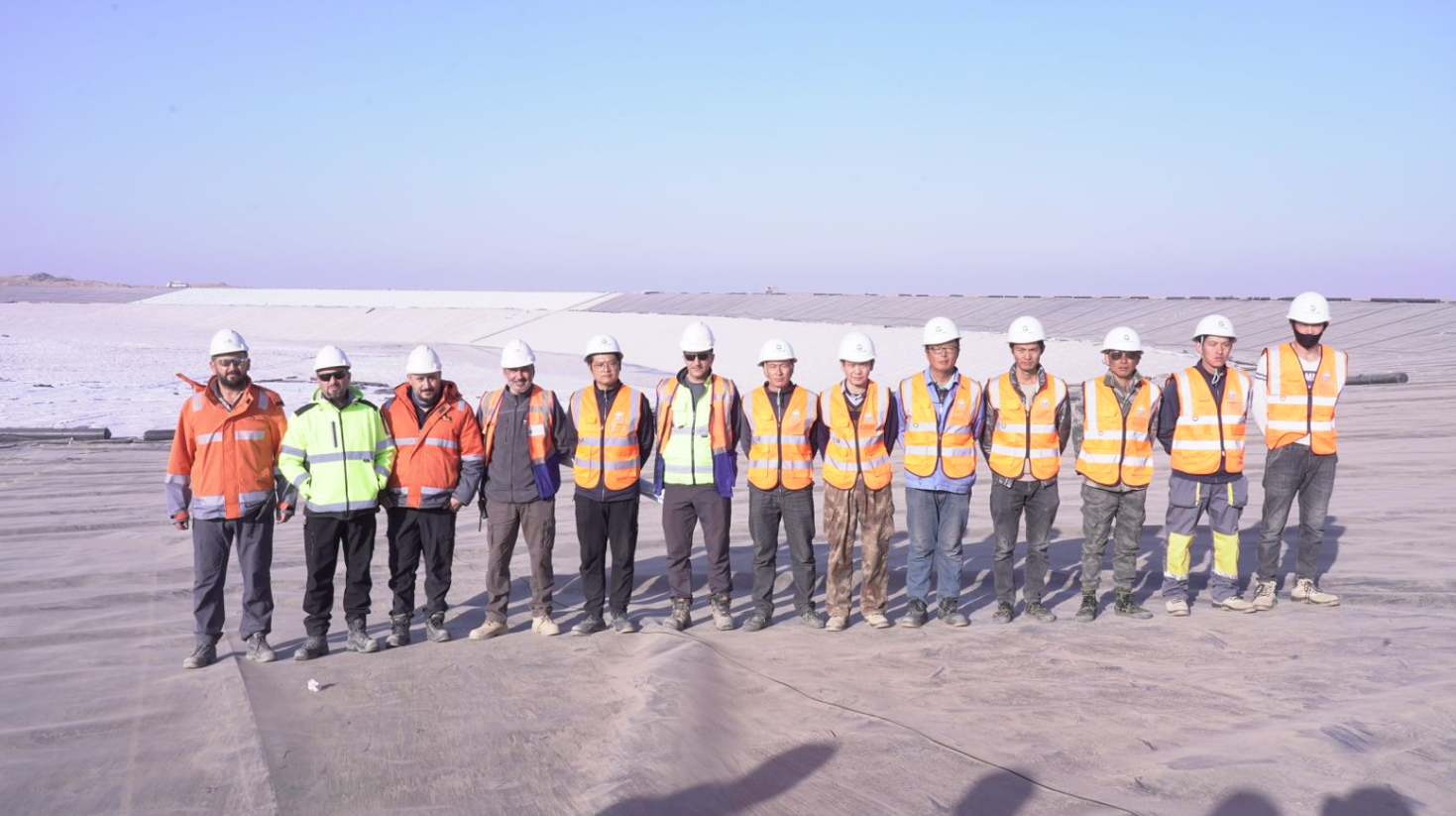
Smelting and tailings projects combine all three loadings at once: continuous operation, chemically aggressive liquid, and high compressive load from stored solids. The stated requirements for this application are high chemical resistance, UV resistance and long service life, with the drainage geonet and geomembrane working as a matched pair. A documented reference is the seepage-prevention works for the tailings-pond basin of a gold mine in Uzbekistan, covering 900,000 square metres, where a three-dimensional composite drainage network was built from textured geomembrane and high-strength polypropylene geotextile. The textured geomembrane is produced on a five-layer co-extrusion blow-moulding line integrated with online double-sided texturing, so the rough surface forms in the molten state and bonds to the substrate at molecular level; the supplier reports this reduces production energy consumption by 25% and avoids the thermal-ageing risk associated with secondary processing.
Aquaculture ponds
In pond lining the drainage question is usually about relieving water pressure beneath and around the liner rather than about chemical attack. The stated requirements here are non-toxic, UV-resistant, fish-friendly materials with a long service life, again with geomembrane and drainage geonet used together, in continuous operation. For a decoration or construction team building the pond, that translates into a filtration check on the geotextile and a clear statement of material composition before installation.
Subgrade, tunnel, slope and landfill works
Supplier literature describes geonet drainage products as HDPE materials used in landfill, retaining-wall, mining, tunnel and civil-engineering projects, in biplanar and triplanar forms. On subgrade and slope work the practical issues are usually installation-related — core crushing during compaction, loss of contact on an irregular face, and tearing at fixings — which is why tensile strength, elongation and core geometry belong in the same conversation as flow capacity. These application categories describe where the product family is used; they are not evidence of performance on a specific project.
Which certificates and documents belong in the submittal?
For projects in the EU and EAEU markets, the certificate set is usually the first thing a reviewer opens. Haoyang Geomembrane holds ICR certificates issued against EN 13249:2016 under the Construction Products Regulation CPR (EU) 305/2011 for its drainage geonet and composite drainage geonet, and GOST certificates for its drainage geonet and 3D composite drainage geonet.
Three practical points follow from that:
- Match the certificate to the exact product. The ICR set covers drainage geonet and composite drainage geonet; the GOST set covers drainage geonet and 3D composite drainage geonet. If your specification names a different variant, list that gap explicitly rather than assuming the certificate extends to it.
- Treat a certificate as a document, not a performance claim. It supports the technical submittal; it does not by itself demonstrate that the product meets your project’s flow, load or chemical-resistance requirements.
- Add the test-report layer. ASTM publishes a guide for specifying drainage geocomposites (ASTM D7931/D7931M-21a) and a guide for acceptance-testing requirements for geonets and geonet drainage geocomposites (ASTM D7273/D7273M-08(2026)). Both are catalogue listings and frameworks for drafting requirements and acceptance tests; a listing does not mean any particular product complies with them.
For wider context on the range, see the Haoyang Environment Co., Ltd. product pages.
Customization, capacity and delivery checks
Most leakage problems that reach the site are decided long before delivery, at the point where the specification is written. The manufacturing side of Haoyang Geomembrane is relevant here: the company was established in 2008, operates a 200,000 m² facility with 190 employees, reports an annual output of 33,000 tonnes and monthly capacity of 3,000 tonnes, and states that products are 100% tested. It works in OBM mode and customizes logo, width, roll length, thickness, GSM, tensile yield strength, tensile fracture strength and piercing strength, plus other physical and chemical indicators. The minimum order quantity is 5,000 m² and lead time is 10–30 days. The company also reports a 6-metre-wide composite drainage network production line — a wide-roll capability worth asking about if your project needs fewer, longer rolls.
For a construction team, that translates into four things to confirm in writing before the order is released: the exact variant and configuration in the certificate, the test conditions behind the flow and compressive figures, the roll length and width against your installation method, and the delivery window against your programme.
FAQ
Why does an anti-seepage system keep seeping when the geomembrane looks undamaged?
Because a liner limits liquid movement; it does not remove liquid. If water or gas reaching the barrier has no continuous drainage path, head builds behind it and the liner is loaded until it fails at a seam or penetration. Repairing the seam without adding relief produces the same failure again. Start by checking whether the drainage layer is continuous, correctly lapped to the collection point, and not blocked by a clogged geotextile filter.
Where does liquid leakage in a lined basin actually come from?
Three routes dominate. Hydraulic pressure from liquid that cannot drain; mechanical damage from cover material, equipment or stored product compressing the core and puncturing the liner; and chemical attack that reduces strength in the core or the geotextile. Because the drainage geonet and geomembrane work as a matched pair in these systems, a leak investigation that examines only the membrane will miss two of the three.
Which drainage geonet should we use if the system handles acid or alkaline liquid?
The acid and alkali resistant drainage geonet, available in HDPE, PP or PET. Haoyang reports ≥90% strength retention after acid/alkali exposure. Before accepting that figure, ask for the exposure medium, concentration, temperature and duration, because a retention percentage without its test protocol cannot be compared with your process chemistry or with another supplier’s claim.
What compressive strength does a drainage geonet need under a tailings pond or a backfilled slab?
Work from the highest normal stress the core will see, then read the compressive strength at 10% strain. Haoyang’s range is reported at ≥500–830 kPa; industry literature on biplanar geonets cites 500–1,000 kPa as a typical band, with test references to ASTM D1621 and ASTM D4716. The number that actually matters is the flow capacity remaining at that compressive load, so ask for both on the same datasheet.
When is high drainage capacity the deciding factor rather than compressive strength?
When inflow is large relative to the plan area or the flow path is long: high groundwater, heavy rainfall, dewatering discharge, or a large basin floor. Haoyang reports drainage capacity of ≥50–120 (L/min)/m, customizable. Because capacity depends on gradient and normal stress, specify the gradient your design uses and confirm the curve rather than the headline figure.
Composite or 3D composite drainage geonet — how do we choose?
A composite drainage geonet pairs a geonet core with one or two thermally bonded nonwoven geotextile layers, which suits planar, horizontal drainage where filtration and protection are needed in one installation. A 3D composite uses a three-dimensional core and is chosen where flow is multi-directional, the surface is irregular, or core height must be held under load — the construction used in the Uzbekistan tailings project. On slopes and transitions, check tensile strength and fixing detail together with the core geometry.
Does 24/7 operation change the specification?
Yes. In industrial leakage-prevention environments the product runs continuously, designed to prevent liquid leakage throughout that period. That shifts the specification from peak performance to sustained performance: flow capacity that holds under permanent load, chemical resistance that holds over the service life, and UV resistance where any part of the geonet is exposed during construction or service.
Which certificates should go into the technical submittal?
For drainage geonet and composite drainage geonet, the ICR certificates against EN 13249:2016 under CPR (EU) 305/2011. For drainage geonet and 3D composite drainage geonet, the GOST certificates. Add product-specific test reports for the flow, compressive and chemical values you are relying on, and reference ASTM D7931/D7931M-21a for specification wording and ASTM D7273/D7273M-08(2026) for acceptance testing.
Can thickness, width and strength be customized, and what are the order terms?
Customization covers logo, width, roll length, thickness, GSM, tensile yield strength, tensile fracture strength, piercing strength and other physical and chemical indicators. The minimum order quantity is 5,000 m² and lead time is 10–30 days, against a reported monthly capacity of 3,000 tonnes. Confirm roll dimensions and the certification scope for the customized configuration before releasing the order.
What drives the material price, and what should we check on arrival?
Thickness, mass per unit area, polymer, geotextile build and roll width drive the material price. One 2026 vendor-solicitation benchmark reports drainage net material valuations of about $1.60–$10.76 per square metre — a material range only, excluding freight, installation and testing, and not a quotation for any specific configuration. On arrival, check roll labels against the ordered variant, verify thickness and mass on a sample, inspect for core crushing and geotextile damage, and store rolls protected from prolonged UV exposure.
Conclusion
Leakage in an anti-seepage system is usually a question about load, chemistry and flow before it is a question about the liner. Persistent seepage points at a missing relief path and a high drainage capacity geonet; flattening under cover points at compressive strength at 10% strain; strength loss in aggressive liquid points at the acid and alkali resistant variant; and irregular geometry points at a 3D composite. Getting those four mappings right, and then verifying the numbers at the load and chemistry your project actually applies, prevents most of the repeat visits that follow a failed repair.
The next step is documentary rather than commercial: take the symptom that matches your site, pull the certificate and datasheet for that exact variant, and check the test conditions against your design values. If you are preparing a submittal for an EU or EAEU project, a sample roll and the matching ICR or GOST certificate are the fastest way to close the loop before the installation programme starts.
Есть вопросы или нужны дополнительные детали?
Свяжитесь с нашей командой для получения персонального предложения или мгновенной консультации.
Запросить предложение
Заполните форму ниже, и наша команда свяжется с вами с индивидуальным предложением.
Прямой чат WhatsApp
Предпочитаете общаться в реальном времени? Напишите нам в WhatsApp для мгновенной помощи и быстрых ответов.
- Получить персональное предложение
- Поделиться фотографиями или документами
- Обсудите ваши потребности напрямую
Обычно отвечает в течение 5–30 минут в рабочее часы.