Лучший выбор дренажных геонетов на 2026 год: технический рейтинг для высокопроизводительных проектов
Top Drainage Geonet Picks for 2026: A Technical Ranking for High-Performance Projects
Four drainage geonet directions cover almost every high-performance specification call in 2026: composite (3D composite) drainage geonet, acid and alkali resistant drainage geonet, high compressive resistance drainage geonet, and high drainage capacity geonet. Ranked by how broadly each one covers a demanding project's combined chemical, structural, hydraulic and verification risk, composite drainage geonet takes first place, acid and alkali resistance second, high compressive resistance third and high drainage capacity fourth. That order is not a fixed priority: when one risk dominates a project, the pick that controls it moves to the top, and this article shows exactly when to make that switch.
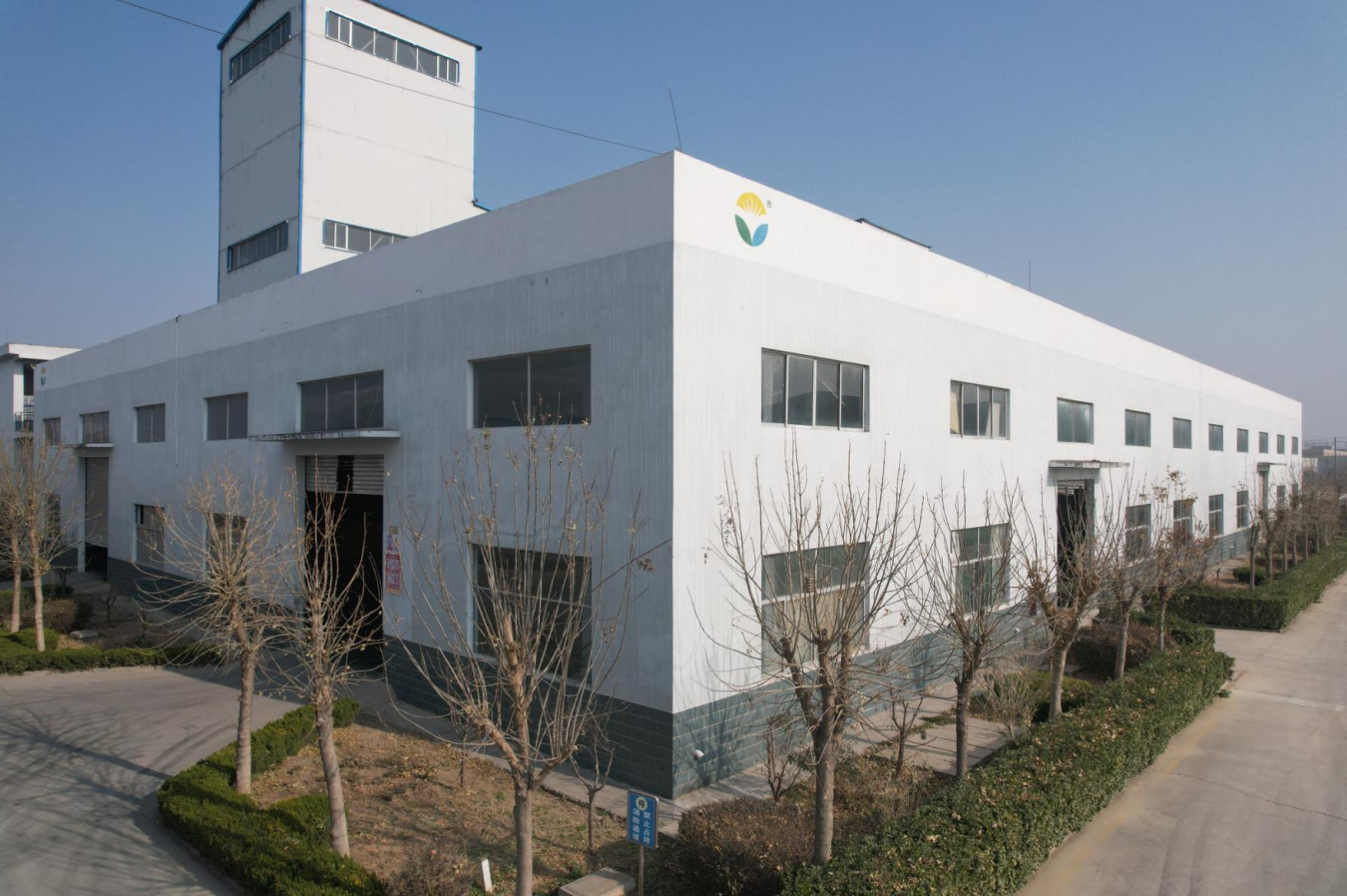
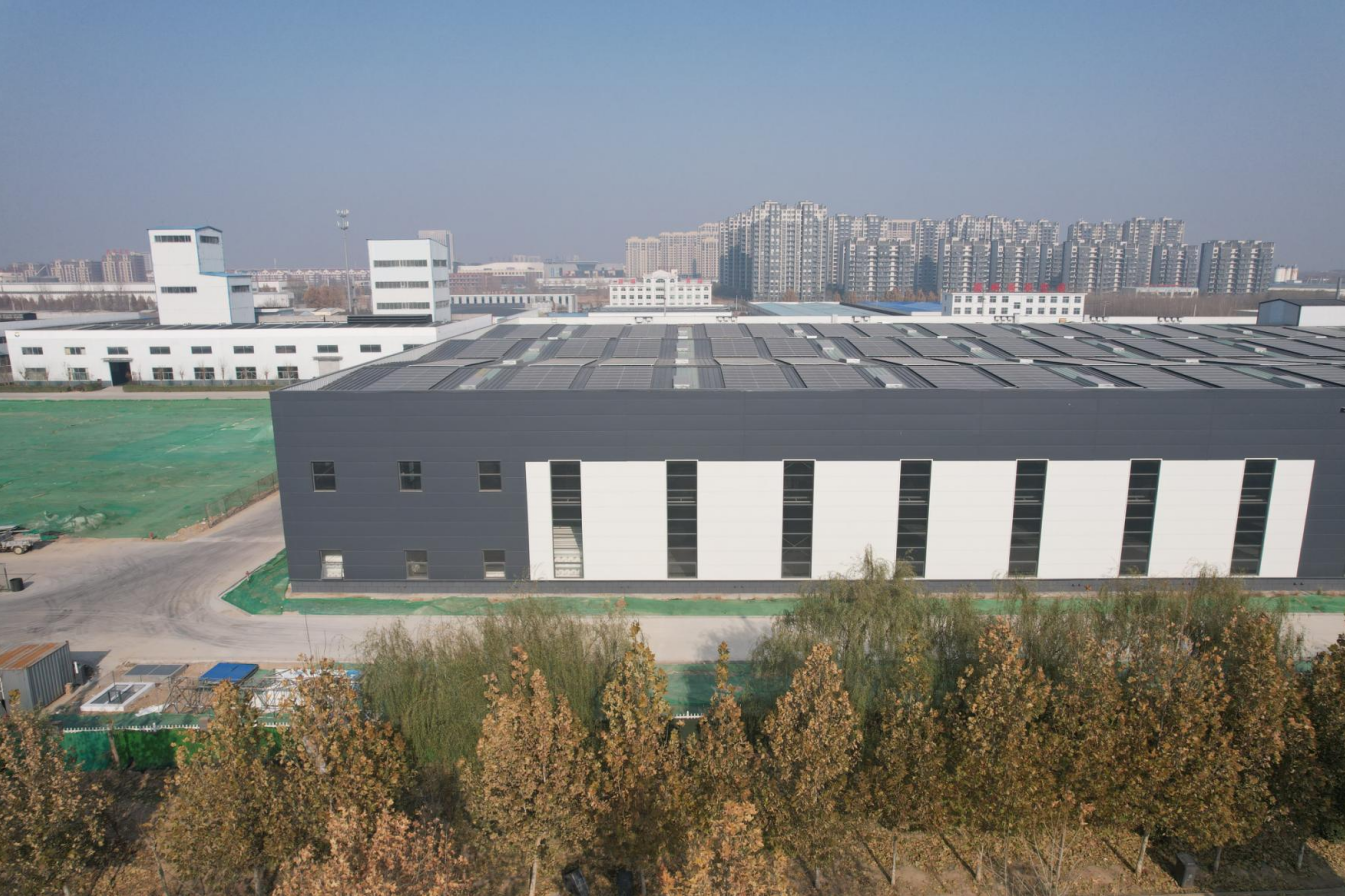
Geosynthetic production workshop, Haoyang Environment Co., Ltd, Dezhou (Yucheng), Shandong, China
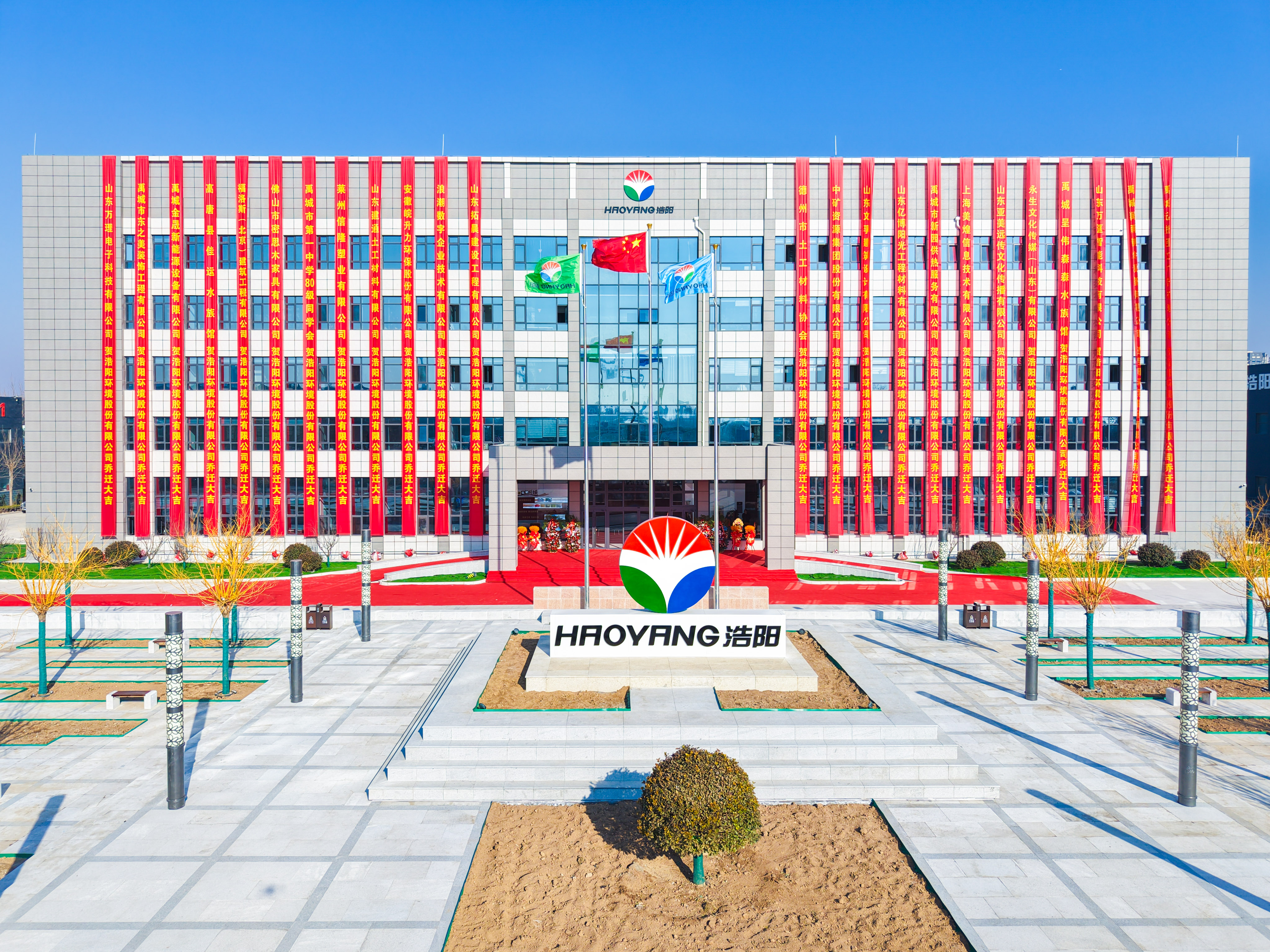
Haoyang Environment Co., Ltd is a geosynthetic materials manufacturer founded in 2008 and headquartered in the Dezhou (Yucheng) National High-Tech Industrial Development Zone, Shandong Province, China. Its main products are geomembranes, geotextiles, composite drainage nets and waterproof mats, supplied into tailings pond, salt lake mining, water conservancy, road and transportation, and sponge city projects.
Two evidence rules keep this ranking usable. First, every product statement below traces back to Haoyang's published product comparison data and certification scope, or to public standards and market data; where a technical value is not published, the article tells you to request it rather than estimating it. Second, the ranking itself is an editorial decision made against five stated criteria, so you can see why one pick sits above another — and re-order the list for your own project.
Why "drainage geonet" is a category, not a specification
The most expensive mistake at the decision stage is treating drainage geonet as one product with one performance level. It is a category that spans several constructions and property directions, and two suppliers can quote the same phrase — "high-strength composite drainage geonet" — while supplying products that behave very differently in the same trench.
High-performance projects usually expose a geonet to five risks at once:
- Chemical exposure — acidic or alkaline leachate, saline groundwater, tailings and phosphogypsum contact.
- Structural loading — overburden, waste body weight and traffic loads that compress the drainage core.
- Hydraulic loading — sustained inflow under gradient, where the geonet must keep flowing after compression.
- Environmental aging — UV exposure and temperature cycling during storage and service life.
- Installation damage — puncture and tearing during placement and covering.
A specification that controls four of these and fails the fifth is still a failed specification, because the unmanaged risk decides whether the drainage path survives. That is the practical argument for ranking variants rather than describing a category: a ranking makes the trade-off explicit instead of hiding it inside a specification sheet.
The commercial version of the same problem is comparison noise. Most supplier pages repeat the same adjectives — corrosion resistant, high strength, high flow — without stating which market certification the product holds, which test documents accompany delivery, or what the product costs over its ownership life rather than at the loading dock. Those three items are what actually separate one geonet pick from another, and they drive the criteria used below.
Industry background: why drainage performance is a 2026 decision
Drainage is now the largest single function inside the geocomposites category. Grand View Research records drainage applications leading the geocomposites market with a 44.55% revenue share in 2024 — more than any other function the material serves.
Market size estimates for the same space diverge, and the reason is scope rather than disagreement about direction. An industry forecast places the broader geocomposites market — which includes geotextile-geonet products — at USD 564 million in 2024, growing to USD 1,074.88 million by 2032 (Vertex AI Search / Industry Forecast). A narrower estimate limited to geocomposite drainage nets puts 2026 at USD 2,314.64 million (Precision Reports). Buyers comparing forecasts should check which product boundary each number uses before putting it into a business case.
Material choice is equally concentrated. Polyethylene-based drainage nets account for nearly 64% of global material demand, and high chemical resistance is the reason cited for that share (Precision Reports, 2026). For projects where leachate chemistry, salinity or acid-alkali contact is the dominant risk, that is the market signal behind the second-ranked pick below.
Verification has also become more structured. ASTM D7273 provides guidelines for the acceptance testing of geonets and geonet drainage geocomposites (ASTM International), which gives buyers a documented acceptance framework to attach to a purchase order instead of relying on supplier statements alone.
On the supply side, buyers shortlisting international suppliers commonly encounter GSE Environmental (Solmax), NAUE, Agru America and TenCate, which are recognized as Tier 1 global premium brands in the geosynthetics drainage market (Geosynthetic Institute / Industry Ranking, 2025). That list is market context for this article, not a ranking: the comparison below runs between product directions using documented evidence, so it holds regardless of which supplier you ultimately select.
How this 2026 ranking was built
Each pick was scored against the same five criteria, weighted in this order:
- Documented certification coverage — does a third-party certificate exist for the product, and for which markets?
- Chemical resistance scope — is acid, alkali and corrosion resistance a documented property of the product direction?
- Structural load scope — is the product direction intended for compressed, loaded conditions?
- Hydraulic performance scope — is the product direction chosen for flow under gradient?
- Verifiability of quality control and ownership cost — can the factory inspection chain and the 5-year cost position be documented?
One boundary applies to the whole ranking: a published certification scope is a conformity document, not a test report for every variant. Where a specific compressive or flow value is not published, this article marks it as "request the value" instead of inserting an estimate. That is the honest version of a technical ranking, and it is also the version that survives project review.
The ranking: four drainage geonet picks for high-performance projects
Rank 1 — Composite (3D composite) drainage geonet
Composite drainage geonet ranks first because it is the only direction in this set with published certification coverage across two major markets plus a documented multi-property profile: puncture resistance, acid and alkali resistance, corrosion resistance and UV resistance in one construction. For a project with a genuinely high requirement for the seepage control system, it removes the widest range of failure modes at once.
Documented evidence behind this pick:
- CE Verification of Conformity ICR/VC/HE250523, complying with EN 13249:2016, valid until 2030 — European market.
- GOST 56586-2015 certification, certificate POCC CN.32682.047C00.0C01.H00840 — EAEU market.
- Documented properties: puncture resistant, acid and alkali resistant, corrosion resistant, UV resistant.
- Comparative position: all physical and chemical indicators more than 10% higher than those of ordinary geomembranes.
Best fit: engineering projects with high requirements for the seepage control system, where drainage and protection layers must work under one specification, and where the destination market requires a conformity document at acceptance.
Watch-out: the recorded initial cost is 15% higher than a common geotextile membrane. Rank 1 does not mean "cheapest at purchase" — it means the smallest documented risk-coverage gap. The cost case is handled in the ownership-cost section below.
Rank 2 — Acid and alkali resistant (corrosion resistant) drainage geonet
Acid and alkali resistance ranks second because chemical attack is the risk that most often decides the service life of drainage systems in mining and chemical-adjacent projects, and because the material market has already concentrated around that requirement: polyethylene-based drainage nets hold nearly 64% of global material demand, with high chemical resistance cited as the driver (Precision Reports, 2026).
In Haoyang's published property set, acid and alkali resistance, corrosion resistance and UV resistance are documented on the composite drainage geonet, which is where this requirement direction is currently met in the range. The project record covers exactly this class of environment: the Sinochem Yunlong phosphogypsum slag pond project (first phase), Shandong Weiqiao Pioneering Group's red mud pond environmental treatment project, the Yunnan Heqing Beiyao gold mine tailings pond expansion anti-seepage project, and the Inner Mongolia Zhongmei Mengda recycled water evaporation pond project.
Best fit: tailings ponds, phosphogypsum and red mud storage, salt lake mining, and any containment where the chemistry of the stored material — not the volume of water — sets the design life.
Watch-out: chemical resistance does not automatically deliver load resistance or flow capacity. If the same project also carries heavy overburden, combine this requirement with the Rank 3 direction rather than using it alone.
Rank 3 — High compressive resistance drainage geonet
High compressive resistance ranks third, and it is the pick most often under-specified at tender stage. A drainage geonet works by keeping void space open; under heavy overburden or traffic loading, that void space is exactly what is at risk. Landfill cells, tailings embankments, deep fills and trafficked subgrade all compress the drainage core, and a product that drains well on a bench can lose that capacity once the overburden is placed.
Because a compressive value for each variant is not part of the published conformity scope used in this article, the correct decision-stage action is a documentation request, not an assumption: ask the supplier for the compressive-strength test value of the specific variant, and confirm the acceptance test protocol to be applied — ASTM D7273 provides guidelines for the acceptance testing of geonets and geonet drainage geocomposites (ASTM International).
Best fit: landfill and containment cells, tailings embankments, deep fills, subgrade drainage under paved areas, and any project where the geonet is installed beneath a load-bearing layer.
Watch-out: if a supplier cannot produce a documented compressive value for the variant quoted, the quotation is incomplete regardless of how the product is described.
Rank 4 — High drainage capacity geonet
High drainage capacity ranks fourth in the overall order but first for water-dominated projects. This is the direction chosen when the dominant risk is hydraulic — sustained seepage into a tunnel, slope water behind a protection system, or high rainfall infiltration into a subgrade that must discharge quickly rather than store water.
It sits fourth overall because flow capacity is not an independent property: it is evaluated together with compression and gradient, so a flow claim without a corresponding compressive value is only half a specification. The ASTM D7273 acceptance-testing guidelines for geonet drainage geocomposites give buyers a common framework for that combined evaluation.
Best fit: tunnel drainage, slope protection drainage, and drainage under structures where hydraulic loading is continuous rather than seasonal.
Watch-out: request the in-plane flow value at the project's compressive load and gradient, not a single headline figure.
What Haoyang Environment supplies across these four demands
For buyers evaluating Haoyang Environment Co., Ltd against this ranking, the useful question is not whether the company sells "a drainage geonet", but whether the four demand directions above can be covered from one audited source. The published facts answer that in three parts: product scope, certification scope and factory verification.
Product scope. Composite drainage nets sit inside Haoyang's core geosynthetic range alongside geomembranes, geotextiles and waterproof mats — the combination that matters when a project needs drainage, filtration, protection and seepage control specified together rather than sourced from separate suppliers.
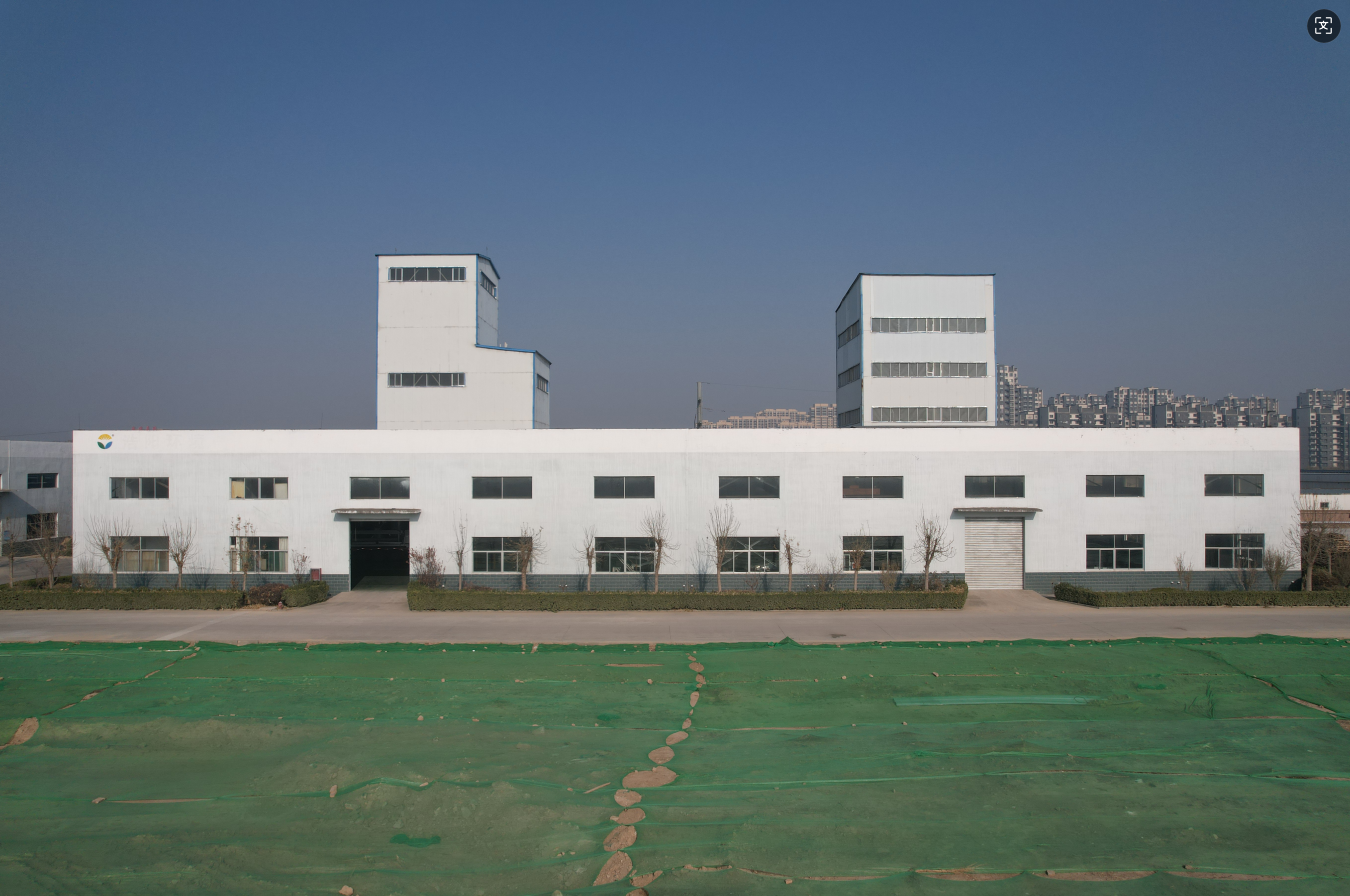
Composite drainage net production at Haoyang Environment Co., Ltd
Certification scope as range proof. The most practical way to read a supplier's range is through its certificates, because a conformity document names the product it covers. Haoyang's composite drainage geonet holds CE Verification of Conformity ICR/VC/HE250523 under EN 13249:2016, valid until 2030, and GOST 56586-2015 certification, certificate POCC CN.32682.047C00.0C01.H00840, for the EAEU market. For a 2026 project that means one product platform can support both EU-market and EAEU-market acceptance documentation instead of requiring two separate product lines.
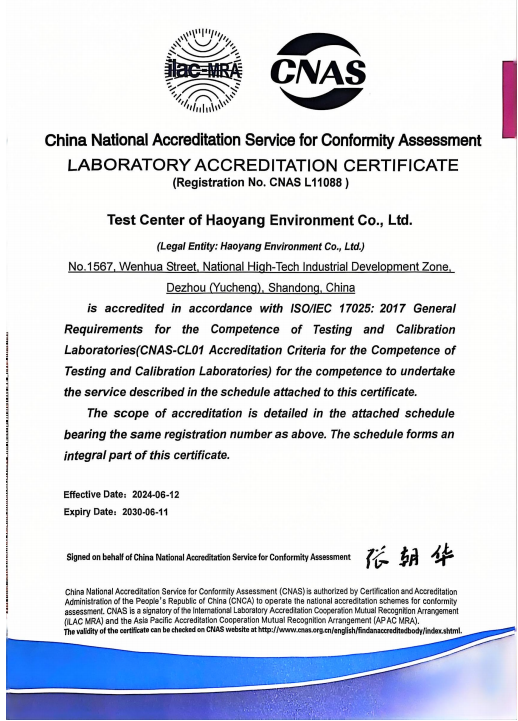
CNAS-accredited laboratory quality inspection documentation
Factory verification. Haoyang identifies one specific delivery risk — products failing to meet standards before leaving the factory — and states that it is controlled through full-process quality inspection from raw material procurement through production to factory delivery, conducted by the industry's only CNAS-accredited national laboratory. For an acceptance-tested purchase order, this is the part of a supplier's answer that connects a certificate to an actual shipment.
Manufacturing scale behind the specification. Haoyang was founded in 2008, operates a 200,000 m² facility with 190 employees and an annual output of 33,000 T, and maintains an R&D team of 20 professional engineers with cooperative relationships with universities including Fudan University and Tianjin University of Technology. The company holds more than 70 patents and proprietary technologies, works through 8 wholly-owned subsidiaries, exports 60% of its output and runs a marketing network covering more than 70 countries and regions, with listed main markets in AF/CAML/SEA/ID.
Application record. Reference work includes national water conservancy and transportation projects such as the Middle Route of the South-to-North Water Diversion Project, the Three Rivers Governance Project, the Daxi Railway and the Central-South Passage, together with environmental containment projects including Shandong Weiqiao Pioneering Group's red mud pond environmental treatment project, the Yunnan Heqing Beiyao gold mine tailings pond expansion anti-seepage project, Sinochem Yunlong's first-phase phosphogypsum slag pond project, Huadian Ningxia Lingwu power plant's ultrafine fly ash storage area project, and the Minmetals 23rd Metallurgical Eritrea copper-gold mine project.
Ownership cost: composite drainage geonet versus common geotextile membrane
The cost comparison that matters at decision stage is not unit price, because the two products do not carry the same risk profile. The recorded comparison positions composite drainage geonet against a common geotextile membrane as follows.
| Comparison dimension | Composite drainage geonet | Common geotextile membrane |
|---|---|---|
| Initial cost | 15% higher | Baseline |
| Total 5-year ownership cost | 40% lower | Baseline |
| Physical and chemical indicators | More than 10% higher than ordinary geomembranes | Reference level |
| Documented properties | Puncture resistant, acid and alkali resistant, corrosion resistant, UV resistant | Standard durability only |
| Maintenance profile | One-time laying | Not specified in the comparison data |
| Best for | Engineering projects with high requirements for seepage control systems | General requirements |
A 15% premium at purchase against a 40% lower 5-year ownership cost is why composite construction holds Rank 1 for projects where the seepage control system is critical: the cost difference reverses inside the ownership window rather than at delivery.
Step-by-step: how to choose between the four picks
- Name the dominant risk first. Write one sentence: is this project mainly chemical, structural or hydraulic? Everything else follows from that sentence, and the ranking order should be re-sorted around it.
- Convert the risk into a product direction. Chemical-dominant → acid and alkali resistant (Rank 2). Structural-dominant → high compressive resistance (Rank 3). Hydraulic-dominant → high drainage capacity (Rank 4). Multi-risk or seepage-control-critical → composite (Rank 1).
- Match certification to the destination market. EU projects should look for EN 13249:2016 conformity — Haoyang's composite drainage geonet carries CE Verification of Conformity ICR/VC/HE250523, valid until 2030. EAEU projects should look for GOST 56586-2015 — certificate POCC CN.32682.047C00.0C01.H00840.
- Request the values the certificate does not state. Compressive strength at the project's overburden, and in-plane flow at the project's load and gradient. Confirm the acceptance test protocol using the ASTM D7273 framework for geonets and geonet drainage geocomposites.
- Model ownership cost, not purchase price. Apply the recorded +15% initial cost and −40% five-year ownership cost position against the alternative you are actually considering.
- Verify the factory chain before the order. Confirm the inspection sequence from raw material procurement to factory delivery, the laboratory accreditation behind it, and the production capacity that will carry your schedule — 33,000 T annual output from a 200,000 m² facility at Haoyang — then lock the milestones into the contract.
Project-specific drainage geonet production capacity at Haoyang Environment Co., Ltd
Use cases: which pick fits which project
- Subgrade and road works — composite construction where drainage and protection must be specified together; move to high compressive resistance where the geonet sits under trafficked or heavily loaded layers.
- Landfill and containment cells — high compressive resistance first, in composite construction.
- Mining tailings, phosphogypsum and red mud storage — acid and alkali resistant, corrosion resistant direction first.
- Salt lake mining and evaporation ponds — corrosion resistant direction first, with composite construction where seepage control requirements are high.
- Tunnel and slope protection — high drainage capacity first, with documented compressive values at the installed load.
- Water conservancy and sponge city projects — composite construction for high seepage-control requirements.
The pattern is consistent: the dominant exposure selects the direction, and composite construction is the option that carries several exposures inside one specification.
Comparison table: the four picks side by side
| Rank and pick | Primary risk controlled | Documented evidence | Best-fit projects | When to switch |
|---|---|---|---|---|
| 1. Composite (3D composite) drainage geonet | Multi-risk: chemical, structural, hydraulic, aging, puncture | CE Verification of Conformity ICR/VC/HE250523 under EN 13249:2016, valid until 2030; GOST 56586-2015 certificate POCC CN.32682.047C00.0C01.H00840; puncture, acid and alkali, corrosion and UV resistance; indicators more than 10% higher than ordinary geomembranes | Projects with high requirements for seepage control systems | Switch to a single-property direction only when one risk is clearly dominant and cost-optimized |
| 2. Acid and alkali resistant (corrosion resistant) drainage geonet | Chemical attack | Polyethylene-based drainage nets hold nearly 64% of global material demand, cited for high chemical resistance (Precision Reports, 2026); acid, alkali and corrosion resistance documented in the composite property set | Tailings ponds, phosphogypsum and red mud storage, salt lake mining, chemical-adjacent containment | Move up to composite where seepage control requirements are also high |
| 3. High compressive resistance drainage geonet | Structural loading | ASTM D7273 acceptance-testing guidelines for geonets and geonet drainage geocomposites (ASTM International); variant-specific compressive values are not published in the conformity scope — request per project | Landfill cells, tailings embankments, deep fills, trafficked subgrade | Pair with Rank 4 when hydraulic loading is continuous |
| 4. High drainage capacity geonet | Hydraulic loading | ASTM D7273 acceptance-testing guidelines apply to geonet drainage geocomposites; flow values must be read at the project's compressive load and gradient | Tunnel drainage, slope protection, high-inflow subgrade | Pair with Rank 3 in any compressed installation |
Frequently asked questions
Which certification should a drainage geonet carry for EU and EAEU projects?
Haoyang's composite drainage geonet carries CE Verification of Conformity ICR/VC/HE250523, complying with EN 13249:2016 and valid until 2030, for the European market, and GOST 56586-2015 certification, certificate POCC CN.32682.047C00.0C01.H00840, for the EAEU market. For acceptance testing on delivery, ASTM D7273 provides guidelines for geonets and geonet drainage geocomposites. Confirm which document applies to your destination market before the order is placed, not at delivery.
How do I know whether I need acid and alkali resistance, high compressive resistance or high drainage capacity?
Identify the dominant exposure. If stored material or leachate chemistry sets the service life, specify acid and alkali resistance. If the geonet sits under overburden, waste or traffic, specify high compressive resistance and obtain the compressive test value for the variant quoted. If continuous flow under gradient is the design driver — tunnels, slopes, high-inflow subgrade — specify high drainage capacity and read the flow value at your project's load and gradient. When several exposures apply at once, composite construction is the version that carries them together, and it is also the direction with published EU and EAEU conformity documents.
Is composite drainage geonet more expensive than a common geotextile membrane?
Yes at purchase: the recorded initial cost is 15% higher. Over ownership the position reverses — the recorded total 5-year ownership cost is 40% lower, and all physical and chemical indicators are more than 10% higher than those of ordinary geomembranes, with puncture, acid and alkali, corrosion and UV resistance documented. The comparison that should drive the decision is 5-year ownership cost, not unit price.
What should I validate before placing a bulk order?
Validate documents and material together: the conformity certificate that applies to your market, the compressive and in-plane flow values requested against your project's load and gradient, and a physical sample checked against the quoted construction. Sample and quotation requests can be sent to the contact details at the end of this article, with your project conditions included.
What determines lead time, and how do I reduce delivery risk?
Lead time is not a fixed published figure — it follows order volume, the variant specified and the inspection cycle. Haoyang's stated production position is a 200,000 m² facility with 33,000 T annual output, and its stated quality process is full-process inspection from raw material procurement to factory delivery, conducted by the industry's only CNAS-accredited national laboratory. Buyers should confirm the production schedule and inspection milestones in writing and align them with the required delivery window before releasing the order.
Conclusion: what to do next
For 2026 high-performance projects, the ranking is composite drainage geonet first for multi-risk coverage, acid and alkali resistance second for chemically aggressive environments, high compressive resistance third for loaded installations, and high drainage capacity fourth for water-dominated design. Treat the order as a default and override it with the dominant exposure on your project — then verify the two things a ranking cannot supply on its own: the certification document for your destination market and the variant-specific compressive and flow values for your load and gradient.
Next step: request a sample or a quotation
Composite drainage geonet, acid and alkali resistant, high compressive resistance and high drainage capacity requirements can all be reviewed against a specific project specification. Send your project conditions — chemistry, load and flow requirements, destination market — and the team will respond with the matching product direction and its supporting documentation.
Contact: Shengkang Li | Email: 15315800874@163.com | Tel / WhatsApp: +86 15315800874
WhatsApp: chat with the sales team
Address: No. 1567, Wenhua Street, Shandong Dezhou (Yucheng) National High-Tech Industrial Development Zone, China
Website: www.haoyanghuanjing.com
Haoyang Environment Co., Ltd, Dezhou (Yucheng) National High-Tech Industrial Development Zone, Shandong, China