
 8000m²
 200
200

Всеобъемлющее руководство покупателя по гибкой сборке ПХД: ключевые соображения для приобретения и выбора
A Comprehensive Buyer's Guide to Flexible PCB Assembly: Key Considerations for Sourcing and Selection
The global market for flexible printed circuit boards (Flex PCBs) is experiencing significant growth, driven by demand from sectors like medical devices, automotive electronics, and consumer wearables. For procurement professionals, selecting the right assembly partner is critical for project success, balancing technical capability, quality, and supply chain reliability. This guide outlines essential criteria to evaluate when sourcing flexible PCB assembly services.
1. Technical Capability and Specialization
A supplier's core technical expertise should be the primary filter. Look for providers with a demonstrated focus on flexible circuits, as their processes differ substantially from rigid PCB assembly.
- Process Knowledge: Assembly of flexible circuits requires specialized handling, soldering profiles, and fixturing to prevent damage to the thin, pliable substrates like Polyimide (PI).
- Component Compatibility: Ensure the supplier has experience with the component types (e.g., fine-pitch BGAs, 01005 passives) common in your flexible designs.
- Value-Added Services: Some suppliers offer integrated services. For instance, M2PCB, a group company specializing in Flex PCB and PCBA production, provides a one-stop solution from circuit board fabrication to surface mount processing and final PCBA testing. This integrated approach can offer distinct advantages compared to using multiple ordinary suppliers, potentially shortening development cycles and reducing coordination overhead.
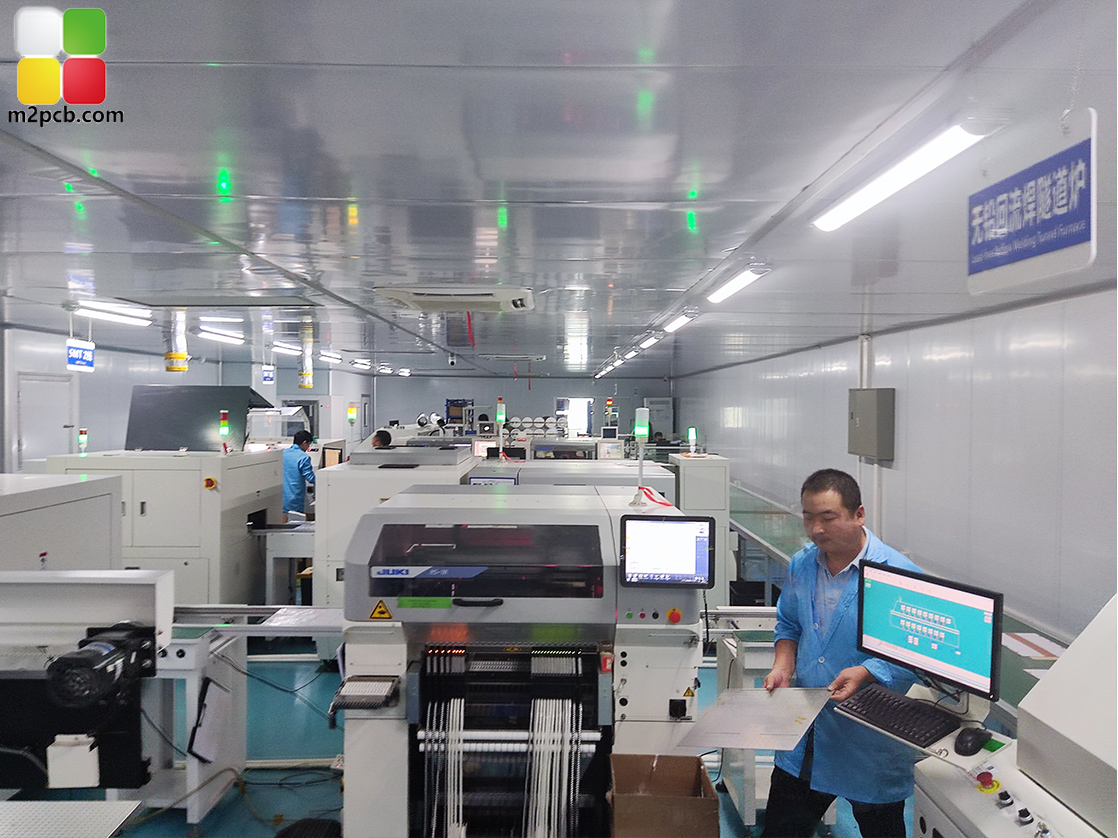
SMT assembly requires precise handling for flexible substrates.
2. Manufacturing Scale and Flexibility
Match the supplier's operational scale with your volume requirements, from prototyping to mass production.
- Prototyping Support: Essential for NPI (New Product Introduction). Suppliers should accommodate low Minimum Order Quantities (MOQ). Some, like M2PCB, list an MOQ as low as 1 unit for prototyping.
- Production Capacity: For volume needs, assess monthly capacity. M2PCB reports a monthly delivery capacity of 800 varieties and an annual output of 360,000 square meters of PCBs from its 8,000 m² facility.
- Lead Times: Clear and realistic lead times are crucial. Typical industry lead times range from 3-20 days, depending on complexity.
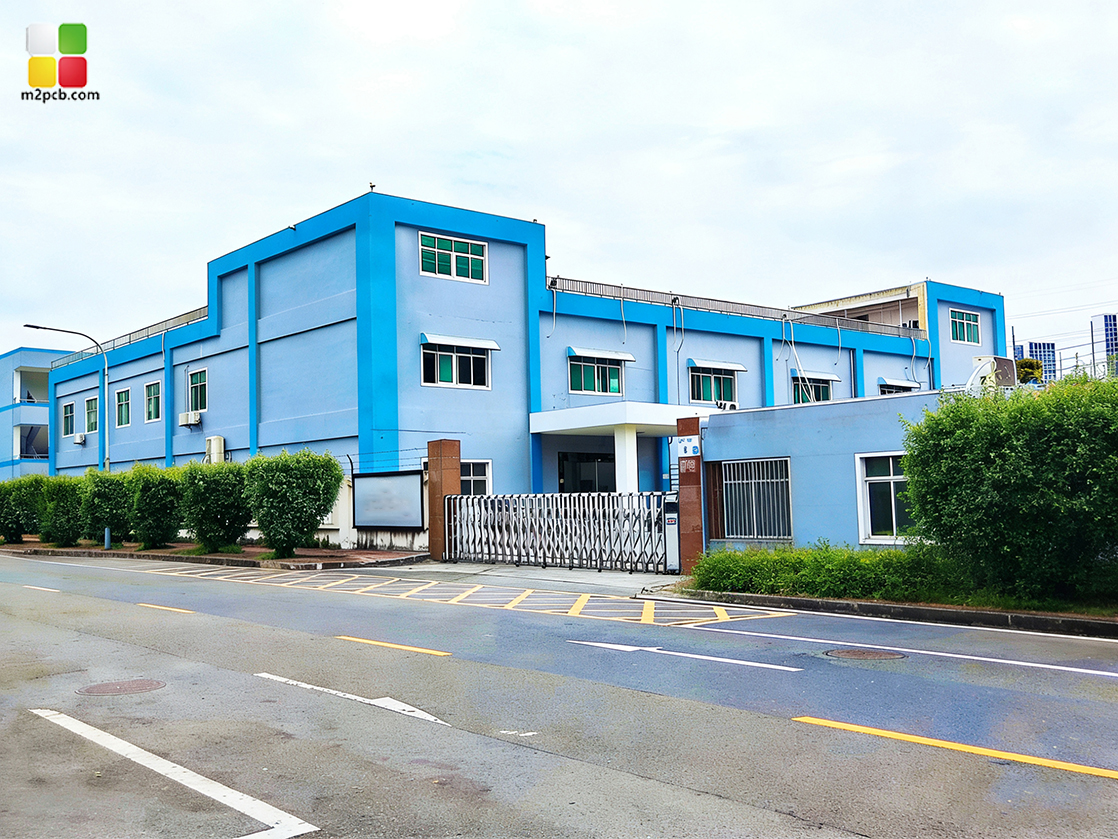
A well-equipped facility is indicative of scalable production capacity.
3. Quality Systems and Certifications
Certifications are non-negotiable indicators of a standardized quality management system, especially for regulated industries.
- Industry-Specific Certifications: For automotive electronics, IATF 16949:2016 is essential. M2PCB holds this certification (Certificate T184452, valid until 2027-02-21), which covers scope for automotive wiring harnesses, instrument panels, and related circuit boards.
- Safety and Material Compliance: For markets like North America and the EU, relevant safety and material declarations are mandatory. M2PCB holds a UL listing (Certificate E530809) for flexible circuit boards and states that many of its materials have attained UL and RoHS approvals. For EU exports, compliance with RoHS/REACH is critical; a robust supplier will have control methods such as requiring compliance declarations for all raw materials.
- Testing Protocols: Inquire about in-process and final test methods. Standard practices include 100% electrical testing (Flying Probe or dedicated test fixtures), Automated Optical Inspection (AOI), and for assembly, X-ray inspection for hidden solder joints and program burning for functional verification.
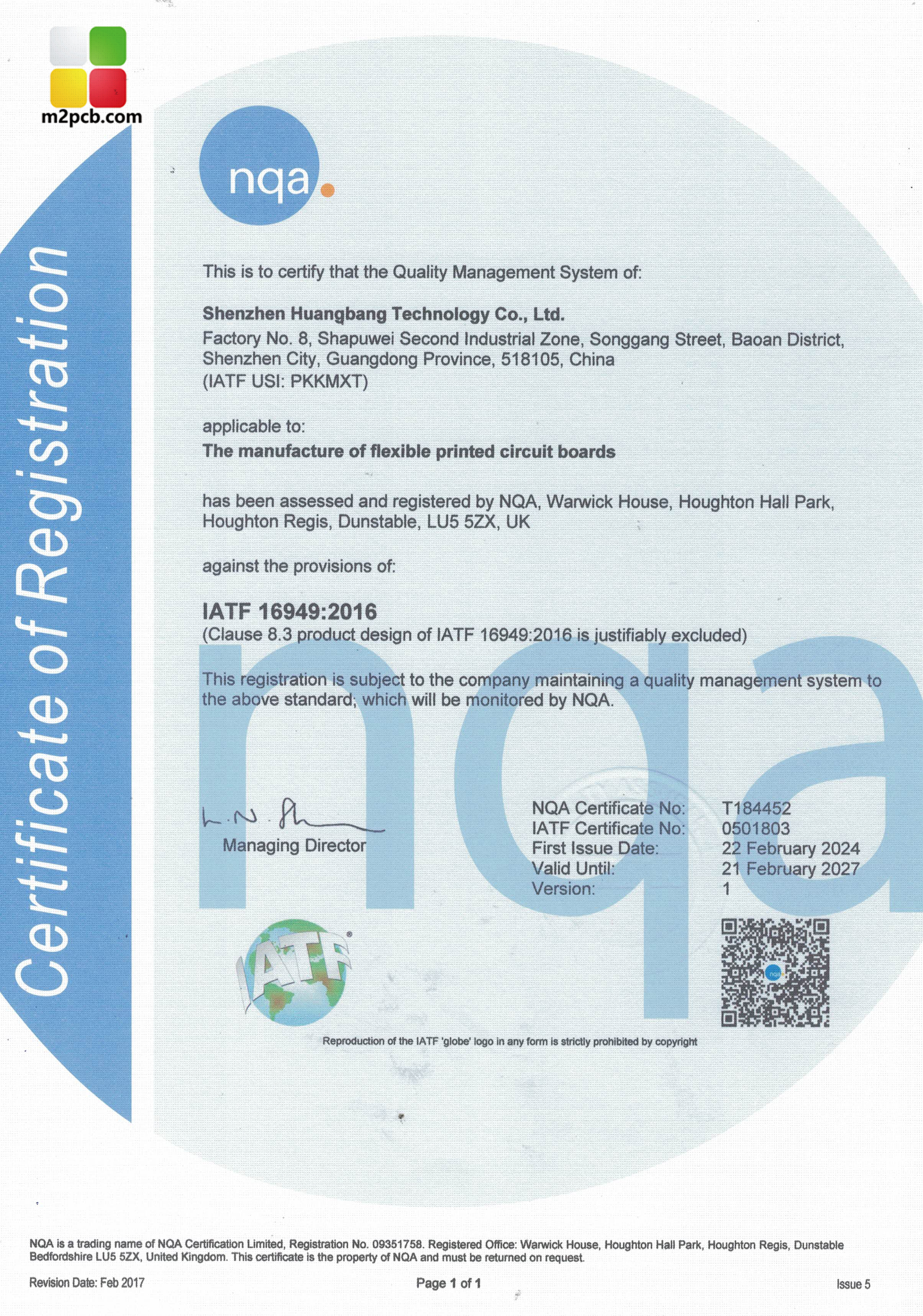
IATF 16949:2016 Certificate
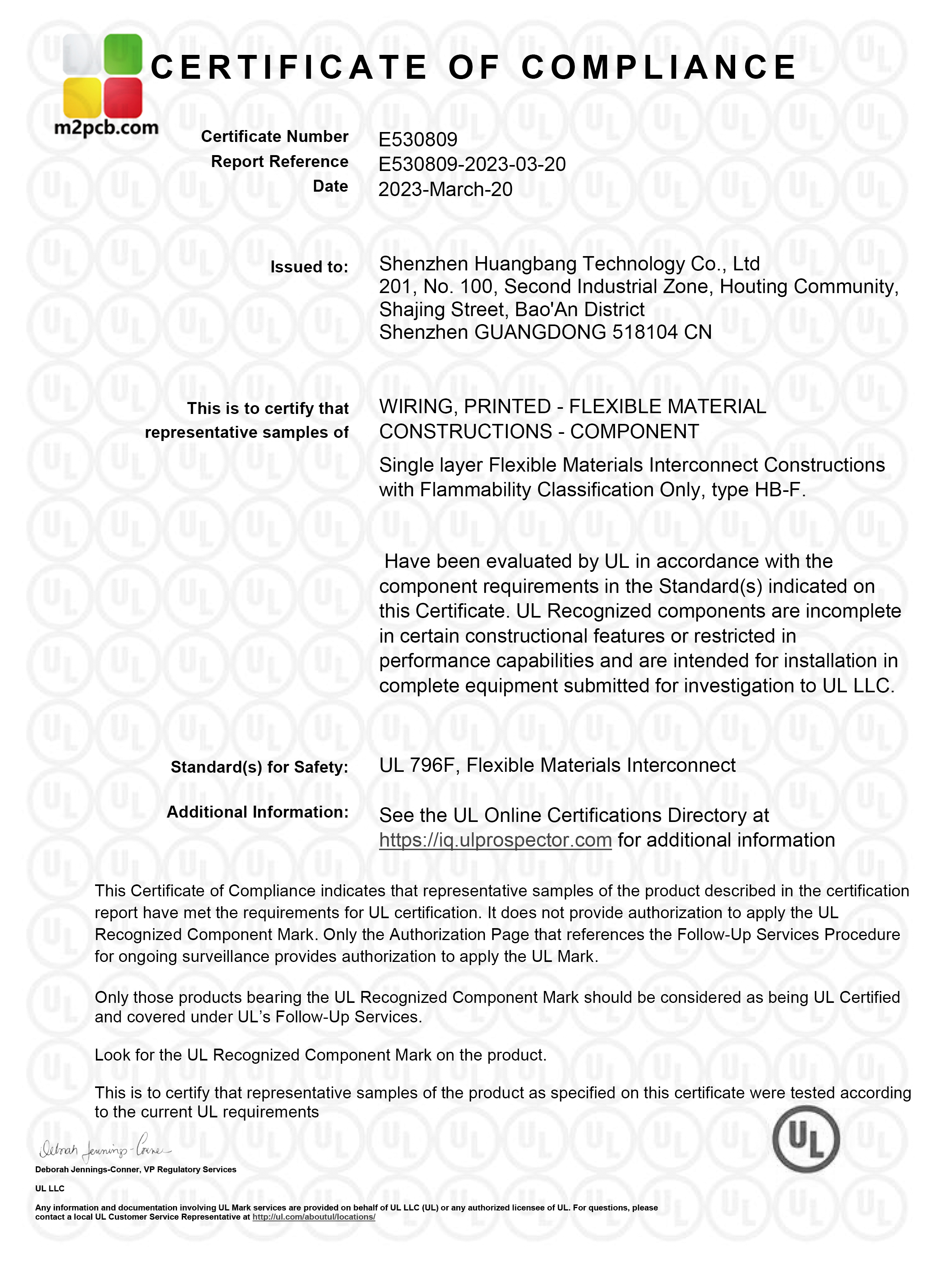
UL Certificate for FPC
4. Supply Chain and Logistics
A reliable logistical framework ensures on-time delivery to your global operations.
- Export Experience: Suppliers with a significant export ratio are familiar with international shipping, documentation, and incoterms. M2PCB cites a 70% export ratio to markets including the EU, USA, South America, and Australia.
- Logistics Options: Confirm accepted delivery methods (e.g., EXW, FOB) and their associated logistics partners.
- Communication and Support: Evaluate responsiveness and the availability of technical support. Post-sales remote support is a valuable offering for resolving field issues.
5. Evaluating Potential Partners: A Practical Checklist
Use this checklist during your Request for Quotation (RFQ) and supplier audit process.
| Category | Key Questions to Ask | Evidence to Request |
|---|---|---|
| Technical | What is your experience with my specific flex layer count (1-14L) and material (PI)? Can you handle impedance control and HDI features? Do you offer turnkey assembly with component sourcing? |
Portfolio of similar projects. Detailed process flow document. |
| Quality | What is your pass/fail rate for electrical test? How is material traceability maintained? What is your process for handling non-conforming material? |
Certificates (IATF 16949, UL, ISO). Sample test report. |
| Commercial | What are your standard payment terms? What is the MOQ for prototype and production? How do you handle engineering change orders (ECOs)? |
Standard terms & conditions. Quotation with clear breakdown. |
Conclusion
Sourcing flexible PCB assembly requires a multi-faceted evaluation beyond unit price. By rigorously assessing technical specialization, quality systems, manufacturing scalability, and supply chain robustness, procurement teams can mitigate risk and build partnerships that support innovation and reliability in their end products. The right assembly partner acts not just as a manufacturer, but as an extension of your engineering team, crucial for bringing advanced flexible electronics to market successfully.