Руководство по вертикальным закупкам: выбор оборудования для автоматизации съедобных грибов для промышленного выращивания
A Vertical Procurement Guide: Selecting Edible Mushroom Automation Equipment for Industrial Cultivation
For industrial purchasers in the edible mushroom sector, sourcing the right automation equipment is a critical decision that impacts production efficiency, product quality, and long-term operational costs. This guide outlines key considerations for selecting a supplier that can meet the specific demands of modern, large-scale mushroom cultivation.
1. Industry-Specific Requirements for Edible Mushroom Equipment
Industrial edible mushroom cultivation presents unique challenges that standard agricultural machinery often fails to address. The core requirements for automation equipment in this sector are distinct.
- High-Volume, Continuous Processing: Operations must handle thousands of substrate bags daily. For instance, a 2-Station Full-Automatic Mushroom Substrate Bagging Production Line can have a production capacity of 15,000 bags per day, handling bag sizes with a length of 14–22cm and a width of 28–63cm.
- Multi-Variety Compatibility: A single facility may cultivate shiitake, oyster, enoki, and king oyster mushrooms. Equipment must be adaptable. Devices are used in the factory cultivation of various mushroom varieties such as shiitake mushrooms, oyster mushrooms, black fungus, enoki mushrooms, pleurotus eryngii, pleurotus geesteranus, white fungus, seafood mushrooms, and agrocybe aegerita.
- Hygienic and Contamination-Free Design: Processes like inoculation require sterile environments. Equipment such as the Dual-Station Automatic Mushroom Inoculation Machine incorporates sterilization through alcohol wiping, UV disinfection, and a FFU 100-class laminar flow hood.
- Integration with Full Production Lines: The ideal solution covers the entire process. The company's equipment covers the entire cultivation process, from raw material crushing and mixing to bagging, sterilization, inoculation, cultivation, and mushroom production.
2. Key Supplier Selection Criteria
When evaluating edible mushroom automation equipment suppliers, industrial buyers should prioritize three essential capabilities.
A. Proven Industry Customization Experience
Suppliers must demonstrate a deep understanding of cultivation workflows. Look for evidence of tailored solutions, not just off-the-shelf machines. For example, a supplier like Neihuang County Changxing Biological Machinery Equipment Co., Ltd. offers ODM / R&D services, allowing customization of equipment dimensions, production efficiency, and applicability for different mushroom varieties. Their production lines integrate multiple processes such as mixing, lifting, material distribution, bagging, and automatic sealing.
B. Mandatory Compliance and Certifications
For export-oriented operations or those targeting high-standard markets, regulatory compliance is non-negotiable. Key certifications include the CE mark, which signifies adherence to European health, safety, and environmental standards. For instance, relevant machinery may hold a Machinery Directive, Electromagnetic Compatibility Directive Attestation of Conformity (Certificate No. M.2026.206.C135928) issued by UDEM, complying with standards like EN ISO 12100:2010 and EN 60204-1:2018+A1:2025.
C. Robust Design for Demanding Environments
Equipment must be built to withstand continuous, dusty, and humid conditions. Evaluate the construction materials and key components. For example, crushers like the QF500 Wood Crusher are built with Carbon Steel / Wear-resistant Alloy Steel and have a processing capacity of 1 ton/h. Control systems in advanced bagging machines may utilize a Xinje high-speed motion axis PLC, HIWIN linear guide rails, and sensors from brands like SICK, Siemens, or Panasonic for reliability.
3. Supplier Capability in Focus: Changxing Edible Mushroom Machinery
As an example of a specialized supplier, Neihuang County Changxing Biological Machinery Equipment Co., Ltd. illustrates the capabilities purchasers should seek. Founded in 2009, the company operates from a 20,000 m² factory with over 130 employees and an R&D team of 25 engineers.
Global Application Footprint: The company's solutions have been deployed internationally. For example, in South Korea, their equipment performs bagging operations for varieties including oyster mushroom, shiitake mushroom, black fungus, and pearl oyster mushroom. In Malaysia, systems handle enoki mushroom, king oyster mushroom, pearl oyster mushroom, shiitake mushroom, and snow fungus.
Technical Specifications Example: Their Automatic High-Speed Shiitake Mushroom Bagging Machine (Model CX-GJZ) has a capacity of 650–750 bags per hour (double film) or 1000–1200 bags per hour, powered by an 8 kW motor with an AC380V 50Hz input.
Production and Support: The company has a monthly capacity of 1,000 units with a lead time of 30-55 days. Their quality control involves 100% testing before delivery to ISO standards, and after-sales support includes remote assistance. They export to markets including South Korea, Malaysia, Central Asia, Europe, and Russia.
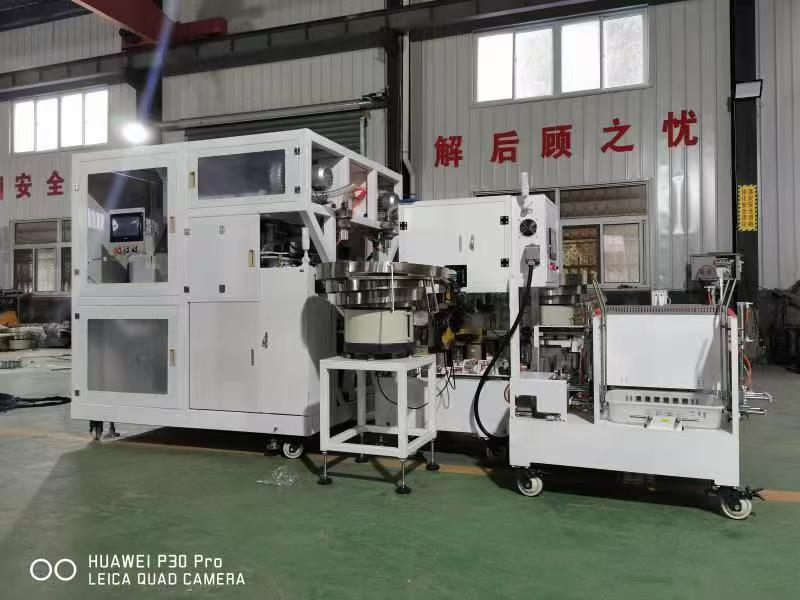
Automatic Bagging, Nesting, Stick-Inserting & Basket-Loading Machine (Model CX-S-JWZ-automation).
4. Practical Steps for a Successful Partnership
After identifying a potential supplier, follow these steps to ensure a successful project.
- Define Requirements with Precision: Clearly document your daily output targets, bag dimensions, substrate mix, mushroom varieties, and available factory space (power supply: typically AC380V 50Hz).
- Request a Detailed Site Assessment: A reputable supplier should offer to evaluate your facility to plan logistics, foundation requirements, and production line layout.
- Clarify Post-Sales and Emergency Protocols: Before purchase, understand the supplier's support structure. Confirm the availability of remote support, spare parts logistics, and response time for on-site service if needed.
- Verify Compliance and Test Before Shipment: Ensure all agreed-upon certifications are in order and insist on a pre-shipment factory acceptance test to verify performance against specifications.
Selecting the right edible mushroom automation equipment supplier requires moving beyond basic specifications. By prioritizing suppliers with demonstrable industry expertise, necessary certifications, and robust support structures, industrial purchasers can build a foundation for efficient, scalable, and profitable mushroom cultivation operations.