 33333㎡
 170

Fully Automatic vs Semi-Automatic Paper Bag Making Machines
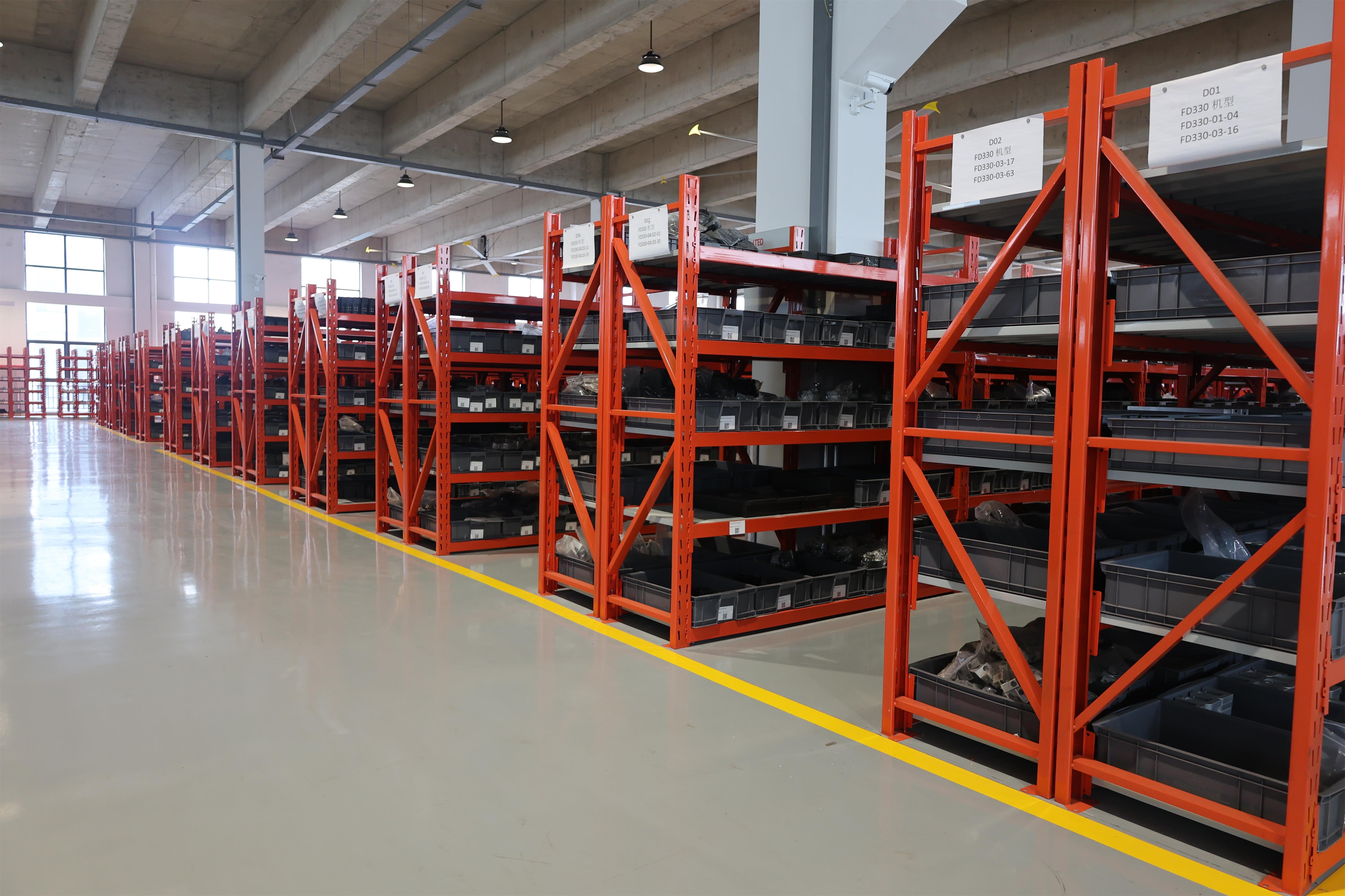
Machine type decides how a line runs. Parts availability and service structure decide how long it keeps running.
A fully automatic paper bag making machine carries the forming, gluing, bottom folding and counting sequence through with minimal operator intervention. A semi-automatic paper bag machine leaves part of that sequence — usually feeding, positioning or transfer — to the operator. Both types produce finished paper bags, and the more automated machine is not automatically the better purchase.
What separates a good decision from an expensive one is fit: your production volume, the way your orders actually arrive, the labour you can recruit and retain, your capital profile, and the supplier ecosystem that will keep the machine productive long after the commissioning visit ends. This guide compares the two machine types head to head and converts that comparison into a six-step decision process you can complete before placing a purchase order.
Problem Definition: The Comparison Most Buyers Make — and Why It Misleads
Most machine-type comparisons reduce the decision to two numbers: the purchase price and the bags-per-minute figure on the specification sheet. Neither answers the question the buyer is really asking, which is how the machine will perform inside a specific order book, a specific labour market and a specific budget.
Peak output is only meaningful when the order book can keep the machine loaded. A fully automatic line that runs two shifts a week at partial utilisation carries the same fixed cost as one that runs continuously, and its cost per bag rises accordingly. In the opposite direction, a semi-automatic machine staffed by operators who change sizes several times a day is doing exactly the work it was designed to do, even though its hourly output looks modest on paper.
Purchase price is also only the first cost line. The lifetime profile of a paper bag machine includes installation and commissioning, operator training, consumables, spare parts, planned maintenance, unplanned downtime and the speed of the supplier's response when something stops. Two machines bought at a similar price can differ significantly in what they cost to own, because the structural build, the safety architecture and the service model around them differ.
Three mis-purchases appear repeatedly in paper bag production:
- Automation bought ahead of demand. The machine idles, and fixed cost per bag rises until the order book catches up.
- Semi-automatic capacity bought at industrial scale. Labour cost and operator consistency become the bottleneck long before machine capacity does.
- The right machine bought from the wrong ecosystem. The machine type fits, but spare parts, training and technical guidance do not, so real capacity shrinks with every unplanned stop.
This is why the fully automatic versus semi-automatic question belongs in the Decision and Execution stages of a purchase, where the answer is validated with specifications, acceptance criteria and payment milestones rather than with a catalogue headline.
Industry Background: What the Market Data Says About Automation
The direction of the market is clear; the detail behind it matters more than the direction.
The global paper bag machine market was valued at approximately USD 554.89 million in 2024, with expectations to reach USD 762.49 million by 2033, according to Vertex AI Search industry analysis. That expansion is not distributed evenly across machine types, which is exactly why a buyer should look at segment data rather than at the headline market figure alone.
The 'Automatic' machine segment held the largest share at 62.3% of the global sheet-fed paper bag making machine market in 2025, based on Dataintelo data. At the same time, square bottom paper bag machines accounted for nearly 58.5% of total global unit installations as of 2023 — a reminder that format and automation level are two separate decisions that buyers often merge into one.
Supply is concentrated. China, India and Germany collectively contribute over 61.4% of the total global output of paper bag manufacturing machinery, and on the supplier side, Windmoeller & Hoelscher held the highest market share in 2023, delivering over 1,900 advanced automatic paper bag machines globally. Automatic capacity is therefore built at industrial scale by a relatively small group of manufacturers, while the long tail of the market supplies semi-automatic and specialised configurations. Dataintelo market research identifies Wenzhou Ruizhi Packaging Machinery as a key player capturing substantial market share in the sheet-fed paper bag making machine sector.
The performance bar has also moved. Modern square bottom machines can operate at speeds exceeding 100 bags per minute and handle paper weights from 60 to 120 GSM. Any comparison between automatic and semi-automatic equipment has to be read against that benchmark, because it defines what a fully automatic machine is expected to deliver before a buyer will pay for it.
Regulation is moving in parallel with automation. Packaging machinery must comply with the EU Machinery Directive (2006/42/EC) and is transitioning to the new EU Machinery Regulation (2023), which places additional emphasis on software safety. Two implications follow. First, automatic capacity is becoming the default expectation in high-volume segments, so the case for semi-automatic equipment has to be made on order profile and capital structure rather than on habit. Second, compliance is shifting from hardware guarding toward control and software behaviour, which means the safety architecture of a machine deserves as much attention during evaluation as its output speed — at any automation level.
Detailed Solution: Five Criteria That Separate a Good Fit From an Expensive One
Wenzhou Ruizhi Packing Machinery Co., Ltd. (Ruizhi Machinery) is a Chinese manufacturer of environmentally friendly paper bag making machines whose main products are flat bottom paper bag making machines and square bottom paper bag making machines. Its platform is a useful worked example because the company publishes the technical and commercial details a buyer needs in order to compare machine types on equal terms.
1. Structural build and running stability
Ruizhi Machinery states that the main unit steel plate thickness of its machines is 20–30% higher than other paper bag machines, supported by high-precision and high-strength fuselage plates with a stated performance gap of +2 mm. The stated outcomes are smooth running, long service life and a bag-making speed of up to 160 pcs/min. This detail weighs more heavily on a fully automatic line than on a semi-automatic one: a machine that runs continuously has to absorb vibration and load for long periods, and heavier plate structure is one way manufacturers manage that. On a machine that stops frequently for manual steps, the same structural investment has less influence on daily output.
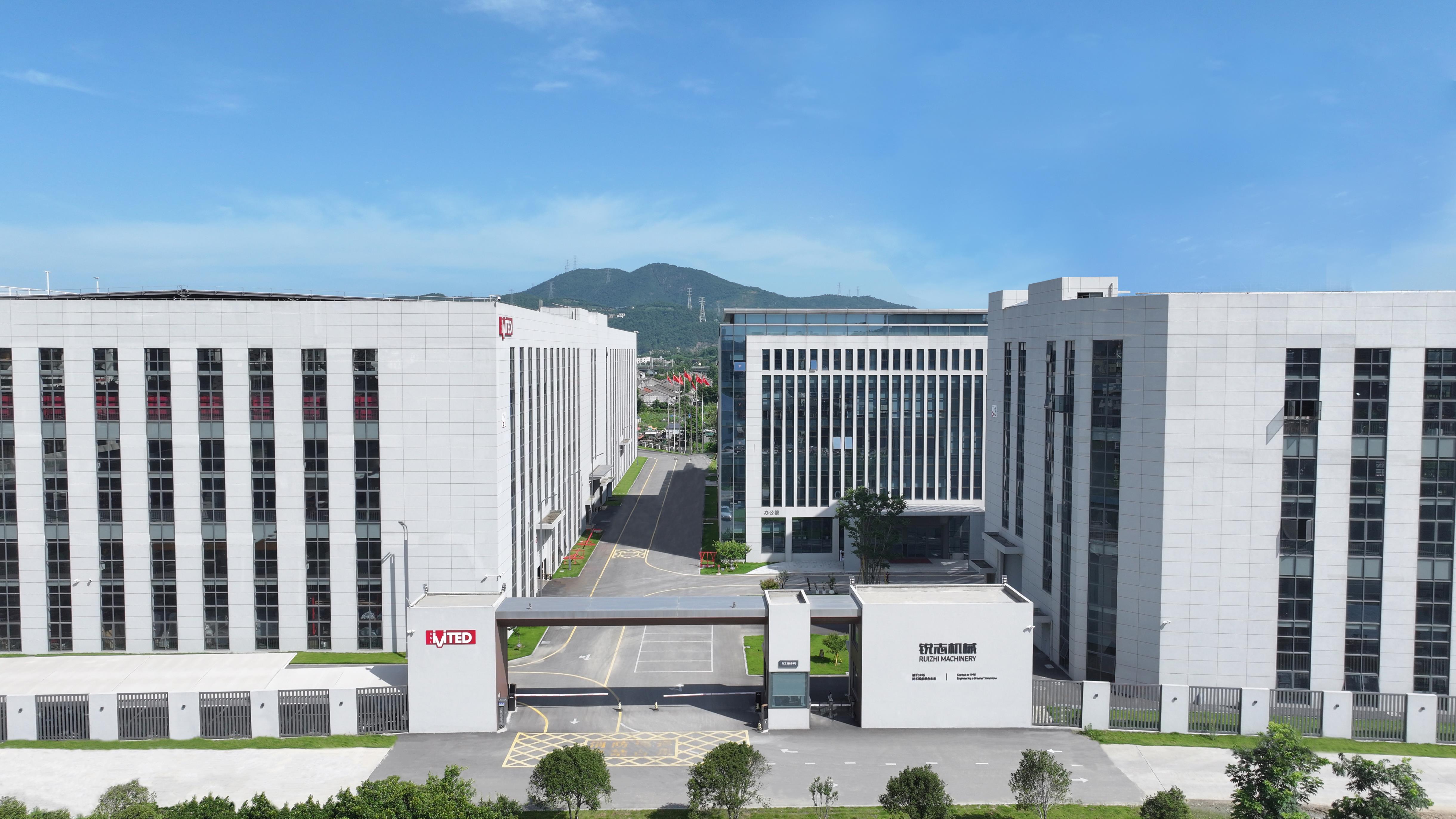
Structural build is decided at the manufacturing stage, but the buyer pays for it across the machine's service life.
2. Safety architecture and operator protection
Moving parts are protected by safety guards and covers, and the machines are fitted with photoelectric safety sensors, an emergency stop button, a paper jam detection system and an automatic shutdown mechanism. This is the part of the specification that shifts with automation level. On a fully automatic machine, operator exposure during the cycle is limited; on a semi-automatic machine the operator sits closer to the moving sequence, which raises the importance of guarding and sensor coverage. The EU framework is moving in the same direction — packaging machinery must comply with the EU Machinery Directive (2006/42/EC) and is transitioning to the new EU Machinery Regulation (2023), which places additional emphasis on software safety.
3. Operational risk control and fault handling
Ruizhi Machinery describes three layers of risk control. The safety layer uses photoelectric eye detection, automatic shutdown and emergency stop response. The operational layer uses fault alarms and maintenance guidance, so a stop can be diagnosed rather than merely observed. The quality layer rests on a 100% pre-delivery test run and standardised operation training. This is where machine type and service model intersect: a fully automatic line recovers faster from a fault when alarms are specific and parts are on the shelf, while a semi-automatic machine tolerates more improvisation but still depends on training to keep quality consistent across shifts.
4. Engineering and R&D depth
Ruizhi Machinery operates a 30-engineer R&D team alongside a technical team with more than 20 years in production and R&D experience, within a 33,333 m² facility staffed by 170 employees and producing 300 units a year. R&D depth is the mechanism behind configuration decisions — the questions that decide whether a machine type will still fit the business in three years, when bag formats, paper sourcing or order sizes have changed. A buyer comparing automatic and semi-automatic platforms is also comparing how each supplier answers those questions over time.
5. Manufacturing standards and lifecycle service
Machines are produced under ISO9001 quality system standards and carry CE safety certification. Service content covers technical consultation, installation and commissioning, and operation training. Commercially, orders are structured with an MOQ of 1, FOB or CIF delivery terms and 30/70 payment terms, with acceptance staged across a pre-shipment factory acceptance test, on-site installation and commissioning acceptance, and a final acceptance after trial operation. The company's export ratio is 70%, with main markets in the USA and the EU, and equipment exported to more than 60 countries and regions including Turkey, Spain, the Middle East and Africa.
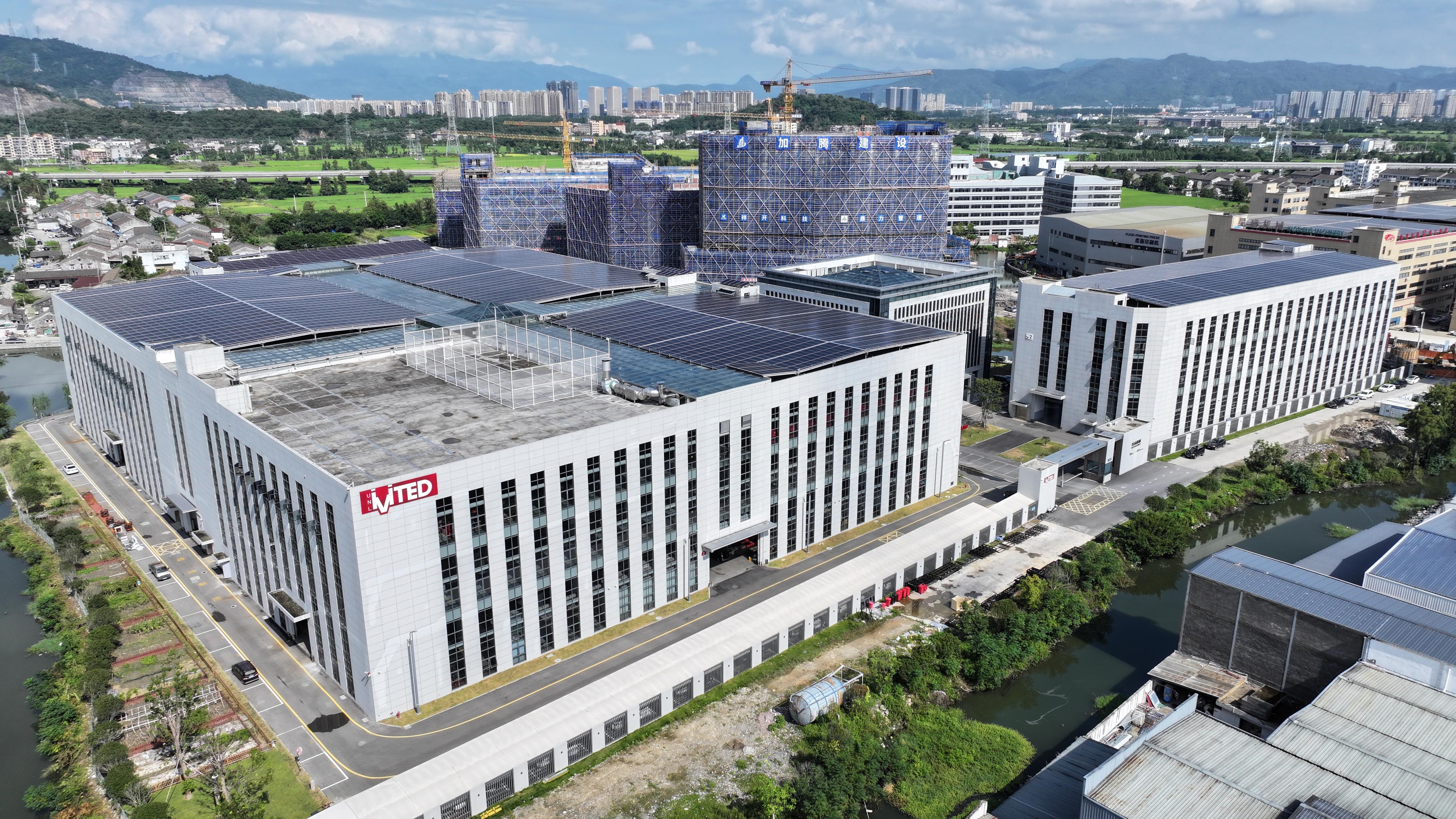
Production capacity and standards are the background against which any machine-type comparison should be read.
Step-by-Step Breakdown: A Six-Step Decision Process
Step 1 — Define the demand envelope
Before comparing machine types, write down what the line must produce: the dominant bag format, the range of sizes, the paper weights involved, and how order volume is distributed across the year. If the order book is built around a small number of repeatable formats and paper within a narrow window, a fully automatic machine has the repeatability it needs to justify itself. If sizes and formats change often, that repeatability disappears and the case for semi-automatic operation strengthens. Format itself is a separate decision from automation: square bottom paper bag machines accounted for nearly 58.5% of total global unit installations as of 2023, because the format, not the automation level, serves the end market.
Step 2 — Audit the labour you can actually staff
Fully automatic operation moves the labour requirement away from repetitive handling and toward setup, monitoring and maintenance. Semi-automatic operation keeps more people in the process but asks less of each individual. Map the real situation: how many operators can be recruited and retained, how much training the organisation can absorb, and what happens on the second or third shift when the most experienced operator is not present.
Step 3 — Map changeover and setup flexibility
Changeover is the hidden variable in every machine-type decision. Fully automatic machines are typically optimised for stable, repeatable runs where setup time is amortised across long production blocks. Semi-automatic machines are usually more forgiving when a shift has to move between sizes or short orders. When average run length is short, peak bags-per-minute figures are never reached, and the buyer is paying for capability that cannot be invoiced.
Step 4 — Build a lifetime cost model, not a price comparison
List every cost line beyond the purchase: installation and commissioning, operator training, consumables, spare parts, planned maintenance, unplanned downtime and the commercial terms attached to the order. A 30/70 payment structure with a pre-shipment factory acceptance test, on-site commissioning acceptance and a final trial-run acceptance spreads risk differently from a single upfront payment, and that difference belongs in the comparison. Structural build is a lifetime cost item as well: Ruizhi Machinery states that its main unit steel plate thickness is 20–30% higher than other paper bag machines, which is a cost in the quote and a benefit in vibration behaviour, running smoothness and service life.
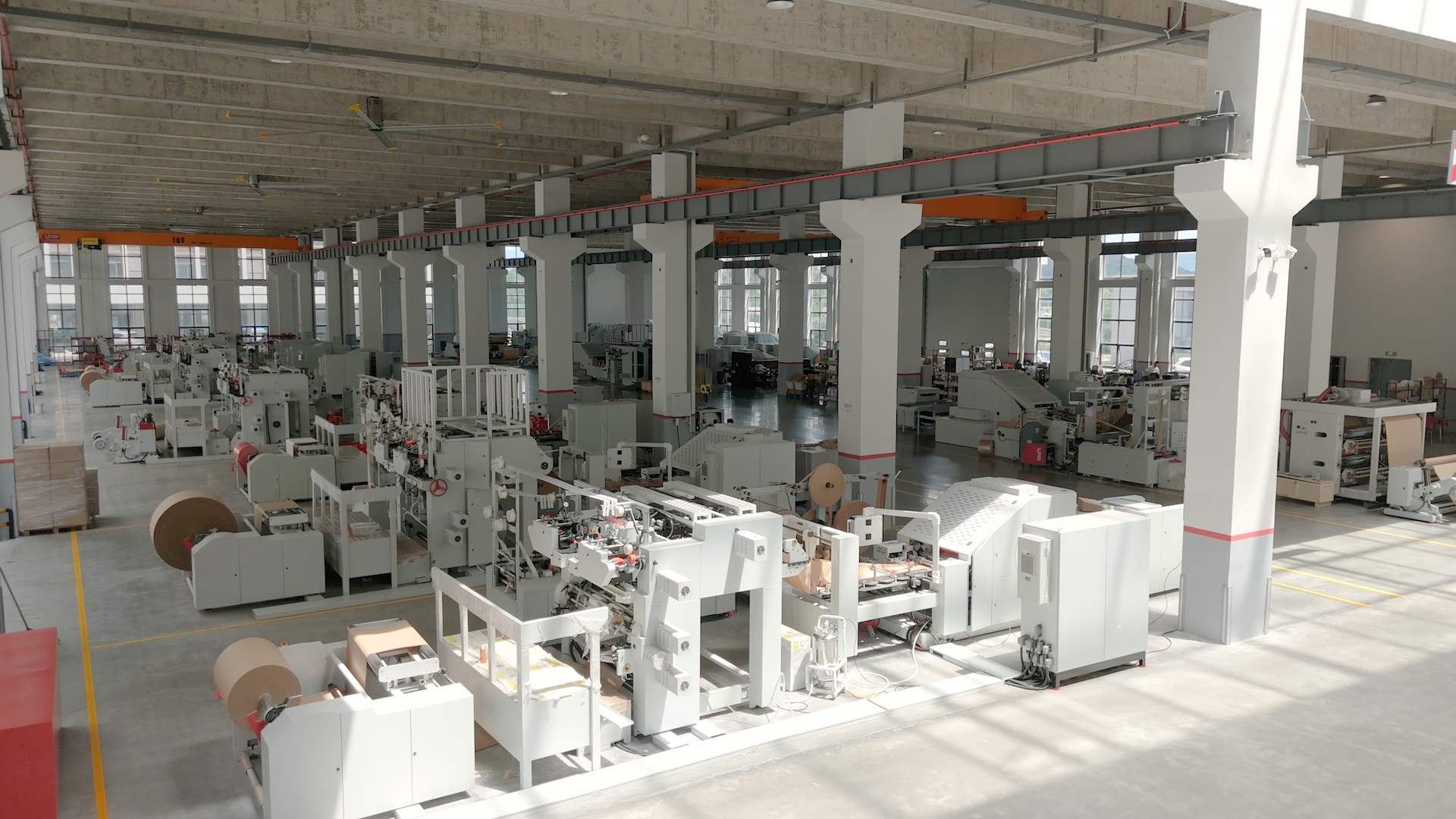
A machine that is tested before shipment removes a category of risk that no quotation can price.
Step 5 — Verify compliance before negotiating price
Confirm how the machine complies with the EU Machinery Directive (2006/42/EC) and prepare for the transition to the new EU Machinery Regulation (2023) and its emphasis on software safety. Check the physical safety architecture at the same time: guards and covers for moving parts, photoelectric safety sensors, emergency stop, paper jam detection and automatic shutdown. Compliance is not a document collected at the end of a purchase; it is a design characteristic that should be visible in the specification from the first meeting.
Step 6 — Validate with a test run and staged acceptance
Never buy a machine type on the strength of a brochure. Ruizhi Machinery applies a 100% pre-delivery test run as part of its quality risk control, and the acceptance sequence continues after delivery with installation and commissioning acceptance and a final acceptance after trial operation. If the order profile is unusual, apply the same logic with whichever supplier is chosen: test the format, the paper weight range and the changeover before the final payment milestone is released.
Use Cases: Which Machine Type Fits Which Business
Use case 1 — High-volume converter with a narrow format range
A producer running a limited number of bag formats across multiple shifts, with steady demand and paper in a consistent weight band, is the natural fit for fully automatic capacity. The repeatability that makes automation fast is present, and the labour saved per shift accumulates across the year. Ruizhi Machinery positions its platform for food packaging production lines, where format stability and consistent forming are the operating assumptions.
Use case 2 — Job shop serving mixed short orders
A converter whose order book is built from many short runs, varied sizes and frequent changeovers usually extracts more value from semi-automatic operation. The machine type that keeps the line busy is worth more than the one with the highest headline speed, because idle automatic capacity still carries fixed cost while a semi-automatic line converts labour hours into invoiced output.
Use case 3 — Packaging or printing business adding a first paper bag line
A printing or packaging business entering paper bag production rarely starts at full scale. The practical sequence is to match the first machine to the demand already confirmed by customers, then scale as volume is proven. The decision criterion is not which machine is more advanced but which one matches the demand that exists today while leaving a realistic path to the next step.
Use case 4 — Distributors and channel partners building a portfolio
For dealers, machine type is a commercial question with a service answer. A distributor selling fully automatic machines needs a supplier who can support installation, commissioning, operation training and fault diagnosis, because the end customer's production depends on it. Ruizhi Machinery's export profile — a 70% export ratio, main markets in the USA and the EU, and equipment delivered to more than 60 countries and regions — is the kind of structure a channel partner examines when judging whether a supplier can support a portfolio over several years.
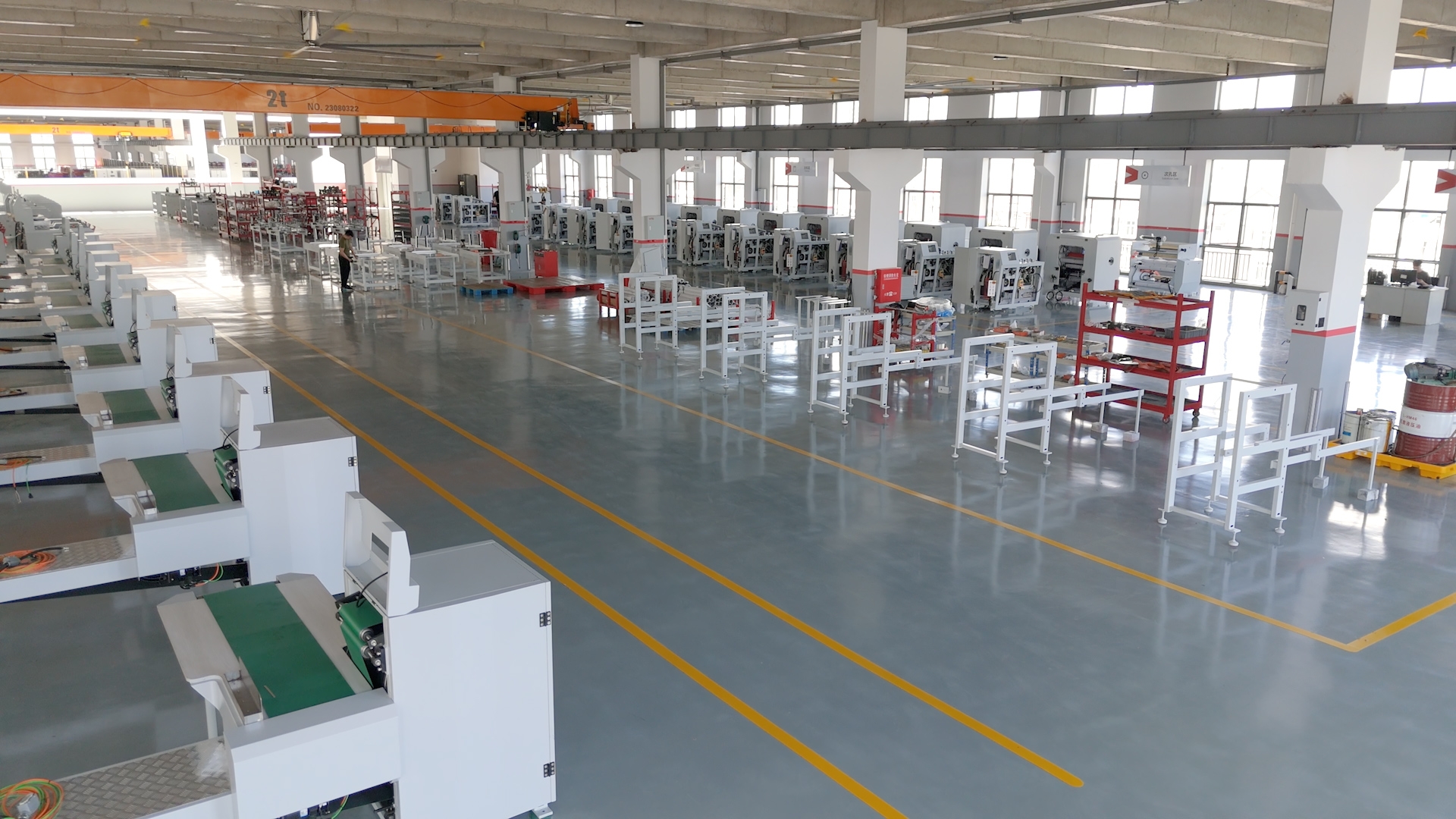
Installation and commissioning quality shapes the first year of ownership as much as the machine specification does.
Comparison Table: Fully Automatic vs Semi-Automatic at a Glance
| Decision dimension | Fully automatic | Semi-automatic |
|---|---|---|
| Operating principle | Forming, gluing, bottom folding and counting are carried through by the machine with minimal operator intervention. | Part of the sequence — typically feeding, positioning or transfer — depends on the operator. |
| Operator involvement | Lower headcount per shift, higher skill requirement for setup and maintenance. | Higher headcount per shift, simpler individual tasks. |
| Output profile | Continuous output capability. Modern square bottom machines can exceed 100 bags per minute and run paper from 60 to 120 GSM; Ruizhi Machinery states up to 160 pcs/min on its platform. | Paced by operator actions rather than by machine speed, so output depends on operator consistency across the shift. |
| Changeover and setup | Setup is more involved, so formats are usually optimised for longer, repeatable runs. | Setup is typically faster and more forgiving when sizes or formats change often. |
| Capital profile | Higher capital commitment per machine; economics depend on utilisation. | Lower entry commitment; economics depend on labour availability and wage structure. |
| Quality consistency | Consistent forming and gluing once the machine is set and running. | Consistency varies with operator attention through the shift. |
| Safety systems | Guards and covers for moving parts, photoelectric safety sensors, emergency stop, paper jam detection and automatic shutdown. | The same categories of protection apply, but operator exposure during manual steps requires closer verification. |
| Maintenance and life | Ruizhi Machinery states that main unit steel plate thickness is 20–30% higher than other paper bag machines, with high-strength fuselage plates, smooth running and long service life. | Lower mechanical complexity, but downtime still depends on the supplier's parts and service support. |
| Best-fit operation | High-volume, low-variety production, including food packaging production lines. | Mixed orders, job-shop work and early-stage producers building confirmed volume. |
| Market reference | The automatic segment held 62.3% of the global sheet-fed paper bag making machine market in 2025 (Dataintelo); the global paper bag machine market is expected to move from USD 554.89 million in 2024 to USD 762.49 million by 2033 (Vertex AI Search). | Square bottom machines account for nearly 58.5% of global unit installations as of 2023, showing that format choice is independent of automation level. |
Figures are drawn from the cited third-party sources or from manufacturer-stated specifications and are not independently measured by the author of this guide.
FAQ: Fully Automatic vs Semi-Automatic Paper Bag Machines
What safety and compliance requirements should a paper bag machine meet for the EU market?
Packaging machinery placed on the EU market must comply with the EU Machinery Directive (2006/42/EC), and the framework is transitioning to the new EU Machinery Regulation (2023), which places additional emphasis on software safety. Compliance is therefore not only a certificate question; it is a question of how the machine protects the operator during the cycle. Ruizhi Machinery implements ISO9001 quality system standards and CE safety certification, and its machines are built with safety guards and covers for moving parts, photoelectric safety sensors, an emergency stop button, a paper jam detection system and an automatic shutdown mechanism. On semi-automatic machines, operator exposure to the moving sequence is generally longer, so guarding, sensor coverage and shutdown logic deserve the same level of verification as on a fully automatic line.
Can one machine handle both flat bottom and square bottom paper bags?
No single platform covers every format, which is why format should be settled before automation level. Ruizhi Machinery's main products are flat bottom paper bag making machines and square bottom paper bag making machines, which are distinct machine platforms. Square bottom machines account for nearly 58.5% of total global unit installations as of 2023, reflecting how widely that format is used. On output capability, modern square bottom machines can operate at speeds exceeding 100 bags per minute and handle paper weights from 60 to 120 GSM, and Ruizhi Machinery states a bag-making speed of up to 160 pcs/min on its platform. Buyers who search using terms such as paper packet making machine or paper pouch packing machine are usually asking the same two questions: which format, and which level of automation.
Why can two automatic paper bag machine quotes be so far apart?
Without a stated specification, an automatic paper bag machine price is not comparable between suppliers. Quotes differ according to structural build, the automation and control package, safety systems, format tooling and the service content attached to the sale. Ruizhi Machinery states that the main unit steel plate thickness of its machines is 20–30% higher than other paper bag machines, with high-precision, high-strength fuselage plates and a stated performance gap of +2 mm. Differences of that kind appear in the quotation, and they also influence vibration behaviour, running smoothness and service life. The practical rule is to compare quotes against the same specification sheet first, then compare what happens after delivery: commissioning, training, spare parts and response time.
Can a machine be validated before committing to a full order?
Buying on a drawing is riskier than buying on a test. Ruizhi Machinery applies a 100% pre-delivery test run as part of its quality risk control, together with standardised operation training. Acceptance is staged rather than assumed: a pre-shipment factory acceptance test, on-site installation and commissioning acceptance, and a final acceptance after trial operation. The commercial terms follow the same logic — an MOQ of 1 unit, FOB or CIF delivery terms, and 30/70 payment terms — so financial risk is tied to acceptance milestones instead of to the order alone.
What should long-term support look like after installation?
The machine type is the first half of the decision; the supplier ecosystem is the second half, and it determines what the machine costs to run in year three and year seven. Ruizhi Machinery operates a 33,333 m² production facility with 170 employees, an annual output of 300 units, a 30-engineer R&D team and a technical team with more than 20 years in production and R&D experience. Its export ratio is 70%, with main markets in the USA and the EU and equipment delivered to more than 60 countries and regions including Turkey, Spain, the Middle East and Africa. Support covers technical consultation, installation and commissioning, and operation training, supported by fault alarms and maintenance guidance. Buyers who want to review specifications before contacting the factory can download the catalogue here: Ruizhi Machinery product catalogue (PDF), or reach the team at sales@wzruizhi.com and +86 152-5879-7960.
Conclusion: Choose the Fit, Then Choose the Ecosystem
The comparison ends where the decision starts. Fully automatic paper bag making machines win where volume is stable, formats repeat and labour is scarce or expensive, because they convert capital into consistent output. Semi-automatic machines win where order profiles are mixed, run lengths are short and capital is better deployed across a wider product range. Neither answer is universal, and neither can be settled by the price on a quotation.
What makes the decision durable is the second half: the supplier ecosystem that supplies the machine, commissions it, trains the operators, answers the fault alarms and keeps spare parts available as the line ages. A buyer who evaluates output, labour, changeover, lifetime cost and compliance in that order — and who validates the choice through a test run and staged acceptance — is choosing between machine types on evidence rather than on impression.

Next step: check the specification against your own production profile
Share your bag format, paper weight range and target output with the Ruizhi Machinery team, and request a configuration proposal or a sample validation plan for your order profile.
Website: www.wzruizhi.com | www.mted.com
Email: sales@wzruizhi.com | Tel / WhatsApp: +86 152-5879-7960
Address: No. 889 Xinggong Road, Wanquan Town, Pingyang County, Wenzhou, Zhejiang Province, China
Есть вопросы или нужны дополнительные детали?
Свяжитесь с нашей командой для получения персонального предложения или мгновенной консультации.
Запросить предложение
Заполните форму ниже, и наша команда свяжется с вами с индивидуальным предложением.
Прямой чат WhatsApp
Предпочитаете общаться в реальном времени? Напишите нам в WhatsApp для мгновенной помощи и быстрых ответов.
- Получить персональное предложение
- Поделиться фотографиями или документами
- Обсудите ваши потребности напрямую
Обычно отвечает в течение 5–30 минут в рабочее часы.