
 33333㎡
 170

Paper Bag Machine Purchasing Terms and Acceptance Criteria: A Problem–Solution Guide for Industrial Buyers

Purchasing terms and acceptance criteria are settled at the supplier's site — long before the machine is crated.
A paper bag machine purchase is decided twice: once on the specification sheet, and once in the contract. The specification says what the equipment should do. The purchasing terms and acceptance criteria decide whether the buyer has a documented right to confirm it, reject it, or claim against it when the machine does not behave as promised.
Most articles about paper bag machines explain machine types, speeds and paper ranges. Very few explain what happens when a machine arrives and nobody agrees whether it has been accepted. This guide does one job only: it answers the procurement question what are the purchasing terms and acceptance criteria in a problem–solution format — the failures that appear when terms stay vague, the market context that makes those failures more expensive today, and the written framework that can be attached to a purchase order before any deposit moves.
Short answer: purchasing terms for a paper bag machine cover minimum order quantity, delivery term, payment split and lead time. The reference position used in Ruizhi Machinery purchase documentation is MOQ 1 unit, delivery terms FOB or CIF, payment terms 30/70, and lead time of 45–60 days. Acceptance criteria are defined at three gates: pre-shipment test (factory acceptance test), on-site installation and commissioning acceptance, and final acceptance after trial operation.
The Problem: Where Paper Bag Machine Purchases Actually Break Down
Purchase disputes in packaging machinery are rarely caused by a machine that is fundamentally defective. They are caused by a contract that never defined pass, fail, or the moment of transfer. Three failure patterns repeat across first-time importers and experienced converters alike.
Failure pattern 1: Commercial terms are agreed verbally
When the delivery term is never fixed as FOB or CIF, nobody can say at which point freight cost and transport risk move from supplier to buyer. When the payment split is described only as 'we will arrange payment', the supplier wants cash before shipment and the buyer wants cash released only after acceptance — and the disagreement surfaces at the worst possible moment, with a finished machine sitting in a warehouse and neither party holding a written rule. Vague lead time creates the same effect: without a written window, a delay cannot even be identified as a delay.
Failure pattern 2: The acceptance benchmark is never written down
'A working machine' is not an acceptance criterion. A criterion is a measurable statement: this model, running this bag size, on this paper weight, at this speed, with this result recorded. Without it, the acceptance discussion becomes an argument about expectations. Buyers who order a square bottom paper bag machine for a specific retail or food-packaging application often discover only after delivery that their paper stock, bag dimensions or glue behaviour were never part of the agreed test scope — because no test scope existed.
Failure pattern 3: Post-delivery disputes have no reference point
If the pre-shipment test was informal, an on-site problem cannot be compared against anything. Was the machine slower than agreed, or was it always intended to run at that output on that material? Without a signed record from the factory, the supplier and buyer are describing two different machines. The cost of this gap is not only financial: it stalls the packaging line, the launch date, and often the buyer's confidence in importing equipment at all.
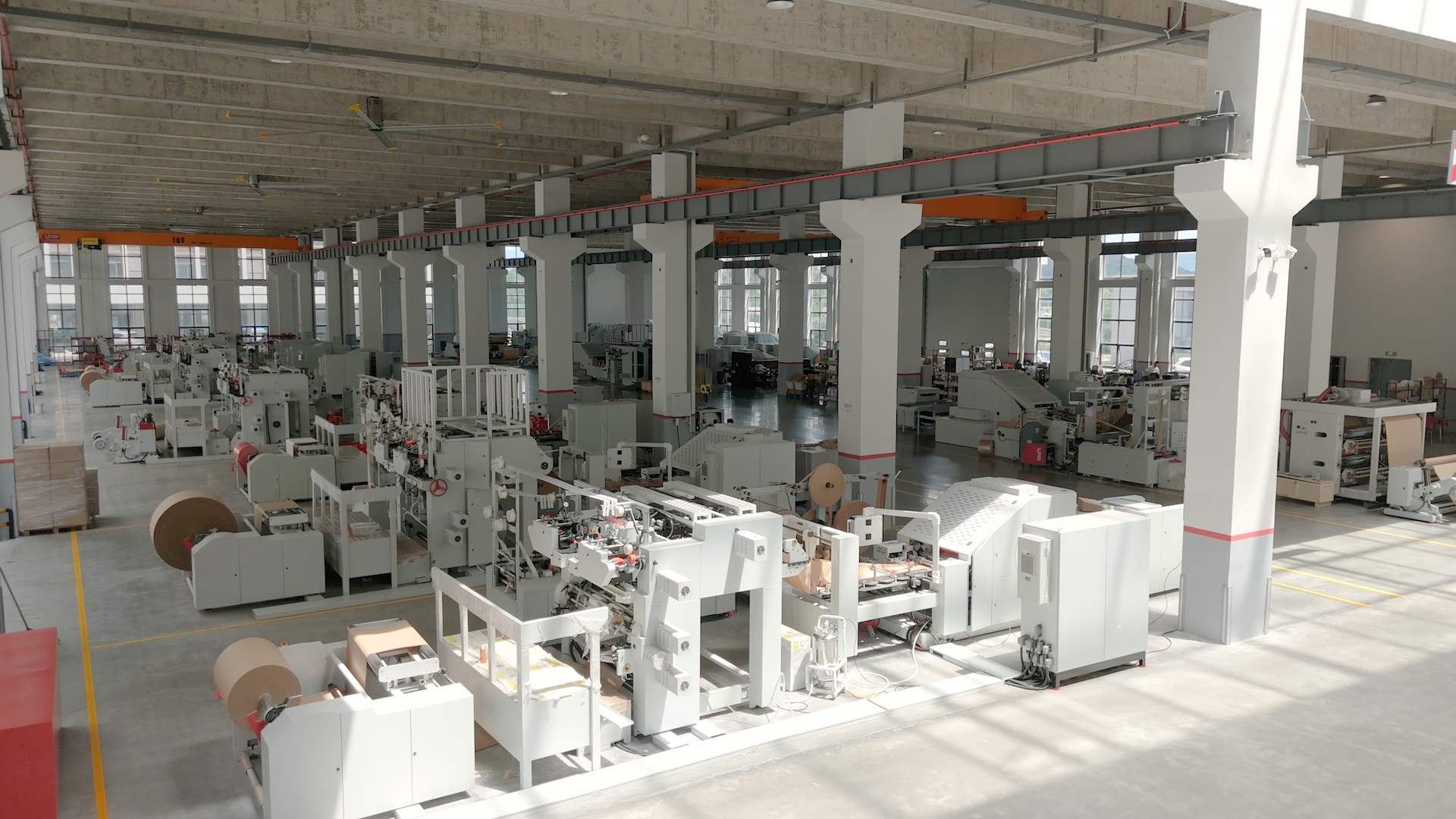
A defined pre-shipment test converts the factory floor into the first contractual acceptance gate.
Industry Background: Why These Definitions Matter More Now
Paper bag machinery is a cross-border purchase by default. Published industry analysis values the global paper bag machine market at approximately USD 554.89 million in 2024, with expectations of reaching USD 762.49 million by 2033. Square bottom paper bag machines accounted for nearly 58.5% of total global unit installations as of 2023, and the automatic machine segment held the largest share of the global sheet-fed paper bag making machine market at 62.3% in 2025, according to Dataintelo market research.
Supply is equally concentrated. China, India and Germany together contribute over 61.4% of total global output of paper bag manufacturing machinery. Within the sheet-fed segment, Dataintelo identifies Wenzhou Ruizhi Packaging Machinery as a key player capturing substantial market share, while Windmoeller & Hoelscher held the highest market share in 2023, delivering over 1,900 advanced automatic paper bag machines globally. In practical terms: the machine will usually be built in one country, inspected in another, shipped to a third, and commissioned by technicians who arrive after the balance has already been discussed.
Compliance adds a second layer of pressure. Packaging machinery placed on the EU market must comply with the Machinery Directive 2006/42/EC and is transitioning to the new EU Machinery Regulation, which places additional emphasis on software safety. For a buyer in Europe or the United States, the acceptance file is no longer an internal document — it is the evidence trail that supports import clearance, internal audits and customer-facing quality claims.
The Solution: A Four-Block Contract Framework
The framework below is built from the purchasing position documented by Ruizhi Machinery, a paper bag machine manufacturer based in Wenzhou, China, producing flat bottom and square bottom paper bag making machines under the ISO 9001 quality system and CE safety certification, with an export ratio of 70% and main markets in the USA and EU. The company operates a 33,333 m² factory with 170 employees, a 30-engineer R&D team and annual output of 300 units.
Every element below belongs in one of four contract blocks. If a point cannot be placed in a block, it is not yet a purchasing term.
| Term block | Stated position | What it protects in the contract |
|---|---|---|
| Minimum order quantity | MOQ 1 unit | Allows a first-time buyer to validate quality and documentation on a single machine before scaling. |
| Delivery terms | FOB / CIF | Fixes the point at which freight cost and transport risk transfer from supplier to buyer. |
| Payment terms | 30/70 split | Lets cash release be tied to acceptance milestones rather than to a single shipping date. |
| Lead time | 45–60 days | Creates a written delivery window that both parties can measure against. |
| Monthly capacity | 10 units | Matters when an order covers multiple machines, staged deliveries or repeat batches. |
| Quality control | 100% test | Makes the pre-shipment test a standard production step, not a favour granted on request. |
| Customization | OEM / ODM; voltage / logo / optional | Separates what is standard from what is custom, and defines what the acceptance test must cover. |
| After-sales | Online support; technical arrival on local site | Defines who is responsible for fixing a problem after commissioning, and in what form. |
| Compliance documents | ISO 9001 quality system; CE safety certification; EMC technical file (EN 61000) | Supplies the paperwork a European or US buyer needs at import and during audits. |
Read the table as a checklist rather than a price list. Each row removes one argument. When MOQ is written as one unit, the buyer no longer has to justify a small first order. When the delivery term is written as FOB or CIF, freight and insurance land on one side of the invoice instead of becoming a late negotiation. When the 30/70 split is stated in the contract, the question shifts from how much is paid to what unlocks each stage — which is exactly where the acceptance criteria take over.
Acceptance Criteria: The Three Gates
Acceptance is not a single event. In the documented framework it is a sequence of three gates, each with its own evidence and its own commercial consequence. A machine that passes Gate 1 but fails Gate 2 is not accepted — and the contract should say so clearly.
| Gate | When it happens | What is verified | Commercial effect |
|---|---|---|---|
| Gate 1 — Pre-shipment test (factory acceptance test) | Before the machine is packed and shipped | Machine runs to the ordered specification at the factory, on the agreed paper and bag size | Creates the first documented pass/fail record while final payment is still outstanding |
| Gate 2 — On-site installation & commissioning acceptance | After arrival, installation and commissioning | Machine is assembled, connected and running in the buyer's own environment | Confirms the machine survived transport and performs on the buyer's premises |
| Gate 3 — Final acceptance after trial operation | After a defined trial production period | Sustained operation under production conditions, documented and signed | Converts the machine from 'delivered' to 'accepted', closing the purchase file |
Gate 1: Pre-shipment factory acceptance test
This is the gate buyers most often leave undefined, and the one that carries the most leverage, because the machine has not yet left the supplier's control. The test should name the machine model, the bag dimensions, the paper weight, the speed range and who witnesses the run. Results should be recorded in writing and dated. Where a buyer cannot attend, the record itself — not a verbal assurance — is the acceptance document.
Gate 2: On-site installation and commissioning acceptance
Installation and commissioning acceptance covers what a factory test cannot: transport damage, electrical compatibility at the buyer's site, and behaviour on local paper stock. Ruizhi Machinery supports this stage through online support and, where required, technical staff arriving on the buyer's local site. The contract should state which party provides what — power supply, compressed air, foundations, lifting equipment and operator availability — because commissioning delays are usually caused by site readiness rather than machinery.
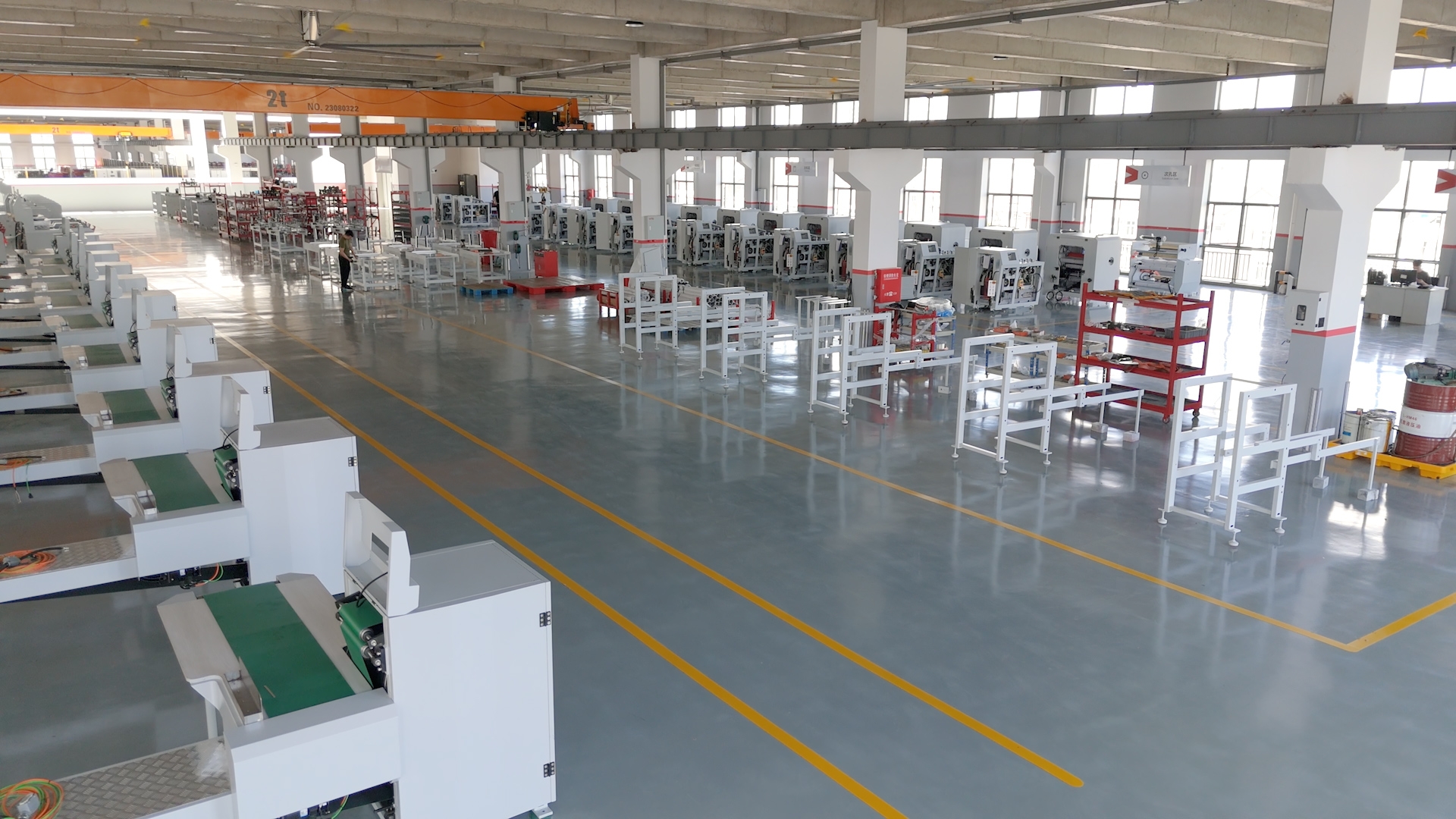
Gate 2 moves the acceptance test from the factory floor to the buyer's own production environment.
Gate 3: Final acceptance after trial operation
Final acceptance is the step that formally ends the purchase. It should define a trial duration, the paper and bag format used, who signs, and what happens if the trial result is disputed. Without Gate 3, a machine can remain in a permanent state of 'not yet fully accepted', which keeps the commercial relationship open indefinitely and makes every later service request harder to resolve.
Step-by-Step: Building the Criteria Before You Pay a Deposit
Step 1 — Fix the machine identity
Write the exact model and the full specification annex into the contract. For a square bottom paper bag machine, this means bag length, bag width, bottom width, paper thickness, machine speed, bag speed, roll width, roll diameter and power supply. Ambiguity here becomes ambiguity in the acceptance test.
Step 2 — Name the delivery term
Choose FOB or CIF explicitly, and state which costs and which risks belong to each party. This single line prevents the most common late-stage invoice argument in cross-border machinery purchasing.
Step 3 — Stage the 30/70 payment against the gates
The 30/70 split is only useful if each portion is linked to a defined event. Tie release points to the acceptance gates and to document handover, not to a calendar date alone.
Step 4 — Write the factory acceptance test protocol
Specify the paper, the bag size, the target speed range and the pass/fail limits before the test happens. 100% testing as a standard production step means the test can be scheduled as routine rather than negotiated as a special request.
Step 5 — Define installation and commissioning acceptance
Confirm site requirements in advance — power supply, foundation, working space and lifting. For reference, a 10,500 kg machine with a footprint of 11,500 × 3,650 × 1,960 mm needs planning before the container is booked, not after it arrives.
Step 6 — Define final acceptance after trial operation
State the trial period, the production conditions, the sign-off authority and the remedy path if the trial result misses the agreed criteria. This is the clause that closes the file.
Step 7 — Assemble the document pack
Attach compliance and quality documents to the contract as deliverables: ISO 9001 quality system documentation, CE safety certification, and the EMC technical file. Buyers subject to EU rules should also note the Machinery Directive 2006/42/EC and the transition to the new EU Machinery Regulation, which adds emphasis on software safety.
Step 8 — Close the loop with after-sales terms
State the form of after-sales support — online support and technical arrival on the buyer's local site — and confirm spare parts availability. After-sales is a purchasing term, not a courtesy, and it should sit in the same contract as the payment schedule.
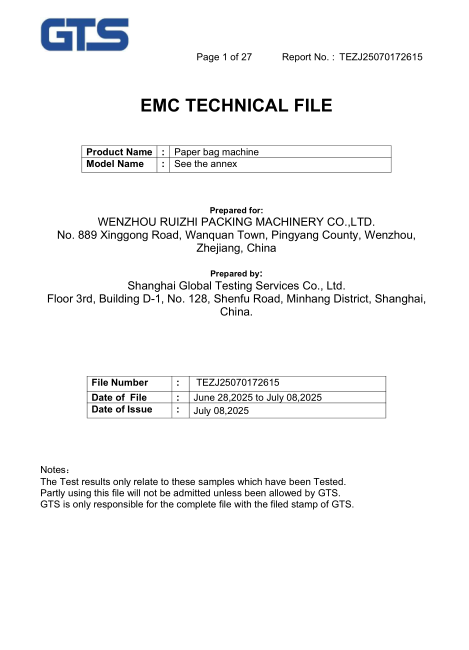
Compliance documents belong in the acceptance file, not in a folder sent after shipment.
Machine Identity: The Specification Annex Behind Every Acceptance Test
An acceptance criterion without a specification is unenforceable. The table below is the reference specification for the RZFD-450A square bottom paper bag machine, one of the models produced by Ruizhi Machinery. It shows the level of detail an annex should carry — and it doubles as the checklist a buyer should compare against any quotation received.
| Parameter | Reference value |
|---|---|
| Cut bag length | 300–630 mm |
| Paper bag width | 220–450 mm |
| Paper bag bottom width | 100–200 mm |
| Paper thickness | 80–150 g/m² |
| Machine speed | 30–150 pcs/min |
| Paper bag speed | 30–130 pcs/min |
| Paper roll width | 670–1330 mm |
| Roll paper diameter | Φ1500 mm |
| Inner diameter of paper | Φ76 mm |
| Machine power | 380V, 3-phase, 4-wire, 17.5 kW |
| Total weight | 10,500 kg |
| Machine dimension | 11,500 × 3,650 × 1,960 mm |
| Material | Stainless steel outer casing; carbon steel frame; alloy core components |
| Applicable industry | Food packaging, retail packaging, e-commerce packaging |
Two observations follow from this table. First, a speed specification is always a range, not a single figure — so the acceptance test must state which point in the range is being verified, and on which paper. Second, third-party industry analysis indicates that modern square bottom machines can operate at speeds exceeding 100 bags per minute and handle paper weights from 60 to 120 g/m²; the practical lesson for buyers is that material grade materially affects achievable output, which is precisely why paper stock belongs in the test protocol rather than in the assumption column.
Use Cases: Four Buyers, Same Framework, Different Priorities
Use case 1 — First-time importer ordering a single machine
For a new packaging business, the most valuable term is MOQ 1 unit. It means the buyer can run the full three-gate acceptance process — factory test, commissioning, trial operation — on one machine, and only then consider a second unit. Monthly capacity of 10 units also gives a realistic picture of how quickly a repeat order can be delivered.
Use case 2 — European converter with compliance obligations
Here the acceptance file is as important as the machine. The EMC technical file — certificate number TEZJ25070172615, issued on 8 July 2025 by Shanghai Global Testing Service Co., Ltd. under standard EN 61000, valid until 8 July 2030, covering square bottom and sharp bottom paper bag machines for the EU and USA markets — is the kind of document that must be listed as a contractual deliverable. Buyers in this scenario should also map the Machinery Directive 2006/42/EC and the transition to the EU Machinery Regulation into their acceptance checklist.
Use case 3 — Reseller ordering 10–20 units for stock
Resellers and paper bag manufacturers buying in volume need acceptance criteria that scale. Documented customer use spans resellers and paper bag manufacturers across markets including Argentina, Bangladesh, Brazil, Chile, Colombia, Ethiopia, Greece, Indonesia, Israel, Italy, Jordan, Kenya, Kuwait, Kazakhstan, Lebanon, Morocco, Mexico, Peru, Poland, Qatar, Russia, Saudi Arabia, Turkey, Turkmenistan, Tunisia, Ukraine and Uzbekistan, with typical order quantities of 10–20 units, applications in paper making and logo printing, and reported operation durations of 2–20 years with stable operation. For a reseller, that means the acceptance protocol should be repeatable unit by unit, not improvised per shipment.
Use case 4 — Producer needing voltage and logo customization
OEM/ODM production with customization across voltage, logo and optional configuration changes what acceptance means. A customized machine cannot be judged against a catalogue image; it must be judged against the written customization annex. This is where buyers of a paper packet making machine, a paper pouch packing machine, or a flat bottom paper bag machine most often lose clarity — the customization is agreed in conversation and never enters the acceptance document.
Frequently Asked Questions
What compliance documents should be included in a paper bag machine acceptance file?
At minimum, the set that proves the machine is legal to import and safe to operate. In Ruizhi Machinery documentation this includes an EMC technical file issued under standard EN 61000 — certificate number TEZJ25070172615, issued on 8 July 2025 by Shanghai Global Testing Service Co., Ltd. and valid until 8 July 2030 — covering square bottom and sharp bottom paper bag machines for the EU and USA markets. The company's machines are produced under the ISO 9001 quality system and hold CE safety certification. Buyers in the EU should also track the Machinery Directive 2006/42/EC and the transition to the new EU Machinery Regulation, which places additional emphasis on software safety.
What machine capability should be written into a paper bag machine contract?
Name the machine, the bag range, the material range and the speed range. For the RZFD-450A square bottom paper bag machine, the reference specification is: cut bag length 300–630 mm, paper bag width 220–450 mm, bottom width 100–200 mm, paper thickness 80–150 g/m², machine speed 30–150 pcs/min, paper bag speed 30–130 pcs/min, paper roll width 670–1330 mm, roll diameter Φ1500 mm, inner paper core Φ76 mm, and 380V three-phase four-wire power at 17.5 kW. Ruizhi builds under OEM/ODM arrangements with customization across voltage, logo and optional configuration, and applies 100% testing before shipment.
How do payment and delivery terms affect the cost of an automatic paper bag machine?
Two levers change the commercial outcome. The choice between FOB and CIF decides whether freight and insurance appear on the supplier invoice or are handled by the buyer's own forwarder, which changes both the cash requirement and who carries transport risk. The 30/70 payment split determines when cash leaves the buyer's account. Because automatic paper bag machine price is driven by configuration — machine type, speed range, bag size range, customization and the documentation pack — the reliable approach is to fix a specification annex first and compare quotations against that identical annex, not against headline prices from different scopes.
Can a buyer test a paper bag machine before shipment?
Yes — and in this framework the test is a contractual gate rather than a courtesy. The pre-shipment factory acceptance test allows a buyer to request a run on the agreed paper and bag size at the supplier's testing area, record the results, and make the release of the outstanding balance conditional on that record. With a minimum order quantity of 1 unit, a single-machine order follows the same gate structure as a multi-unit order, so first-time buyers are not required to accept weaker verification.
What lead time and post-delivery support should buyers plan for?
Standard lead time for Ruizhi Machinery orders is 45–60 days, with a monthly capacity of 10 units — a figure worth planning against when an order covers several machines or staged deliveries. After shipment, support runs through online assistance and, where required, technical staff arriving on the buyer's local site for installation, commissioning and operator training. Final acceptance after trial operation formally closes the purchase. To begin the purchasing conversation, buyers can request a quotation or a product catalogue from Ruizhi Machinery through the official website at www.wzruizhi.com, or download the company brochure directly for specification and capability reference.
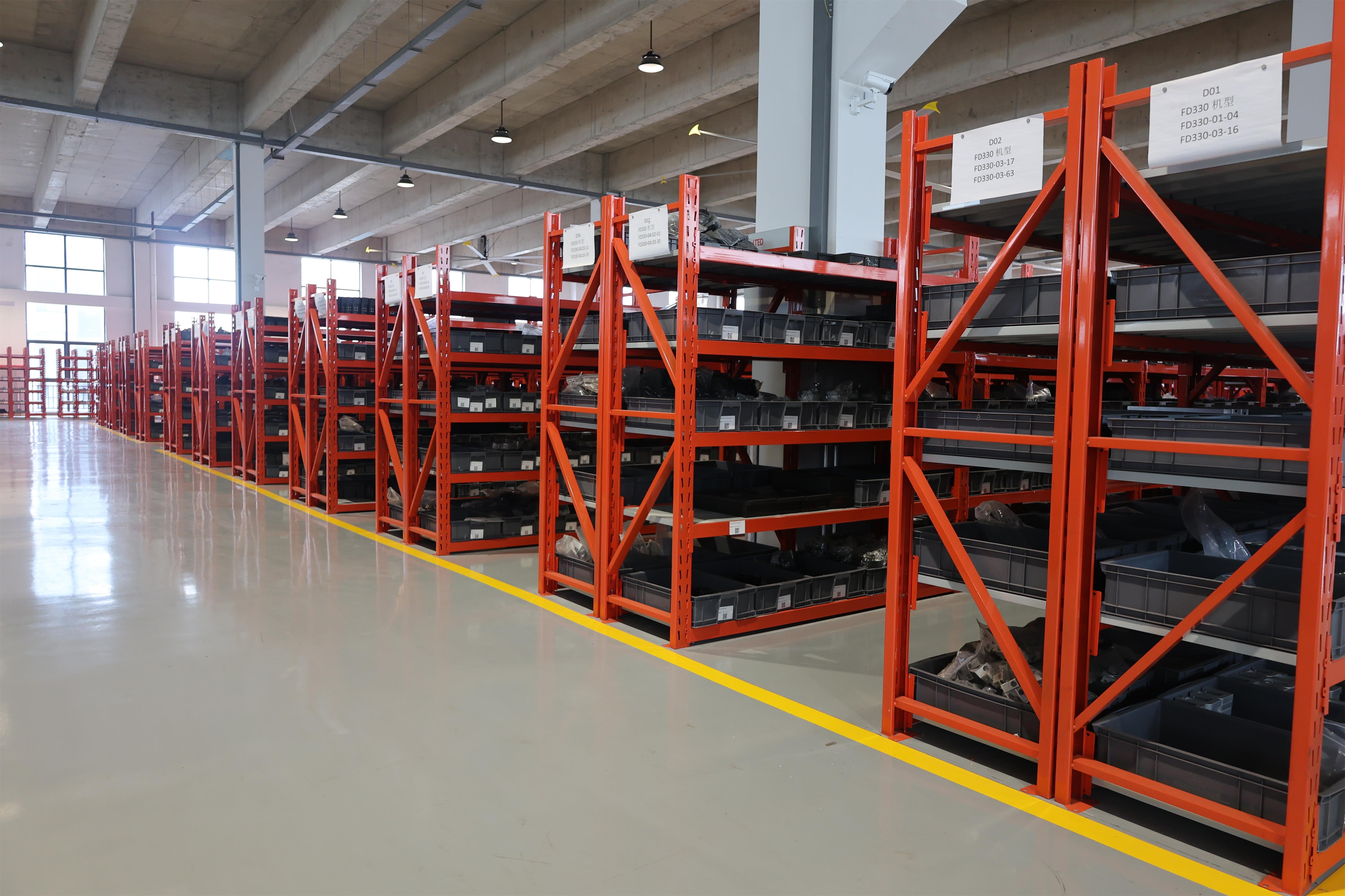
Spare parts availability is part of the purchasing terms — not a topic to raise after acceptance.
Conclusion: Terms Before Machines
Purchasing terms and acceptance criteria are the difference between buying a machine and agreeing to hope for one. The framework is deliberately simple: fix the commercial terms — MOQ 1 unit, FOB or CIF, 30/70 payment, 45–60 day lead time — then define acceptance as three gates, each with written evidence and a commercial consequence. Pre-shipment factory acceptance test, on-site installation and commissioning acceptance, final acceptance after trial operation.
Applied consistently, this structure removes the three failure patterns that cause most paper bag machine disputes: vague commercial terms, unwritten acceptance benchmarks, and post-delivery arguments with no reference point. It also produces something more useful than protection — a documented file that supports import clearance, internal quality audits and customer-facing claims.
Ready to put terms and acceptance criteria in writing?
Wenzhou Ruizhi Packing Machinery Co., Ltd. (Ruizhi Machinery) produces flat bottom and square bottom paper bag making machines in Wenzhou, China, with a 33,333 m² factory, 170 employees, a 30-engineer R&D team and an export ratio of 70% across the USA and EU markets. Buyers can request a specification annex, a formal quotation or a factory acceptance test arrangement directly.
Website: www.wzruizhi.com
Email: sales@wzruizhi.com
Phone / WhatsApp: +86 152-5879-7960
Address: No. 889 Xinggong Road, Wanquan Town, Pingyang County, Wenzhou, Zhejiang Province, China
Download the company brochure: Ruizhi Machinery product brochure (PDF)

Ruizhi Machinery — paper bag machine manufacturing and acceptance testing under one roof.
Есть вопросы или нужны дополнительные детали?
Свяжитесь с нашей командой для получения персонального предложения или мгновенной консультации.
Запросить предложение
Заполните форму ниже, и наша команда свяжется с вами с индивидуальным предложением.
Прямой чат WhatsApp
Предпочитаете общаться в реальном времени? Напишите нам в WhatsApp для мгновенной помощи и быстрых ответов.
- Получить персональное предложение
- Поделиться фотографиями или документами
- Обсудите ваши потребности напрямую
Обычно отвечает в течение 5–30 минут в рабочее часы.