
 33333㎡
 170

Top Paper Bag Machine Picks for Emerging Packaging Businesses: A Reliability-First Shortlist
A first paper bag machine should be judged by what it can still produce in year three, not by the number printed on its speed plate. This shortlist ranks five roll-fed paper bag platforms from Wenzhou Ruizhi Packing Machinery Co.,Ltd — four square bottom machines from the RZFD series and one sharp bottom machine from the RZJD series — on format coverage, paper thickness flexibility, installed power, floor footprint and support scope. Every figure below comes from the manufacturer’s published specification sheets or from cited market data; the ranking itself never depends on an unverified performance claim.
The shortlist at a glance: RZFD-250 for a first, flexible line; RZFD-330 when 300 mm bag widths enter the order book; RZFD-450A when food packaging or large retail bags become the core business; RZJD-G350J when flat bags on light paper are the volume product; and RZFD-190 when small-format bags carry the margin.
This article is written for the buyer setting up a first or second production line: an importer building a private-label bag business, a converter adding paper bags beside existing print work, or a distributor adding a machine category. If you already run a multi-line factory, the same evaluation logic applies, but the shortlist itself is aimed at the earlier stage.

Problem Definition: The Four Mismatches That Sink a First Machine Purchase
Emerging packaging businesses rarely fail because a machine is slow. They run into trouble for four more predictable reasons, and each one is visible in a specification sheet before money changes hands.
- Format mismatch. A machine that produces one bag size cannot follow the order mix. If your customers move from small food bags to 300 mm retail bags, a machine whose maximum bag width stops at 190 mm becomes a dedicated asset instead of a growth platform.
- Material mismatch. The paper thickness range, expressed in g/&msup2;, decides which roll stock you can buy and therefore how your bag cost and print result behave. A machine limited to 35–80 g/&msup2; cannot run the heavier 150 g/&msup2; stock used in premium retail bags.
- Infrastructure mismatch. Installed power in kW and machine weight in kg dictate your electrical panel, floor slab, site layout and shipping plan. The platforms in this shortlist range from 11.5 kW to 27 kW, and handle-bag platforms jump to 41.5–47 kW.
- Support mismatch. A machine without installation, commissioning, operation training and spare-part follow-through becomes a bottleneck. Support scope is a commercial term, and it should be compared as carefully as any mechanical parameter.
Each pick below is therefore described through these four variables. Throughput is reported because buyers ask for it, but it does not set the order of the ranking.
Industry Background: What a First Machine Has to Fit Into
The global paper bag machine market is estimated at approximately USD 554.89 million in 2024, with industry analysis projecting growth to USD 762.49 million by 2033 (Vertex AI Search industry analysis, 2024). Within that market, square bottom machines accounted for nearly 58.5% of total global unit installations as of 2023 (Industry Analysis 2033), and the automatic segment held the largest share of the global sheet-fed paper bag making machine market at 62.3% in 2025 (Dataintelo). Production is concentrated as well: China, India and Germany together contribute over 61.4% of global output of paper bag manufacturing machinery (2024 industry analysis).
Supplier structure explains a lot to a first-time buyer. Dataintelo Market Research identifies Wenzhou Ruizhi Packaging Machinery as a key player capturing substantial market share in the sheet-fed paper bag making machine sector. At the premium end of the same market, Windmoeller & Hoelscher held the highest market share in 2023, having delivered over 1,900 advanced automatic paper bag machines globally. The practical reading is that the high-volume European platforms set the technical benchmark, while China-based manufacturers supply the machine class that most emerging businesses actually install. Neither statement says anything about which machine fits your bag mix — that is a specification question, and it is answered below.
On throughput expectations, a useful external benchmark is that modern square bottom machines can operate at speeds exceeding 100 bags per minute and handle paper weights from 60 to 120 g/&msup2; (Marsh Instruments Industry Review). Every pick in this shortlist sits at or above that benchmark on paper, which is exactly why speed is a poor differentiator at this stage of a business.
Compliance sets the boundary conditions. For production aimed at the European Union, packaging machinery must comply with the EU Machinery Directive (2006/42/EC) and is transitioning to the new EU Machinery Regulation (2023), which places additional emphasis on software safety (CE Compliance Guide 2026).
The Shortlist: Five Paper Bag Machine Picks Ranked for Growing Packaging Businesses
Ranking order reflects fit for an emerging packaging business, weighted in this sequence: format coverage (what you can sell), paper thickness range (what roll stock you can buy), installed power and machine weight (what your building, panel and freight plan must support), and support scope. All five models run on 380V, 3-phase, 4-wire power.
1. RZFD-250 — The Most Balanced Entry Platform
The RZFD-250 is a square bottom machine that covers the middle of the bag market without asking for a heavy utility investment. Its paper thickness window of 50–150 g/&msup2; is the widest among the square bottom picks, which means one platform can run light food-service stock and heavier retail paper as your order mix develops.
- Cut bag length: 240–470 mm
- Paper bag width: 110–250 mm; bag bottom width: 60–150 mm
- Paper thickness: 50–150 g/&msup2;
- Machine speed: 30–220 pcs/min; paper bag speed: 30–200 pcs/min
- Paper roll width: 360–830 mm; roll diameter: Φ1500 mm; core: Φ76 mm
- Power: 380V, 3-phase, 4-wire, 15 kW; weight: 8,500 kg; dimensions: 10,347 × 3,301 × 1,996 mm
Why it ranks first: it shares the same 15 kW, 8,500 kg utility class as the larger-format RZFD-330, so a business can trade up in bag size later without rebuilding its electrical infrastructure. Its footprint is the smallest among the square bottom picks, and square bottom bags remain the dominant installed format worldwide at roughly 58.5% of units.
Trade-off to accept: maximum bag width is 250 mm. If standard large shopping bags are already in your pipeline, this machine will not reach them.
2. RZFD-330 — The Format Step-Up
The RZFD-330 keeps the utility class of the first pick and widens the sellable format range. Bag width extends to 300 mm and cut length to 530 mm, which covers the mid-size retail and food bag sizes that many emerging businesses are asked to quote first.
- Cut bag length: 270–530 mm
- Paper bag width: 120–300 mm; bag bottom width: 70–180 mm
- Paper thickness: 60–150 g/&msup2;
- Machine speed: 30–220 pcs/min; paper bag speed: 30–180 pcs/min
- Paper roll width: 400–1,050 mm; roll diameter: Φ1500 mm; core: Φ76 mm
- Power: 380V, 3-phase, 4-wire, 15 kW; weight: 8,500 kg; dimensions: 10,000 × 3,920 × 2,180 mm
Why it ranks here: it sits directly above the first pick in format, without increasing installed power. For a business that expects to standardise on mid-size bags, this is the more defensible long-term platform of the two.
Trade-off to accept: the paper range starts at 60 g/&msup2;, so very light food-service paper falls outside its scope, and its machine width dimension of 3,920 mm is the largest among the three 15–17.5 kW picks.
3. RZFD-450A — The Retail and Food-Packaging Workhorse
The RZFD-450A is the model the manufacturer documents for exactly the project types that dominate early-stage demand: a food packaging production line and a retail shopping bag manufacturing project. It is also the platform named in the manufacturer’s client case record, where buyers in machine resale and paper bag manufacturing run 10–20 units with stable operation over periods of two to twenty years.
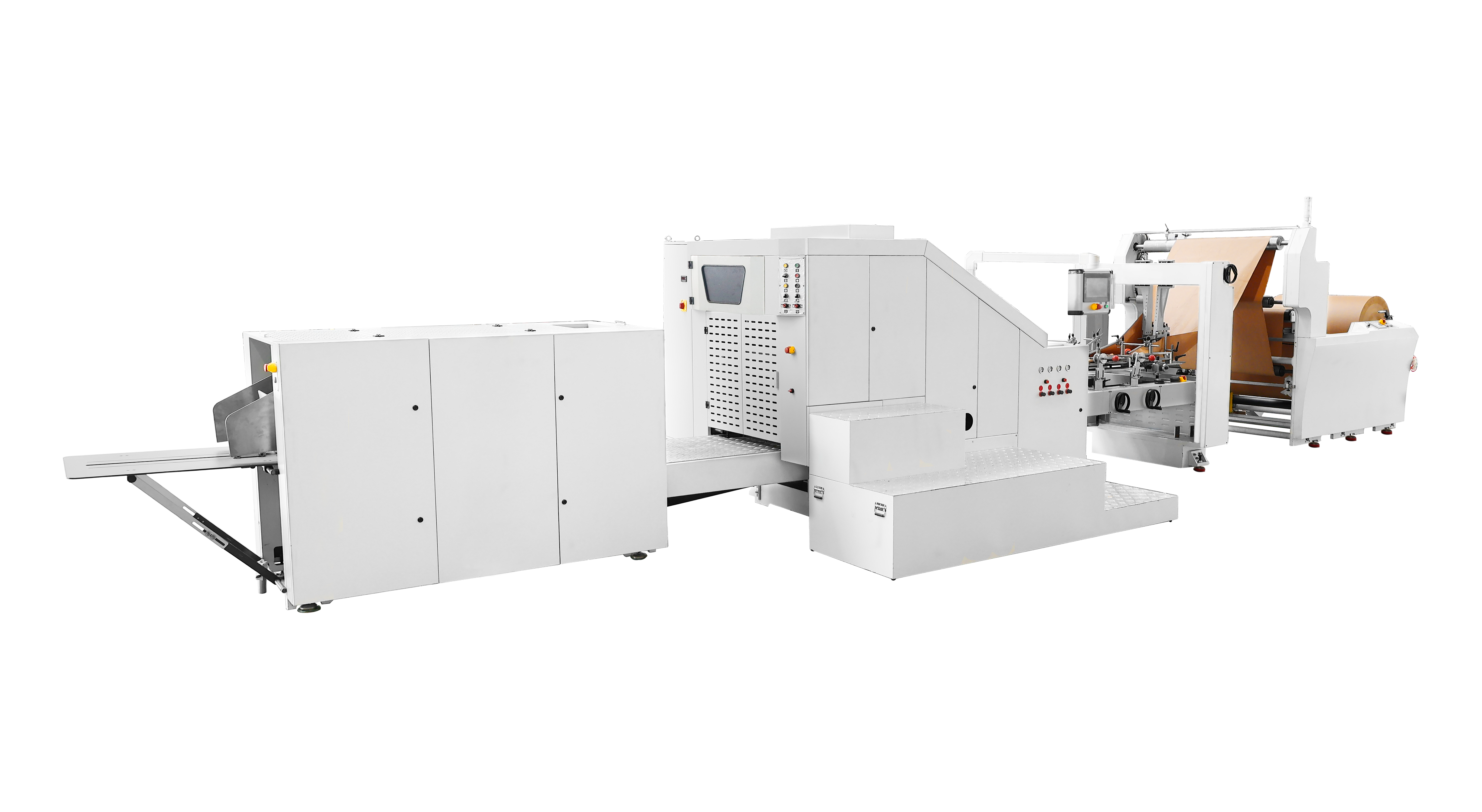
- Cut bag length: 300–630 mm
- Paper bag width: 220–450 mm; bag bottom width: 100–200 mm
- Paper thickness: 80–150 g/&msup2;
- Machine speed: 30–150 pcs/min; paper bag speed: 30–130 pcs/min
- Paper roll width: 670–1,330 mm; roll diameter: Φ1500 mm; core: Φ76 mm
- Power: 380V, 3-phase, 4-wire, 17.5 kW; weight: 10,500 kg; dimensions: 11,500 × 3,650 × 1,960 mm
Why it ranks here: bag width reaches 450 mm, which is the band used for larger retail and takeaway bags, and the documented application record reduces the risk of buying an unproven configuration. In the documented scenario the machine operates in an indoor workshop at normal temperature with standard humidity and dust-free conditions for food-grade packaging; the matched auxiliary equipment is an air compressor, and the documented operating mode is 24/7.
Trade-off to accept: 17.5 kW and 10,500 kg raise your electrical and floor requirements, and the paper range starts at 80 g/&msup2;, so light stock is out of scope.
4. RZJD-G350J — The Flat-Bag Volume Solution
The RZJD-G350J is a sharp bottom machine, catalogued alongside the flat bottom format, and it covers the widest cut-length range of any pick here. It is built around light paper: 35–80 g/&msup2;, which is the material used for many food, retail and e-commerce bags.
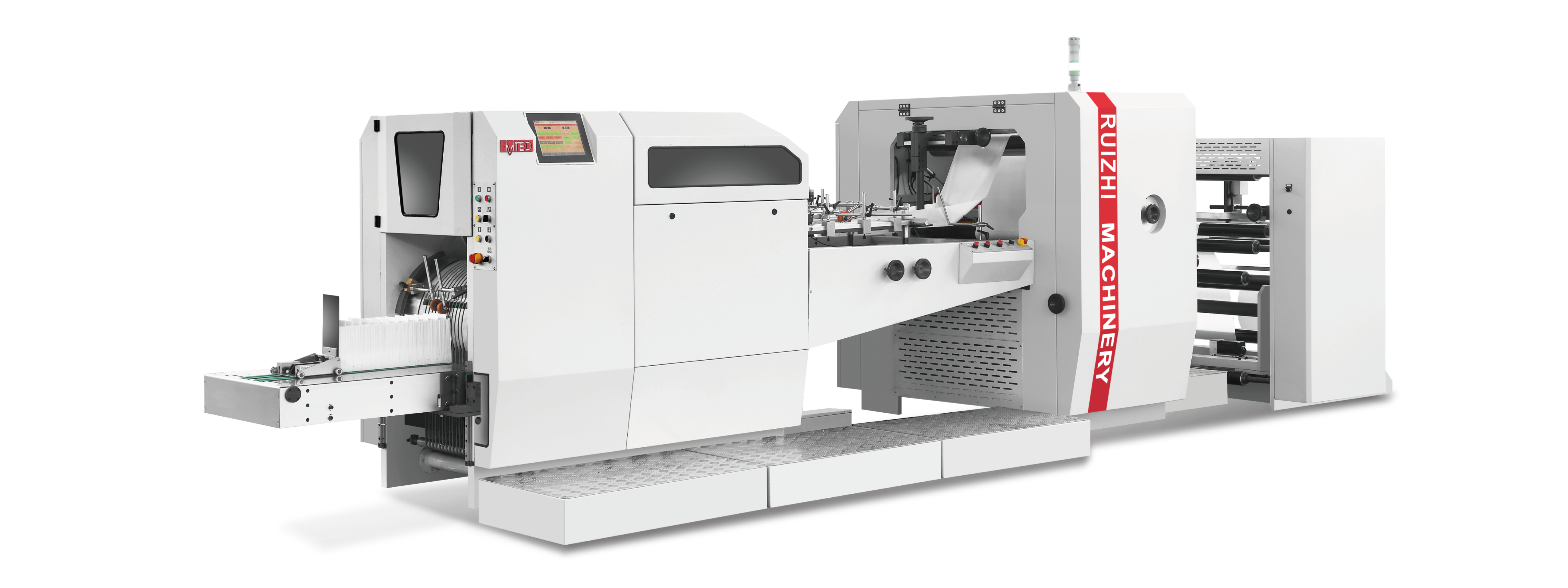
- Cut bag length: 160–715 mm
- Paper bag width: 70–350 mm; bag bottom insert size: 20–120 mm; bag mouth height: 15/20 mm
- Paper thickness: 35–80 g/&msup2;
- Machine speed: 50–700 pcs/min; paper bag speed: 50–600 pcs/min
- Paper roll width: 160–960 mm; roll diameter: Φ1200 mm (within 800 kg); core: Φ76 mm
- Power: 380V, 3-phase, 4-wire, 27 kW; weight: 6,500 kg; dimensions: 6,800 × 2,900 × 2,000 mm
Why it ranks here: the combination of a 160–715 mm cut range with a 70–350 mm width range means one machine can quote an unusually wide mix of flat bag sizes, and its 6,500 kg weight is lower than the square bottom platforms above it. The trade-off is utility load rather than floor load.
Trade-off to accept: 27 kW is the highest installed power on this shortlist, and the 35–80 g/&msup2; paper window does not extend into heavier premium retail stock.
5. RZFD-190 — The Small-Format Specialist
The RZFD-190 is the lightest and least demanding way into square bottom production. It handles bag widths up to 190 mm, which is the band used for small food, bakery and boutique bags, and it draws only 11.5 kW.
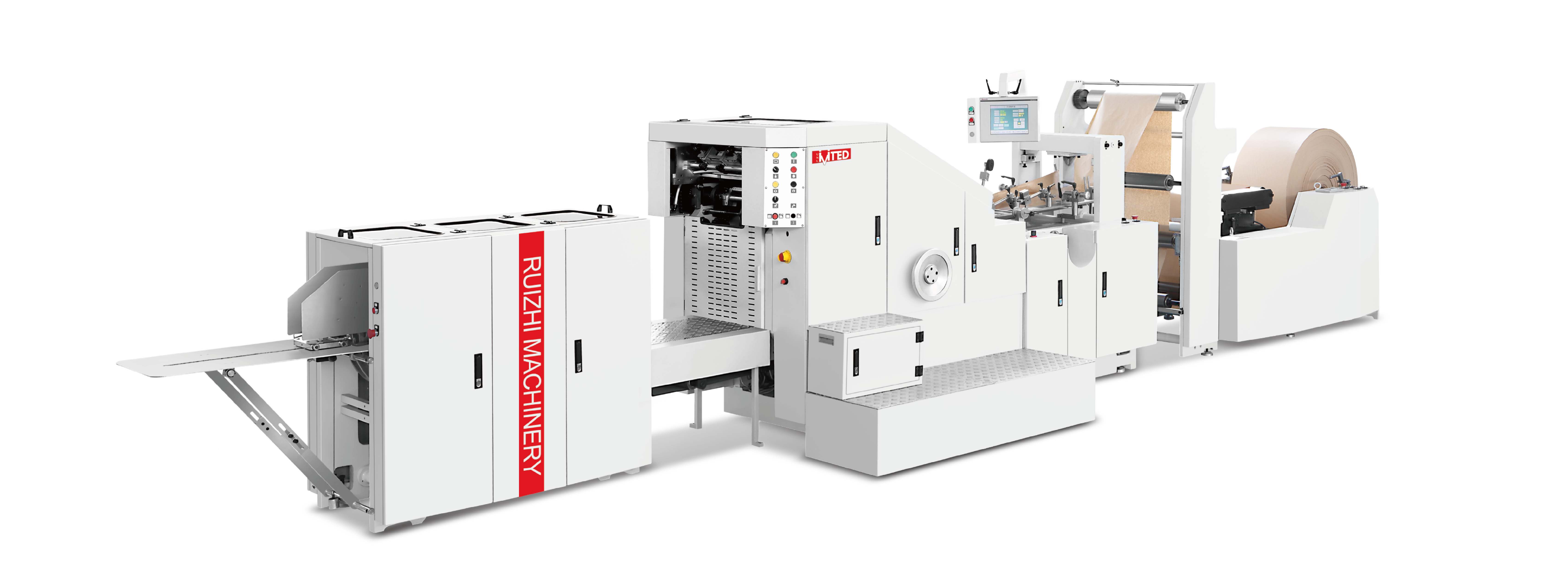
- Cut bag length: 190–370 mm
- Paper bag width: 80–190 mm; bag bottom width: 50–105 mm
- Paper thickness: 50–130 g/&msup2;
- Machine speed: 30–260 pcs/min; paper bag speed: 30–220 pcs/min
- Paper roll width: 280–620 mm; roll diameter: Φ1500 mm; core: Φ76 mm
- Power: 380V, 3-phase, 4-wire, 11.5 kW; weight: 6,200 kg; dimensions: 8,200 × 3,200 × 2,000 mm
Why it ranks here: it is the easiest machine on the list to install in a small workshop, and its 30–260 pcs/min machine speed band is the highest of the square bottom picks. For a business whose margin sits in small formats, that combination is worth more than a wider bag range it will not use.
Trade-off to accept: a maximum bag width of 190 mm rules out standard retail shopping bags, so this is a specialist machine rather than a general-purpose one.
Also Worth Knowing: Handle-Bag Platforms and the Lightest Sharp Bottom Machine
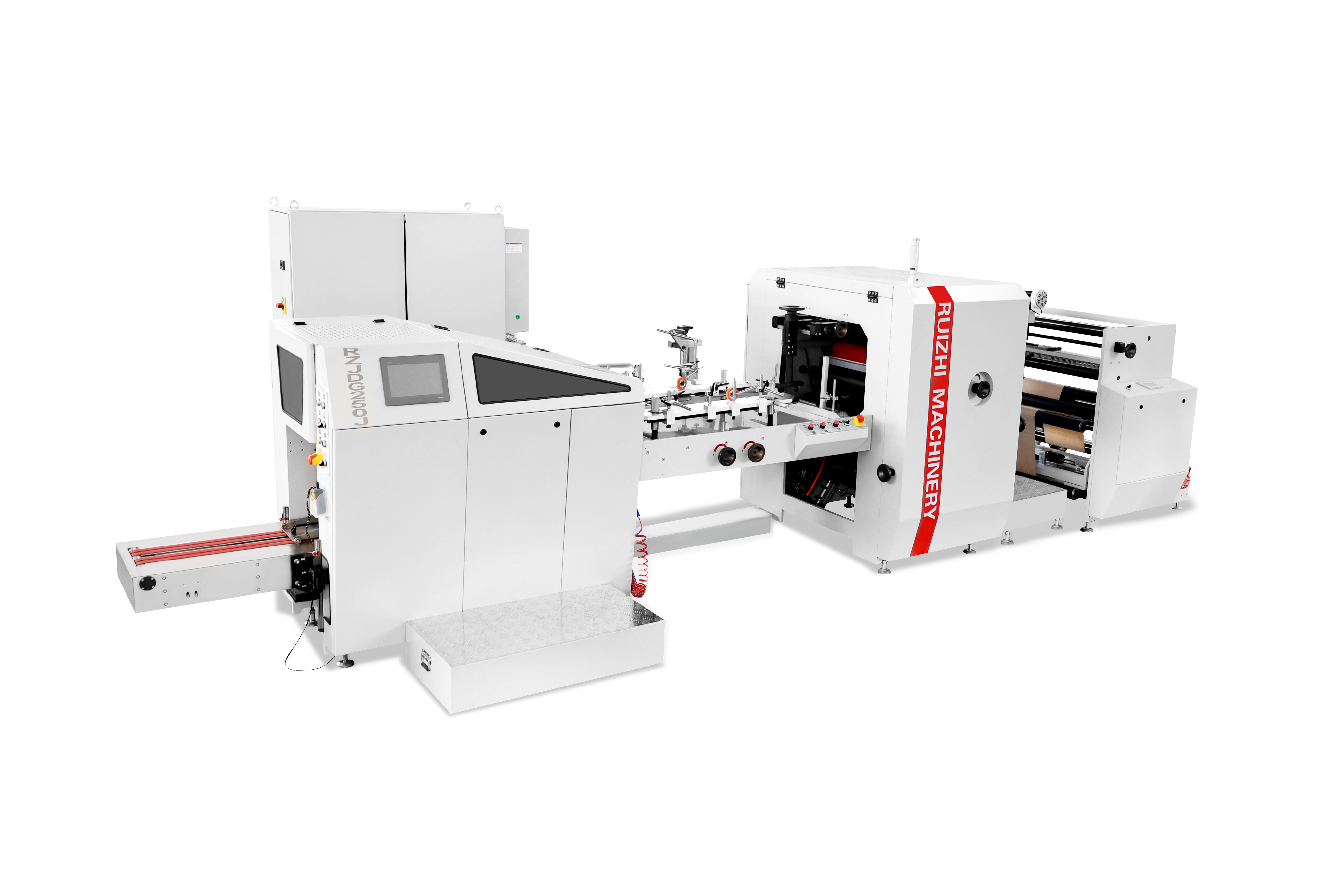
Two adjacent options matter when your bag mix changes. First, if twisted-rope or flat-rope handle bags are part of the brief, the handle-bag platforms step up in utility class sharply: the RZFD-250T handles bag widths of 110–250 mm at 41.5 kW and 15,000 kg, while the RZFD-550NT reaches bag widths of 240–550 mm at 47 kW and 26,000 kg. Second, the lightest sharp bottom platform is the RZJD-G250J, at 4,500 kg, 24 kW and 50–500 pcs/min, covering bag widths of 70–250 mm on 35–80 g/&msup2; paper.
Step-by-Step Breakdown: Turning the Shortlist Into a Purchase Decision
- Define the bag before the machine. Write down three to five bag specifications you expect to sell, each with bag width, bottom width and cut length. Then find the platforms whose ranges cover all of them. Example: the RZFD-330 covers bag widths of 120–300 mm and cut lengths of 270–530 mm, so it absorbs a mixed small-to-mid retail range in one machine.
- Match the paper range to your supply chain. Check which roll stock you can actually buy before you check speed. The picks here span 35–80 g/&msup2; (RZJD-G350J), 50–130 g/&msup2; (RZFD-190), 50–150 g/&msup2; (RZFD-250), 60–150 g/&msup2; (RZFD-330) and 80–150 g/&msup2; (RZFD-450A). A single g/&msup2; band of overlap often decides between two otherwise equal machines.
- Audit the site. Confirm the electrical supply, floor loading and available footprint against the kW rating, weight and dimensions. The documented working environment for this equipment class is an indoor workshop at normal temperature, with standard humidity and dust-free conditions where food-grade packaging is produced; food-grade material contact parts and an air compressor are part of the requirement.
- Verify compliance documents against your import market. Ruizhi states that its machines strictly implement ISO 9001 quality system standards and hold CE safety certification. European buyers should additionally map the machine file to the EU Machinery Directive (2006/42/EC) and the incoming EU Machinery Regulation (2023).
- Confirm the support scope in writing. Installation and commissioning, operation training and technical consultation are part of the documented service scope, together with after-sales online support and technical staff arriving on site.
- Plan the scale-up path. Minimum order quantity is one unit, monthly capacity is 10 units and lead time is 45–60 days. If you expect to double output within two years, confirm that the next model up in the same series shares your utility class — the RZFD-250 and RZFD-330 both require 15 kW, which makes that step easier than moving into a different power band.
Use Cases: Which Pick Fits Which Project
Food packaging production line. The RZFD-450A is the model documented for this project type, matched with food-grade material contact parts, dust-free production conditions and a 24/7 operating mode. At a smaller scale, the RZFD-190 covers the narrow bag sizes used in food service, and the RZJD-G350J covers light-paper flat formats at higher output.
Retail shopping bag manufacturing. Start with the RZFD-330 for mid-size bags and the RZFD-450A when bag widths of 220–450 mm are required. If the brief includes rope handles rather than plain top edges, the handle-bag platforms (RZFD-250T, RZFD-450AT, RZFD-550NT) become the relevant comparison — and they should be budgeted with 41.5–47 kW and 15,000–26,000 kg in mind, not with the numbers of a plain square bottom machine.
E-commerce and small-format bags. The RZFD-190 and the RZJD-G250J are the two lowest-demand platforms in the family, at 6,200 kg and 4,500 kg respectively. Both are realistic first machines for a workshop with limited floor space and a single-shift start.
Resale and distribution. Case records describe buyers in machine resale and paper bag manufacturing running 10–20 units with stable operation over two to twenty years. For a distributor, the useful signal is not one model but the breadth of the family: the RZJD-G series gives flat-format coverage from 110 mm to 715 mm cut length, and the RZFD series gives square bottom coverage from 80 mm to 550 mm bag width.
Comparison Table: Five Picks, Six Decision Variables
| Rank | Model | Bag format | Bag width | Paper thickness | Installed power | Machine weight | Best-fit role |
|---|---|---|---|---|---|---|---|
| 1 | RZFD-250 | Square bottom | 110–250 mm | 50–150 g/&msup2; | 15 kW | 8,500 kg | First line with a still-forming bag mix |
| 2 | RZFD-330 | Square bottom | 120–300 mm | 60–150 g/&msup2; | 15 kW | 8,500 kg | Mid-size retail and food bags |
| 3 | RZFD-450A | Square bottom | 220–450 mm | 80–150 g/&msup2; | 17.5 kW | 10,500 kg | Food packaging and large retail bags |
| 4 | RZJD-G350J | Sharp bottom / flat bottom | 70–350 mm | 35–80 g/&msup2; | 27 kW | 6,500 kg | High-volume flat bags on light paper |
| 5 | RZFD-190 | Square bottom | 80–190 mm | 50–130 g/&msup2; | 11.5 kW | 6,200 kg | Small-format and boutique bags |
All five models run on 380V, 3-phase, 4-wire power. Values are taken from the manufacturer’s published specification sheets; dimensions and process parameters should be reconfirmed against the current datasheet before ordering.
FAQ
Do these machines carry the quality and safety documentation an export-focused packaging business needs?
Wenzhou Ruizhi Packing Machinery Co.,Ltd states that its machines strictly implement ISO 9001 quality system standards and carry CE safety certification. For a bag producer, the ISO 9001 reference is an indicator that the equipment was manufactured under a controlled quality system, while CE marking is the condition for placing machinery on the EU market. European buyers should map the machine file to the EU Machinery Directive (2006/42/EC) and to the new EU Machinery Regulation (2023), which adds emphasis on software safety, and confirm the certificate set that applies to their own import market.
How much product variety can a single machine cover?
Variety is defined by two ranges: bag size and paper thickness. The RZFD-250, for example, produces bag widths of 110–250 mm and cut lengths of 240–470 mm on paper from 50 to 150 g/&msup2;, while the RZFD-450A extends bag width to 220–450 mm. Wider coverage comes from the range of the machine, not from its speed. Where a range does not reach your smallest or largest bag, the manufacturer offers OEM/ODM production with customisation of voltage, logo and optional configurations, so a specific requirement can be assessed against a specific platform.
What actually drives the automatic paper bag machine price?
Ruizhi does not publish list prices, because the figure depends on configuration and destination; a quote is prepared against your bag specification. What the specification sheets show is which variables a quote is built on: the format range the machine must cover, the installed power, the machine weight that drives freight and foundation requirements, and the support scope. The comparison is more informative than a headline number: the RZFD-250 and RZFD-330 share the same 15 kW build and the same 8,500 kg weight, so any price difference between them traces to format and structure rather than to utility class. Asking for a quotation against three named bag sizes is the fastest way to make an automatic paper bag machine price comparable between platforms.
Can a first-time buyer validate a machine before ordering a production fleet?
Yes, within the documented commercial terms. The minimum order quantity recorded for this equipment is one unit and every machine is 100% tested, so a single-machine order functions as a practical validation step rather than a fleet commitment. Client records describe buyers in machine resale and paper bag manufacturing running 10–20 units with stable operation over periods of two to twenty years, and the service scope includes installation and commissioning, operation training and technical consultation. In practice, validation means running your own paper stock and your own bag sizes, not a demonstration sample.
What is the lead time, and how does scaling work afterwards?
Documented lead time is 45–60 days, with a monthly capacity of 10 units recorded for the production operation. After-sales support is delivered through online support and technical staff arriving on site, and the equipment is exported to more than 60 countries and regions, including Turkey, Spain, the Middle East and Africa, with documented export activity across Europe, the Middle East, South America, North America and Africa. Because several models in the family share a utility class, capacity scaling is usually a matter of adding a machine rather than rebuilding the workshop. To move from this shortlist to a specific recommendation, send your bag width, cut length and paper weight to Ruizhi Machinery and request the configuration that covers your range.
Conclusion: Buy for the Format Mix You Expect, Not the Speed You Admire
The five picks above are all documented configurations of the same manufacturing and support system, which is what keeps a first purchase from becoming a dead end. Start with the RZFD-250 while your bag mix is still forming; step up to the RZFD-330 when 300 mm widths enter the order book; move into the RZFD-450A when food packaging or large retail bags become the core business; choose the RZJD-G350J if flat bags on light paper are your volume product; and use the RZFD-190 when small formats carry your margin. Each decision is checkable against a specification sheet before the order is placed, which is a better position than buying the fastest machine in the catalogue and discovering its format limits a year later.
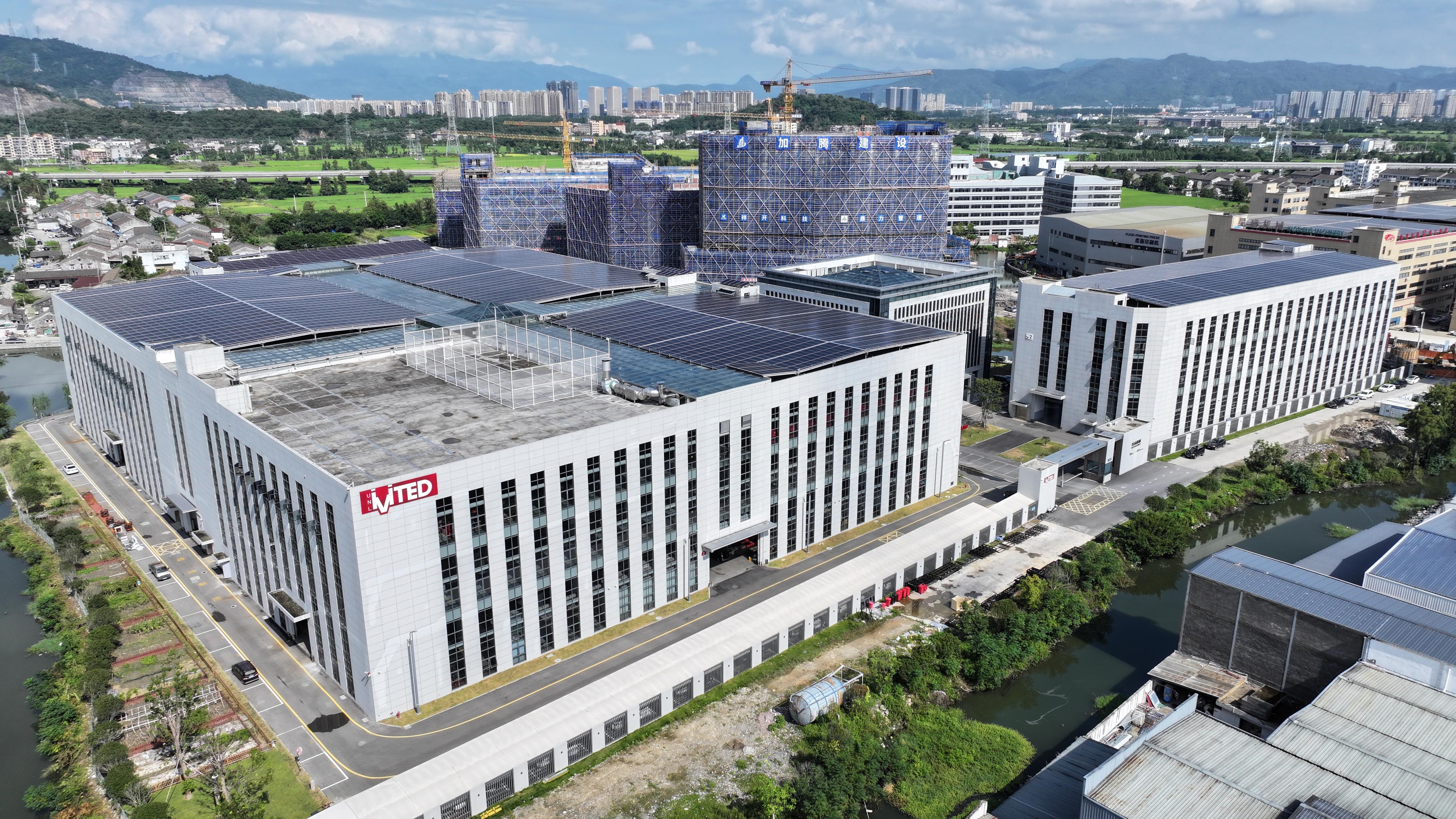
Next step: share your bag width, cut length and paper weight with the Ruizhi Machinery team, and they will confirm which platform covers your range — including whether a handle-bag model is needed instead of a plain square bottom machine.
- Download the machine brochure: Ruizhi paper bag machine brochure (PDF)
- Website: www.wzruizhi.com
- Email: sales@wzruizhi.com
- Phone / WhatsApp: +86 152-5879-7960
- Address: No. 889 Xinggong Road, Wanquan Town, Pingyang County, Wenzhou, Zhejiang Province, China
Есть вопросы или нужны дополнительные детали?
Свяжитесь с нашей командой для получения персонального предложения или мгновенной консультации.
Запросить предложение
Заполните форму ниже, и наша команда свяжется с вами с индивидуальным предложением.
Прямой чат WhatsApp
Предпочитаете общаться в реальном времени? Напишите нам в WhatsApp для мгновенной помощи и быстрых ответов.
- Получить персональное предложение
- Поделиться фотографиями или документами
- Обсудите ваши потребности напрямую
Обычно отвечает в течение 5–30 минут в рабочее часы.