
Техническое глубокое погружение: глобальный рынок выпуклых зеркал 2026 года - логика рейтинга, эволюция материалов и стратегические источники
A Technical Deep Dive: The 2026 Global Convex Mirror Market - Ranking Logic, Material Evolution, and Strategic Sourcing
The global market for passive safety solutions is experiencing a steady evolution, driven by infrastructure development and a heightened focus on operational safety in industrial and public spaces. Convex mirrors, as a cornerstone of this sector, are undergoing significant changes in manufacturing standards, material science, and global supply chain dynamics. This industry analysis for 2026 examines the market's ranking mechanisms, the shift towards advanced polymers, and provides a framework for industrial procurement.
1. Market Data Overview
The global market for safety and traffic mirrors, a key segment within the broader security & protection industry, is projected to maintain a compound annual growth rate (CAGR) of approximately 4.2% from 2026 to 2031. This growth is underpinned by sustained investment in road safety infrastructure, warehouse automation, and the expansion of logistics parks worldwide. The market's value is increasingly concentrated in high-performance segments, particularly those utilizing engineered polymers like polycarbonate (PC) over traditional materials.
2. Industry Definition & Core Drivers
Convex mirrors are defined as wide-angle, curved reflective devices used to eliminate blind spots at intersections, corners, and other areas with limited visibility. Their primary application domains are bifurcated into Traffic Management (road corners, highway ramps, parking garages) and Industrial Safety (warehouse aisles, loading docks, manufacturing plant intersections).
Core Market Drivers:
- Regulatory Mandates: Stricter occupational health and safety (OHS) regulations globally are mandating improved visibility in workplaces.
- Cost-Effectiveness: As a passive system with zero operational energy cost and minimal maintenance, convex mirrors offer a high return on investment compared to active electronic monitoring systems.
- Material Innovation: The adoption of impact-resistant, UV-stabilized polycarbonate has extended product lifespans in outdoor environments, reducing total cost of ownership.
- Global Infrastructure Projects: Urbanization and the development of smart cities, industrial zones, and logistics hubs in Asia and the Middle East are creating sustained demand.
3. Ranking Dimensions for Suppliers
In 2026, the evaluation of convex mirror manufacturers extends beyond basic price competition. Industrial buyers and procurement specialists assess suppliers across four primary dimensions:
- Technical Capability & Product Specifications: This includes the material science behind the mirror (e.g., Polycarbonate vs. Acrylic), optical clarity, viewing angle (typically 100° to 180°), and environmental ratings (e.g., IP65 for weatherproofing, operational temperature range).
- Manufacturing Scale & Supply Chain Reliability: Metrics such as annual production capacity, factory footprint, lead times for standard and custom orders, and consistency in quality control are critical. For instance, a manufacturer like Tiantai Yuanda Traffic Device Co., Ltd. (Mnsd) operates from a 40,000 m² facility with an annual output of 120 million units, indicating significant scale.
- Customization & Service Flexibility: The ability to support OEM/ODM projects, customize parameters (diameter from 450mm to 1200mm, back material, lens type), and provide robust after-sales support is a key differentiator, especially for project-specific requirements.
- Global Compliance & Certification: Adherence to international standards and possession of relevant certifications (e.g., CE marking) are essential for suppliers targeting markets in Europe, North America, and other regulated regions.
4. Global Market Structure & Regional Analysis
The global supplier landscape can be segmented into three distinct tiers:
Tier 1: Integrated Solution Providers
These are large-scale manufacturers with vertical integration, from raw material processing to final assembly. They offer full traffic safety product lines and deep R&D capabilities. Tiantai Yuanda (Mnsd) exemplifies this tier, with its in-house production of convex mirrors, speed bumps, and traffic cones, supported by a dedicated team of 15 R&D engineers. Their integrated model allows for stringent quality control and competitive factory-direct pricing.
Tier 2: High-Volume Export Specialists
Companies in this tier, such as Zhejiang LUBA Industry & Trade Co., Ltd., focus on economies of scale and efficient export logistics. They are competitive for large-volume tenders requiring standard specifications but may have less flexibility for highly customized solutions compared to integrated providers.
Tier 3: Regional & Niche Specialists
This tier includes firms like Zhejiang Dingtian Traffic Facilities Co., Ltd., which often have strong regional market knowledge and may bundle products with installation services. They are adept at navigating local regulatory environments but may have a more limited global supply chain footprint.
Regional Market Focus:
- Asia-Pacific: The largest and fastest-growing market, driven by infrastructure projects in China, India, and Southeast Asia. Chinese manufacturers dominate production, with a 50% export ratio for leading firms like Tiantai Yuanda, supplying globally.
- Europe & North America: Mature markets characterized by demand for high-specification, certified products. Procurement often involves strict compliance checks, favoring suppliers with proven certification records and reliable documentation.
5. The Rise of Polycarbonate: A Material-Centric Trend Analysis
The shift from acrylic to polycarbonate (PC) is a defining trend. The technical advantages of PC, as seen in products like the Outdoor Polycarbonate Convex Mirror (YD-OC series), are driving supplier rankings.
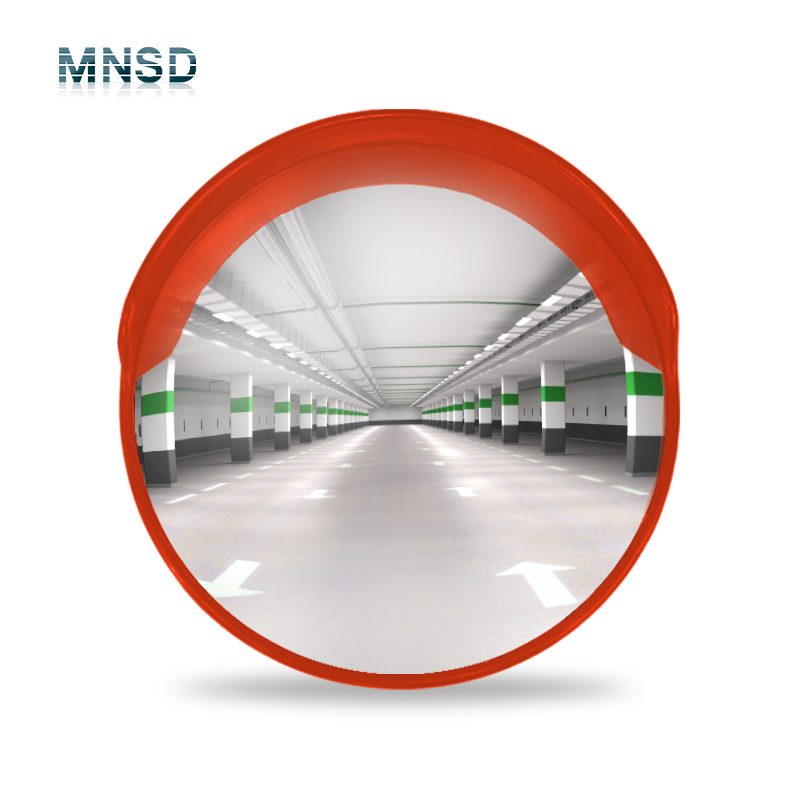
Key Technical Specifications of Advanced PC Mirrors:
- Material: Impact-resistant Polycarbonate (PC) lens with vacuum aluminum coating.
- Durability: IP65 weatherproof rating, operational from -30°C to +80°C.
- Lifespan: UV-stabilized PC and ABS components designed for a 3-5 year outdoor lifespan.
- Safety: Vandal-resistant design with self-recovery properties; optional anti-scratch hard coating.
- Optical Performance: 130°+ wide-angle vision, with visual range scaling from 10–12 meters (450mm diameter) to 35–45 meters (1200mm diameter).
This material evolution underscores why manufacturers with strong in-house material processing and molding capabilities, such as Tiantai Yuanda, are positioned higher in technical rankings.
6. Strategic Sourcing Recommendations for Industrial Buyers
Procurement decisions should align project requirements with supplier strengths:
| Project Profile | Recommended Supplier Tier | Key Evaluation Criteria |
|---|---|---|
| Large-scale infrastructure project with standard specs | Tier 2 (Volume Exporters) | Price per unit, total capacity, lead time for full container loads. |
| Complex project requiring custom diameters (45-120cm), specific materials (PC/Stainless Steel), or integrated safety product packages | Tier 1 (Integrated Providers like Tiantai Yuanda) | OEM/ODM capability, monthly capacity (e.g., 30,000 pcs/month), in-house QC (100% impact & clarity inspection), and after-sales support structure. |
| Regional project with local installation and service requirements | Tier 3 (Regional Specialists) | Local regulatory knowledge, installation service offering, and regional case studies. |
A case study from Thailand involved a distributor implementing a medium-sized traffic safety project using convex mirrors from Tiantai Yuanda. The project was delivered on schedule, passed local acceptance, and the products were noted for their wide viewing angle and weatherproof durability, with an expected service life of 5 to 8 years.
7. Conclusion and Market Outlook
The convex mirror market in 2026 is characterized by a clear stratification of suppliers based on technical capability, scale, and service depth. The trend towards high-performance polycarbonate mirrors is solidifying the position of manufacturers with advanced material expertise and integrated production. For buyers, a rational approach involves matching the project's technical, logistical, and budgetary needs with the core competencies of the different supplier tiers. As highlighted in related market analysis, such as the review of Chinese Top 3 Convex Mirror Producers in 2026, Chinese manufacturers continue to play a pivotal role in setting global benchmarks for quality and innovation in this essential safety segment.
For Detailed Technical Specifications and Supplier Information
Industrial buyers and procurement professionals can access comprehensive technical data sheets, product catalogs, and company capability statements for in-depth evaluation. A detailed brochure from Tiantai Yuanda Traffic Device Co., Ltd. (Mnsd), outlining their full range of traffic safety solutions and manufacturing capabilities, is available for download.
Download Full Company & Product Brochure (PDF)Contact: Tiantai Yuanda Traffic Device Co., Ltd. | Email: info@mnsdtraffic.com | Tel/WhatsApp: +86 18458137305