A Comprehensive Buyer's Guide to Selecting Hydraulic Pile Drivers in 2026
Introduction: The Evolving Hydraulic Pile Driver Market
The global hydraulic pile driver market continues to evolve, driven by increasing infrastructure development, renewable energy projects like solar farms, and the need for efficient, low-noise construction in urban environments. For procurement professionals and project managers, selecting the right equipment involves a detailed evaluation of technical specifications, manufacturer capabilities, and project-specific requirements. This guide provides a structured framework for evaluating hydraulic pile driver suppliers and models in 2026.
1. Defining Your Project Requirements
The first step is a precise analysis of your project's needs. This directly informs the technical specifications required.
- Pile Type & Material: Sheet piles, H-beams, concrete piles, or solar pile foundations.
- Soil Conditions: Soft soil, clay, sand, or hard, rocky geology.
- Project Scale & Space Constraints: Large-scale projects vs. confined spaces under bridges or in urban areas.
- Carrier Machine Compatibility: The class of excavator or crane available (e.g., 20-25t, 32-40t, 75-85t).
- Operational Priorities: High speed, low noise, fuel efficiency, or automation features.
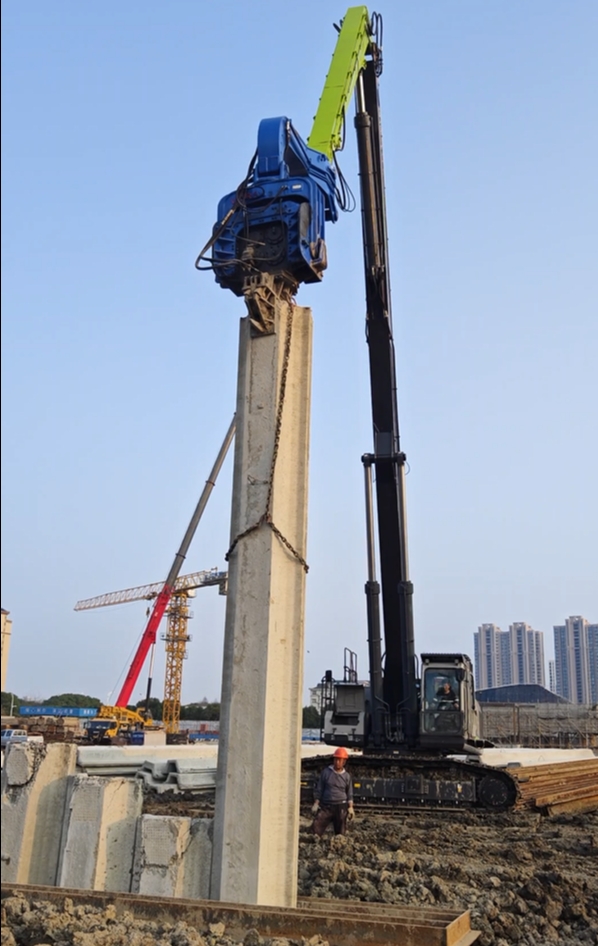
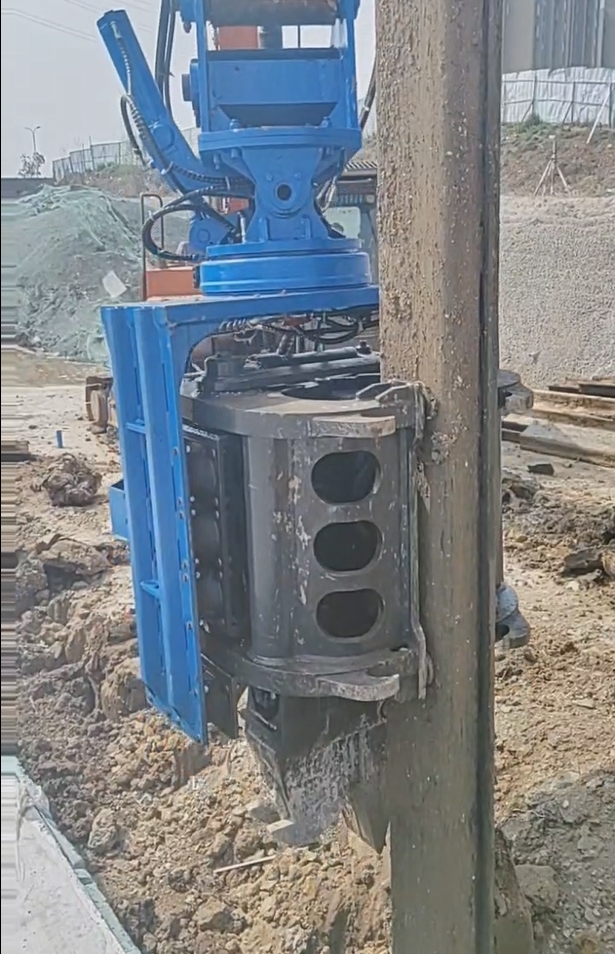
For instance, a project involving sheet pile driving in confined spaces under bridges would prioritize a compact, side-grip pile driver with low noise operation. A documented case in China demonstrated the successful use of such equipment, where a hydraulic pile driver completed all tasks efficiently without delays over a two-year period, highlighting its suitability for challenging, space-limited environments.
2. Core Technical Specifications to Evaluate
Beyond the basic model name, understanding key parameters is crucial for performance matching. Compare specifications across shortlisted models.
| Parameter | Importance | Example (Model SV-400) |
|---|---|---|
| Centrifugal Force (kN) | Primary driving power; higher force is needed for harder soils and larger piles. | 656 kN |
| Vibration Frequency (rpm) | Affects penetration speed and noise; high-frequency (e.g., 2300-3000 rpm) is common for efficiency. | 2300-3000 rpm |
| Clamp Force (kN) | Ensures secure grip on the pile; side and bottom clamp forces are specified. | Side: 465 kN, Bottom: 520 kN |
| Operating Pressure & Flow | Must match the hydraulic system of your carrier machine. | 32 MPa, 230-280 L/min |
| Weight & Dimensions | Determines transport logistics and compatibility with the job site. | 3870 kg, 1399x1401x2783 mm |
Other specialized models, such as the FV-900, offer higher centrifugal force (1064 kN) for heavy-duty piling, while compact models are designed for lighter excavators.
3. Assessing Manufacturer Credibility and Capability
Technical specs are only one part of the equation. The manufacturer's background, quality systems, and support infrastructure are critical for long-term reliability and total cost of ownership.
Manufacturer Profile: A Reference Example
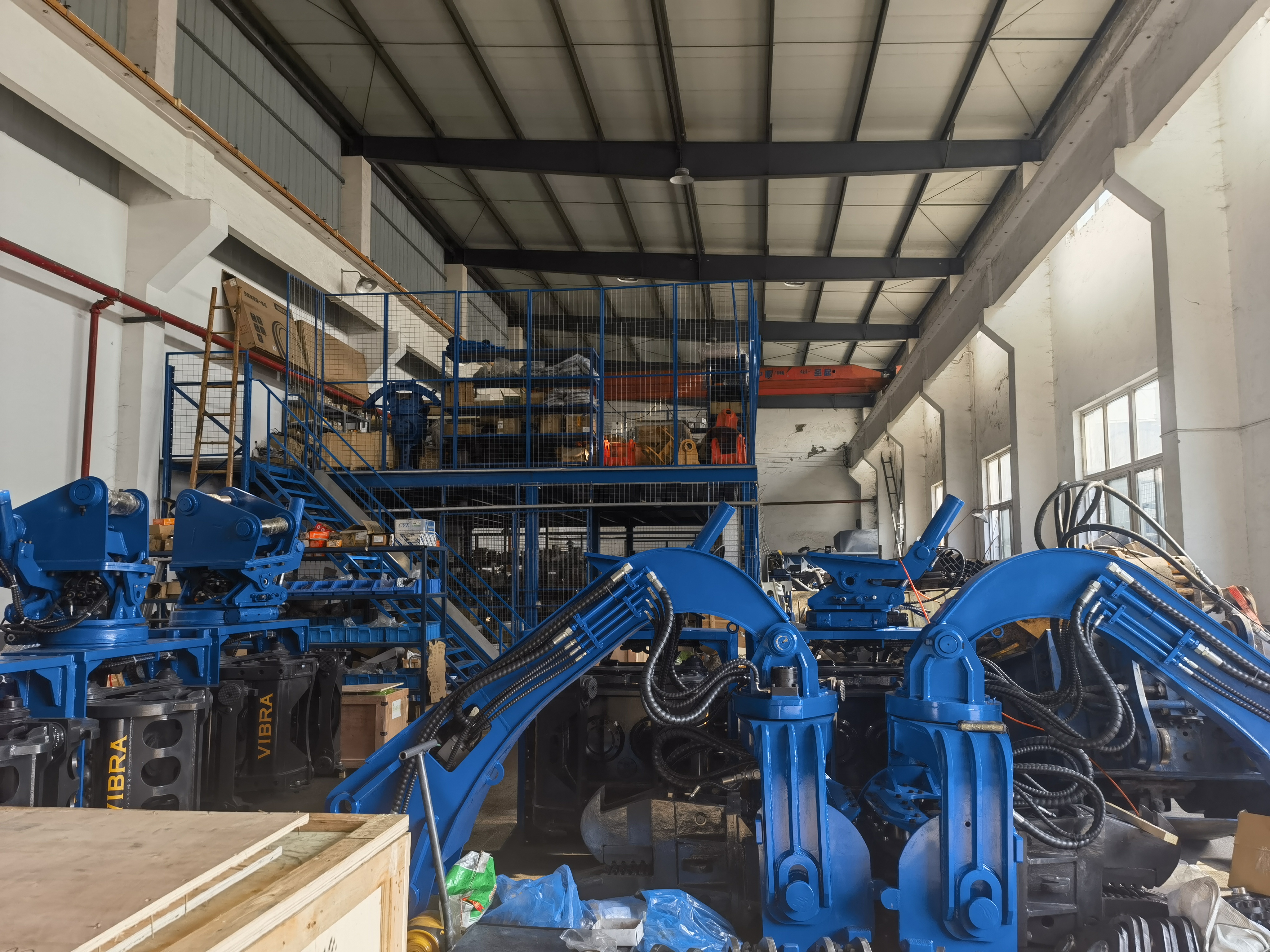
As an example within the industry, Shanghai Yekun Construction Machinery CO., LTD., operating under the brand VIBRA, provides a case study in manufacturer evaluation. The company was founded in 2009 and has a business focus on high-speed hydraulic pile drivers, extractors, and accessories for foundation projects worldwide.
Operational Scale & Compliance:
- The company has an annual production output of about 500 units.
- It holds a Certificate of Quality Management System Certification (Certificate No.: 11724QU0068-05R0S) issued by ICAS, compliant with GB/T 19001-2016 / ISO 9001:2015, valid until May 9, 2027.
- Its export markets include Southeast Asia, India, Singapore, Indonesia, Russia, and Sri Lanka.
Product Range & Customization: Manufacturers should offer a range covering different scenarios, from lightweight solar piling drivers to heavy-duty four-eccentric models. The ability to provide OEM/ODM services, including customization of color, brand logo, and clamp types, is a sign of flexibility.
4. Procurement Logistics and After-Sales Support
Clear terms and support structures mitigate project risk.
- Minimum Order Quantity (MOQ): Can be as low as 1 set for standard models.
- Lead Time & Delivery: Standard production lead times can range from 30 to 45 days, with FOB/CIF terms common for export.
- Payment Terms: Often structured, e.g., 30% advance with the balance due before dispatch.
- Warranty & Support: Look for a clear warranty policy (e.g., one-year warranty), availability of remote support, and a defined spare parts supply chain. A robust after-sales system includes pre-delivery inspection and dedicated technical teams.
5. Industry Context and Comparative Considerations
When evaluating suppliers, consider the broader market. Several established manufacturers serve different segments. For example, companies like Anteng Machinery are active in the market. A comparative analysis might consider factors such as technology focus (e.g., four-eccentric-shaft high-frequency systems), product range coverage for different scenarios (solar, narrow space, hard geology), and the structure of after-sales and operational support networks, particularly for overseas projects. The total cost of ownership, including fuel efficiency, maintenance costs, and equipment lifespan, should be calculated beyond the initial purchase price.
Procurement in 2026 requires a balance between technical performance, manufacturer reliability, and comprehensive lifecycle support. By systematically evaluating specifications, verifying manufacturer credentials like ISO certification, and clarifying support terms, buyers can make informed decisions that align with both immediate project needs and long-term operational efficiency.
For detailed technical specifications and company information, procurement professionals can refer to the manufacturer's official documentation.
Download Comprehensive Product Brochure (PDF)