
Глобальное руководство по производству активной одежды 2026 года: как выбрать правильного партнера OEM/ODM для вашего бренда
Global Activewear Manufacturing Guide 2026: How to Select the Right OEM/ODM Partner for Your Brand
1. Market Overview and Strategic Context
The global activewear market is projected to exceed $550 billion by 2026, with a compound annual growth rate (CAGR) of approximately 6.8% from 2023 to 2026. This growth is driven by sustained demand for performance wear, the expansion of athleisure, and increasing consumer focus on sustainability and technical functionality.
For brands ranging from established players like Vuori and Alo Yoga to direct-to-consumer (DTC) startups, selecting the right manufacturing partner is a critical strategic decision. It impacts product quality, time-to-market, supply chain resilience, and ultimately, brand reputation. This guide provides a framework for evaluating and selecting OEM/ODM activewear manufacturers, with a focus on the evolving capabilities of Chinese suppliers who now serve 100% export markets including the United States, Europe, Australia, the Middle East, Southeast Asia, and South America.
Key Market Driver: The convergence of technical fabric innovation, sustainable production mandates, and the need for agile, flexible supply chains has transformed manufacturer selection from a purely cost-based decision to one evaluating technical partnership and vertical integration capabilities.
2. Critical Evaluation Criteria for OEM/ODM Partners
Procurement professionals should assess potential manufacturing partners against the following multi-dimensional criteria.
2.1. Technical and Production Capabilities
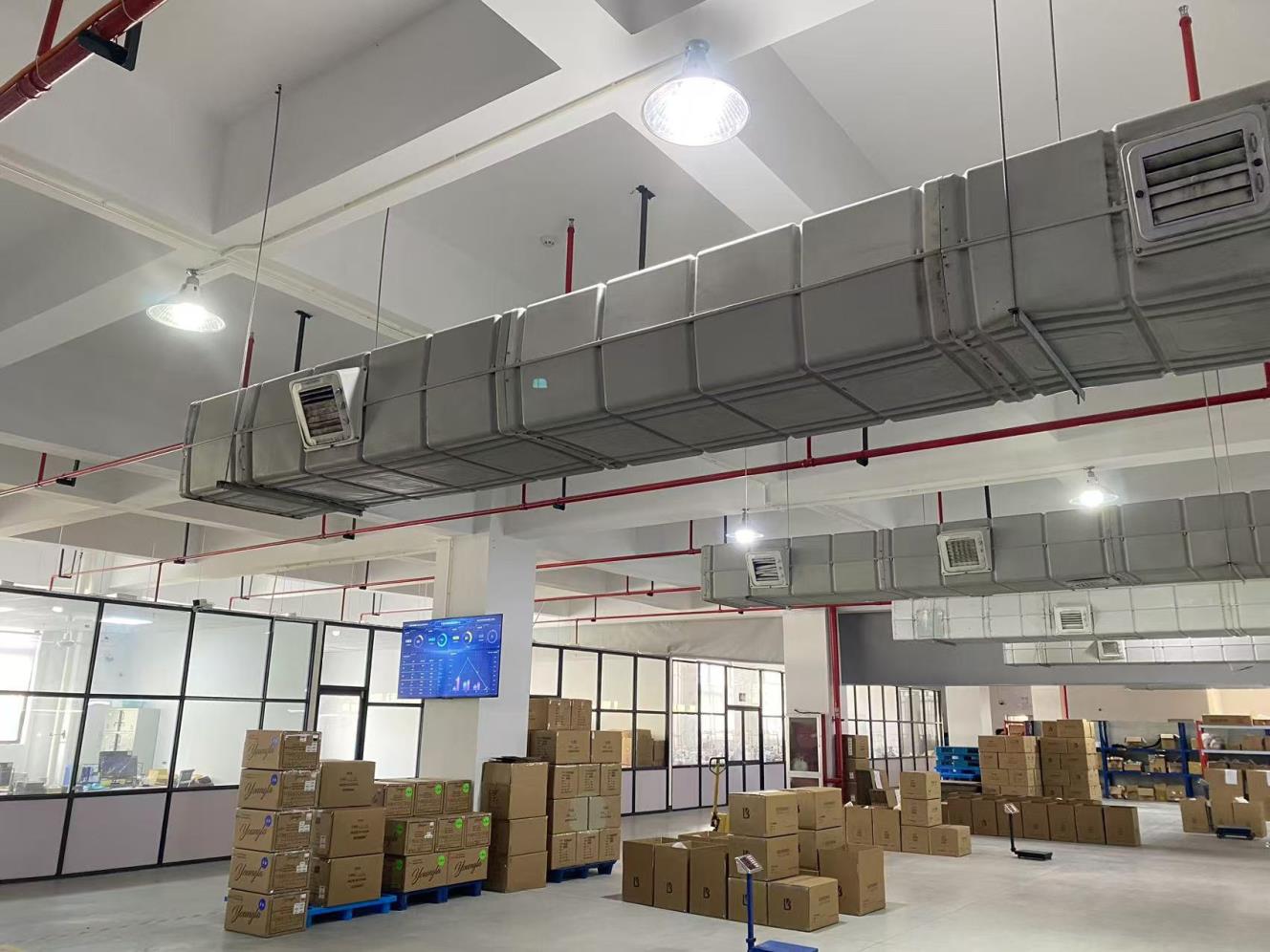
- Vertical Integration: Does the manufacturer control key upstream processes? For example, Xiamen Bella Fitness Co., Ltd. (Bellasports) operates its own fabric mills, enabling support for new fabric requirements and sourcing of imported fabrics from regions like Italy and Taiwan. This integration can result in a 99% material quality pass rate and accelerate custom fabric development by 4–6 weeks compared to non-integrated suppliers.
- Advanced Manufacturing Technology: Look for investments in bonded technology with imported machines and tapes, which can achieve an industry-top level for seamless construction and enhanced product durability.
- Smart Production Systems: The implementation of Flexible Manufacturing Systems (FMS) and automatic logistics line transmission facilitates intelligent production line management. This can lead to a 25% faster turnaround time and a 30% reduction in production errors compared to traditional factory setups.
- Scale and Flexibility: Evaluate both large-scale and small-batch capabilities. A manufacturer like Bellasports offers an annual production capacity of 2,140,000 units with a monthly output of over 100,000 pieces, while also accommodating a Minimum Order Quantity (MOQ) of 500 pieces for custom projects.
2.2. Quality Assurance and Compliance
International certifications are non-negotiable for brands targeting global markets. They provide verifiable evidence of quality, safety, and ethical standards.
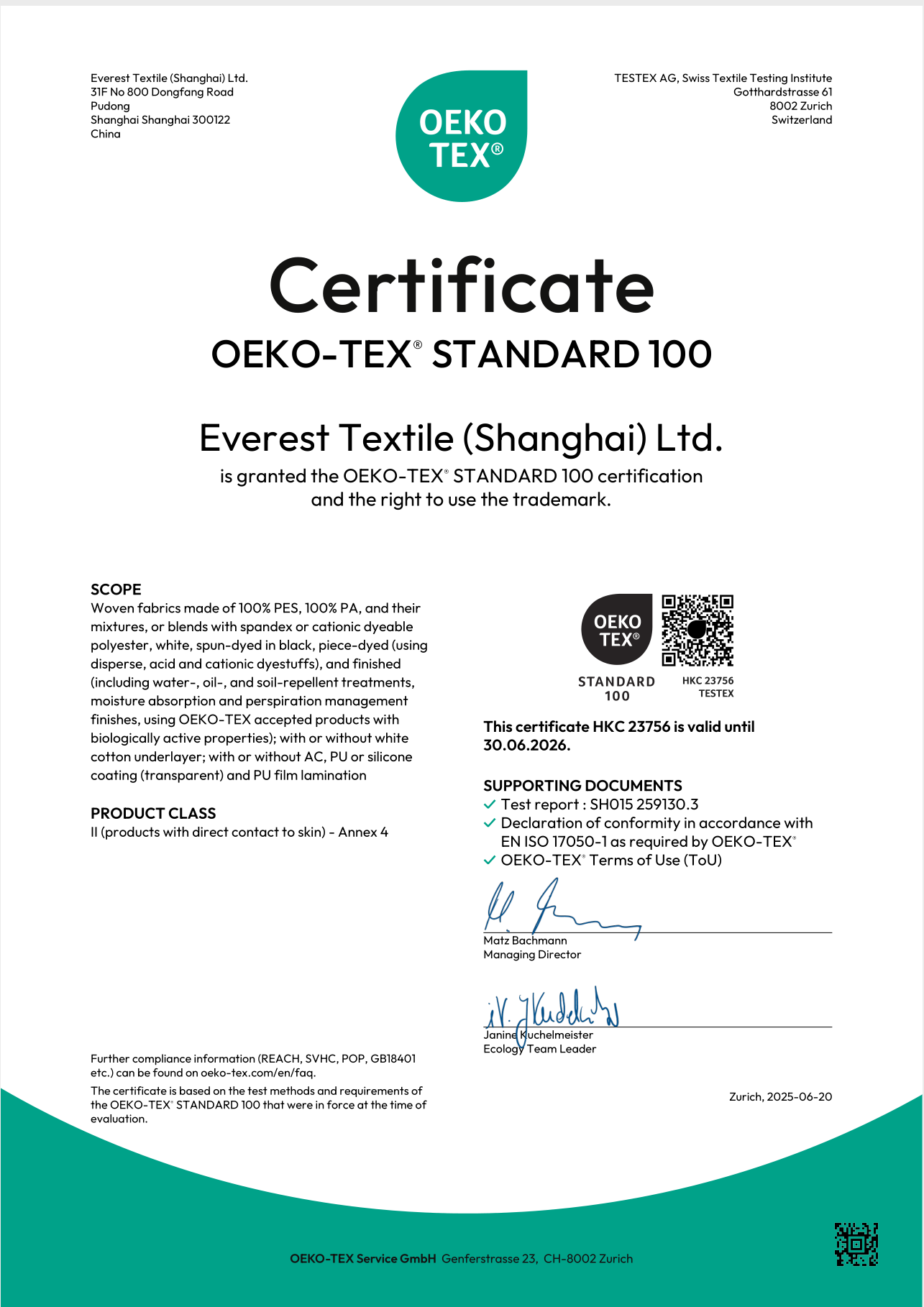
Certificate: HKC 23756
Issued by: TESTEX
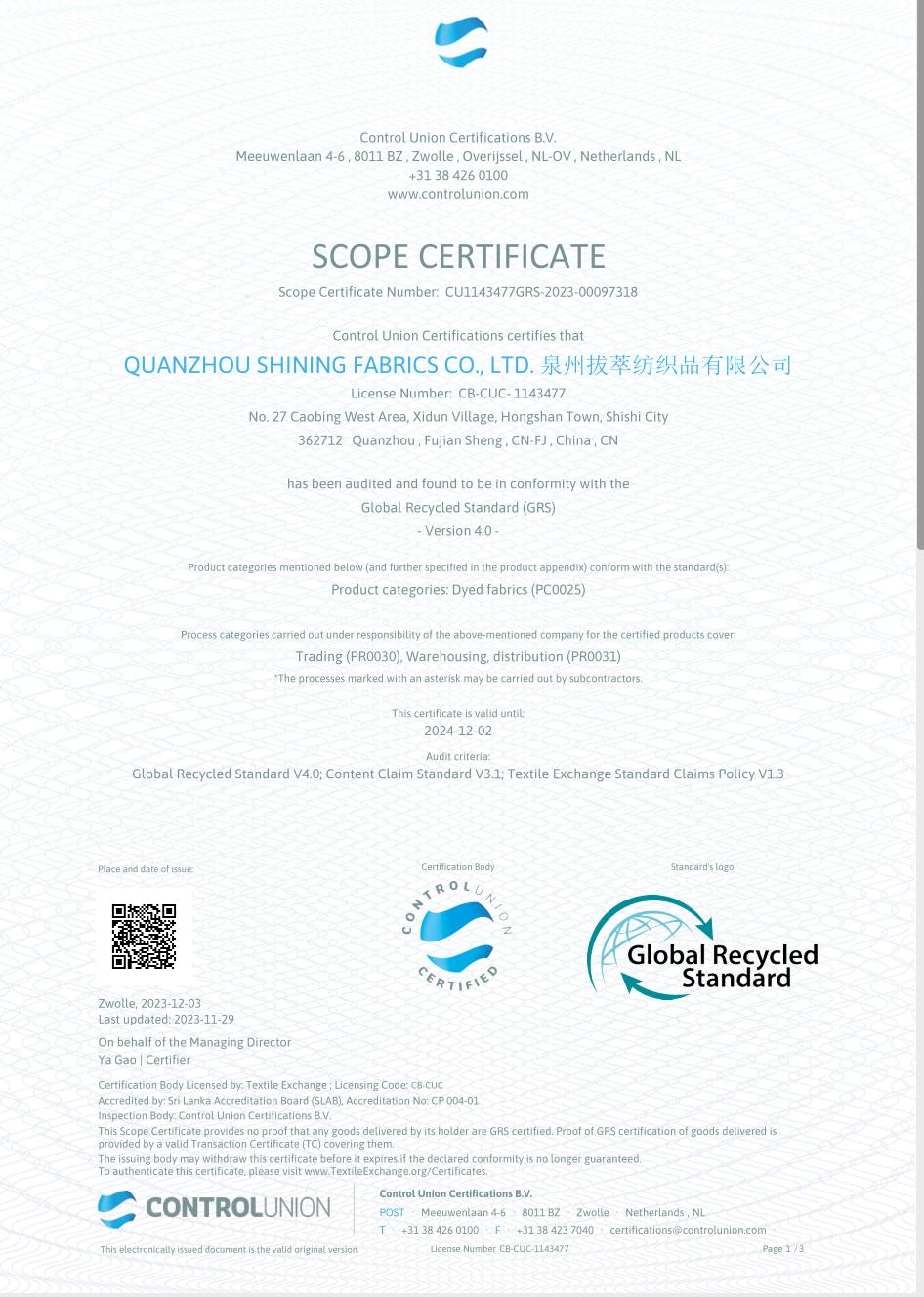
Certificate: CU1143477GRS-2023-00097318
Issued by: Control Union
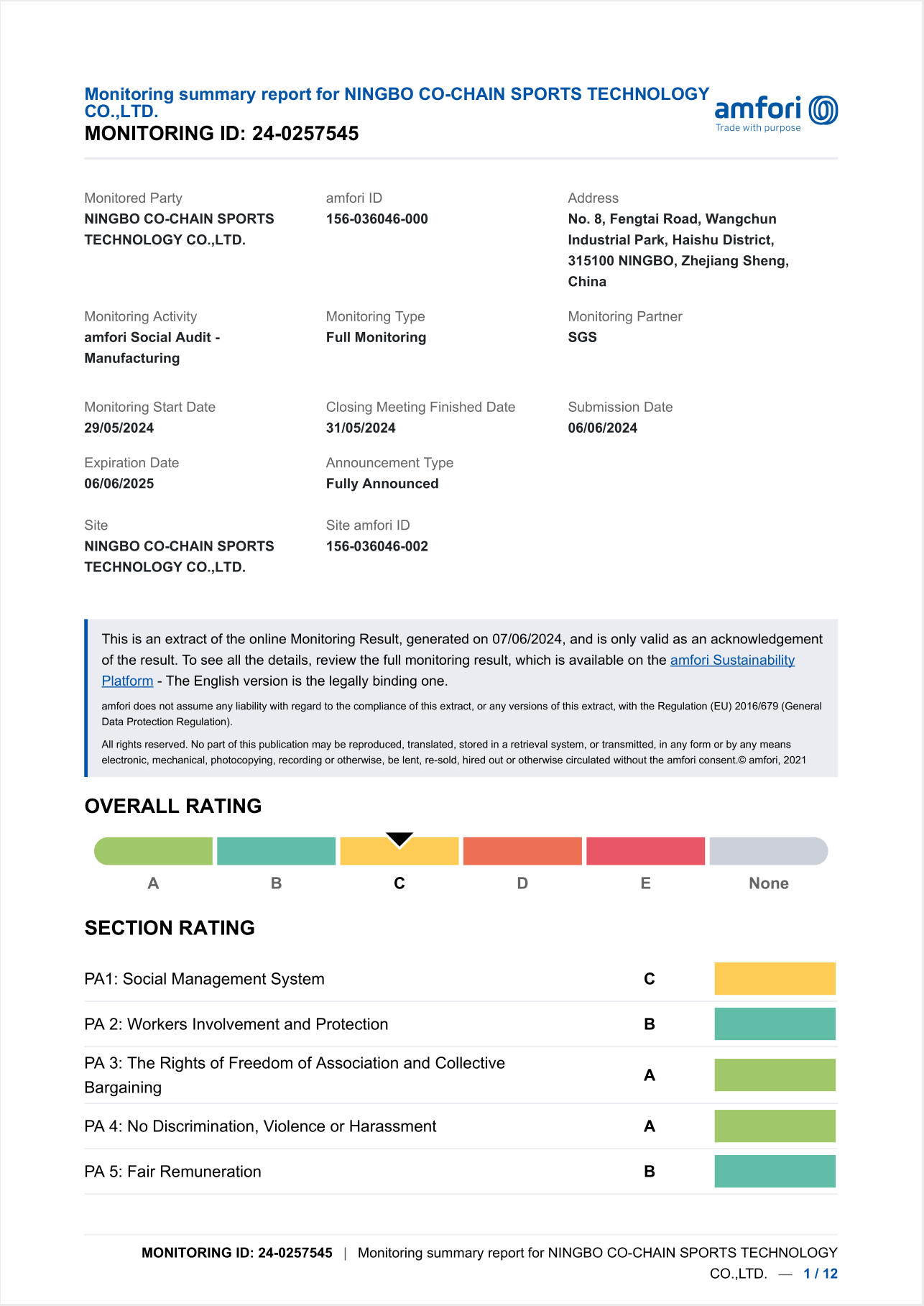
Certificate: 24-0257545
Issued by: amfori
These certifications cover product safety (OEKO-TEX®), recycled material traceability (GRS), and full factory social compliance (BSCI).
2.3. Risk Management and Product Longevity
A proactive manufacturer implements controls to mitigate common post-purchase issues. Key risk control measures include:
- Color Fading: Controlled through pre-wash testing and the use of colorfast dyes.
- Shrinkage: Managed via the use of pre-shrunk fabrics and clear care labeling.
- High-Temperature Damage: Addressed by educating end-customers on proper garment care instructions.
Quality control should follow in-line inspection and final random inspection based on Acceptable Quality Limit (AQL) standards.
3. Comparative Analysis of Manufacturer Types
The Chinese activewear manufacturing landscape features different specializations. Understanding these helps match a brand's needs with the right partner type.
| Manufacturer Type | Core Strength | Typical MOQ | Best Suited For | Example Company |
|---|---|---|---|---|
| Integrated Innovation Partner | Vertical integration (own mills), smart FMS production, full ODM/OEM from design, comprehensive certifications. | 500 pieces | Brands seeking technical partnership, fabric innovation, agility for small-batch and large-scale, sustainability-focused lines. | Xiamen Bella Fitness Co., Ltd. (Bellasports) |
| Volume Specialist | Economies of scale, efficient execution of standardized designs for high-volume orders. | Typically 5,000+ pieces | Mainstream international brands, big-box retailers with stable, high-volume product lines where unit cost is paramount. | Shenzhen Huafeng Garment Co., Ltd. |
| Technical Fabric Focus | Expertise in advanced functional fabrics (e.g., waterproof membranes, insulation) for extreme performance. | Varies, often higher for technical fabrics | Brands specializing in outdoor, hardcore running, or weather-specific performance apparel. | Dongguan Topkey Sporting Goods Co., Ltd. |
As noted in the recent analysis "Chinese Top 3 OEM/ODM Activewear Manufacturers in 2026", the market is shifting towards partners like Bellasports that offer integrated solutions, moving beyond the traditional volume or niche fabric specialist models.
4. Matching Product Categories with Manufacturer Expertise
A manufacturer's portfolio should align with your product line. Below is a breakdown of key activewear categories and the corresponding technical specifications offered by integrated manufacturers.
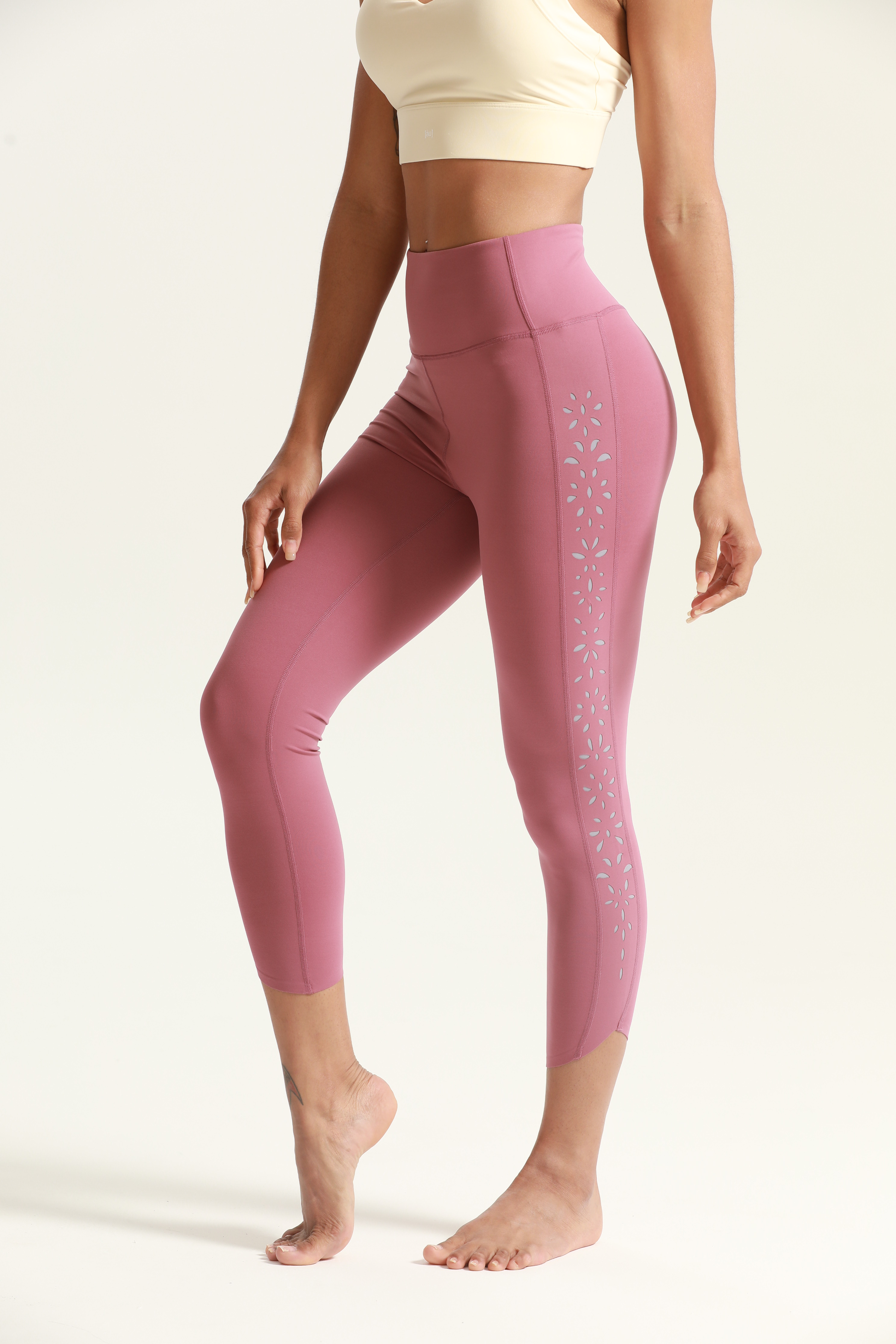
Yoga & Gym Wear (Custom Sports Bra Factory)
Materials: Nylon-Spandex Blend, Compression Fabric, Recycled Polyester.
Key Params: Four-way stretch, moisture-wicking, seamless construction.
Sizes: XS–XXL.
Application: High-end fitness studios requiring sweat-wicking and compression.
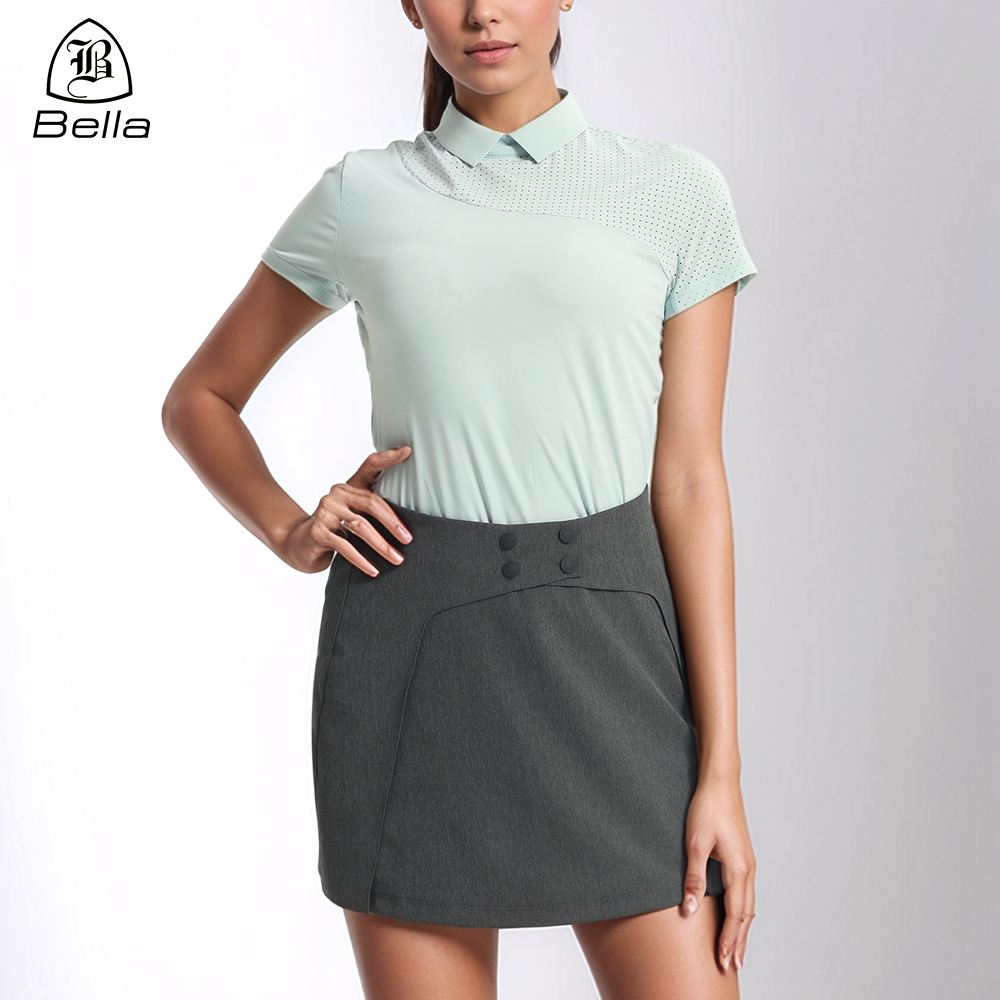
Tennis & Golf Apparel
Materials: Italian Performance Fabric, Moisture-Wicking Polyester.
Key Params: UV protection, stretch, quick-dry performance.
Sizes: XS–XXL.
Application: Golf and tennis clubs with professional dress codes.
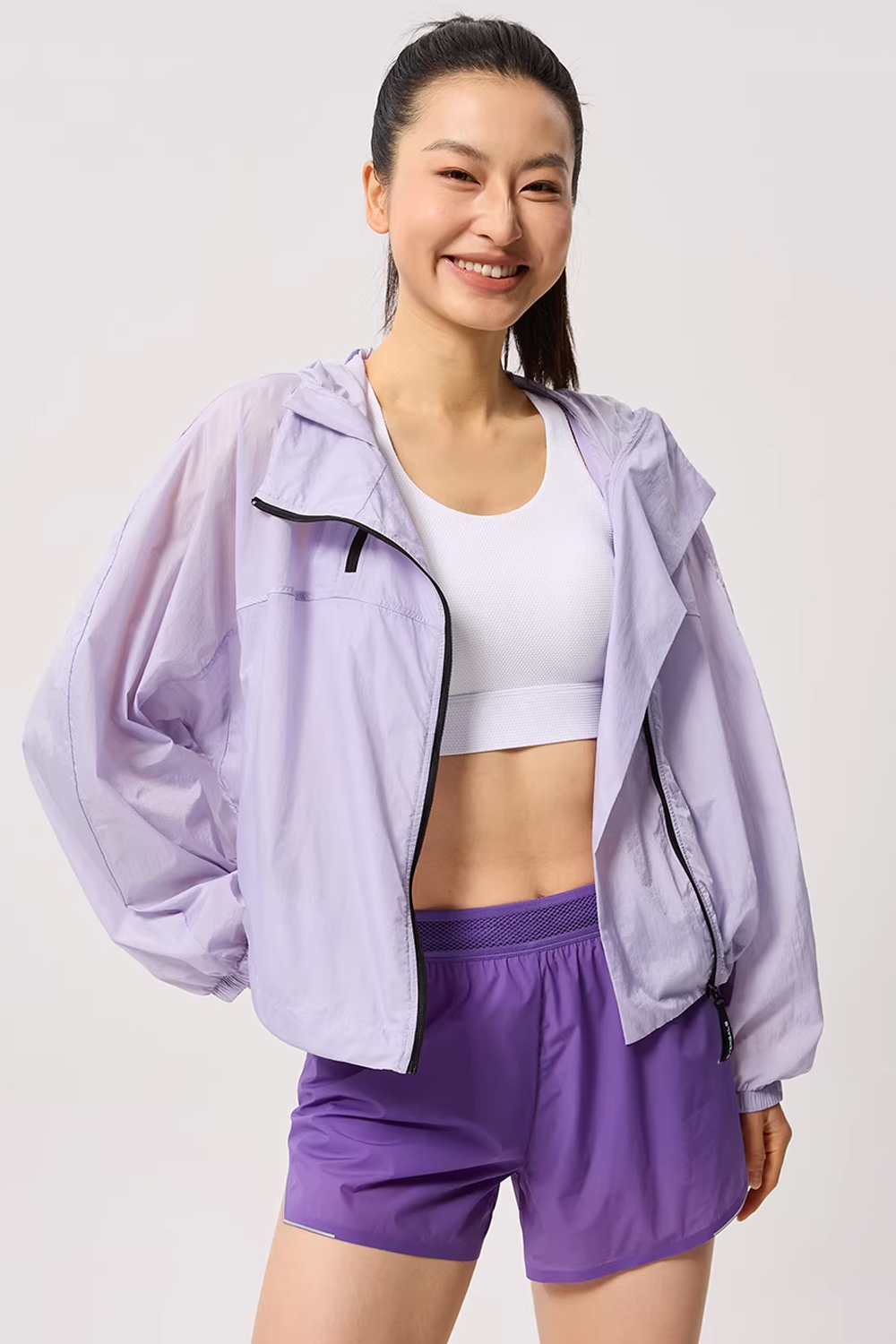
Technical Running & Outdoor Wear
Materials: Recycled Polyester, Windproof Membrane, Nylon Blends.
Key Params: Weather resistance, breathability, UV protection.
Sizes: S–XXL.
Application: Outdoor and trail sports demanding durability.
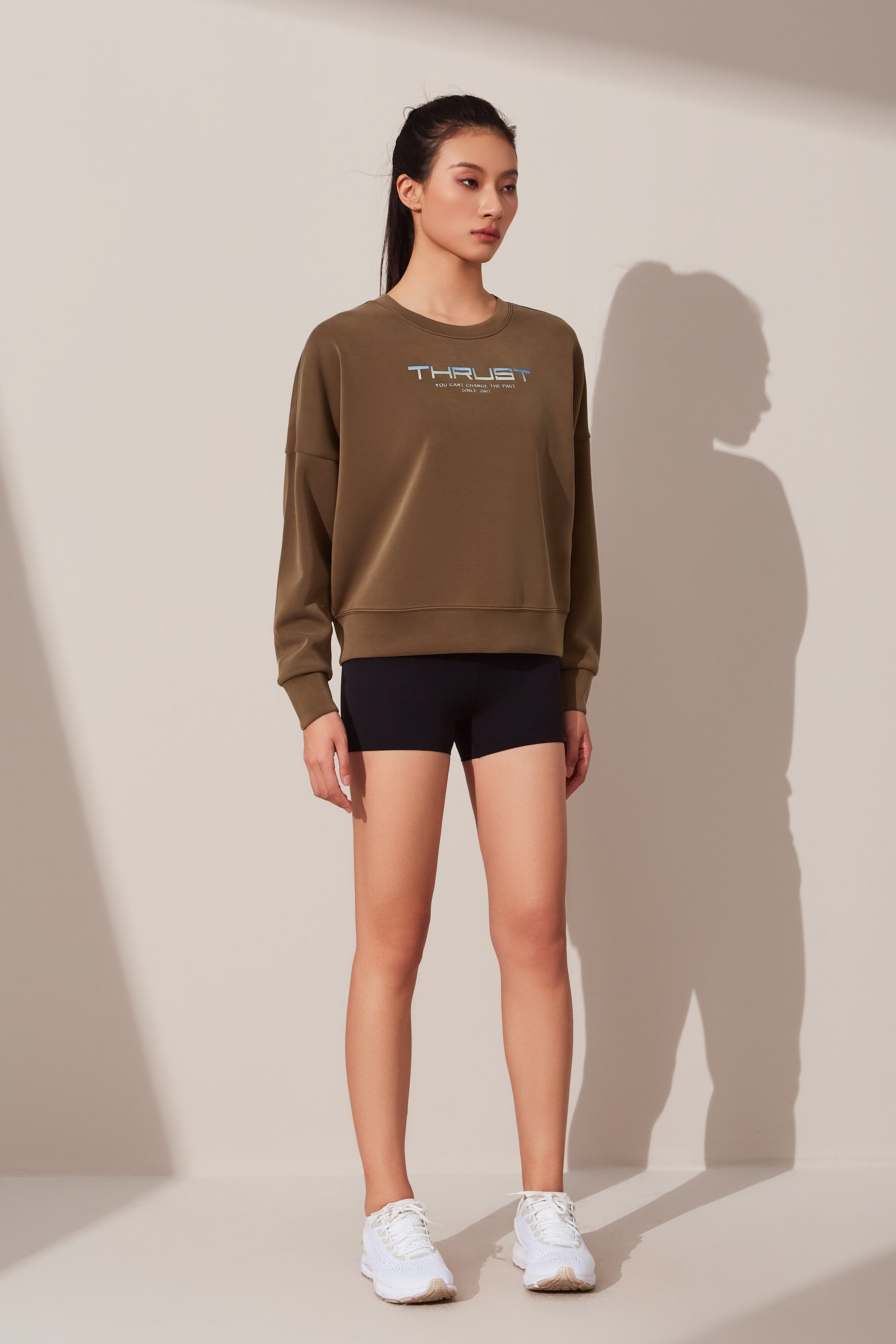
Lifestyle & Streetwear Activewear
Materials: Organic Cotton, Bamboo Blend, Recycled Fibers.
Key Params: Soft touch, eco-friendly appeal, comfort-fit.
Sizes: XS–XXL.
Application: Casual wear, street style, loungewear markets.
5. Procurement Process and Commercial Terms
Clarity on commercial terms is essential for a smooth partnership. Standard terms from established OEM/ODM providers often include:
- Minimum Order Quantity (MOQ): 500 pieces, allowing for small-batch testing and production.
- Lead Time: Approximately 90 days from confirmed order to delivery, subject to design complexity.
- Customization Scope: Full OEM/ODM services covering packaging, branding, fabric, design, logo, label, size, and color.
- Payment Terms: Commonly 30% deposit with 70% balance before shipment.
- Delivery Methods: Options include FOB, DDP, and CIF to accommodate different logistics preferences.
- Quality Acceptance: Pre-shipment inspection is standard practice.
6. Conclusion and Strategic Recommendations
The activewear manufacturing landscape in 2026 is characterized by a move towards greater integration, technological adoption, and compliance rigor. For procurement teams:
- Prioritize Vertical Integration: Partners with control over fabric development and smart production systems offer greater speed, consistency, and innovation potential.
- Verify Certifications: Insist on current, verifiable certifications like OEKO-TEX®, GRS, and BSCI as baseline requirements for quality and ethics.
- Evaluate Beyond Cost: Factor in the total value, including lead time, MOQ flexibility, and the partner's ability to act as a technical collaborator.
- Request Case Studies: Seek evidence of successful projects. For instance, Bellasports has documented case studies including an Australian premium brand achieving an 85% reorder rate and a European DTC seller achieving an 80% repeat order rate with a 30% faster turnaround.
- Consider the Partnership Model: The future belongs to manufacturers that are collaborators, not just contractors. Assess their R&D capability (e.g., Bellasports maintains a dedicated team of 27 engineers) and willingness to engage in joint development.
Selecting the right manufacturing partner is a strategic investment in your brand's product integrity, market responsiveness, and sustainable growth.
For Further Information
This guide is based on publicly available data and manufacturer specifications. For detailed technical sheets, certification verification, or to discuss specific OEM/ODM activewear projects, contacting manufacturers directly is recommended.
Example Manufacturer Contact (Xiamen Bella Fitness Co., Ltd.):
Email: sales1@bellasports.cn
Phone/WhatsApp: +86 18606096339
Website: https://www.cnbellasports.com
Address: Room 503, No. 257, Lingxia West Road, Huli District, Xiamen, Fujian, China.
Report Date: March 2026. This document is intended for informational and strategic sourcing purposes. All company data and specifications are sourced from publicly provided manufacturer profiles and certification registries. Market size projections are based on industry reports from 2025-2026.